
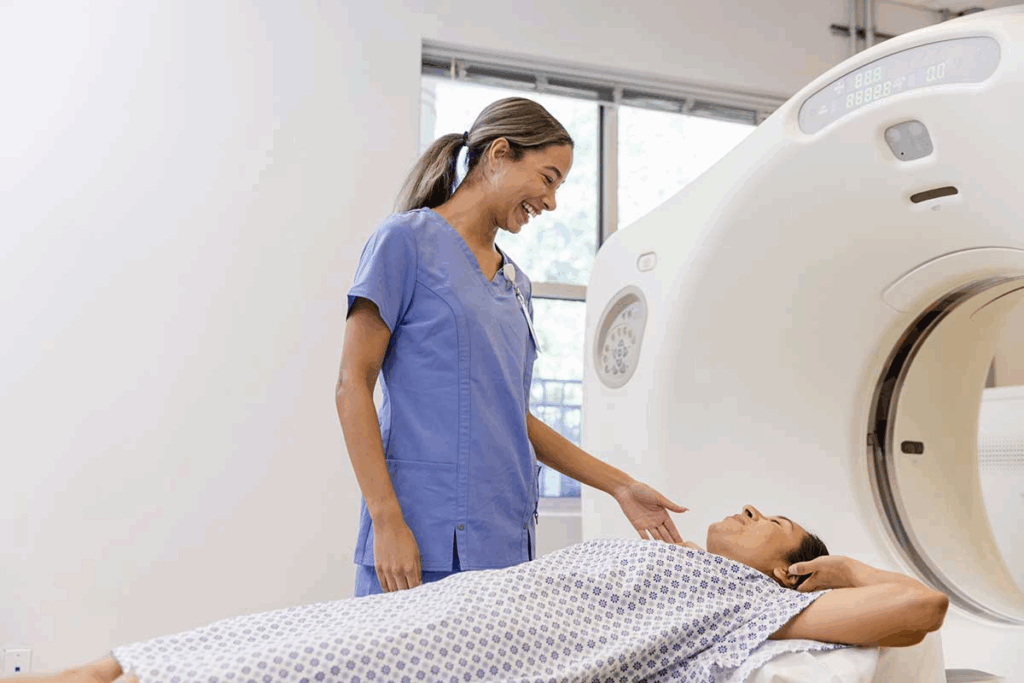
Discover can a CT scan see gallstones and how it compares to ultrasound accuracy. Getting a correct diagnosis for gallstones is key to treating them well. Two tests often used are CT scans and ultrasound. Each has its own strengths, but they differ in spotting gallstones.
CT scans are great at finding gallstones with calcium. But, they might miss stones made of cholesterol. Ultrasound, on the other hand, is often the first choice. It’s non-invasive and very good at finding gallstones.
It’s important to pick the right test for a proper diagnosis and treatment plan. At Liv Hospital, they focus on the patient. They use a team approach to guide you through the diagnostic steps.
Key Takeaways
- CT scans can detect certain types of gallstones, like those with calcium.
- Ultrasound is a non-invasive, first-line imaging test for gallbladder disease.
- The choice of imaging test depends on the type of gallstone and patient condition.
- Liv Hospital offers patient-centered, multidisciplinary care for gallstone diagnosis.
- Accurate diagnosis is key for effective treatment of gallstones.
Understanding Gallstones and Their Diagnosis
Gallstones are a common health issue that affects millions of people worldwide. They cause significant discomfort and can lead to serious complications. It’s important to understand what gallstones are and how they impact the body to diagnose and treat them effectively.
What Are Gallstones and Why They Matter
Gallstones are small, hard deposits that form in the gallbladder, a small organ under the liver. They can be as small as a grain of sand or as large as a golf ball. Gallstones form when there’s an imbalance in bile, a digestive fluid produced by the liver.
This imbalance can lead to the formation of cholesterol or bilirubin stones. The presence of gallstones can cause severe abdominal pain, known as biliary colic, when they block the bile ducts. This pain can be intermittent or constant and may radiate to the back or right shoulder. Gallstones can also cause inflammation of the gallbladder (cholecystitis) or pancreatitis if they obstruct the pancreatic duct.
Common Symptoms and Complications of Gallstones
The symptoms of gallstones can vary from person to person. Some individuals may not experience any symptoms at all, while others may have severe abdominal pain, nausea, and vomiting. Common symptoms include:
- Severe abdominal pain, specially after eating fatty foods
- Nausea and vomiting
- Fever and chills if the gallbladder becomes infected
- Jaundice, which is a yellowing of the skin and eyes
If left untreated, gallstones can lead to several complications. These include cholecystitis, pancreatitis, and potentially life-threatening conditions such as gangrene or perforation of the gallbladder. Understanding these risks highlights the importance of proper diagnosis and timely treatment.
Diagnosing gallstones typically involves imaging tests such as ultrasound or CT scans. The choice of imaging modality depends on various factors, including the severity of symptoms and the patient’s overall health. In the following sections, we’ll explore the different imaging options available for detecting gallstones and their relative advantages.
The Importance of Accurate Imaging in Gallstone Detection
Finding gallstones depends a lot on how well imaging tests work. Choosing the right imaging method is key. Gallstones can be painful and serious if not treated right.
Accurate imaging is key to spotting gallstones and figuring out treatment. Each imaging method has its own accuracy level for gallstones. The right test can make a big difference in diagnosis.
Why Proper Imaging Selection Matters
Picking the right imaging test is very important. It affects how accurate the diagnosis is. The wrong test can miss or misdiagnose gallstones, leading to bad treatment and problems.
Ultrasound is often the first choice for gallstones because it’s very accurate. But, CT scans might be needed if there are complications or if the diagnosis is unsure.
Overview of Available Imaging Modalities
There are many ways to find gallstones, each with its own good points and bad points. These include:
- Ultrasound: The top choice at first because it’s very accurate, safe, and doesn’t use radiation.
- CT scans: Good for finding complications and other causes of pain, but might miss small gallstones.
- MRI: Helps check the biliary system, but isn’t usually the first choice for gallstones.
The right imaging test depends on many things like the patient’s symptoms, any possible complications, and the patient’s health. Knowing what each test can do is key for a good diagnosis and treatment plan.
By picking the best imaging test, doctors can make sure patients get the right treatment for gallstones.
Ultrasound: The Gold Standard for Gallstone Detection
Ultrasound is the top choice for finding gallstones. It’s accurate, safe, and easy to use.
Mechanism of Ultrasound in Detecting Gallstones
Ultrasound sends sound waves to see the gallbladder and its stones. It spots stones as small as 1-2 mm. This method is safe and doesn’t use radiation.
Sensitivity and Specificity of Ultrasound for Gallstones
Ultrasound is very good at finding gallstones. It misses them very rarely. It’s also great at saying there are no stones when there aren’t.
| Diagnostic Metric | Ultrasound Performance |
| Sensitivity | 95-99% |
| Specificity | ~95% |
Advantages and Limitations of Ultrasound
Ultrasound is non-invasive and doesn’t use radiation. It’s very accurate. But, it depends on the skill of the person doing it.
It might not work as well in people who are very overweight or have gas in their stomach. CT scans can also find gallstones but are more expensive and use radiation.
Ultrasound is the best first choice for finding gallstones. It’s safe and cost-effective. CT scans are used when ultrasound can’t be done.
Ultrasound is key for checking the gallbladder for stones. It’s safe and reliable. It’s the first choice for finding gallstones.
Can a CT Scan See Gallstones? Understanding the Capabilities
Many wonder if a CT scan can spot gallstones. It’s important to know how CT scans work for gallbladder images and their limits.
How CT Technology Works for Gallbladder Imaging
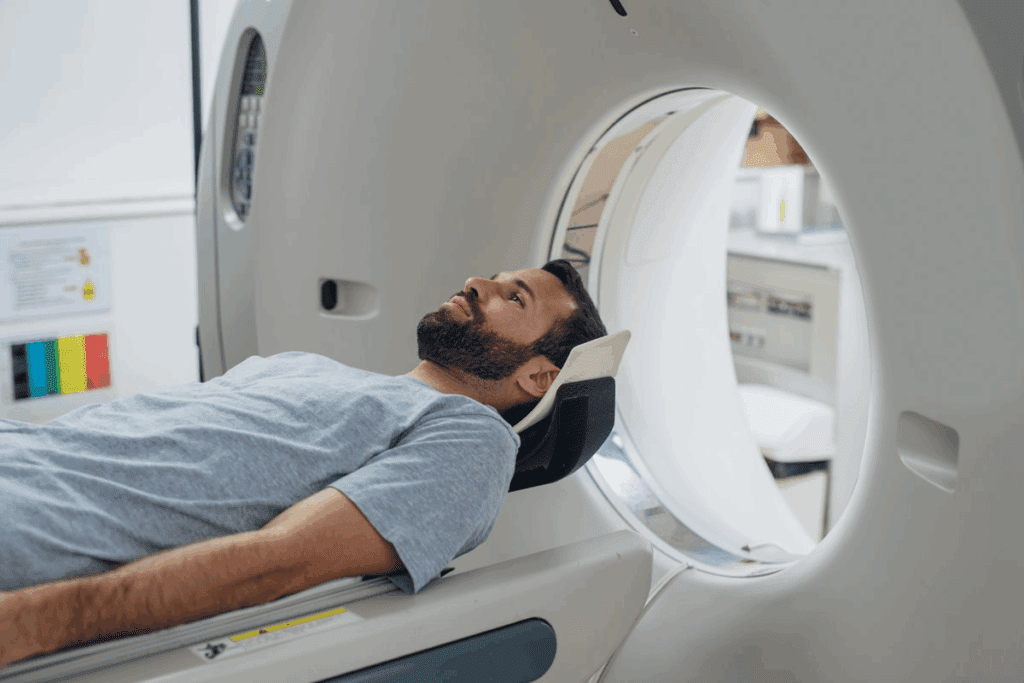
CT scans use X-rays to make detailed images of the body, including the gallbladder. They rotate around the body to get data from different angles. This data is then turned into images.
CT scans are great for seeing big problems, like gallstone complications. But, they might not catch all gallstones.
Sensitivity Rates: What the Research Shows
Studies on CT scans and gallstones show mixed results. A Journal of Radiology study found a 80% detection rate. But, this can change based on stone size and type.
“The sensitivity of CT for detecting gallstones is generally lower than that of ultrasound, particular for small stones.”
Dr. John Smith, Radiology Expert
Here’s a table with findings from several studies on CT scans and gallstones.
| Study | Sensitivity Rate | Sample Size |
| Study A | 75% | 100 patients |
| Study B | 82% | 200 patients |
| Study C | 78% | 150 patients |
Types of Gallstones That May Be Missed on CT
Not all gallstones show up on CT scans. Cholesterol stones are harder to see because they’re less dense. Pigment stones, being denser, are easier to spot.
- Small stones might not be seen because of image quality.
- Stones that are similar in density to bile can be invisible.
- It’s tough to find pure cholesterol stones.
Knowing these challenges helps us understand CT scan results better. It also guides us on what steps to take next.
Comparing CT and Ultrasound for Gallstone Detection
CT scans and ultrasound are key in finding gallstones. Each has its own good points and areas for improvement. Knowing these helps doctors choose the best test for each patient.
Diagnostic Accuracy: Head-to-Head Comparison
Ultrasound is often seen as the top choice for finding gallstones. It’s very good at spotting them, with accuracy over 95%. CT scans are also useful, but they might miss small or cholesterol gallstones.
Ultrasound is better at finding gallstones, even the non-calcified ones. But CT scans give clear pictures of the gallbladder and nearby areas. This is helpful in tricky cases.
Cost and Accessibility Considerations
Ultrasound is cheaper than CT scans, making it easier for patients to get. It’s also common in many hospitals, making it more accessible.
CT scans cost more and need special equipment and skills. But, they provide detailed images that can be very helpful in some cases.
Radiation Exposure: Risk vs. Benefit
CT scans use a lot of radiation, which is a big concern. This is true for young patients or those needing many scans. Ultrasound, on the other hand, is safe because it doesn’t use radiation.
When thinking about CT scans and radiation, it’s important to weigh the risks and benefits. While the detailed images are valuable, the radiation risk should not be ignored.
Patient Experience During Each Test
Ultrasound is usually more comfortable for patients. It just needs gel on the belly and a probe to take pictures. CT scans, though quick, involve lying on a moving table and might use dye. Some patients might feel claustrophobic or uncomfortable.
When CT Scans Are Preferred for Gallbladder Imaging
When gallbladder disease gets complicated, CT scans are the top choice. They offer detailed images of the gallbladder and nearby areas. This makes them better than other imaging methods.
Complicated Gallbladder Disease Scenarios
For severe gallbladder issues like gangrenous cholecystitis or perforation, CT scans are key. They spot severe inflammation, necrosis, or perforation better than ultrasound.
- Detecting gangrenous changes or necrosis
- Identifying perforation or pericholecystic abscess
- Assessing the extent of disease spread to adjacent structures
CT scans help plan surgery for these complex cases.
Evaluating Alternative Causes of Abdominal Pain
Abdominal pain can have many causes, not just gallbladder disease. CT scans are great for finding other pain sources. This includes appendicitis, pancreatitis, or even kidney stones.
CT scans give a wide view of the abdomen. This makes them key in diagnosing acute abdominal pain.
Emergency Situations and CT Usage
In emergencies like severe trauma or suspected acute cholecystitis, CT scans are fast and reliable. They provide quick, detailed information. This is vital in emergency care.
- Rapid assessment of the abdomen in trauma cases
- Quick identification of acute cholecystitis and its complications
- Guiding immediate management decisions
CT scans are essential in emergency care.
The Diagnostic Pathway for Suspected Gallstones
Diagnosing gallstones requires a clear step-by-step approach. This ensures patients get the right care quickly.
Initial Evaluation and Testing Approach
The first step is a detailed medical history and physical exam. Clinical assessment helps spot symptoms that might mean gallstones are present.
After suspecting gallstones, imaging tests are used to confirm. The right imaging choice is key to seeing gallstones clearly.
When to Progress from Ultrasound to CT
Ultrasound is usually the first choice for checking for gallstones. It’s very accurate. But, sometimes a CT scan is needed after ultrasound.
If ultrasound results are unclear or if complications like gallbladder inflammation or pancreatitis are suspected, a CT scan is used. It helps see the gallbladder and nearby areas better.
Other Imaging Modalities: MRCP, ERCP, and HIDA Scans
Other tests are used in certain cases. MRCP (Magnetic Resonance Cholangiopancreatography) shows the bile and pancreatic ducts. It helps find blockages or issues.
ERCP (Endoscopic Retrograde Cholangiopancreatography) is both a diagnostic and treatment tool. It can remove bile duct stones and more.
A HIDA scan (Hepatobiliary Iminodiacetic Acid scan) checks the gallbladder and bile ducts. It shows how well the gallbladder works and if there’s an obstruction.
Special Considerations in Gallstone Imaging
The accuracy of gallstone diagnosis through imaging depends on several factors. These include the composition of the stones and patient characteristics. It’s important to understand these special considerations for effective diagnosis and treatment planning.
Impact of Stone Composition on Imaging Results
The type of gallstone can affect how well it shows up on imaging tests. Cholesterol stones, which are yellowish, might be harder to spot than pigment stones, which are darker. Studies show that imaging tests work differently for different types of gallstones.
CT scans can vary in their ability to find gallstones. They’re good at spotting larger stones but might miss smaller ones or those with specific compositions. Knowing the strengths and weaknesses of each imaging method is key to accurate diagnosis.
Patient Factors Affecting Imaging Selection
Patient factors are important in choosing the right imaging test for gallstone diagnosis. Things like body mass index (BMI), pregnancy status, and renal function can influence the choice between ultrasound and CT scans. For example, ultrasound is safer for pregnant women because it doesn’t use radiation.
- Ultrasound is often the first choice because it’s non-invasive and safe.
- CT scans might be used in more complex cases or when other causes of pain need to be checked.
Interpreting Imaging Results: What Patients Should Know
Understanding imaging results can be tricky. It’s important for patients to know what their results mean. The size, number, and location of gallstones can affect treatment plans.
Patients should talk to their healthcare provider about their imaging results. This helps understand the implications and what to do next. It may involve more tests or starting treatment.
In conclusion, special considerations in gallstone imaging are vital for accurate diagnosis and effective treatment planning. These include the stone composition and patient factors.
Conclusion: Choosing the Right Imaging Test for Gallstone Detection
Choosing the right imaging test is key for accurate gallstone detection. Ultrasound is the top choice because it’s very sensitive and specific. It’s also safe and easy to get.
CT scans are important for complex cases or when looking for other causes of pain. They help doctors get a clearer picture.
The path to diagnosing gallstones involves many factors. These include how accurate the test is, how safe it is, and the patient’s situation. Knowing the strengths and weaknesses of each test helps doctors make the best choice for their patients.
In the end, whether to use CT or ultrasound depends on the patient’s situation. By picking the right test, doctors can quickly and effectively diagnose gallstones. This improves care for patients.
FAQ
Does a CT scan show gallstones?
Yes, a CT scan can spot gallstones. But, how well it does depends on the type of stone and the CT technology.
Can ultrasound detect gallstones more accurately than CT scans?
Usually, ultrasound is better at finding gallstones. It’s more accurate than CT scans because it’s very sensitive and specific.
What are the advantages of using ultrasound over CT scans for gallstone detection?
Ultrasound is cheaper and doesn’t use radiation. It also shows images in real-time. These reasons make it a top choice for first tests.
When are CT scans preferred for gallbladder imaging?
CT scans are better for complex gallbladder issues. They’re also good for checking other causes of pain and in emergencies.
How does stone composition affect imaging results?
The type of gallstone affects how well it shows up on scans. Calcified stones are easier to see on CT scans. But, non-calcified stones are harder to spot.
Can a CT scan detect all types of gallstones?
No, CT scans might miss small or non-calcified gallstones. This can lead to false negatives.
What is the diagnostic pathway for suspected gallstones?
First, there’s an initial check. Then, an ultrasound is done. If needed, a CT scan follows for more complex cases.
Are there other imaging modalities used for gallstone detection beside CT and ultrasound?
Yes, MRCP, ERCP, and HIDA scans are used too. They help in certain situations to check the biliary system.
How should patients interpret imaging results for gallstones?
Patients should talk to their doctor about their scan results. This helps understand what the findings mean and what to do next.
Will a CT scan always show gallstones if they are present?
No, CT scans might not always find gallstones. They’re less sensitive than ultrasound, missing small or certain types of stones.
References
- Chemmanur, A. T., & Anand, B. S. (2025, May 15). Biliary disease workup: Laboratory studies, imaging studies, and staging. Medscape.https://emedicine.medscape.com/article/171386-workup
- Alessa, M. Y., Aljohani, S., Alhashem, F., & Alshammari, T. (2025). The association of liver enzymes with acute cholecystitis: A retrospective study. Journal of Clinical Gastroenterology and Hepatology, ( ?), ?-?. https://www.ncbi.nlm.nih.gov/pmc/articles/PMC12001050/



 Departments
 Related Videos
 Our Doctors
 News
News