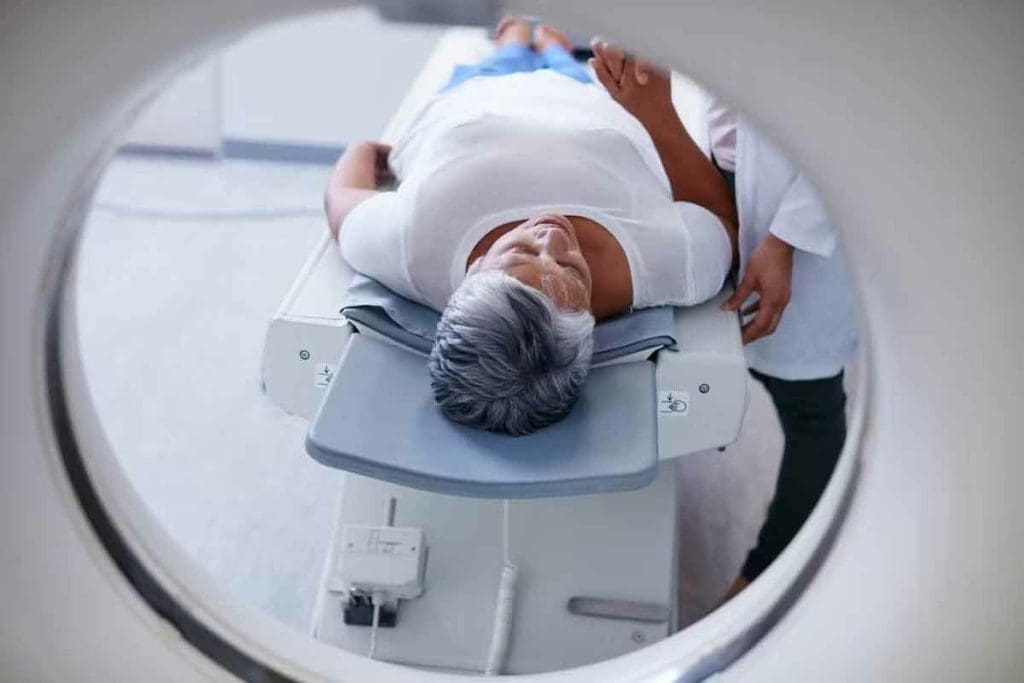
Finding bone cancer early is key to good treatment. Tests like PET scans, MRI, CT scans, and blood tests are important. They help us see how far the disease has spread.
A PET scan uses a special tracer to find fast-growing cells, like cancer cells. It’s great at spotting cancer that has spread to bones, with a success rate of about 93%. For more on diagnosing bone cancer, check out the American Cancer Society website.
MRI and CT scans give clear pictures of tumors and where cancer might be spreading. Blood tests check your overall health and if cancer is getting worse. At Liv Hospital, we use all these tests together to help our patients.
Key Takeaways
- PET scans offer high sensitivity in detecting metastatic bone involvement.
- MRI and CT scans provide detailed images of tumors and where cancer might spread.
- Blood tests help assess overall health and if cancer is getting worse.
- Using all these tests together helps improve patient outcomes.
- Liv Hospital focuses on the patient in diagnosing bone cancer.
Understanding Bone Cancer and Its Detection Challenges
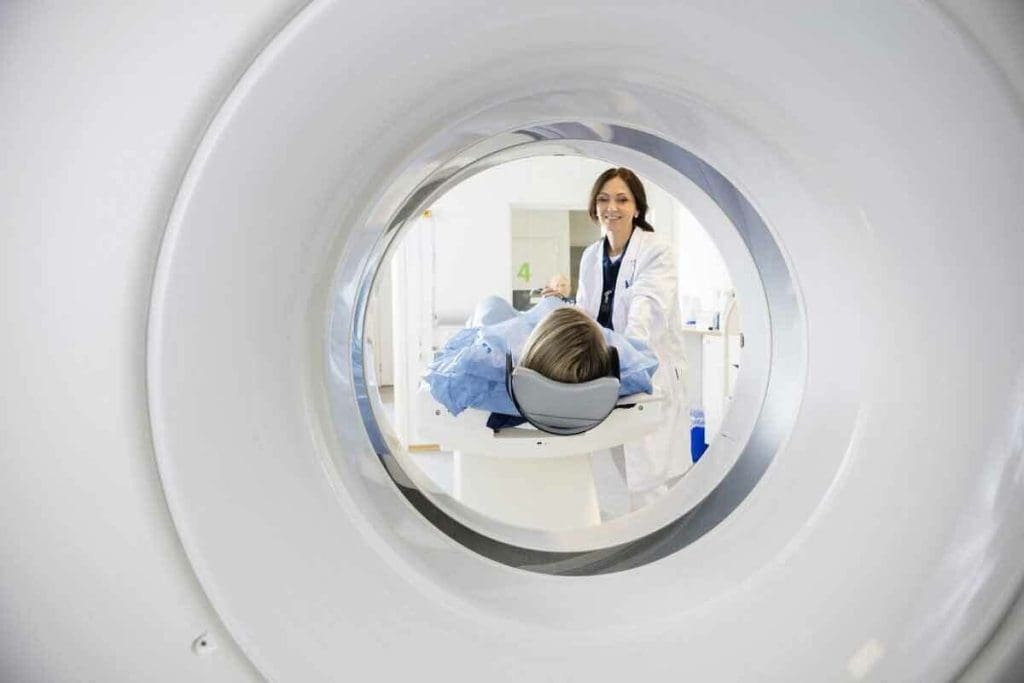
It’s key to understand bone cancer to get a correct diagnosis and treatment. There are two main types: primary bone cancer starts in the bones, and metastatic bone cancer spreads to the bones from other places. Advanced imaging methods, such as PET scans, play a major role in diagnosis ” but can a PET scan detect cancer in bones? Yes, it can help identify cancerous activity and show how far the disease has spread.
Primary vs. Metastatic Bone Cancers
Primary bone cancer is rare and begins in bone cells. It often happens in long bones and the pelvis. Metastatic bone cancer, though, is more common. It happens when cancer from other places, like the breast or lung, reaches the bones.
Early detection is key for both types. It greatly affects treatment success and patient outcomes.
Knowing the difference between primary and metastatic bone cancer is important. Their treatments are different. Primary bone cancer needs a specific plan, while metastatic bone cancer requires a broader approach.
Why Early and Accurate Detection Matters
Finding bone cancer early is vital for better survival rates and treatment results. Early detection means treatments work better, and chances of success go up. Accurate diagnosis also helps avoid unnecessary treatments, improving patients’ lives.
Early detection lets doctors create a timely treatment plan. This can include surgery, chemotherapy, or radiation. The role of early and accurate detection in bone cancer treatment cannot be overstated. It greatly affects patients’ prognosis and quality of life.
The Science Behind PET Scan Technology
PET scans use a special method to find cancer. They look at how cells use energy. This is done with a radioactive drug, called a tracer, that is given to the body.
How PET Scans Work
A PET scan finds the radiation from the tracer in the body. Cancer cells use more energy than normal cells. So, they take in more tracer, making them easy to spot.
Radioactive Tracers and Cancer Cell Metabolism
The main tracer used is Fluorodeoxyglucose (FDG). It’s a sugar molecule with a radioactive part. Cancer cells eat more sugar than normal cells. So, they take in more FDG, helping PET scans find them.
The Imaging Process
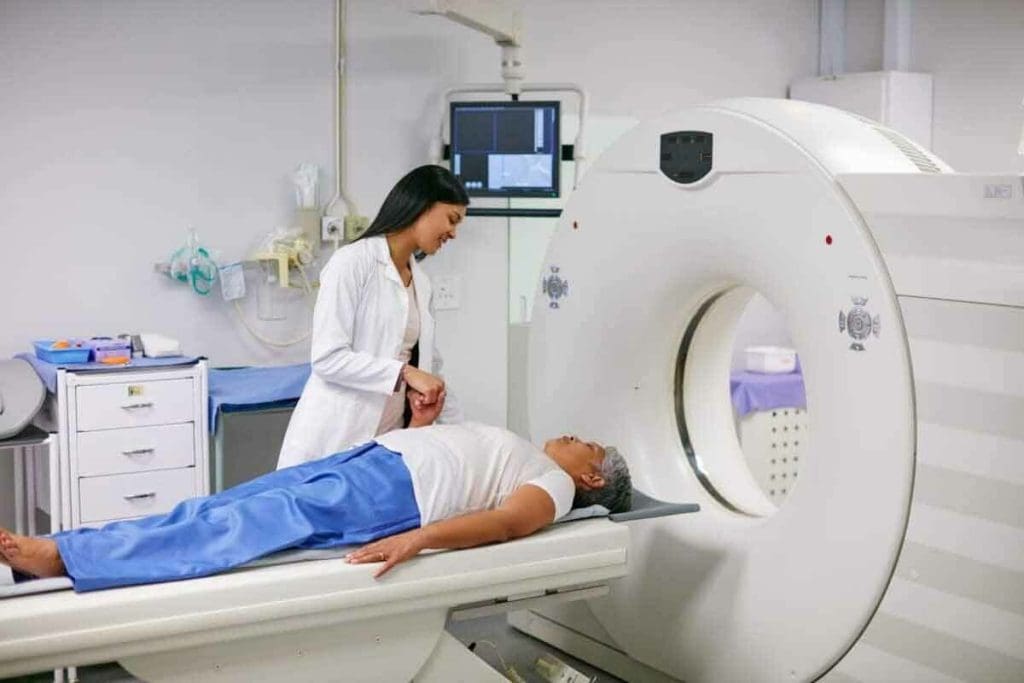
When you get a PET scan, you lie on a table that moves into a big machine. The PET scanner catches the radiation from the tracer. It makes detailed pictures of how your body works.
Doctors then look at these pictures. They find areas where cells are using energy differently. This usually means cancer is there.
| Aspect | Description | Significance |
| Tracer Used | Fluorodeoxyglucose (FDG) | Highlights cancer cells due to their high glucose consumption |
| Detection Mechanism | Radiation emission detection | Allows for precise localization of cancerous tissues |
| Imaging Outcome | Detailed metabolic activity maps | Provides insights into cancer spread and treatment response |
Can a PET Scan Detect Cancer in Bones?
PET scans are key in finding bone cancer. They show high sensitivity for spotting cancer in bones. We’ll look at how well PET scans work for diagnosing bone cancer and what types they detect best.
Sensitivity Rates for Bone Metastases
PET scans are great for checking bone metastases. Studies show they have a sensitivity rate of about 93% for finding cancer in bones. This high rate is important for accurate diagnosis and treatment plans.
Let’s see how PET scans compare:
| Imaging Modality | Sensitivity Rate | Specificity Rate |
| PET Scan | 93% | 95% |
| CT Scan | 70% | 80% |
| MRI | 85% | 90% |
Types of Bone Cancers Best Detected by PET
PET scans can find many types of bone cancers. They’re great for spotting cancer in bones from other cancers like breast, lung, and prostate. They’re good at finding cancer cells because they look at them at the molecular level.
Limitations for Certain Bone Cancer Subtypes
Even though PET scans are very good, they’re not perfect for all bone cancers. They might not work as well for some primary bone tumors that don’t show up much on scans. We need to know these limits when we look at PET scan results.
In summary, PET scans are very useful in finding and managing bone cancer. They have high sensitivity rates for cancer in bones. Knowing their strengths and weaknesses helps doctors use them wisely in treatment.
PET/CT Combination: Enhanced Diagnostic Power
PET/CT scans are better at finding bone cancer. They mix PET’s metabolic details with CT’s body structure images. This gives doctors a full view of the disease.
Why Combining PET with CT Improves Accuracy
PET and CT scans together are more accurate. PET scans show where cancer cells are active. CT scans give clear body pictures. This combo helps pinpoint bone cancer’s location and size.
This team-up also spots bone cancer better. It helps doctors plan the best treatment by knowing how far the cancer has spread.
Clinical Applications for Bone Cancer Detection
PET/CT scans are key in finding bone cancer. They’re great for:
- Finding primary bone cancers and metastases
- Accurate bone cancer staging
- Tracking how well treatments work
- Spotting cancer coming back early
These scans give doctors a clear view of the disease. This helps them make better care plans for patients.
Case Studies and Success Rates
Many studies show PET/CT’s power in finding bone cancer. For example, a Journal of Nuclear Medicine study found PET/CT beats PET or CT alone in spotting bone metastases.
PET/CT scans are very good at finding bone cancer. They have success rates over 90%. This makes them a top choice for diagnosing bone cancer.
In short, PET/CT scans are a big step forward in diagnosing bone cancer. They offer both metabolic and structural views. This makes them essential for doctors.
MRI Technology for Bone Cancer Detection
MRI is very good at showing changes in bone marrow linked to bone cancer. MRI technology uses magnetism and radio waves to create detailed pictures inside the body. These pictures are key for spotting bone cancer in soft tissues and bone marrow.
Bone Marrow Changes Visualization
MRI can see changes in bone marrow, which is where bone cancer often starts. It helps find bone cancer early. MRI’s clear images let doctors see how much marrow is involved, which helps in planning treatment.
Strengths in Soft Tissue and Marrow Evaluation
MRI is great at looking at soft tissues and bone marrow. This is important for bone cancer because tumors can spread to both. MRI’s sensitivity to soft tissue changes helps find out how far the tumor has spread. This is key for choosing the right treatment.
When MRI Is the Preferred Diagnostic Tool
There are times when MRI is the best choice for diagnosing bone cancer. For example, when there’s a worry about spinal cord compression or when soft tissue involvement needs a close look. MRI is also good for tracking how bone tumors react to treatment. It shows changes in tumor size and marrow over time.
CT Scans in Bone Cancer Diagnosis
CT scans have changed how we find and understand bone problems. They use X-rays and computers to show detailed pictures of inside the body. This is great for looking at bone structure.
What CT Scans Reveal About Bone Structure
CT scans show detailed bone pictures. Doctors use these to spot changes or damage. This is key for finding bone cancer, as it lets them check bone health.
Detecting Cortical Bone Destruction
CT scans are good at finding damage in bone. This is important for aggressive tumors. They help doctors see how much damage there is and plan treatment.
Limitations Compared to Other Imaging Methods
CT scans are great for bones but not as good for soft tissues as MRI. They also use radiation, which is a concern for some patients. Using CT with other scans like PET can help get a clearer picture.
| Imaging Modality | Bone Structure Detail | Soft Tissue Evaluation | Radiation Exposure |
| CT Scan | Excellent | Fair | Yes |
| MRI | Fair | Excellent | No |
| PET Scan | Poor | Excellent (with tracer) | Yes (due to tracer) |
For more info on bone cancer imaging, check the CMS Medicare Coverage Database.
Bone Scans and Nuclear Imaging Techniques
Nuclear imaging, including bone scans, is key in diagnosing and managing bone cancer. These methods help us understand how far the disease has spread and how it’s progressing.
Traditional Bone Scintigraphy
Traditional bone scintigraphy, or a bone scan, is a nuclear imaging technique. It detects bone metastases. A small amount of radioactive material is injected into the bloodstream. This material goes to areas of bone activity.
Using a gamma camera, we take images of the skeleton. These images show areas of high bone metabolism, often signs of cancer.
Bone scintigraphy is great for checking the whole skeleton for metastatic disease. It gives a full-body image. This helps us find multiple bone sites involved at once.
Comparison with PET for Bone Metastases
Bone scintigraphy and PET scans both detect bone metastases. But they work in different ways. PET scans give higher resolution and detailed metabolic activity of cancer cells. Yet, bone scintigraphy is more available and often cheaper.
We might use both methods together. For example, a bone scan gives a broad view of the skeleton. A PET scan then focuses on specific areas of concern.
Complementary Use of Multiple Nuclear Imaging Methods
Using multiple nuclear imaging methods together improves diagnosis and understanding of bone cancer. By combining techniques like bone scintigraphy and PET scans, we get a fuller picture of the disease.
This approach helps in planning and monitoring treatment better. It also lets us see how well treatment is working and catch any recurrence early.
X-rays in Initial Bone Cancer Screening
X-rays are often used in the first step to check for bone cancer. They can show important changes in bone structure. This makes them a key tool in finding possible problems early on.
Can a Knee X-ray Show Cancer?
A knee X-ray might show signs of cancer, like aggressive lesions. But, it’s not enough to say for sure if you have cancer. X-rays can show changes in bone, like breakdown or new growth, which could mean cancer. Yet, more tests are needed to be sure.
Characteristic Findings of Bone Malignancies
Bone cancers often have specific signs on X-rays. These include:
- Destruction of bone tissue
- Abnormal new bone formation
- Cortical bone destruction
- Soft tissue masses
Seeing these signs means we need to look closer with more detailed tests. This helps us understand if you have bone cancer.
When to Proceed to Advanced Imaging
If an X-ray shows something odd, we usually move to more detailed tests. This could be MRI, CT, or PET scans. We pick the next step based on what the X-ray shows and how you’re feeling.
| Imaging Technique | Primary Use in Bone Cancer | Advantages |
| X-ray | Initial screening | Quick, widely available, low cost |
| MRI | Soft tissue evaluation | High sensitivity for soft tissue and marrow changes |
| CT | Cortical bone assessment | Detailed bone structure evaluation |
| PET | Metabolic activity assessment | High sensitivity for detecting metastases and assessing metabolic activity |
A top oncologist says, “X-rays are great for starting, but we often use many tests to really know what’s going on with bone cancer.”
“Using X-rays with other tests helps us find and treat bone cancer better.”
” Expert Opinion
Does Bone Cancer Show Up in Blood Work?
Imaging tests are key for finding bone cancer. But, blood tests also give important clues. They can show if bone activity is off, hinting at cancer.
Alkaline Phosphatase and Lactate Dehydrogenase Tests
Alkaline phosphatase (ALP) and lactate dehydrogenase (LDH) blood tests are important. ALP levels rise in bone cells, which can mean bone growth or damage. This might point to bone cancer. LDH levels also go up in some cancers, including bone cancer.
These tests aren’t just for bone cancer. They can also show up in other health issues. But, they’re useful when looked at with other test results.
Tumor Markers for Specific Bone Cancers
Some bone cancers have tumor markers in blood tests. For example, certain osteosarcoma types show specific proteins. These markers aren’t enough to say you have cancer. But, they help track the disease and how it’s doing with treatment.
Why Blood Tests Alone Are Insufficient
Blood tests are just one tool for finding bone cancer. They can’t say for sure if you have it because many things can change blood test results. Tests like PET scans, MRIs, and CT scans are key. They let doctors see the tumor and its details.
The table below shows how different blood tests help in diagnosing bone cancer:
| Blood Test | Relevance to Bone Cancer | Limitations |
| Alkaline Phosphatase (ALP) | Elevated levels can indicate bone growth or damage | Not specific to bone cancer; can be elevated in other bone conditions |
| Lactate Dehydrogenase (LDH) | Elevated levels can be associated with various cancers | Not specific to bone cancer; can be elevated in many other conditions |
| Tumor Markers | Specific markers can be associated with certain types of bone cancer | Not diagnostic on their own; used for monitoring disease progression and treatment response |
In summary, blood tests aren’t enough to say you have bone cancer. But, they help a lot. A full check-up with blood tests, imaging, and doctor’s thoughts is needed. This way, doctors can really know what’s going on and how to treat it.
Comparative Analysis: Sensitivity and Specificity of All Methods
Finding bone cancer is a tough task that needs many imaging tests. Each test has its own level of sensitivity and specificity. We’ll look at how well different tests work for finding different bone cancers.
Detection Rates for Different Bone Cancer Types
Each imaging test catches different bone cancers at different rates. For example, PET scans are really good at finding bone metastases, with a success rate of 93% in some studies 1. MRI is great at seeing changes in bone marrow and soft tissues.
When we compare how well tests find primary and metastatic bone cancers, we see some differences. CT scans are better at spotting damage in the outer bone layer. MRI is more sensitive to changes in the bone marrow.
| Imaging Modality | Primary Bone Cancer Detection Rate | Metastatic Bone Cancer Detection Rate |
| PET Scan | 85% | 93% |
| MRI | 90% | 80% |
| CT Scan | 80% | 70% |
False Positive and False Negative Considerations
False positives and negatives are big worries in diagnosing bone cancer. False positives can cause unnecessary worry and more tests. False negatives can mean a late start to treatment. The accuracy of tests varies, with PET/CT being very specific for bone metastases.
Cost-Effectiveness Comparison
How much each test costs is also important. While PET scans and PET/CT are very effective, they are pricier. A cost analysis shows that the right test depends on the situation and what the patient needs.
Patient Experience and Preparation for Diagnostic Tests
Knowing what happens during tests can make you feel less anxious. We want to help you feel comfortable and calm during these important tests.
What to Expect During a PET Scan
A PET scan is a detailed test that finds many health issues, like bone cancer. You’ll lie on a table that moves into a big scanner. Before starting, you get a small, radioactive tracer that shows active areas in your body.
“The PET scan is painless, but lying for a long time might be uncomfortable,” says a leading radiologist. “It’s important to listen to your healthcare team to get the best results.”
Preparing for MRI and CT Examinations
Getting ready is important for MRI and CT scans. For an MRI, take off metal items like jewelry and glasses. You’ll lie on a table that moves into the MRI machine.
- For CT scans, you might need to not eat for a few hours or drink a special liquid.
- Tell your doctor about any allergies or health issues.
- Follow your healthcare team’s instructions closely for a smooth test.
Managing Anxiety and Discomfort
It’s normal to feel nervous before tests. Here are some ways to help:
- Breathing exercises: Deep, slow breaths can calm you down.
- Support system: Having a friend or family member with you can help.
- Ask questions: Knowing what’s happening can reduce your worries.
Being prepared and informed can reduce discomfort. Our team is here to support you every step of the way.
Conclusion: Choosing the Right Diagnostic Approach
Choosing the right way to diagnose bone cancer is key. We’ve looked at different imaging tests like PET scans, MRI, CT scans, and bone scans. Each has its own strengths and weaknesses.
The right test depends on several things. This includes the type of bone cancer, the patient’s health, and what imaging options are available. Knowing how each test works helps us pick the best one for each patient.
PET scans are great at finding bone metastases. MRI shows soft tissue and bone marrow in detail. CT scans help see bone structure, and bone scans spot areas of high activity.
By using these tests together and thinking about each patient’s needs, we can get better at diagnosing. This leads to more effective treatments. As medical technology gets better, picking the right diagnostic approach will keep being vital for good care.
FAQ
Can a PET scan detect bone cancer?
Yes, PET scans are very good at finding bone cancer. They are most useful for spotting cancer that has spread to the bones, with a success rate of about 93%.
How does a PET scan detect bone cancer?
PET scans use special tracers that light up cancer cells. This lets doctors see where the cancer is by looking at areas with high activity.
What is the difference between primary and metastatic bone cancer?
Primary bone cancer starts in the bone itself. Metastatic bone cancer comes from another part of the body and spreads to the bone. The way doctors find and treat it can differ.
Can an MRI detect bone cancer?
Yes, MRI is great at finding bone cancer. It’s good at showing changes in the bone marrow and the soft tissues around the bone.
How does a CT scan contribute to bone cancer diagnosis?
CT scans give detailed views of the bone. They can spot bone cancer by looking for damage to the bone’s outer layer. But, they might not catch everything that other tests can.
Can a knee X-ray show cancer?
X-rays can show signs of bone cancer. But, they might miss it early on. For a sure diagnosis, you often need more advanced tests.
Does bone cancer show up in blood work?
Some blood tests can hint at bone cancer. But, they’re not enough to say for sure. You need imaging tests and a doctor’s check-up too.
What is the role of bone scintigraphy in detecting bone metastases?
Bone scintigraphy is used to find bone metastases. But, PET scans are more accurate. Doctors might use both for a complete diagnosis.
How do PET/CT scans improve diagnostic accuracy?
PET/CT scans combine two tests. PET shows how cells are working, and CT shows the body’s structure. This combo helps doctors get a clearer picture.
What should I expect during a PET scan?
During a PET scan, you’ll get a tracer and then be scanned. It’s usually painless, but you might need to stay very quiet for a bit.
How can I prepare for an MRI or CT examination?
To prepare, remove metal items and wear comfy clothes. Follow your doctor’s instructions. Use relaxation techniques to manage any anxiety or discomfort.
Are there any limitations to using PET scans for bone cancer detection?
PET scans are very good, but they might not catch all types of bone cancer. Always talk to your doctor about the best test for you.
Can blood tests alone diagnose bone cancer?
No, blood tests can’t confirm bone cancer on their own. You need imaging tests like PET scans, MRI, and CT scans for a sure diagnosis.
What are the benefits of combining multiple imaging methods?
Using tests like PET/CT gives a full picture of bone cancer. This helps doctors make better treatment plans and improves accuracy.
Will bone cancer show up in a blood test?
Some blood tests might suggest bone cancer. But, they’re not enough to be sure. You need imaging tests and a doctor’s evaluation for a diagnosis.
Can a CT scan detect bone cancer?
Yes, CT scans can spot bone cancer by showing changes in the bone. But, they might not be as good as other tests for all types of bone cancer.
- Akashi, T., Osada, S., Shigematsu, H., et al. (2021). Diagnostic value of ¹â¸F-FDG PET/CT compared to bone scintigraphy, CT, and PET alone in detection of bone metastases. Journal of Nuclear Medicine / Patient-based & Segment-based analysis, (n.d.). https://pubmed.ncbi.nlm.nih.gov/23886160/
- Alomari, A. I., & Abdelsalam, S. (2023). Comparison of PET/CT and MRI in the diagnosis of bone metastasis: a review. Frontiers in Oncology. https://www.frontiersin.org/articles/10.3389/fonc.2021.736654/full