
Feeling pain in your ears and sinuses can be confusing and uncomfortable. At Liv Hospital, we know that ear and sinus problems are complex and often not well understood. The eustachian tubes, which connect the middle ear to the sinuses, are key. They help balance pressure and drain fluid.
Discover the link between sinus infection symptoms and ear infections. Our guide explores the common causes and how to manage both conditions.
If you have a sinus issue, it can cause ear pain. This is because the eustachian tube gets blocked. This tube is important for ear health. It lets air in, balances pressure, and drains extra fluid.
Knowing how ear and sinus problems are linked is important. It helps us diagnose and treat them better. We will look into how sinus problems affect ear health and what it means for treatment.
Key Takeaways
- The eustachian tubes connect the middle ear to the sinuses, playing a vital role in ear health.
- Sinus issues can cause ear pain and may lead to ear infections.
- Understanding the link between ear and sinus health is essential for proper diagnosis.
- Effective treatment relies on accurately identifying the cause of the problem.
- Liv Hospital is dedicated to providing top-notch healthcare with full support.
The Interconnected Nature of Ear and Sinus Infections

Ear and sinus infections are linked by the eustachian tubes. These tubes connect the middle ear to the back of the nose and throat. They play a key role in this connection.
Understanding the Ear-Sinus Connection
The eustachian tubes help regulate air pressure in the ears and sinuses. When sinuses get inflamed and congested, these tubes can get blocked. This blockage can cause fluid to back up in the middle ear, creating a perfect spot for bacteria or viruses to grow. This can lead to an ear infection.
The Role of Eustachian Tubes: These tubes open and close to let air in and out of the middle ear. When they work right, they keep air pressure equal on both sides of the eardrum. But if they get blocked, it can cause ear infection symptoms.
Common Pathogens and Risk Factors
Ear and sinus infections can be caused by viruses or bacteria. The same germs that cause sinusitis can also cause ear infections, when the eustachian tubes are blocked. Common risk factors include:
- Cold or flu
- Allergies
- Anatomical issues, such as a deviated septum
- Exposure to smoke or pollutants
Knowing these risk factors can help prevent infections from spreading between the ears and sinuses.
| Condition | Common Pathogens | Risk Factors |
| Ear Infections | Bacteria (e.g., Streptococcus pneumoniae), Viruses (e.g., Respiratory Syncytial Virus) | Cold or flu, allergies, anatomical issues |
| Sinus Infections | Bacteria (e.g., Haemophilus influenzae), Viruses (e.g., Rhinovirus) | Cold or flu, allergies, exposure to smoke or pollutants |
Sinus Infection Symptoms Ear Problems Can Trigger
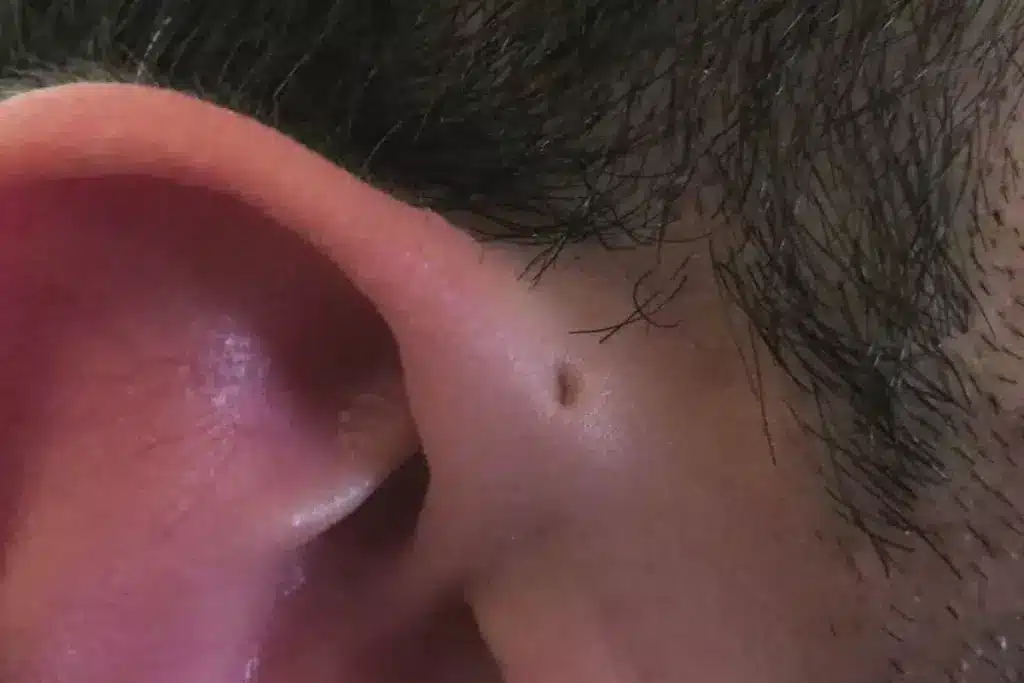
Ear infections can cause symptoms that look like sinus infections. This makes it hard to tell which one you have. The ear and sinus systems are connected, so an infection in one can spread to the other.
How Ear Infections Mimic Sinus Conditions
Ear infections can have symptoms that look like sinus infections. For example, ear pain can be mistaken for facial pain from sinusitis. “The ear and sinus are closely linked anatomically, so it’s not surprising that infections can cause similar symptoms,” says Medical Expert, an ENT specialist.
Some common symptoms of ear infections that might be confused with sinus infection symptoms include:
- Ear pain or discomfort
- Feeling of fullness or pressure in the ear
- Hearing loss or muffled hearing
- Fever
These symptoms can be confusing when they happen together. It’s hard to tell if the problem is in the ears or sinuses.
When Infections Spread Between Ears and Sinuses
The Eustachian tube connects the middle ear to the back of the nose and throat. It plays a big role in spreading infections between the ears and sinuses. When this tube gets blocked, it can cause ear pain and lead to a secondary ear infection.
Key factors that contribute to the spread of infections include:
- Anatomical proximity between the ears and sinuses
- Shared pathogens, such as bacteria and viruses
- Compromised immune systems
As Medical Expert, “Understanding the connection between ear and sinus infections is key for proper diagnosis and treatment. When one system is affected, it’s important to think about how it might impact the other.”
Conclusion
Treating ear pain from a sinus infection starts with fixing the root cause. Home remedies like warm compresses, decongestants, and steam therapy can ease ear pain. They also help with symptoms of sinus or ear infections.
It’s key to know ear infections and sinus pressure are often linked. An ear infection might be caused by sinus pressure, and vice versa. Knowing the differences and similarities helps manage symptoms better.
Understanding the connection between sinus and ear infections is the first step to treatment. If symptoms don’t get better or get worse, seeing a doctor is important. Sometimes, an ear infection can lead to a green discharge, showing a bacterial infection.
We stress the need to see a doctor for persistent or severe symptoms. This way, you can get the right diagnosis and treatment. It helps ease the discomfort from sinus or ear infections.
FAQ:
Can a sinus infection cause ear pain?
Yes, sinus infections can cause ear pain due to pressure buildup and Eustachian tube dysfunction.
How are ear infections and sinus infections related?
Both can involve inflammation and fluid buildup in connected airways, with sinus congestion sometimes leading to middle ear problems.
Can an ear infection cause sinus infection symptoms?
Yes, an ear infection can occasionally contribute to congestion, pressure, or discomfort similar to sinus infection symptoms.
What are the symptoms of a sinus infection that affect the ears?
Symptoms include ear fullness, pressure, muffled hearing, pain, and sometimes popping or clicking sounds.
How do you know if you have a sinus infection or an ear infection?
Sinus infections typically cause facial pressure, congestion, and nasal discharge, while ear infections often cause localized ear pain, fluid, or hearing changes.
Can a blocked eustachian tube cause ear pain?
Yes, a blocked Eustachian tube can create pressure, pain, and muffled hearing in the affected ear.
What are the common pathogens that cause ear and sinus infections?
Common pathogens include Streptococcus pneumoniae, Haemophilus influenzae, Moraxella catarrhalis, and various respiratory viruses.
Can an ear infection cause a stuffy nose?
Yes, especially if the infection affects the middle ear or Eustachian tube, leading to congestion and nasal symptoms.
References:
National Center for Biotechnology Information. Evidence-Based Medical Insight. Retrieved from https://www.ncbi.nlm.nih.gov/books/NBK532284/