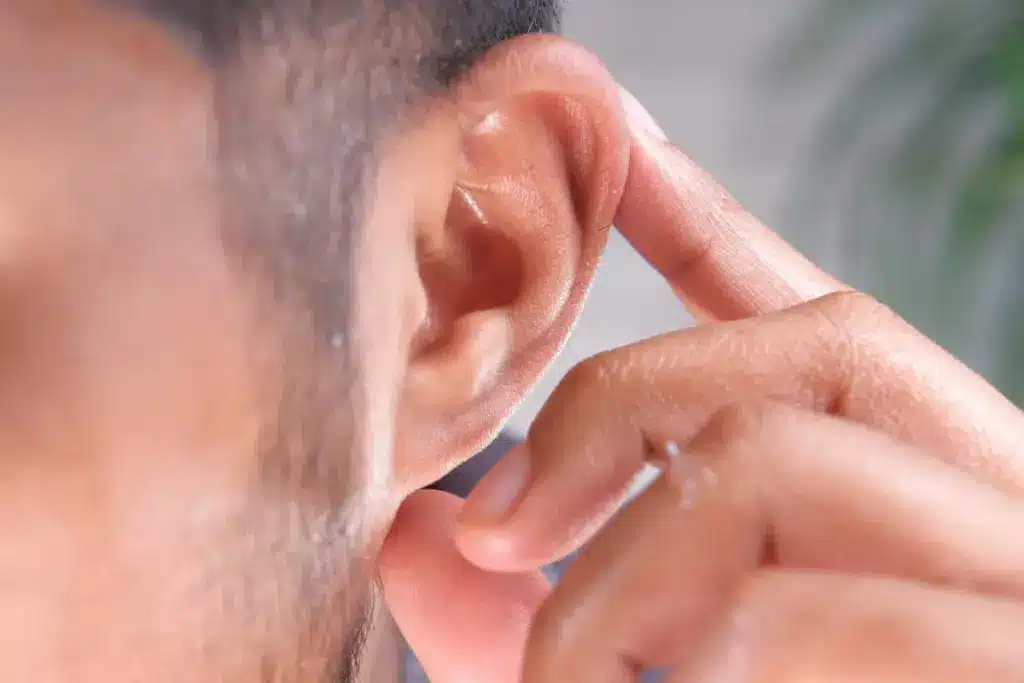
Ear infections are a big health worry. They can make you hear ringing, buzzing, or roaring sounds in your ears. Studies show that having ear infections often can lead to long-term tinnitus. It’s important to know how ear infections and tinnitus are linked. This way, you’ll know what to do and when to get help.
Doctors say ear infections can cause tinnitus because of inflammation and damage to the inner ear. Fixing the infection usually makes the tinnitus go away. For more details, check out Healthline’s article on tinnitus and ear.
Key Takeaways
- Ear infections can cause tinnitus due to inner ear inflammation and damage.
- Treating the underlying infection often resolves tinnitus.
- Recurring ear infections increase the risk of chronic tinnitus.
- Tinnitus from mild ear infections usually resolves within a few weeks.
- Severe or untreated infections can lead to permanent tinnitus and hearing loss.
Understanding the Connection Between Ear Infections and Tinnitus

Ear infections and tinnitus are linked through the ear’s response to infection. We’ll look at how infections can cause tinnitus and its effects.
What is Tinnitus and How Does it Manifest?
Tinnitus is hearing sounds when there’s no real noise. It can sound like ringing, buzzing, or hissing. It can last a short time or be ongoing, affecting people differently.
The Relationship Between Ear Infections and Auditory Symptoms
Ear infections can lead to tinnitus because of the damage they cause. They can harm the middle or inner ear, disrupting sound processing and causing tinnitus.
Here’s how different ear infections relate to tinnitus risk:
|
Type of Ear Infection |
Description |
Tinnitus Risk |
|---|---|---|
|
Otitis Media |
Infection of the middle ear |
Moderate |
|
Otitis Interna |
Infection of the inner ear |
High |
|
Otitis Externa |
Infection of the outer ear canal |
Low to Moderate |
Tinnitus can be a temporary side effect of an ear infection. But, how long it lasts depends on the infection’s severity. Sometimes, tinnitus can become a long-term issue that needs ongoing care.
It’s important to understand the connection between ear infections and tinnitus. Knowing the causes and risks helps people get the right medical help and support.
Ringing in Ear After Ear Infection: Causes and Mechanisms

Ear infections and tinnitus are linked through inflammation and damage to the inner ear. When an ear infection happens, it can cause tinnitus or ringing in the ear. Knowing how this happens is key to treating it.
Inflammation and Damage to Inner Ear Structures
Ear infections can cause inflammation in the middle ear. This inflammation can spread to the inner ear, harming the structures that help us hear and balance. This harm can damage the hair cells in the cochlea, causing tinnitus. The damage’s extent affects how long and how bad the tinnitus is.
Key factors contributing to tinnitus after an ear infection include:
- Inflammation of the middle and inner ear
- Damage to the hair cells in the cochlea
- Eustachian tube dysfunction
Types of Ear Infections That Commonly Cause Tinnitus
Ear infections like otitis media and otitis externa can cause tinnitus. Otitis media, or middle ear infection, is a common cause because of inflammation and fluid buildup. Otitis externa, or outer ear infection, can also cause tinnitus if it spreads to the ear canal or affects the eardrum.
|
Type of Ear Infection |
Common Symptoms |
Association with Tinnitus |
|---|---|---|
|
Otitis Media |
Ear pain, fever, hearing loss |
High |
|
Otitis Externa |
Ear pain, itching, discharge |
Moderate |
|
Labyrinthitis |
Vertigo, hearing loss, tinnitus |
High |
Risk Factors for Developing Post-Infection Tinnitus
Some people are more likely to get tinnitus after an ear infection. This includes those with a history of ear infections, hearing loss, or loud noise exposure. Knowing these risk factors helps in preventing and managing tinnitus.
It’s essential for individuals experiencing persistent tinnitus after an ear infection to seek medical attention to rule out any underlying conditions that may require treatment.
Duration and Severity of Infection-Related Tinnitus
The time tinnitus lasts after an ear infection depends on the infection’s severity and treatment success. We will look at what affects tinnitus duration and when it might become long-term.
How Long Does Tinnitus Last After an Ear Infection?
Tinnitus from an ear infection can last from a few days to months. Usually, tinnitus goes away once the infection is treated. But, the time it takes can differ based on the infection’s severity and the person’s health.
It’s key to treat the ear infection well to get rid of tinnitus. Doctors might give antibiotics or other treatments. They might also suggest therapies to help with tinnitus symptoms.
Factors That Influence Recovery Time
Several things can affect how long tinnitus lasts after an ear infection. These include:
- The severity of the ear infection
- The effectiveness of the treatment
- The individual’s overall health and immune response
- Any underlying conditions that may affect hearing or ear health
Knowing these factors can help people manage their expectations. It also helps them work with their doctors to find the best treatment.
When Temporary Tinnitus Becomes Chronic
In some cases, tinnitus can last long after the ear infection is treated. Chronic tinnitus is hard to manage. But, there are treatments like sound therapy and cognitive behavioral therapy. Sometimes, medical treatments are needed too.
It’s important for people with long-lasting tinnitus to see a doctor to find the cause and get a treatment plan. By tackling the root cause and trying different treatments, people can find relief and improve their life quality.
Conclusion: Managing and Treating Tinnitus from Ear Infections
To manage and treat tinnitus caused by ear infections, we must address the underlying infection. Treating the infection with antibiotics or antifungal medications can help. This reduces inflammation and ear pressure.
Sound therapy, including white noise machines and hearing aids, may also be beneficial. For those experiencing persistent tinnitus, consulting a hearing care professional or ENT specialist can provide personalized treatment options and support.
By understanding the connection between ear infections and tinnitus, individuals can take the first step towards alleviating their symptoms. This improves their quality of life.
FAQ:
Can an ear infection cause tinnitus?
Yes. Ear infections can cause tinnitus (ringing, buzzing, or hissing in the ear) due to fluid buildup, inflammation, or pressure changes in the middle or inner ear.
How long does tinnitus last after an ear infection?
Tinnitus usually improves within a few days to a couple of weeks after the infection resolves. Persistent ringing beyond this period should be evaluated by a doctor.
What types of ear infections commonly cause tinnitus?
Middle ear infections (otitis media) and inner ear infections (labyrinthitis) are the most common types associated with tinnitus, as they affect the structures involved in hearing.
Can tinnitus be caused by a cold or flu-related ear infection?
Yes. Viral infections, including those from colds or flu, can lead to eustachian tube dysfunction or fluid buildup, which may trigger temporary tinnitus.
How can I stop ringing in my ears from an ear infection?
Treating the underlying infection is key. Additional steps include: avoiding loud noises, reducing stress, using background noise to mask ringing, and following your doctor’s advice.
Is tinnitus a permanent condition after an ear infection?
Most tinnitus after an ear infection is temporary. Permanent tinnitus is rare and usually occurs only if there is severe or repeated damage to the inner ear or auditory nerve.
What are the risk factors for developing post-infection tinnitus?
Risk factors include recurrent ear infections, severe infections, older age, pre-existing hearing loss, exposure to loud noise, and inner ear damage.
Can ear infections cause permanent tinnitus or hearing loss?
While rare, severe or untreated infections—especially involving the inner ear—can lead to permanent tinnitus or hearing loss. Prompt treatment minimizes this risk.
References:
National Center for Biotechnology Information. Evidence-Based Medical Insight. Retrieved from https://pmc.ncbi.nlm.nih.gov/articles/PMC11528090/