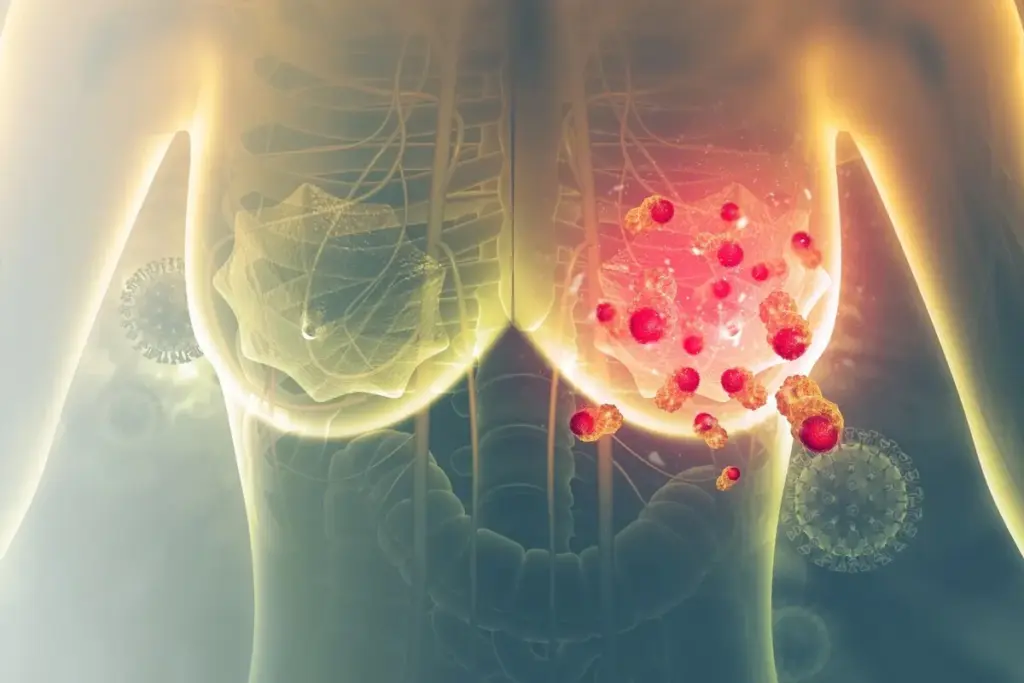
Finding a lump in your breast can be scary. You might wonder, can breast cysts turn into cancer? We want to tell you that these fluid-filled sacs are not dangerous.
Most women between 35 and 50 find these common lumps. While they can feel firm, breast cysts do not turn into deadly tumors. Knowing the cancer risk of different lumps is key for your peace of mind.
Telling cysts vs cancer apart needs a doctor’s skill and advanced imaging. At Liv Hospital, we give clear answers. We check if you have a breast cancer cyst or tumor. Our team offers medical skill and care to help you through your tests.
Key Takeaways
- Simple breast cysts are benign and carry no risk of becoming malignant.
- These fluid-filled sacs are very common in women aged 35 to 50.
- Most findings are discovered through routine screenings or self-exams.
- Professional imaging is the only way to confirm a diagnosis.
- Liv Hospital provides advanced diagnostic care for international patients.
- Understanding the nature of your lump reduces unnecessary anxiety.
The Critical Truth: Do Breast Cysts Turn Into Cancer?

It’s important to know if breast cysts can turn into cancer. This knowledge helps reduce fear and ensures we get the right medical care. We’ll look into the facts about breast cysts and cancer, giving you clear answers.
Simple Breast Cysts Do Not Transform Into Cancer
Simple breast cysts are fluid-filled sacs in the breast that are usually not harmful. Studies show that simple breast cysts do not turn into cancer. They are common and can be uncomfortable, but they don’t raise your cancer risk.
Understanding the Difference Between Transformation and Risk Association
It’s key to know the difference between cysts turning into cancer and the link between cysts and cancer risk. Simple cysts themselves don’t become cancerous. But, having certain types of cysts might be linked to other factors that affect cancer risk.
Research shows women with palpable cysts might have a slightly different risk profile than those without. But, this doesn’t mean the cysts are precancerous.
The Nuanced Relationship: Increased Cancer Incidence Rates
Studies found women with palpable cysts have a higher breast cancer rate than the general population. But, this doesn’t mean the cysts are turning into cancer. It shows a complex mix of factors that might lead to cysts and cancer risk.
To grasp this better, let’s look at the data:
| Study Group | Breast Cancer Incidence Rate | Relative Risk |
| Women with Palpable Breast Cysts | 120 per 100,000 | 1.2 |
| General Population | 100 per 100,000 | 1.0 |
This table shows the complex link between breast cysts and cancer, stressing the need to understand individual risks.
What Are Breast Cysts and How Common Are They?
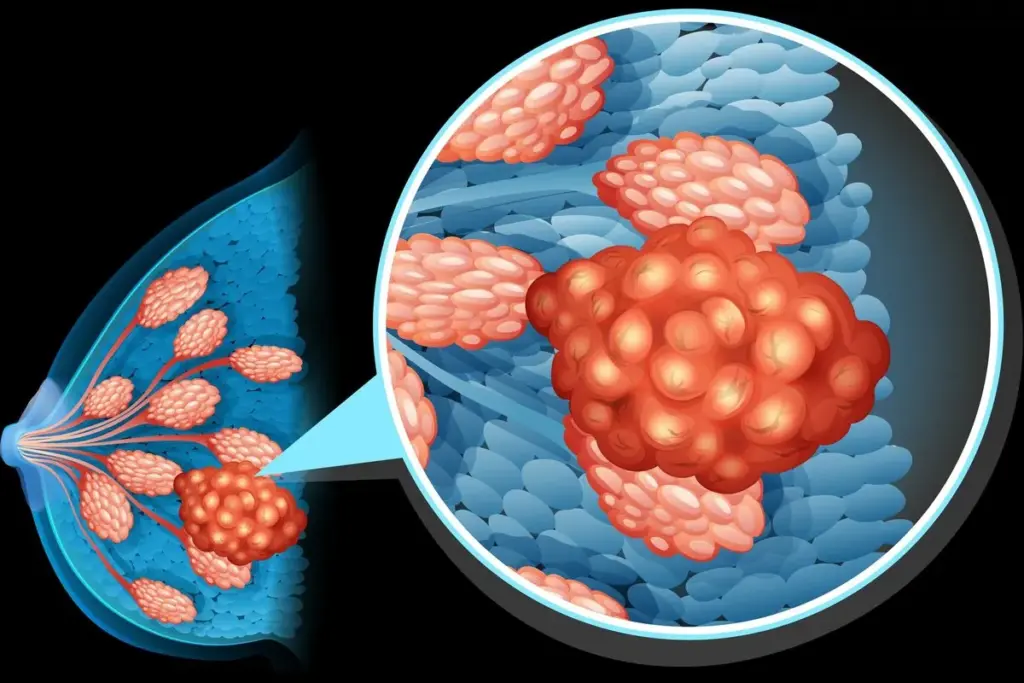
Breast cysts are fluid-filled sacs in the breast tissue. Many women get them. They are not cancerous and can be found during exams or ultrasound.
Defining Breast Cysts: Fluid-Filled Sacs in Breast Tissue
Breast cysts are filled with fluid and have a thin wall. They can be different sizes and shapes. The presence of breast cysts is not indicative of cancer. But, they can hurt, mainly if they’re big.
We use ultrasound to find out if they’re cysts or tumors. This method is very good at telling the difference.
Who Develops Breast Cysts Most Frequently
Breast cysts are most common in premenopausal women, between 40 and 50 years old. Hormones change during the menstrual cycle, which can make cysts grow or shrink.
The table below shows who usually gets breast cysts:
| Demographic Characteristic | Association with Breast Cysts |
| Age | Premenopausal women, typically 40-50 years old |
| Hormonal Status | Influenced by hormonal fluctuations during menstrual cycle |
| Menopausal Status | More common in premenopausal women |
Why Breast Cysts Are a Leading Cause of Breast Clinic Referrals
Breast cysts often lead to visits to breast clinics. This is because they are common and need to be checked against tumors. Accurate diagnosis is key to calm patients and help them get the right care.
We use exams, imaging like ultrasound, and sometimes aspiration or biopsy to handle breast cysts well.
Does Cyst Goes Away on Its Own? Natural Resolution and Treatment Options
Many women with breast cysts wonder if they will go away by themselves. We’ll look into how often they do and what affects their disappearance.
The 70 Percent Rule: How Often Cysts Resolve Without Treatment
About 70% of breast cysts go away without treatment. This news is comforting for many women with these sacs. Their disappearance often ties to hormonal changes during the menstrual cycle.
Factors That Influence Whether a Cyst Will Disappear Naturally
Several things can affect if a cyst will go away by itself. Hormonal changes are a big factor, as shifts in estrogen and progesterone can make cysts shrink or go away. Other factors include the cyst’s size and the person’s overall health.
When Cyst Aspiration or Other Interventions Are Recommended
Even though many cysts go away by themselves, sometimes medical help is needed. Cyst aspiration, where the fluid is drained, is often suggested for bigger cysts or those causing pain. The choice to drain a cyst depends on the patient’s symptoms and medical history.
How to Tell the Difference: Breast Cysts vs Cancer
It’s important to know the difference between breast cysts and cancer. This helps get the right treatment. We’ll look at how they feel, the tests used to find them, and the risks involved.
Physical Characteristics That Distinguish Cysts from Tumors
Breast cysts and tumors feel different. Breast cysts are smooth and soft, like a fluid-filled sac. Tumors are hard and have uneven edges. But, not all hard lumps are cancer, and not all soft lumps are cysts. A doctor’s check is key to tell them apart.
Imaging and Diagnostic Methods: Ultrasound and Other Tools
Imaging tests are key to tell cysts from tumors. Ultrasound is a main tool for this. It shows if a lump is a fluid-filled cyst or a solid tumor. Mammography and MRI are also used, based on the patient’s situation and risk. Sometimes, a biopsy is needed for a clear diagnosis.
Understanding Risk Factors: Why Younger Women Under 45 Need Special Attention
Even though breast cancer is rare in young women, some risks increase its chance. Women under 45 with a family history of breast cancer or other risks should watch closely. Knowing these risks and talking to a doctor can help find cancer early and treat it better.
| Characteristics | Breast Cysts | Breast Tumors |
| Texture | Smooth and soft | Hard with uneven edges |
| Diagnostic Tool | Ultrasound, often appears as a fluid-filled sac | Ultrasound, Mammography, MRI; appears as a solid mass |
| Risk Factors | Common in premenopausal women | Increased with family history, genetic mutations |
Conclusion
We’ve looked into how breast cysts relate to cancer. It’s clear that simple breast cysts don’t raise cancer risk. Yet, knowing about breast cysts and how to manage breast health is key for our well-being.
Breast cysts are fluid-filled sacs in the breast tissue. They are common in women. Knowing the difference between cysts and tumors is important for breast health.
Simple breast cysts don’t become cancer. But, women with cyst history should watch their breast health closely. Regular check-ups and screenings help catch problems early.
Understanding breast cysts and their link to cancer risk helps women manage their breast health better. This knowledge lets women make informed health choices. It reduces worry and improves life quality.
In summary, while most breast cysts aren’t cancerous, knowing about them is vital for breast health. We urge women to stay informed and talk to doctors if they worry about breast cysts or other breast issues.
FAQ
Do breast cysts turn into cancer over time?
Many worry about this, but doctors agree: simple breast cysts don’t turn into cancer. Cysts are filled with fluid, while cancer is made of abnormal cells. They are two different things, and one doesn’t change into the other. While it’s good to watch for changes, a cyst itself can’t become cancerous.
Can a breast cyst go away on its own without treatment?
Yes, many breast cysts disappear by themselves. About 70% of them go away without any help. They often change with the menstrual cycle because of hormones. If a cyst is big or hurts, we might suggest a simple procedure to help.
How can we distinguish between a breast cancer lump vs cyst?
Both can feel like lumps, but they’re different. Cysts are smooth, round, and moveable, like a water balloon. Cancer lumps are hard, painless, and don’t move. But, we can’t tell just by feeling, so we use imaging to check if it’s a cyst or cancer.
Are cysts cancerous in breasts if they appear during menopause?
Most breast cysts are not cancer, no matter when they show up. But, we watch more closely in older women because cysts are less common then. It’s key to remember most are harmless, but we need to check for cancer. Sometimes, tumors and cysts can both be present, so we need to be sure.
What is the difference between fibrocystic breast vs cancer ultrasound results?
Ultrasound shows what’s inside a lump well. In a fibrocystic vs cancer ultrasound, a cyst looks dark and clear with clear edges. A tumor looks dense and different. This helps us tell if it’s a cyst or cancer, giving you the right information.
Can cysts in breast become cancerous if they are “complex”?
Simple cysts are always safe, but complex cysts have fluid and solid parts. These need more watching or a biopsy to check for cancer. But, most of the time, they’re not cancerous. We help you through every step to make sure you’re okay.
Can a breast cyst turn into cancer if I have a family history of the disease?
Your family history doesn’t change a cyst’s nature. It’s always a harmless fluid-filled sac. But, having a family history means you should get checked more often. This is to catch any tumors that might be cancer.
Is it possible for a breast lump vs cyst to be misdiagnosed?
With today’s tech, misdiagnosis is rare. We use top-notch imaging to tell cysts from tumors. If it’s not clear, we do a biopsy to be sure. This way, we never miss a cancerous cyst.
References
National Center for Biotechnology Information. Evidence-Based Medical Insight. Retrieved from https://pubmed.ncbi.nlm.nih.gov/9099114/



 Departments
 Related Videos
 Our Doctors
 News
News