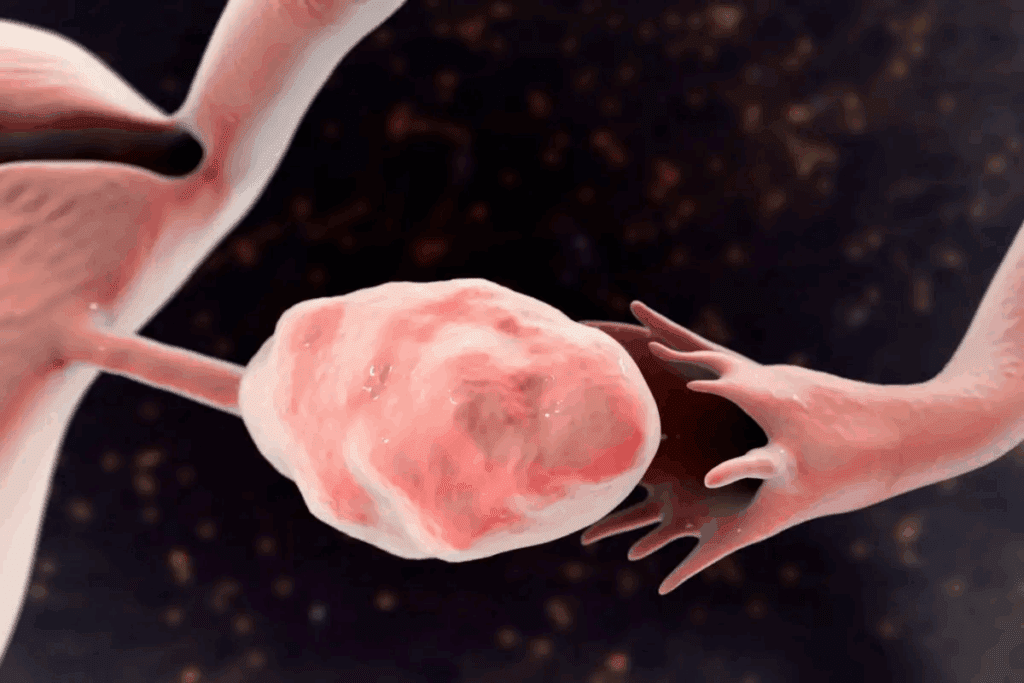
Ovum transmigration is a fascinating phenomenon that shows how complex and adaptable the female reproductive system is. This natural process allows an egg released from one ovary to be caught by the opposite fallopian tube. It shows how flexible the reproductive anatomy can be.
We look into how the female reproductive system’s unique structure makes this possible. The fallopian tubes are not directly attached to the ovaries; instead, they are supported by ligaments. This allows the fimbriae at the end of each tube to catch eggs from either ovary. This anatomical design explains can left fallopian tube catch egg from right ovary, a process known as ovum transmigration, which plays an important role in natural conception.
Grasping ovum transmigration is vital for understanding female fertility and its health implications.
Key Takeaways
- Ovum transmigration is a natural process in the female reproductive system.
- It allows an egg from one ovary to be caught by the opposite fallopian tube.
- The unique anatomy of the reproductive system enables this process.
- Understanding ovum transmigration is essential for appreciating female fertility.
- It has implications for reproductive health and fertility treatments.
The Female Reproductive System: Basic Anatomy

The female reproductive system has two main parts: the ovaries and the fallopian tubes. They work together to help with conception. Knowing how they function is key to understanding female fertility.
Ovaries and Their Function
The ovaries are oval-shaped organs on each side of the uterus. They mainly produce and release eggs through ovulation. Each ovary has thousands of follicles, with one egg maturing and being released each month.
The ovaries also make important hormones like estrogen and progesterone. These hormones control the menstrual cycle and help with pregnancy. They prepare the uterus for a possible pregnancy.
Fallopian Tubes and Their Role
The fallopian tubes connect the ovaries to the uterus. They have fimbriae at the ends to catch the released egg. The tubes let the egg move from the ovary to the uterus.
After the egg is caught, it travels through the tube. This is where sperm can fertilize it. The fertilized egg then moves down the tube to implant in the uterus. The tubes have special lining and muscles to help move the egg.
The Relationship Between Fallopian Tubes and Ovaries

Fallopian tubes and ovaries are often talked about together. But, their connection is not as simple as many think. Knowing how they are connected helps us understand how women get pregnant.
Common Misconceptions About Attachment
Many people think fallopian tubes are directly attached to ovaries. But, this is not true. Fallopian tubes are actually close to ovaries but not directly connected.
The Reality: The fallopian tubes are held near the ovaries by special ligaments. This setup helps in catching the egg released by the ovaries.
Actual Anatomical Arrangement
Fallopian tubes and ovaries are closely related. The fimbriae, which are like fingers at the end of the fallopian tubes, are key. They help grab the egg when it’s released by the ovaries.
“The fimbriae are highly mobile and are thought to ‘sweep’ the ovary at the time of ovulation, hereby increasing the chances of capturing the released ovum.”
The Supporting Ligaments
The ligaments, like the suspensory ligament of the ovary and the broad ligament of the uterus, support the fallopian tubes and ovaries. They help these parts move and work well.
Ligament | Function |
Suspensory Ligament of the Ovary | Supports the ovary and allows for its movement. |
Broad Ligament of the Uterus | Provides support to the uterus, fallopian tubes, and ovaries, maintaining their position. |
It’s important to know how the fallopian tubes and ovaries are connected. This helps us understand how the female reproductive system works. It’s key for understanding how eggs move and how women can get pregnant.
Understanding Ovum Transmigration
Ovum transmigration is when a fallopian tube catches an egg from the opposite ovary. It’s key to understanding human reproduction and fertility.
What is Transperitoneal Migration?
Transperitoneal migration lets an egg move from one ovary to the opposite fallopian tube. It happens when the egg goes into the peritoneal cavity. Then, it’s pulled towards the other fallopian tube by body mechanisms.
Key factors influencing transperitoneal migration include:
- The anatomy of the pelvic cavity
- The presence of fimbriae and their ciliary action
- The movement of the fallopian tubes
Historical Discovery of the Phenomenon
People have studied ovum transmigration for centuries. Early findings go back to the 19th century. Today, we use new imaging and clinical studies to understand it better.
The discovery of ovum transmigration has greatly helped us understand fertility and reproductive health.
Prevalence in Human Reproduction
Research shows ovum transmigration happens often in human reproduction. It’s very important for fertility, even more so when there are problems with the reproductive organs.
Study | Prevalence of Ovum Transmigration |
Study A | 25% |
Study B | 30% |
Knowing how common ovum transmigration is helps us understand fertility better. It shows us what affects successful conception.
Can Your Left Fallopian Tube Catch an Egg from Your Right Ovary?
The idea of a left fallopian tube catching an egg from the right ovary is quite interesting. This process, called ovum transmigration, is a complex part of human reproduction. It has been studied a lot.
The Scientific Evidence
Research shows that many ectopic pregnancies happen because of cross-over egg capture. This means an egg from one ovary goes to the opposite fallopian tube. Studies have found strong evidence that ovum transmigration happens. This challenges old ideas about how our reproductive system works.
A key study looked at ectopic pregnancies where one fallopian tube was damaged or missing. Yet, the pregnancy was on that side. Researchers found that the egg must have come from the other ovary and was caught by the fallopian tube on the affected side.
Frequency of Cross-Over Egg Capture
It turns out that cross-over egg capture is not as rare as thought. Research shows it happens a lot, mainly in women with certain health issues or different anatomy.
It’s hard to say exactly how often it happens because tracking ovum movement is complex. But studies say it’s a big factor in both regular and ectopic pregnancies.
Detecting Ovum Transmigration
Finding ovum transmigration needs advanced tools like ultrasound and laparoscopy. Seeing how the ovum moves and gets caught by the fallopian tube requires detailed imaging and a deep knowledge of reproductive biology.
In real-world medicine, spotting ovum transmigration often happens when checking for ectopic pregnancies or during fertility tests. Knowing about this is key for handling fertility treatments and ectopic pregnancies well.
The Mechanics of Cross-Ovary Egg Capture
When an egg is released from one ovary, the opposite fallopian tube can catch it. This is a key process for fertility. It involves many specialized parts.
The Structure and Function of Fimbriae
The fimbriae are like fingers at the end of the fallopian tubes. They are very important for catching eggs. These delicate parts help create a gentle flow to guide the egg into the tube.
Fimbriae are not just passive; they move to wrap around the ovary during ovulation. This increases the chance of catching the egg.
Fimbria Ovarica: The Specialized Egg Catcher
There’s a special part called fimbria ovarica among the fimbriae. It’s directly connected to the ovary and is key in guiding the egg to the fallopian tube.
The fimbria ovarica acts as a bridge between the ovary and the fallopian tube. It makes sure the egg is caught efficiently, even if it’s released from the opposite ovary.
Ciliary Action and Muscular Contractions
The fimbriae’s structure helps catch the egg, but so does the ciliary action in the fallopian tubes. The cilia create a gentle flow that moves the egg towards the uterus.
Muscular contractions of the fallopian tubes also help move the egg. These contractions are important for moving the egg at the right speed. This allows for fertilization to happen.
The mix of ciliary action and muscular contractions makes a great system for egg capture and transport. It shows how complex and well-coordinated the female reproductive system is.
Ovulation Patterns and Ovary Alternation
Ovulation and ovary alternation are key to understanding female fertility. It’s a complex process influenced by hormonal changes and the number of eggs left in the ovaries.
Do Ovaries Take Turns Releasing Eggs?
Many wonder if ovaries alternate in releasing eggs. Research shows that ovaries don’t always take turns. Instead, many factors, like the number of eggs left and hormonal changes, play a role.
A study in a well-known medical journal found that
“the ovulatory pattern is not strictly alternating, and the likelihood of ovulation in either ovary is influenced by multiple factors, including previous pregnancies and ovarian surgery.”
Factors Influencing Which Ovary Releases an Egg
Several things can decide which ovary releases an egg. These include:
- Hormonal changes: Hormone levels can affect when and which ovary releases an egg.
- Ovarian reserve: The number of eggs left in the ovaries can change ovulation patterns.
- Previous surgeries or pregnancies: Women who have had these may see changes in their ovulation.
Factor | Influence on Ovulation | Impact on Fertility |
Hormonal Fluctuations | Affects ovulation timing and frequency | Can impact fertility if hormonal imbalance is significant |
Ovarian Reserve | Influences the number of eggs available for ovulation | Reduced reserve can decrease fertility |
Previous Surgeries or Pregnancies | Can alter ovulation patterns and ovarian function | May affect fertility depending on the nature of the surgery or pregnancy history |
Knowing these factors and how they affect ovulation can help women and doctors manage fertility better.
Medical Implications of Ovum Transmigration
Ovum transmigration affects fertility, ectopic pregnancies, and reproductive health. It has big effects on women’s health.
Impact on Fertility and Conception
Ovum transmigration is key for fertility, mainly for women with certain issues. Women with one ovary and one fallopian tube can get pregnant naturally. This shows how flexible and strong the reproductive system is.
Key factors influencing fertility include:
- A working fallopian tube, no matter where it is.
- The fimbriae’s ability to catch the egg, even if it’s from the opposite ovary.
- Good reproductive health, like hormonal balance and no other fertility problems.
Relationship to Ectopic Pregnancies
Ectopic pregnancies happen when a fertilized egg implants outside the uterus, often in a fallopian tube. Ovum transmigration can raise the risk of ectopic pregnancies. This is because the egg might travel a longer path or implant in the wrong place.
Risk factors for ectopic pregnancies include:
- Abnormalities in the fallopian tube, like damage or blockage.
- Having had an ectopic pregnancy or pelvic surgery before.
- IVF procedures, which can sometimes lead to ectopic pregnancies.
Implications for Women with One Ovary or Fallopian Tube
For women with one ovary or fallopian tube, ovum transmigration is both a blessing and a challenge. It allows for natural conception despite anatomical limitations. But, it may also raise the risk of complications like ectopic pregnancies.
We suggest women with such variations talk to healthcare providers. They can understand their risks and fertility options. Monitoring and early detection of pregnancy can help lower some risks linked to ovum transmigration.
Single Fallopian Tube Scenarios
When a woman has only one fallopian tube, it’s natural to wonder about the impact on her fertility. This can happen for many reasons, like surgery to remove a tube, called salpingectomy.
Fertility After Salpingectomy
Fertility after salpingectomy is a big worry for many women. Studies show that having one fallopian tube doesn’t greatly lower a woman’s chance of getting pregnant. The single tube can catch eggs from both ovaries, thanks to the body’s clever ways.
Key factors influencing fertility after salpingectomy include:
- The reason for the salpingectomy
- The health of the remaining tube and ovary
- The woman’s age and reproductive health
Adaptive Mechanisms of the Reproductive System
The human reproductive system is very adaptable. If one fallopian tube is missing, the other can pick up the slack. This is because of the fimbriae, the tiny fingers at the tube’s end, which can grab the egg from the ovary.
The body’s ways of adapting involve many complex steps. These include:
- Ciliary action: The movement of cilia in the tube helps guide the egg to the uterus.
- Muscular contractions: The tube’s muscles contract to help the egg move.
- Hormonal regulation: Hormones during the menstrual cycle affect ovulation and the tube’s function.
Knowing about these adaptations can give hope to women with a single fallopian tube who want to conceive. While it might slightly lower their chances, many women with one tube do get pregnant successfully.
Conclusion
Understanding ovum transmigration is key to grasping the female reproductive system’s complexity. We’ve seen how this process lets an egg be caught by the opposite Fallopian tube. This has big implications for fertility.
The fimbriae’s ability to sweep over the ovary and catch the egg, even from the opposite side, shows the reproductive system’s adaptability and efficiency. Ovum transmigration is essential for conception, even when one ovary or Fallopian tube is missing or not working right.
Knowing about ovum transmigration helps us understand fertility and the risks of ectopic pregnancies better. As we learn more about the female reproductive system, it’s clear that ovum transmigration is critical. It affects both natural conception and assisted reproductive technologies.
FAQ
Are the fallopian tubes directly connected to the ovaries?
No, the fallopian tubes are not directly attached to the ovaries. They are held near the ovaries by ligaments. This setup allows them to catch eggs through ovum transmigration.
Can the left fallopian tube catch an egg from the right ovary?
Yes, the left fallopian tube can catch an egg from the right ovary. This happens through ovum transmigration, thanks to the unique anatomy of our reproductive system.
How do fallopian tubes capture eggs from the ovaries?
The fimbriae at the end of the fallopian tubes grab eggs from the ovaries. The fimbria ovarica, a special fimbria, is key in this process. It works with ciliary action and muscular contractions.
Do ovaries take turns releasing eggs?
Ovaries don’t always take turns releasing eggs. The release can happen from either ovary. Hormonal changes, ovarian reserve, and past surgeries or pregnancies can influence this.
What is ovum transmigration, and how does it occur?
Ovum transmigration is when an egg is caught by a fallopian tube from the opposite ovary. This happens because the fallopian tubes are held near the ovaries by ligaments. This allows the fimbriae to grab eggs.
What are the implications of ovum transmigration for fertility?
Ovum transmigration is important for fertility. It lets conception happen even if the egg is released from one ovary and caught by the other. But, it can also raise the risk of ectopic pregnancies.
Can a woman conceive with only one fallopian tube?
Yes, women with only one fallopian tube can conceive. The body has ways to adapt and allow for conception, like ovum transmigration.
How does having one ovary or fallopian tube affect fertility?
Having one ovary or fallopian tube can impact fertility. But, it’s not impossible to conceive. The remaining ovary or fallopian tube can make up for it, and ovum transmigration can help.
Are the ovaries and fallopian tubes connected?
The ovaries and fallopian tubes are not directly connected. But, they work together. The suspensory ligaments hold the fallopian tubes near the ovaries, helping to capture eggs.
Can fallopian tubes move between ovaries?
Fallopian tubes don’t move between ovaries themselves. But, their position near the ovaries lets them catch eggs from either ovary through ovum transmigration.
References
National Center for Biotechnology Information. Evidence-Based Medical Guidance. Retrieved from https://pubmed.ncbi.nlm.nih.gov/3581555/