


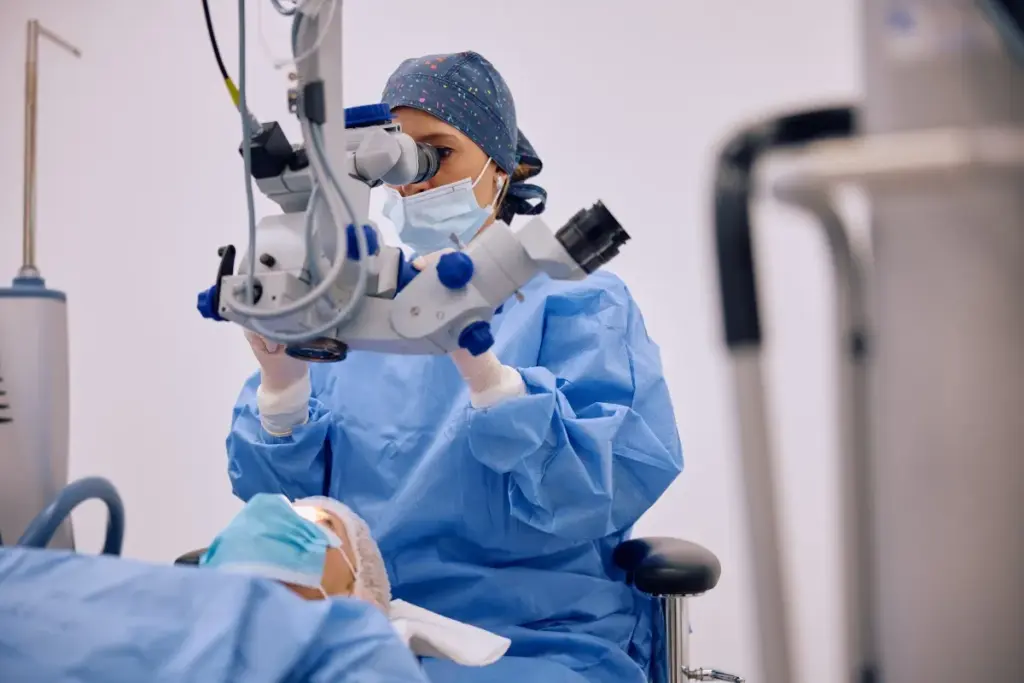
Many people get frustrated with blurry near vision as they get older. Regaining clarity is now possible thanks to modern medicine. We offer expert care to help you see clearly at any distance.
At Liv Hospital, our team uses the latest techniques to improve your daily life. Does lasik work for reading glasses? We focus on special methods that let one eye see close-up and the other far away.
This method, called monovision, makes you less dependent on magnifying lenses for everyday tasks. Our goal is to make your daily life more comfortable and convenient.
Surgery can improve your eyesight, but it can’t stop natural aging. You might see changes as presbyopia develops. This condition affects almost everyone, no matter what treatments they’ve had.
Our specialists will check your eyes to find the best option for you. We use advanced surgical paths to fix close-up vision. We’re dedicated to finding the right solution for your unique vision needs.
Key Takeaways
- Monovision LASIK creates different focus points for each eye to treat presbyopia.
- The procedure aims to reduce your daily dependence on magnification.
- Laser surgery does not cause or prevent the natural aging of the eye.
- Patients may see vision changes as they age.
- Liv Hospital follows advanced academic protocols for patient safety.
- A professional evaluation is necessary to determine if you are a candidate.
Understanding Presbyopia and LASIK for Reading
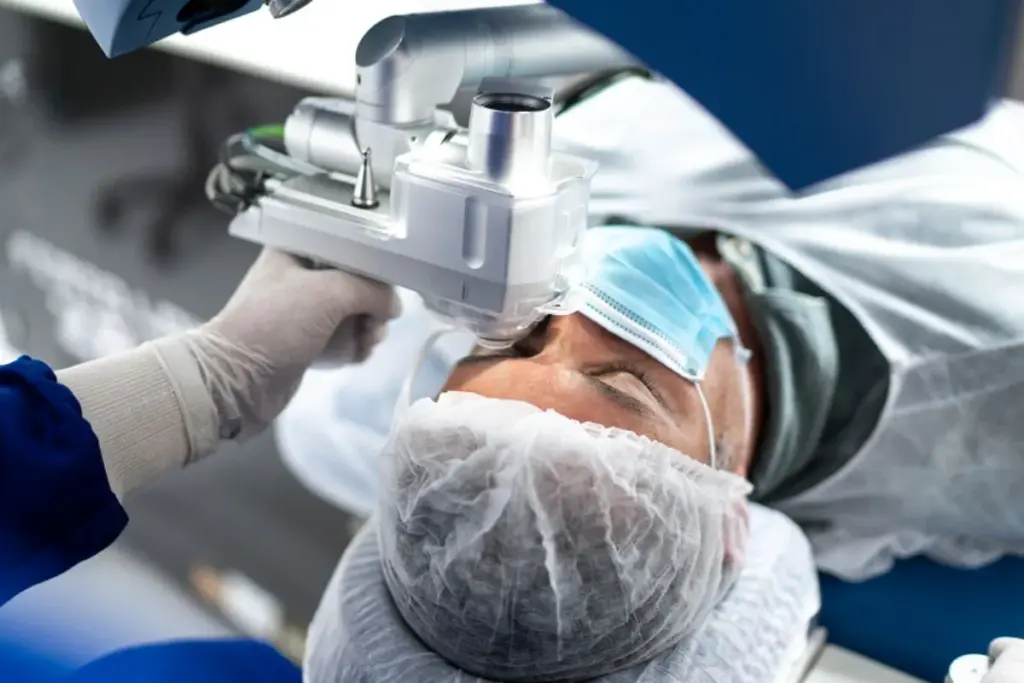
As we get older, our eyes change in many ways. One of these changes is presbyopia, which makes it hard to see close things clearly. This happens naturally, usually starting in the early to mid-40s.
What is Presbyopia?
Presbyopia happens when the lens in your eye loses its flexibility. This makes it hard to focus on things that are close. It’s a natural part of aging, where the lens becomes less flexible.
Medical sources say presbyopia makes near objects blurry. This starts soon after you turn 40. The lens in your eye hardens, making it hard to read and do other tasks that need close vision.
Why Standard LASIK Does Not Fix Reading Vision
Standard LASIK surgery fixes distance vision by changing the cornea. It can help with nearsightedness, farsightedness, and astigmatism. But it doesn’t fix presbyopia.
Standard LASIK mainly fixes far vision. It doesn’t help with near vision because it doesn’t change the lens’s ability to focus on close objects. This is why LASIK doesn’t fix presbyopia.
| Condition | Standard LASIK | Presbyopia Correction |
| Distance Vision | Corrects nearsightedness, farsightedness, and astigmatism | Not directly addressed |
| Near Vision | Does not correct presbyopia | Requires alternative treatments or adjustments |
It’s important to know what standard LASIK can and can’t do. LASIK can fix some vision problems, but presbyopia needs special solutions.
How Monovision LASIK Works for Near Vision
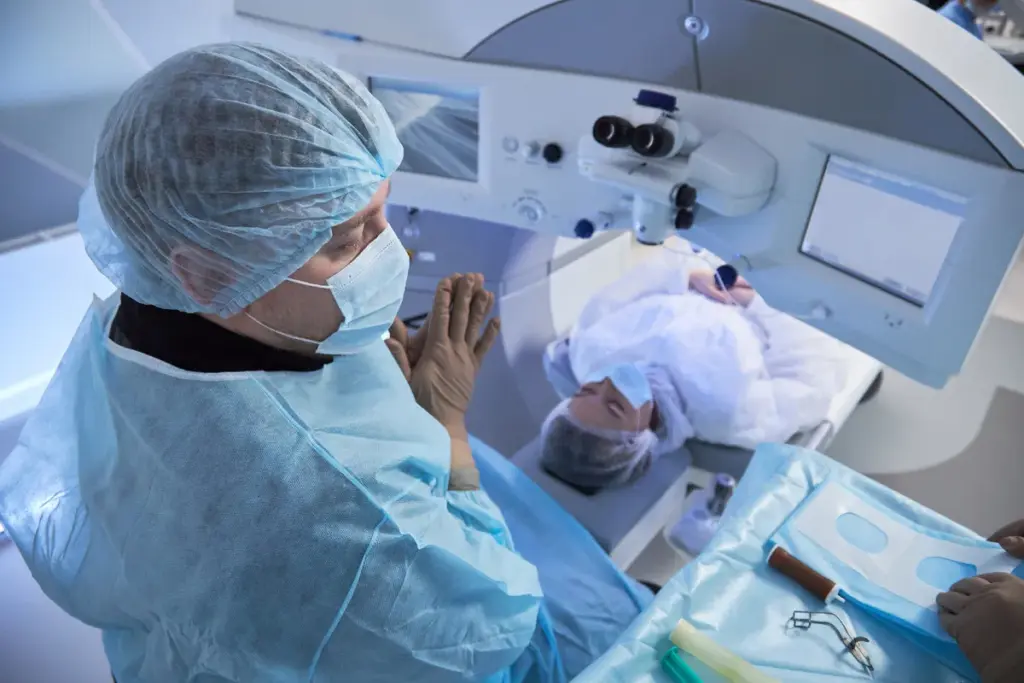
Monovision LASIK is a solution for presbyopia. It corrects one eye for distance and the other for near vision. This method might eliminate the need for reading glasses after surgery.
The Concept of Monovision Correction
Monovision LASIK corrects one eye for distance and the other for near vision. It uses a modified monovision technique. This adds a third focal point for intermediate vision.
The dominant eye is for distance vision. This way, you can see far and near without glasses. It might seem odd to have different corrections in each eye. But, your brain can adapt to this.
This adaptation makes Monovision LASIK work for different distances.
Key Benefits of Monovision LASIK:
- Reduced dependence on reading glasses
- Improved near and distance vision
- Quick recovery compared to other presbyopia treatments
Laser Eye Surgery on One Eye vs. Both Eyes
In Monovision LASIK, the non-dominant eye is for near vision. The dominant eye is for distance. This balance helps you do daily tasks without glasses.
Not everyone is right for Monovision LASIK. Eye health, presbyopia degree, and personal preferences matter.
| Aspect | Monovision LASIK on One Eye | Standard LASIK on Both Eyes |
| Correction Approach | One eye for near, one for distance | Both eyes for distance |
| Presbyopia Correction | Yes, through monovision | No, presbyopia not directly addressed |
| Dependence on Glasses | Reduced for most daily tasks | Glasses needed for near tasks |
Adjusting to Monovision After Surgery
Getting used to Monovision LASIK takes time. Your brain must adjust to the new visual processing. Some adjust quickly, while others may take weeks or months.
“I was amazed at how quickly my brain adapted to the difference between my eyes after Monovision LASIK,” says William Shatner. His story shows the possibility of successful adaptation and satisfaction.
Patience and follow-up care are key during adjustment. Our team supports patients through this period. We address any concerns post-surgery.
Evaluating Candidates for Laser Eye Surgery
Figuring out if LASIK surgery is right for you means checking your eye health and lifestyle. This check is key because not everyone can get LASIK, like for fixing presbyopia and reading problems.
Assessing Your Eye Health and Lifestyle
We suggest a detailed eye exam to see if LASIK or other surgeries for presbyopia are right for you. This exam looks at your cornea’s health, how bad your presbyopia is, and your overall eye health.
We also think about your lifestyle and how presbyopia impacts your daily life. For example, if you’re very active or have certain job needs, these can affect if LASIK or other treatments are good for you.
Alternatives to LASIK for Reading Glasses
If LASIK isn’t a good choice for you, there are other options. One is refractive lens exchange, where a new lens is put in to fix presbyopia.
Other choices include:
- Reading glasses, a simple and non-surgical option.
- Conductive keratoplasty (CK), a small procedure that changes the cornea to help with near vision.
Conclusion
LASIK surgery, like monovision LASIK, is a good fix for reading problems caused by presbyopia. Standard LASIK doesn’t fix presbyopia, and results can differ for everyone. So, getting a full eye check is key to see if LASIK for reading glasses is right for you.
At your exam, we look at your eye health and lifestyle to find the best treatment. If LASIK isn’t right for you, there are other choices like refractive lens exchange. Knowing about LASIK’s options and limits helps you decide what’s best for your eyes and lessens your need for reading glasses.
Choosing surgery for reading glasses can really change your life. We aim to give top-notch healthcare and support. We want to help you get the best from your LASIK, fixing your vision issues and making your life better.
FAQ
What is Presbyopia?
Presbyopia is a common age-related condition. It happens when the eye’s lens loses its flexibility. This makes it hard to focus on close objects.
Does LASIK work for reading glasses?
Standard LASIK is for distance vision. But, monovision LASIK can help with reading. It corrects one eye for near vision, making reading easier.
Can you get LASIK for reading if you have presbyopia?
Yes, LASIK can help with reading if you have presbyopia. It doesn’t fix the aging lens, but monovision or multifocal LASIK can improve near vision.
Does LASIK help with reading vision permanently?
LASIK for reading provides long-lasting correction. But, your eye’s natural lens will continue to age. You might need a “touch-up” or other solutions like RLE later.
Can I get laser eye surgery for reading if I have already had distance LASIK?
Yes, often. If you had LASIK for distance and now struggle with near vision, we can create monovision in one eye. This helps with reading.
Can you get one eye laser surgery instead of both?
Absolutely. Getting laser surgery in one eye is common for monovision. It’s the standard for those with clear distance vision in their dominant eye.
Can LASIK fix the need for reading glasses entirely?
LASIK can make reading vision clear for many. But, some might need glasses for very fine print or in dim light.
What is the recovery time for laser eye surgery one eye at a time?
Recovery for laser surgery in one eye is similar to standard LASIK. Most people can return to work in 24 to 48 hours. Adjusting to monovision takes a few weeks.
Can laser eye surgery correct the need for reading glasses in older adults?
Yes, laser eye surgery can help older adults with reading glasses. For those over 50 or 60, Refractive Lens Exchange (RLE) is often discussed as a more effective solution.
Is there a specific surgery for reading glasses that is better than LASIK?
The best surgery for reading glasses depends on your eyes. Monovision LASIK works for some, while others might prefer Refractive Lens Exchange (RLE) for a more lasting result.
Reference
National Center for Biotechnology Information. Evidence-Based Medical Insight. Retrieved from https://pubmed.ncbi.nlm.nih.gov/4028882/


 Departments
 Related Videos
 Our Doctors
 News
News


