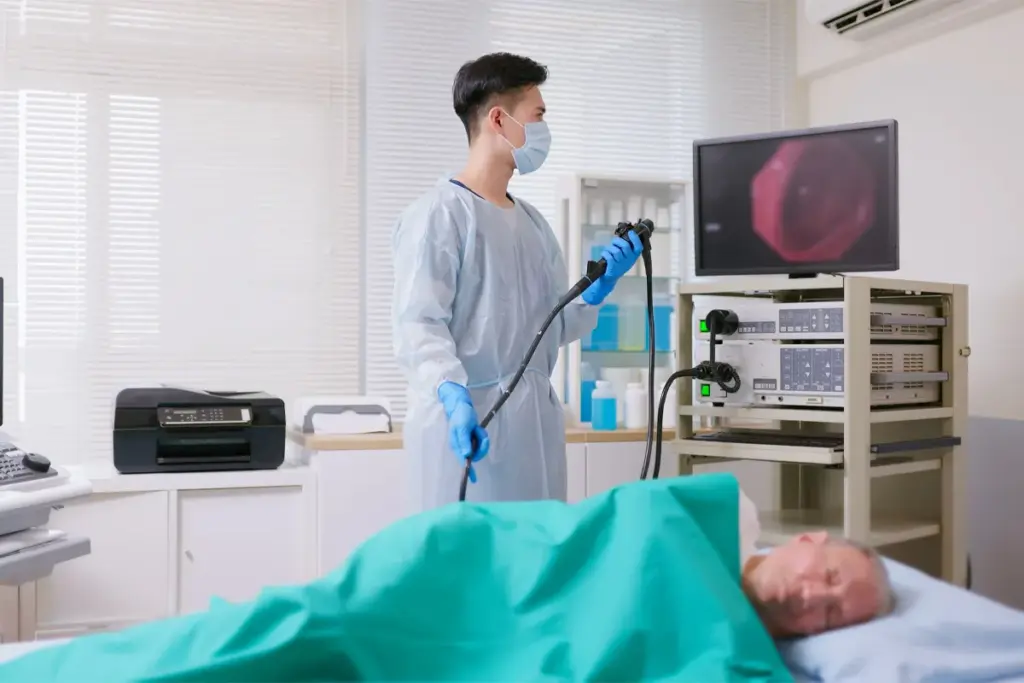
Colon is rising among young adults, and early detection is key for survival. While ultrasound is not the first choice for diagnosis, we will look into its role in finding colon cancer. We will also see its limits compared to other ways of diagnosing. Can you see cancer in the abdomen with ultrasound? Get amazing facts on scary tumor detection and powerful, vital screening options today.
At Liv Hospital, we aim to provide world-class, innovative care on a global level. Methods like colonoscopy and new blood tests are making a big difference. We will dive into how well ultrasound works in finding colon cancer and why it’s not the top choice for diagnosis.
Key Takeaways
- Ultrasound has limited role in detecting colon cancer.
- Colonoscopy is a more effective diagnostic method.
- Advanced screening methods are key for early detection.
- Liv Hospital offers world-class care for colon cancer patients.
- Early detection greatly boosts survival rates.
The Growing Concern of Colorectal Cancer

Colorectal cancer is a major health threat. It’s becoming more common, and we need to understand the numbers. Looking at current stats and future projections is key.
Current Statistics and Projections for 2025
The numbers for colorectal cancer are scary. By 2025, 154,000 people will likely be diagnosed. Sadly, 52,900 will die from it. These numbers show how urgent the situation is.
These figures are a big challenge for public health. We must think about how to tackle this issue. Looking at cancer trends and prevention strategies is vital.
Risk Factors and Warning Signs
Knowing the risk factors and warning signs is important. Several things can increase your risk of colorectal cancer, including:
- A family history of colorectal cancer or polyps
- A personal history of inflammatory bowel disease
- A diet high in red and processed meats
- Physical inactivity and obesity
- Smoking and heavy alcohol consumption
Knowing these risk factors can help you take steps to lower your risk. Also, being aware of symptoms like changes in bowel habits and blood in the stool can lead to early diagnosis and treatment.
By understanding the current stats, risk factors, and warning signs, we can fight colorectal cancer. We need a plan that includes awareness, prevention, and early detection.
Understanding Medical Ultrasound Technology
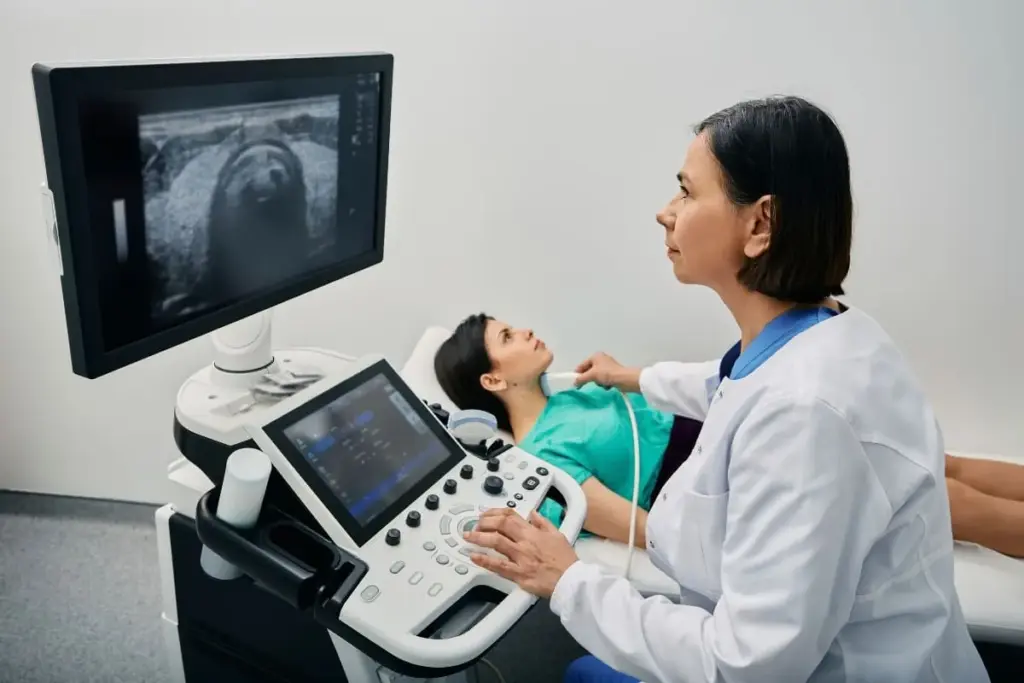
Medical ultrasound technology uses sound waves to see inside the body. It lets doctors see organs and tissues clearly without surgery. This tool is key in today’s medicine.
How Sonography Works in Medical Diagnostics
Ultrasound, or sonography, sends sound waves into the body. A probe called a transducer sends these waves. The waves bounce back and are caught by the transducer.
The transducer turns these waves into electrical signals. The ultrasound machine then makes images from these signals. These images show what’s happening inside the body in real time.
This method is safe and doesn’t use harmful radiation. It’s good for everyone, including pregnant women and kids. It lets doctors see moving parts like the heart and blood flow.
Key Components of Ultrasound Technology:
- Transducer (Probe): Converts electrical energy into sound waves and vice versa.
- Ultrasound Machine: Processes the signals received from the transducer to create images.
- Display Monitor: Shows the ultrasound images in real-time.
Types of Ultrasound Examinations
There are many ultrasound exams, each for different body parts or needs.
|
Type of Ultrasound |
Description |
Common Applications |
|---|---|---|
|
Abdominal Ultrasound |
Examines organs within the abdominal cavity. |
Liver disease, gallstones, abdominal pain investigation. |
|
Pelvic Ultrasound |
Focuses on the reproductive organs and urinary tract. |
Assessment of ovarian cysts, prostate issues, and pregnancy. |
|
Obstetric Ultrasound |
Monitors fetal development during pregnancy. |
Fetal growth monitoring, detecting congenital anomalies. |
|
Vascular Ultrasound |
Examines blood vessels and blood flow. |
Diagnosing deep vein thrombosis, varicose veins, and carotid artery disease. |
Each ultrasound exam is made for a specific purpose. They help doctors diagnose and treat many health issues accurately.
Can You See Cancer in the Abdomen With Ultrasound?
Ultrasound can spot cancer in the abdomen, but it’s not always easy. It shows pictures of organs inside the belly. But how well it works depends on many things.
Capabilities of Abdominal Ultrasound Imaging
Ultrasound is good for finding cancers in the belly. It’s fast and doesn’t hurt. It can see organs like the liver and kidneys.
It can spot tumors and guide biopsies. For example, it’s great at finding big liver tumors. But, it’s not as good for small tumors in the kidneys or pancreas.
Limitations in Deep Tissue Visualization
Ultrasound has its limits, mainly with deep tissues. It can’t see tumors hidden behind gas-filled areas like the intestines. The quality of the images also depends on the person doing the scan.
It’s hard to tell if a tumor is cancerous or not. This is why other tests like CT scans or MRI are needed to get a full picture.
In short, ultrasound is helpful for finding some cancers in the belly. But, its success depends on the cancer type, location, and the skill of the person doing the scan. Knowing what ultrasound can and can’t do is key to making the right choices for more tests.
Can Abdominal Ultrasound Detect Bowel Problems?
Abdominal ultrasound plays a key role in spotting bowel problems. It’s a non-invasive way to check the digestive system. This helps us understand digestive health better.
Digestive Tract Conditions Visible on Ultrasound
Ultrasound can spot some digestive issues like blockages and inflammation. It’s great for looking at the bowel and nearby areas. It can help find:
- Intussusception, where a part of the intestine slides into another
- Appendicitis, though CT scans are common, ultrasound can help first
- Bowel obstruction, seen by dilated loops and fluid
- Inflammatory bowel disease, showing thickened bowel walls
How well ultrasound works depends on the operator’s skill and the equipment’s quality.
When Ultrasound Is Recommended for Bowel Assessment
Ultrasound is a top choice for checking the bowel in many cases. It’s non-invasive and doesn’t use radiation. It’s best for:
|
Clinical Scenario |
Ultrasound Utility |
|---|---|
|
Suspected bowel obstruction |
Can identify dilated bowel loops and fluid |
|
Abdominal pain in children and adolescents |
Preferred initial imaging due to safety and lack of radiation |
|
Monitoring inflammatory bowel disease |
Can assess bowel wall thickness and inflammation |
|
Detecting intussusception |
Can diagnose and sometimes guide reduction |
Even though ultrasound is helpful, it has its limits. Things like bowel gas and the operator’s skill can affect it. So, it’s often used with other tests for a full picture.
Ultrasound’s Limitations for Colon Cancer Detection
Ultrasound has its limits when it comes to finding colon cancer. The colon’s complex shape and the challenges of sonography play a big role. We’ll dive into these issues.
Anatomical Challenges of the Colon
The colon’s shape makes it hard to see with ultrasound. Its twists and turns, along with gas inside, hide the wall and any tumors.
Other organs around the colon also get in the way. Bowel gas is a big problem because it distorts the image.
- The colon’s shape and position make it hard to see fully.
- Bowel gas and feces mess up the ultrasound images.
- The colon wall is thin, making it tough to spot tumors early.
Technical Constraints of Standard Sonography
Standard sonography has its own limits. It can’t always spot small tumors or early changes in the colon wall.
Ultrasound waves can’t go very deep, which is a problem for bigger or deeper tumors. Also, how well you can see depends a lot on the person doing the scan.
- It’s hard to find small or early tumors.
- It’s tough to see deeper or larger tumors.
- How good the scan looks depends on the person doing it.
Will An Ultrasound Show Cancer? Detecting Different Types
Ultrasound technology is key in finding different cancers. But, how well it works depends on the cancer’s type and where it is in the body. It’s used to spot and track many health issues, and it plays a big role in finding cancer. Yet, finding cancer with ultrasound depends on the cancer type and its location.
Cancers More Easily Detected by Ultrasound
Some cancers are easier to spot with ultrasound because of where they are and the tissue around them. For example, thyroid cancer and breast cancer are often found through ultrasound. This is because these organs are closer to the surface and easier to reach.
Ultrasound is also good for finding liver cancer and gallbladder disease. This is because these organs are in the belly, which is easy to scan. It’s also helpful for checking ovarian cancer and testicular cancer by showing detailed images of the reproductive organs. It helps guide biopsies and other treatments, making them more accurate.
Why Colorectal Tumors Present Unique Challenges
But, finding colorectal tumors is harder with ultrasound. The colon’s complex shape and deep location make it hard to get clear images. Also, gas in the colon can block ultrasound waves, making it even tougher.
Ultrasound can sometimes find tumors or odd growths in the colon. But, it’s not the main tool for finding colorectal cancer. Instead, we use direct methods like colonoscopy or CT colonography for a clear diagnosis.
Specialized Ultrasound Techniques for Colorectal Assessment
Standard ultrasound has its limits, leading to the creation of new methods for checking the colon and rectum. While it’s good for many checks, it can’t see these areas well. This need for better views has led to new techniques.
These new methods are key for better diagnosis and treatment planning for colon and rectum issues. We’ll look at two big ones: endorectal ultrasound and contrast-enhanced ultrasound.
Endorectal Ultrasound Applications
Endorectal ultrasound, or endosonography, uses a probe in the rectum for clear images of the rectal wall and nearby tissues. It’s great for:
- Checking how deep a rectal cancer is and if it has spread to lymph nodes
- Looking at the health of the anal sphincter for those with fecal incontinence
- Helping with biopsies and other treatments in the rectum
The probe’s close position to the area being checked offers detailed views not seen with external ultrasound. This makes endorectal ultrasound a key tool for managing rectal cancer and other issues.
Contrast-Enhanced Ultrasound Developments
Contrast-enhanced ultrasound (CEUS) uses contrast agents to show blood flow and tissue vascularity better. For colorectal checks, CEUS helps in:
- Spotting liver lesions, which is important for those with colorectal cancer that might spread to the liver
- Looking at tumor blood flow and how well it’s getting blood, which can show how aggressive the tumor is and how it’s responding to treatment
- Finding lesions in the colon and rectum better
CEUS gives real-time images without using harmful radiation. This makes it a great addition to other tests for checking colorectal conditions.
These advanced ultrasound methods are big steps forward in checking the colon and rectum. They give doctors more detailed and accurate info. This helps them make better choices for diagnosis, treatment, and patient care.
How Is Colon Cancer Detected? The Gold Standard Approach
Colonoscopy is the top method for finding colon cancer. It helps doctors find and remove polyps before they turn cancerous. This makes it a key tool for both finding and preventing cancer.
Colonoscopy: Visualization and Prevention
A flexible tube with a camera is used in colonoscopy. It lets doctors see inside the colon. This is key for spotting polyps and early cancer.
Colonoscopy does more than just find problems. It also stops cancer from happening. Doctors can remove polyps during the test, stopping cancer before it starts.
The benefits of colonoscopy are many:
- Early Detection: It finds colon cancer early, when it’s easier to treat.
- Prevention: Removing polyps stops cancer from forming.
- Reduced Mortality: Colonoscopy screenings cut down on deaths from colon cancer.
The 53% Mortality Reduction Through Screening
Colonoscopy has a big impact on colon cancer deaths. Screening with colonoscopy cuts down colon cancer deaths by 53%. This shows how important colonoscopy is in fighting colon cancer.
|
Detection Method |
Diagnostic Capability |
Preventive Capability |
|---|---|---|
|
Colonoscopy |
High |
Yes |
|
CT Colonography |
High |
No |
|
Ultrasound |
Limited for Colon |
No |
|
Stool-Based Tests |
Moderate |
No |
In conclusion, colonoscopy is the best way to find and prevent colon cancer. It lets doctors see inside the colon, find polyps, and remove them. This makes it a powerful tool in the fight against colon cancer.
Can CT Scan Detect Colon Cancer?
CT colonography, a special CT scan, is key in finding colon cancer early. It uses X-rays to show detailed images of the colon. Doctors can spot tumors or polyps with this method.
Accuracy and Limitations of CT Colonography
CT colonography is good at finding colon cancer, even in its early stages. But, it’s not perfect.
CT colonography can see the whole colon, which is a big plus. It can spot big lesions well. But, it needs a lot of bowel prep, which can be hard for patients.
Also, there’s a small chance of getting too much radiation. This is a downside of CT colonography.
Does Colon Cancer Show on CT Scan? Understanding Results
Reading CT scan results needs a lot of skill. They can show many things, from harmless polyps to cancer. If there’s cancer, it might look like a mass or thickening on the CT scan.
The CT scan‘s ability to find colon cancer depends on the tumor’s size and where it is. Also, how clear the scan is matters a lot. Big tumors are easier to see, but small ones might need more careful looking.
Studies show CT colonography is very good at finding colon cancer. It’s almost as good as colonoscopy in some cases. A study found CT colonography spots 90% of big lesions.
|
Diagnostic Method |
Sensitivity |
Specificity |
|---|---|---|
|
CT Colonography |
90% |
85% |
|
Colonoscopy |
95% |
90% |
In summary, CT scans, like CT colonography, are very important in finding colon cancer. They have many benefits, but knowing their limits is key for good care.
Comparing Diagnostic Methods for Colorectal Cancer
Several methods are used to find colorectal cancer, each with its own benefits and drawbacks. It’s important to know these differences to choose the best way to diagnose.
Stool-Based Tests and Their Effectiveness
Stool-based tests are non-invasive ways to find colorectal cancer. They look for hidden blood or abnormal DNA in stool, signs of cancer or precancerous growths. These tests can help find cancer early, which is key to saving lives.
Fecal occult blood tests (FOBT) are a common type. They find hidden blood in stool, a sign of cancer. While they help lower cancer death rates, they’re not perfect and can give false results.
CT Scan vs. Ultrasound vs. Colonoscopy
CT scans, ultrasound, and colonoscopy are used to spot colorectal cancer. Each has its own strengths and weaknesses.
- CT Scan: CT colonography is good at finding big polyps and cancers. It gives a clear view of the colon and can spot cancers causing symptoms.
- Ultrasound: Ultrasound can check the abdomen, but it’s not the first choice for colorectal cancer. It can’t see the colon well.
- Colonoscopy: Colonoscopy is the top choice for finding colorectal cancer. It lets doctors see the colon and rectum directly, catching polyps and cancers early.
Emerging Blood-Based Screening Options
Blood tests are being developed to find colorectal cancer. They look for biomarkers in blood linked to cancer. These tests could be easy and painless for patients.
More research is needed to make these tests better. As they improve, they could be a big help in fighting colorectal cancer.
When Ultrasound Is Used in Colon Cancer Management
In colon cancer, ultrasound is a key tool for monitoring and checking treatment. It’s not the main way to find colon cancer. But, it plays a big role in managing the disease.
Supplementary Diagnostic Applications
Ultrasound is used as a backup tool in some cases. For example, it helps check liver metastases, which are common in advanced colon cancer. This lets doctors understand the cancer’s stage better and plan treatment.
Ultrasound-guided biopsies also help. They use ultrasound to guide the biopsy needle to the tumor. This makes getting accurate tissue samples easier.
|
Supplementary Application |
Description |
Benefits |
|---|---|---|
|
Liver Metastasis Assessment |
Evaluating the liver for possible metastases with ultrasound. |
Helps in staging cancer and planning treatment. |
|
Ultrasound-Guided Biopsy |
Using ultrasound to guide the needle during a biopsy. |
Improves accuracy in getting samples. |
Monitoring During and After Treatment
Ultrasound is key in tracking patients during and after colon cancer treatment. It helps see how well treatments like chemotherapy or radiation are working.
After treatment, ultrasound checks for any signs of cancer coming back or spreading. Regular checks are important for catching problems early. This can lead to better outcomes for patients.
Effective monitoring uses different imaging methods, with ultrasound being a valuable tool for doctors.
Alarming Trends: Colorectal Cancer in Younger Adults
Recent data show a big change in who gets colorectal cancer. Now, more young adults are getting it. This is a worrying trend that we need to pay attention to.
Colorectal cancer used to be mostly seen in older people. But now, it’s happening more in younger folks. This change makes us rethink what we know about the disease and who’s at risk.
The 2% Annual Increase in Ages 20-39
Studies show a 2% yearly increase in colorectal cancer in adults 20-39. This rise is seen in many different groups. The reasons for this trend are complex, involving genes, environment, and lifestyle.
It’s important to understand these factors. We need to figure out how diet, exercise, and other lifestyle choices play a role. This knowledge will help us prevent and catch the disease early.
Implications for Updated Screening Guidelines
The growing number of young adults with colorectal cancer means we need to rethink screening rules. Right now, we start screening at 50 for those at average risk. But with more young people getting sick, we might need to start screening earlier.
Thinking about starting screening earlier is a big deal. We have to consider the benefits and risks. This includes how it affects healthcare costs and the emotional impact on young people.
Changing screening guidelines for young adults is key. We need to find a balance. This means looking at the latest research, risk factors, and how to catch and prevent the disease early.
Abdominal Cancer Ultrasound Detection: Current Research
Research on using ultrasound to find abdominal cancer is showing great promise. Thanks to new imaging tech, we’re getting better at spotting cancer early. This is leading to better health outcomes for patients.
Technological Advancements in Ultrasound Imaging
New tech has made ultrasound better at finding abdominal cancer. The changes include:
- Improved transducer technology for clearer images
- Advanced signal processing for better image quality
- Three-dimensional (3D) and four-dimensional (4D) ultrasound for detailed views
These updates have made ultrasound a more dependable way to diagnose abdominal cancers. Studies show that using these new tools has promising results in improving diagnostic accuracy (Source).
Artificial Intelligence in Cancer Detection
The use of artificial intelligence (AI) in ultrasound is changing cancer detection. AI can look at ultrasound images and find patterns and anomalies that humans might miss.
AI in ultrasound cancer detection offers several benefits:
- It makes diagnoses more accurate by recognizing patterns
- It reduces the chance of misinterpreting images
- It might help find cancers sooner
As research keeps moving forward, combining advanced ultrasound tech with AI will be key. It’s expected to greatly improve how we detect and treat abdominal cancer.
Multidisciplinary Approach to Colorectal Cancer Diagnosis
Diagnosing colorectal cancer needs a detailed plan. It combines many diagnostic tools and expert opinions. This approach helps get a precise diagnosis and better care for patients.
Combining Multiple Diagnostic Modalities
Many tools help diagnose colorectal cancer. Colonoscopy is key for seeing the colon and rectum. It helps find and remove polyps to prevent cancer.
CT colonography gives a detailed look at the colon. It’s great when colonoscopy can’t be done or to see how far the cancer has spread.
Endorectal ultrasound is important for rectal cancer. It shows how big the tumor is.
The Team Approach to Cancer Care
Managing colorectal cancer needs a team. This team includes gastroenterologists, surgeons, oncologists, radiologists, and pathologists. They all work together.
This teamwork ensures patients get the best care. They help from the start to after treatment.
|
Diagnostic Modality |
Primary Use |
Advantages |
|---|---|---|
|
Colonoscopy |
Visualization of colon and rectum |
Allows for diagnosis and prevention through polyp removal |
|
CT Colonography |
Detailed visualization of colon |
Useful when colonoscopy is not feasible; assesses disease spread |
|
Endorectal Ultrasound |
Staging rectal cancer |
Determines local extent of tumor |
Using many diagnostic tools and a team-based care model boosts patient results in colorectal cancer.
Liv Hospital’s Approach to Colorectal Cancer Screening
At Liv Hospital, we mix the newest medical methods with care that focuses on the patient. We aim to give top-notch care that meets each patient’s unique needs.
Implementation of State-of-the-Art Academic Protocols
We lead in medical progress by using the latest academic protocols for colorectal cancer screening. Our goal is to give patients the most precise diagnoses and treatment plans.
Key components of our state-of-the-art protocols include:
- Advanced imaging techniques for enhanced visualization
- Evidence-based screening guidelines tailored to individual risk factors
- Collaboration with leading academic institutions to stay updated on the latest research
Advanced Multidisciplinary Care for Improved Outcomes
Our team approach is key to giving patients the best care for colorectal cancer screening. We combine experts from different fields to create a care plan that fits each patient’s needs.
The benefits of our multidisciplinary care include:
|
Care Aspect |
Description |
Benefit |
|---|---|---|
|
Coordinated Care |
Our team works together to develop a complete treatment plan. |
Ensures smooth transitions from diagnosis to treatment and follow-up care. |
|
Specialized Expertise |
Our team includes specialists in gastroenterology, oncology, surgery, and radiology. |
Offers patients access to the newest treatments and techniques. |
|
Personalized Support |
We provide tailored support services for emotional and practical needs. |
Boosts patient comfort and confidence during their care journey. |
By combining the latest academic protocols with advanced team care, Liv Hospital aims to better outcomes for patients with colorectal cancer screening.
Conclusion: Making Informed Decisions About Colon Cancer Screening
It’s important to know about the different screening options and how well they work. We’ve looked at ultrasound, CT scans, and colonoscopy for finding colon cancer. Each has its own good points and areas for improvement.
By using more than one test and keeping up with new research, people can make better choices for their health. Liv Hospital shows how important it is to use a team approach. They use the latest technology and care methods for better results.
Choosing the right colon cancer screening helps people take charge of their health. This leads to better prevention and treatment of colon cancer. We suggest talking to doctors to find the best screening plan for each person’s risk and needs.
FAQ
Can ultrasound detect colon cancer?
Ultrasound is useful, but it’s not the best for finding colon cancer. This is because of the colon’s shape and the limits of standard sonography.
What are the limitations of abdominal ultrasound in cancer detection?
Ultrasound can’t see deep inside the body well. This makes it hard to find some cancers, like colon cancer.
Can abdominal ultrasound detect bowel problems?
Yes, it can check for bowel issues like blockages and inflammation. But, how well it works depends on the problem and where it is.
What types of cancer can ultrasound detect?
Ultrasound can spot many cancers. But, how well it works depends on the cancer’s location and type. Some cancers in the abdomen can be seen with ultrasound.
How is colon cancer typically detected?
Colonoscopy is the top way to find colon cancer. It lets doctors see inside the colon and remove polyps that could become cancer.
Can a CT scan detect colon cancer?
Yes, CT scans, like CT colonography, are good for finding colon cancer. They are very sensitive and accurate.
What are the benefits of colonoscopy in colon cancer prevention?
Colonoscopy greatly lowers death rates from colon cancer. Studies show a 53% drop in death rates among those who get screened.
Are there alternative diagnostic methods for colorectal cancer?
Yes, there are other ways to diagnose colorectal cancer. These include stool tests, CT scans, ultrasound, and blood tests. Each has its own strengths and weaknesses.
Can ultrasound be used in colon cancer management?
Ultrasound is not the main tool for diagnosing colon cancer. But, it can help in managing the disease, like during and after treatment.
What is the role of artificial intelligence in cancer detection?
Artificial intelligence is being used to make ultrasound better. It aims to improve how well we can find cancers in the abdomen.
Why is a multidisciplinary approach important in colorectal cancer diagnosis?
Using many diagnostic methods and a team approach is key. It helps get the best results for patients with colorectal cancer.
References
National Colorectal Cancer Roundtable (NCCRT). Data and progress. https://nccrt.org/our-impact/data-and-progress/
Colorectal Cancer Alliance. Facts and statistics. https://colorectalcancer.org/basics/facts-and-statistics
National Center for Biotechnology Information (NCBI). Colorectal cancer: Current updates and future perspectives. https://pmc.ncbi.nlm.nih.gov/articles/PMC10780254/
Cancer Research Institute. Colorectal cancer awareness month. https://www.cancerresearch.org/blog/colorectal-cancer-awareness-month
American Cancer Society. Cancer facts & figures 2025. https://www.cancer.org/content/dam/cancer-org/research/cancer-facts-and-statistics/annual-cancer-facts-and-figures/2025/2025-cancer-facts-and-figures-acs.pdf