
What does tongue cancer under tongue? A visual guide to recognizing the early signs of floor of mouth cancer. Tongue cancer starts in the tongue’s cells and can cause growths or tumors. It’s a small part of head and neck cancers, making up about 1% of new cases in the U.S. Each year, around 18,040 people are expected to get it.
It’s key to know what tongue cancer looks like to catch it early. Growth can show up on the tongue’s side or under it. That’s why checking your mouth regularly is important.
At Liv Hospital, we stress the need for thorough cancer checks. This helps find growths early. We offer top-notch care from a team of experts.
Key Takeaways
- Tongue cancer is a subset of head and neck cancer.
- It accounts for about 1% of new cancer cases in the U.S.
- Routine oral examinations are key for early detection.
- Lesions can appear on the side or underneath the tongue.
- Early diagnosis greatly improves treatment chances.
Understanding Tongue Cancer: Prevalence and Overview

Tongue cancer is a serious condition that can affect a person’s life greatly. It is a type of oral cancer. We will look at the statistics and where tongue cancer usually happens. This will give you a full picture of this condition.
Statistics and Incidence Rates in the United States
Tongue cancer is a part of oral cancers and has caught the attention of doctors. In the U.S., tongue cancer makes up a big part of oral cavity cancers. The numbers of new tongue cancer cases have been going up.
The American Cancer Society says the number of new cases of tongue cancer has been increasing over the past few decades. This shows we need to know more and take steps to prevent it.
The exact numbers can change based on age, gender, and where you live. But, tongue cancer is more common in some groups. This includes men and people who have used tobacco and alcohol a lot.
Common Locations for Tongue Cancer Development
Tongue cancer can happen in different parts of the tongue. It is mainly divided into two types: oral tongue cancer (the front part) and oropharyngeal cancer (the base). The most common type of tongue cancer is squamous cell carcinoma, which starts in the squamous cells on the tongue’s surface.
The disease often shows up as a lump on the side of the tongue that bleeds easily. It can look like red or white patches on the tongue. Seeing these signs is important and means you should see a doctor.
Cancer Under Tongue: Specific Characteristics and Appearance
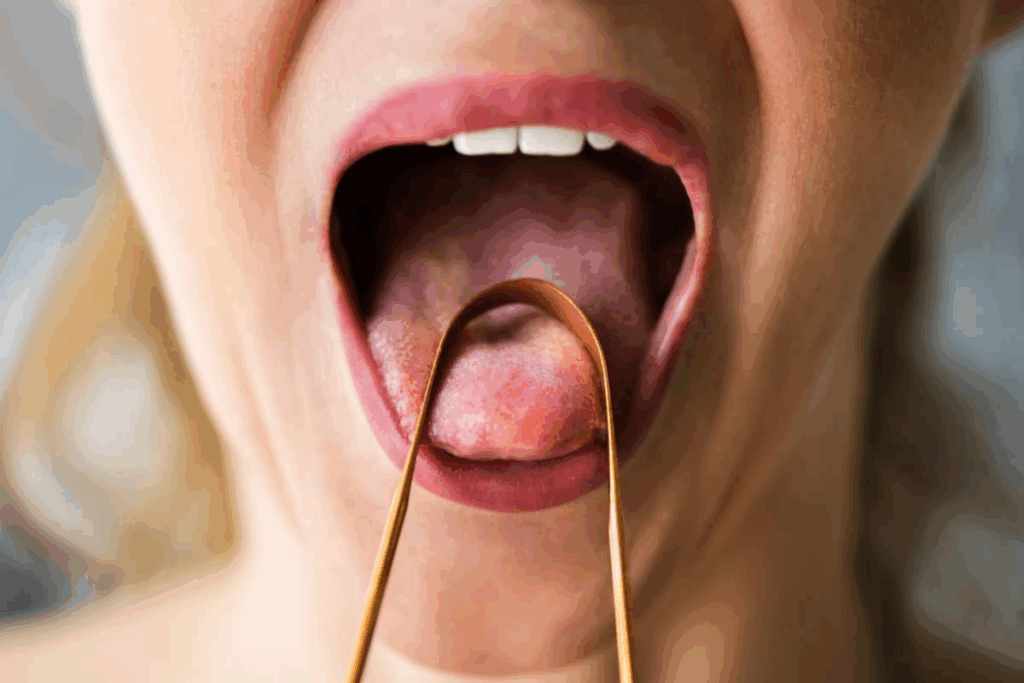
Knowing the signs of cancer under the tongue is key for early treatment. This type of cancer, called sublingual cancer, often starts in squamous cells. These cells make up about 90 percent of oral cancers.
Visual Indicators of Sublingual Cancer
Look out for white bumps or patches called leukoplakia, red patches known as erythroplakia, and hard lumps that won’t heal. These signs can help spot cancer under the tongue.
Leukoplakia shows up as white patches or lesions on the tongue or inside the mouth. Not all leukoplakia is cancer, but it can turn into cancer over time.
Erythroplakia is red patches in the mouth, including under the tongue. These patches are more likely to be cancerous or turn into cancer.
Differences Between Cancerous and Non-Cancerous Growths
Telling cancerous from non-cancerous growths under the tongue is important. Cancerous growths are hard, painless, and don’t go away. Non-cancerous growths are soft, painful, or can heal on their own.
Characteristics | Cancerous Growths | Non-Cancerous Growths |
Texture | Hard | Soft |
Pain | Painless | Painful |
Duration | Persistent | May resolve |
Cancer Cysts Under the Tongue
Cancer cysts under the tongue are signs of sublingual cancer. They look like lumps or swellings and may cause pain or trouble swallowing.
If you see unusual growths or cysts under your tongue, see a doctor. Early detection and treatment are key to managing sublingual cancer.
Early Visual Signs and Symptoms of Tongue Cancer
Knowing the early signs of tongue cancer is key to better treatment. Early detection is vital for a good outcome.
Tongue cancer can show itself in many ways. It’s important to watch for changes in tongue color and texture. Also, look out for unusual growths or sores.
Red Patches (Erythroplakia) and Their Significance
Erythroplakia is a condition with red patches on the tongue. These red lesions can feel velvety and are linked to a higher cancer risk. If you have persistent red patches, see a doctor.
- Red patches that are persistent and do not heal
- Velvety texture, which can be a distinguishing characteristic
- Higher risk associated with erythroplakia
White Patches and Bumps (Leukoplakia)
Leukoplakia shows up as white patches or bumps on the tongue. While not all cases are cancerous, some can turn into cancer. If you notice white patches or bumps, get them checked by a healthcare provider.
- White patches or bumps that do not scrape off
- Potential for progression to cancer
- Importance of professional evaluation
Non-Healing Ulcers and Persistent Sores
Ulcers or sores on the tongue that won’t heal are a big worry. They might be a sign of tongue cancer, so get them checked by a doctor.
- Ulcers or sores that persist
- Potential indication of tongue cancer
- Necessity for medical assessment
Bleeding and Pain Symptoms
Bleeding or pain in the tongue area could be a sign of tongue cancer. While many things can cause these symptoms, persistent bleeding or pain needs a doctor’s check-up.
Stay alert to any changes in your mouth. If you notice anything odd, see a doctor. Early treatment can greatly improve your chances of beating tongue cancer.
Anatomical Areas Affected by Tongue Cancer
Tongue cancer can happen in different parts of the tongue. Each part has its own signs and symptoms. Knowing these areas well is key to catching cancer early and treating it effectively.
Circumvallate Papillae Cancer: Identification and Symptoms
The circumvallate papillae are big papillae at the tongue’s back. Cancer here can make swallowing hard and change how things taste. Spotting circumvallate papillae cancer early is very important for good treatment.
Symptoms of this cancer include pain or discomfort at the tongue’s back. In serious cases, it can also make speaking or swallowing hard.
Foliate Papillae Cancer: Visual Characteristics
Foliate papillae are on the tongue’s sides. Cancer here can show up as visible lesions or ulcers that don’t heal.
This cancer can cause pain or discomfort on the tongue’s sides. It’s worse when eating or talking.
Tongue Frenulum Cancer: What to Look For
The tongue frenulum is a small tissue fold linking the tongue to the mouth floor. Finding cancer here early is tough. Regular self-checks are essential to spot any oddities.
Signs of tongue frenulum cancer include unexplained pain or swelling under the tongue.
Plica Fimbriata Cancer: Recognizing the Signs
Plica fimbriata are small, fringe-like structures under the tongue. Though rare, cancer can happen here. It shows up with symptoms that need careful checking.
Anatomical Area | Common Symptoms | Visual Characteristics |
Circumvallate Papillae | Difficulty swallowing, changes in taste | Lesions or ulcers at the back of the tongue |
Foliate Papillae | Pain on the sides of the tongue | Visible lesions or ulcers on the sides |
Tongue Frenulum | Unexplained pain or swelling under the tongue | Abnormalities under the tongue |
Plica Fimbriata | Non-specific symptoms, swelling under the tongue | Fringe-like abnormalities under the tongue |
Types of Tongue Cancer and Their Visual Presentations
Tongue cancer comes in different types, with squamous cell carcinoma being the most common. It’s important to know how each type looks. We’ll look at squamous cell carcinoma and other types of tongue cancer.
Squamous Cell Carcinoma: The Most Common Type
Squamous cell carcinoma starts in the squamous cells of the tongue. It’s more common in older men. Visual presentations include ulcers, white or red patches, and lumps on the tongue. These symptoms can hurt and may bleed.
The look of squamous cell carcinoma can change. It often starts as a small, painless lump or ulcer. As it grows, it can cause discomfort, pain, and trouble swallowing.
Other Types of Tongue Cancer
While squamous cell carcinoma is the most common, other types like adenocarcinomas and lymphomas also exist. These are less common but important. Knowing about all types of tongue cancer helps with accurate diagnosis and treatment.
Other types of tongue cancer may look different. It’s key to know the various visual presentations for early detection.
Distinctive Features of Cancerous Lumps and Growths
Cancerous lumps and growths on the tongue can look different. It’s important to know what to look for. They can be hard lumps, unusual colors, or other changes.
Hard Lumps on Side of Tongue
One sign of tongue cancer is hard lumps on the side of the tongue. At first, they might not hurt. But as they grow, they can become painful. It’s key to get any lump checked by a doctor.
- Hard lumps feel firm or stuck to the area around them
- They can show up anywhere on the tongue, like the sides, tip, or base
- These lumps might mean you have squamous cell carcinoma, the most common tongue cancer
Purple or Bruised Spots on Tongue
Purple or bruised spots on the tongue can also be a sign of cancer. These spots might mean there’s bleeding or blood vessels in the tumor.
Some things to notice about these spots include:
- They look like discolored patches or lesions
- The color can be purple, blue, or even black
- These spots might hurt or bleed, too
White Bumps and Their Significance
White bumps on the tongue can also be a warning sign. But they’re more often linked to conditions like leukoplakia. It’s important to know what these bumps look like and why they’re there.
Some things to keep in mind about these bumps include:
- They can show up anywhere on the tongue
- They might be flat, raised, or feel rough
- They often don’t go away or can grow bigger over time
Oral Cancer Lumps: Characteristics and Appearance
Oral cancer lumps, like those on the tongue, can look different. Knowing what to look for can help catch them early.
Characteristic | Description |
Texture | They can be hard, firm, or soft |
Appearance | They might look like lumps, bumps, or ulcers |
Pain | They might not hurt at first but can become painful as they grow |
It’s vital to recognize the signs of cancerous lumps and growths. If you see anything unusual on your tongue, see a doctor right away. They can help with early detection and treatment.
Differentiating Tongue Cancer from Other Mouth Conditions
It’s important to tell the difference between cancer and non-cancerous tongue lesions. Many conditions can affect the tongue. Knowing their unique signs is key for the right diagnosis and treatment.
Common Benign Tongue Conditions
Some non-cancerous conditions can look like tongue cancer. This makes it hard to diagnose. These include:
- Transient Lingual Papillitis: This is inflammation of the tongue’s papillae, causing pain and discomfort.
- Oral Lichen Planus: An autoimmune condition that can cause white patches and ulcers on the tongue.
- Tongue Ulcers: These are often caused by trauma, are painful, but usually heal on their own.
Even though these conditions are usually harmless, they can sometimes look like cancer. A doctor’s thorough check is needed to figure out any unusual tongue symptoms.
When to Be Concerned About a Tongue Abnormality
Noticing unusual changes on your tongue can worry you. You should see a doctor if you have:
- Persistent ulcers or sores that don’t heal within two weeks.
- Unexplained bleeding or pain on the tongue.
- White or red patches that don’t go away.
- Hard lumps or thickening of the tongue tissue.
Early detection is key to treating tongue cancer well. If you’re worried about a tongue abnormality, don’t wait to see a healthcare professional.
Key Visual Differences Between Cancerous and Non-Cancerous Lesions
Cancerous tongue lesions have clear visual signs that set them apart from non-cancerous ones. These include:
- Persistence: Cancerous lesions often stay or grow, unlike non-cancerous ones that may heal.
- Appearance: They can look like white or red patches, ulcers, or lumps. They might be painful or bleed easily.
- Texture: Cancerous lesions are usually hard, while non-cancerous ones are soft or tender.
Knowing these differences can help spot issues early and get the right medical care. If you’re unsure about tongue changes, always check with a healthcare professional.
Risk Factors Contributing to Tongue Cancer Development
Tongue cancer is influenced by lifestyle and demographic factors. Knowing these risk factors helps in prevention and early detection.
Tobacco and Alcohol Use
Tobacco and alcohol are major risk factors for tongue cancer. Tobacco contains harmful substances that can cause cancer. Alcohol, when used with tobacco, raises the risk even more. It’s best to avoid or cut down on these substances.
Tobacco and Alcohol Use Statistics:
Risk Factor | Relative Risk | Prevalence |
Tobacco Use | 5-10 times higher | 30% of tongue cancer cases |
Alcohol Consumption | 2-3 times higher | 20% of tongue cancer cases |
Combined Tobacco and Alcohol Use | 15-30 times higher | 50% of tongue cancer cases |
HPV Infection and Its Growing Significance
HPV infection is a growing risk factor for tongue cancer, mainly in younger people. HPV-related tongue cancer is different from tobacco-related cases. Vaccination and awareness are key.
Age, Gender, and Other Demographic Factors
Age and gender are key demographic factors for tongue cancer. The risk goes up with age, with most cases in people over 40. Men are more likely to get tongue cancer than women. Genetic predisposition, diet, and work exposures also matter.
Knowing these risk factors helps in early detection and prevention. We urge people, with or without risk factors, to watch their oral health. If you notice anything unusual, see a healthcare professional.
Conclusion: Importance of Early Detection and Seeking Medical Care
Early detection is key to better treatment and survival for tongue cancer patients. It’s important to know the signs like unusual patches, lumps, or ulcers under the tongue. This helps get medical help quickly.
Knowing what cancer under the tongue looks like is essential. A cancer cyst under the tongue could mean a serious issue. So, it’s important to see a doctor if you notice any unusual changes.
We at our institution are dedicated to top-notch healthcare for international patients. Our team works hard to offer advanced treatments and support. We make sure patients get the care they need.
By catching cancer early and getting medical help, patients have a better chance of beating tongue cancer.
FAQ
What are the common visual indicators of tongue cancer under the tongue?
Look out for white patches (leukoplakia) and red patches (erythroplakia). Also, watch for non-healing ulcers and lumps that bleed easily.
How does tongue cancer typically manifest on the tongue?
Tongue cancer shows up as lumps, red or white patches, or non-healing ulcers. It can also cause bleeding and pain.
What is the difference between cancerous and non-cancerous growths on the tongue?
Cancerous growths don’t go away and grow bigger. They may bleed or hurt. Non-cancerous growths are usually harmless and can go away on their own.
What are the risk factors that contribute to the development of tongue cancer?
Risk factors include tobacco and alcohol use, HPV infection, and being older or male.
What is the significance of circumvallate papillae cancer, and how is it identified?
Circumvallate papillae cancer is a type of cancer near the back of the tongue. It’s identified by looking for abnormal growths or lesions in that area.
Can tongue cancer be differentiated from other benign mouth conditions?
Yes, tongue cancer can be told apart by its lasting nature, growth, and symptoms like bleeding and pain. These are not common in benign conditions.
What is the most common type of tongue cancer, and how does it present visually?
The most common type is squamous cell carcinoma. It shows up as a lump, ulcer, or patch on the tongue that won’t heal.
How important is early detection in treating tongue cancer?
Early detection is key. It greatly improves treatment success and survival rates, which is our goal in healthcare.
What should I look for when checking for tongue cancer?
Check for unusual changes like lumps, white or red patches, non-healing ulcers, and persistent pain or bleeding.
Are there any specific anatomical areas of the tongue more prone to cancer?
Yes, areas like the circumvallate papillae, foliate papillae, tongue frenulum, and plica fimbriata are more at risk. Each has its own symptoms and signs.
References
World Health Organization. (2025). What Does Tongue Cancer Look Like Under the. Retrieved from https://www.who.int/news-room/fact-sheets/detail/oral-health