
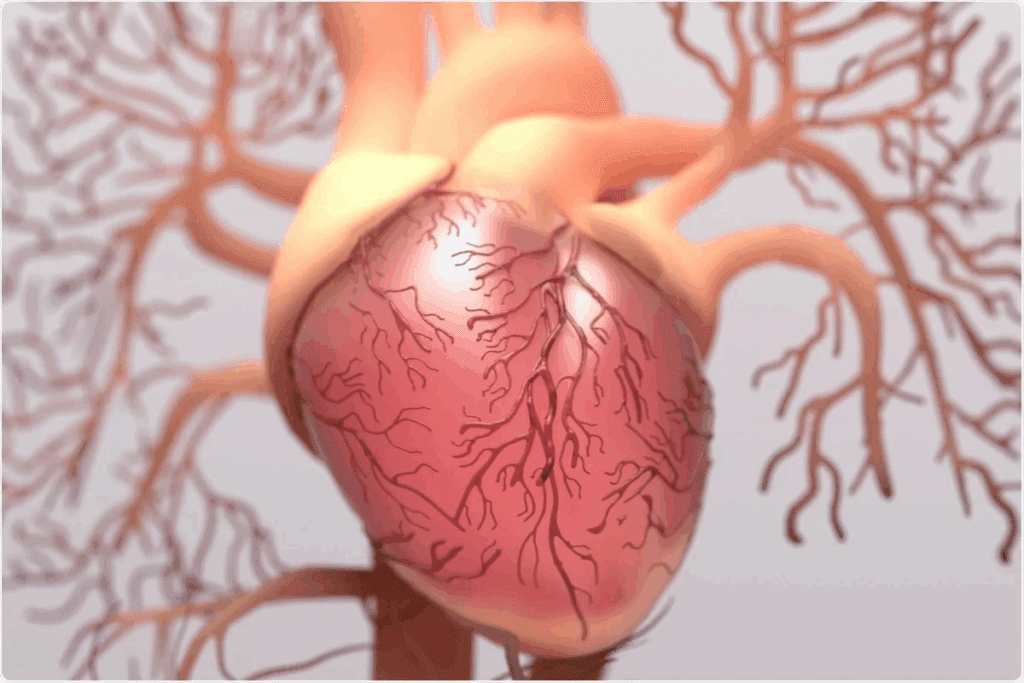
Knowing how the heart works is key to treating heart problems. At Liv Hospital, we are committed to providing accurate and up-to-date knowledge for better heart health. The heart is a vital, fist-sized muscular organ. It’s located slightly on the left side of the chest. It has four main chambers: two atria and two ventricles.
Visual aids like cardiac anatomy diagrams and images are very important. They help us understand the heart’s complex system. By looking at detailed heart anatomy, doctors, students, and researchers can grasp the heart’s role. They can also spot and treat different heart issues.
Key Takeaways
- Accurate heart anatomy visualization aids in diagnosing cardiovascular conditions.
- The heart consists of four main chambers: two atria and two ventricles.
- Cardiac anatomy diagrams and images are key to understanding the heart’s structure and function.
- Detailed heart anatomy helps in better diagnosis and treatment of heart conditions.
- Liv Hospital is committed to providing accurate and up-to-date knowledge for better cardiovascular health.
The Fundamental Structure of the Human Heart

The humanheart is a complex organ. Knowing its structure is key for medical experts and students. It has many layers and structures that work together to keep blood flowing.Explore a cardiac anatomy diagram with labeled images of the human heart structure.
We will look at the heart’s four-chambered design and its outer features. These are important for how it works. The heart has four chambers: the right atrium, right ventricle, left atrium, and left ventricle. Each one has a special role in blood circulation.
Overview of the Four-Chambered Heart
The four-chambered heart is a remarkable example of biological engineering. The right atrium gets deoxygenated blood from the body. The left atrium gets oxygenated blood from the lungs. The right ventricle sends blood to the lungs for oxygen. The left ventricle sends oxygenated blood to the rest of the body.
| Chamber | Function |
| Right Atrium | Receives deoxygenated blood |
| Left Atrium | Receives oxygenated blood |
| Right Ventricle | Pumps blood to lungs |
| Left Ventricle | Pumps oxygenated blood to body |
External Cardiac Anatomy Features
The heart’s outside includes the pericardium, a protective sac, coronary arteries for heart muscle blood, and major blood vessels for circulation.
Knowing these outside features helps us understand the heart’s role in the circulatory system. The coronary arteries, for example, are key in supplying oxygen and nutrients to the heart muscle.
Essential Cardiac Anatomy Diagrams for Clinical Understanding

Cardiac anatomy diagrams are key in teaching and practicing medicine. They help us understand the heart’s complex structure. These diagrams are essential for doctors, showing the heart’s anatomy clearly and in detail.
Standard Anatomical Views of the Heart
To grasp the heart’s structure, we need to see it from different angles. The main views are anterior, posterior, and lateral. Each view gives us special insights into the heart’s anatomy.
| Anatomical View | Description | Key Features |
| Anterior View | Front view of the heart | Right ventricle, pulmonary trunk, and aorta |
| Posterior View | Back view of the heart | Atria, pulmonary veins, and superior/inferior vena cava |
| Lateral View | Side view of the heart | Relationship between chambers and major blood vessels |
Circulatory Pathway Visualization
Knowing the circulatory pathway is key for diagnosing and treating heart issues. Seeing the pathway helps doctors follow blood flow through the heart and lungs. This helps spot problems.
The pathway has two main parts: the pulmonary circuit and the systemic circuit. The pulmonary circuit moves blood from the heart to the lungs and back. The systemic circuit moves blood from the heart to the body and back.
By looking at detailed diagrams and visualizations, doctors can better understand the heart’s function and problems.
Detailed Exploration of the Heart’s Chambers
The heart has four chambers that are key to our health. Each chamber has a special role in moving blood around our body. This helps our heart work well.
Right and Left Atria Structure and Function
The right atrium gets oxygen-poor blood from the body. The left atrium gets oxygen-rich blood from the lungs. This keeps the blood flowing right.
The atria are thin and act as blood reservoirs. They help push blood into the ventricles. The atrial walls have pectinate muscles for better blood reception.
Right and Left Ventricles Anatomy and Mechanics
The right ventricle sends oxygen-poor blood to the lungs. The left ventricle sends oxygen-rich blood to the body. This keeps the blood mixed correctly.
The ventricles are thicker than the atria, with the left being the strongest. The ventricular walls are made of muscle cells. They contract to pump blood effectively.
Knowing how the heart’s chambers work is vital for health. Cardiac anatomy images help doctors see and understand the heart. This aids in making treatment plans.
Major Blood Vessels in Cardiac Anatomy
It’s key to know the major blood vessels to get cardiac anatomy. These vessels are vital for the heart’s health. They bring oxygen and nutrients to the heart. We’ll look at the arterial system and venous return, key for heart function.
Arterial System: Aorta and Pulmonary Trunk
The arterial system carries blood from the heart to the body and lungs. The aorta comes from the left ventricle. The pulmonary trunk comes from the right ventricle. Both are key for blood flow.
The aorta splits into arteries for the body. The pulmonary trunk splits into left and right pulmonary arteries for the lungs. Knowing these vessels helps in diagnosing and treating heart issues.
Venous Return: Superior and Inferior Vena Cava
The superior and inferior vena cava bring deoxygenated blood back to the heart. The superior vena cava comes from the upper body. The inferior vena cava comes from the lower body. Both go to the right atrium.
| Vessel | Function | Destination |
| Aorta | Carries oxygen-rich blood | Body |
| Pulmonary Trunk | Carries oxygen-poor blood | Lungs |
| Superior Vena Cava | Drains blood from upper body | Right Atrium |
| Inferior Vena Cava | Drains blood from lower body | Right Atrium |
In conclusion, major blood vessels are critical in cardiac anatomy. Knowing their role is vital for health professionals and students. By studying the arterial system and venous return, we gain insight into the heart’s workings.
Heart Valves: Gatekeepers of Circulatory Function
Heart valves are key to making sure blood moves in one direction through the heart. The heart has four important valves. They work together to keep blood flowing smoothly.
Atrioventricular Valves: Mitral and Tricuspid
The atrioventricular valves, made up of the mitral and tricuspid valves, are very important. They control blood flow between the atria and ventricles. The mitral valve is between the left atrium and left ventricle. It makes sure blood moves right from the atrium to the ventricle.
The tricuspid valve is between the right atrium and right ventricle. It helps blood flow from the right atrium to the right ventricle.
- The mitral valve has two leaflets that open and close to let blood flow.
- The tricuspid valve has three leaflets that do the same thing.
Semilunar Valves: Aortic and Pulmonary
The semilunar valves, which are the aortic and pulmonary valves, control blood flow from the ventricles into the major arteries. The aortic valve is between the left ventricle and the aorta. It makes sure oxygen-rich blood goes into the body’s circulation.
The pulmonary valve is between the right ventricle and the pulmonary artery. It lets deoxygenated blood go to the lungs for oxygen.
- The aortic valve has three cusps that open to let blood flow into the aorta.
- The pulmonary valve also has three cusps that help blood flow into the pulmonary artery.
Knowing how these heart valves work is key for diagnosing and treating heart valve diseases. Detailed cardiac anatomy images help doctors examine closely. They use this to create good treatment plans.
The Cardiac Conduction System Illustrated
The heart has its own electrical system, called the cardiac conduction system. It’s made up of special tissues and pathways. This system is key for the heart to beat in a regular rhythm.
Electrical Conduction Pathway
The electrical conduction pathway is how electrical signals control the heartbeat. It makes sure the heart pumps blood well. It starts with the SA node, the heart’s natural pacemaker.
The SA node sends out electrical signals at a certain rate. These signals then go to the AV node. There, they pause a bit before moving to the ventricles.
This pause lets the atria fully contract before the ventricles do. The signals then go through the Bundle of His and split into left and right branches. They reach the Purkinje fibers, which make the ventricles contract.
Specialized Tissue: SA Node, AV Node, Bundle of His, and Purkinje Fibers
The cardiac conduction system includes special tissues for electrical impulses. The SA node in the right atrium starts the heartbeat. The AV node is between the atria and ventricles, controlling the impulse to the ventricles.
The Bundle of His and its branches carry the signal to the ventricles. The Purkinje fibers spread the impulse across the ventricular muscle. This ensures the ventricles contract together.
Knowing about these tissues is key for diagnosing and treating heart issues. By showing the cardiac conduction system, we can see how the heart’s electrical activity works.
Advanced Cardiac Anatomy Diagrams for Clinical Applications
Advanced cardiac anatomy diagrams have changed how doctors work. They show the heart’s detailed structure. This is key for doctors to spot and treat heart problems.
“The human heart’s complexity demands a deep grasp of its anatomy for good care,” say top cardiologists. These diagrams help doctors understand the heart better. This improves patient care and results.
Coronary Circulation Visualization
Seeing the heart’s blood flow is vital. Coronary circulation diagrams show how blood reaches the heart muscle. New imaging lets us make detailed diagrams of this flow. This helps spot heart disease early.
Seeing the heart’s blood flow is very important. It lets doctors find blockages and plan treatments. A study found that seeing the heart’s blood flow is key for treating heart disease.
Cardiac Muscle Tissue Architecture
Understanding the heart’s muscle structure is also key. Cardiac muscle diagrams show how heart cells work together. This helps doctors understand heart problems better.
The heart’s muscle structure is complex. Advanced diagrams help explain this. They let doctors diagnose and treat heart muscle issues better.
Using these diagrams, doctors can learn more about the heart. This leads to better care for patients. As medical imaging gets better, so will these diagrams. This will help doctors even more in the future.
3D Cardiovascular Anatomy Diagrams: Modern Visualization Techniques
The use of 3D cardiovascular anatomy diagrams has changed cardiology a lot. They give us new insights into the heart’s complex structure. These new ways of seeing the heart have changed how we learn and work with cardiac anatomy.
Now, we can see the heart’s details clearly with advanced computer models and interactive tools. This has made both medical practice and education better.
Computer-Generated 3D Heart Models
Computer-generated 3D heart models show the heart’s anatomy in detail. They let doctors and students see the heart from different sides. This is great for understanding how the heart’s parts fit together.
For example, a 3D model can show how the coronary arteries go around the heart. This helps a lot in learning and planning surgeries.
Interactive Cardiovascular Pic Resources
Interactive cardiovascular pics let users play with 3D models live. This makes learning about the heart’s anatomy more fun and effective.
These tools are super helpful for students and doctors in training. They also help doctors explain complex heart issues to patients. This makes patients understand their health better.
| Feature | Computer-Generated 3D Models | Interactive Cardiovascular Pics |
| Visualization Detail | High-resolution 3D structures | Interactive, manipulable models |
| Educational Value | Excellent for understanding spatial relationships | Enhances engagement and retention |
| Clinical Application | Useful for preoperative planning | Facilitates patient education and understanding |
Using these new tools helps us understand the heart better. This leads to better care for patients. As technology gets better, we’ll have even more tools to help us treat heart problems.
Comparative Heart Anatomy Images: Normal vs. Pathological Conditions
It’s key to know the difference between normal and diseased hearts for good care. Images that compare healthy and sick hearts help doctors learn. This knowledge improves how they treat patients.
These images give us a deep look into heart problems. They help us understand the heart’s anatomy and how it can go wrong.
Structural Heart Disease Visualization
Seeing the heart’s structure is important in cardiology today. By looking at normal and sick hearts side by side, doctors spot problems. Comparative heart anatomy images make it easier to see what’s wrong.
For example, heart conditions like hypertrophic cardiomyopathy or mitral valve prolapse are clearer with these images. This helps doctors give better care.
Congenital Heart Defects Illustrated
Images that show congenital heart defects help doctors understand them better. By seeing normal hearts and defects side by side, they can make better diagnoses. This leads to better treatment plans.
For instance, defects like atrial septal defects and tetralogy of Fallot are easier to grasp with these images. They help doctors explain complex issues to patients and each other.
Atlas of Human Cardiac Anatomy: Comprehensive Educational Resources
An atlas of human cardiac anatomy is key for both clinicians and students. It gives a detailed look at the heart’s anatomy. These resources help us grasp the heart’s complex structure and function.
Photorealistic Heart Anatomy Images
Photorealistic heart anatomy images show the heart’s details in a realistic way. They are vital for learning, letting students and doctors see the heart’s complex anatomy clearly.
These images help us understand the heart’s chambers, valves, and blood vessels better. Their clear and precise nature makes them a top choice for medical education.
Schematic Diagrams for Medical Education
Schematic diagrams simplify the heart’s anatomy while keeping it informative. They highlight important structures and their connections. These diagrams are key for learning, making complex cardiac anatomy easier to understand.
They are great for showing how blood moves through the heart. By using these diagrams, we can understand the heart’s functions better.
Photorealistic images and schematic diagrams are both essential in a detailed atlas of human cardiac anatomy. They work together to give a full view of the heart’s anatomy. This supports both learning and clinical work.
Conclusion: Advances in Cardiac Anatomy Visualization and Future Directions
Advances in cardiac anatomy visualization have changed how we see the heart’s complex structure. We’ve looked at how cardiac and cardiovascular anatomy diagrams help in clinics and schools.
Using new visualization methods, we can help patients more and improve research. This helps those with heart problems. The future of heart anatomy will bring new medical treatments and therapies.
As we go on, better cardiac anatomy diagrams and images will be key in heart medicine. We expect these advances to lead to better diagnosis and treatment of heart diseases.
FAQ
What is the importance of cardiac anatomy diagrams in understanding the heart’s structure and function?
Cardiac anatomy diagrams are key for those in the medical field. They help us understand the heart’s complex system. This knowledge is vital for diagnosing and treating heart issues.
What are the main features of the human heart’s fundamental structure?
The human heart has four chambers. It has layers and structures that work together. These include the pericardium, coronary arteries, and major blood vessels.
How do cardiac anatomy diagrams aid in clinical understanding and education?
These diagrams show the heart’s anatomy in detail. They help doctors diagnose and treat heart conditions. They are also important for learning about the heart.
What is the role of the heart’s chambers in maintaining circulatory function?
The heart’s chambers, like the atria and ventricles, keep blood flowing. Knowing their anatomy is key for diagnosing and treating heart problems.
What is the significance of major blood vessels in cardiac anatomy?
Major blood vessels carry oxygen and nutrients to the heart. Understanding them is critical for diagnosing and treating heart conditions.
How do heart valves contribute to circulatory function?
Heart valves make sure blood flows in one direction. Knowing how they work is important for diagnosing and treating heart issues.
What is the cardiac conduction system, and how does it regulate the heartbeat?
The cardiac conduction system controls the heartbeat. It includes special tissue like the SA node and Purkinje fibers.
What are the benefits of advanced cardiac anatomy diagrams in clinical applications?
Advanced diagrams show the heart’s anatomy in detail. They help doctors diagnose and treat heart conditions. They are vital for medical education and practice.
How do 3D cardiovascular anatomy diagrams improve visualization techniques?
3D diagrams offer detailed, interactive models of the heart. They help doctors diagnose and treat heart conditions. They are a big step forward in visualizing the heart.
What is the importance of comparative heart anatomy images in understanding normal and pathological conditions?
Images comparing normal and abnormal hearts help doctors understand heart diseases. They are essential for medical education and practice.
What is the value of an atlas of human cardiac anatomy in medical education?
An atlas of human cardiac anatomy provides detailed illustrations. It helps doctors and students understand the heart’s anatomy and related conditions.
How do detailed heart anatomy images contribute to the diagnosis and treatment of heart conditions?
Detailed images help doctors diagnose and treat heart conditions. They provide a clear understanding of the heart’s anatomy and related issues.
What is the role of coronary circulation visualization in cardiac anatomy?
Visualizing coronary circulation is key for understanding the heart’s blood supply. It is vital for diagnosing heart conditions.
How do interactive cardiovascular pic resources aid in clinical practice and education?
Interactive resources provide detailed, interactive models of the heart. They help doctors diagnose and treat heart conditions. They are essential for medical education and practice.
References
- StatPearls. (2023). Anatomy, Thorax, Heart Muscles. In NCBI Bookshelf.https://www.ncbi.nlm.nih.gov/books/NBK545195/
- TeachMeAnatomy (Fitzgerald, G.). (2024). The chambers of the heart – atria & ventricles.https://teachmeanatomy.info/thorax/organs/heart/atria-ventricles/
- SEER Training Modules. (n.d.). Structure of the Heart.https://training.seer.cancer.gov/anatomy/cardiovascular/heart/structure.html



 Departments
 Related Videos
 Our Doctors
 News
News