Every year, thousands of people worldwide face a sudden cardiac arrest without warning. This is a shocking fact that shows the big difference between a heart attack and cardiac arrest. Both are serious, but they are not the same.
Knowing the difference is vital for receiving quick and appropriate medical care. A heart attack happens when blood flow to the heart is blocked, harming the heart muscle. On the other hand, cardiac arrest is when the heart’s electrical system fails, stopping the heart from beating right.
Key Takeaways
● Cardiac arrest and heart attack are distinct medical emergencies.
● A heart attack involves blocked blood flow to the heart, damaging the heart muscle.
● Cardiac arrest occurs when the heart’s electrical system malfunctions.
● Understanding the difference is key for the right medical response.
● Quick medical help is vital for survival in both cases.
Understanding Cardiac Arrest and Heart Attack

It’s important to know the difference between cardiac arrest and heart attack. Both are serious heart issues, but they have different causes and effects.
Defining Cardiac Arrest
Cardiac arrest happens when the heart suddenly stops beating. It’s caused by an electrical problem that stops the heart’s normal rhythm. This is a life-threatening situation that needs immediate help.
Defining Heart Attack
A heart attack occurs when blood flow to the heart is blocked. This blockage, often by a blood clot, damages the heart muscle because it lacks oxygen. It’s a problem with blood flow that can lead to cardiac arrest if not treated quickly.
Key Differences Between the Two Conditions
The main difference is in their causes. Cardiac arrest is an electrical issue that stops the heart. A heart attack is a problem with blood flow to the heart. Knowing this helps doctors respond quickly and correctly.
To wrap it up, both conditions are serious but need different treatments. Understanding the symptoms and the differences can greatly improve patient care.
The Relationship Between Cardiac Arrest and Heart Attack

Although cardiac arrest and heart attack are closely linked, they are different conditions; specifically, a heart attack can lead to cardiac arrest. Sometimes, cardiac arrest happens without a heart attack. We’ll look at how these conditions are connected and the risks they pose.
How Heart Attacks Can Lead to Cardiac Arrest
A heart attack happens when blood flow to the heart is blocked. This blockage can damage the heart muscle. It might lead to cardiac arrest if not treated quickly.
Key factors that increase the risk of cardiac arrest following a heart attack include:
● The extent of heart muscle damage
● The presence of pre-existing heart conditions
● The timeliness and effectiveness of medical intervention
When Cardiac Arrest Occurs Without a Heart Attack
Cardiac arrest can happen without a heart attack. It can be caused by heart conditions or external factors. For example, severe electrical disturbances in the heart can lead to cardiac arrest.
Other conditions that may lead to cardiac arrest without a heart attack include:
● Structural heart abnormalities
● Severe infections or sepsis
● Drug overdoses or certain medications
Statistical Relationship Between the Two Conditions
Studies show a strong link between heart attacks and cardiac arrest. The American Heart Association notes that heart attacks increase the risk of cardiac arrest. Quick medical care during a heart attack is key to preventing cardiac arrest.
Key statistics illustrating this relationship include:
|
Condition |
Incidence |
Survival Rate |
|---|---|---|
|
Heart Attack |
Approximately 790,000 in the U.S. annually |
Varies based on promptness of care |
|
Cardiac Arrest |
Over 350,000 out-of-hospital cases in the U.S. each year |
Less than 10% survival rate without immediate CPR |
Understanding the link between cardiac arrest and heart attack is vital. It helps us develop better prevention and treatment plans. By knowing the risks and acting fast, we can save lives.
What Happens During a Cardiac Arrest
Cardiac arrest happens when the heart suddenly stops pumping blood. This leads to a lack of oxygen to vital organs. It’s a life-threatening situation that needs quick medical help to get the heart working again.
Physiological Mechanism
Cardiac arrest starts with the heart’s electrical system going wrong. This causes an irregular heartbeat, or arrhythmia. The most common type is ventricular fibrillation, where the heart quivers and can’t pump blood.
The changes in the body during cardiac arrest are fast and serious. Without blood flow, organs like the brain, liver, and kidneys don’t get oxygen or nutrients. This can cause lasting damage.
Effects on the Body
Cardiac arrest has immediate and severe effects on the body. Without a heartbeat, blood doesn’t circulate, and oxygen can’t reach tissues. This leads to:
● Loss of consciousness due to inadequate blood flow to the brain
● Potential damage to vital organs from lack of oxygen
● Cessation of normal bodily functions as the body’s systems begin to shut down
Critical Timeline
The time to treat cardiac arrest is very short. Without help, survival chances drop fast. The American Heart Association stresses the need for the “Chain of Survival,” which includes:
|
Step |
Description |
Timeframe |
|---|---|---|
|
1. Recognition of cardiac arrest |
Identifying the condition and calling for help |
Immediate |
|
2. CPR (Cardiopulmonary Resuscitation) |
Performing chest compressions to maintain blood circulation |
Within 2 minutes |
|
3. Defibrillation |
Using an AED to restore a normal heartbeat |
Within 3-5 minutes |
Quick action is key to prevent lasting damage and improve survival chances. Knowing how cardiac arrest works, its effects, and the need for fast help can make a big difference.
Common Causes of Cardiac Arrest
It’s important to know why cardiac arrest happens. This is because it can stop the heart from beating right away. There are many reasons for this.
Let’s look at the main causes. We’ll group them into three types: heart electrical problems, heart structure issues, and other non-heart factors.
Electrical Disturbances in the Heart
The heart’s electrical system makes it beat. If this system gets messed up, it can cause irregular heartbeats. Some of these irregular heartbeats can even stop the heart.
● Ventricular Fibrillation: A serious arrhythmia where the heart’s ventricles fibrillate instead of beating right.
● Long QT Syndrome: A condition that affects the heart’s electrical system, leading to dangerous heart rhythms.
Structural Heart Problems
Problems with the heart’s structure can also cause cardiac arrest. These can be present at birth or develop later due to other conditions.
● Cardiomyopathy: A disease of the heart muscle that makes it hard for the heart to pump blood.
● Coronary Artery Disease: A condition where the heart’s main blood vessels get damaged or diseased.
Non-Cardiac Causes
Cardiac issues are a big reason for cardiac arrest, but other factors can also cause it. These include severe injuries, imbalances in essential minerals, and other factors not related to the heart.
● Severe Trauma: Physical injuries that can harm the heart’s function.
● Electrolyte Imbalance: Abnormal levels of minerals like potassium or sodium, which are key for the heart’s electrical activity.
Knowing these causes helps us find ways to prevent cardiac arrest. It also helps us treat it better when it happens.
Recognizing the Symptoms of Cardiac Arrest
Cardiac arrest can happen without warning. But, there are signs that come before it. Knowing these signs is key to acting fast.
Immediate Warning Signs
The first signs of cardiac arrest are clear and urgent. They include:
● Sudden collapse
● Loss of consciousness
● No breathing or pulse
Seeing these signs means you must act quickly. Call for help and start CPR if you can.
Preceding Symptoms That May Go Unnoticed
Some people may feel symptoms before a cardiac arrest. These can be:
● Dizziness or lightheadedness
● Chest discomfort or pain
● Shortness of breath
● Nausea or vomiting
These signs might seem minor but can signal a bigger problem.
Differences from Heart Attack Symptoms
Cardiac arrest and heart attack are both serious but different. A heart attack blocks blood to the heart, hurting the muscle. Symptoms include chest pain and shortness of breath.
Cardiac arrest, though, is when the heart stops beating. Its symptoms are more about losing heart function.
Risk Factors for Sudden Cardiac Arrest
The risk of sudden cardiac arrest comes from genetics, environment, and health. Knowing these factors helps find people at risk. It also helps in taking steps to prevent it.
Genetic and Family History Factors
Genetics play a big role in cardiac arrest risk. People with heart conditions in their family are at higher risk. Genetic testing can find inherited heart conditions that raise the risk.
Some genetic conditions that increase the risk of cardiac arrest include:
● Hypertrophic cardiomyopathy
● Long QT syndrome
● Brugada syndrome
● Arrhythmogenic right ventricular cardiomyopathy (ARVC)
Lifestyle and Environmental Factors
Lifestyle choices greatly affect cardiac arrest risk. Smoking, a sedentary lifestyle, and a diet high in saturated fats and cholesterol raise the risk. Excessive alcohol and drug use also increase the risk.
|
Lifestyle Factor |
Impact on Cardiac Arrest Risk |
|---|---|
|
Smoking |
Increases risk due to cardiovascular damage |
|
Sedentary Lifestyle |
Contributes to obesity, diabetes, and heart disease |
|
Diet High in Saturated Fats |
Leads to atherosclerosis and heart disease |
Pre-existing Medical Conditions
Heart conditions before cardiac arrest are a big risk factor. Conditions like coronary artery disease, heart failure, and valvular heart disease increase the risk. Diabetes and obesity also raise the risk.
Managing these conditions with treatment and lifestyle changes can lower the risk of cardiac arrest.
Immediate Response to Cardiac Arrest
When someone has a cardiac arrest, every second is key. The right action can mean life or death. It’s vital to be ready and know how to act fast.
The Importance of Quick Action
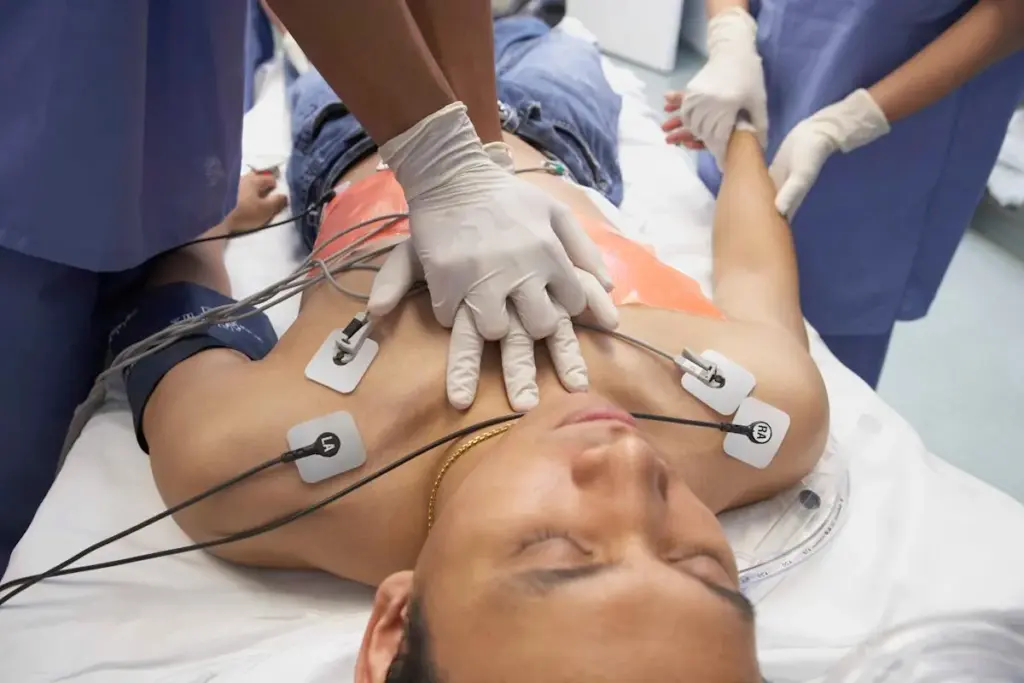
Acting quickly is essential because the heart stops pumping blood. Immediate CPR and defibrillation are critical to keep blood flowing and the heart beating right.
Step-by-Step CPR Guide
Doing CPR right is key. Here’s how:
● Check the person’s airway, breathing, and circulation (ABCs).
● Call for emergency medical help right away.
● Start compressions: Push down on the chest to a depth of 2-3 inches at a rate of 100-120 compressions per minute.
● Give rescue breaths: After 30 compressions, give two breaths.
● Keep going until help arrives.
Using an AED (Automated External Defibrillator)
An AED checks the heart and shocks it if needed. To use an AED:
- Turn it on and follow the voice prompts.
- Attach the electrode pads to the person’s bare chest as shown in the diagrams.
- The AED will analyze the heart rhythm and advise if a shock is needed.
- If a shock is advised, ensure no one is touching the person and press the shock button.
The Chain of Survival Concept
The chain of survival is a series of steps to help someone survive cardiac arrest. The links are:
● Recognizing the emergency and calling for help.
● Starting CPR early to keep blood flowing.
● Using a defibrillator quickly to fix the heart rhythm.
● Getting advanced care from trained professionals.
Knowing and using these steps can greatly improve survival chances. Being prepared and knowing what to do can save lives.
Medical Treatment for Cardiac Arrest
When a cardiac arrest happens, quick medical help is key to get the heart working again. We’ll look at the different steps of treatment. This includes emergency actions and care after the heart starts beating again.
Emergency Interventions
Right away, emergency actions are vital. These include CPR and defibrillation. CPR means doing chest compressions and giving breaths to keep blood flowing and oxygen in the body.
Defibrillation uses an AED to give an electric shock. This shock helps the heart beat normally again.
Hospital Treatment Protocols
When you get to the hospital, doctors might give medicines to help the heart. Sometimes, they might put in a device like an ICD to stop future cardiac arrests.
Post-Resuscitation Care
After the heart starts beating again, care focuses on helping the patient get better. This includes watching them in an ICU, managing any problems, and starting rehab.
|
Treatment Stage |
Interventions |
Goals |
|---|---|---|
|
Emergency Interventions |
CPR, Defibrillation |
Restore heart function, maintain circulation |
|
Hospital Treatment |
Medications, Device Implantation |
Stabilize heart rhythm, prevent future arrests |
|
Post-Resuscitation Care |
Monitoring, Rehabilitation |
Support recovery, manage complications |
Common Misconceptions About Cardiac Arrest
Many people don’t understand cardiac arrest, which can be deadly. It’s a serious condition that needs quick action. Yet, it’s often mixed up with other heart problems.
Cardiac Arrest vs. Heart Attack Confusion
Many confuse cardiac arrest with heart attacks. Both are heart issues, but they’re different. A heart attack blocks blood to the heart, harming the muscle. Cardiac arrest, on the other hand, is when the heart stops beating suddenly.
Here’s a table to show the main differences:
|
Condition |
Cause |
Primary Effect |
|---|---|---|
|
Heart Attack |
Blockage of blood flow to the heart |
Damage to heart muscle |
|
Cardiac Arrest |
Sudden loss of heart function |
Heart stops beating effectively |
Myths About Resuscitation
There are myths about CPR, like it’s always successful or too hard to do right. But, CPR can really help if done quickly and correctly.
Key Facts About CPR:
● CPR should start within 2 minutes for the best chance of survival.
● It includes chest compressions and rescue breaths.
● Automated External Defibrillators (AEDs) can help with CPR.
Misunderstandings About Survival Rates
Some think survival rates after cardiac arrest are always low. But, they can vary a lot. It depends on the cause, how fast and well CPR is done, and if defibrillators are used.
Knowing these details helps us better handle cardiac emergencies. By learning and sharing this info, we can lower the risk and impact of cardiac arrest.
Survivability and Recovery After Cardiac Arrest
Recovering from cardiac arrest is complex. It depends on the cause, how fast treatment starts, and the patient’s health. Knowing these points helps patients, families, and doctors deal with the recovery process.
Survival Statistics
Survival chances after cardiac arrest change based on many factors. These include the cause, the quality of care, and the patient’s health before the event. Studies show that about 10% of out-of-hospital arrests survive. In-hospital arrests have a slightly better chance, with 15% to 20% survival rates.
Factors Affecting Survival Rates
Several things can affect survival after cardiac arrest. These include:
● Promptness of Treatment: Starting CPR and defibrillation quickly can increase survival chances.
● Cause of Cardiac Arrest: Different heart conditions can lead to different survival rates.
● Pre-existing Health Conditions: Patients with serious health issues before the arrest may face lower survival rates.
Long-term Recovery Process
The recovery after cardiac arrest is long and tough. It involves physical, cognitive, and emotional healing. Rehabilitation programs that fit the individual’s needs are key to the recovery journey.
Potential Complications
Cardiac arrest survivors may face many challenges. These include:
- Cognitive issues like memory loss or trouble focusing.
- Emotional and psychological problems, like anxiety and depression.
- Physical problems from brain injury or organ damage during the arrest.
Early and thorough care can help lessen these issues. This improves the survivor’s quality of life.
Prevention Strategies for Cardiac Arrest
To prevent cardiac arrest, we need to change our lifestyle, get regular health checks, and prepare our communities. These steps can greatly lower the risk of cardiac arrest and keep our hearts healthy.
Heart-Healthy Lifestyle Choices
Choosing a heart-healthy lifestyle is key to avoiding cardiac arrest. This means:
● Eating a balanced diet with lots of fruits, veggies, and whole grains
● Staying active with activities like walking, cycling, or swimming
● Not smoking and drinking alcohol in moderation
● Keeping a healthy weight and managing stress
SPARSH Hospital says, “To prevent cardiac arrest, we must live a heart-healthy lifestyle, get regular medical checks, manage heart conditions, and prepare our communities for CPR and AEDs.” A heart-healthy lifestyle is the foundation of preventing cardiac arrest.
Regular Medical Check-ups
Regular health checks are essential for catching heart problems early. We suggest:
- Seeing your doctor once a year
- Keeping an eye on your blood pressure and cholesterol
- Talking to your doctor about your family’s heart health
Spotting and managing heart issues early can greatly lower the risk of cardiac arrest.
Managing Existing Heart Conditions
If you have a heart condition, managing it well is very important. This means:
● Following your doctor’s medication plan
● Going to all your follow-up appointments
● Making lifestyle changes as your doctor advises
Managing heart conditions well can improve your life and lower the risk of cardiac arrest.
Community Preparedness
It’s also important for communities to be ready to prevent cardiac arrest. This includes:
● Encouraging CPR training in the community
● Having Automated External Defibrillators (AEDs) in public places
● Running campaigns to raise awareness about cardiac arrest and prevention
By working together, we can make our communities healthier and better prepared for heart emergencies.
Living with Increased Cardiac Arrest Risk
Dealing with a higher risk of cardiac arrest can be tough. But, there are ways to manage it. People at higher risk need to take special steps to stay safe.
Psychological Impact
The mental side of living with a higher risk of cardiac arrest is big. Many feel anxious and scared. It’s key to talk about these feelings with doctors and mental health experts.
Support from loved ones and groups can help a lot. Sharing stories and tips with others who get it can offer comfort and advice.
Lifestyle Adjustments
Staying heart-healthy is important for those at risk. Eating right, exercising often, and avoiding bad habits are key.
Exercise is great for stress and heart health. But, always check with a doctor before starting a new workout, even if you have heart issues.
Support Systems and Resources
A strong support network is vital for managing cardiac arrest risk. This includes family, friends, and healthcare teams.
There are also many resources out there. You can find educational materials, support groups, and heart health programs.
Medical Monitoring Options
Regular check-ups and monitoring are key for managing risk. Tests like ECGs and echocardiograms help check heart health.
|
Monitoring Option |
Description |
Frequency |
|---|---|---|
|
Electrocardiogram (ECG) |
Measures the electrical activity of the heart |
Annually or as recommended by a healthcare provider |
|
Echocardiogram |
Ultrasound of the heart to assess its structure and function |
Every 2-5 years or as needed based on risk factors |
|
Stress Test |
Evaluates heart function under physical stress |
As recommended by a healthcare provider based on individual risk |
By making lifestyle changes, building a support network, and getting regular check-ups, you can live better and lower your risk.
Conclusion
It’s important to know about cardiac arrest, its causes, symptoms, and treatments. Cardiac arrest and heart attacks are different, but they can be linked. Quick medical help is key to surviving.
We’ve looked at what cardiac arrest is, its connection to heart attacks, common causes, symptoms, and treatments. Knowing these details helps people prevent it and react better in emergencies.
Good treatment and survival chances come from fast action, medical care, and managing risks. By focusing on heart health and understanding dangers, we can lower cardiac arrest rates. This helps improve outcomes for those who face it.
FAQ
What is the difference between cardiac arrest and heart attack?
Cardiac arrest happens when the heart’s electrical system fails. This causes the heart to stop beating well. A heart attack, on the other hand, is when blood flow to the heart is blocked. This damage to the heart muscle is what happens.
Can you have a cardiac arrest without a heart attack?
Yes, you can have a cardiac arrest without a heart attack. This can happen due to heart electrical problems or structural issues.
What are the symptoms of cardiac arrest?
Symptoms include sudden loss of consciousness and no pulse. You might also feel chest pain or shortness of breath before it happens. But often, there’s no warning.
How is cardiac arrest treated?
Treatment starts with CPR and using an Automated External Defibrillator (AED) if there is one. In the hospital, doctors use advanced life support to help the heart work again. They also care for the patient after to help them recover.
What are the risk factors for cardiac arrest?
Risk factors include genetic issues, smoking, obesity, and heart conditions like coronary artery disease. These can increase your risk.
How can cardiac arrest be prevented?
To prevent it, live a heart-healthy lifestyle and get regular check-ups. Manage any heart conditions you have. Also, make sure CPR training and AEDs are available in your community.
What is the survivability of cardiac arrest?
Survival rates depend on how fast medical help arrives and the cause of the cardiac arrest. Quick CPR and defibrillation can greatly improve chances of survival.
What is CPR, and how is it performed?
CPR is an emergency procedure. It involves chest compressions and rescue breaths. This keeps blood flowing and oxygen to vital organs until help arrives.
What is an AED, and how is it used?
An AED analyzes the heart’s rhythm and gives an electric shock if needed. It’s used during cardiac arrest to help the heart function normally again.
What is the chain of survival in cardiac arrest?
The chain of survival includes recognizing the emergency, calling for help, starting CPR, using a defibrillator, and post-resuscitation care. Each step is important for the best outcome.
Can cardiac arrest be a result of a heart attack?
Yes, a severe heart attack can cause cardiac arrest. This happens if the heart muscle damage is too great.
What are the long-term effects of surviving cardiac arrest?
Survivors may face physical and emotional challenges. These can include neurological damage, heart failure, and psychological issues like anxiety or depression.
References
National Center for Biotechnology Information. Evidence-Based Medical Insight. Retrieved from https://pubmed.ncbi.nlm.nih.gov/27552981/