Every minute is critical when someone’s heart stops. Cardiac arrest is a serious condition that needs quick action. In the U.S., over 350,000 cardiac arrests happen outside hospitals each year.
Knowing what cardiac arrest is and how to react can save lives. Cardiopulmonary resuscitation (CPR) is key. It keeps blood flowing and air moving until help arrives.
We’ll look at why fast action is key in cardiac arrest. We’ll also see how CPR plays a vital role in saving lives.
Key Takeaways
- Cardiac arrest is a life-threatening condition requiring immediate attention.
- CPR is critical for keeping blood flowing and air moving.
- Understanding cardiac arrest and knowing how to respond can improve survival chances.
- Timely action during cardiac arrest is vital for saving lives.
- CPR helps bridge the gap until medical help arrives.
The Race Against Time: Understanding Cardiac Arrest
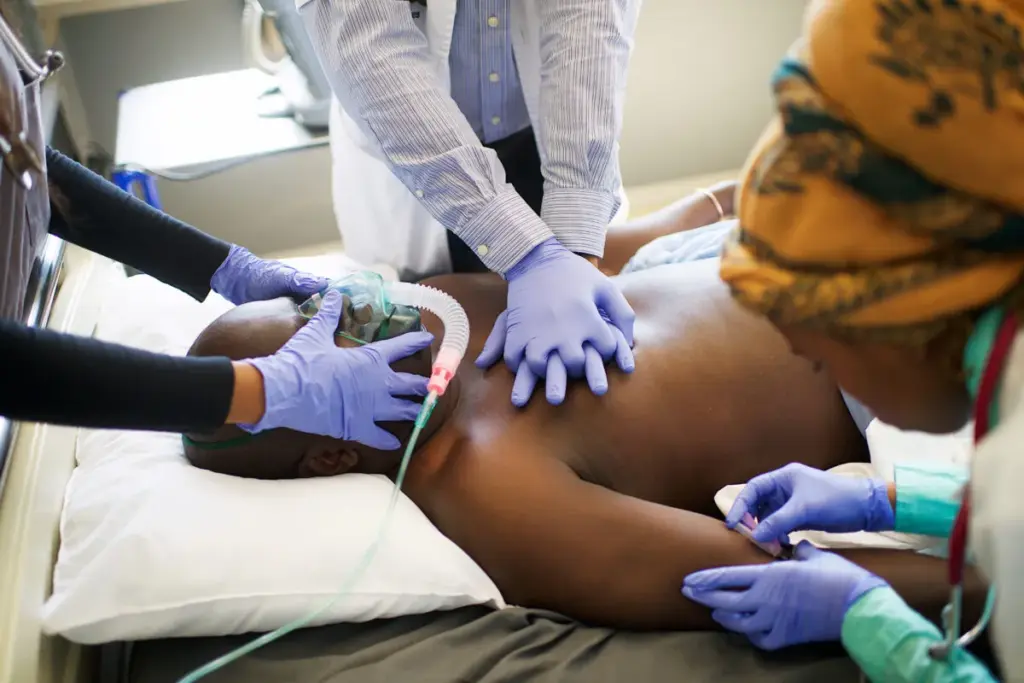
Cardiac arrest is a serious medical emergency that needs quick action. It’s important to know what it is and how to act fast. When someone has cardiac arrest, their heart stops beating right away. This means no blood or oxygen gets to their organs.
What is cardiac arrest and how does it differ from a heart attack?
Many people mix up cardiac arrest and heart attack. But they are not the same. A heart attack happens when blood can’t get to the heart, hurting the heart muscle. Cardiac arrest, on the other hand, is when the heart’s electrical system fails, stopping the heart from beating.
“It’s key to tell the difference between cardiac arrest and heart attack,” says experts. “Because the treatments are very different.”
The physiology of cardiac arrest
When someone has cardiac arrest, their heart’s electrical system gets all mixed up. This leads to ventricular fibrillation. The heart can’t pump blood anymore, causing blood pressure and oxygen to drop fast.
This shows why we need to act fast. We need to do cardiopulmonary resuscitation (CPR) right away. CPR helps keep blood and oxygen flowing to the body’s important parts.
Why immediate action is essential
How well someone does with cardiac arrest depends a lot on how fast we act. Every minute matters. Without CPR or a defibrillator, the chance of survival drops fast.
Quick action means calling for help and starting CPR. If there’s an AED around, using it can also help a lot. These steps together can really improve someone’s chances of living and staying healthy.
The Critical Timeline of Cardiac Arrest

Cardiac arrest is a serious situation. It happens when the heart stops beating well. This leads to a series of urgent events that affect the outcome.
Brain Damage Begins Within 4-6 Minutes
Brain damage starts quickly after cardiac arrest. Brain damage begins within 4-6 minutes because the brain needs oxygen. This shows how fast we need to act to avoid permanent damage.
Survival Rates Decrease by 7-10% with Each Passing Minute
Every minute without help lowers the chance of survival. Survival rates decrease by 7-10% for every minute that passes without help. This highlights the need for quick medical help and bystander action.
The Concept of Biological Death Versus Clinical Death
It’s important to know the difference between biological and clinical death. Clinical death is when the heart stops and there’s no blood flow. Biological death is when changes are permanent and can’t be reversed. The time between these two is key for saving someone.
Understanding these timelines helps both doctors and the public to act fast in cardiac emergencies.
Recognizing Cardiac Arrest: The First 60 Seconds
It’s very important to spot cardiac arrest quickly. This is because it’s a serious medical emergency that needs fast action.
Signs and Symptoms to Watch For
The signs of cardiac arrest can happen fast and be very clear. The main signs include:
- Sudden collapse
- No breathing or abnormal breathing (gasping)
- No pulse
- No response to verbal commands or physical stimuli
It’s very important to look for these signs in the first 60 seconds if you think someone might be having a cardiac arrest. The quicker you spot these signs, the faster you can help.
|
Signs/Symptoms |
Description |
|---|---|
|
Sudden Collapse |
The person falls to the ground unexpectedly. |
|
No Breathing or Abnormal Breathing |
The person may not be breathing, or they might be gasping for air. |
|
No Pulse |
Checking the carotid artery for a pulse; if absent, it indicates cardiac arrest. |
Common Misconceptions About Cardiac Arrest
There are many wrong ideas about cardiac arrest that can slow down help. For example, some think it’s the same as a heart attack, but it’s not. Cardiac arrest is when the heart suddenly stops working, while a heart attack is when blood flow to the heart is blocked.
“Cardiac arrest is not a heart attack, though it can be caused by one. Knowing this difference is key for quick action.” – American Heart Association
Differentiating from Other Medical Emergencies
Cardiac arrest can look like other problems like seizures or fainting. But, not having a pulse and not being able to wake up are big clues. It’s very important to check for a pulse and breathing to know if it’s cardiac arrest.
By knowing the signs and symptoms of cardiac arrest and clearing up common wrong ideas, we can better spot this serious condition in the first 60 seconds.
The Chain of Survival: A Time-Sensitive Response Protocol
The chain of survival is key in handling cardiac arrest. It focuses on quick actions that boost survival chances.
Early Recognition and Activation of Emergency Response
Spotting cardiac arrest early is vital. It kicks off the emergency response system quickly. This first step is essential to get help fast.
Immediate action is needed to check for cardiac arrest signs. Look for unresponsiveness and odd breathing.
Immediate High-Quality CPR
Quality CPR is critical for blood flow and better resuscitation chances. It includes chest compressions and breaths, done in a set ratio.
Rapid Defibrillation
Defibrillation is key for some cardiac arrests. It uses a defibrillator to shock the heart back to normal.
The quicker defibrillation happens, the better the survival odds.
Advanced Life Support and Post-Cardiac Arrest Care
Advanced life support includes complex medical steps like meds and airway care. Post-cardiac arrest care helps the patient recover and deals with any issues.
|
Chain of Survival Link |
Description |
Time Sensitivity |
|---|---|---|
|
Early Recognition |
Identifying cardiac arrest and calling for help |
Immediate |
|
CPR |
Maintaining blood circulation through chest compressions and rescue breaths |
Within minutes |
|
Defibrillation |
Restoring a normal heartbeat through electric shock |
As soon as possible |
|
Advanced Life Support |
Providing complex medical interventions |
Upon EMS arrival |
|
Post-Cardiac Arrest Care |
Supporting recovery and managing complications |
Ongoing |
Bystander CPR: The First Critical Intervention
When cardiac arrest happens, the first minutes are key. Bystander CPR can be the difference between life and death, making it a vital first response.” — It’s the first step in saving lives, connecting the start of cardiac arrest to medical help.
How to Perform Effective Chest Compressions
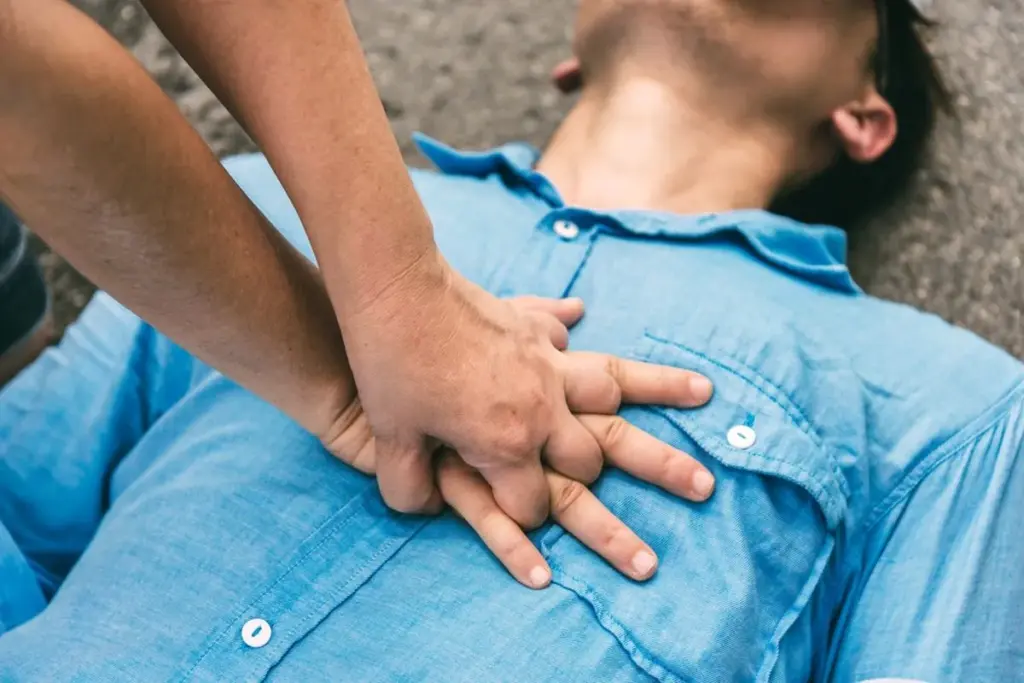
Effective chest compressions are key in CPR. To do them right, place your heel on the chest’s center. Put your other hand on top and press down about 2 inches. Do this at a rate of 100-120 times per minute.
It’s important to let the chest fully recoil between compressions. This ensures the best blood flow.
The Importance of Minimal Interruptions
Keeping CPR going without breaks is vital. Every pause in chest compressions lowers the chance of successful resuscitation. Only stop for defibrillation or pulse checks. Continuous CPR keeps blood flowing and boosts survival chances.
Hands-Only vs. Conventional CPR
The debate between hands-only CPR and conventional CPR goes on. Hands-only CPR is simpler and works well for many cases, even for those not trained. But, conventional CPR, with chest compressions and breaths, is best for those who know how to do it.
The most important thing is to do CPR quickly and well. Both hands-only and conventional CPR have their roles. The choice depends on the rescuer’s training and the emergency’s details.
Automated External Defibrillators (AEDs): The Life-Saving Device
Automated External Defibrillators (AEDs) are lifesavers. They work fast in emergencies. Using an AED quickly can save lives.
Restoring a Normal Heartbeat
AEDs are for emergencies to fix a heartbeat. They check the heart’s rhythm and shock it if needed. This helps the heart beat right again.
How AEDs Work:
- They check the heart’s rhythm with pads on the chest.
- See if a shock is needed to fix the heartbeat.
- Give a controlled electric shock to the heart.
- Guide the user with voice prompts or visual instructions.
Finding and Using an AED in an Emergency
It’s key to know where and how to use an AED in an emergency. They’re in places like malls, airports, and schools. Here’s how to use one:
- Turn on the AED and follow the voice prompts.
- Expose the chest and attach the pads as shown.
- The AED checks the heart rhythm. Make sure no one is touching the person.
- If a shock is advised, clear the area and press the shock button.
- Keep doing CPR as the AED tells you.
“ “It’s vital that people know where AEDs are and how to use them.”
Public Access Defibrillation Programs
Public access defibrillation programs increase AEDs in public places. They also teach people how to use them. These efforts have boosted survival rates from cardiac arrest.
By making AEDs more available and teaching people about them, we can save more lives. It’s a big step towards a safer community for all.
Why Minutes Matter in Cardiac Arrest: The Golden Window
Time is very important when dealing with cardiac arrest. The time to act is very short. Cardiac arrest is a serious condition that needs quick help.
Biological Processes During Oxygen Deprivation
Cardiac arrest stops the heart and blood flow. This leads to a quick drop in oxygen to organs like the brain. The brain is very sensitive to lack of oxygen and can start to get damaged in minutes.
“The brain needs a lot of oxygen,” say medical experts. Without it, cells start to die, leading to permanent damage if not treated fast.
The Relationship Between Response Time and Survival Outcomes
The time from when cardiac arrest starts to when medical help arrives is key. Studies show that quicker response times lead to better survival rates. Every minute without help lowers the chance of survival.
The first few minutes are the most important. Quick CPR and defibrillation can greatly increase survival chances. We must act fast to help the patient.
- Early recognition of cardiac arrest
- Immediate CPR
- Rapid defibrillation
These steps are vital in saving lives and directly affect the patient’s outcome.
Research on Time-to-Intervention Statistics
Many studies have looked at how fast medical help arrives and its impact. Research shows that quick medical help is key to survival. Every minute without defibrillation lowers survival chances by 7-10%.
“The importance of timely intervention in cardiac arrest cannot be overstated. Every minute counts, and immediate action is critical for better survival rates.”
— American Heart Association
It’s important for both doctors and the public to understand the urgency of cardiac arrest. By acting fast, we can save more lives.
Emergency Medical Services Response: What Happens After the Call
Calling for help during a cardiac arrest can be lifesaving. When you call emergency services, they start a series of critical actions. These actions are key to responding to the cardiac emergency.
Response Times: A Critical Factor
EMS response times vary a lot in the United States. Urban areas usually have faster response times than rural areas. Recent data shows the average response time is around 7-10 minutes. But, in less populated areas, it can take longer.
Knowing these response times is very important. The time window for effective action in cardiac arrest is very short. Without CPR and defibrillation, survival chances drop by 7-10% every minute.
Advanced Interventions by First Responders
First responders, like EMTs and paramedics, are key in the initial response. They are trained to provide advanced life support. This includes CPR, defibrillation, and medications to stabilize the heart.
These actions are critical before reaching the hospital. The training and equipment of first responders greatly impact survival rates.
The Importance of Continued CPR
Continuing CPR until EMS arrives is vital. It keeps blood flowing, which is essential for brain and organ function. Try to minimize CPR interruptions to increase the chances of successful resuscitation.
Understanding EMS’s role and the importance of continued CPR helps in cardiac emergencies. It can potentially save lives.
Hospital Treatment for Cardiac Arrest Survivors
Hospital treatment for cardiac arrest survivors is key to their recovery. It includes many medical steps and support. Right after they arrive, doctors check them to decide the best care plan.
Post-resuscitation Care
Post-resuscitation care is vital. It aims to stabilize the patient and handle any issues from the cardiac arrest. This care happens in an ICU or a cardiac care unit.
Key parts of post-resuscitation care are:
- Watching vital signs and heart function closely
- Handling complications like arrhythmias or brain issues
- Using medicines to help the heart and manage pain
The American Heart Association says, “The goal of post-cardiac arrest care is to improve the patient’s health.” This detailed approach is key to better patient results.
Therapeutic Hypothermia and Other Interventions
Therapeutic hypothermia cools the body to help. It’s shown to lessen brain damage in cardiac arrest survivors.
Other treatments might include:
- Coronary angiography to find and fix blockages
- Devices like intra-aortic balloon pumps to help the heart
- Monitoring the brain to manage injury
Recovery and Rehabilitation
The recovery and rehab phase is all about the patient’s needs. It’s about getting strong, managing heart health, and dealing with brain or thinking problems.
Rehab programs might include:
- Physical therapy to boost strength and mobility
- Occupational therapy for daily tasks and independence
- Speech therapy for communication issues
- Cardiac rehab to improve heart health and lower future risks
With full care and support, we can greatly improve outcomes for cardiac arrest survivors. This helps them live better and increases their chances of survival.
Cardiac Arrest in Special Circumstances
Cardiac arrest in unique situations needs special care. Different groups face unique challenges. They require specific knowledge and response plans.
Pediatric Cardiac Arrest
Cardiac arrest in kids is rare but urgent. It often comes from breathing problems. Managing it well means spotting it fast, doing good CPR, and following special guidelines.
“The key to successful resuscitation in children lies in early recognition and intervention,” stresses the need for quick action.
Pregnancy and Cardiac Arrest
Cardiac arrest in pregnancy is rare but serious. Pregnancy changes the body, making it harder to manage. It’s important to move the uterus during CPR to help the heart.
Cardiac Arrest During Physical Activity
Being active can lead to cardiac arrest, mainly in those with heart issues. Screening before activities and having emergency plans are key in sports. Using AEDs can also save lives.
Cardiac Arrest in Elderly Populations
The elderly face a higher risk of cardiac arrest due to heart disease. Their health issues and many medicines can make it harder to treat. It’s vital to tailor care to their health and wishes.
“The decision to start or keep trying to save someone should consider their health, wishes, and chances of recovery.”
Preparing for Cardiac Emergencies: Training and Education
Cardiac emergencies can happen anytime. It’s important to be ready with the right training and knowledge. Knowing how to act in an emergency, like CPR, is key. It also means having plans in place and joining community efforts.
CPR Certification and Training Options
CPR training is vital for being ready for cardiac emergencies. Many groups offer CPR courses, from basic to advanced. These teach you how to do chest compressions and use AEDs until help arrives.
When picking a CPR course, look for one accredited by the American Heart Association (AHA) or the Red Cross. They offer classes in person, online, or a mix. This makes it easy to get certified.
Creating Emergency Action Plans
An emergency action plan outlines steps for a cardiac emergency. It should list AED locations, emergency numbers, and what to do in a cardiac arrest.
To make a good plan, think about possible emergencies, choose responders, and make sure everyone knows the plan. It’s also important to practice and update the plan regularly.
Community Preparedness Initiatives
Community efforts are key in responding to cardiac emergencies. Programs like public access defibrillation make AEDs available. Communities can also host CPR training and raise awareness about heart health.
Getting involved in community initiatives helps make a safer place. It saves lives and builds a caring community.
Preventing Cardiac Arrest: Risk Factors and Warning Signs
We can lower the risk of cardiac arrest by knowing its risk factors and taking action. Cardiac arrest often comes from heart problems. Spotting these early can save lives.
Identifying High-Risk Individuals
Some people are more likely to have cardiac arrest. This includes those with heart disease, a family history of cardiac arrest, and conditions like hypertrophic cardiomyopathy. Age and gender also play a role, with risk increasing after 45 and being higher in men.
Key risk factors to watch for:
- History of heart attack or coronary artery disease
- High blood pressure
- High cholesterol
- Diabetes
- Obesity
- Smoking
- Physical inactivity
Preventive Measures and Lifestyle Modifications
Preventing cardiac arrest requires lifestyle changes and medical care. A heart-healthy lifestyle can greatly reduce risk. This includes eating well, staying active, managing stress, and avoiding tobacco and too much alcohol.
Lifestyle modifications that can help prevent cardiac arrest:
- Eating a diet rich in fruits, vegetables, and whole grains
- Engaging in at least 150 minutes of moderate-intensity aerobic activity per week
- Maintaining a healthy weight
- Managing stress through techniques like meditation or yoga
Medical Interventions for At-Risk Patients
For those at high risk, medical care is key. This can include medicines for high blood pressure and cholesterol, and procedures for heart rhythm issues.
Medical interventions that can help:
- Medications for hypertension and hyperlipidemia
- Implantable cardioverter-defibrillators (ICDs) for those at high risk of life-threatening arrhythmias
- Catheter ablation to treat arrhythmias
- Coronary artery bypass grafting (CABG) or percutaneous coronary intervention (PCI) to address coronary artery disease
By knowing the risk factors and taking action, we can lower cardiac arrest rates. This is through lifestyle changes and medical care, saving lives.
Real-Life Survival Stories: When Quick Action Made the Difference
Real-life stories show how fast action can save lives in cardiac arrest cases. These stories highlight the need for quick medical help. They also teach us what makes a difference in survival.
Case Studies of Successful Resuscitations
Many cases show how fast action helps during cardiac arrest. For example, a study in the Journal of the American Heart Association tells of a bystander doing CPR. This greatly increased the victim’s survival chances until medical help arrived.
Another case involved a layperson using an Automated External Defibrillator (AED). This successfully brought back the victim’s heart rhythm. Such stories stress the need for more CPR and AED training.
Lessons Learned from Survivors
Survivors and their families share important insights. They talk about the need for quick CPR and AED use. They also stress the importance of good care after a cardiac arrest.
A table below summarizes key lessons from these stories:
|
Lesson |
Description |
Impact |
|---|---|---|
|
Immediate CPR |
Prompt chest compressions by bystanders |
Significantly improves survival rates |
|
AED Use |
Timely defibrillation using Automated External Defibrillators |
Restores normal heart rhythm, improving survival chances |
|
Post-Arrest Care |
Comprehensive medical care after cardiac arrest |
Improves long-term outcomes and reduces neurological damage |
The Psychological Impact on Rescuers and Survivors
Cardiac arrest and rescue efforts deeply affect survivors and rescuers. Survivors may feel many emotions, from gratitude to anxiety and depression. They need support.
Rescuers, including family members, can also be emotionally affected. It’s important to offer them counseling too.
By looking at these survival stories, we learn more about cardiac arrest. We see the need for a full response. This includes quick action, proper medical care, and ongoing support.
Conclusion: The Race Against Time in Cardiac Arrest
Every minute is critical in cardiac arrest. We’ve looked at the timeline, the need to recognize signs, and how bystander CPR and AEDs save lives.
The survival rate drops with each minute. This shows how urgent action is. Knowing how cardiac arrest works and the survival chain helps us act faster.
Training and education are key in preparing for cardiac emergencies. Knowing the risks and signs helps us prevent cardiac arrest. Together, we can improve survival rates.
By raising awareness and being ready, we can save lives. This teamwork boosts the chances of survival for those hit by cardiac arrest.
FAQ
What is cardiac arrest?
Cardiac arrest is a serious medical emergency. It happens when the heart suddenly stops beating. This leads to a lack of blood flow and oxygen to vital organs.
What is the difference between cardiac arrest and a heart attack?
A heart attack blocks blood flow to the heart, damaging the muscle. Cardiac arrest is when the heart stops beating. While a heart attack can cause cardiac arrest, they are different conditions.
What are the signs and symptoms of cardiac arrest?
Signs of cardiac arrest include sudden loss of responsiveness and no breathing. You might also see no pulse. Chest pain, shortness of breath, or feeling lightheaded can also be symptoms.
What is CPR, and how is it performed?
CPR is a lifesaving technique used when the heart stops. It involves chest compressions and rescue breaths. Hands-only CPR is also recommended in some cases.
What is an Automated External Defibrillator (AED), and how is it used?
An AED is a portable device that helps restore a normal heartbeat. To use it, follow the voice prompts or visual instructions. Attach the electrode pads to the chest and deliver a shock if advised.
How long does the brain survive without oxygen during cardiac arrest?
Brain damage can start within 4-6 minutes without oxygen. The chance of survival and recovery drops with each minute.
What is the chain of survival in cardiac arrest response?
The chain includes recognizing cardiac arrest early, calling emergency services, and performing CPR. Using an AED and receiving advanced care are also key. Each step is vital for better survival rates.
Can cardiac arrest be prevented?
Yes, preventing cardiac arrest is possible. Managing risk factors like high blood pressure and diabetes helps. Identifying and preventing risk can lower the chance of cardiac arrest.
What happens during hospital treatment for cardiac arrest survivors?
Survivors get post-resuscitation care in the hospital. This may include cooling the body, medication, and other treatments. They also go through rehabilitation to regain function.
Are there special considerations for cardiac arrest in different populations?
Yes, cardiac arrest in children, pregnant women, and the elderly needs special care. Understanding these differences is key for effective treatment.
How can communities prepare for cardiac emergencies?
Communities can prepare by promoting CPR training and installing public defibrillators. Developing emergency plans also helps. These efforts improve response to cardiac emergencies.
What is the importance of timely intervention in cardiac arrest?
Quick action is critical in cardiac arrest. Survival chances drop with each minute. Prompt CPR, defibrillation, and advanced care are essential for better outcomes.
References
National Center for Biotechnology Information. Evidence-Based Medical Insight. Retrieved from https://pubmed.ncbi.nlm.nih.gov/33707000/



 Departments
 Related Videos
 Our Doctors
 News
News