Sleep for cardiac catheterization? Usually, twilight sedation is best. Avoid dangerous deep anesthesia risks while staying comfortable and calm.
Having a cardiac cath can be scary for many. One big question is if they will sleep through it. Clear talk is very important in healthcare, even more so for coronary angiography.
About 1 million cardiac catheterization procedures happen every year in the U.S. It’s a common way to check heart health. Some people might feel better knowing they’ll be sedated, but others might worry about the sedation’s effects.
We’ll dive into the heart cath procedure. We’ll talk about the sedation types and what to expect before, during, and after. Our aim is to give you detailed, easy-to-understand info for those looking for top-notch medical care.
Key Takeaways
- Cardiac catheterization is a common diagnostic procedure for heart health.
- The procedure involves the use of sedation to help patients relax.
- Different types of sedation may be used depending on the patient’s condition and the procedure’s complexity.
- Patients should discuss their sedation options with their healthcare provider.
- Understanding the procedure can help alleviate anxiety and concerns.
What Is Cardiac Catheterization?
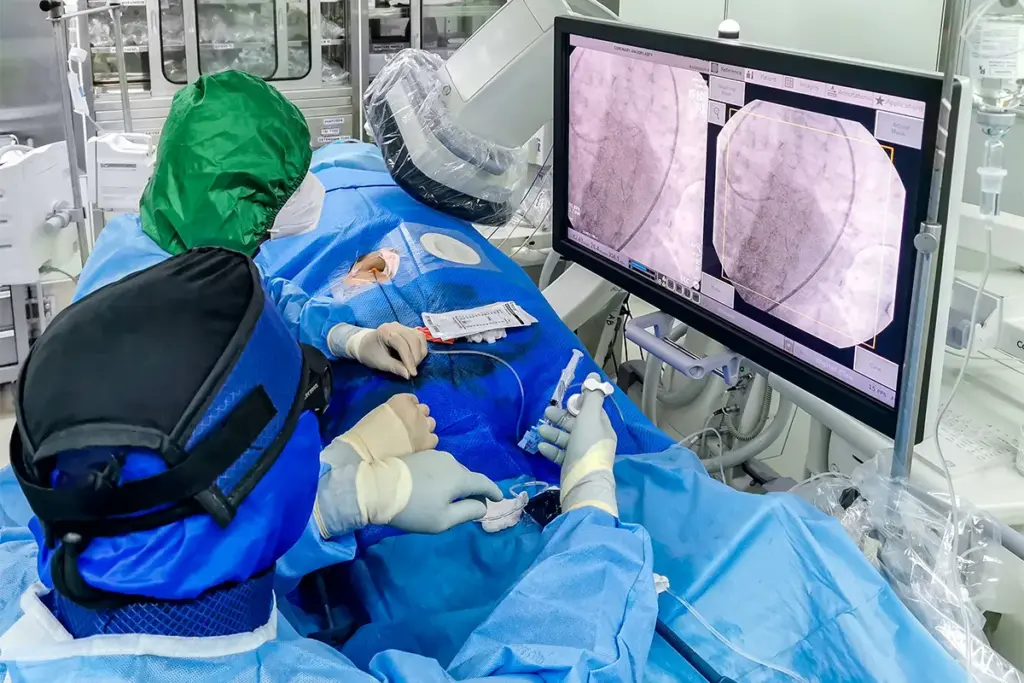
Cardiac catheterization, also known as coronary angiography, is a test that shows how well the heart works. It uses a thin, flexible tube called a catheter. This tube is inserted into an artery in the leg or arm and guided to the heart.
Doctors can then see the heart’s chambers, valves, and arteries. This helps them find problems like coronary artery disease.
Definition and Purpose of the Procedure
The main goal of cardiac catheterization is to see the heart’s structure and function clearly. It helps doctors check the arteries, find blockages, and choose the right treatment. This test is key for diagnosing heart diseases, checking valves, and seeing how well the heart muscle works.
Key aspects of cardiac catheterization include:
- Diagnosing coronary artery disease and assessing its severity
- Evaluating heart valve function and identifying any issues
- Checking how well the heart muscle works and the heart’s overall health
- Measuring how well the heart pumps and the pressures in the heart chambers
How Cardiac Catheterization Differs from Other Heart Tests
Unlike tests like stress tests or echocardiograms, cardiac catheterization goes straight into the heart. It gives doctors a detailed look and precise measurements. This makes it a vital tool for both finding and treating heart problems.
While other tests are useful, cardiac catheterization offers a more detailed view of the heart’s condition.
History and Development of the Technique
Cardiac catheterization has a long history, with big improvements in technology and technique. It was first used in the mid-20th century and has become a key part of cardiology. Today’s catheterization labs use advanced imaging like fluoroscopy and angiography. These tools make the procedure safer and more accurate.
|
Year |
Milestone |
Significance |
|---|---|---|
|
1929 |
First cardiac catheterization performed by Werner Forssman |
Pioneered the invasive cardiology field |
|
1960s |
Introduction of coronary angiography |
Enabled visualization of coronary arteries |
|
1980s |
Advancements in catheter technology and imaging |
Improved safety and diagnostic accuracy |
|
Present day |
Continued advancements in technology and technique |
Enhanced patient outcomes and expanded treatment options |
Types of Cardiac Catheterization Procedures
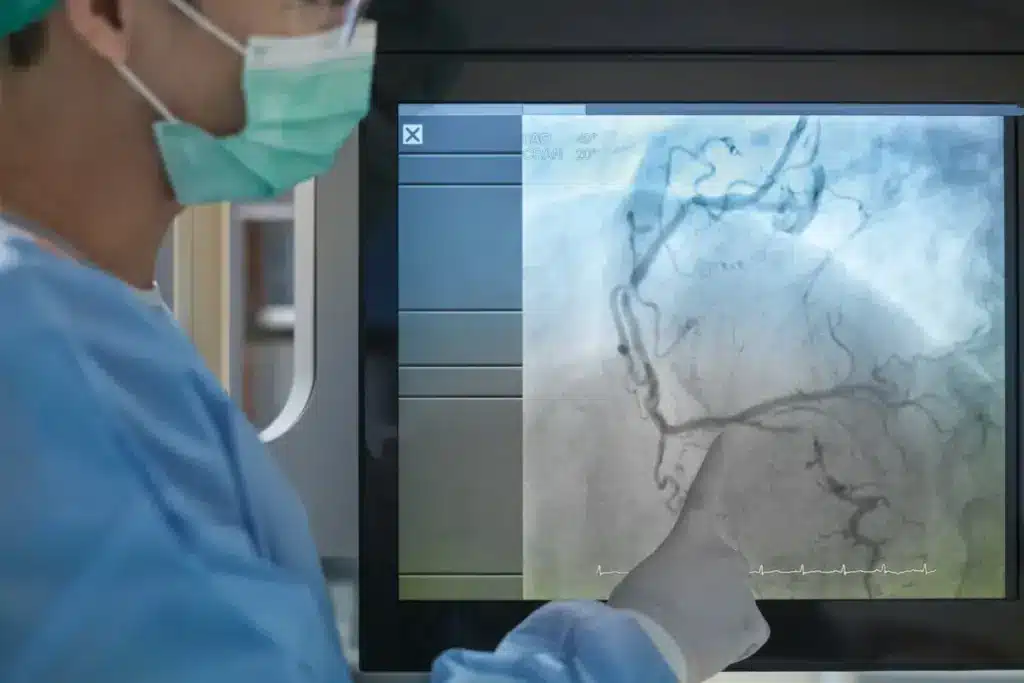
Cardiac catheterization procedures are divided into types based on their purpose and the heart area they focus on. This helps us understand each type’s specific use and benefits.
Diagnostic Cardiac Catheterization
Diagnostic cardiac catheterization helps diagnose heart conditions. It uses a contrast dye to see the coronary arteries and heart chambers. This lets doctors find any blockages or issues.
Key aspects of diagnostic cardiac catheterization include:
- Coronary angiography to visualize the coronary arteries
- Assessment of heart chamber pressures and functions
- Identification of blockages or abnormalities in the coronary arteries
Interventional Cardiac Catheterization
Interventional cardiac catheterization treats heart conditions, not just diagnose them. It uses a catheter for treatments like angioplasty or stenting. This aims to improve blood flow to the heart.
Notable features of interventional cardiac catheterization are:
- Angioplasty to widen narrowed or obstructed arteries
- Stenting to keep arteries open
- Treatment of coronary artery disease
Right Heart vs. Left Heart Catheterization
Cardiac catheterization can target either the right or left side of the heart. Right heart catheterization checks the heart’s pumping and pressures. Left heart catheterization looks at the left ventricle and coronary arteries.
|
Catheterization Type |
Purpose |
Area of Focus |
|---|---|---|
|
Diagnostic |
Diagnosis of heart conditions |
Coronary arteries and heart chambers |
|
Interventional |
Treatment of heart conditions |
Blocked arteries |
|
Right Heart |
Assessment of heart function and pressures |
Right side of the heart |
|
Left Heart |
Visualization of left ventricle and coronary arteries |
Left side of the heart |
Common Reasons for Undergoing a Cardiac Cath
Knowing why we get a cardiac cath can ease worries. We do it to check for heart problems. It helps us see if our heart is working right.
Diagnosing Coronary Artery Disease
One big reason is to find out if we have coronary artery disease (CAD). This happens when the heart’s blood supply gets blocked. The test uses dye and X-rays to see if there are any blockages.
Evaluating Heart Valve Function
It also checks how well our heart valves work. By looking at pressures and oxygen levels, we can spot problems. This is key for finding issues with the valves.
Assessing Heart Muscle Performance
The test looks at how well our heart muscle pumps. It uses dye to see how the left ventricle works. This helps find any problems with pumping.
Measuring Cardiac Output and Pressures
It also measures cardiac output and heart pressures. These numbers tell us how well the heart pumps. They help find issues like heart failure.
|
Measurement |
Normal Value |
Significance |
|---|---|---|
|
Cardiac Output |
4-8 L/min |
Indicates heart’s pumping efficiency |
|
Left Ventricular Pressure |
120/0-10 mmHg |
Assesses left ventricle function |
|
Right Atrial Pressure |
2-6 mmHg |
Indicates right heart function |
Understanding these numbers shows how important cardiac cath is. It helps us decide the best treatment for our heart.
Cardiac Catheterization vs. Non-Invasive Heart Tests
It’s important to know the difference between cardiac catheterization and other heart tests. Non-invasive tests give useful info about heart health. But, cardiac catheterization gives a closer look at the heart’s inner workings.
Comparison with Stress Tests and Echocardiograms
Stress tests and echocardiograms are used to check heart function and spot problems. Stress tests see how the heart works during exercise. Echocardiograms use sound waves to show the heart’s images.
These tests are helpful but might miss complex heart issues. Cardiac catheterization, though, lets doctors see the heart’s arteries and pressures directly.
Cardiac Enzymes and Blood Tests for Heart Conditions
Cardiac enzymes and blood tests check for heart damage or disease. They look at enzymes and proteins in the blood that show heart muscle damage.
These tests show if heart disease is present but not where or how bad it is. Cardiac catheterization fills this gap by showing detailed artery images and blockages.
When Catheterization Becomes Necessary
Cardiac catheterization is needed when non-invasive tests don’t give clear answers or when a detailed look is needed. This is true for symptoms of coronary artery disease or when other tests show serious heart disease.
The choice to do cardiac catheterization depends on the patient’s situation and what doctors need to decide on treatment.
|
Diagnostic Test |
Purpose |
Invasiveness |
|---|---|---|
|
Stress Test |
Measures heart performance during physical activity |
Non-invasive |
|
Echocardiogram |
Creates images of the heart using ultrasound waves |
Non-invasive |
|
Cardiac Catheterization |
Directly visualizes coronary arteries and measures heart chamber pressures |
Invasive |
|
Blood Tests for Cardiac Enzymes |
Detects heart damage or disease by measuring enzyme levels in the blood |
Non-invasive |
Preparing for Your Cardiac Catheterization
Getting ready for your cardiac catheterization is key to its success and your comfort. We know being prepared can lower anxiety and make things easier.
Pre-Procedure Testing and Evaluation
We’ll do several tests before your procedure to check your health and risks. These might include:
- Blood tests to check your blood count, clotting, and kidney function
- Electrocardiogram (ECG) to assess your heart’s rhythm
- Chest X-ray to examine your heart and lungs
- Other tests as necessary based on your medical history and current condition
These tests help us understand your heart’s condition and make informed decisions about your care.
Dietary and Medication Restrictions
We’ll give you specific instructions on what to eat and take before the procedure. This usually means:
|
Restriction |
Guideline |
|---|---|
|
Fasting |
Avoid eating and drinking for a specified period before the procedure |
|
Medications |
Continue taking most medications as usual, but inform us about all medications, including blood thinners |
|
Fluids |
May be allowed in limited quantities up to a certain time before the procedure |
It’s important to follow these instructions carefully to minimize risks.
What to Bring to Your Appointment
On the day of your cardiac catheterization, please bring:
- A list of your current medications and dosages
- Any relevant medical records or test results
- Comfortable clothing
- A friend or family member for support
Having the right items can make your experience smoother.
Mental Preparation and Anxiety Management
We know cardiac catheterization can cause anxiety. To help manage your anxiety, we recommend:
- Deep breathing exercises
- Meditation or relaxation techniques
- Discussing your concerns with your healthcare team
Our team is committed to supporting you throughout the process and addressing any concerns you may have.
Sedation and Anesthesia During Cardiac Catheterization
Cardiac catheterization often uses sedation to keep patients comfortable. Sedation is key to making the procedure painless and stress-free.
Conscious Sedation: The Most Common Approach
Conscious sedation is the most used type during cardiac catheterization. It lets patients relax but stay awake and follow instructions. This sedation mix helps patients feel calm and less anxious.
Local Anesthesia for Catheter Insertion Sites
Local anesthesia is also used at the catheter site. It numbs the area, so patients don’t feel pain during the procedure.
When General Anesthesia Might Be Used
For complex procedures, general anesthesia might be needed. It makes patients completely unconscious during the procedure.
Factors That Determine Your Sedation Level
The sedation level depends on several factors. These include the patient’s health, procedure complexity, and the doctor’s judgment. Patient anxiety, age, and past sedation experiences also play a role.
Knowing these details can ease worries about being “put to sleep.” Our team will talk about your sedation plan with you before the procedure. This ensures you’re comfortable and well-informed.
The Cardiac Catheterization Procedure Step by Step
Cardiac catheterization has changed cardiology, making it easier to check the heart. It involves several steps to diagnose and treat heart issues.
Setting Up in the Catheterization Laboratory
The procedure starts in a special room with advanced imaging. Patients lie on a table, and their health is watched closely. The room is kept warm, and patients are comforted to ease their worry.
Catheter Insertion and Navigation
A thin, flexible tube called a catheter is put into an artery. It’s guided to the heart using imaging like fluoroscopy. This step needs skill and is done by experienced doctors.
Key steps in catheter insertion include:
- Preparing the insertion site by cleaning and numbing it with local anesthesia
- Carefully inserting the catheter through a small incision
- Guiding the catheter to the heart using real-time imaging
Imaging and Data Collection
With the catheter in place, detailed images and data are collected. This includes looking at the coronary arteries and heart valves. This information helps doctors diagnose and treat heart problems.
The imaging techniques used during cardiac catheterization provide valuable insights into the heart’s anatomy and function.
Procedure Duration and What to Expect
The procedure can take 30 minutes to an hour, sometimes longer for complex cases. Patients are usually awake, thanks to sedation. The medical team watches over them, ensuring their safety and comfort.
What patients can expect during the procedure:
- Minimal discomfort due to the use of local anesthesia and sedation
- Continuous monitoring of vital signs
- A team of experienced medical professionals guiding the procedure
What You’ll Experience During a Cardiac Cath
The cardiac cath procedure is done under conscious sedation. This means you’ll be relaxed but able to breathe on your own. You can also respond to questions, making the experience safe and comfortable.
Level of Consciousness and Awareness
You’ll stay conscious and aware during the procedure. Conscious sedation helps you relax, reducing anxiety and discomfort. You can follow instructions and communicate any concerns.
Physical Sensations During the Procedure
You might feel a slight pinch when the catheter is inserted. Some people feel a mild pressure or warmth from the dye injection. But, pain is rare, and your team will work to keep you comfortable.
Communication with the Medical Team
Your medical team will talk to you throughout the procedure. They’ll explain what’s happening and ask for your feedback. This ensures your comfort and safety.
Managing Anxiety and Discomfort
To manage anxiety, try relaxation techniques like deep breathing or visualization. Your team is there to reassure and support you. If you feel any discomfort, let them know, and they’ll help.
Knowing what to expect during a cardiac cath can help you prepare. Your medical team is dedicated to making the experience safe and comfortable. They’re ready to answer any questions you have.
Recovery After Cardiac Catheterization
Knowing what to expect during recovery can make patients feel more at ease. Recovery from cardiac catheterization goes through several stages. These include immediate care after the procedure and instructions for going home.
Immediate Post-Procedure Care
Right after the procedure, patients go to a recovery area. There, medical staff watch over them for a few hours. They check for any bleeding or pain and manage it.
Hospital Monitoring Period
The time spent in the hospital varies based on the patient’s condition and the procedure. Usually, patients stay for a few hours or overnight. This time lets us see how well they’re doing and handle any problems.
Discharge Instructions and Activity Restrictions
Before leaving, patients get clear instructions for home care. They learn about activity restrictions, like not lifting heavy things. They also find out how to take care of the catheter site and watch for complications.
When to Call Your Doctor
It’s important for patients to know when to call their doctor after going home. We tell them to reach out if they notice bleeding, pain, fever, or other concerns. Knowing this helps ensure a safe recovery.
By following these steps, patients can reduce risks and get the best results after their cardiac catheterization.
Potential Risks and Complications
It’s important for patients to know about the risks of cardiac catheterization. We aim to make the procedure safe and comfortable. But, it’s key to understand the possible complications that can happen.
Common Minor Complications
Most people do well with cardiac catheterization. But, some minor issues can occur. These might include bruising or small bleeding where the catheter was inserted. This usually goes away in a few days.
Some might feel temporary discomfort or soreness at the site. This is usually not serious.
Serious but Rare Complications
Though rare, serious problems can happen during or after the procedure. These include infection, allergic reactions to the dye, or damage to the arteries. In rare cases, heart attack, stroke, or arrhythmias can occur.
Risk Factors That Increase Complication Rates
Some factors can raise the risk of complications. These include being older, having diabetes, kidney disease, or other serious health issues. Patients with these factors may need closer watch during and after the procedure.
Sedation-Related Risks
Sedation is used to help patients relax during the procedure. It’s usually safe but can cause side effects. These might include breathing problems, allergic reactions, or feeling very sleepy for a long time.
We closely watch patients on sedation to reduce these risks. Knowing about these risks helps us prepare patients better. Our goal is to ensure a safe and comfortable experience for everyone.
Special Considerations for Different Patient Groups
Cardiac catheterization needs to consider many factors for each patient. This ensures safe and effective treatment. Healthcare providers must tailor care to meet the unique needs of each group.
Cardiac Catheterization in Elderly Patients
Elderly patients often have health issues like diabetes and high blood pressure. These can make cardiac catheterization more complex. We carefully check their kidney function before the procedure and adjust their medications as needed.
We also look at their overall health and how well they can recover. This helps us plan the best care for them.
Procedure Modifications for High-Risk Patients
High-risk patients face unique challenges. They might have severe heart problems or complex heart structures. To reduce risks, we make special changes to the procedure.
This could mean using different entry points, advanced imaging, or special tools. Our goal is to make the procedure as safe as possible for them.
Pediatric Cardiac Catheterization Differences
Pediatric cardiac catheterization is very different from adult procedures. Children are smaller, and they often have heart defects from birth. We use special tools and techniques designed just for kids.
Our team is trained to handle the unique challenges of pediatric cases. This ensures the best care for young patients.
Patients with Anxiety or Claustrophobia
Patients with anxiety or claustrophobia need extra support. We offer sedation and other comfort measures during the procedure. Our team works with patients to understand their fears and develop a plan to manage their anxiety.
This might include conscious sedation or relaxation techniques. Our goal is to make sure they feel comfortable and safe.
By focusing on the specific needs of each patient group, we can offer personalized care. This improves the safety and success of cardiac catheterization for everyone.
Technological Advancements in Cardiac Catheterization
Cardiac catheterization has seen big changes thanks to new technology. These changes make the procedure safer and more effective. We’ve seen big improvements in the technology used in this medical field.
Improved Imaging Techniques
One big change is better imaging. Modern labs use high-resolution fluoroscopy systems. These systems give clearer images, helping doctors navigate and diagnose better. Some key improvements include:
- 3D Imaging: This lets doctors see the heart in three dimensions, improving accuracy.
- Intravascular Ultrasound (IVUS): It shows detailed images of coronary arteries, helping with stent placement.
- Optical Coherence Tomography (OCT): It gives high-resolution images of arteries, helping with stent placement and finding minor dissections.
Miniaturization of Catheters and Equipment
Smaller catheters and equipment make procedures less invasive. This can lead to faster recovery times and less discomfort for patients. Smaller access sites mean fewer complications and less pain.
Robotic-Assisted Catheterization
Robotic-assisted catheterization is a new technology. It offers more precision and control during procedures. This technology allows for:
- Enhanced Precision: Robotic systems provide more precise control, potentially improving outcomes.
- Reduced Radiation Exposure: Doctors can control the robotic system from a safe area, reducing radiation exposure.
- Improved Stability: Robotic systems keep the catheter steady, making the procedure safer.
Advances in Sedation and Patient Comfort
New sedation techniques and comfort measures have improved the patient experience. Modern sedation methods help manage anxiety and make procedures more comfortable. Some key developments include:
- Conscious Sedation: Patients stay relaxed and can respond to commands during the procedure.
- Targeted Sedation: Medications are chosen to provide comfort without affecting breathing.
- Monitoring Advances: Better monitoring equipment tracks patient vital signs and sedation levels more accurately.
These advancements in cardiac catheterization lead to better results, a more efficient process, and a better experience for patients and healthcare providers.
Patient Experiences and Testimonials
Many people worry about sedation before cardiac catheterization. Hearing from others who have gone through it can help ease those worries.
Common Misconceptions About Being “Put to Sleep”
Many think you’re “put to sleep” during cardiac catheterization. But, most patients are given conscious sedation. This lets them stay awake but feel relaxed.
Conscious sedation is not the same as general anesthesia. Patients can breathe on their own and answer questions.
Tips from Patients Who Have Undergone the Procedure
Here are tips from those who have had the procedure:
- Follow your doctor’s instructions carefully regarding pre-procedure preparations.
- Ask questions about the sedation process to alleviate any concerns.
- Arrange for someone to drive you home after the procedure.
|
Tip |
Description |
|---|---|
|
Pre-procedure preparations |
Follow your doctor’s instructions regarding dietary restrictions and medication. |
|
Ask questions |
Don’t hesitate to ask about the sedation process and what to expect. |
|
Post-procedure care |
Arrange for someone to drive you home and assist you for the rest of the day. |
Learning about sedation and hearing from others can help reduce anxiety about cardiac catheterization.
Conclusion
Cardiac catheterization is a key tool for diagnosing and treating heart issues. Sedation is important for patient comfort. Knowing about the procedure, sedation types, and what happens before and after helps patients feel ready.
We’ve covered everything about cardiac catheterization, answering common questions. This aims to reduce anxiety and make the experience better. Our focus is on effective patient care, ensuring the best results for everyone.
Improving cardiac catheterization and care is vital. Clear communication and education are key. This way, patients can make informed choices about their treatment, taking charge of their health.
FAQ
What is cardiac catheterization?
Cardiac catheterization is a procedure to diagnose and treat heart issues. It involves inserting a catheter into an artery in the leg or arm. The catheter is then guided to the heart.
Will I be put to sleep during a cardiac cath?
Most patients get conscious sedation. This makes them relax but stay awake. They can follow instructions. In some cases, general anesthesia is used, depending on the patient’s health and the procedure’s complexity.
What are the types of cardiac catheterization procedures?
There are two main types. Diagnostic catheterization helps diagnose heart conditions. Interventional catheterization uses the catheter for treatments like angioplasty or stenting.
How long does a cardiac catheterization procedure take?
The procedure usually takes 30 minutes to an hour. But, it can take longer for more complex cases.
What can I expect during the recovery period?
After the procedure, patients are watched in a recovery area for hours. Then, they are kept under observation in the hospital. When they are discharged, they get instructions on what activities to avoid and when to call their doctor.
Are there any risks or complications associated with cardiac catheterization?
Yes, like any procedure, cardiac catheterization has risks. These include minor issues like bruising or bleeding. More serious but rare complications include infection or artery damage.
How do I prepare for a cardiac catheterization?
Preparation includes pre-procedure tests and following dietary and medication restrictions. Patients also need to mentally prepare. They should follow their doctor’s instructions closely for a smooth procedure.
Can I undergo cardiac catheterization if I have anxiety or claustrophobia?
Yes, patients with anxiety or claustrophobia can have the procedure. Extra support or sedation may be used to help manage their condition during the procedure.
What advancements have been made in cardiac catheterization?
Recent advancements include better imaging and smaller catheters and equipment. Robotic-assisted catheterization and improved sedation and comfort also contribute to better outcomes and a more efficient process.
How does cardiac catheterization compare to non-invasive heart tests?
Cardiac catheterization gives a more detailed view of the heart than non-invasive tests like stress tests and echocardiograms. It is a valuable tool for diagnosis and treatment planning.
Reference
Anesthesia for cardiac catheterization procedures. https://pmc.ncbi.nlm.nih.gov/articles/PMC4246841/