Getting ready for a CT-guided lung biopsy might seem scary, but we’re here to help. At Liv Hospital, our team uses the latest methods to ensure your care is top-notch. We’re all about making sure you feel confident and prepared. Learn how to prepare for a cat scan guided biopsy with step-by-step instructions for a smooth procedure.
The first CT-guided lung biopsy was done in 1976 by Haaga and Alfidi. It’s now the go-to method for lung issues. Our team is ready to walk you through every step, aiming for a smooth and successful procedure.
Key Takeaways
- Understand the step-by-step process of a CT-guided lung biopsy.
- Learn about the necessary preparations for a successful procedure.
- Discover how Liv Hospital’s interventional radiology department ensures safety and accurate diagnosis.
- Find out what to expect during and after the CT-guided lung biopsy.
- Understand the importance of post-procedure care.
What is a Cat Scan Guided Biopsy
A CT guided lung biopsy is a small procedure to take lung tissue samples. It helps find lung problems like nodules or masses. Our team uses CT images to guide the needle for a precise diagnosis.
Definition and Purpose of CT Guided Lung Biopsies
A CT guided lung biopsy uses a needle guided by CT scans to take lung tissue samples. It aims to find lung issues, which might be harmless or serious. Getting the right tissue sample is key for the right treatment.
CT guided lung biopsies are chosen for their high accuracy and low risk. They are less invasive than surgery, making them safer.
Diagnostic Accuracy and Success Rates
The CT guided lung biopsy is very accurate, with success rates over 90%. This means it usually gives a clear diagnosis, helping start the right treatment quickly.
Studies show that major complications from CT guided lung biopsies are rare, under 20%. This shows the procedure is safe when done by experts.
When This Procedure is Recommended
We suggest a CT scan guided biopsy for lung issues that need tissue samples. This includes lung nodules or masses seen on scans. The choice depends on the patient’s health and the lung problem’s details.
Our team looks at each case carefully. They consider the lung lesion’s size, location, and the patient’s health. This helps decide if a CT guided lung biopsy is best.
Advanced Imaging Technology in CT Guided Lung Biopsies
At the heart of CT guided lung biopsies lies sophisticated imaging technology. This technology is key for precise targeting of lung lesions. It ensures both accurate diagnosis and patient safety.
Advanced imaging technologies have greatly improved interventional radiology. This is true for ct guided needle biopsy procedures. These technologies offer real-time visualization, making biopsies more precise.
Cone-Beam CT Technology
Cone-beam CT technology is used in biopsy guided by ct scan. It gives a three-dimensional view of lung anatomy. This allows for more accurate needle placement.
The benefits of cone-beam CT include better accuracy and shorter procedure times. Our team can see the needle tip in real-time. This ensures precise targeting of lung lesions.
CT Fluoroscopy for Improved Precision
CT fluoroscopy is another key technology in ct scan guided needle biopsy procedures. It provides continuous imaging during the biopsy. This allows for real-time adjustments.
Using CT fluoroscopy improves biopsy precision. Our team can monitor the needle’s progress in real-time. This reduces complications and boosts diagnostic accuracy.
How Real-Time Imaging Enhances Biopsy Accuracy
Real-time imaging is vital for successful ct guided needle biopsy procedures. It allows for immediate adjustments. This ensures the biopsy needle is accurately placed in the lung lesion.
The table below summarizes the key benefits of advanced imaging technologies in CT guided lung biopsies:
| Technology | Benefits |
| Cone-Beam CT | 3D visualization, improved accuracy, reduced procedure time |
| CT Fluoroscopy | Real-time imaging, enhanced precision, reduced risk of complications |
By using these advanced imaging technologies, we ensure high accuracy and safety in CT guided lung biopsies. This improves patient outcomes and makes the procedure more efficient.
Medical Evaluation Before Your Procedure
To ensure a smooth CT guided lung biopsy, we do a detailed medical check-up first. This step is key to spotting risks and getting the patient ready for the procedure.
Required Pre-Procedure Testing
Several tests are done before the biopsy to check the patient’s health and lung function. These include:
- Coagulation studies to check for bleeding risks
- Pulmonary function tests to see how well the lungs work
- Imaging studies to look at past scans and see any changes
These tests help us make the procedure fit the patient’s needs and reduce risks.
Comprehensive Medication Review
Reviewing the patient’s medications is vital to avoid bad reactions during the procedure. We look at:
- Blood thinners and anticoagulants that might need to be changed or stopped
- Medications for chronic conditions like diabetes, high blood pressure, or asthma
- Any allergies or sensitivities to medications or contrast agents
We work with the patient and their doctors to make sure all medications are right for the procedure.
“A thorough medical evaluation before a CT guided lung biopsy is key for patient safety and the best results.”
Liv Hospital Medical Team
Important Medical History Considerations
The patient’s medical history is very important for planning the CT guided lung biopsy. We look at:
- Previous surgeries or biopsies and their results
- Chronic medical conditions that could affect the procedure or recovery
- Any history of allergic reactions to contrast agents or other substances used during the procedure
By reviewing the patient’s medical history, we can prepare for and avoid risks, making the procedure safe and successful.
Days Leading Up to Your CT Scan Guided Lung Biopsy
To get the best results from your CT scan guided lung biopsy, preparation is key. Our team at Liv Hospital is here to help. We offer personalized support to make sure you’re ready and safe.
Dietary Guidelines and Restrictions
You might need to follow special diet rules before your biopsy. Usually, you’ll be asked to not eat for 8 hours before. But, always listen to what your healthcare team says. They know what’s best for you.
Drink lots of water before your procedure, unless told not to. Eating well can help you feel better and recover faster.
| Dietary Recommendation | Guideline |
| Fasting | 8 hours before the procedure |
| Hydration | Drink plenty of water unless instructed not to |
| Nutrition | Eat a balanced diet full of nutrients |
Medication Adjustments and Discontinuations
Some medicines might need to be changed or stopped before your biopsy. Tell your doctor about all the medicines you take. This includes blood thinners and diabetes drugs.
We’ll tell you which medicines to keep taking or stop. It’s important to do what we say to avoid problems.
Lifestyle Modifications to Ensure Safety
Changing your lifestyle a bit can also help keep you safe. You might need to avoid hard work, stop smoking, and drink less alcohol.
By making these changes and listening to our team, you’ll have a better biopsy experience.
The Night Before Your Procedure
Getting ready for your CT guided lung biopsy is key the night before. It’s important to do a few things to make sure everything goes smoothly.
Final Preparation Checklist
Here’s a checklist for the night before your ct needle biopsy:
- Confirm your arrival time and check-in procedures
- Review your medication list and any necessary adjustments
- Ensure you have a responsible adult to accompany you to the hospital and stay with you after the procedure
- Double-check that you have followed any dietary guidelines or restrictions
What to Pack for Your Hospital Visit
Bringing the right things to the hospital can make your stay more comfortable. Think about packing:
- Comfortable clothing and a robe
- Slippers or comfortable shoes
- Any personal items you may need, such as glasses or a phone charger
- A list of your medications and contact information for your emergency contacts
Mental Preparation and Anxiety Management
Feeling anxious or worried about your biopsy guided by ct scan is normal. To cope with anxiety, try:
- Relaxation techniques, such as deep breathing or meditation
- Reaching out to friends or family for support
- Discussing your concerns with your healthcare team
At Liv Hospital, we’re here to support you. By preparing well, you can help make your cat scan biopsy a success.
Morning of Your Cat Scan Guided Biopsy
Getting ready for your CT lung biopsy? We aim to make your morning as easy as possible. We know you’re excited and a bit nervous. We’re here to help you every step of the way.
Arrival Time and Check-in Procedures
Arrive at the hospital early on the day of your biopsy. Our check-in is quick and easy. Bring your ID and insurance info to speed things up.
Final Pre-Procedure Assessments
After checking in, we’ll do a quick review of your health history. We’ll also do a physical check to make sure you’re ready. Our team will go over the biopsy details with you, answering any questions you have.
Meeting Your Interventional Radiology Team
You’ll meet the team doing your CT lung biopsy. They’re all about giving you top-notch care. They want to make sure you’re comfortable and informed.
Consent Forms and Final Questions
We’ll go over the consent forms with you. This is your chance to ask any last questions about the biopsy. We’re here to help and make sure you’re clear on everything.
| Pre-Procedure Checklist | Purpose |
| Arrival and Check-in | To complete necessary paperwork and preparations |
| Medical History Review | To ensure safety and appropriateness of the procedure |
| Physical Examination | To assess your current health status |
| Consent Forms Review | To ensure understanding of the procedure and its implications |
By the end of your visit, you’ll be all set for the biopsy. Our team is ready to take care of you.
Step-by-Step CT Lung Biopsy Procedure
Our medical team will guide you through each step of the CT lung biopsy. We make sure you’re safe and comfortable. The process includes several important stages, from getting you set up to collecting tissue samples.
Patient Positioning and Initial Imaging
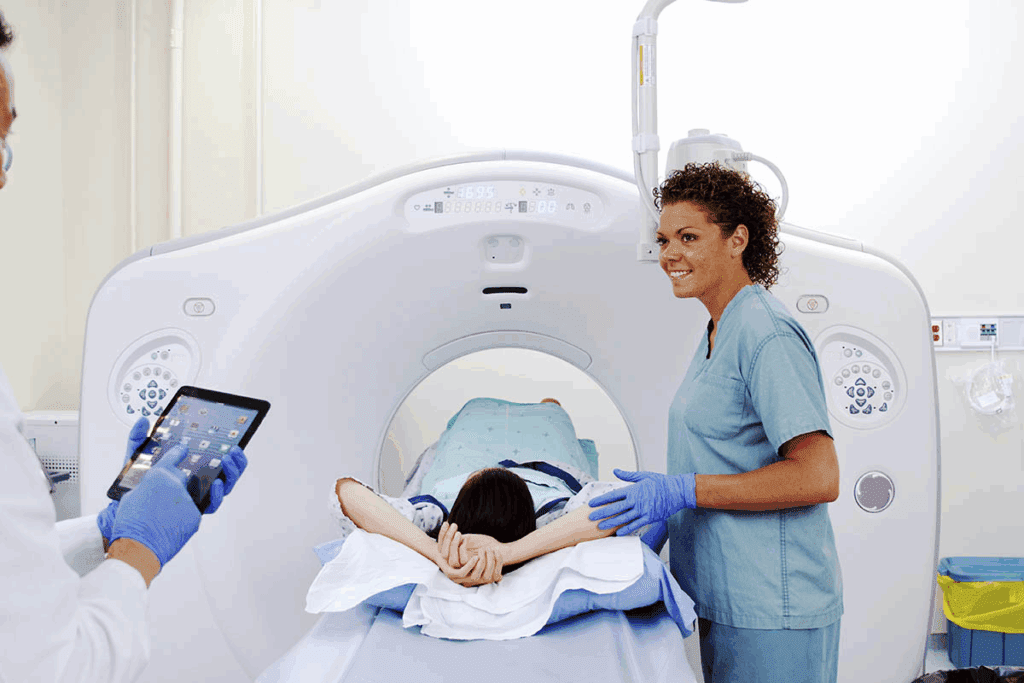
The first step is getting you into the right position on the CT table. Our team will help you get into the best spot to reach the lung area we need to check. After you’re set, we do initial CT scans to find the exact spot for the biopsy.
Getting you in the right spot is key for the procedure’s success. It helps us aim for the specific area we’re concerned about.
Local Anesthesia Administration
To keep you comfortable, we give you local anesthesia. This numbs the area where the biopsy needle will go. You’ll stay comfortable during the whole process.
Needle Insertion Technique
We use the CT images to guide the biopsy needle into the lung tissue. The real-time imaging lets us aim for the right spot. This ensures we get the tissue sample from the correct area.
Tissue Sample Collection Process
With the needle in place, we collect tissue samples for testing. These samples are then sent to the lab for analysis. This will help us figure out what’s affecting your lung.
Our team keeps a close eye on you during the procedure. We make sure you’re comfortable and that any risks are managed.
Potential Risks and Complications
It’s important to know the risks of a CT guided lung biopsy for safety and informed consent. We do our best to avoid risks, but it’s key for patients to know what might happen. This includes complications that could occur during or after the procedure.
Pneumothorax: Understanding and Managing the Primary Risk
Pneumothorax, or lung collapse, is a big risk with CT scan guided biopsy. Our team at Liv Hospital is ready to handle this issue. We watch patients closely to spot and fix any problems quickly.
Managing pneumothorax might mean putting in a chest tube to expand the lung. Sometimes, patients need to stay longer to make sure the lung doesn’t collapse further.
Bleeding and Hemoptysis
Bleeding is a possible issue with a biopsy with CT scan guidance. It’s rare but can be serious. Hemoptysis, or coughing up blood, might happen if the lung tissue gets irritated or injured. We plan the biopsy carefully and watch closely to reduce these risks.
Air Embolism and Other Rare Complications
Air embolism, where air gets into the blood, is a rare but serious problem with CT guided lung biopsy. Other rare issues include infection and damage to nearby structures. Though these are rare, it’s good for patients to know about them and report any unusual symptoms right away.
Warning Signs That Require Immediate Attention
After a CT scan biopsy procedure, watch for warning signs that need quick medical help. Look out for severe chest pain, trouble breathing, coughing up a lot of blood, or signs of infection like fever and chills. Our team gives clear instructions on what to look for and how to get help if needed.
Knowing the risks and complications of cat scan guided biopsy helps patients prepare and take part in their care. We aim to give the best care and support during the biopsy process.
Post-Procedure Care and Recovery
After a CT guided lung biopsy, patients start a vital recovery phase. This phase is key for their safety and the procedure’s success.
Immediate Recovery Room Monitoring
We watch patients closely in the recovery room for any immediate issues. Our team checks vital signs and looks for signs of distress or discomfort.
Monitoring typically includes:
- Vital sign checks
- Oxygen saturation monitoring
- Observation for signs of pneumothorax or other complications
Follow-up Imaging to Check for Complications
To check for any biopsy complications, we do follow-up imaging. This might be more CT scans or chest X-rays to look for issues like pneumothorax.
“Follow-up imaging is a critical step in ensuring patient safety post-biopsy,”
Discharge Instructions and Home Care
Before leaving, we give detailed home care instructions. This includes wound care, managing pain, and recognizing complications.
We also advise on:
- Medication management
- Activity levels
- Follow-up appointments
Activity Restrictions and Gradual Return to Normal Activities
To aid in recovery, we suggest avoiding heavy lifting and strenuous activities. Patients are also told not to drive for a while.
We recommend a gradual return to normal activities. Our team provides specific guidance based on the patient’s condition and how they’re doing.
Conclusion
A CT guided lung biopsy is a key tool for diagnosing lung issues. At Liv Hospital, we focus on top-notch care and support for our patients. Knowing the steps and possible risks helps patients feel ready for their biopsy.
This procedure is safe and works well when done by experts. We stress the need for proper preparation and care for the best results. Our team helps patients at every step, from the start to after the procedure, ensuring they get all the support they need.
Choosing Liv Hospital for your biopsy means you’re in safe hands. Our dedication to excellent patient care and support is vital for diagnosing and treating lung conditions.
FAQ
What is a CT guided lung biopsy?
A CT guided lung biopsy is a procedure that uses CT imaging. It helps target and sample abnormal lung tissue. This is key for diagnosing lung issues like nodules or masses.
How accurate is a CT guided lung biopsy?
A CT guided lung biopsy is very accurate. It’s a reliable way to get tissue samples for diagnosis.
What are the risks associated with a CT guided lung biopsy?
Potential risks include pneumothorax and bleeding. There’s also a chance of air embolism. Our team will manage these risks and guide you on what to watch for.
How do I prepare for a CT guided lung biopsy?
Preparation includes following dietary and medication guidelines. We’ll also help you make lifestyle changes to reduce risks. Our team will support you every step of the way.
What happens on the day of the CT guided lung biopsy?
On the day, you’ll arrive at the hospital and go through check-in. You’ll meet our team and undergo final assessments. We’ll answer any questions and review consent forms.
What is the step-by-step process of a CT lung biopsy procedure?
The procedure starts with positioning you correctly. Then, local anesthesia is given. Next, the needle is guided to collect tissue samples. This careful approach ensures a safe procedure.
What kind of care can I expect after a CT guided lung biopsy?
After the procedure, you’ll be monitored in the recovery room. We’ll give you discharge instructions and advice on home care. We’ll also tell you about activity restrictions for a safe recovery.
What is cone-beam CT technology used for in CT guided lung biopsies?
Cone-beam CT technology allows for real-time needle tip visualization. This enhances biopsy accuracy and reduces complications.
How long does it take to recover from a CT guided lung biopsy?
Recovery time varies. Our team will guide you on activity restrictions. This helps you gradually return to normal activities safely.
Can I undergo a CT guided lung biopsy if I have certain medical conditions?
We’ll assess your medical history to see if a CT guided lung biopsy is right for you.
Reference
- Nakamura, K., et al. (2021). Computed Tomography-guided Lung Biopsy: A Review. PMC. https://www.ncbi.nlm.nih.gov/pmc/articles/PMC9327413