Nearly 1 in 5 adults in the United States will face heart disease at some point. This makes heart health very important cat scan vs mri.
Cardiologists and heart specialists use advanced tests like cat scans and MRIs to diagnose and treat heart issues.
Both tests offer insights into the heart’s structure and function. Yet, they differ in technology, application, and what they can diagnose. We’ll look into these differences to help you choose the right test for your heart health.
Key Takeaways
- Cat scans and MRIs are both used for cardiac imaging, but they serve different purposes.
- The choice between a cat scan and an MRI depends on the specific cardiac condition being diagnosed.
- Understanding the strengths and limitations of each test is key for effective diagnosis and treatment.
- Cardiologists and heart specialists are essential in picking the best imaging test for each patient.
- Advances in imaging technology keep improving the accuracy and safety of heart diagnoses.
Understanding the Basics of Cat Scans and MRIs
Cat scans and MRIs are key tools in healthcare. They help us see inside the body. This is how we find and treat many health problems.
What is a Cat Scan?
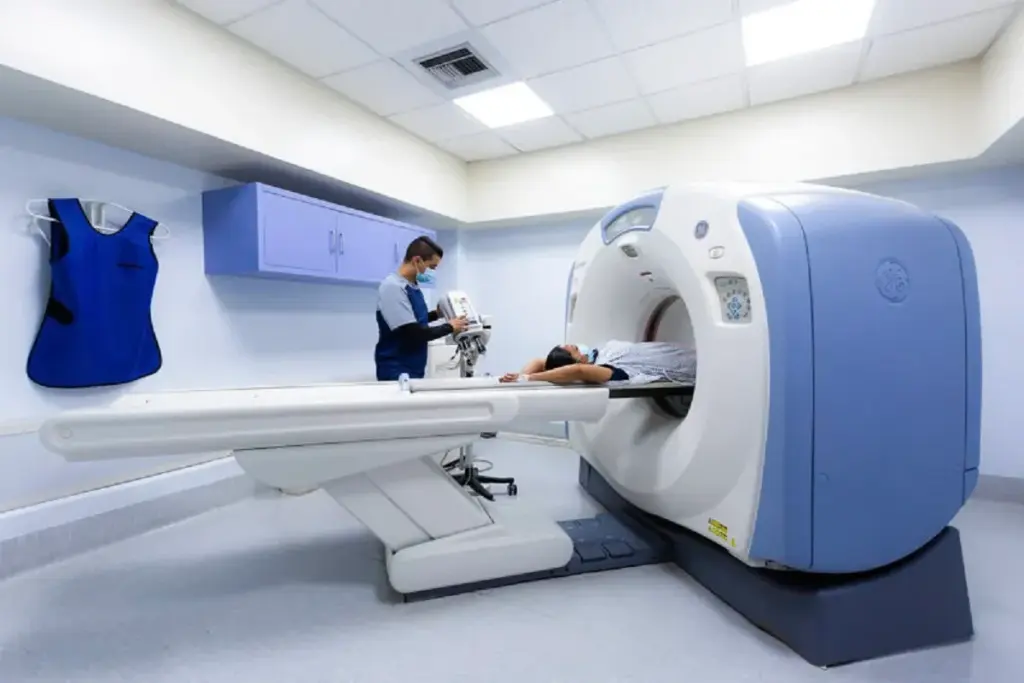
A Cat scan, or Computed Tomography scan, uses X-rays to show the body’s inside. It’s great for quick checks in emergencies. X-rays help make detailed images that show the whole picture.
What is an MRI?
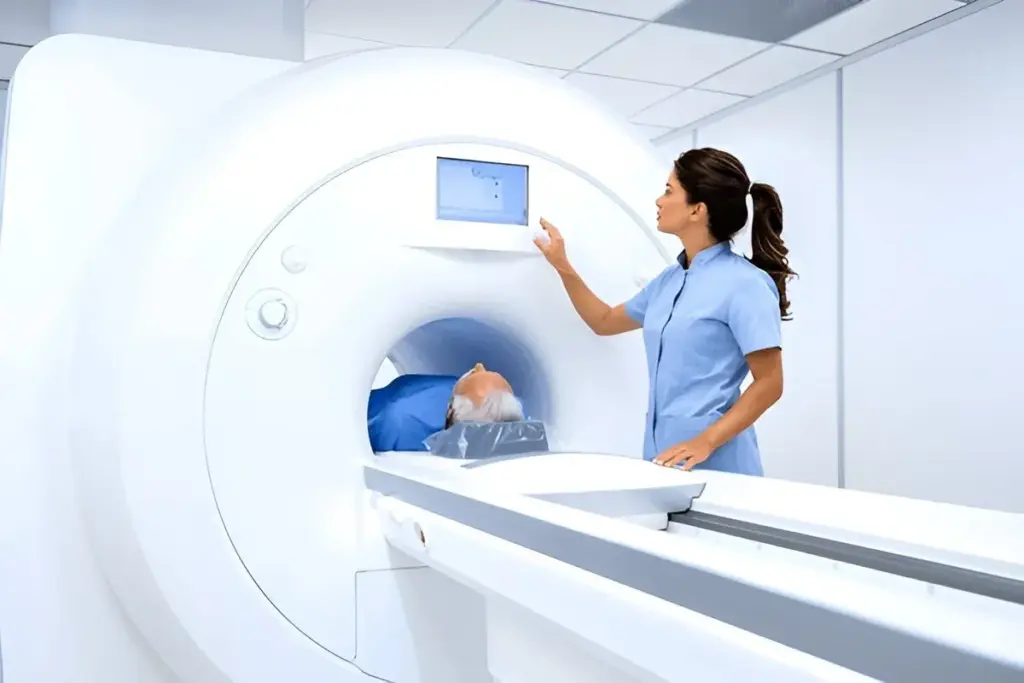
An MRI, or Magnetic Resonance Imaging, uses magnetic fields and radio waves. It makes detailed images without ionizing radiation. MRIs are best for soft tissues, like organs and tendons.
Key Differences Between the Two
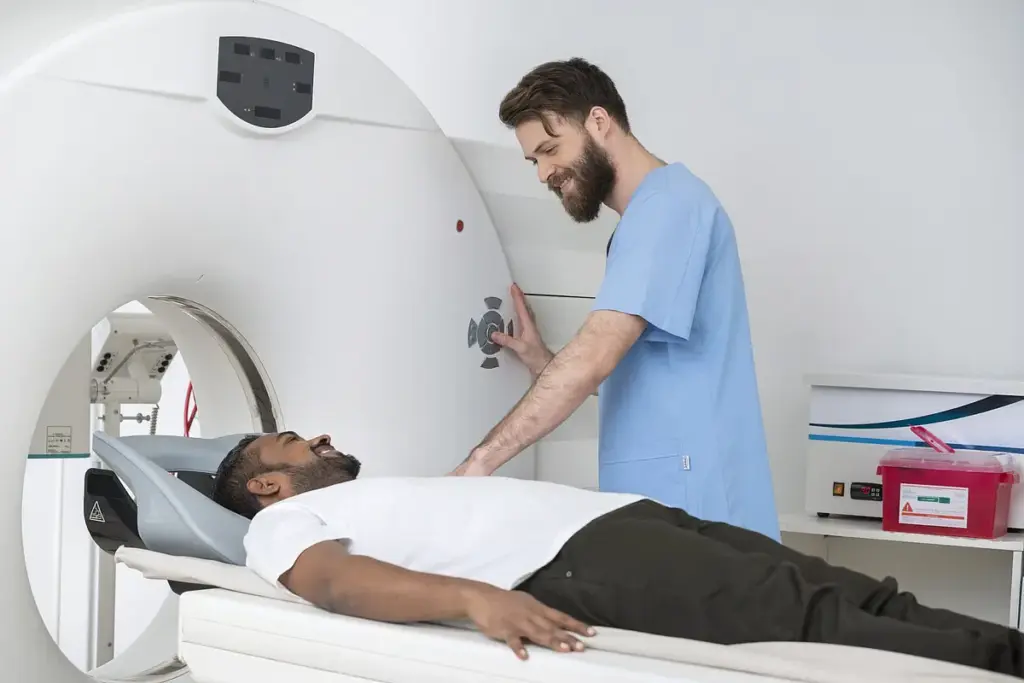
Cat scans and MRIs are different in how they work and what they’re used for. Cat scans are quicker and better for emergencies. MRIs give more detail for soft tissues without radiation.
|
Characteristics |
Cat Scan |
MRI |
|---|---|---|
|
Technology Used |
X-rays |
Magnetic fields and radio waves |
|
Primary Use |
Emergency situations, internal injuries |
Soft tissue imaging, detailed organ visualization |
|
Radiation Exposure |
Yes, uses ionizing radiation |
No, does not use ionizing radiation |
How Cat Scans Work
It’s important to know how cat scans work to understand their role in medicine. A CT scan, or computed tomography scan, utilizes computer-processed X-rays to create detailed images of the body. These X-rays create detailed images of the body’s inside.
The Technology Behind Cat Scans
Cat scans use X-rays from different angles around the body. A computer then makes tomographic images, or slices, of the body. This lets us see inside structures like organs and bones clearly. Cat scan technology has improved a lot, with faster and clearer images now.
“The development of cat scan technology has been a significant milestone in medical imaging,” say medical experts. It helps doctors diagnose and treat conditions better. Cat scans are used a lot because they give quick, important information.
Common Uses for Cat Scans
Cat scans are used in many ways, including in emergencies. They are great for:
- Finding internal injuries and bleeding
- Spotting cancers and tracking their growth
- Helping with procedures like biopsies
- Looking at vascular diseases, including heart issues
These uses show how important and versatile cat scans are. We count on them for detailed images that help us decide on treatments.
Risks and Limitations of Cat Scans
Cat scans are useful but involve radiation exposure. This is a worry, mainly for those needing many scans. The risk of harm from radiation is small but needs careful thought. Also, cat scans might not show soft tissues as well as MRI scans, which limits their use in some cases.
We need to think about the good and bad of cat scans. We should use them wisely and follow guidelines. This way, we get the most from them while keeping patients safe.
Exploring MRI Technology
MRI has greatly improved medical imaging. It uses magnetic fields and radio waves to show the body’s inside parts.
The Mechanism of MRIs
MRI machines align hydrogen nuclei with a strong magnetic field. Then, radio waves disturb these nuclei. The signals they send back help create detailed images.
The key components of an MRI machine include:
- A large, cylindrical magnet that generates the primary magnetic field.
- Gradient coils that modify the magnetic field to spatially encode the signal.
- Radiofrequency coils that transmit and receive the radio waves.
Common Applications of MRI
MRI is great for soft tissue imaging. It’s key for diagnosing brain, spinal cord, and joint issues. It’s also used for cardiac imaging to check the heart’s structure and function.
Some common uses of MRI are:
|
Application |
Description |
|---|---|
|
Neurological Disorders |
Diagnosing conditions such as multiple sclerosis, stroke, and brain tumors. |
|
Musculoskeletal Injuries |
Evaluating injuries to ligaments, tendons, and cartilage. |
|
Cardiovascular Disease |
Assessing heart structure and function, including coronary artery disease. |
Advantages and Disadvantages of MRI
MRI’s big plus is it shows detailed images without ionizing radiation. But, it can take a long time. It’s not good for people with metal implants or those who get claustrophobic.
Here’s a quick look at MRI’s pros and cons:
- Advantages: Detailed soft tissue imaging, no ionizing radiation.
- Disadvantages: Time-consuming, can cause claustrophobia, not safe with certain metal implants.
Comparing Image Quality: Cat Scan vs MRI
Cat Scans and MRIs differ in technology and image quality. The clarity and detail of images are key in medical diagnosis. Each has its own strengths and weaknesses, affecting how accurately they can diagnose conditions.
Resolution and Detail in Cat Scans
Cat Scans, or CT scans, are fast and clear, great for bones. They use X-rays to show detailed cross-sections of the body. For bones, Cat Scans are very detailed but not as good for soft tissues as MRIs.
Key advantages of Cat Scans include:
- High resolution for bony structures
- Quick imaging process, ideal for emergencies
- Effective for detecting internal injuries and bleeding
But, Cat Scans use radiation, a concern for young patients or those needing many scans.
Clarity and Contrast in MRI Imagery
MRIs are best for soft tissues, like the brain and spinal cord. They use magnetic fields and radio waves, without radiation. This makes them great for diagnosing soft tissue conditions.
“Studies have shown that MRIs can provide more detailed images of certain conditions, such as cardiac sarcoidosis, making them a preferred diagnostic tool for specific patient populations.”
The benefits of MRI include:
- Excellent soft tissue differentiation
- No radiation exposure
- Ability to provide functional information through techniques like diffusion-weighted imaging
|
Imaging Modality |
Strengths |
Weaknesses |
|---|---|---|
|
Cat Scan |
High resolution for bones, quick |
Less detailed for soft tissues, radiation exposure |
|
MRI |
Excellent for soft tissues, no radiation |
Can be time-consuming, not suitable for all patients (e.g., those with certain metal implants) |
In conclusion, choosing between Cat Scans and MRIs depends on the situation. Knowing their strengths and weaknesses helps improve diagnosis and care.
Cost Considerations for Cat Scans and MRIs
Understanding the costs of Cat Scans and MRIs is key to making smart choices. The prices can change a lot based on where you are, what scan you need, and your insurance.
Average Costs in the U.S.
In the U.S., Cat Scans can cost between $200 and $1,000. This depends on the part of the body scanned and if contrast material is used. For example, a head or brain scan is usually cheaper than a full-body scan.
MRIs are pricier, with costs from $400 to $3,500 or more. The scan’s complexity, the need for contrast, and the body part scanned all affect the price.
Insurance Coverage and Expenses
Insurance is a big factor in how much you’ll pay for Cat Scans and MRIs. Most plans cover these tests if they’re needed for your health.
But, it’s important to know your insurance plan’s details. This includes deductibles, copays, and coinsurance rates. Without good insurance, these tests can be very expensive.
Comparison of Average Costs
|
Diagnostic Test |
Low Cost |
High Cost |
Average Cost |
|---|---|---|---|
|
Cat Scan |
$200 |
$1,000 |
$600 |
|
MRI |
$400 |
$3,500 |
$1,950 |
Knowing these costs and talking to your healthcare team can help you make better choices. Look into ways to save, like choosing in-network providers or setting up payment plans.
Safety Concerns: Radiation Exposure
When we look at Cat Scans and MRIs, we must talk about radiation safety. The amount of radiation you get is key to knowing if a test is safe.
Radiation Levels in Cat Scans
Cat Scans, or CT scans, use X-rays to see inside your body. This means you get exposed to ionizing radiation. This has raised health worries because it might raise cancer and genetic damage risks. The amount of radiation depends on the scan type, dose, and body part scanned.
A typical Cat Scan gives you as much radiation as years of natural background radiation. While Cat Scans are often needed, it’s important to talk about them with your doctor. This includes discussing if the scan is really needed and if there are other options.
MRI and Its Lack of Ionizing Radiation
MRI (Magnetic Resonance Imaging) doesn’t use ionizing radiation. Instead, it uses a strong magnetic field and radio waves to create images. This makes MRI safer for people who need many tests or are worried about radiation.
Because MRI doesn’t use ionizing radiation, it’s safer for pregnant women and kids. It’s also great for long-term health management because it doesn’t use radiation. This makes MRI very useful for some patients.
Comparison of Radiation Exposure
|
Imaging Modality |
Radiation Exposure |
Typical Effective Dose |
|---|---|---|
|
Cat Scan (CT Scan) |
Yes |
2-10 mSv (varies by scan type and body part) |
|
MRI |
No |
N/A |
It’s important to know how Cat Scans and MRIs differ in radiation exposure. Cat Scans are often needed but the radiation should be thought about. MRIs are a safer choice for some patients and for long-term health needs.
Duration and Comfort During Procedures
When it comes to Cat Scans and MRIs, how long they take and how comfortable you are are key. Patients want to know what to expect in terms of time and comfort.
Time Required for a Cat Scan
A Cat Scan, or CT scan, is quick. The actual scan takes just a few minutes. But getting ready and finding the right spot on the table can add time. On average, a Cat Scan takes about 10 to 30 minutes from start to finish.
Time Required for an MRI
MRIs, though, take longer. They can last from 15 to 90 minutes. This depends on the scan type and the body part being looked at. MRI scans need you to stay very quiet and not move for a long time. This can be hard for some people.
A medical expert says, “MRI scans are very sensitive to movement. It’s important for patients to stay as quiet as possible to get clear images.”
“The quality of MRI images is directly related to the patient’s ability to stay motionless during the scan.”
Patient Comfort Considerations
Comfort is a big deal for both Cat Scans and MRIs. Cat Scans are quicker but some people might feel uncomfortable in the tight space or from staying very quiet.
MRIs, being longer and in a tight space, can make claustrophobia worse. To help, some MRI places have open machines or sedation to make patients relax.
|
Procedure |
Average Duration |
Comfort Considerations |
|---|---|---|
|
Cat Scan |
10-30 minutes |
Quick procedure, but may involve radiation exposure and contrast dye |
|
MRI |
15-90 minutes |
Longer duration, enclosed space, possible claustrophobia |
We know everyone is different, and we try to make every procedure comfortable. Knowing the differences in time and comfort between Cat Scans and MRIs helps patients get ready for their imaging needs.
Typical Diagnostic Use Cases for Cat Scans
Cat scans are key in medical diagnosis for their fast and precise images. They are used in many medical situations, most importantly in emergencies where time is of the essence.
Common Conditions Diagnosed with Cat Scans
Cat scans help diagnose many conditions, like acute injuries, strokes, and internal bleeding. They also spot cancers, vascular diseases, and damage to internal organs.
Because of their speed and accuracy, cat scans are perfect for emergency cases. They help quickly assess the severity of head injuries or find internal injuries from trauma.
When is a Cat Scan Preferred?
A cat scan is often chosen when quick imaging is needed, like in emergency rooms. They are also better for patients with certain implants or conditions that make MRI scans risky.
|
Condition |
Cat Scan |
MRI |
|---|---|---|
|
Acute Stroke |
Rapid assessment |
Detailed brain tissue analysis |
|
Internal Injuries |
Quick detection of internal bleeding |
Detailed assessment of soft tissue damage |
|
Cancer Detection |
Effective for detecting tumors |
Better for soft tissue tumor analysis |
In summary, cat scans are a vital tool in diagnosis, mainly in emergencies and for specific medical conditions. Their quick and accurate images make them essential in healthcare.
Typical Diagnostic Use Cases for MRIs
MRI technology has changed how we see inside the body. It lets doctors see internal structures clearly. This makes MRI key for diagnosing many health issues. We’ll look at common conditions MRI can spot and when it’s the best choice.
Conditions Diagnosed with MRI
MRIs are great for soft tissue issues, like organs and tendons. They’re often used for cardiac sarcoidosis or checking cardiac function. MRI also helps with neurological problems, like multiple sclerosis and spinal cord injuries.
When MRI is the Preferred Diagnostic Tool
An MRI is usually the top pick for soft tissue images. This is true for brain, spinal cord, and joint issues. MRI is also safer for pregnant women and those needing many scans because it doesn’t use harmful radiation.
|
Diagnostic Use Case |
MRI |
Cat Scan |
|---|---|---|
|
Soft Tissue Imaging |
Excellent for soft tissue details |
Limited soft tissue contrast |
|
Cardiac Conditions |
Assesses cardiac function and structure |
Can detect cardiac issues but with less detail |
|
Neurological Disorders |
Highly effective for diagnosing multiple sclerosis, spinal cord injuries |
Useful for detecting hemorrhages, tumors |
Future of Imaging: Trends and Innovations
Medical technology is getting better, making imaging more accurate and comfortable for patients. We’re seeing big changes in cat scan and MRI technology. These changes help doctors give more precise and personal care.
Advances in Cat Scan Technology
New cat scan tech means faster scans, less radiation, and clearer images. These updates are key for spotting complex health issues, like in emergencies.
Innovations in MRI Techniques
MRI tech is also getting better, with clearer images and quicker scans. New MRI methods, like functional MRI, let doctors see more. They can now check both the body’s structure and how it works.
The Evolving Role of Imaging in Medicine
The future of imaging is about more than just tech. It’s about how these new tools will change medicine. As cat scan and MRI tech keeps improving, we’ll see better patient care, smarter treatment plans, and a better healthcare system.
FAQ
What is the main difference between a cat scan and an MRI?
Cat scans use X-rays to create images. MRIs use a strong magnetic field and radio waves. This affects how they’re used, with cat scans for emergencies and MRIs for soft tissue.
How do cat scans work?
Cat scans use X-rays to take images from different angles. These images are then put together to show detailed pictures of the body’s inside.
What are the common applications of cat scans in cardiac health?
Cat scans help check for heart disease and find calcium in arteries. They also look at the heart’s structure and function, mainly in emergencies.
What are the risks associated with cat scans?
Cat scans expose you to radiation, which can raise cancer risk. The dye used in some scans can harm those with kidney issues.
How does MRI technology work?
MRI uses a strong magnetic field and radio waves to create images. It’s great for seeing soft tissues, like the heart and blood vessels.
What are the advantages of MRI in cardiac health?
MRI shows detailed heart images without radiation. It’s good for checking heart failure and other complex heart issues.
What are the disadvantages of MRI?
MRI might cause claustrophobia because of the machine’s design. It’s not safe for people with certain metal implants. Patients must stay very quiet during the scan.
How do the costs of cat scans and MRIs compare?
Cat scans are usually cheaper than MRIs. But, costs depend on location, insurance, and the procedure’s needs.
Are cat scans or MRIs safer in terms of radiation exposure?
MRIs are safer because they don’t use radiation. Cat scans use X-rays, which can be a problem for those needing many scans.
How long do cat scans and MRIs typically take?
Cat scans are quick, taking just a few minutes. MRIs take longer, from 15 to 90 minutes, based on the exam’s complexity.
When is a cat scan preferred over an MRI?
Use a cat scan in emergencies where speed matters. This includes acute trauma or heart issues.
When is an MRI recommended over a cat scan?
Choose an MRI for soft tissue details, like heart failure or complex heart diseases. It’s also better for those worried about radiation.
What are the future trends in cat scan and MRI technology?
Future advancements include lowering radiation doses in cat scans and improving MRI image quality. New MRI techniques, like functional MRI, will also help diagnose better.
References
National Center for Biotechnology Information. Evidence-Based Medical Insight. Retrieved from https://pmc.ncbi.nlm.nih.gov/articles/PMC2016896/