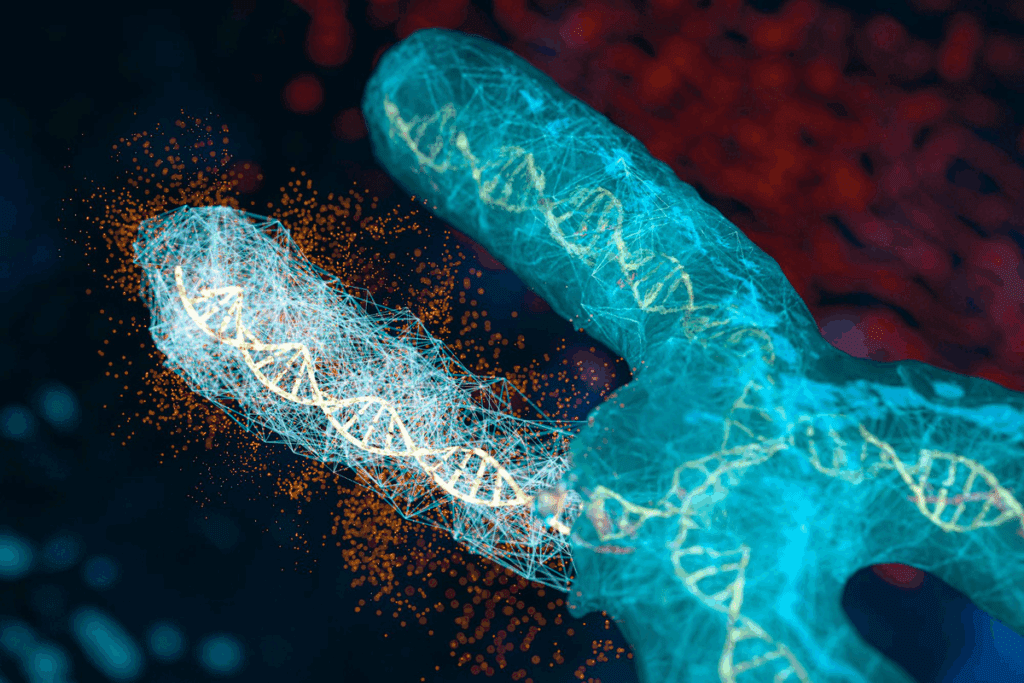
Prenatal testing is key in finding birth defects and chromosomal abnormalities during pregnancy. It helps expecting parents know about their baby’s health. This testing gives important insights. A guide to prenatal tests used to check for genetic abnormalities and birth defects in the fetus.
About 3-5% of pregnancies face birth defects or genetic disorders. Prenatal screening tests spot these risks. This lets parents make informed choices about their care.
At Liv Hospital, we aim to give top-notch healthcare. We support international patients fully. Our prenatal tests use advanced blood screening, detailed ultrasound, and cell-free DNA analysis. These methods find chromosomal conditions like Down syndrome and structural defects before birth.
Key Takeaways
- Prenatal testing detects birth defects and chromosomal abnormalities during pregnancy.
- Approximately 3-5% of pregnancies are complicated by birth defects or genetic disorders.
- Prenatal screening tests help identify pregnancies at increased risk.
- Liv Hospital offers complete prenatal testing services.
- Advanced technologies are used to detect chromosomal conditions and structural defects.
Understanding Prenatal Testing

Prenatal testing is key in pregnancy care. It gives parents-to-be important info about their baby’s health. This testing combines different methods to spot risks early.
It helps check for genetic issues and birth defects. This way, parents can make better choices during their pregnancy.
The Main Goal of Prenatal Screening
The main goal is to find pregnancies at risk of genetic problems and birth defects. This lets doctors keep a closer eye and act fast if needed.
Early detection lowers the chance of pregnancy and birth complications. It makes the journey safer for both mom and baby.
Statistics on Birth Defects and Genetic Disorders
Birth defects and genetic disorders are more common than many think. About one in 33 babies is born with a defect. Chromosomal issues affect about 1 in 150 live births.
| Condition | Incidence |
|---|---|
| Birth Defects | 1 in 33 births |
| Chromosomal Abnormalities | 1 in 150 live births |
| Down Syndrome (Trisomy 21) | 1 in 700 births |
These numbers show why prenatal screening is so vital. It helps spot risks early, leading to better care and support.
Types of Prenatal Tests to Check for Genetic Abnormalities and Birth Defects
[Add image here]
Prenatal tests are divided into screening and diagnostic tests. Each has its own role in pregnancy care. Let’s look at what they do.
Screening vs. Diagnostic Tests
Screening tests are non-invasive and check for genetic risks. Diagnostic tests are more accurate but riskier because they’re invasive. It’s key for parents-to-be to know the difference.
When Different Tests Are Performed
When you get prenatal tests depends on the type. Screening tests happen in the first and second trimesters. Diagnostic tests, like amniocentesis and CVS, are offered between 10 and 20 weeks.
| Test Type | Purpose | Timing |
|---|---|---|
| Screening Tests | Assess risk of genetic abnormalities | First and second trimesters |
| Diagnostic Tests | Definitively diagnose genetic conditions | Between 10 and 20 weeks |
In conclusion, knowing about prenatal tests helps expectant parents make better choices for their pregnancy.
First Trimester Screening Options
During the first trimester, several screening options are available. These tests help identify genetic disorders early. This allows parents to make informed decisions about their care.
Maternal Blood Screening Tests (11-14 Weeks)
Maternal blood screening tests are done between 11 and 14 weeks. They measure proteins and hormones in the mother’s blood. This includes human chorionic gonadotropin (hCG) and pregnancy-associated plasma protein A (PAPP-A).
Abnormal levels of these markers can signal a higher risk of chromosomal abnormalities. The test is non-invasive and provides valuable information. It’s important to remember it’s a screening, not a diagnostic test.
Nuchal Translucency Ultrasound
The nuchal translucency ultrasound is another key test in the first trimester, between 11 and 14 weeks. It measures the fluid-filled space at the back of the fetus’s neck. An increased thickness can be linked to a higher risk of chromosomal abnormalities, like Down syndrome.
Combined First Trimester Screening
The combined first trimester screening combines maternal blood screening tests and nuchal translucency ultrasound results. This approach gives a more accurate risk assessment than either test alone.
| Screening Test | Gestation Period | Key Measurements |
|---|---|---|
| Maternal Blood Screening | 11-14 weeks | hCG, PAPP-A levels |
| Nuchal Translucency Ultrasound | 11-14 weeks | Nuchal translucency thickness |
| Combined First Trimester Screening | 11-14 weeks | Combination of blood markers and nuchal translucency |
By combining these tests, healthcare providers can give expectant parents a detailed understanding of their pregnancy. This helps in planning the next steps if there’s a higher risk.
Cell-Free DNA Screening (NIPT)
Cell-free DNA screening has changed prenatal care a lot. It’s also known as Noninvasive Prenatal Testing (NIPT). This test looks at DNA in the mother’s blood to find genetic issues.
How Cell-Free DNA Testing Works
This test looks at DNA in the mother’s blood. It finds DNA from the placenta. After the 10th week, it tells about genetic risks.
Conditions Detected by NIPT
NIPT checks for common chromosomal problems like Down syndrome. It also looks for sex chromosome issues and some microdeletions. It’s not a final diagnosis but helps decide next steps.
Accuracy and Limitations
NIPT is very good at finding some genetic problems. But, it’s a screening, not a final test. It can give a risk level but not confirm a diagnosis. Rarely, it might show a problem that’s not there or miss one that is.
Talking to a healthcare provider about NIPT is a good idea. They can help you understand its role in your care. This way, you can make the best choices for your pregnancy.
Second Trimester Maternal Serum Screening
Second trimester maternal serum screening is a non-invasive test. It checks for certain substances in the mother’s blood. This helps identify possible risks. It’s done between 15 and 20 weeks of pregnancy.
Triple and Quad Screening Tests
The triple screen looks at three substances in the blood: alpha-fetoprotein (AFP), human chorionic gonadotropin (hCG), and unconjugated estriol (uE3). The quad screen adds a fourth marker, inhibin-A, to the triple screen. These tests check for chromosomal abnormalities.
Markers Measured:
- Alpha-fetoprotein (AFP)
- Human chorionic gonadotropin (hCG)
- Unconjugated estriol (uE3)
- Inhibin-A (for quad screen)
What These Tests Can Detect
These tests look for markers linked to higher risks of:
- Down syndrome
- Trisomy 18
- Neural tube defects
| Condition | Markers | Typical Screening Test |
|---|---|---|
| Down syndrome | Low uE3, high hCG | Triple/Quad Screen |
| Trisomy 18 | Low AFP, low uE3, low hCG | Triple/Quad Screen |
| Neural tube defects | High AFP | Triple/Quad Screen |
Interpreting Abnormal Pregnancy Test Results
Abnormal results from these tests mean there’s a higher risk. They don’t confirm a condition. But, more tests like amniocentesis or ultrasound might be needed.
Healthcare providers should talk about what abnormal results mean. They should guide pregnant individuals on what to do next. This helps them make informed decisions.
Comprehensive Ultrasound Evaluations
Ultrasound evaluations are key in prenatal care. They give insights into how the fetus is growing. These tests are done at different times in pregnancy to check the fetus’s health.
First Trimester Ultrasound Markers
In the first trimester, ultrasound markers can show if there are problems. Important markers include:
- Nuchal translucency (NT) – a measure of the fluid-filled space at the back of the fetus’s neck
- Nasal bone presence or absence
- Ductus venosus flow
- Tricuspid regurgitation
Anatomy Scan (18-22 Weeks)
The anatomy scan is done between 18 and 22 weeks. It’s a detailed check of the fetus’s body. It looks at:
- Head and brain structure
- Face and jaw
- Heart and major blood vessels
- Spine and limbs
- Abdominal organs
This scan finds many structural and chromosomal issues.
Birth Defects Detected at 20-Week Ultrasound
The 20-week ultrasound can find many birth defects. These include:
- Neural tube defects (e.g., spina bifida)
- Heart defects
- Cleft lip and palate
- Limb abnormalities
- Abdominal wall defects
Finding these issues early helps parents plan for their baby’s needs.
Ultrasound evaluations are essential for a healthy pregnancy. They help find problems early. This way, doctors can give the best care and support.
Diagnostic Testing Procedures
Diagnostic tests are key to finding genetic issues during pregnancy. They give clear answers, helping parents know their baby’s health.
Chorionic Villus Sampling (CVS)
Chorionic Villus Sampling (CVS) is done between 10 and 13 weeks. It takes a small sample from the placenta for genetic checks. CVS can spot issues like Down syndrome and trisomy 13.
The test is guided by ultrasound for safety. It’s important to talk about its risks and benefits with a doctor.
Amniocentesis
Amniocentesis removes amniotic fluid for genetic tests. It’s done between 15 and 20 weeks. The fluid has cells for chromosomal checks.
Amniocentesis is very accurate, about 99%. But, it’s vital to know the risks, like miscarriage, and talk to a doctor.
Chromosome Check During Pregnancy
CVS and amniocentesis are for chromosome checking during pregnancy. They look at fetal cells for chromosomal issues. This info helps parents prepare for their baby’s arrival.
Diagnostic tests have big benefits:
- Early detection of genetic conditions
- Accurate diagnosis for better decision-making
- Preparation for a child with special needs
Diagnostic tests, like CVS and amniocentesis, are essential in prenatal care. They give parents vital info about their baby’s health, helping them make informed choices during pregnancy.
Understanding Test Results
Understanding prenatal test results is key. Prenatal testing is vital for pregnancy care. It gives parents and doctors important info about the fetus’s health.
Interpreting Positive and Negative Results
Prenatal test results are either positive or negative. A negative result means the test didn’t find the condition. This is reassuring, but remember, no test is perfect.
A positive result shows a possible condition. It doesn’t confirm it. It just means there’s a higher risk.
For example, a positive Down syndrome screening doesn’t mean the fetus has it. It just means there’s a higher risk.
False Positives and False Negatives
It’s important to know about false positives and false negatives. A false positive means a test says there’s a condition when there isn’t. This can cause worry and more tests.
A false negative means a test misses a condition. This can give false reassurance.
| Test Result | Actual Condition | Implication |
|---|---|---|
| Positive | Present | True Positive – Condition detected |
| Positive | Not Present | False Positive – Unnecessary anxiety and further testing |
| Negative | Not Present | True Negative – Reassurance |
| Negative | Present | False Negative – False reassurance |
Next Steps After Abnormal Pregnancy Test Results
Abnormal test results can be scary. If results show a risk or condition, talk to a healthcare provider. They might suggest more tests like amniocentesis or CVS.
Remember, test results can affect your feelings. Getting support from doctors, counselors, or groups can help a lot.
Dealing with prenatal test results can be tough. We aim to help expectant parents understand and make informed choices about their care.
Chromosomal Abnormalities and Birth Defects Detected
We now have advanced prenatal testing options. These can detect chromosomal abnormalities and structural birth defects. These tests are key for giving expectant parents important health info about their baby.
Common Trisomies
Trisomies happen when there’s an extra chromosome in the body’s cells. The most common ones found through prenatal tests are Down syndrome (Trisomy 21), Trisomy 18 (Edwards syndrome), and Trisomy 13 (Patau syndrome).
Down syndrome is marked by intellectual disability and unique physical traits. Trisomy 18 and Trisomy 13 are linked to severe intellectual and physical disabilities. In many cases, they can be life-threatening.
| Trisomy | Common Name | Characteristics |
|---|---|---|
| Trisomy 21 | Down syndrome | Intellectual disability, distinct physical features |
| Trisomy 18 | Edwards syndrome | Severe intellectual and physical disabilities |
| Trisomy 13 | Patau syndrome | Severe intellectual and physical disabilities, often life-limiting |
Sex Chromosome Abnormalities
Sex chromosome abnormalities happen when there are variations in the number of X or Y chromosomes. Common ones include Turner syndrome (45,X) and Klinefelter syndrome (47,XXY).
Turner syndrome affects females, causing short stature, infertility, and other health issues. Klinefelter syndrome affects males, leading to infertility, tall stature, and developmental delays.
Neural Tube and Other Structural Defects
Neural tube defects (NTDs) occur when the neural tube doesn’t close properly during fetal development. Common NTDs include spina bifida and anencephaly.
Spina bifida can cause varying degrees of paralysis and bladder dysfunction. Anencephaly is a condition where a major portion of the brain, skull, and scalp is missing, typically not compatible with life.
Other structural defects that can be detected prenatally include heart defects, abdominal wall defects, and skeletal abnormalities.
Who Should Consider Pregnancy Disease Testing
Knowing who needs prenatal disease testing is key for a healthy pregnancy. Certain risk factors make prenatal testing more important. It helps find issues early.
Age-Related Risk Factors
Being older increases the risk of chromosomal problems. Women over 35 are considered advanced in age. The risk of Down syndrome and other issues grows with age.
Here are some age-related statistics:
- At 35, the risk of Down syndrome is about 1 in 350.
- By 40, this risk jumps to about 1 in 100.
- At 45, the risk is about 1 in 30.
Family History and Genetic Factors
Family history and genetics also matter. A family history of genetic disorders raises the risk. We look at conditions like:
- Cystic fibrosis
- Sickle cell disease
- Thalassemia
- Previous child with a chromosomal abnormality
Genetic counseling helps understand these risks. It guides the decision for prenatal testing.
Tests Done in Pregnancy Based on Risk Profile
The tests needed vary by risk level. Those at higher risk may need more detailed tests. Common tests include:
- Maternal Blood Screening Tests: These check the mother’s blood for markers of chromosomal issues.
- Cell-Free DNA Screening (NIPT): A non-invasive test that screens for certain conditions in the mother’s blood.
- Chorionic Villus Sampling (CVS) and Amniocentesis: These tests sample cells from the placenta or amniotic fluid to detect chromosomal problems.
Talking to a healthcare provider is important. They can help choose the right tests based on your risk factors.
Conclusion
Prenatal testing is key in prenatal care. It helps find and manage genetic issues early. We’ve looked at different tests to see how they help spot problems.
First trimester screenings, cell-free DNA tests, and ultrasounds are important. They help find issues early. Tests like chorionic villus sampling and amniocentesis give clear answers. This lets parents make informed choices.
Prenatal testing is vital for a healthy pregnancy. Knowing about the tests helps parents and doctors. It’s clear that prenatal testing is very important.
Tests for birth defects are a big part of this care. They help make pregnancies healthier. In the end, prenatal testing is a great tool for parents and doctors.
FAQ
What is the main goal of prenatal screening?
Prenatal screening aims to find pregnancies at risk of genetic disorders and birth defects. This allows for early action and informed choices.
What are the different types of prenatal tests available?
There are two main types of prenatal tests. Screening tests check for risk of genetic issues. Diagnostic tests give a clear diagnosis.
What is the difference between screening and diagnostic tests?
Screening tests are non-invasive and check for risk. Diagnostic tests, like CVS and amniocentesis, are invasive and give a clear diagnosis.
What is NIPT, and how does it work?
NIPT, or cell-free DNA screening, looks at DNA in the mother’s blood. It finds chromosomal problems like trisomies with high accuracy.
Can blood tests be wrong for pregnancy?
Blood tests are usually right, but there’s a small chance of errors. It’s key to know their limits and talk to a healthcare provider about results.
What is the 20-week ultrasound, and what can it detect?
The 20-week ultrasound, or anatomy scan, is a detailed ultrasound. It can spot birth defects and chromosomal disorders.
Who should consider prenatal testing based on age-related risk factors?
Women over 35 are at higher risk for chromosomal issues. They should think about prenatal testing, like NIPT or diagnostic tests.
What are the next steps after receiving abnormal test results?
If results show a problem, doctors will suggest more testing. They’ll also talk about what the results mean and options for managing the condition.
Can prenatal testing detect all types of chromosomal abnormalities and birth defects?
Prenatal testing can find many issues, but it’s not perfect. Some problems might not show up, and test accuracy can vary.
What is the significance of maternal blood screening tests during pregnancy?
Maternal blood screening tests, like the triple and quad screen, find chromosomal issues and birth defects. They give important info to parents and doctors.
Are there any risks associated with diagnostic testing procedures like CVS and amniocentesis?
CVS and amniocentesis carry a small risk of complications, like miscarriage. But, the benefits usually outweigh the risks.
References
National Center for Biotechnology Information. Prenatal Tests: Detecting Birth Defects and Chromosomal Abnormalities. Retrieved from https://www.ncbi.nlm.nih.gov/pmc/articles/PMC10493820/