

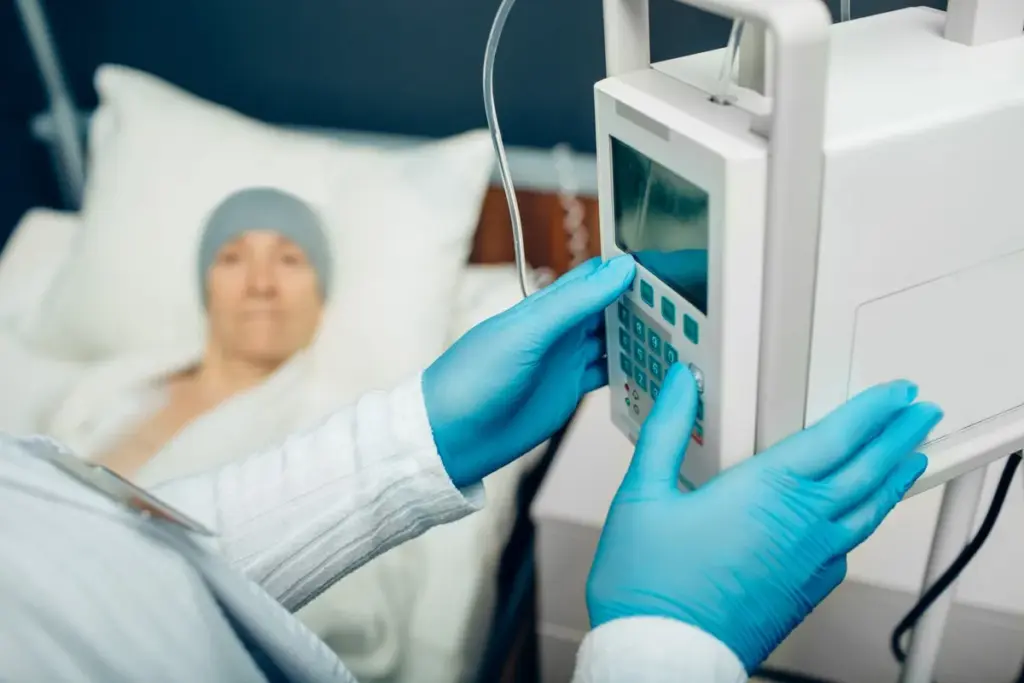
Chemoradiotherapy combines chemotherapy and radiation therapy. It’s a common treatment for many cancers, including cervical cancer.
Compare chemotherapy vs radiation timing today. Discover the vital differences and how these amazing treatments provide powerful cures.
The length of chemoradiotherapy changes based on the cancer type, the patient’s health, and treatment guidelines. For cervical cancer, treatment usually takes 51 to 66 days.
Studies show that finishing chemoradiotherapy in 56 to 64 days can lead to better survival rates. It’s important to stick to the recommended treatment plan for the best results.
Key Takeaways
- Chemoradiotherapy duration varies depending on cancer type and patient health.
- Cervical cancer treatment typically lasts between 51 to 66 days.
- Completing treatment within 56 to 64 days improves survival rates.
- Adhering to the recommended treatment schedule is key.
- Precise treatment duration impacts both emotional preparation and medical outcomes.
Understanding Chemoradiotherapy: A Complete Overview
Chemoradiotherapy combines chemotherapy and radiation therapy to fight cancer. It uses both methods to target cancer cells in different ways. This approach aims to make cancer treatment more effective.
Definition and Purpose of Chemoradiotherapy
Chemoradiotherapy is when chemotherapy and radiation therapy are used together to treat cancer. It aims to get a better result than using either therapy alone. Chemotherapy kills cancer cells with drugs, while radiation therapy damages their DNA with high-energy rays.
This combination can lead to better control of tumors and possibly cure some cancers. A study in Radiotherapy and Oncology shows the challenges of diagnosing pneumonitis in patients on immunotherapy. It highlights the complexity of managing patients with combined treatments.
When Chemoradiotherapy Is Recommended
Chemoradiotherapy is used for many types of cancer, based on the cancer’s stage, location, and other factors. It’s often used for cervical, head and neck, and rectal cancers. The choice to use chemoradiotherapy depends on the patient’s health, other diseases, and treatment guidelines.
“The integration of chemotherapy and radiation therapy has revolutionized the treatment of various cancers, improving outcomes and survival rates.”
Key Components of Treatment Planning
Planning for chemoradiotherapy includes several important steps. These are:
- Accurate staging of the cancer
- Choosing the right chemotherapy agents and radiation doses
- Coordinating treatment schedules for the best effect
- Monitoring patient response and adjusting treatment as needed
|
Treatment Component |
Description |
Importance |
|---|---|---|
|
Accurate Staging |
Determining the extent of cancer spread |
High |
|
Chemotherapy Agents |
Choosing drugs to kill cancer cells |
High |
|
Radiation Doses |
Determining the right radiation dose |
High |
Protocols can differ based on cancer type, patient health, and treatment guidelines. This shows the need for a personalized treatment plan.
Chemotherapy vs Radiation: Understanding the Components of Combined Treatment
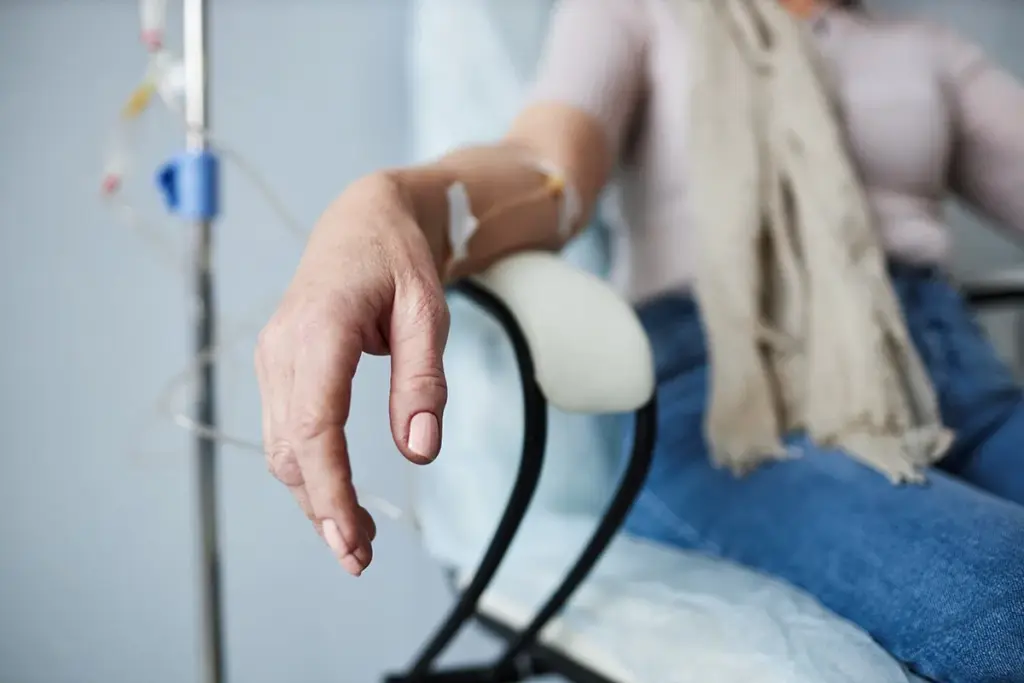
Cancer treatment often combines chemotherapy and radiation. These treatments work in different ways but together are very effective. It’s important for patients to know the difference to make good choices about their care.
How Chemotherapy Works in Combined Therapy
Chemotherapy uses drugs to kill cancer cells or stop them from growing. It’s used with radiation to target cancer cells that have spread. Chemotherapy’s systemic approach helps radiation’s localized treatment, making treatment more effective.
Chemotherapy drugs can be taken by mouth or given through an IV. The choice of drugs depends on the patient’s needs and cancer type.
How Radiation Works in Combined Therapy
Radiation therapy uses high-energy rays to kill cancer cells or slow their growth. It targets the main tumor and nearby tissues. Radiation’s precision means it can deliver high doses right to the tumor, protecting healthy tissues.
There are different types of radiation therapy, like external beam and internal radiation (brachytherapy). The choice depends on the cancer’s location, size, and stage.
Synergistic Effects of Combined Treatment
Chemotherapy and radiation together can improve treatment results. Their synergistic effects help control the tumor better and lower the chance of it coming back.
Studies show that combining chemotherapy and radiation can lead to better outcomes. This is because they target cancer cells in different ways, making it harder for cancer to resist treatment.
Standard Duration of Chemoradiotherapy Treatments
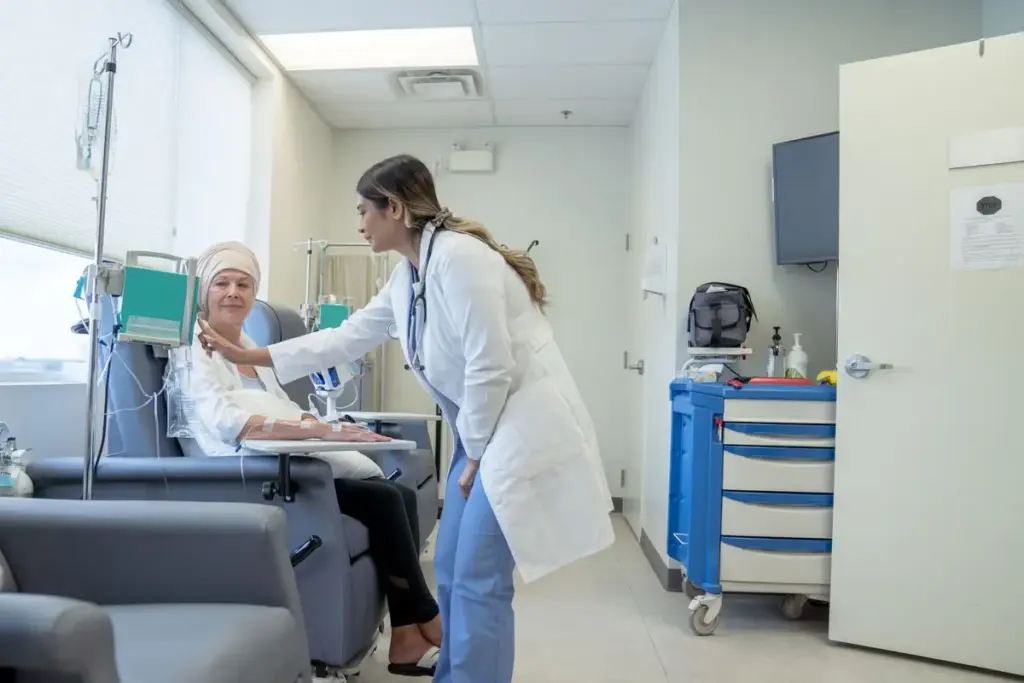
Knowing how long chemoradiotherapy lasts is key for doctors and patients. This treatment mixes chemotherapy and radiation to fight cancer. It’s used for cancers like cervical, head and neck, and rectal cancers.
The length of chemoradiotherapy changes based on the cancer type and stage, and the patient’s health. But, there’s a general guideline for how long treatment should last.
The 51-66 Day Treatment Window
Research shows that chemoradiotherapy for cancers like cervical cancer usually lasts 51 to 66 days. This time lets doctors give the right amount of radiation and chemotherapy. It helps the treatment work best without causing too many side effects.
Median Treatment Time of 60 Days
Recent studies say the average time for chemoradiotherapy is about 60 days. Finishing treatment in this time is linked to better results. Patients live longer and have a better quality of life.
Why Treatment Duration Matters
The length of chemoradiotherapy is very important. It affects how well the treatment works. Studies show that finishing treatment in 56 to 64 days leads to better survival rates.
Longer treatments can cause more harm, make the treatment less effective, and increase the chance of cancer coming back. So, doctors must plan treatment carefully. They aim to finish treatment in the best time for the patient.
Chemoradiotherapy for Different Cancer Types
Different cancers need different approaches to chemoradiotherapy, affecting treatment time. Each cancer type has its own unique challenges and needs.
Cervical Cancer Treatment Duration
Chemoradiotherapy for cervical cancer combines radiation and chemotherapy. It makes cancer cells more sensitive to radiation. Longer treatments can lower survival chances.
Head and Neck Cancer Treatment Duration
Chemoradiotherapy is a main treatment for head and neck cancer. It aims to save organs. Treatment usually lasts 6 to 7 weeks. The exact time depends on the tumor, patient health, and treatment plan.
Intensity-modulated radiation therapy (IMRT) is often used. It targets tumors precisely, reducing harm to nearby tissues.
Rectal Cancer Treatment Duration
Rectal cancer treatment starts with chemoradiotherapy to shrink tumors. This part lasts about 5-6 weeks. Then, surgery and more chemotherapy might follow.
The total neoadjuvant therapy (TNT) approach is becoming more popular. It combines chemotherapy and radiation before surgery, aiming to improve results.
Other Cancer Types and Their Timeframes
Other cancers like anal, esophageal, and bladder use chemoradiotherapy too. Treatment times vary a lot. For example, anal cancer treatment is about 5-6 weeks, while esophageal cancer can take 5 to 8 weeks.
The exact treatment time depends on the tumor, patient health, and treatment guidelines.
The Treatment Timeline: What to Expect Week by Week
Knowing the timeline of chemoradiotherapy is key for patients. It helps them understand their treatment journey. Chemoradiotherapy has a structured plan, divided into several phases.
Initial Planning and Preparation Phase
The first phase is all about planning and getting ready. It includes tests, talks with doctors, and a treatment plan made just for you. Patient navigation services are very important here. A study in JAMA Internal Medicine shows they help a lot with cancer care.
Early Treatment Phase (Weeks 1-3)
In the early phase, patients start their chemoradiotherapy. This is a critical time that sets the stage for the whole treatment. Patients might start feeling side effects. It’s important to watch their health closely.
Supportive care helps manage these side effects. It also makes sure patients stick to their treatment.
Mid-Treatment Phase (Weeks 4-6)
By the mid-phase, patients are in the thick of their treatment. This time is filled with ongoing treatment and checks to see how it’s working. The team keeps a close eye on the patient’s progress and makes changes as needed.
Final Treatment Phase (Weeks 7-9)
The final phase is about finishing the treatment and starting to recover. Patients get ready for after-care, like follow-up visits and rehab plans. Knowing the timeline helps them understand what’s next and how to recover well.
|
Treatment Phase |
Week |
Key Activities |
|---|---|---|
|
Initial Planning |
Pre-treatment |
Diagnostic tests, treatment planning |
|
Early Treatment |
1-3 |
Start chemoradiotherapy, manage side effects |
|
Mid-Treatment |
4-6 |
Ongoing treatment, regular assessments |
|
Final Treatment |
7-9 |
Complete treatment, plan recovery |
Understanding the chemoradiotherapy timeline helps patients prepare better. It lets them manage their expectations and stick to their treatment plans.
Impact of Treatment Duration on Survival Rates
Studies show that how long treatment lasts affects survival rates in patients getting chemoradiotherapy. The length of treatment is key to better patient outcomes. It’s vital to find the best treatment length for the highest survival chances.
Survival Rates for Treatments Under 56 Days
Research shows that finishing chemoradiotherapy in 56 days or less boosts five-year survival rates to about 65%. This time frame is seen as the best for many patients. It ensures treatment is given without big breaks.
Survival Rates for Treatments Between 57-64 Days
Treatments lasting from 57 to 64 days have a five-year survival rate of about 63%. This is a bit lower than the 56-day mark but is also good.
Survival Rates for Treatments Exceeding 71 Days
Treatments over 71 days have a five-year survival rate of just 52%. Long treatments often mean problems or breaks, which can harm patient results.
Research Supporting These Outcome Differences
Recent studies confirm that finishing chemoradiotherapy quickly is key for the best survival rates. Delays or long treatments can make treatment less effective and lead to worse results. This shows how important it is to keep treatment on track without interruptions.
Key Takeaway: Finishing chemoradiotherapy in 56 to 64 days is linked to better five-year survival rates. This shows how important treatment length is for patient outcomes.
Completion Rates and Treatment Adherence
It’s key to know how well patients finish chemoradiotherapy treatments. How well a patient sticks to the treatment plan greatly affects its success.
Chemoradiotherapy combines chemotherapy and radiation therapy. This complex treatment can make it hard for patients to stick to the plan.
Percentage of Patients Completing Treatment Within 8-9 Weeks
About 34-57% of patients finish chemoradiotherapy in 8-9 weeks. This shows the challenges for both patients and doctors in keeping to the schedule.
A study in a top medical journal showed that patient navigation helps. It can make cancer screening and follow-up better, helping patients stick to treatment.
“Patient navigation services have been shown to improve cancer treatment outcomes by facilitating access to care and reducing barriers to treatment completion.”
– Journal of Clinical Oncology
Factors Affecting Treatment Completion
Many things can make it hard for patients to finish chemoradiotherapy on time. These include:
- Things about the patient, like age and health
- How bad the side effects are and how complex the treatment is
- How easy it is to get care and the quality of support services
Strategies to Improve Adherence to Treatment Schedules
Healthcare providers can use several ways to help patients stick to their treatment plans:
|
Strategy |
Description |
Potential Impact |
|---|---|---|
|
Patient Education |
Teaching patients about their treatment and possible side effects |
Helps patients understand and follow their treatment |
|
Supportive Care |
Providing services like pain management and nutrition advice |
Makes patients more comfortable and able to handle treatment |
|
Patient Navigation |
Using navigators to help patients get care and overcome obstacles |
Can lead to more patients finishing treatment and better results |
By knowing what affects treatment completion and using strategies to improve, healthcare providers can make chemoradiotherapy better. This helps patients get the best results from their treatment.
Managing Side Effects During Chemoradiotherapy
It’s key to manage side effects from chemoradiotherapy well. This helps keep treatment on track and improves patient results. Chemoradiotherapy combines chemotherapy and radiation therapy, leading to various side effects.
Common Side Effects and Their Timeline
Side effects from chemoradiotherapy can start early or later. Some common ones include:
- Fatigue: Many patients feel tired early and it lasts.
- Nausea and Vomiting: These happen due to chemotherapy and radiation, more so if the area treated is the abdomen.
- Skin Reactions: Skin can get irritated, from red to peeling off.
- Hematologic Toxicity: Blood cell counts can drop, causing anemia, neutropenia, or thrombocytopenia.
A study in Radiotherapy and Oncology showed diagnosing pneumonitis in immunotherapy patients is tough. This highlights the challenge in managing side effects in treatments like chemoradiotherapy.
Impact of Side Effects on Treatment Duration
Side effects can affect how long chemoradiotherapy lasts. Severe side effects might mean treatment breaks or changes. This could make treatment longer. It’s important for doctors to watch for side effects and find ways to lessen them.
“The management of side effects is not just about alleviating symptoms but also about ensuring that patients can continue their treatment as planned.”
Expert Opinion
Supportive Care to Maintain Treatment Schedule
Supportive care is key in managing side effects and keeping treatment on track. This includes:
- Symptom Management: Actively managing symptoms like nausea, pain, and tiredness.
- Nutritional Support: Making sure patients eat well to handle treatment.
- Psychological Support: Giving emotional and mental support to deal with treatment challenges.
Understanding chemoradiotherapy side effects and using supportive care helps doctors. They can help patients get through treatment better.
Treatment Breaks and Extensions: When and Why They Occur
Some patients on chemoradiotherapy face treatment breaks or extensions. These pauses or extensions happen for many reasons. They can change how long treatment lasts and might affect how well it works.
Medical Reasons for Treatment Interruptions
Medical issues are a big reason for treatment breaks. Severe side effects like mucositis or neutropenia can make patients need time to get better. Other health problems or complications might also stop treatment.
Common medical reasons for treatment interruptions include:
- Severe side effects
- Unrelated health issues
- Complications during treatment
Managing Unavoidable Treatment Breaks
It’s important to handle treatment breaks well to keep treatment on track. This means watching the patient closely and changing the treatment plan if needed.
Strategies for managing treatment breaks include:
- Adjusting the treatment schedule
- Providing supportive care to manage side effects
- Monitoring patient health closely
Minimizing the Impact of Treatment Delays
It’s key to lessen the effects of treatment delays for chemoradiotherapy to work well. This can mean changing the treatment plan, improving care for side effects, and watching how the patient responds.
|
Strategy |
Description |
Benefit |
|---|---|---|
|
Adjusting Treatment Plan |
Modifying the treatment schedule or intensity |
Reduces overall treatment time |
|
Intensifying Supportive Care |
Enhancing care to manage side effects |
Improves patient tolerance to treatment |
|
Close Monitoring |
Regularly assessing patient response and health |
Allows for timely adjustments to treatment |
Studies show that treatment breaks and extensions can affect how well treatment works. Knowing why these happen and how to handle them is key to making chemoradiotherapy better.
Institutional Variations in Chemoradiotherapy Protocols
Chemoradiotherapy plans can change a lot from one place to another. This affects how well and safely the treatment works. It’s a big deal in cancer care.
Differences in Treatment Approaches by Institution
Why treatments vary is due to many things. These include what resources are available, the rules for treatment, and the doctors’ skills. For example, a study showed that how much radiation and what chemotherapy are used can differ a lot.
These differences come from not having the same rules for everyone. Places need to adjust treatments based on their patients and what they can offer.
Quality Markers for Chemoradiotherapy Delivery
Places use certain signs to check if they’re doing a good job with treatments. These signs include how many patients finish treatment, how happy patients are, and how many side effects happen.
|
Quality Marker |
Description |
Target Value |
|---|---|---|
|
Treatment Completion Rate |
Percentage of patients completing the planned treatment |
>90% |
|
Patient Satisfaction |
Patient-reported satisfaction with care |
>80% |
|
Treatment-Related Side Effects |
Incidence of severe side effects |
International Standards and Guidelines for Treatment Duration
Guidelines from big groups like the National Cancer Network and the European Society for Medical Oncology help. They suggest how long treatments should last. This makes sure care is the same everywhere, based on what works best.
By understanding and fixing the differences in treatment plans, doctors can make care better. This helps patients get the best treatment possible.
Patient-Specific Factors Affecting Treatment Duration
Patient-specific factors are key in deciding how long chemoradiotherapy treatment lasts. These factors can greatly affect how well a patient does with the treatment. This, in turn, can change how long the treatment goes on for.
Impact of Age and Comorbidities
Age and health conditions can change how long treatment takes. Older patients or those with many health issues might need a different treatment plan. This could make treatment last longer. Studies show older adults might face more side effects, leading to treatment breaks.
Health problems like diabetes or heart disease can make treatment harder. For example, diabetes can slow down wound healing during radiation therapy. Managing these conditions well is key to avoid treatment delays.
Genetic and Biological Factors
Genetic and biological factors can affect how a tumor reacts to treatment. Some tumors might grow faster or be harder to treat, needing longer or more intense treatment. Thanks to genetic profiling, doctors can now tailor treatments to fit each patient’s cancer.
The location and size of the tumor also matter. Tumors in sensitive spots might need more careful radiation to protect nearby tissues. This can affect how long treatment lasts.
Socioeconomic and Logistical Considerations
Socioeconomic and logistical factors can also impact treatment duration. Patients with little money or far from treatment centers might struggle to keep up with treatment. Help with transportation and other support services can help with this.
Logistical things, like finding time at treatment centers, can also affect treatment scheduling. Good planning and coordination are important to avoid unnecessary delays.
Advances in Chemoradiotherapy: Trends Affecting Treatment Duration
New technology and personalized medicine are changing chemoradiotherapy. In recent years, we’ve seen big improvements. These changes are making treatments better and safer for patients.
Technological Improvements Streamlining Treatment
New tech is making chemoradiotherapy more effective. Improvements in radiation delivery systems like IMRT and proton therapy are key. They help target tumors better and protect healthy tissues.
Advanced imaging, like MRI and PET scans, is also helping. These tools let doctors plan and adjust treatments more accurately. They help see how tumors are responding and make changes as needed.
Personalized Treatment Approaches
Personalized medicine is a big deal in chemoradiotherapy now. Tailoring treatments to each patient is making care better. Genetic profiling and biomarker analysis help find the best treatments for each person.
New drugs are also making treatments more effective. These drugs target specific parts of tumors. They help stop tumors from growing and spreading.
Future Directions in Combined Modality Therapy
The future of chemoradiotherapy is bright. It will keep combining new tech and personalized care. Research into immunotherapy and targeted therapy will make treatments even better.
We can look forward to even more advanced treatment planning. Artificial intelligence in treatment delivery will play a big role. These advancements will make treatments shorter and more effective for patients.
Conclusion: Optimizing Chemoradiotherapy Duration for Best Outcomes
Getting the right amount of time for chemoradiotherapy is key to beating cancer. Studies show that finishing treatment in 56 to 64 days boosts survival chances. This time helps control tumors and lowers the chance of side effects.
Recent studies highlight how long treatment is matters a lot. Those who finish on time do better. So, sticking to the plan and avoiding delays is vital.
Healthcare teams can make treatment more effective by focusing on the right duration. This focus improves patient results and life quality. It’s all about making treatment work best for everyone.
FAQ
What is chemoradiotherapy, and how does it work?
Chemoradiotherapy combines chemotherapy and radiation therapy to fight cancer. It makes cancer cells more sensitive to radiation. This makes the treatment more effective at killing cancer cells.
What is the difference between chemotherapy and radiation therapy?
Chemotherapy uses drugs to kill cancer cells. Radiation therapy uses high-energy rays to do the same. Chemoradiotherapy uses both to target cancer cells better.
How long does chemoradiotherapy typically last?
Chemoradiotherapy’s length varies based on cancer type, patient health, and treatment guidelines. For cervical cancer, it usually lasts 51 to 66 days, with a median of about 60 days.
Why is treatment duration important in chemoradiotherapy?
Finishing treatment in 56 to 64 days can improve survival rates. Longer treatment times can reduce effectiveness and worsen outcomes.
What are the common side effects of chemoradiotherapy?
Side effects include fatigue, nausea, vomiting, diarrhea, and skin reactions. The severity and how long they last vary by person and treatment.
How can side effects be managed during chemoradiotherapy?
Medications and lifestyle changes can help manage side effects. Patients should talk to their healthcare team about their side effects.
What happens if treatment is interrupted or delayed?
Interruptions or delays can reduce treatment effectiveness. Reasons include severe side effects or equipment issues. Adjusting the schedule and supportive care can help minimize delays.
Can patient-specific factors affect treatment duration?
Yes, factors like age, health, and socioeconomic status can influence treatment length. Healthcare teams consider these when planning treatment.
Are there any advances in chemoradiotherapy that can affect treatment duration?
Yes, new technologies and personalized treatments aim to shorten treatment duration and improve outcomes.
Is chemoradiotherapy the same as chemotherapy or radiation therapy alone?
No, chemoradiotherapy combines both chemotherapy and radiation therapy. It is more effective than either treatment alone.
What are the benefits of chemoradiotherapy compared to other cancer treatment options?
Chemoradiotherapy can offer better outcomes and effectiveness for certain cancers. Discussing the benefits and risks with a healthcare team is important.
References
National Center for Biotechnology Information. Evidence-Based Medical Insight. Retrieved from

























