Last Updated on December 3, 2025 by Ugurkan Demir

A step-by-step guide on chronic rhinosinusitis treatment, focusing on long-term care plans and management strategies.
Chronic rhinosinusitis (CRS) is a long-lasting inflammation in the nasal passages and sinuses. It lasts more than 12 weeks. It affects about 14.6% of people in the United States, greatly impacting their life quality.
It’s important to know the effective treatment options for CRS. At Liv Hospital, we focus on patient care and follow the latest medical guidelines. This helps patients improve their quality of life.
This guide will help you understand CRS diagnosis, symptoms, and treatment approaches. It aims to empower you to make informed decisions about your care.
Key Takeaways
- Understanding the definition and prevalence of chronic rhinosinusitis.
- Recognizing the impact of CRS on quality of life.
- Exploring treatment options for effective CRS management.
- The importance of patient-centered care in treating CRS.
- Overview of the comprehensive guide to CRS treatment.
Understanding Chronic Rhinosinusitis

To manage chronic rhinosinusitis well, we must first understand it. This includes its definition, how common it is, and what makes it different.
Definition and Prevalence
Chronic rhinosinusitis (CRS) is a long-lasting inflammation in the nasal and sinus areas. It lasts more than 12 weeks. About 10% of adults in the UK have it.
CRS is divided into two types based on nasal polyps. This affects how it’s treated.
Prevalence of CRS: CRS is common worldwide. The exact rate varies by region.
Population | Prevalence Rate |
UK Adult Population | 10% |
US Adult Population | 12-15% |
Distinguishing Chronic Rhinosinusitis from Acute Sinusitis
It’s important to know the difference between CRS and acute sinusitis. Their treatments are very different. Acute sinusitis is short-term and often goes away with little treatment. CRS, on the other hand, is long-term and needs ongoing care.
The main differences are in how long it lasts and if it keeps coming back.
- Duration: CRS lasts more than 12 weeks, while acute sinusitis usually goes away in 4 weeks.
- Recurrence: CRS has ongoing or recurring symptoms.
Impact on Quality of Life
CRS greatly affects patients’ lives. It impacts not just their health but also their mental state. Symptoms like nasal congestion, loss of smell, and facial pain can be very hard to deal with. They can make it hard to work and increase healthcare costs.
The effects of CRS on quality of life include:
- Reduced physical functioning
- Increased emotional distress
- Social and occupational limitations
Recognizing the Symptoms and Causes
Knowing the symptoms and causes of chronic rhinosinusitis (CRS) is key to treating it. CRS is a condition where the nasal and sinus passages stay inflamed for a long time.
Common Symptoms of Chronic Rhinosinusitis
CRS symptoms can really affect a person’s life. Some common signs include:
- Nasal Obstruction: Trouble breathing through the nose because of congestion.
- Nasal Discharge: Thick, colored discharge from the nose, often with postnasal drip.
- Facial Pain/Pressure: Ongoing pain or pressure in the face, like the cheeks and forehead.
- Hyposmia: A reduced sense of smell, which can also affect taste.
Underlying Causes and Risk Factors
Many things can lead to CRS. Knowing these causes helps in managing the condition.
Some main causes and risk factors are:
- Allergic Rhinitis: Allergies can make CRS symptoms worse by causing more nasal inflammation.
- Asthma: People with asthma are more likely to get CRS, as both involve chronic inflammation.
- Immunocompromised States: Those with weakened immune systems are more at risk for sinus infections and CRS.
Different Types of Chronic Rhinosinusitis
CRS can be divided into types based on whether nasal polyps are present.
Chronic Rhinosinusitis without Nasal Polyps: This type doesn’t have nasal polyps. It’s often linked to infections or other inflammatory conditions.
Chronic Rhinosinusitis with Nasal Polyps: This type has nasal polyps. These growths can block nasal passages and sinuses, causing more severe symptoms.
Diagnostic Process for Chronic Rhinosinusitis
Diagnosing chronic rhinosinusitis (CRS) is a detailed process. It includes looking at medical history, physical exams, and various tests. This approach is key to correctly identifying CRS and differentiating it from other issues.
Medical History and Physical Examination
The first step is a detailed medical history and physical exam. We check the patient’s symptoms and how long they’ve had them. We also look for signs of nasal problems, like nasal polyps, which are common in CRS.
Imaging Studies: CT Scans and MRIs
Imaging studies are vital for diagnosing CRS, mainly when surgery is considered. A CT scan shows the extent of sinus disease. It gives clear images of the sinuses and any issues. Sometimes, an MRI is used to check soft tissue or rule out other problems.
Nasal Endoscopy and Other Diagnostic Tests
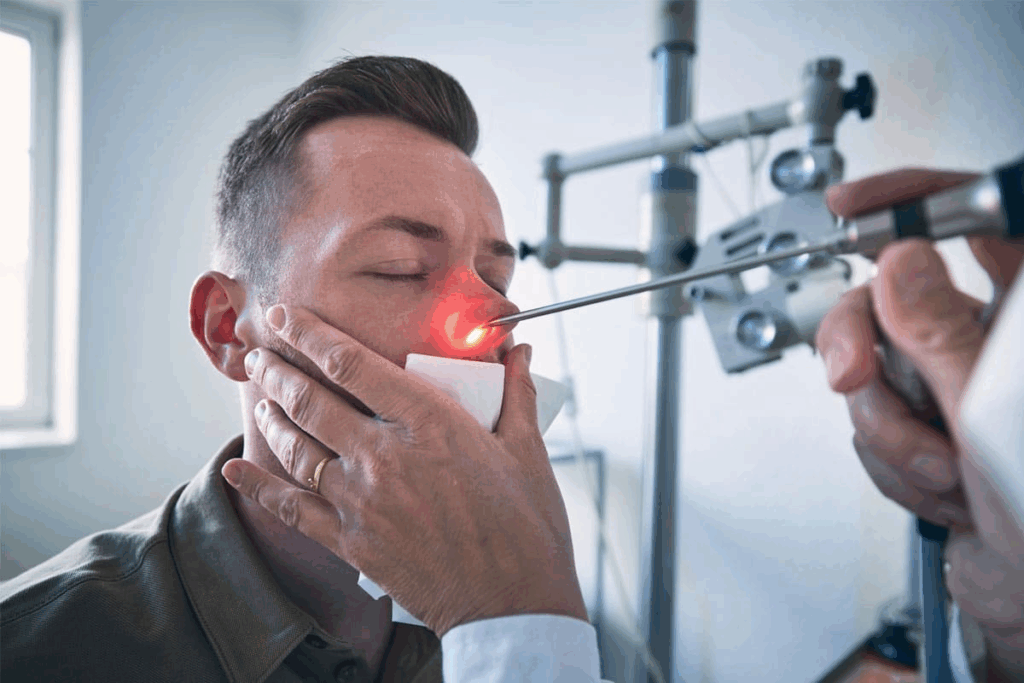
Nasal endoscopy is a major tool for diagnosing CRS. It lets us see inside the nasal passages and sinuses. We use an endoscope to look for inflammation, polyps, or discharge. We might also take samples for culture. Other tests, like allergy tests, help find what might be causing CRS.
By using all these methods, we can accurately diagnose CRS. This helps us understand how severe it is and create a treatment plan that fits the patient’s needs.
First-Line Chronic Rhinosinusitis Treatment Options
Managing Chronic Rhinosinusitis starts with a mix of medical treatments. These aim to lessen symptoms and boost life quality. The goal is to ease nasal blockage, sinus pressure, and other symptoms.
Saline Nasal Irrigation Techniques
Saline nasal irrigation is key in treating Chronic Rhinosinusitis. It cleans the nasal passages with a saline solution. This helps remove debris, cuts down inflammation, and aids in sinus drainage.
We suggest using a neti pot or a squeeze bottle with a nasal spray tip for best results.
Benefits of Saline Nasal Irrigation:
- Reduces nasal congestion and sinus pressure
- Removes allergens and irritants from the nasal passages
- Helps in maintaining nasal hygiene
Intranasal Corticosteroids: Usage and Benefits
Intranasal corticosteroids are vital in treating Chronic Rhinosinusitis. These drugs are put directly into the nasal passages. They reduce swelling and improve sinus drainage, easing symptoms.
Key Benefits:
- Reduces inflammation and swelling in the nasal passages
- Decreases nasal congestion and discharge
- Improves sense of smell
Examples include fluticasone and mometasone. They are available by prescription or over-the-counter.
Oral Corticosteroids: When They’re Necessary
Oral corticosteroids are used for short-term severe inflammation when intranasal ones fail. Though effective, they are used with caution due to side effects from long-term use.
Treatment Option | Primary Use | Benefits |
Saline Nasal Irrigation | Daily nasal hygiene and symptom relief | Reduces congestion, removes debris |
Intranasal Corticosteroids | Reducing inflammation and swelling | Decreases nasal discharge, improves smell |
Oral Corticosteroids | Severe inflammation not controlled by intranasal steroids | Rapid reduction of severe inflammation |
Antibiotic Therapy for Chronic Rhinosinusitis
Antibiotics are key in treating chronic rhinosinusitis (CRS), mainly when a bacterial infection is thought to be present. We will look at how antibiotics help in CRS treatment. This includes when they are used, the types available, and possible side effects.
When Antibiotics Are Appropriate
Antibiotics are often needed for CRS, mainly when there’s thick, yellow discharge. This suggests a bacterial infection. A short antibiotic course might be right for CRS with thick discharge.
We think about antibiotics when patients have symptoms like thick nasal discharge, facial pain, or fever. These signs point to a bacterial infection in CRS. Deciding to use antibiotics depends on how severe the symptoms are and the patient’s health history.
Types of Antibiotics Used for CRS
The antibiotic choice for CRS depends on several things. These include the likely bacteria, how severe the disease is, and any allergies or intolerances. Common antibiotics include:
- Amoxicillin-clavulanate: A broad-spectrum antibiotic effective against many bacteria.
- Fluoroquinolones: Such as levofloxacin, good against both Gram-positive and Gram-negative bacteria.
- Macrolides: Like azithromycin, which also have anti-inflammatory effects.
Antibiotic Class | Examples | Use in CRS |
Penicillins | Amoxicillin-clavulanate | First-line treatment for mild to moderate CRS |
Fluoroquinolones | Levofloxacin | Reserved for severe or complicated CRS |
Macrolides | Azithromycin | Used for their anti-inflammatory properties in addition to antimicrobial effects |
Duration of Treatment and Possible Side Effects
The length of antibiotic treatment for CRS varies. It depends on how severe the condition is and how well the patient responds. Treatment usually lasts from 7 to 21 days.
Side effects of antibiotics include stomach problems, allergic reactions, and antibiotic resistance. We must consider these risks when deciding to use antibiotics for CRS.
Understanding when and how to use antibiotics helps manage CRS effectively. It’s important to closely watch patients during treatment. This way, we can adjust therapy as needed to improve outcomes.
Surgical Interventions for Persistent Cases
When CRS doesn’t get better with medicine, surgery can help a lot. We suggest surgery for those who haven’t seen improvement. It aims to clear out blockages and ease symptoms.
Endoscopic Sinus Surgery: Procedure and Recovery
Endoscopic sinus surgery is a common choice for CRS. It uses an endoscope to see inside the sinuses. Then, tools remove blockages like nasal polyps to improve drainage.
Key Aspects of Endoscopic Sinus Surgery
- Procedure: Done under general anesthesia.
- Recovery: Most go home the same day. Expect some nasal stuffiness and discharge.
Balloon Sinuplasty: A Minimally Invasive Alternative
Balloon sinuplasty is another option for CRS. It’s good for those with milder cases or can’t have traditional surgery.
Key Aspects of Balloon Sinuplasty
- Procedure: Uses a balloon to open up the sinuses.
- Recovery: Recovery is usually faster than with endoscopic surgery.
Post-Surgical Care and Management
After surgery, it’s important to follow a care plan. This includes using nasal saline and possibly antibiotics or steroids.
Procedure | Endoscopic Sinus Surgery | Balloon Sinuplasty |
Anesthesia | General | General or Local |
Recovery Time | Several days to a week | Typically shorter, 1-3 days |
Effectiveness for Nasal Polyps | Highly effective | Limited |
Invasiveness | More invasive | Less invasive |
Knowing about surgical options helps patients make better choices for their care.
Advanced Biologic Therapies for Severe Cases
For those with severe Chronic Rhinosinusitis (CRS), advanced biologic therapies offer hope. These treatments target specific inflammatory pathways. This approach is more tailored to the patient’s needs.
Understanding Biologic Medications
Biologic medications use genetically engineered proteins to fight inflammation. In CRS, they aim to reduce swelling and improve symptoms. This is done by tackling the root causes of the condition.
CRS involves complex inflammatory pathways. Biologic medications target these pathways. This can lead to better relief for those with severe CRS.
Candidates for Biologic Treatment
Not every CRS patient is a good fit for biologic therapy. These treatments are usually for those with:
- Severe CRS that hasn’t improved with usual treatments
- Nasal polyps
- High eosinophil levels (a sign of inflammation)
Those interested in biologic treatment go through a detailed evaluation. This checks their medical history, current symptoms, and how they’ve reacted to past treatments.
Effectiveness and Cost Considerations
Studies show biologic therapies can greatly help severe CRS patients. They can lead to less nasal congestion, better smell, and less need for strong steroids.
But, these treatments cost more than traditional ones. Healthcare providers weigh the costs against the benefits. They aim to find the best treatment for each patient’s situation.
The main advantages of biologic therapies for CRS are:
- They target the problem directly
- They can control symptoms better
- They might reduce the need for surgery or strong steroids
As research grows, we’ll see more options for CRS treatment. This could help more patients find relief from this tough condition.
Home Remedies and Lifestyle Modifications
There are home remedies and lifestyle changes that can help with CRS symptoms. Adding these to your daily routine can make you feel better and reduce symptoms.
Environmental Controls and Allergen Avoidance
Managing CRS starts with controlling your environment. This means avoiding allergens and irritants. Here are some ways to do it:
- Use HEPA filters in air conditioners and vacuums to catch airborne allergens.
- Stay away from strong smells and chemicals that can bother your nose.
- Keep your home clean to cut down on dust and mold.
Nasal douching with saline is also helpful. It cleans out your nasal passages and sinuses.
Dietary Considerations for Reducing Inflammation
Your diet is important for managing CRS. Some foods can make symptoms worse, while others can help.
Foods to Avoid | Beneficial Foods |
Dairy products (for those with dairy intolerance) | Omega-3 rich foods like salmon and walnuts |
Processed and high-sugar foods | Antioxidant-rich foods like berries and leafy greens |
Stress Management Techniques
Stress can make CRS symptoms worse. So, managing stress is key. Try meditation, yoga, or deep breathing to lower stress.
By using these lifestyle changes and home remedies with medical care, you can control your CRS symptoms better. This will improve your quality of life.
Creating a Long-Term Management Plan
Managing chronic rhinosinusitis (CRS) well needs a team effort. This includes both healthcare providers and patients. We will look at what makes up a good long-term plan. This way, people with CRS can live active and comfortable lives.
Working with Healthcare Providers
Seeing healthcare providers regularly is key for CRS management. We suggest visits every 3-6 months. This lets them check how you’re doing and adjust treatments if needed.
Key aspects to discuss with healthcare providers include:
- Symptom severity and impact on daily life
- Treatment efficacy and possible side effects
- Any changes in medical history or new symptoms
Monitoring Symptoms and Treatment Response
It’s important to watch CRS symptoms and how treatments work. Keeping a symptom diary is helpful. It tracks symptoms like nasal congestion, facial pain, and loss of smell.
Key symptoms to monitor include:
- Nasal discharge and congestion
- Facial pressure or pain
- Loss of smell or taste
Adjusting Treatments as Needed
CRS can change, so treatments might need to change too. We work with healthcare providers to know when to make changes. This could mean switching medications or trying new therapies.
Factors that may necessitate treatment adjustments include:
- Inadequate symptom control
- Development of side effects
- Changes in the underlying cause or contributing factors
By working together with healthcare providers and staying proactive, individuals with CRS can manage their symptoms better. This leads to a better quality of life.
Conclusion: Living Successfully with Chronic Rhinosinusitis
Living with chronic rhinosinusitis (CRS) can be tough. But, the right treatment can bring big relief and better life quality. A detailed treatment plan is key to handling CRS symptoms well.
Patients can manage CRS by teaming up with healthcare providers and being proactive. This means using medical treatments, making lifestyle changes, and keeping an eye on how treatments work. Adjustments might be needed over time.
Reducing CRS symptoms is vital for treatment success. With a treatment plan made just for them, people can feel better. It’s important for patients and doctors to work together for the best results in dealing with CRS.
FAQ
What is chronic rhinosinusitis?
Chronic rhinosinusitis is a long-term condition. It causes inflammation in the nasal passages and sinuses. This lasts more than 12 weeks.
What are the common symptoms of chronic rhinosinusitis?
Symptoms include nasal congestion and facial pain. You might also have thick nasal discharge, loss of smell, and cough.
How is chronic rhinosinusitis diagnosed?
Doctors use a medical history and physical exam. They also do imaging studies like CT scans and nasal endoscopy.
What are the first-line treatment options for chronic rhinosinusitis?
First, doctors might use saline nasal irrigation. They also prescribe intranasal and oral corticosteroids. These help manage symptoms and improve life quality.
When are antibiotics used to treat chronic rhinosinusitis?
Antibiotics are used when there’s a bacterial infection. The type and length of treatment depend on the severity and cause.
What are the surgical options for treating chronic rhinosinusitis?
Surgery includes endoscopic sinus surgery and balloon sinuplasty. These aim to improve drainage and reduce symptoms in severe cases.
What are biologic therapies, and who are they for?
Biologic therapies are advanced treatments for severe cases. They target specific inflammatory pathways. They’re for patients who haven’t responded to usual treatments.
How can lifestyle modifications help manage chronic rhinosinusitis?
Making lifestyle changes can help. This includes controlling the environment, changing your diet, and managing stress. These can improve life quality alongside medical treatments.
Why is creating a long-term management plan important for chronic rhinosinusitis?
A long-term plan is key. It involves regular check-ups and adjusting treatments. This is vital for managing the condition and improving life quality.
Can chronic rhinosinusitis be cured?
While it’s a chronic condition, a good treatment plan can help a lot. It can reduce symptoms and improve life quality, helping patients manage the condition well.
What is the difference between chronic sinusitis and chronic rhinosinusitis?
Chronic rhinosinusitis affects both the nasal passages and sinuses. Chronic sinusitis focuses on sinus inflammation alone.
How does chronic rhinosinusitis impact quality of life?
It can greatly affect daily life. It causes discomfort, affects sleep, and can impair thinking. Effective management is essential.
References
National Center for Biotechnology Information. (2025). How to Treat Chronic Rhinosinusitis A StepbyStep Guide. Retrieved from https://www.ncbi.nlm.nih.gov/pmc/articles/PMC11835454/