


The circumflex artery is key to keeping the heart healthy. The left circumflex branch comes from the left coronary artery. It sends blood to the heart’s sides and back.
The LCX artery is vital for the heart’s function. It brings oxygen-rich blood to the left ventricle. Knowing its anatomy helps in treating heart diseases.
Key Takeaways
- The circumflex artery is a vital vessel supplying the lateral and posterolateral regions of the heart.
- The left circumflex branch arises from the left coronary artery.
- Understanding the anatomy of the circumflex artery is essential for diagnosing coronary artery disease.
- The LCX artery supplies oxygenated blood to the left ventricle.
- Knowledge of the circumflex artery’s posterior view is essential for effective treatment.
The Vital Role of the Circumflex Artery in Cardiac Function

The left circumflex artery (LCX) is a key part of the heart’s blood flow. It makes sure the left ventricle gets enough blood. As a major branch of the left coronary artery, it’s vital for heart health.
Definition and Location of the LCX Artery
The LCX artery starts from the left coronary artery. It runs in the left atrioventricular groove, around the heart. It mainly supplies blood to the left ventricle’s sides and back.
The LCX artery’s location is critical for the heart. It helps distribute blood to a big part of the left ventricle. This area is key for the heart’s pumping action. Any problem here can cause serious heart issues.
Fundamental Importance in Heart Circulation
The circumflex artery is key for heart circulation. It gives blood to the left ventricle’s sides and back. Without it, the heart can’t pump blood well.
“The circumflex artery is a vital structure that must be considered in the diagnosis and treatment of coronary artery disease.” –
A leading cardiologist
The LCX artery’s role is even more important when dealing with heart disease. Problems with the artery can cause serious heart problems and even death.
| Region | Blood Supply |
| Lateral wall of the left ventricle | LCX artery |
| Posterior wall of the left ventricle | LCX artery and its branches |
| Left atrium | LCX artery and its atrial branches |
In conclusion, the circumflex artery is vital for heart health. Knowing about it helps in diagnosing and treating heart problems.
Anatomical Origin and Course of the Circumflex Branch
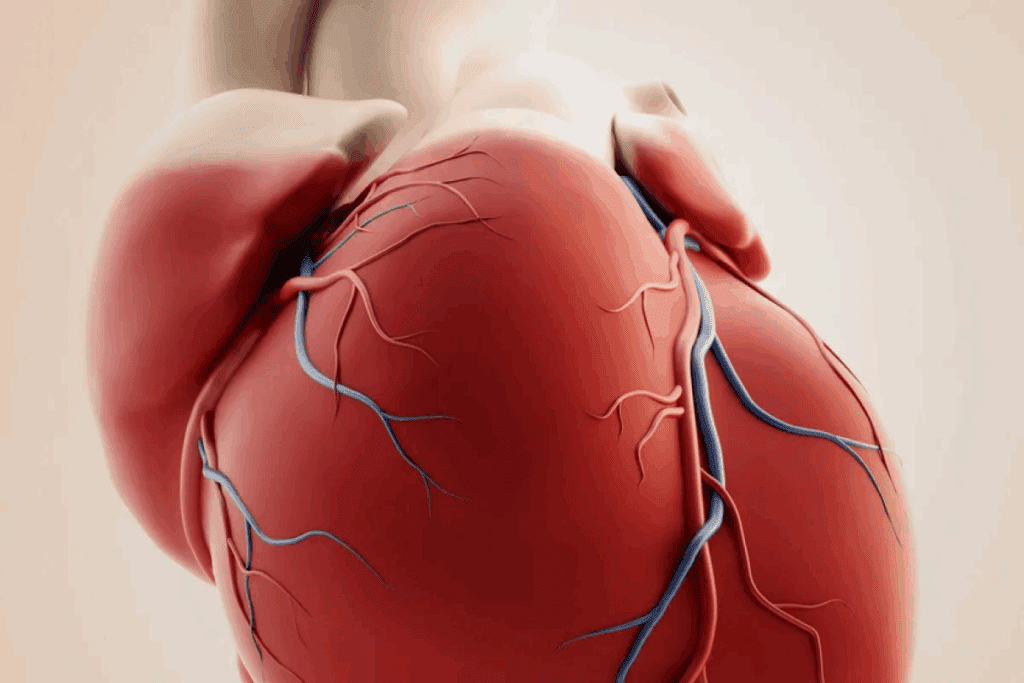
The circumflex branch of the left coronary artery is key to heart circulation. Knowing where it starts and how it moves is vital for treating heart disease.
Bifurcation from the Left Coronary Artery
The circumflex artery starts from the left coronary artery, right after the left main coronary artery. This bifurcation is a key spot, marking the start of the circumflex artery’s path.
From here, the circumflex artery moves around the heart. It supplies blood to different heart parts. The left circumflex branch is a main branch from the left coronary artery. Its start is important for understanding heart blood flow.
Path Through the Left Atrioventricular Groove
The circumflex artery goes through the left atrioventricular groove. This groove is key for it to reach the heart’s sides and back. Along the way, it branches off to the left ventricle and atrium.
The circumflex artery’s path through the left atrioventricular groove is important. It allows it to supply blood to the heart’s sides and back. This path is essential for understanding the circumflex artery’s role in heart function.
Circumflex Artery: Structure and Characteristics
We look into the circumflex artery’s features to see why it’s key for heart health. This artery, a major branch of the left coronary artery, differs in size and shape among people.
Typical Dimensions and Physical Properties
The circumflex artery is usually 3 to 5 mm wide. Its length and spread can change, affecting the heart areas it feeds.
Key dimensions and properties include:
- Diameter: 3-5 mm
- Length: Variable, often reaching the posterior aspect of the heart
- Course: Runs in the left atrioventricular groove
Relationship to Adjacent Cardiac Structures
The circumflex artery runs near the left atrium and ventricle. This close relationship is vital for its role in supplying these heart areas.
Histological Features of the Artery Wall
The circumflex artery’s wall has three layers: intima, media, and adventitia. The intima is the innermost, made of endothelial cells. The media, in the middle, has smooth muscle cells and elastic fibers for adjusting size. The outermost adventitia supports the artery and has the vasa vasorum, which feeds the artery wall.
| Layer | Composition | Function |
| Intima | Endothelial cells | Interface with blood, regulates blood flow |
| Media | Smooth muscle cells, elastic fibers | Vasodilation and vasoconstriction |
| Adventitia | Connective tissue, vasa vasorum | Support, supply to the artery wall |
Knowing the structure and features of the circumflex artery helps us understand its importance in heart health and disease.
Blood Supply Distribution of the Left Circumflex Branch
The left circumflex artery is key in supplying blood to the heart. It’s a major branch of the left coronary artery. It helps keep the left ventricle and nearby areas healthy and working well.
Regions Perfused by the Heart Left Circumflex
The left circumflex artery mainly feeds blood to the left ventricle’s sides and back. It covers the lateral and sometimes the posterior walls. How much it covers can differ from person to person, based on the heart’s blood flow pattern.
Obtuse Marginal Branches: Function and Coverage
The left circumflex artery has obtuse marginal branches. These branches are vital for the lateral wall of the left ventricle. They help the heart pump by bringing oxygenated blood. The number and size of these branches can change, but they’re key for heart blood flow.
Contribution to Posterior Interventricular Blood Supply
In some cases, the left circumflex artery helps with blood to the back of the heart. It does this by sending off the posterior descending artery. This is more common when the left coronary artery is dominant. The posterior descending artery is important for the back part of the heart’s wall.
| Region | Blood Supply | Clinical Significance |
| Lateral Left Ventricle | Obtuse Marginal Branches | Important for lateral wall motion |
| Posterior Left Ventricle | Left Circumflex Artery | Critical for posterior wall perfusion |
| Posterior Interventricular Septum | Posterior Descending Artery (in left-dominant circulation) | Essential for septal perfusion |
Knowing how the left circumflex branch supplies blood is key for treating heart disease. The way it covers different areas and the presence of obtuse marginal branches affect treatment choices.
Posterior View of the Circumflex Artery: Clinical Importance
Understanding the posterior view of the circumflex artery is key for diagnosing and treating heart disease. The circumflex artery supplies about 15-20 percent of the heart’s posterior wall. This makes it vital to accurately see and understand this artery’s back side.
Imaging Techniques for Posterior Visualization
Several imaging methods help us see the back of the circumflex artery. These include coronary angiography and CT angiography. They give us detailed images of the artery’s back side. We use these to check the artery’s health and plan treatments.
Coronary angiography is a common method for looking at coronary arteries, including the circumflex artery. It helps us spot blockages or problems in the artery. CT angiography offers a non-invasive option with clear images of the arteries.
| Imaging Technique | Advantages | Limitations |
| Coronary Angiography | High-resolution images, detailed view of artery lumen | Invasive, risk of complications |
| CT Angiography | Non-invasive, quick procedure | May not provide as detailed a view as coronary angiography |
Interpreting Posterior Circumflex Artery Pathology
Understanding the posterior circumflex artery’s problems is key for diagnosing heart disease. We look for signs of narrowing, blockage, or other issues that could harm the heart. Accurate reading of images helps us decide on treatments.
The back side of the circumflex artery is critical because it supplies a big part of the heart’s back. Any issues here can have big effects on health.
Challenges in Posterior Circumflex Visualization
Seeing the posterior circumflex artery can be tough because of its location and the heart’s complex structures. We face challenges like its small size and tricky position among other heart structures.
But, new imaging tech has made it easier to see the posterior circumflex artery clearly. We keep working to improve our imaging methods for better diagnosis.
Anatomical Variations in the Cardiac Circumflex Artery
It’s key to know the different forms the cardiac circumflex artery can take. This artery is a big part of the left coronary artery. It brings blood to the heart’s sides and back.
Left vs. Right Dominant Circulation Patterns
The way blood flows through the heart’s arteries matters a lot. If the left coronary artery is more dominant, the circumflex artery is bigger. It covers more of the heart’s back side. But, if the right coronary artery is more dominant, the circumflex artery is smaller.
Most people, about 70-85%, have a right-dominant circulation. Around 7-10% have a left-dominant pattern. The rest have both arteries playing a big role.
Common Anomalies of the Circumflex of the Heart
The circumflex artery can have different shapes and paths. Sometimes, it starts from the right coronary artery. This can make things tricky during heart procedures.
Other times, the artery might be smaller or missing. This can make other arteries work harder. Knowing these differences helps doctors plan better treatments.
Developmental Basis for Anatomical Variations
The heart’s arteries, like the circumflex, grow in a complex way. They start as tiny buds and connect to the aorta. Genes and the environment shape how they grow.
Changes in how the circumflex artery grows can affect its function. Knowing why these changes happen helps doctors treat them better.
Clinical Significance of Circumflex Artery Pathology
It’s key to understand the circumflex artery pathology for diagnosing and treating coronary artery disease. The circumflex artery is vital for the heart’s blood flow. Its problems can seriously affect heart health.
Circumflex Artery in Coronary Artery Disease
Coronary artery disease (CAD) is a big cause of illness and death globally. The circumflex artery often gets involved in CAD. Its blockage or narrowing can cause serious health issues.
The circumflex artery is important because it supplies blood to a big part of the heart. Its problems can affect how well the heart works.
The circumflex artery’s role in CAD can show up in different ways. This includes:
- Less blood flow to the heart’s sides and back
- Ischemia or heart muscle damage
- Electrical issues that can cause irregular heartbeats
Acute Circumflex Occlusion: Symptoms and Presentation
An acute blockage of the circumflex artery can cause a variety of symptoms. These can range from mild chest pain to severe heart problems. Symptoms may include:
- Chest pain or angina that spreads to the arm or jaw
- Shortness of breath or feeling like you can’t catch your breath
- Nausea or vomiting
- Diaphoresis or feeling like your heart is racing
It’s important to quickly recognize these symptoms. This is because timely action can greatly improve patient outcomes. The proximal left circumflex artery is a critical area. Problems here can severely impact heart function.
Long-term Consequences of Circumflex Stenosis
Long-term stenosis of the circumflex artery can lead to serious issues. These include:
- Chronic ischemia or hibernating heart muscle
- Heart failure or reduced left ventricular function
- Higher risk of arrhythmias or sudden cardiac death
Understanding these long-term effects is key for effective treatment. Recognizing the importance of circumflex artery pathology helps us give better care to CAD patients.
Diagnostic and Interventional Approaches for the LCX Heart Artery
Getting the right diagnosis and treatment for LCX artery disease is key for good patient care. The left circumflex artery (LCX) is very important for the heart’s blood flow. Problems with it can affect the heart’s function a lot.
Modern Imaging Modalities for Assessment
We use different imaging tools to check the LCX heart artery. These include:
- Coronary Angiography: Gives clear pictures of the coronary arteries, including the LCX.
- Cardiac CT: A non-invasive way to see the heart’s blood flow.
- Cardiac MRI: Helps check how well the heart is working and if it’s alive.
“The right imaging tool depends on the patient’s needs and the doctor’s questions,” say experts.
Interventional Techniques for Circumflex Artery Disease
Interventional methods are key in treating LCX artery disease. We look at these options:
- Percutaneous Coronary Intervention (PCI): A small procedure to open blocked arteries.
- Coronary Artery Bypass Grafting (CABG): Surgery to bypass blocked arteries.
Choosing between PCI and CABG depends on the disease’s extent and the patient’s health.
Challenges in Proximal Left Circumflex Artery Intervention
Working on the proximal left circumflex artery is hard because of its location and complexity. We must think about:
- Anatomical Variations: Different shapes and paths of the LCX can make treatment harder.
- Technical Challenges: Using the right tools is key for success.
A top cardiologist says, “Knowing the LCX’s details is vital for a good outcome.”
Conclusion
Knowing about the circumflex artery is key to keeping the heart healthy. This artery, or LCX, is important for blood flow to the heart. It’s essential for the heart to work well.
We’ve looked at the anatomy and importance of the circumflex artery. It helps supply blood to the heart. Problems with it can affect the heart’s function.
The circumflex artery is a big part of the heart’s blood flow. Finding and treating problems with it is critical. We talked about how to diagnose and treat LCX artery issues.
In short, the circumflex artery is very important for heart health. Understanding its role helps us take better care of our hearts. This leads to better health outcomes for patients.
FAQ
What is the circumflex artery, and what is its role in the heart?
The circumflex artery, or LCX artery, is a key part of the left coronary artery. It supplies blood to the left ventricle’s sides and back. This is vital for the heart’s health.
Where does the circumflex artery originate from?
It starts from the left coronary artery. Then, it splits off and goes through the left atrioventricular groove.
What are the typical dimensions and physical properties of the circumflex artery?
The circumflex artery’s size and structure can vary. Knowing its details is important for medical procedures.
What regions of the heart are perfused by the left circumflex branch?
The left circumflex branch supplies blood to the left ventricle’s sides and back. Its obtuse marginal branches add more coverage.
What is the significance of the circumflex artery in coronary artery disease?
The circumflex artery is key in coronary artery disease. Its blockage can cause serious heart problems and even be life-threatening.
How is the circumflex artery visualized, especialy in its posterior aspect?
Seeing the posterior part of the circumflex artery is hard. But, there are imaging tools to help diagnose and assess it.
What are the common anatomical variations of the cardiac circumflex artery?
There are common variations in the cardiac circumflex artery. These include differences in circulation patterns and anomalies. Understanding these is key for accurate diagnosis and treatment.
What are the symptoms and presentation of acute circumflex occlusion?
Acute circumflex occlusion can cause chest pain and heart problems. It needs quick diagnosis and treatment.
What are the diagnostic and interventional approaches for the LCX heart artery?
There are advanced imaging and treatment options for the LCX artery. But, treating the proximal left circumflex artery can be challenging.
What is the significance of understanding the circumflex artery’s anatomy and pathology?
Knowing the anatomy and pathology of the circumflex artery is vital. It helps in accurate diagnosis and treatment, which impacts heart health and patient outcomes.
References
National Health Service (NHS). (2025). Circumflex Artery Key Facts Anatomy and Posterior View.


 Departments
 Related Videos
 Our Doctors
 News
News




