
Explaining whether rheumatoid arthritis wrist joint involvement is typically bilateral or unilateral and why this distinction matters.
Rheumatoid arthritis often affects both sides of the body and is symmetrical. It mainly hits the hands. But, each person’s experience can be different.
Research shows that up to 69% of people with rheumatoid arthritis have symptoms on just one side. At Liv Hospital, we understand that everyone’s fight with rheumatoid arthritis is unique. We use top-notch evaluation and proven treatments to help our patients.
Key Takeaways
- Rheumatoid arthritis typically presents with bilateral and symmetrical joint involvement.
- Significant individual variation in disease presentation is observed.
- Unilateral synovitis, osteitis, and erosion can occur in a substantial proportion of patients.
- Accurate diagnosis and patient-centered care are key for the best results.
- Liv Hospital offers top-level evaluation and proven treatment plans.
The Nature and Characteristics of Rheumatoid Arthritis
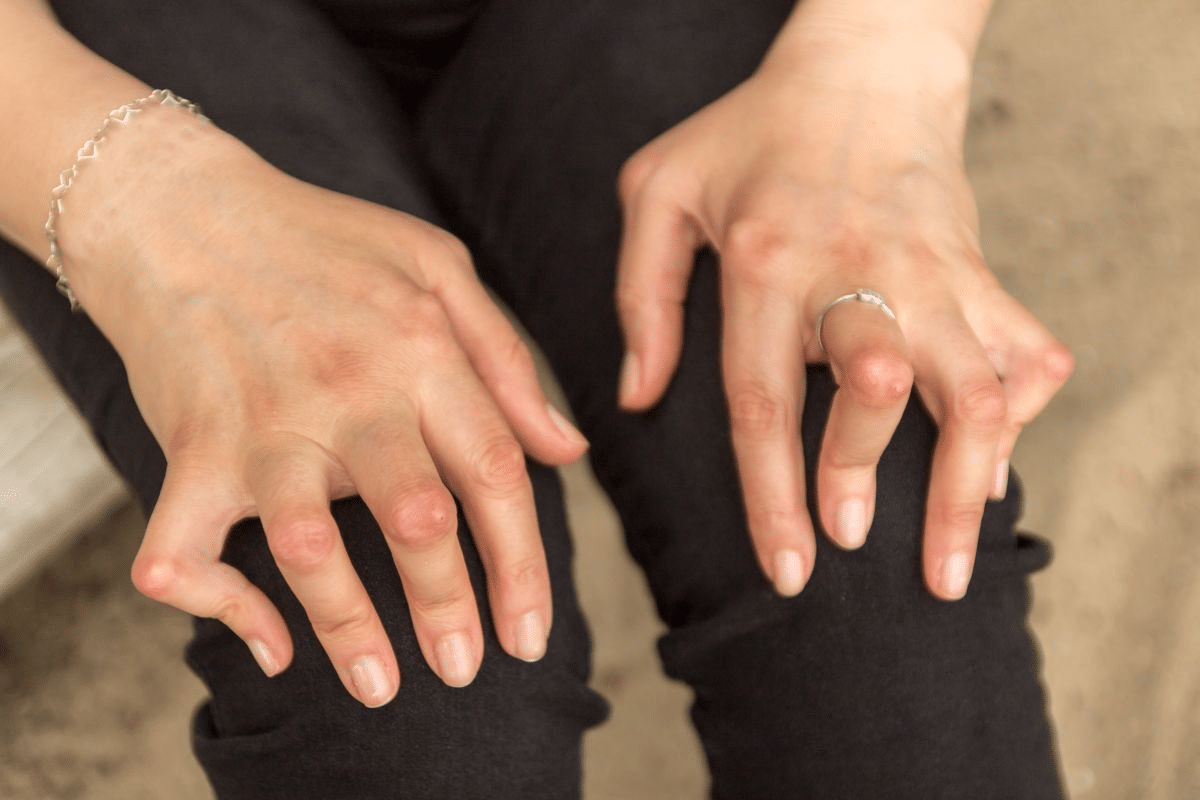
Rheumatoid arthritis (RA) is a chronic condition that mainly affects the joints. It causes inflammation and can lead to serious damage. The immune system mistakenly attacks the lining of the joints, leading to pain, swelling, and damage over time.
Definition and Autoimmune Mechanisms
Rheumatoid arthritis is an autoimmune disorder. The body’s immune system attacks healthy joint tissues. This leads to inflammation, pain, and stiffness in the joints.
The exact cause of this autoimmune response is not known. It is believed to involve genetics and environment. The immune cells and cytokines play a key role in this process. Cytokines help fight infections but in RA, they cause inflammation and damage.
Prevalence and Risk Factors
Rheumatoid arthritis affects a significant portion of the global population. The prevalence varies by region. Studies show that RA affects 0.5% to 1% of people worldwide.
Women are more likely to develop RA than men. The risk increases with age. Understanding these factors helps in early diagnosis and management.
|
Risk Factor |
Description |
|---|---|
|
Genetic Predisposition |
Individuals with a family history of RA are more likely to develop the condition. |
|
Gender |
Women are more likely to develop RA than men. |
|
Age |
The risk of developing RA increases with age. |
|
Smoking |
Smoking is a significant risk factor for developing RA and can also affect the severity of the disease. |
Knowing these risk factors is key for early diagnosis and treatment. Early intervention can greatly improve outcomes for those with RA.
Bilateral Presentation: The Hallmark of Rheumatoid Arthritis

Rheumatoid arthritis (RA) is known for its symmetrical joint involvement. This shows its autoimmune nature. It’s a key sign that helps doctors tell RA apart from other arthritis types.
Symmetrical Joint Involvement Patterns
RA’s symmetrical joint involvement is quite noticeable. If one hand or foot is affected, the other will likely be too. This pattern is not just seen in hands and feet but also in bigger joints like knees and elbows.
Several factors contribute to this symmetrical pattern. Autoimmune mechanisms are a big part of it. The immune system attacks the synovial tissues in many joints at once. This means RA affects multiple joints in a symmetrical way, not just one.
Why Symmetry Occurs in Autoimmune Conditions
Symmetry in autoimmune diseases like RA comes from the immune system’s wide reach. It attacks similar structures on both sides of the body. This leads to bilateral and symmetrical involvement.
Studies point to genetics, environmental factors, and hormones as reasons for this symmetry. Knowing why RA is symmetrical helps us understand the disease better. It also helps in finding better treatments.
Early recognition of RA’s symmetrical signs is key. It helps doctors diagnose and treat RA early. This can lead to better outcomes for patients.
Unilateral Manifestations in Rheumatoid Arthritis
RA can affect joints in different ways, from both sides to just one. Knowing about unilateral manifestations in RA is key for correct diagnosis and treatment. This part looks at how RA can show up differently and research on unilateral synovitis.
Prevalence of Asymmetrical Presentations
Many RA patients have joints affected on only one side. Up to 42% of them have unilateral synovitis, which challenges the idea that RA is always symmetrical. This makes diagnosing and treating RA more complex.
Asymmetrical presentations in RA show the need for a detailed understanding of the disease. Doctors must watch for unilateral manifestations to act quickly and effectively. Recognizing all possible ways RA can show up helps healthcare providers manage the disease better and improve patient results.
Research on Unilateral Synovitis
Research on unilateral synovitis in RA has shed light on how the disease works. Advanced imaging like MRI and ultrasound has found unilateral synovitis in many RA patients. This shows the value of precise diagnostic tools in spotting and treating RA.
More research is needed to grasp the full impact of unilateral synovitis in RA. Looking into what causes asymmetrical presentations can lead to better treatments. By diving into the complexities of RA, researchers aim to enhance diagnosis and treatment for those with this chronic illness.
Rheumatoid Arthritis Wrist Joint: Patterns of Involvement
The wrist joint is a key area affected by rheumatoid arthritis (RA). It shows complex patterns of involvement. RA often affects both wrists symmetrically.
Anatomy of the Wrist in RA
The wrist joint has many small bones and ligaments. It’s a common spot for RA to show up. The wrist’s complex structure makes it vulnerable to damage and deformities from inflammation and erosion.
Inflammation and Erosion Patterns
Inflammation in the wrist can cause synovitis. This is when the synovial membrane thickens and fills with inflammatory cells. It can also lead to bone erosion, causing structural and functional problems.
Studies show MRI can spot inflammation and erosion in the wrist early in RA. The patterns of these changes vary among patients. They affect how the disease progresses and its outcome.
Subclinical Synovitis Detection
Subclinical synovitis is inflammation that’s not obvious but can be seen with imaging like MRI or ultrasound. In RA, it’s a big worry because it can cause ongoing joint damage if not treated.
MRI studies found subclinical synovitis in 73% of RA patients. Catching it early is key to starting treatment and preventing long-term damage.
|
Imaging Modality |
Detection Rate of Subclinical Synovitis |
Clinical Significance |
|---|---|---|
|
MRI |
73% |
High sensitivity for detecting early inflammation |
|
Ultrasound |
60% |
Useful for bedside assessment and monitoring |
Knowing how RA affects the wrist joint is vital for managing the disease. Advanced imaging helps doctors find and treat subclinical synovitis. This can change the disease’s course.
Hand Joint Involvement in Rheumatoid Arthritis
Rheumatoid arthritis (RA) often affects the hands, impacting daily life. The hands are very sensitive to RA, with different joints being hit in various ways.
Metacarpophalangeal Joint Pathology
The metacarpophalangeal (MCP) joints are often hit first by RA. MCP joint pathology includes swelling, cartilage loss, and bone damage. This can cause the fingers to bend outward.
The MCP joints are key for hand function. Their damage can make everyday tasks hard for patients.
Proximal Interphalangeal Joint Changes
The proximal interphalangeal (PIP) joints are also common targets for RA. PIP joint changes include swelling, pain, and can lead to finger deformities.
PIP joint problems can make it hard to move fingers and use them for tasks.
Distribution Patterns in Early vs. Established Disease
In early RA, joints can be affected in different ways. Some people might only have one side affected. But as RA gets worse, it usually affects both sides equally.
As RA becomes more established, certain joints like MCP and PIP are often hit. Knowing this helps doctors diagnose and treat RA better.
Spotting RA’s typical patterns in the hands helps catch it early. It also helps doctors choose the right treatment to avoid lasting damage.
Disease Progression: From Unilateral to Bilateral Involvement
Rheumatoid arthritis (RA) can move from affecting one side to both sides. This change is influenced by many factors. Knowing how this happens helps doctors predict the disease’s path and plan treatments.
Timeline of Symmetrical Development
Research shows RA can spread from one side to both over time. How long this takes varies for each person.
|
Timeframe |
Percentage of Patients |
Symmetry Development |
|---|---|---|
|
0-6 months |
30% |
Initial symmetry observed |
|
6-12 months |
50% |
Symmetry increases |
|
1-2 years |
70% |
Majority develop bilateral involvement |
Predictive Factors for Bilateral Progression
Several factors can predict if RA will spread to both sides. These include:
- Seropositivity: Patients with seropositive RA are more likely to develop bilateral disease.
- Initial Disease Severity: Higher initial disease activity is associated with faster progression to bilateral involvement.
- Genetic Markers: Certain genetic markers, such as HLA-DRB1 alleles, are linked to more aggressive disease and bilateral progression.
Individual Variation in Disease Course
Even with these trends, RA’s progression can vary greatly from person to person. This variation comes from:
- Genetic heterogeneity: Different genetic backgrounds influence disease progression.
- Environmental factors: Lifestyle and environmental exposures can impact disease activity.
- Treatment response: Variability in response to treatments affects disease progression.
Understanding these factors helps doctors better predict and manage RA’s progression.
Advanced Imaging in Detecting Joint Involvement
Advanced imaging is key in spotting joint problems in Rheumatoid Arthritis (RA). It uses new imaging methods to give detailed views of joint damage. This helps doctors diagnose and treat RA better.
MRI Findings in Early Rheumatoid Arthritis
Magnetic Resonance Imaging (MRI) is a top tool for catching RA early. It shows synovitis, bone marrow edema, and erosions in joints. These signs can show up before symptoms do, helping doctors act fast.
Research shows MRI is great at spotting these signs. It helps doctors know if a patient might get worse and what treatment to use.
Ultrasound Detection of Subclinical Synovitis
Ultrasound is also important for checking RA. It’s good at finding subclinical synovitis, which isn’t always seen by the eye. It can see thickened synovium and signs of inflammation.
Ultrasound is great for tracking how the disease is doing and how well treatments work. It can also help with injections and other treatments.
Comparing Clinical Examination with Imaging Results
Looking at how clinical checks compare to imaging shows a big gap. Clinical checks might miss how bad the joint problems are. But imaging can spot problems that aren’t seen by the eye.
This shows why imaging is so important in diagnosing and treating RA. Using both clinical checks and imaging leads to better care and outcomes for patients.
Classic Deformities in Rheumatoid Hands
Rheumatoid arthritis severely impacts the hands, causing noticeable deformities. These changes not only harm the look of the hands but also make daily tasks hard.
Ulnar Deviation of the Fingers
Ulnar deviation, or ulnar drift, is a common sign of rheumatoid arthritis. It makes fingers bend towards the ulna. This happens because of inflammation and damage to the joints.
The main signs of ulnar deviation are:
- Drifting of the fingers towards the ulnar side
- Weakness of the radial-sided ligaments and tendons
- Contracture of the ulnar-sided intrinsic muscles
Swan Neck and Boutonnière Deformities
Swan neck and boutonnière deformities are also common in rheumatoid arthritis. Swan neck deformity makes the PIP joint bend too much and the DIP joint bend too little.
Boutonnière deformity causes the PIP joint to bend and the DIP joint to straighten. Both happen because of muscle and tendon imbalance.
Z-Thumb and Other Thumb Deformities
The thumb often gets affected too, leading to Z-thumb or boutonnière deformity. The Z-thumb has the metacarpophalangeal joint bent and the interphalangeal joint straight.
These thumb issues can make it hard to grip and pinch. Knowing about these deformities is key for treating rheumatoid arthritis.
Diagnostic Implications of Bilateral vs. Unilateral Presentation
Understanding the difference between bilateral and unilateral presentation is key in diagnosing rheumatoid arthritis (RA). Some people with RA have symmetrical joint pain, while others have pain on one side. This difference is important for diagnosis.
Differential Diagnosis Considerations
Doctors must rule out other conditions when diagnosing RA. Differential diagnosis means checking for other types of arthritis and joint problems, like osteoarthritis, psoriatic arthritis, and gout.
“The diagnosis of rheumatoid arthritis is based on a combination of clinical findings, laboratory tests, and imaging studies.”
How joints are affected is a big clue. If both sides are affected, it’s more likely RA. But if only one side hurts, it might be something else.
|
Condition |
Typical Presentation |
Key Diagnostic Features |
|---|---|---|
|
Rheumatoid Arthritis |
Bilateral, symmetrical |
Rheumatoid factor, anti-CCP antibodies, joint erosions on imaging |
|
Osteoarthritis |
Unilateral or bilateral, asymmetrical |
Joint space narrowing, osteophytes on imaging |
|
Psoriatic Arthritis |
Unilateral or bilateral, asymmetrical |
Presence of psoriasis, dactylitis, enthesitis |
Diagnostic Criteria and Classification
RA diagnosis uses clinical criteria, lab tests, and sometimes imaging. The 2010 ACR/EULAR classification criteria help diagnose RA early and start treatment.
These criteria look at:
- Number and type of joints involved
- Presence of rheumatoid factor and anti-citrullinated protein antibody
- Elevated acute-phase reactants (CRP or ESR)
- Duration of symptoms
Challenges in Early Diagnosis
It’s hard to diagnose RA early because symptoms can vary. Early intervention is key to stop joint damage and improve outcomes.
Advanced imaging like MRI and ultrasound can spot early signs of RA. This includes subclinical synovitis, even before symptoms show up.
Treatment Approaches Based on Joint Involvement Patterns
The extent and symmetry of joint involvement are key in deciding RA treatment. Rheumatoid arthritis is a complex disease needing a detailed treatment plan.
Systemic Medications for Bilateral Disease
For those with bilateral RA, systemic meds are often the main treatment. These meds aim to reduce inflammation and slow disease. Disease-Modifying Antirheumatic Drugs (DMARDs) and Biologic Agents are key in managing bilateral RA.
A comparison of conventional DMARDs and biologic DMARDs is provided in the table below:
|
Treatment |
Mechanism of Action |
Common Examples |
|---|---|---|
|
Conventional DMARDs |
Suppress the immune system |
Methotrexate, Hydroxychloroquine |
|
Biologic DMARDs |
Target specific proteins involved in inflammation |
Etanercept, Adalimumab |
Targeted Interventions for Specific Joints
Targeted interventions are also needed for severely affected joints. Corticosteroid injections can quickly ease joint pain. Physical therapy helps keep joints mobile and strong.
Personalized Treatment Strategies
Personalized treatment is becoming more important in RA care. Healthcare providers tailor treatment based on joint involvement, disease activity, and patient preferences.
Effective RA treatment involves a detailed plan. It combines systemic meds, targeted interventions, and personalized strategies. This approach improves outcomes for RA patients.
Functional Impact and Rehabilitation
RA can change how a person moves and live their life. It makes simple tasks hard. This affects their daily activities a lot.
Daily Living Challenges
People with RA struggle with basic things like holding things or opening doors. The functional impact of RA on hand function is big. It makes it hard to do things on their own.
A study in the Journal of Rheumatology found that RA patients have trouble with daily tasks. This is because of problems with fine motor skills and grip strength.
“The loss of hand function due to RA not only affects the individual’s ability to perform daily tasks but also impacts their overall quality of life.”
Occupational Therapy Approaches
Occupational therapy is key in dealing with RA’s effects. Therapists help patients find ways to keep their hands working. They also teach them to adapt to their limitations.
- Exercises to improve range of motion and strength
- Adaptive techniques for daily living activities
- Use of assistive devices to facilitate independence
|
Occupational Therapy Intervention |
Benefits for RA Patients |
|---|---|
|
Range of Motion Exercises |
Maintains flexibility and reduces stiffness |
|
Strengthening Exercises |
Improves grip strength and hand function |
|
Adaptive Techniques |
Enhances ability to perform daily tasks |
Assistive Devices for Maintaining Function
Assistive devices are very helpful for people with RA. They help keep them independent. Some examples are:
- Adaptive utensils with ergonomic handles
- Buttonhooks and zipper pulls
- Jar openers and other kitchen aids
Rehabilitation is important for managing RA’s effects. Occupational therapy and assistive devices help a lot. They help people with RA stay independent and live well.
Conclusion
Rheumatoid arthritis is a complex disease that affects joints. It can show up in different ways, making diagnosis and treatment tricky. Knowing if RA affects both sides or just one is key.
Most of the time, RA affects both sides of the body. This is because it often hits joints on both sides in a symmetrical way. But sometimes, it only affects one side. Spotting these differences is important for managing the disease well.
New imaging tools help doctors see joint damage better. This lets them tailor treatments to each patient. By understanding how RA affects joints, doctors can create plans that work best for each person.
Studies keep showing how complex RA is. This makes it clear that a detailed approach to treating it is needed. By recognizing both bilateral and unilateral RA, doctors can help patients live better lives.
FAQ
Is rheumatoid arthritis typically bilateral or unilateral?
Rheumatoid arthritis usually affects both sides of the body. But, some people might start with symptoms on just one side.
What are the common hand deformities associated with rheumatoid arthritis?
Rheumatoid arthritis can cause several hand deformities. These include ulnar deviation, swan neck deformity, boutonnière deformity, and z-thumb deformity.
How does rheumatoid arthritis affect the wrist joint?
Rheumatoid arthritis can cause inflammation and damage in the wrist. This leads to pain, stiffness, and limited movement. It can also cause hidden inflammation that shows up on advanced imaging.
Are the joints involved in rheumatoid arthritis typically symmetrical?
Yes, rheumatoid arthritis often affects both sides of the body. But, some people might have asymmetrical symptoms, even in early stages.
Can rheumatoid arthritis start unilaterally and become bilateral?
Yes, rheumatoid arthritis can start on one side and spread to both sides. The time it takes and the factors that predict this vary from person to person.
What role does advanced imaging play in detecting joint involvement in rheumatoid arthritis?
Advanced imaging like MRI and ultrasound can spot early signs of rheumatoid arthritis. They can find inflammation and joint damage before symptoms appear.
How does rheumatoid arthritis impact daily living and function?
Rheumatoid arthritis can make everyday tasks hard, like getting dressed or cooking. This is because it affects the hands and wrists.
What treatment approaches are used for rheumatoid arthritis based on joint involvement patterns?
Treatment for rheumatoid arthritis depends on the joints affected. It might include medicines for widespread disease or targeted treatments for specific joints. Treatment plans are tailored to each patient’s needs.
Can occupational therapy help with managing rheumatoid arthritis?
Yes, occupational therapy is very helpful. It helps people with rheumatoid arthritis manage daily tasks, maintain function, and adapt to changes in their condition.
What are the diagnostic implications of bilateral vs. unilateral presentation in rheumatoid arthritis?
The way rheumatoid arthritis presents affects diagnosis. It influences how doctors make a diagnosis and the challenges in early detection, which is harder with atypical or asymmetrical presentations.
How do metacarpophalangeal and proximal interphalangeal joints get affected in rheumatoid arthritis?
Metacarpophalangeal joints often show signs of rheumatoid arthritis like inflammation and erosion. Proximal interphalangeal joints can develop deformities and lose function. The extent of these changes varies depending on the stage of the disease.
National Center for Biotechnology Information. Evidence-Based Medical Guidance. Retrieved from https://pubmed.ncbi.nlm.nih.gov/27334175/