
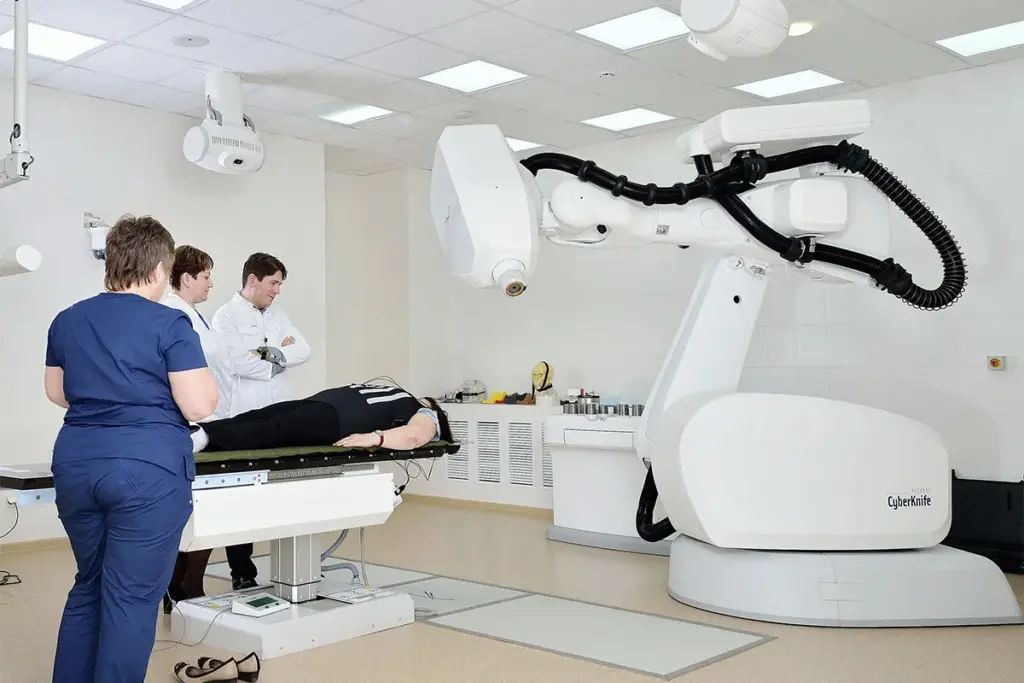
Recent studies show that over 50% of cancer patients get radiation therapy. Robotic radiosurgery has changed the game in radiation oncology. It allows for precise and targeted treatment of tumors and lesions. Defining what is the cyberknife treatment (stereotactic body radiation) and the function of the cyberknife system.
The CyberKnife treatment is a non-invasive radiation therapy. It uses a robotic arm to deliver high doses of radiation to specific areas. This technology provides precision targeting, reducing damage to healthy tissues.
Key Takeaways
- Robotic radiosurgery enables precise treatment of tumors and lesions.
- The CyberKnife treatment is a non-invasive radiation therapy.
- Precision targeting minimizes damage to surrounding healthy tissues.
- Effective treatment option for various types of cancer and other conditions.
- Advanced technology for improved patient outcomes.
The CyberKnife System: An Overview
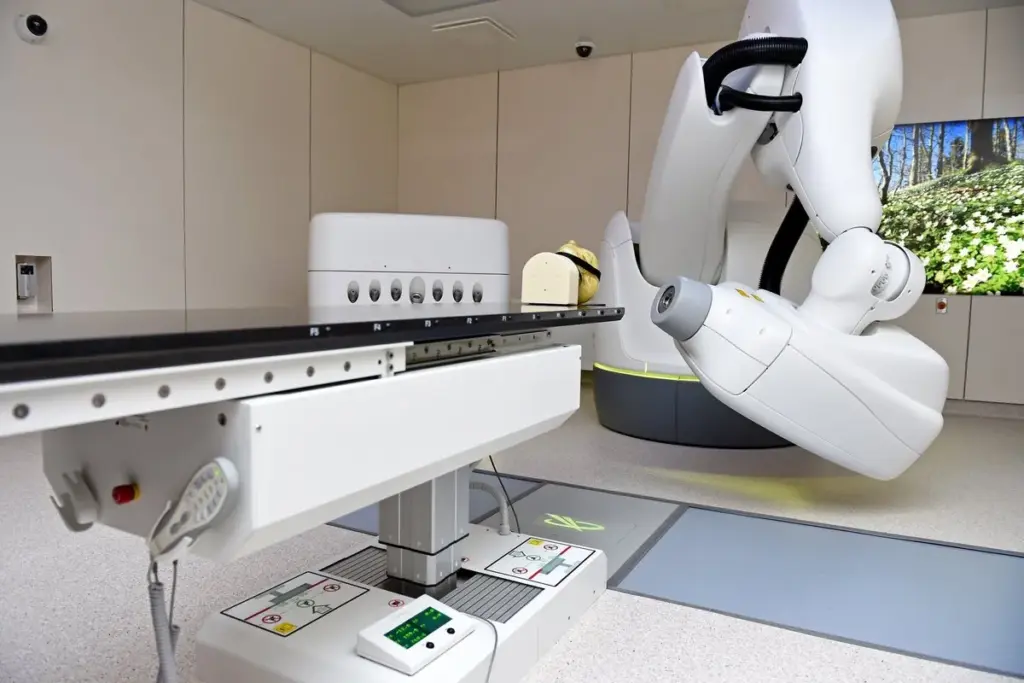
The CyberKnife system is a leading-edge technology for tumor radiation. It uses the stereotactic method, a precise coordinate system to locate tumors.
Definition and Core Technology
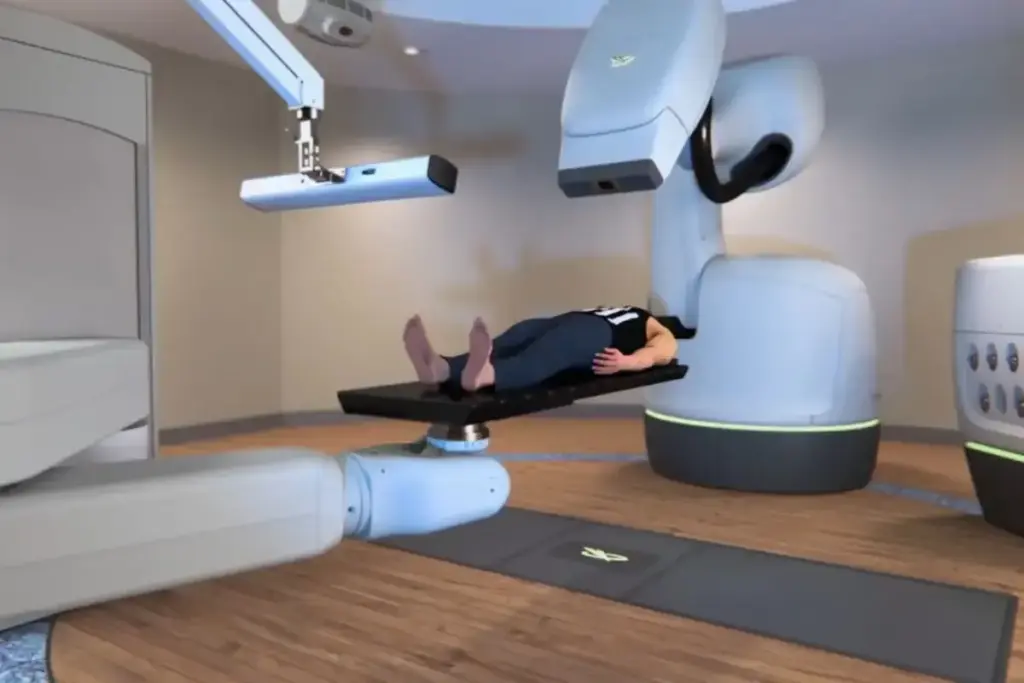
The CyberKnife system is a top-notch radiation therapy technology. It uses a robotic arm to give precise doses of radiation to tumors. Its core technology is advanced imaging guidance, which tracks the tumor’s movement in real-time.
This technology ensures that the radiation accurately hits the tumor while sparing healthy tissue. Its ability to adjust to the tumor’s movement in real-time is a big leap in radiation therapy.
History and Development Timeline
The CyberKnife system’s history goes back to stereotactic radiosurgery for brain tumors. It has grown to treat tumors all over the body.
It has seen many improvements, like better robotic precision and imaging. These updates have made it useful for many types of tumors and conditions.
Key Components and Features
The CyberKnife system has key parts like a linear accelerator, a robotic manipulator, and an advanced imaging system. These work together to give precise radiation doses to tumors.
- Linear Accelerator: Makes the radiation for treatment.
- Robotic Manipulator: Allows for precise movement and positioning of the radiation beam.
- Advanced Imaging System: Enables real-time imaging and tracking of the tumor.
These features make the CyberKnife system a top choice for treating many types of tumors and locations.
How Robotic Radiosurgery Works
The CyberKnife system is a big step forward in robotic radiosurgery. It offers precise treatment for tumors. This technology has changed radiation therapy by giving a non-invasive option that is very accurate.
The Mechanics Behind CyberKnife
The CyberKnife system has a robotic arm with a linear accelerator. This part makes radiation beams. These beams hit the tumor from many angles for precise dose delivery.
The system’s robotic nature lets it adjust to the tumor’s movement in real-time. This ensures accurate treatment.
The mechanics of CyberKnife involve a complex mix of its robotic parts and advanced imaging systems. This mix allows for real-time adjustment to the tumor’s position. It makes the treatment more effective.
Radiation Delivery Process
The radiation delivery process in CyberKnife has several steps. First, it uses advanced imaging to find the tumor and track its movement. Then, the robotic arm adjusts its position to ensure accurate radiation delivery to the tumor site.
This process targets radiation well, reducing harm to healthy tissue. The real-time adjustment capability of CyberKnife is key. It lets the system adjust for any tumor movement during treatment.
By combining robotic precision with advanced imaging and real-time tracking, CyberKnife delivers radiation accurately. This makes it a good option for tumors hard to target with traditional methods.
Precision Targeting: The Hallmark of CyberKnife
The CyberKnife system is changing cancer treatment with its unmatched accuracy. It treats complex tumors well and keeps healthy tissue safe.
Its advanced robotic tech and real-time imaging make it precise. This means it can hit tumors with great accuracy.
Sub-Millimeter Accuracy Explained
The CyberKnife’s sub-millimeter accuracy means it can aim with incredible precision. It uses smart algorithms and real-time images to track tumors and adjust beams.
This precision brings many benefits:
- It treats complex tumors well.
- It keeps healthy tissue safe.
- It leads to better patient results.
Targeting Complex and Irregular Tumors
The CyberKnife is great at tackling tough tumors. Its tech lets it shape radiation beams to fit the tumor, treating it well while protecting other tissue.
Sparing Healthy Tissue
One big plus of the CyberKnife is it saves healthy tissue. Its precise beams reduce damage to nearby tissue, cutting down on side effects and improving patient results.
|
Treatment Benefits |
CyberKnife System |
Traditional Radiation Therapy |
|---|---|---|
|
Precision Targeting |
Sub-millimeter accuracy |
Limited accuracy |
|
Tumor Tracking |
Real-time imaging and tracking |
No real-time tracking |
|
Side Effects |
Minimized risk of side effects |
Higher risk of side effects |
Real-Time Imaging and Adjustment Technology
The CyberKnife system has advanced real-time imaging and adjustment tech. This tech changes how we do radiation therapy. It makes sure the radiation hits the tumor right, even if it moves.
Advanced Imaging Systems
The CyberKnife uses top-notch imaging to show the tumor’s position during treatment. These images help adjust the radiation beam to hit the tumor right. Real-time imaging guidance is key for precise targeting.
Motion Tracking Capabilities
The CyberKnife can track tumor movement in real-time. This motion tracking capability lets the radiation beam follow the tumor. This reduces harm to healthy tissue around it.
|
Feature |
Description |
Benefit |
|---|---|---|
|
Real-Time Imaging |
Provides current images of the tumor during treatment |
Ensures accurate radiation delivery |
|
Motion Tracking |
Tracks the movement of the tumor in real-time |
Minimizes damage to surrounding healthy tissue |
|
Adaptive Treatment Delivery |
Adjusts the radiation beam based on real-time images |
Enhances treatment precision and effectiveness |
Adaptive Treatment Delivery
The CyberKnife’s adaptive treatment delivery adjusts the radiation beam in real-time. This ensures the treatment is precise and effective, even for moving tumors.
With advanced imaging, motion tracking, and adaptive delivery, the CyberKnife is a top tool for treating tumors.
The Science of Stereotactic Radiosurgery
The science behind stereotactic radiosurgery is complex. It combines technology and radiobiology principles. This method has changed how we treat tumors and lesions by giving precise radiation doses.
Defining the Stereotactic Method
The stereotactic method uses a coordinate system for precise tumor location. This technique allows doctors to target tumors with great accuracy. It helps avoid damage to healthy tissue.
The stereotactic frame or system is key for delivering radiation. It ensures the radiation goes exactly to the tumor. This is based on the tumor’s size, shape, and location.
Fractionation Strategies
Fractionation means breaking the total radiation dose into smaller parts. This method is used for larger tumors or those near important structures. It’s tailored to each patient, balancing treatment effectiveness and side effects.
Hypofractionation is a strategy in some radiosurgery treatments. It delivers the total dose in fewer fractions than traditional radiation therapy. This method works well for some tumors.
Radiobiology Principles
Understanding radiobiology is key for better treatment outcomes. Radiobiology studies how radiation affects tissues. The goal is to give the tumor the most dose while protecting normal tissues.
The effectiveness of radiation depends on dose rate, fractionation, and tumor cell sensitivity. Knowing these principles helps doctors create personalized treatment plans. These plans are based on the tumor and patient’s specific needs.
CyberKnife vs. Traditional Radiation Therapy
The CyberKnife system is a big step forward in radiation therapy. It offers precision and flexibility. This section will compare it to traditional radiation therapy methods like conventional external beam radiation, Intensity-Modulated Radiation Therapy (IMRT), and Gamma Knife.
Conventional External Beam Radiation
Conventional external beam radiation therapy (EBRT) sends radiation beams from outside the body to the tumor. It’s not as precise as the CyberKnife system, which is better for irregularly shaped tumors or those near important structures.
The CyberKnife system uses a robotic arm to deliver radiation from many angles. This makes it more precise and reduces damage to healthy tissue.
Intensity-Modulated Radiation Therapy (IMRT)
IMRT is a more advanced radiation therapy that changes the intensity of the beams to match the tumor’s shape. It’s very effective but can take longer and expose more healthy tissue to radiation.
The CyberKnife system can give precise radiation doses in fewer sessions. Its real-time imaging and tracking help reduce side effects.
Gamma Knife Comparison
Gamma Knife radiosurgery uses cobalt sources to treat tumors, mainly in the brain. It’s very effective for brain tumors. But, it needs a rigid head frame, limiting its use.
The CyberKnife system can treat tumors anywhere in the body, including the brain. Its frameless design makes it more versatile.
Advantages and Limitations
The CyberKnife system has many benefits over traditional radiation therapy:
- High precision and accuracy in targeting tumors
- Ability to treat tumors in various locations throughout the body
- Non-invasive and frameless design
- Potential for fewer treatment sessions
But, it also has some drawbacks. It’s more expensive than some traditional therapies and requires special training to operate.
Brain Tumor Therapy Applications
The CyberKnife system is a breakthrough in brain tumor treatment. It’s non-invasive and very precise. This makes it perfect for treating many types of brain tumors.
Primary Brain Tumors
Primary brain tumors start in the brain and can be either benign or malignant. The CyberKnife system is great for treating these tumors. It can reach tumors that are hard to get to or near important brain areas.
Its accuracy lets it send high doses of radiation right to the tumor. This helps protect the healthy tissue around it.
Metastatic Brain Lesions
Metastatic brain lesions happen when cancer spreads to the brain from other parts. The CyberKnife system is a good choice for treating these. It’s a non-surgical option that’s precise and effective.
It’s great for patients with many metastases because of its ability to deliver precise, high doses of radiation.
Acoustic Neuromas and Meningiomas
Acoustic neuromas and meningiomas are usually benign tumors in the brain. The CyberKnife system is a precise and effective treatment for these. It helps save hearing and balance for acoustic neuromas.
For meningiomas, it offers great tumor control with few side effects.
Vascular Malformations
Vascular malformations, like arteriovenous malformations (AVMs), can be treated with the CyberKnife system. It sends precise radiation to the malformation. This reduces the risk of bleeding and other problems.
The CyberKnife system is versatile and precise. It’s a valuable treatment option for many brain tumors and conditions. It offers a non-invasive and effective alternative to traditional surgery.
Prostate Cancer Treatment Options
Men with prostate cancer have a non-invasive treatment option with the CyberKnife system. This technology has changed how prostate cancer is treated. It offers precision and fewer side effects.
CyberKnife Protocol for Prostate Cancer
The CyberKnife protocol for prostate cancer is very personalized. It uses fiducial markers in the prostate. These markers track the prostate’s movement in real-time for accurate radiation delivery.
- Accurate targeting of the prostate gland
- Real-time tracking for motion management
- Personalized treatment planning
Hypofractionation Benefits
CyberKnife for prostate cancer offers the hypofractionation regimen. This means giving higher doses of radiation in fewer sessions. It results in a shorter treatment time.
- Reduced treatment time
- Higher dose delivery with precision
- Improved patient convenience
Fiducial Markers and Tracking
Fiducial markers are key in CyberKnife treatment for prostate cancer. These small markers are implanted in the prostate. They help the CyberKnife system track the prostate’s position during treatment.
This technology ensures precise radiation delivery to the tumor. It spares the healthy tissue around it.
Outcomes and Quality of Life
Research shows CyberKnife radiosurgery for prostate cancer has high control rates with few side effects. Patients often have a better quality of life. This is because the treatment is non-invasive and radiation is delivered precisely.
|
Treatment Aspect |
CyberKnife |
Traditional Radiation |
|---|---|---|
|
Treatment Duration |
Fewer sessions |
Multiple sessions over several weeks |
|
Side Effects |
Minimal |
Variable, often more pronounced |
Lung Treatment: Addressing Moving Targets
Managing respiratory motion is key in lung cancer treatment. The CyberKnife system shines by delivering precise radiation. This is vital because lung tumors move a lot during breathing, making them hard to hit with radiation.
Respiratory Motion Management
The CyberKnife system uses advanced tech to track and adjust to lung tumor movement in real-time. It combines imaging and tracking algorithms to hit the tumor accurately, even as it moves with breathing.
Real-time tracking lets the system give more radiation to the tumor. This reduces harm to healthy tissue. It makes treatment more effective and lowers side effect risks.
Early-Stage Lung Cancer Approach
For early-stage lung cancer, the CyberKnife offers a non-surgical option. It can be done in just a few sessions. This is great for those who can’t have surgery or prefer a less invasive method.
The hypofractionated treatment regimen of the CyberKnife delivers high doses in short sessions. This has proven to control tumors well and improve survival chances.
Metastatic Lung Lesions
When lung cancer spreads, the CyberKnife can target multiple spots in the lungs. Its precision makes it perfect for treating metastatic disease.
By effectively treating metastatic lesions, the CyberKnife can enhance life quality and possibly extend life for those with advanced lung cancer.
Clinical Results and Studies
Many studies show the CyberKnife’s success and safety in lung cancer treatment. They highlight high tumor control and low toxicity rates. This makes the CyberKnife a valuable option for lung cancer patients.
Clinical evidence supporting the CyberKnife for lung cancer keeps growing. Ongoing research aims to improve treatment and outcomes for patients.
Spine Targeting and Liver Applications
The CyberKnife system has changed how we treat spinal tumors and liver cancer. It uses advanced robotic radiosurgery. This method is non-invasive and has shown great promise in treating complex conditions.
Spinal Tumor Management
Managing spinal tumors has become more precise with CyberKnife. It uses advanced imaging to track the tumor’s movement. This is key for treating tumors near the spinal cord.
Key Benefits of CyberKnife in Spinal Tumor Management:
- High precision in targeting tumors
- Real-time tracking of tumor movement
- Minimally invasive, reducing recovery time
|
Treatment Aspect |
CyberKnife |
Traditional Surgery |
|---|---|---|
|
Precision |
Sub-millimeter accuracy |
Variable, often less precise |
|
Invasiveness |
Non-invasive |
Invasive |
|
Recovery Time |
Minimal to no downtime |
Several weeks to months |
Liver Cancer Treatment
CyberKnife delivers precise radiation to liver tumors while protecting healthy tissue. Its ability to track liver movement is a big plus.
“The CyberKnife system’s ability to accurately target liver tumors while minimizing exposure to surrounding healthy tissue represents a significant advancement in the treatment of liver cancer.”
Patients with liver cancer treated with CyberKnife have seen great results. Many have experienced significant tumor reduction and better quality of life.
Treatment Planning Process
The CyberKnife treatment planning process is detailed and multi-step. It aims for precise and effective treatment. It covers several key steps, from the first consultation to quality checks.
Initial Consultation
The first step is the initial consultation. Here, the patient’s medical history is reviewed. The team checks if CyberKnife therapy is right for them. This step is important for setting up the treatment plan and expectations.
- Review of medical history
- Assessment of tumor characteristics
- Discussion of treatment options
Imaging and Simulation
Imaging and simulation are vital in treatment planning. Advanced scans like CT, MRI, or PET are used. They help create a detailed plan for treatment.
Dose Calculation and Optimization
Dose calculation and optimization are key steps. The goal is to target the tumor with precision, protecting healthy tissue. Advanced algorithms help in optimizing the treatment plan.
- Definition of treatment goals
- Calculation of radiation dose
- Optimization of beam arrangement
Quality Assurance Procedures
Quality assurance is a big part of treatment planning. It ensures the treatment is accurate and safe. Checks are done before and during treatment.
Key quality assurance measures include:
- Verification of patient positioning
- Validation of treatment plan
- Monitoring of treatment delivery
The Patient Experience and Outpatient Sessions
CyberKnife treatment is a non-invasive, outpatient option for many medical conditions. It makes care more comfortable and convenient. Patients get effective treatment without hospital stays, which is great for those wanting to keep their daily life as normal as possible.
Before Treatment Day
Before treatment, patients go through a detailed preparation. They have a consultation with a specialist to talk about treatment plans and what to expect. Imaging and simulation help plan the treatment accurately. Patients are given specific instructions by their healthcare team to get ready for the treatment day.
During the Procedure
On treatment day, patients are placed comfortably on the CyberKnife table. The treatment is non-invasive, and sedation is only used if a doctor says so. The CyberKnife system tracks the tumor’s location in real-time with advanced imaging, ensuring precise radiation delivery.
Comfort and Convenience Factors
The CyberKnife treatment aims to keep patients comfortable. It’s usually painless, and patients can relax during the session. Because it’s an outpatient treatment, patients can go home the same day and often get back to normal activities quickly. Not having to stay in the hospital is a big plus for many.
Post-Session Experience
After treatment, patients are watched for a short time to check for any immediate side effects.
“The CyberKnife treatment was surprisingly straightforward. I was back to my normal routine within a day,”
shares a patient who underwent treatment. Most patients can easily get back to their daily activities without much interruption.
In conclusion, CyberKnife treatment provides a comfortable and convenient outpatient experience. It allows patients to get advanced care without hospital stays. This is very helpful for those wanting to keep their treatment from affecting their daily life too much.
Treatment Duration and Session Count
The length and frequency of CyberKnife treatment sessions depend on several factors. These include the type and stage of the disease, and the patient’s health.
Single vs. Multiple Fraction Treatments
CyberKnife therapy can be given in one or many fractions. Single fraction treatments are often for smaller, easier-to-reach tumors. On the other hand, multiple fraction treatments are for larger or more complex tumors.
The choice between single and multiple fraction treatments depends on the tumor’s size, location, and how close it is to important structures.
Typical Treatment Schedules
Treatment schedules for CyberKnife therapy vary a lot. Some patients need only one session, while others may need several sessions over days or weeks.
|
Treatment Type |
Typical Number of Sessions |
Duration per Session |
|---|---|---|
|
Single Fraction |
1 |
30-90 minutes |
|
Multiple Fractions |
3-5 |
30-60 minutes |
Factors Affecting Treatment Length
Several factors can affect how long CyberKnife treatment lasts. These include the tumor’s complexity, the patient’s health, and the treatment plan.
Fractionation strategies are key in setting treatment duration. By breaking the total dose into smaller parts, CyberKnife therapy can be customized. This helps reduce side effects and improve treatment results.
Side Effects and Recovery Speed
The CyberKnife treatment is known for being tolerable. But, it’s important to know about possible side effects. Some patients might experience them, even though the system aims to avoid them.
Common Acute Side Effects
Side effects from CyberKnife treatment can differ based on the area treated. Common ones include fatigue, skin reactions, and inflammation in the treated area. These effects are usually mild to moderate and go away in a few weeks.
Table: Common Acute Side Effects by Treatment Area
|
Treatment Area |
Common Side Effects |
|---|---|
|
Brain |
Headaches, fatigue, hair loss |
|
Prostate |
Urinary frequency, fatigue, mild urinary tract infection |
|
Lung |
Cough, fatigue, shortness of breath |
Long-Term Considerations
Long-term side effects are rare with CyberKnife treatment because of its precision. But, some patients might face late effects like fibrosis or damage to nearby tissues. It’s key to have regular check-ups to watch for these effects.
Side Effect Minimization Strategies
Several methods are used to lessen side effects. These include precise planning, real-time imaging, and adaptive delivery. These technologies help target the tumor accurately, protecting healthy tissue.
- Precise treatment planning using advanced imaging
- Real-time tracking of the tumor
- Adaptive delivery to adjust for any changes
Recovery Timeline
The time it takes to recover varies by individual and treatment area. Most patients can get back to normal in a few days to a week after treatment. They also have follow-up appointments to check on their recovery and address any issues.
Recovery is generally swift, with many patients experiencing minimal downtime.
Beyond Cancer: Benign Applications
The CyberKnife system is not just for cancer. It also helps with non-cancerous conditions. This gives hope to those with painful disorders.
Trigeminal Neuralgia
Trigeminal neuralgia is a chronic pain condition. It affects the trigeminal nerve, causing intense pain in the face. The CyberKnife offers a non-invasive way to treat it.
It uses precise radiation to target the nerve root. This can greatly reduce or stop the pain. It improves the patient’s life quality.
The treatment is done in one session. This makes it easy for patients. The CyberKnife’s accuracy helps avoid harming nearby tissues.
Arteriovenous Malformations
Arteriovenous malformations (AVMs) are abnormal connections between arteries and veins. They can cause neurological symptoms. The CyberKnife treats AVMs by delivering radiation to the malformation.
This encourages the malformation to close over time. It’s often chosen for AVMs hard to reach surgically.
Studies show CyberKnife treatment is effective for AVMs. It has a high success rate in closing malformations. Its non-invasive nature and precision make it appealing to patients.
Functional Disorders
CyberKnife radiosurgery is also used for functional disorders. This includes some movement disorders and epilepsy. Its precision allows for targeted therapy without surgery.
This is a new area for CyberKnife. It offers hope for patients with conditions not helped by usual treatments.
Candidacy and Specialist Evaluation
To see if CyberKnife is right for you, a specialist will do a detailed check. They look at your health, past treatments, and the details of your tumor or lesion. This helps decide if CyberKnife is the best choice for you.
Ideal Candidates for CyberKnife
People with tumors or lesions hard to treat with usual surgery or radiation are good candidates. This includes those with tumors in tricky spots like the brain, spine, or lung.
- Patients with inoperable or complex tumors
- Those who have undergone previous radiation therapy
- Individuals with recurrent tumors
Contraindications
Even though CyberKnife is flexible, it’s not for everyone. Big tumors or some health issues might make it not work well. This could raise the risk of side effects.
Contraindications may include:
- Large tumor size
- Certain medical conditions (e.g., pacemakers, severe claustrophobia)
The Multidisciplinary Approach
A team of experts will check if CyberKnife is right for you. This team includes doctors, surgeons, and other specialists. They work together to create a treatment plan just for you.
Insurance and Cost Considerations
The cost of CyberKnife can change based on several things. This includes how complex the treatment is, how many sessions you need, and your insurance. Many insurances cover CyberKnife for some conditions, but check your coverage.
|
Insurance Provider |
Coverage for CyberKnife |
|---|---|
|
Medicare |
Covered for certain indications |
|
Private Insurers |
Varies by policy |
|
Medicaid |
Covered in some states |
Talk to your doctor about your insurance and any costs you might face. This will help you understand what you’ll pay for CyberKnife treatment.
Conclusion
The CyberKnife system has changed how we treat cancer. It offers precise and targeted treatments. This is true for both cancer and benign conditions.
This system uses advanced imaging and adjusts in real-time. It makes treatment safer and faster. Patients can recover quicker with fewer side effects.
It’s a non-invasive way to treat tumors. This has opened up new possibilities. It improves patient outcomes and quality of life.
FAQ
What is the CyberKnife treatment?
The CyberKnife treatment is a non-invasive therapy. It uses robotic radiosurgery to target tumors and lesions. This method provides precise treatment for many cancers and conditions.
How does the CyberKnife system work?
The CyberKnife system has a robotic arm. It delivers precise radiation to tumors. It adjusts to the tumor’s movement in real-time for accurate radiation delivery.
What are the benefits of using the CyberKnife system?
The CyberKnife system offers many benefits. It has sub-millimeter accuracy and treats complex tumors well. It also minimizes damage to healthy tissue.
What types of cancer and conditions can be treated with CyberKnife?
CyberKnife treats various conditions. This includes brain tumors, prostate cancer, lung cancer, and spinal tumors. It also treats liver cancer and benign conditions like trigeminal neuralgia.
How is the CyberKnife treatment planned?
Planning the CyberKnife treatment involves several steps. These include a consultation, imaging, simulation, dose calculation, and quality assurance.
Is the CyberKnife treatment performed on an outpatient basis?
Yes, CyberKnife treatment is usually done on an outpatient basis. This makes the treatment convenient and comfortable for patients.
How long does the CyberKnife treatment take?
The treatment time and number of sessions vary. It depends on the patient’s needs and the treatment type.
What are the possible side effects of CyberKnife treatment?
CyberKnife is generally well-tolerated. But, some patients might experience side effects. These can be minimized with the system’s technology and specialist evaluation.
How is the CyberKnife system different from traditional radiation therapy?
CyberKnife has several advantages over traditional radiation therapy. It offers precision targeting, real-time imaging, and non-invasive treatment.
How do I determine if I am a candidate for CyberKnife treatment?
To see if CyberKnife is right for you, get a specialist evaluation. A multidisciplinary team will assess your condition and determine if CyberKnife is suitable.
What is the role of imaging guidance in CyberKnife treatment?
Imaging guidance is key in CyberKnife treatment. It tracks the tumor’s movement and adjusts radiation delivery. This ensures accurate radiation delivery.
Can CyberKnife be used to treat benign conditions?
Yes, CyberKnife treats various benign conditions. This includes trigeminal neuralgia, arteriovenous malformations, and functional disorders.
References
National Center for Biotechnology Information. Evidence-Based Medical Insight. Retrieved from https://www.ncbi.nlm.nih.gov/pmc/articles/PMC3438800/



 Departments
 Related Videos
 Our Doctors
 News
News