When you have a medical scan with iodine-based contrast, your body gets rid of it safely. It mainly does this through your urine. This process is very important for people who have had a CT scan with contrast. Contrast leaves your body quickly with proper hydration. Learn amazing and vital tips to clear your system for a perfect and healthy recovery.

Recent studies have shown how fast the body clears this material. They found that it takes about 43 days for urinary iodine levels to get back to normal after getting contrast dye through an IV.
It’s important for doctors and patients to know how the body gets rid of iodine contrast.
Key Takeaways
- The body mainly gets rid of iodine contrast through urine.
- It takes about 43 days for urinary iodine levels to return to normal.
- Knowing how the body gets rid of iodine contrast is key for doctors and patients.
- Iodine contrast is used in medical imaging, like CT scans.
- The body’s natural processes help safely remove the contrast dye.
Understanding Iodine Contrast Media
Iodine-based contrast agents are key in medical imaging, like CT scans with contrast. They help make internal structures visible during scans.
What is iodine contrast and its medical uses
Iodine-containing contrast medium (ICCM) is used in X-ray imaging. It makes blood vessels, organs, and structures more visible. For more info on contrast media safety, check RadiologyInfo.org.
ICCM is used in CT scans, angiography, and other radiographic exams. It works by absorbing X-rays, making it visible on images. This helps doctors see different tissues and structures clearly, leading to accurate diagnoses.
Types of iodine-based contrast agents
There are many types of iodine-based contrast agents, each with unique properties. They are classified by their osmolality, or the concentration of particles in solution.
|
Type |
Osmolality |
Characteristics |
|---|---|---|
|
High-osmolar contrast media (HOCM) |
High |
Earlier generation, higher risk of adverse reactions |
|
Low-osmolar contrast media (LOCM) |
Lower |
Preferred for most examinations, better safety profile |
|
Iso-osmolar contrast media (IOCM) |
Isotonic with blood |
Newer generation, potentially fewer adverse effects |
The choice of contrast agent depends on the imaging procedure, patient factors, and the radiologist’s preference. Knowing about different iodine-based contrast agents is key for their effective use in imaging.
The Journey of Contrast Through Your Body
After being given, contrast agents move through the bloodstream. They interact with different body tissues. This is key for medical imaging like CT scans and MRI with contrast.
The contrast dye spreads quickly through the body. It’s carried by the bloodstream to various parts. This is vital for highlighting specific areas during medical imaging.
Initial Distribution After Administration
When given, contrast media spreads fast across the body. The speed and amount can change based on the contrast type and the person’s health.
The bloodstream carries the contrast media to organs and tissues. This first step is important for the contrast to reach the right areas for clear images.
How Contrast Interacts with Body Tissues
The interaction between contrast media and body tissues is complex. The contrast agent can build up in certain tissues. This makes structures more visible during imaging.
In a CT scan with contrast, the contrast dye makes blood vessels and some lesions stand out. In an MRI with contrast, gadolinium contrast improves image clarity, mainly in areas with high blood flow or inflammation.

|
Type of Contrast |
Primary Use |
Interaction with Tissues |
|---|---|---|
|
Iodine-based Contrast |
CT scans, angiography |
Enhances visibility of blood vessels and certain lesions |
|
Gadolinium-based Contrast |
MRI scans |
Highlights areas with high blood flow or inflammation |
Knowing how contrast media works with body tissues is key. It helps in accurately reading imaging results and keeping patients safe during contrast-enhanced procedures.
Primary Elimination Pathway: The Renal System
The kidneys play a key role in removing iodine-based contrast agents from the body. After iodine contrast is given, it goes into the blood. The kidneys then filter it out.
How Kidneys Filter Contrast Media
The kidneys filter contrast media through a complex process. This involves glomerular filtration and tubular secretion. Kidney function affects how well this process works.
A study in the Journal of Radiology found that the glomerular filtration rate (GFR) is key to clearing contrast media. This shows why checking kidney function before using iodine contrast is important.
Urinary Excretion of Iodine Contrast
After filtration, the contrast media is excreted through urine. This happens as it moves through the renal tubules. The speed of this process can change based on hydration and kidney health.
Being well-hydrated helps the body get rid of contrast media faster. A medical expert said, “Drinking enough water is key to getting rid of contrast media. It helps avoid kidney problems caused by the contrast.”
The process of getting rid of contrast media starts right after it’s given. It keeps going for 24 hours. Keeping an eye on urine output and kidney function during this time is vital for patients getting CT scans or other procedures with iodine contrast.
Timeline of Iodine Contrast Elimination
Iodine contrast elimination takes days to weeks after it’s given. It’s important for the body to get rid of it to function normally again.
First 24-48 hours after administration
In the first 24 to 48 hours, the body starts to get rid of the iodine contrast. The kidneys filter it out and it’s then passed in the urine. This is when the iodine levels in the urine are the highest.
Studies show that iodine levels in the urine stay high for a while. Drinking enough water helps get rid of the contrast faster.
Long-term elimination patterns
How long it takes to get rid of iodine contrast varies. Things like kidney function, health, and how much water you drink affect it.
Research found that it takes about 43 days for iodine levels to go back to normal. But, this time can differ a lot.
<SEP-14307_image_3>
|
Timeframe |
Urinary Iodine Levels |
Elimination Status |
|---|---|---|
|
0-24 hours |
High |
Active elimination |
|
24-48 hours |
Elevated |
Continued elimination |
|
43 days (median) |
Baseline |
Elimination complete |
Recent Research on Contrast Elimination Rates
New studies have given us a better understanding of how our bodies get rid of contrast media from medical scans. This research is key to knowing how contrast elimination works and its impact on patient care.
Scientific Findings on Urinary Iodine Normalization
Research shows that most people get their urinary iodine levels back to normal after getting contrast. About 75% of individuals normalize their urinary iodine levels by 60 days after contrast media. This is important because it shows how well our bodies can get rid of these agents.
The normalization of urinary iodine levels is a sign of how well our bodies process and eliminate contrast media. For more details, check out studies in medical journals like the one at https://pmc.ncbi.nlm.nih.gov/articles/PMC4247980/.
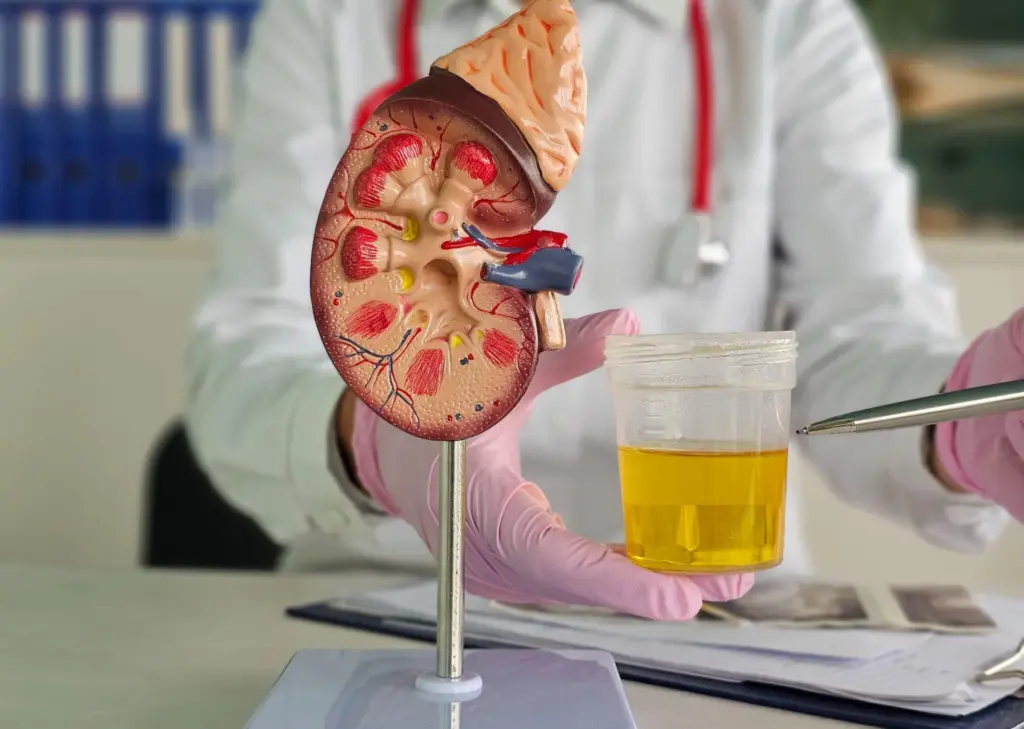
Individual Variations in Contrast Elimination
While there’s a general timeline for getting rid of contrast, individual variations are big. Things like kidney function, how much water you drink, and your overall health can affect how fast contrast is cleared. Knowing these differences is vital for doctors to give better care and avoid problems with contrast media.
Research on how fast contrast is eliminated is always getting better. As we learn more, we can give safer and more effective care to patients who have scans with contrast.
Secondary Elimination Pathways
Contrast media can be removed from the body through more than one way. The kidneys are key in filtering out these agents. But, other systems also help in getting rid of them.
Hepatobiliary Excretion of Contrast
The liver and bile ducts are another major way to get rid of contrast media. The liver absorbs the agent and sends it to the bile. Then, the bile moves it to the gut, where it leaves the body in feces.
Hepatobiliary excretion is vital for those with kidney problems. It offers a backup way to remove contrast. Some MRI contrast agents are made to go through the liver and bile ducts.
Other Minor Elimination Routes
There are also smaller ways contrast media can leave the body. These include:
- Salivary glands: A bit of contrast can be found in saliva.
- Sweat glands: Contrast can also be in sweat, but it’s a tiny amount.
- Lactation: Breast milk can have small amounts of contrast in breastfeeding women.
These minor paths are not a big deal for most people. But, they might matter for certain patients or when thinking about side effects.
The body has many ways to deal with contrast agents. Knowing about these paths is important for treating patients and making safer contrast media.
Factors Affecting How Your Body Processes Contrast
How well your body gets rid of contrast media depends on several things. Kidney function and how well you’re hydrated are two big factors.
Kidney Function and Contrast Elimination
The kidneys are key in getting rid of contrast media. Kidney function greatly affects how fast contrast agents are removed.
If your kidneys aren’t working well, getting rid of contrast media takes longer. This is because the kidneys filter the contrast from your blood.
|
Kidney Function Status |
Impact on Contrast Elimination |
|---|---|
|
Normal kidney function |
Efficient elimination of contrast media |
|
Impaired kidney function |
Delayed elimination, possible buildup |
Hydration Status and Elimination Efficiency
Being well-hydrated is vital for getting rid of contrast media. Drinking enough water helps dilute the contrast. This makes it easier for the kidneys to filter it out.
People getting contrast media often drink lots of water before and after. This helps keep them hydrated.
Good hydration and healthy kidneys are important for removing contrast media well.
Contrast Media and Thyroid Function
Iodine contrast media help make medical images clearer. But, they can also affect the thyroid gland. The thyroid gland is key to our metabolism, and iodine contrast can change how it works.
Effects on Thyroid Function
Using iodine contrast media can change how the thyroid works. This is more likely in people with thyroid problems. Hyperthyroidism and hypothyroidism can get worse with iodine contrast. The thyroid takes in iodine, and too much can mess with its function.
Here are some important points about iodine contrast and thyroid function:
- People with thyroid issues are at higher risk of thyroid problems from iodine contrast.
- Iodine contrast can cause thyroiditis, which is inflammation of the thyroid gland.
- The risk of thyroid issues from iodine contrast is usually low but can depend on individual health.
Elimination Patterns in Patients with Thyroid Conditions
In those with thyroid conditions, how iodine contrast is removed can differ. Impaired kidney function, common in some thyroid disorders, can slow down removal.
Several factors can affect how iodine contrast is removed in patients with thyroid conditions:
- The severity of the thyroid condition.
- Presence of other health issues, like kidney disease.
- The type and dose of iodine contrast media used.
It’s important to understand these factors for patients with thyroid conditions who need iodine contrast media. Healthcare providers must weigh the risks and benefits and keep an eye on thyroid function.
Plasma Iodine Levels After Contrast Administration
After a CT scan with contrast, patients see a quick rise in plasma iodine levels. This is because of the iodine in the contrast agent. It’s key to know how the body handles and gets rid of this contrast.
Iodine contrast media are used in medical imaging to make body structures or fluids clearer. The iodine in the agent makes it visible on X-rays.
Initial Peak and Subsequent Decline
Right after getting the contrast, plasma iodine levels hit their highest point. Then, they start to go down as the body gets rid of the contrast. The kidneys are key in this, filtering the agent from the blood.
The rate at which levels drop can differ from person to person. Things like kidney health and how well hydrated you are can affect this. Drinking plenty of water is often advised to help with getting rid of the contrast.
Interpreting Iodine Levels in Blood Tests
Understanding iodine levels in blood tests after contrast needs knowing the normal timeline for elimination. Doctors look at the peak and then the drop to see if the body is getting rid of the contrast as it should.
If iodine levels don’t follow the usual trend, it could mean kidney problems or other issues with getting rid of the contrast. Here’s a rough guide to what might happen with plasma iodine levels after contrast:
|
Time After Contrast Administration |
Expected Plasma Iodine Level Trend |
|---|---|
|
0-2 hours |
Initial peak |
|
2-24 hours |
Gradual decline |
|
24-48 hours |
Continued decline towards baseline |
Potential Complications of Delayed Contrast Elimination
The iodine contrast in the body for too long can cause problems. When it’s not cleared out quickly, it can lead to various issues. It’s important to know these risks to take good care of patients.
Contrast-Induced Nephropathy
Contrast-induced nephropathy (CIN) is a big concern. It’s kidney damage from imaging contrast. People with kidney problems or dehydration are at higher risk.
The reasons for CIN are complex. They include:
- Direct harm to kidney cells from contrast media
- Less blood flow to the kidneys
- Oxidative stress and inflammation
Other Systemic Effects of Prolonged Contrast Retention
Delayed contrast elimination can also cause other issues. These might include:
- Thyroid problems from the iodine in contrast agents
- Allergic reactions, from mild to severe
- Interactions with other medicines or health conditions
It’s key to watch patients closely after they get contrast. Healthcare teams should look out for signs of trouble. They should act fast to lessen any bad effects.
Enhancing Contrast Elimination: Medical Recommendations
To better remove iodine contrast, we need to drink lots of water and manage our meds carefully. This is key to avoiding problems and keeping patients safe.
Hydration Protocols Before and After Contrast Procedures
Drinking enough water is vital for getting rid of contrast media. Hydration protocols before and after help dilute the contrast. This makes it easier for the kidneys to get rid of it.
Guidelines say patients should drink lots of water before getting MRI with contrast. The best hydration plan includes:
- Drinking plenty of water before the procedure
- Getting intravenous fluids if needed, for those at higher risk
- Keeping hydrated after the procedure to flush out the contrast
Medications That May Affect Contrast Elimination
Some medications can change how we process contrast media. Doctors think about this when planning procedures with contrast:
Some meds might need to be changed or stopped to reduce risks. For example:
|
Medication Type |
Potential Effect on Contrast Elimination |
|---|---|
|
Nonsteroidal anti-inflammatory drugs (NSAIDs) |
May affect kidney function, potentially slowing contrast elimination |
|
Certain antibiotics |
Can increase the risk of contrast-induced nephropathy |
It’s important for patients to tell their doctors about all meds they’re taking before a procedure with contrast.
Modern Medical Protocols for Contrast Safety
Medical institutions have set up various protocols for safe contrast media use. These steps aim to reduce risks, mainly for patients with health issues.
Institutional Approaches to Contrast Administration
Hospitals and medical centers have created guidelines for contrast media use. These guidelines include:
- Checking patient kidney function before procedures
- Hydration plans to help clear contrast
- Watching patients who have had reactions before
Using low-osmolar contrast media is now common. This is because they are safer than high-osmolar agents.
Advances in Contrast Media Safety
New developments in contrast media aim to make them safer. Some key improvements are:
|
Advance |
Description |
Benefit |
|---|---|---|
|
Low-osmolar contrast agents |
Less osmolality than old agents |
Lower risk of kidney damage |
|
Iodixanol |
Iso-osmolar contrast medium |
Very low risk of kidney harm |
|
Contrast media with protective additives |
Agents with antioxidants or other protectants |
Better safety |
The ongoing development of contrast media and protocols will keep making imaging safer for patients.
Conclusion
It’s important to know how the body gets rid of iodine contrast. This is true for doctors and patients who have imaging tests like a CT scan with contrast.
The kidneys are key in getting rid of the contrast. They filter and remove it through urine. How well the kidneys work and how much water you drink also matter.
Studies have shown that most people get rid of iodine contrast in a few days. But, everyone is different. Some people might take longer.
Understanding how iodine contrast is removed helps doctors take better care of patients. It also helps avoid problems that can come from the contrast.
FAQ
What is iodine contrast media used for in medical imaging?
Iodine contrast media makes body structures or fluids more visible in medical imaging. This is true for CT scans.
How is iodine contrast administered?
Iodine contrast is given through an IV before a medical imaging test.
What happens to iodine contrast after it’s administered?
After being given, iodine contrast spreads through the body. It interacts with tissues and is mainly removed through the kidneys.
How do the kidneys eliminate iodine contrast?
The kidneys filter out iodine contrast from the blood. It is then passed in the urine.
How long does it take for iodine contrast to be eliminated from the body?
It usually takes 24-48 hours for iodine contrast to leave the body. But this time can vary.
What factors can affect the elimination rate of iodine contrast?
Kidney function and how well you’re hydrated can affect how fast iodine contrast is removed.
Can iodine contrast affect thyroid function?
Yes, iodine contrast can impact thyroid function, mainly in those with thyroid issues.
What are the possible complications of delayed contrast elimination?
Delayed elimination can cause problems like contrast-induced nephropathy and other systemic issues.
How can contrast elimination be enhanced?
Drinking plenty of water before and after contrast tests can help. Some medications might also speed up elimination.
What is contrast-induced nephropathy?
Contrast-induced nephropathy is a kidney function decline caused by contrast media.
Are there any secondary pathways for contrast elimination?
Yes, apart from the kidneys, the liver also plays a minor role in removing contrast.
How do modern medical protocols ensure contrast safety?
Modern safety measures include hydration plans and careful patient selection. Advances in contrast media also play a role.
What is the role of hydration in contrast elimination?
Drinking enough water is key for effective contrast removal. It helps the kidneys to filter and remove the contrast.
Can medications affect contrast elimination?
Yes, some medications can change how fast contrast is removed. Their use should be managed in patients getting contrast tests.
References:
https://my.clevelandclinic.org/health/treatments/24587-stomach-pumping