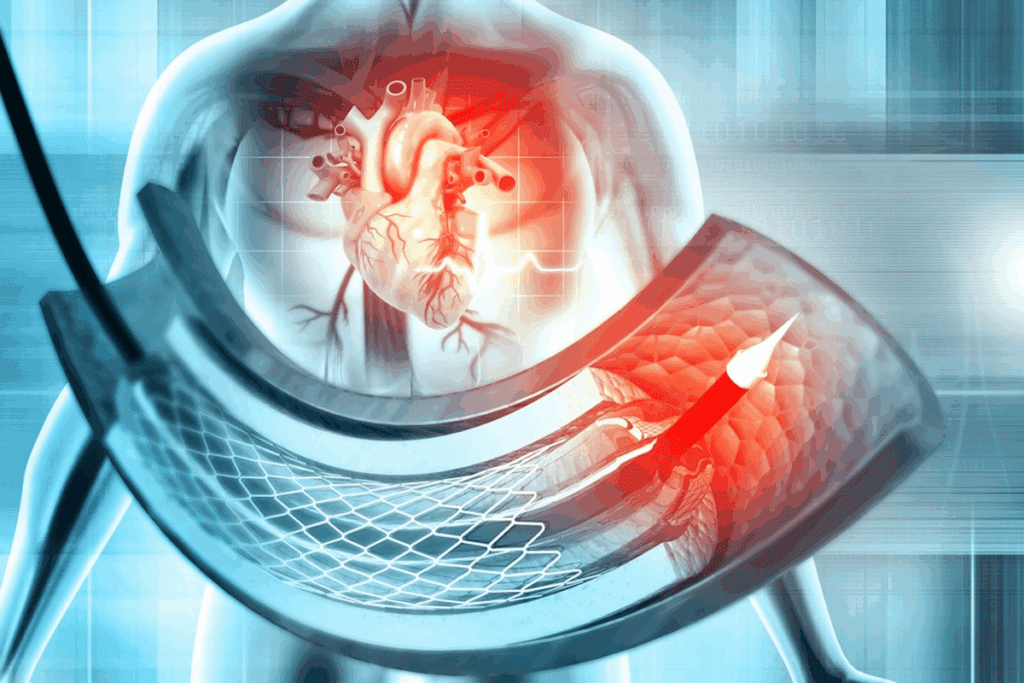
Knowing about coronary anatomy is key for spotting and treating heart problems. At Liv Hospital, we use top-notch CT scans and proven methods to care for our patients’ hearts. The coronary arteries’ detailed structure and how they branch out are important for finding issues.
The main coronary arteries – the left main, left anterior descending, and right coronary artery – have their own branches. These are seen on coronary artery anatomy CT scans. Coronary artery anatomy diagrams also help us grasp the heart’s complex anatomy.
Key Takeaways
- Coronary anatomy is essential for heart health diagnosis and treatment.
- CT scans and diagrams are critical for seeing coronary anatomy.
- The three main coronary arteries have their own branches.
- Liv Hospital uses advanced CT imaging for the best care.
- Understanding coronary anatomy helps improve patient results.
The Essential Framework of Heart Blood Supply

The heart’s blood supply, called coronary circulation, is key to its survival. It delivers oxygen and nutrients to the heart muscle. This lets the heart pump blood well throughout the body.
Why Coronary Circulation Is Critical for Survival
Coronary circulation is vital because it gives the heart muscle the oxygen and nutrients it needs. Without it, the heart can’t work, leading to heart attacks. The coronary arteries, like a crown around the heart, do this important job.
The importance of coronary circulation can’t be stressed enough. It’s the base of the heart’s ability to pump blood. Any problem with this supply can cause serious health issues. Knowing about coronary circulation is key for preventing and treating heart diseases.
Anatomical Positioning of Coronary Vessels
The coronary vessels are placed to make sure the heart gets the blood it needs. They start at the aortic root, just above the aortic valve, and spread around the heart. This anatomical positioning helps blood reach the heart muscle efficiently.
The right coronary artery (RCA) and the left coronary artery (LCA) are the main arteries. The RCA goes to the right atrium, parts of the right ventricle, and the heart’s back. The LCA splits into the left anterior descending artery (LAD) and the left circumflex artery (LCx). These supply blood to the left ventricle and other areas.
Knowing the anatomical positioning of coronary vessels is important for treating heart disease. It helps find blockages and guides treatments like angioplasty or CABG.
Key Fact 1: The Three Major Coronary Arteries and Their Functions

To understand coronary anatomy, we must look at the three main coronary arteries and their roles. These arteries carry blood to the heart muscle. Their work is key to keeping the heart healthy.
Left Main Coronary Artery: The Critical Gateway
The left main coronary artery is a vital part that starts from the left aortic sinus. It’s short, usually between 5 to 10 mm long. It then splits into two main branches: the left anterior descending artery and the left circumflex artery. This artery is essential for blood supply to a big part of the heart muscle.
Left Anterior Descending Artery: The “Widowmaker”
The left anterior descending (LAD) artery is called the “widowmaker” because blockages here are very dangerous. It runs down the anterior interventricular groove. It supplies blood to the heart’s front, the front two-thirds of the interventricular septum, and sometimes the heart’s apex. A blockage here can cause serious heart damage, making it a key area for disease diagnosis and treatment.
Right Coronary Artery: Right Heart’s Lifeline
The right coronary artery (RCA) starts from the right aortic sinus. It brings blood to the right atrium, the right ventricle, and usually the heart’s back third. It has several branches, like the right marginal artery, which feeds the heart’s right side. The RCA is vital for the right heart’s function, and its disease can cause serious problems.
The three major coronary arteries work together to ensure the heart muscle gets enough blood. Knowing their anatomy and function is key for diagnosing and treating heart disease.
| Coronary Artery | Origin | Primary Areas Supplied |
| Left Main Coronary Artery | Left aortic sinus | Major portion of the left heart |
| Left Anterior Descending Artery | Left main coronary artery | Anterior wall, anterior two-thirds of the interventricular septum |
| Right Coronary Artery | Right aortic sinus | Right atrium, right ventricle, posterior third of the interventricular septum |
Key Fact 2: Coronary Artery Branching Patterns and Blood Distribution
The left and right coronary arteries branch out in unique ways. This ensures the heart gets enough blood. Knowing these patterns helps us see how blood spreads across the heart muscle.
Left Coronary System Branches
The left coronary artery splits into two main branches. The LAD and the circumflex branch are these. The LAD goes down the front of the heart, reaching the tip. It supplies blood to the front of the heart and part of the middle wall.
The circumflex branch goes around the back of the heart. It gives blood to the sides and back of the left ventricle. It also has branches for the sides.
Right Coronary System Branches
The right coronary artery runs to the right of the heart’s main artery. It follows the back of the heart. It has branches like the right marginal artery and the posterior descending artery (PDA).
The right marginal artery goes to the right side of the heart. The PDA goes to the back of the heart’s middle wall. It also reaches parts of the left and right ventricles.
| Coronary Artery Branch | Area Supplied |
| Left Anterior Descending (LAD) | Anterior wall of the heart, anterior two-thirds of the interventricular septum, apex |
| Circumflex Branch | Lateral and posterior walls of the left ventricle |
| Right Marginal Artery | Right margin of the heart |
| Posterior Descending Artery (PDA) | Posterior third of the interventricular septum, parts of the left and right ventricles |
A leading cardiologist says, “Knowing how coronary arteries branch is key for treating heart disease.” This shows how important it is to understand heart anatomy in medical practice.
Key Fact 3: Coronary Anatomy Revealed Through CT Imaging
CT imaging has changed cardiology by giving us detailed views of coronary anatomy. This non-invasive tool lets us see the coronary arteries clearly. It helps in diagnosing and treating coronary artery disease.
Coronary Artery Anatomy CT: Radiological Perspectives
From a radiological view, CT scans give us a special look at the coronary anatomy. They help us spot stenosis, occlusions, and other issues that can affect the heart.
The clear images from CT scans are key for diagnosing coronary artery disease. They help doctors see how bad the disease is and plan the best treatment.
Technical Aspects of Coronary CT Angiography
Coronary CT angiography uses a CT scanner to see the coronary arteries after a contrast agent is injected. The process involves timing the contrast injection right, matching it with the heart rate, and making the images.
High-tech CT scanners are needed for clear images of the coronary arteries. The settings, like slice thickness and image reconstruction, are adjusted to improve image quality.
Advanced Visualization: 3D and Multi-Planar Reformats
Coronary CT angiography is great because it lets us use advanced visualization like 3D reconstruction and multi-planar reformats. These methods help us see the coronary anatomy in more detail.
3D views give us a big picture of the coronary tree. Multi-planar reformats let us look closely at certain parts. Together, they’re very useful for both diagnosing and planning treatments.
| Visualization Technique | Description | Clinical Utility |
| 3D Reconstruction | Provides a three-dimensional view of the coronary arteries | Global assessment of coronary anatomy, useful for complex cases |
| Multi-Planar Reformats | Allows for detailed examination in multiple planes | Detailed assessment of specific coronary segments, useful for stenosis evaluation |
Key Fact 4: Coronary Cusp Anatomy and Arterial Origins
The anatomy of the coronary cusp is key to knowing where the coronary arteries start. The coronary cusps are important parts of the aortic root. They house the beginnings of the coronary arteries. Knowing their anatomy is vital for cardiology procedures.
Aortic Root Structure and Coronary Ostia
The aortic root is the part of the aorta that connects to the heart. It has three sinuses, or dilations, called the aortic sinuses. The coronary ostia, or the openings of the coronary arteries, are in two of these sinuses.
The aortic sinuses are key because they are where the coronary arteries start. These arteries supply blood to the heart muscle. The anatomy of the aortic root and the coronary ostia is complex and varies among people. Knowing this is important for procedures like coronary angiography and aortic valve replacement.
Right Coronary Cusp: Anatomical Landmarks
The right coronary cusp is one of the aortic valve’s three cusps. It’s linked to the right coronary artery. The right coronary artery starts from the anterior aortic sinus, or the right coronary sinus.
The right coronary cusp’s landmarks include its relation to cardiac structures and the position of the coronary ostium. This is important for understanding the right coronary artery’s role.
Left Coronary Cusp: Structural Features
The left coronary cusp is linked to the left main coronary artery. It’s usually larger than the right coronary cusp. The left main coronary artery starts from the left posterior aortic sinus.
The left coronary cusp’s features, like its size and the position of the left main coronary ostium, are key. They help us understand the blood supply to the left ventricle and other heart parts.
Variations in Coronary Artery Origin and Their Implications
Coronary artery origins can vary, and these variations can be significant. For instance, an anomalous origin can cause myocardial ischemia or other heart issues. It’s important to understand these variations for accurate diagnosis and treatment planning.
Recognizing variations in coronary artery origin is essential for both imaging and interventional procedures. By knowing the specific anatomy and possible variations, healthcare providers can give more tailored care.
Key Fact 5: Understanding Coronary Anatomy Through Diagrams and Maps
Visual tools like diagrams and maps are key in cardiology today. They help us make accurate diagnoses and treatments. These tools are vital for learning and practicing medicine.
Reading and Interpreting Coronary Anatomy Diagrams
Diagrams of coronary anatomy are essential for doctors and students. To use them well, you need to know the standard terms and the paths of the arteries. Key elements include identifying the origin of each artery, their branching patterns, and any anatomical variations. For example, a diagram will show the left main artery splitting into two branches. The right artery starts from a different part of the heart.
The Standardized Map of Coronary Arteries
A standard map of coronary arteries helps doctors talk the same language. This map makes it easier to pinpoint where problems are. The American Heart Association (AHA) coronary artery segmentation model is widely used. It breaks down the arteries into 16 or 17 parts.
- The left main coronary artery is typically divided into two or three segments.
- The left anterior descending artery is usually segmented into multiple parts due to its extensive course.
- The right coronary artery is also segmented, with particular attention to its distal branches.
Translating Diagrams to Clinical Practice
Using diagrams in real-world medicine involves several steps. First, doctors must understand the diagram in the context of the patient’s health. They match the diagram with the patient’s symptoms and test results. For instance, a blockage found in a coronary angiogram can guide treatment.
- Identify the affected coronary segment using the diagram.
- Correlate the anatomical findings with the patient’s symptoms and diagnostic tests.
- Plan the appropriate intervention based on the integrated information.
By using diagrams and maps, we can better understand heart anatomy. This leads to more accurate diagnoses and better treatments.
Key Fact 6: Coronary Sections on CT Scans and Their Diagnostic Value
Coronary CT scans have changed cardiology by showing detailed images of the heart’s arteries. These images help doctors diagnose and treat heart disease.
Detecting Stenosis and Occlusions in Coronary Sections
Coronary CT scans are key for spotting stenosis and occlusions in heart arteries. Stenosis is when arteries narrow due to plaque, and occlusions block them completely. Finding these issues is key for choosing the right treatment.
These scans let doctors see the heart’s arteries clearly. They can spot stenosis or occlusions. This helps figure out the risk of heart attacks and other heart problems.
Calcium Scoring and Atherosclerotic Plaque Assessment
Calcium scoring is another use of coronary CT scans. It measures calcium in the heart’s arteries, showing plaque buildup. A higher score means more plaque and a higher risk of heart issues.
These scans also help find vulnerable plaques that can cause heart attacks. By looking at plaque details, doctors can plan better treatments for each patient.
Common Anatomical Variants and Clinical Significance
Coronary CT scans can show common heart artery shapes. These shapes can affect how doctors diagnose and treat heart disease.
Some shapes might raise the risk of heart problems or need special treatment plans. Knowing these shapes helps doctors give care that fits each patient’s needs.
Key Fact 7: Coronary Angiogram Anatomy: Bridging Diagnosis and Treatment
Coronary angiogram anatomy is key in linking diagnosis to treatment. It shows how knowing the coronary arteries’ anatomy is vital for both finding problems and planning treatments.
CT Angiography vs. Invasive Coronary Angiography
There are two main ways to see coronary angiogram anatomy: CT angiography and invasive coronary angiography. CT angiography is a non-invasive test that uses X-rays to show the coronary arteries in detail. It helps spot blockages and check the arteries’ health without using a catheter.
Invasive coronary angiography involves putting a catheter into the coronary arteries through an artery. This method lets doctors see the arteries and might also allow for treatments like angioplasty and stenting during the same visit.
| Characteristics | CT Angiography | Invasive Coronary Angiography |
| Invasiveness | Non-invasive | Invasive |
| Diagnostic Capability | High-resolution images of coronary arteries | Detailed images and possible intervention |
| Therapeutic Capability | No | Yes, allows for angioplasty and stenting |
Interpreting Coronary Angiogram Findings
Understanding coronary angiogram results needs a good grasp of coronary anatomy and spotting issues. Stenosis, or artery narrowing, is often seen and can mean plaque buildup. Knowing how severe and where the narrowing is helps decide the best treatment.
“The accurate interpretation of coronary angiograms is key in making revascularization decisions and better patient outcomes.”
— Medical Expert, Interventional Cardiologist
Anatomical Considerations for Interventional Cardiology
When thinking about treatments like angioplasty or stenting, knowing the coronary arteries’ anatomy is critical. Things like where the blockages are, if there’s calcification, and the coronary tree’s overall shape affect the treatment choice and how it’s done.
By mixing detailed anatomy knowledge with advanced imaging, we can make treatments for coronary artery disease better. This leads to better results for patients.
Conclusion: Advancing Our Understanding of Coronary Anatomy
Knowing about coronary anatomy is key for treating heart disease. We’ve looked at 7 important facts about it. These range from how blood flows through the heart to using CT scans to see the arteries.
By learning more about coronary anatomy, we can help patients more. Knowing the heart’s blood flow and the arteries’ paths helps us spot and fix problems. This leads to better care for everyone.
As we get better at understanding the heart’s blood system, we can treat heart disease better. Our aim is to give top-notch healthcare. Knowing about coronary anatomy is a big part of that.
FAQ
What is coronary anatomy and why is it important?
Coronary anatomy is about the structure of the coronary arteries. These arteries carry blood to the heart. Knowing about coronary anatomy helps doctors diagnose and treat heart issues.
How do CT scans visualize coronary anatomy?
CT scans, like coronary CT angiography, use special imaging. They show the coronary arteries’ structure and function. This helps spot any blockages or problems.
What are the three major coronary arteries and their functions?
The three main coronary arteries are the left main, left anterior descending, and right coronary artery. The left main artery supplies the left side of the heart. The left anterior descending artery covers the front wall and the middle wall. The right coronary artery supplies the right side of the heart.
What is the significance of coronary cusp anatomy?
Coronary cusp anatomy is about the aortic root and coronary ostia. Knowing this is key to spotting variations in coronary artery origin. It helps understand their impact on health.
How are coronary anatomy diagrams used in clinical practice?
Coronary anatomy diagrams help doctors understand the complex coronary arteries. They use these diagrams to interpret images from CT scans and angiograms.
What is the role of coronary angiogram anatomy in diagnosis and treatment?
Coronary angiogram anatomy is vital for diagnosis and treatment. It gives detailed info on the coronary arteries. This helps spot blockages and guide treatments.
How do anatomical variants affect coronary artery disease diagnosis and treatment?
Anatomical variants, like different coronary artery origins, impact disease diagnosis and treatment. Knowing these variations is key for accurate diagnosis and effective treatment.
What is the importance of calcium scoring and atherosclerotic plaque assessment in coronary CT scans?
Calcium scoring and plaque assessment are key for evaluating coronary artery disease. They help identify high-risk patients. This guides preventive and therapeutic strategies.
How does coronary CT angiography compare to invasive coronary angiography?
Coronary CT angiography is non-invasive and provides detailed coronary artery info. Invasive coronary angiography involves dye injection and is more invasive. Both have their uses and limitations.
What are the benefits of understanding coronary anatomy for patient care?
Understanding coronary anatomy is vital for quality patient care. It helps doctors diagnose and treat coronary artery disease effectively. This improves patient outcomes and reduces cardiovascular risks.
References:
National Center for Biotechnology Information. (2025). Coronary Anatomy Explained 7 Key Facts from CT. Retrieved from https://pmc.ncbi.nlm.nih.gov/articles/PMC7905109