Testing the cranial nerves is key in a full neurological check-up. It helps find problems that need quick action. Learn to perform a rapidcranial nerve screening. This essential guide gives you a fast, step-by-step process for clinical assessment.
In medical practice, checking the cranial nerves carefully is very important. It’s used to check on patients after head injuries, track stroke progress, or find diseases inside the brain. Learning how to do this well helps doctors and nurses give the best care.
Key Takeaways
- Cranial nerve assessment is integral to neurological examination.
- Systematic examination helps identify possible neurological problems.
- Mastering cranial nerve testing is essential for healthcare providers.
- Cranial nerve function assessment is key in many clinical situations.
- Good cranial nerve examination methods can be done with simple tools.
The Fundamentals of Cranial Nerve Screening in Clinical Practice
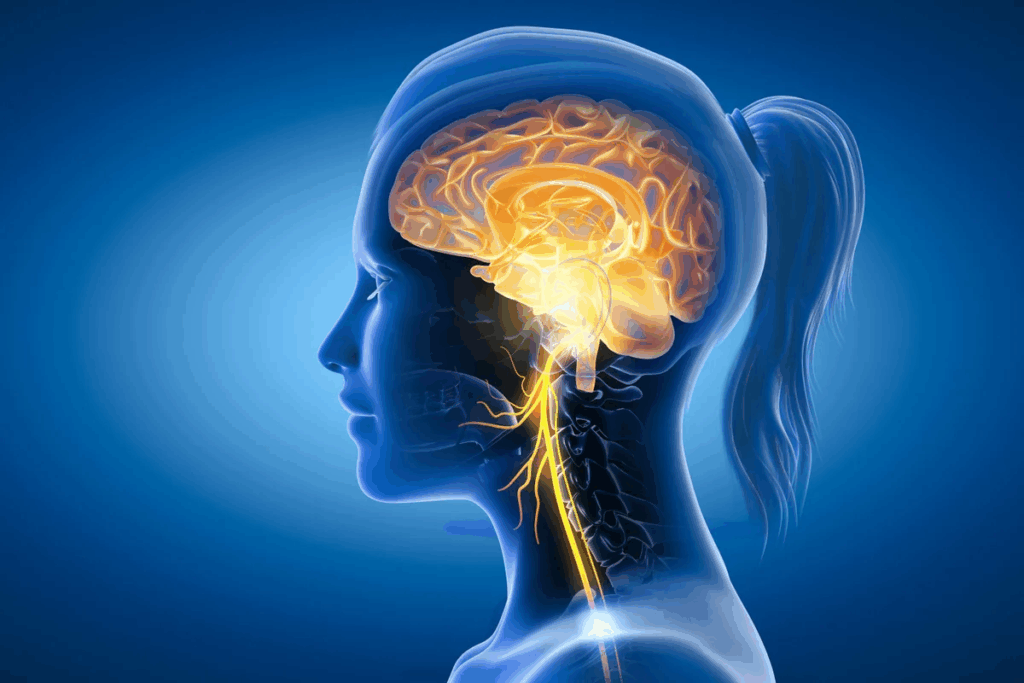
Checking cranial nerves is key in neurological exams. These nerves control many body functions like feeling, moving, and automatic actions. Knowing how these nerves work helps doctors find and fix problems in the brain.
Neuroanatomical Basis of Cranial Nerves
The 12 cranial nerves start from the brain stem. Problems with these nerves can show where in the brain stem or along the nerve path something is wrong. They handle different tasks, like feeling, moving, and controlling automatic actions.
- Sensory functions (e.g., smell, vision, hearing)
- Motor functions (e.g., eye movements, facial expressions, swallowing)
- Autonomic functions (e.g., heart rate, digestion)
Clinical Significance in Neurological Assessment
Testing cranial nerves is very important in checking the brain. If a nerve doesn’t work right, it might mean there’s a problem in the brain stem. Certain nerve signs can point to specific areas around the skull base.
Cranial Nerve | Function | Clinical Significance |
I (Olfactory) | Smell | Loss of smell can indicate frontal lobe pathology |
II (Optic) | Vision | Visual field defects can indicate optic nerve or chiasmal pathology |
III, IV, VI (Oculomotor, Trochlear, Abducens) | Eye movements | Abnormal eye movements can indicate brain stem or cranial nerve pathology |
Testing cranial nerves also helps track how neurologic diseases change. It lets doctors spot and treat problems early. This way, they can help patients better.
Essential Equipment and Preparation for Complete Testing
Healthcare professionals need the right tools and a good place to test the cranial nerves. This is key for a detailed check-up. The tools and setting affect how well the test works.
Required Tools and Materials
Good news: you don’t need much special gear for cranial nerve tests. Most hospitals and clinics have what you need. Here are the basics:
- A 256-hertz or 512-hertz tuning fork for checking vibration sense and hearing.
- Ishihara or Hardy-Rand-Ritter plates for color vision tests.
- A fundoscopy for looking at the retina and optic disc.
- A penlight or flashlight for checking pupillary reactions.
Equipment | Purpose | Cranial Nerve(s) Tested |
Tuning Fork (256Hz or 512Hz) | Assessing vibration sense and hearing | VIII (Vestibulocochlear) |
Ishihara or Hardy-Rand-Ritter Plates | Evaluating color vision | II (Optic) |
Fundoscope | Examining the retina and optic disc | II (Optic) |
Penlight or Flashlight | Assessing pupillary reactions | II (Optic), III (Oculomotor) |
Patient Positioning and Environmental Considerations
Good lighting is key for eye exams and checking pupillary reactions. We suggest a bright room that can be adjusted. This helps avoid glare. Also, the room should be comfy and the patient should be relaxed.
With the right gear and a good setting, we can do detailed cranial nerve tests. These tests help us give the best care to our patients.
Testing Cranial Nerve I: Olfactory Nerve Assessment
Checking the olfactory nerve is key for spotting neurological issues. This nerve, or Cranial Nerve I, carries smell info from the nose to the brain.
Anatomical Overview and Function
The olfactory nerve helps us smell and taste food’s flavor. It starts in the nasal cavity and ends in the olfactory bulb. From there, it sends signals to the brain.
Olfactory nerve function is vital for smelling and tasting food. Damage can cause anosmia (loss of smell) or dysosmia (distorted smell).
Testing Procedure and Normal Findings
To test the olfactory nerve, patients smell familiar scents with their eyes shut. Each nostril is tested alone to check for smell differences.
The test involves:
- Using distinct, non-irritating scents (like vanilla, coffee, lavender).
- Having the patient close their eyes and block one nostril.
- Showing the scent under the open nostril and asking to identify it.
- Doing the same with the other nostril.
Normal results mean the patient correctly identifies the scents without big differences between nostrils.
Common Abnormalities and Clinical Correlations
Problems with the olfactory nerve can signal many neurological issues. Anosmia, or losing smell, can come from nerve or bulb damage. This is often due to trauma, infections, or diseases like Alzheimer’s or Parkinson’s.
Other issues that might affect the olfactory nerve include:
- Upper respiratory infections.
- Nasal polyps or other blockages in the nose.
- Neurodegenerative diseases.
Getting the olfactory nerve right is key for diagnosing and treating these problems. Knowing how the olfactory nerve works and what can go wrong helps doctors give better care to those with smell problems.
Visual System Evaluation: Testing Cranial Nerves II, III, IV, and VI
Checking the visual system is key in a full neurological check-up. We look at Cranial Nerves II, III, IV, and VI. First, we use a Snellen chart to see how well you can see. This helps us understand how well the optic nerve (Cranial Nerve II) is working.
We also check your visual field by looking at each other. This tells us about the path your vision takes. Then, we check how your pupils react to light. This involves Cranial Nerves II and III working together. Lastly, we do a fundoscopy to see the optic nerve and retina.
When we test the oculomotor (Cranial Nerve III), trochlear (Cranial Nerve IV), and abducens (Cranial Nerve VI) nerves, we look at how your eyes move. Knowing how to test these nerves is important for finding problems in the visual pathway.
A detailed check of the cranial nerves, including II, III, IV, and VI, is essential. It helps find any neurological issues and guides treatment. By learning how to do a cranial nerve exam and test the 12 cranial nerves, doctors can make accurate diagnoses and give the best care.
FAQ
What is the purpose of cranial nerve testing in clinical practice?
Cranial nerve testing checks the function of the 12 nerves from the brain. It helps find and diagnose problems in the head, neck, and trunk.
What equipment is required for complete cranial nerve testing?
You need a 256-hertz or 512-hertz tuning fork, Ishihara or Hardy-Rand-Ritter plates, and a fundoscopy. Good lighting and the right patient position are also key.
How is Cranial Nerve I (olfactory nerve) tested?
To test the olfactory nerve, patients smell familiar scents with their eyes closed. This checks for conditions like anosmia.
What is involved in evaluating the visual system, and which cranial nerves are assessed?
Testing the visual system checks Cranial Nerves II, III, IV, and VI. It looks at vision sharpness, field, light reflexes, and eye movements.
How is visual acuity assessed during cranial nerve testing?
Visual acuity is tested with a Snellen chart. It measures how clear a patient’s vision is.
What is the clinical significance of cranial nerve testing in neurological diagnosis?
Cranial nerve testing finds and tracks neurological problems. It helps diagnose issues in the brain stem and visual pathways.
How do you test for Cranial Nerve II (optic nerve)?
Testing Cranial Nerve II includes checking vision sharpness, field, and optic nerve with fundoscopy.
What are some common abnormalities associated with olfactory nerve dysfunction?
Common issues include anosmia, or not being able to smell. This can be linked to many neurological conditions.
Why is patient positioning and environmental preparation important during cranial nerve testing?
Correct patient positioning and a well-prepared environment are vital. They ensure accurate and reliable test results.
References
National Center for Biotechnology Information. Evidence-Based Medical Guidance. Retrieved from https://www.ncbi.nlm.nih.gov/books/NBK537153/