
The human body’s ability to hear and balance is linked to Cranial Nerve VIII, or the vestibulocochlear nerve. This nerve is key for hearing and balance. At Liv Hospital, we know how important it is for a good life. That’s why our team works hard to help with vestibulocochlear nerve problems. The ultimate guide to cranial nerve VIII. Learn its two amazing, critical branches for hearing (cochlear) and balance (vestibular).
The vestibulocochlear nerve is the eighth cranial nerve. It has two parts: vestibular and cochlear fibers. Both are for sensing only. Knowing about this nerve helps us diagnose and treat problems.
Key Takeaways
- The vestibulocochlear nerve is key for hearing and balance.
- It has two parts: vestibular and cochlear fibers.
- Knowing its anatomy helps us diagnose and treat problems.
- Liv Hospital offers full services for vestibulocochlear issues.
- Good diagnosis and treatment can greatly improve life quality.
The Fundamentals of Cranial Nerve VIII
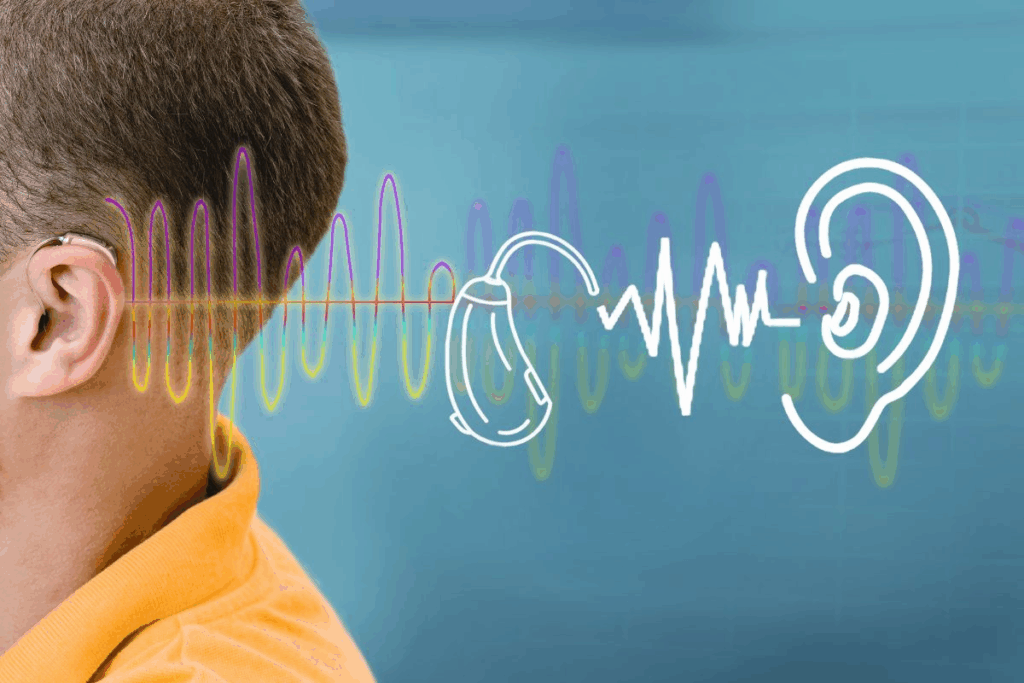
The vestibulocochlear nerve, or CN 8, plays a key role in our senses. It sends sound and balance info to the brain. This nerve comes out of the brain at the cerebellopontine angle. It then leaves the skull through the internal acoustic meatus of the temporal bone.
Definition and Nomenclature
Cranial Nerve VIII is also known as the vestibulocochlear nerve. It has two parts: the cochlear nerve for hearing and the vestibular nerve for balance. This shows how important it is for both hearing and staying balanced.
The name “vestibulocochlear” comes from Latin. “Vestibulum” means entrance, and “cochlea” is like a snail-shell. This name points to its role in the inner ear’s vestibule and cochlea.
Position Among Other Cranial Nerves
Cranial Nerve VIII is the eighth cranial nerve, or CN 8. It sits between the facial nerve (CN VII) and the glossopharyngeal nerve (CN IX) at the brainstem. This spot helps it send sensory info from the inner ear to the brain.
Knowing about Cranial Nerve VIII is important for health and understanding our senses. Its complex nature shows how our hearing and balance work together.
Anatomy of Cranial Nerve VIII: The Vestibulocochlear Nerve

Knowing about Cranial Nerve VIII is key for treating hearing and balance issues. This nerve, also called the vestibulocochlear nerve, is vital for sound perception and balance.
Origin and Neural Pathway
The vestibulocochlear nerve starts in the brainstem, at the pons and medulla oblongata junction. It has two parts: the cochlear and vestibular nerves. These parts send sensory info from the inner ear to the brain.
The nerve goes through the internal auditory canal in the temporal bone. This canal protects the nerve and the facial nerve as they travel to the brainstem.
Structural Organization
The vestibulocochlear nerve’s structure is complex, showing its role in hearing and balance. The cochlear nerve carries sound signals from the cochlea to the brain. This lets us hear sounds. The vestibular nerve sends balance and spatial info from the vestibular apparatus.
- The cochlear nerve has fibers that respond to sound, helping us understand what we hear.
- The vestibular nerve has fibers that detect head movements, aiding in balance and equilibrium.
The combination of these nerves into one shows their complexity and importance. Understanding its anatomy helps us see how we process sound and stay balanced.
The Dual Components of the Vestibulocochlear Nerve
It’s important to know about the two parts of the vestibulocochlear nerve. This nerve, also known as Cranial Nerve VIII (CN8), helps us hear and stay balanced. It has two main parts: the cochlear nerve and the vestibular nerve. Each part does a different job that’s key for our hearing and balance.
The Cochlear Division: Auditory Function
The cochlear division deals with our hearing. It sends sound signals from the inner ear to the brain. There, these signals become the sounds we hear.
The cochlear nerve has many fibers. These fibers are activated by hair cells in the cochlea. When sound waves move these hair cells, they send signals to the brain.
A leading audiologist says, “The cochlear nerve is key for hearing. Damage to it can cause big hearing problems.”
“The cochlear nerve lets us hear a wide range of sounds, from deep rumbles to high pitches.”
Medical Expert, Audiologist
The Vestibular Division: Balance Function
The vestibular division helps us stay balanced and oriented in space. It sends signals from the inner ear to the brain. This helps us keep our balance and move smoothly.
The vestibular nerve is triggered by the movement of fluid in the inner ear. This movement helps us stay steady.
Division | Function | Structures Involved |
Cochlear | Auditory Function | Cochlea, Organ of Corti |
Vestibular | Balance and Spatial Orientation | Semicircular Canals, Otolith Organs |
In short, the vestibulocochlear nerve has two parts that work together. They help us hear and stay balanced. Knowing about these parts is key for diagnosing and treating CN8-related issues.
The Inner Ear: Where Sound Processing Begins
Sound processing starts in the inner ear. It has the cochlea and vestibular organs. These parts turn vibrations into signals for our brain.
Anatomy of the Cochlea
The cochlea is shaped like a spiral and is key to hearing. It’s filled with fluid and has hair cells that turn sound into nerve signals. The cochlea has three parts: the scala vestibuli, the scala media, and the scala tympani.
The scala media, or cochlear duct, has the organ of Corti. This is where the hair cells for sound detection are found. The spiral ganglion in the cochlea has the cell bodies of the cochlear nerve. These cells send sound information to the brain.
Vestibular Organs and Their Functions
The inner ear also has the vestibular organs. They help us keep our balance and sense our surroundings. The vestibular system includes the otolith organs and the semicircular canals.
The otolith organs sense changes in gravity and linear acceleration. The semicircular canals detect rotational movements. Together, they help us stay balanced and move through our environment.
Vestibular Organ | Function |
Otolith Organs (Utricle and Saccule) | Detect linear acceleration and changes in gravity |
Semicircular Canals | Detect rotational movements |
How Cranial Nerve VIII Controls Hearing
Understanding how Cranial Nerve VIII controls hearing is complex. It involves the pathway of sound processing from the ear to the brain. This process is key for us to hear and understand sound.
Sound Wave Reception and Amplification
Sound waves hit the ear and cause vibrations in the eardrum and ossicles. These vibrations then move to the cochlea in the inner ear, where they get amplified. This amplification is vital for detecting even the faintest sounds.
Mechanism of Amplification: The middle ear’s ossicles amplify sound vibrations. The stapes bone sends these vibrations to the oval window of the cochlea. This amplifies sound energy.
Mechanotransduction: Converting Sound to Neural Signals
In the cochlea, vibrations cause fluid movement, which stimulates hair cells. This leads to mechanotransduction. It’s the process of turning mechanical energy into electrical signals. These signals then go to the cochlear nerve.
Hair cells in the cochlea turn sound vibrations into neural signals. This is key for us to hear. It lets auditory information get to the brain.
Structure | Function |
Cochlea | Converts sound vibrations into neural signals |
Hair Cells | Mechanotransduction of sound vibrations |
Cochlear Nerve | Transmits neural signals to the brain |
The Auditory Neural Pathway to the Brain
The neural signals from the cochlea go to the cochlear nuclei in the brainstem via the cochlear nerve. Then, they move through various centers in the brainstem before reaching the primary auditory cortex.
The auditory pathway is complex, with many connections. The primary auditory cortex is where we interpret and understand sound. This lets us respond to what we hear.
We’ve followed the sound processing pathway from sound waves to brain interpretation. This shows the important role of Cranial Nerve VIII in hearing.
Signal Processing in the Auditory Cortex
Signal processing in the auditory cortex is key for hearing and understanding sounds. This part of the brain is complex and vital for processing sound information.
We count on the auditory cortex to break down sound, spot patterns, and grasp speech. This complex process begins with the primary auditory cortex.
Primary Auditory Cortex Function
The primary auditory cortex is the starting point for sound processing. It focuses on basic sound traits like frequency, loudness, and how long sounds last. This initial step is essential for grasping sound’s basic features.
Key functions of the primary auditory cortex include:
- Processing basic sound characteristics
- Analyzing sound frequency and amplitude
- Detecting sound duration and timing
Function | Description |
Frequency Analysis | Processing sound frequencies to distinguish between different sounds |
Amplitude Detection | Analyzing sound amplitude to determine loudness |
Duration Processing | Detecting the duration of sounds to understand timing and rhythm |
Sound Interpretation and Perception
Once basic sound traits are processed, higher-order areas tackle more complex sound tasks. This includes spotting patterns, understanding speech, and grasping sound emotions.
Sound interpretation is a detailed process involving many brain parts. The auditory cortex works with other brain areas to make sense of our sound world.
We use this complex process to get speech, recognize tunes, and make sense of sounds around us. The auditory cortex is key for us to move and interact with our surroundings.
The Vestibular System and Spatial Orientation
Our sense of balance and spatial awareness comes from the vestibular system in our inner ear. It helps us detect changes in head position and movement. This is key for keeping our balance and understanding where we are in space.
This system lets us move easily through our environment. It’s a complex structure that helps us navigate.
Semicircular Canals: Detecting Rotational Movement
The semicircular canals are a vital part of the vestibular system. They’re filled with a fluid called endolymph. They are sensitive to rotational movements, like when we turn our head.
When we rotate our head, the fluid in the canals lags behind. This movement stimulates sensory hair cells. It sends nerve signals to the brain.
The brain then figures out the direction and speed of the rotation. This helps us stay balanced when we’re turning or spinning. The semicircular canals work together with other parts of the vestibular system to give us a full sense of movement.
Otolith Organs: Sensing Linear Acceleration and Gravity
The otolith organs, the utricle and saccule, are also important. They help us detect linear acceleration and gravity. These organs contain sensory hair cells embedded in a gel-like substance with calcium carbonate crystals called otoliths.
When we move linearly or feel gravity, the otoliths move. This stimulates the sensory hair cells. It sends nerve signals to the brain.
The brain uses this information to help us stay balanced during movements like walking or running. The semicircular canals and otolith organs work together. They give us a full sense of where we are and how we’re moving.
Understanding the vestibular system is key to grasping human balance and spatial awareness. It detects both rotational and linear movements. This is essential for our daily activities, from simple actions to complex ones.
Common Disorders of Cranial Nerve VIII
Disorders of the vestibulocochlear nerve, or Cranial Nerve VIII, can cause hearing loss and balance problems. These issues can make daily life hard for many people.
Hearing Disorders
Hearing issues linked to Cranial Nerve VIII include sensorineural hearing loss, tinnitus, and auditory neuropathy. Sensorineural hearing loss happens when the inner ear or the nerve to the brain is damaged. Tinnitus is when you hear sounds or ringing in your ears without any outside noise. Auditory neuropathy affects how sound signals are sent from the inner ear to the brain.
Balance Disorders
Balance problems linked to Cranial Nerve VIII issues include vestibular neuritis, labyrinthitis, and benign paroxysmal positional vertigo (BPPV). Vestibular neuritis is when the vestibular nerve gets inflamed, causing vertigo and balance issues. Labyrinthitis is an inner ear disorder that leads to dizziness and hearing loss. BPPV is when small crystals in the inner ear cause brief but intense dizziness.
Disorder | Symptoms | Possible Causes |
Sensorineural Hearing Loss | Permanent hearing loss | Damage to inner ear or nerve pathway |
Tinnitus | Ringing or noise in ears | Exposure to loud noise, certain medications |
Vestibular Neuritis | Vertigo, balance problems | Viral infection |
Labyrinthitis | Dizziness, hearing loss | Infection or inflammation |
BPPV | Brief intense dizziness | Dislodged crystals in inner ear |
The disorders affecting Cranial Nerve VIII can be complex and varied. They need a detailed approach for diagnosis and treatment. It’s important for healthcare providers to understand these conditions well to give the right care and support.
Diagnostic Approaches for Vestibulocochlear Function
It’s important to accurately diagnose vestibulocochlear function to find problems with Cranial Nerve VIII. We use different tests to check hearing and balance. These are key parts of vestibulocochlear function.
Audiometric Testing
Audiometric testing is key for hearing checks. It includes tests to see how well you can hear and understand speech. Pure-tone audiometry finds the quietest sounds you can hear. Speech audiometry checks how well you can understand speech at different volumes.
Test Type | Description | Clinical Significance |
Pure-tone Audiometry | Measures hearing thresholds at different frequencies | Helps diagnose hearing loss and its severity |
Speech Audiometry | Assesses speech understanding at various volumes | Evaluates the ability to comprehend speech in different conditions |
Vestibular Function Tests
Vestibular function tests check your balance. They help find problems with balance and spatial awareness. Electronystagmography (ENG) and videonystagmography (VNG) track eye movements to spot balance issues. Rotary chair testing tests how your balance system reacts to rotation.
These tests are essential for understanding vestibulocochlear function. By using both hearing and balance tests, we can fully assess your vestibulocochlear health.
Treatment and Management of Vestibulocochlear Disorders
Managing vestibulocochlear disorders needs a detailed plan. This plan should match the condition of the nerve. It might include medicine, surgery, and therapy.
Medical Interventions
Medicine is key in treating these disorders. Pharmacological treatments help ease symptoms. For example, drugs can lessen vertigo and nausea.
Corticosteroids might be given to reduce swelling in sudden hearing loss. We also use otoprotective agents to shield the inner ear from harm. These protect hearing and balance in at-risk patients.
Surgical Approaches
Surgery is needed for some cases. Cochlear implantation can give back hearing to those with severe loss. It implants a device to directly stimulate the nerve.
Vestibular nerve section is used for severe vertigo. It cuts the nerve to stop vertigo signals.
Rehabilitative Therapies
Therapies help patients recover or adjust to their condition. Vestibular rehabilitation therapy (VRT) improves balance and reduces dizziness. It’s a form of physical therapy.
Auditory rehabilitation helps those with hearing loss. It includes speech therapy and hearing aids. These tools improve communication.
Combining medicine, surgery, and therapy gives patients the best care. It improves their life and function.
Conclusion
We’ve looked into how the vestibulocochlear nerve, or Cranial Nerve VIII, helps us hear and stay balanced. This nerve is key to our senses, with its two parts working together. This makes hearing and balance possible.
The cochlear part of the nerve is important for hearing sounds. The vestibular part helps us keep our balance and sense where we are. Knowing about Cranial Nerve VIII helps us see its big role in our lives.
Understanding this nerve helps us find and treat problems with hearing and balance. This is very important for doctors and people who want to know more about their hearing and balance.
As we learn more about the vestibulocochlear nerve, we see how complex our senses are. By learning more about Cranial Nerve VIII, we can help improve life for those with related issues.
FAQ
What is Cranial Nerve VIII responsible for?
Cranial Nerve VIII, also known as the vestibulocochlear nerve, helps us hear and keeps our balance.
What are the two main components of the vestibulocochlear nerve?
It has two parts: the cochlear nerve for hearing and the vestibular nerve for balance.
What is the function of the cochlear division of Cranial Nerve VIII?
The cochlear division sends sound signals to the brain. This lets us hear sounds.
What is the role of the vestibular division of Cranial Nerve VIII?
The vestibular division helps us stay balanced. It sends info from the vestibular system to the brain.
What is the anatomy of the inner ear related to Cranial Nerve VIII?
The inner ear has the cochlea for sound and the vestibular organs for balance.
How does Cranial Nerve VIII control hearing?
It controls hearing by sending signals from the cochlea to the brain. There, we process these signals as sound.
What is the primary auditory cortex responsible for?
The primary auditory cortex analyzes sound basics like pitch and volume.
What are some common disorders affecting Cranial Nerve VIII?
Disorders include hearing loss, tinnitus, vertigo, and more.
How are vestibulocochlear disorders diagnosed?
Doctors use tests to check hearing and balance.
What are the treatment options for vestibulocochlear disorders?
Treatments vary, from medicine to surgery, based on the condition.
What is the vestibulocochlear nerve also known as?
It’s also called Cranial Nerve VIII or the 8th cranial nerve.
What is the role of the semicircular canals in the vestibular system?
The semicircular canals help us sense rotation. This aids in balance and spatial awareness.
What do the otolith organs sense in the vestibular system?
The otolith organs sense movement and gravity. They’re key for balance.
References
National Center for Biotechnology Information. Cranial Nerve VIII: Vestibulocochlear Nerve Function in Hearing and Balance. Retrieved from https://www.ncbi.nlm.nih.gov/pmc/articles/PMC2861521/