
The vagus nerve, also known as the tenth cranial nerve, is a key part of our nervous system. It helps with swallowing, speaking, controlling our heart rate, and digestion.Discover cranial nerve X. This complete guide explains the vagus nerve’s origin, critical functions, and extensive branches.
We will look into the significance and complexity of this nerve. We’ll cover its origin, path, and roles. The vagus nerve comes from the fourth and sixth pharyngeal arches, making it very diverse.
Knowing about the vagus nerve is important for those looking for top-notch medical care abroad. We’ll dive into its details, preparing for a deeper look in the next sections.
Key Takeaways
- The vagus nerve is the 10th cranial nerve, playing a vital role in various bodily functions.
- It is associated with the derivatives of the fourth and sixth pharyngeal arches.
- The nerve is responsible for controlling essential functions such as swallowing, speech, heart rate, and digestion.
- Understanding the vagus nerve is important for international healthcare seekers.
- The vagus nerve carries about 80 to 90 percent of vital sensory info from organs back to the brain.
The Vagus Nerve: An Overview
The vagus nerve is a key part of the cranial nerves. It runs through the body and is very important. We will look at what it is, its history, and why it matters.
Definition and Anatomical Significance
The vagus nerve, or Cranial Nerve X, is the longest cranial nerve. It goes from the brain to the abdomen. It helps many organs work right.
The name “vagus” comes from the Latin word for “wandering.” This is because it travels a long way through the body.
Historical Context and Etymology
For a long time, people have known about the vagus nerve’s complex role. The name “vagus” was chosen because of its long path. Early scientists noticed this.
“The vagus nerve is a complex nerve that has been studied for centuries, with its functions and pathways being of great interest to anatomists and physicians alike.”
Let’s see how important the vagus nerve is:
- Innervation of the larynx and pharynx
- Regulation of heart rate
- Influence on digestion
Function | Description |
Innervation of larynx and pharynx | Controls swallowing and vocalization |
Regulation of heart rate | Influences heart rate variability |
Influence on digestion | Regulates digestive processes |
In conclusion, the vagus nerve is very important. Its long path and many functions make it a key nerve to study.
Anatomical Origin of Cranial Nerve X
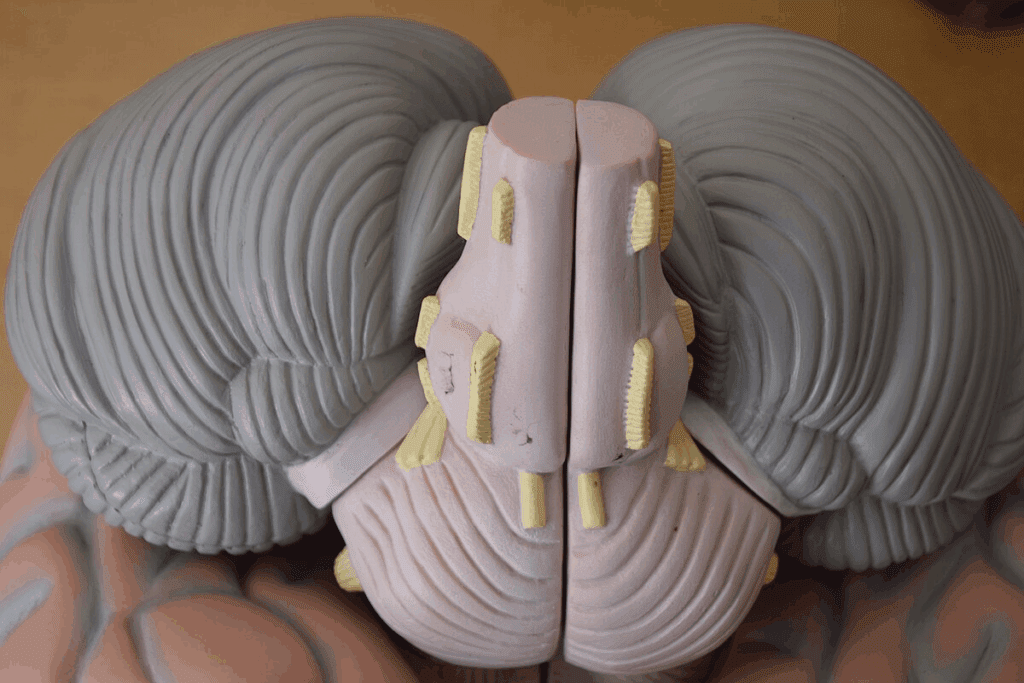
The vagus nerve starts in four parts of the medulla oblongata. This complex start shows why it does so many things in our body. It’s a key part of our autonomic nervous system, affecting things like our heart rate and digestion.
The Four Nuclei in the Medulla Oblongata
The vagus nerve comes from four nuclei in the medulla oblongata. These are the dorsal motor nucleus, nucleus ambiguus, nucleus solitarius, and spinal trigeminal nucleus. Each part helps the nerve do different things.
- The dorsal motor nucleus helps control the viscera.
- The nucleus ambiguus helps the larynx and pharynx move.
- The nucleus solitarius gets sensory info from the viscera.
- The spinal trigeminal nucleus gets sensory info from the face and head.
Embryological Development and Variations
The vagus nerve grows from the brainstem and pharyngeal arches during development. It forms from several smaller nerves from the fourth and sixth arches. Differences in how it grows can affect how it works in people.
Knowing how the vagus nerve grows and changes is key to understanding its role. As Cranial Nerve X, it’s vital for our autonomic nervous system. Its growth shows its many functions.
Anatomical Course and Distribution
The vagus nerve starts its journey through the jugular foramen. It then travels through different parts of the body. This path lets it connect with many structures, helping with important body functions.
Exit Through the Jugular Foramen
The vagus nerve leaves the skull through the jugular foramen. It goes with the glossopharyngeal and accessory nerves. This spot is key, marking the start of the vagus nerve’s long path through the neck, chest, and belly.
Cervical Portion and Relationships
In the neck, the vagus nerve is wrapped in the carotid sheath. It’s close to the internal carotid artery and the internal jugular vein. This shows how the nerve interacts with other important structures in the neck.
- The vagus nerve has branches in the neck, like the pharyngeal branches and the superior laryngeal nerve.
- These branches help with swallowing and speaking by innervating the pharynx and larynx.
Thoracic Pathway and Connections
In the chest, the vagus nerve continues its path. It branches out to the heart and other organs. It works with the sympathetic trunk in this area.
- The vagus nerve helps form the pulmonary plexus, which controls the lungs.
- It also has cardiac branches that help manage heart rate and function.
Abdominal Distribution to the Splenic Flexure
The vagus nerve’s journey through the belly is long. It reaches the stomach, small intestine, and large intestine up to the splenic flexure. This is key for digestion and the gut-brain connection.
The vagus nerve’s complex path shows its vital role in the body. It helps with breathing, blood flow, digestion, and overall health.
Major Branches of the Vagus Nerve
The vagus nerve has many branches that control important body functions. These include heart rate, digestion, and breathing. Each branch plays a key role in how our body works.
Pharyngeal Branches and Innervation
The pharyngeal branches help control the muscles of the pharynx. These muscles are vital for swallowing. They form the pharyngeal plexus, a network of nerve fibers.
This innervation helps the muscles of the pharynx work together. It makes sure food moves smoothly from the mouth to the esophagus.
Superior Laryngeal Nerve: Internal and External Branches
The superior laryngeal nerve splits into internal and external branches. The internal branch senses the larynx above the vocal cords. The external branch controls the cricothyroid muscle, which changes vocal pitch.
This dual function is key for voice production and control. It’s essential for how we speak and sing.
Recurrent Laryngeal Nerve and Vocal Fold Function
The recurrent laryngeal nerve controls the vocal folds’ movement. It’s vital for voice production and preventing food from going into the lungs during swallowing.
Any problems with this nerve can cause vocal cord paralysis. This can affect our voice and lead to breathing issues.
Cardiac Branches and Heart Rate Regulation
The cardiac branches of the vagus nerve help control the heart. They slow the heart rate and promote a restful state. This balances the body’s “fight or flight” response.
Branch | Function | Area Innervated |
Pharyngeal Branches | Motor innervation for swallowing | Pharyngeal muscles |
Superior Laryngeal Nerve | Sensory and motor innervation for voice production | Larynx above vocal cords and cricothyroid muscle |
Recurrent Laryngeal Nerve | Motor innervation for vocal fold movement | Intrinsic muscles of the larynx |
Cardiac Branches | Parasympathetic innervation for heart rate regulation | Heart |
Sensory Functions of Cranial Nerve X
The vagus nerve has a big role in sensing our body. About 80-90% of its fibers are for sensing. This shows how important it is for sending signals from our organs to our brain.
Afferent Pathways: The 80-90% Sensory Component
The vagus nerve mainly sends sensory info. It has fibers that send signals from our organs like the heart and stomach to our brain.
Afferent pathways help us feel what’s happening inside us. This info helps control our heart rate, digestion, and breathing.
Organ/System | Type of Sensory Information | Function |
Heart | Cardiac rhythm, blood pressure | Regulation of heart rate |
Lungs | Respiratory rate, lung inflation | Control of breathing |
Gastrointestinal Tract | Stretch, chemical composition | Regulation of digestion |
Visceral Sensory Functions and Interoception
Visceral sensory functions keep our body balanced. The vagus nerve’s fibers check on our organs. They send signals to our brain to adjust as needed.
Interoception, thanks to the vagus nerve, lets us feel our body’s state. It affects our mood, hunger, and overall health.
Motor Functions of the Vagus Nerve
It’s important to know how the vagus nerve works for our health. This nerve, or Cranial Nerve X, controls muscles for swallowing and talking. It’s a key part of our body’s functions.
Parasympathetic Control of Thoracic and Abdominal Organs
The vagus nerve helps control organs in the chest and belly. It’s key for our “rest and digest” mode. It affects heart rate, digestion, and more.
It slows down the heart, helping us relax. This is important for our heart health and dealing with stress.
Special Visceral Efferent Functions and Pharyngeal/Laryngeal Control
The vagus nerve also controls muscles in the throat. These muscles are key for swallowing and talking. It helps us speak and sing.
It’s vital for swallowing. It makes sure food goes down the right way, keeping us safe and helping digestion.
“The vagus nerve is a key player in the delicate dance of neural control that governs our most basic yet vital functions.”
— Dr. [Last Name], Neurologist
In short, the vagus nerve does a lot. It controls organs and helps us swallow and talk. Knowing this helps us understand its role in our health.
The Vagus Nerve in the Autonomic Nervous System
The vagus nerve is key to the autonomic nervous system. It plays a big role in parasympathetic control and vagal tone. This helps us understand how it affects our body functions and well-being.
Role in Parasympathetic “Rest and Digest” Responses
The vagus nerve is vital in the parasympathetic nervous system. It helps our body relax and digest. This balance is important for staying healthy.
It does this by controlling heart rate, blood pressure, digestion, and more. This way, it helps our body recover from stress and stay in top shape.
Vagal Tone and Homeostasis
Vagal tone is how active the vagus nerve is. A high tone means better stress handling and health. Things like exercise, meditation, and social connections can boost it.
Keeping vagal tone healthy is key. It helps our body deal with stress and stay balanced.
Learning about the vagus nerve’s role in our body is important. It helps us understand how to keep our body healthy. By supporting parasympathetic responses and maintaining vagal tone, we help our body heal and regulate itself.
Clinical Significance and Disorders
It’s key to understand the vagus nerve’s role in our bodies. Its dysfunction can cause many symptoms and conditions. This knowledge helps in diagnosing and treating these issues.
Vagus Nerve Dysfunction and Symptoms
Vagus nerve problems can cause dysphagia (swallowing issues) and dysphonia (voice problems). They can also affect the heart and stomach. These symptoms can really lower a person’s quality of life.
The vagus nerve affects many body functions. Its problems can lead to heart rate issues and stomach problems. This shows how important it is to find and treat these problems early.
Diagnostic Approaches and Testing
Doctors use several ways to find vagus nerve problems. They might do electromyography (EMG) to check the nerve’s health. This test can spot damage or issues.
They also use MRI or CT scans to see the nerve and nearby areas. These images help doctors find out what’s wrong with the vagus nerve.
Common Pathologies: Neuritis, Trauma, and Compression
The vagus nerve can face many problems like neuritis (nerve inflammation), trauma, and compression. These issues can come from injuries, infections, or body shape problems.
- Neuritis can cause pain, numbness, and weakness in areas the vagus nerve controls.
- Trauma to the vagus nerve can happen from surgery, accidents, or other injuries.
- Compression can be caused by tumors, cysts, or other growths pressing on the nerve.
Knowing about these problems helps doctors create better treatment plans. By fixing the root cause of vagus nerve issues, doctors can help patients feel better and live better lives.
Conclusion
The vagus nerve, or cranial nerve X, is a complex and vital nerve. It plays a key role in many bodily functions. In this article, we’ve looked at its origin, functions, and branches. We’ve seen how it affects the body’s systems.
This nerve controls many functions, like the heart rate and digestion. Its branches, such as the pharyngeal and laryngeal, help regulate important processes. These include heart rate, digestion, and breathing.
In short, the vagus nerve is a key part of our nervous system. Knowing about its functions and branches is important for health. By understanding the vagus nerve, we can better care for our health and well-being.
FAQ
cWhat is the vagus nerve?
The vagus nerve, also known as cranial nerve X, is a key part of our nervous system. It helps with swallowing, speaking, and controlling our heart rate.
What is the origin of the vagus nerve?
It starts in the medulla oblongata, a part of the brainstem. This is where it begins its journey through our body.
What does the term “vagus” mean?
“Vagus” means “wandering.” This name fits because the nerve travels all over our body.
What is the course of the vagus nerve?
It goes from the brainstem to the neck, chest, and belly. Along the way, it connects with many organs and structures.
What are the major branches of the vagus nerve?
The main branches include the pharyngeal, superior laryngeal, recurrent laryngeal, and cardiac branches. Each has its own role.
What is the role of the vagus nerve in the autonomic nervous system?
It helps our body relax and stay balanced. This is important for keeping us healthy and coping with stress.
What is vagal tone?
Vagal tone is about the balance of the vagus nerve’s activity. It’s key for keeping our body in a healthy state.
What are the symptoms of vagus nerve dysfunction?
Problems with the vagus nerve can lead to swallowing issues, voice changes, and irregular heartbeats.
How is vagus nerve dysfunction diagnosed?
Doctors use tests like electromyography and imaging to check the nerve’s function. This helps find the cause of the problem.
What are the common pathologies affecting the vagus nerve?
Issues like neuritis, trauma, and compression can harm the vagus nerve. These problems can cause a variety of symptoms.
Why is understanding the vagus nerve important?
Knowing about the vagus nerve is vital for health. It helps doctors and patients understand how it affects our body.
References
National Center for Biotechnology Information. Evidence-Based Medical Guidance. Retrieved from https://www.ncbi.nlm.nih.gov/books/NBK537171/