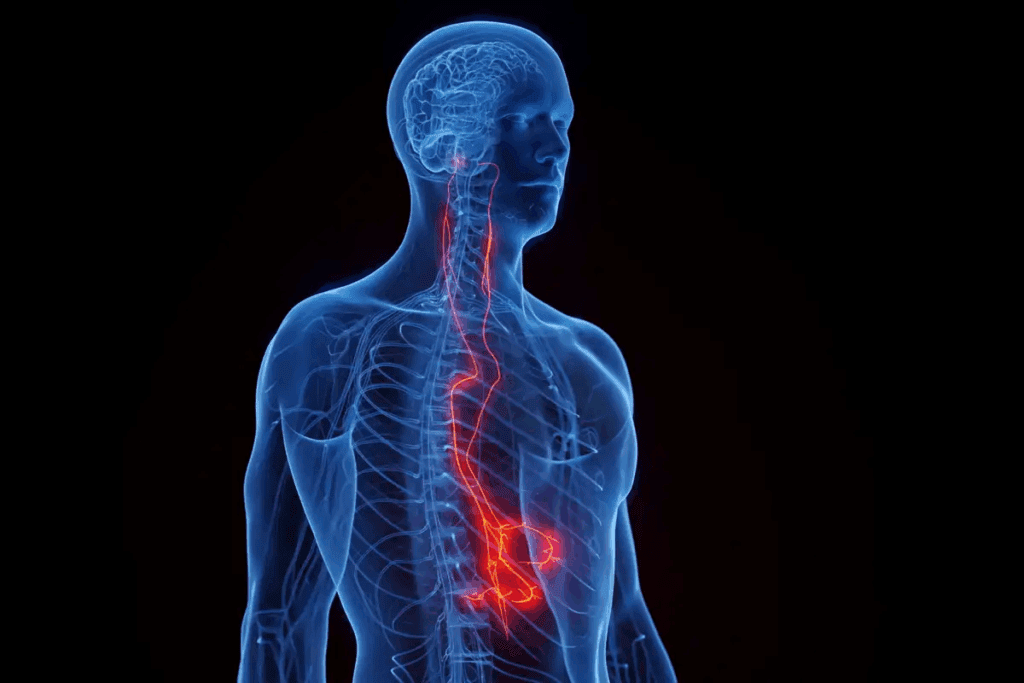
Ever wondered how you can follow a moving object or look across a room without moving your head? It’s thanks to three special cranial nerves: the oculomotor, trochlear, and abducens nerves. They work together to control the eye muscles. The ultimate guide tocranial nerves 3 4 6. Learn how the Oculomotor, Trochlear, and Abducens work together in amazing harmony.
At Liv Hospital, our experts use the latest technology to find and treat problems with these nerves. The oculomotor nerve (CN III) helps four of the six eye muscles. It controls how high your eyelids go and how small your pupils get. The trochlear nerve (CN IV) and abducens nerve (CN VI) help the superior oblique and lateral rectus muscles.
Key Takeaways
- The oculomotor, trochlear, and abducens nerves control eye movement.
- These nerves innervate the extraocular muscles enabling various eye movements.
- Liv Hospital’s specialists use advanced diagnostic protocols for related disorders.
- Understanding the role of these nerves is key for diagnosis and treatment.
- Accurate identification and patient-centered management are our top priorities.
The Neurology Behind Eye Movement
Moving our eyes is a team effort of many cranial nerves from the brainstem. This teamwork controls the extraocular muscles for different eye movements. Knowing how this works helps doctors diagnose and treat eye problems.
Basic Anatomy of Ocular Control
The oculomotor (III), trochlear (IV), and abducens (VI) cranial nerves are key. They start from different parts of the brainstem. The oculomotor nerve comes from the midbrain, the trochlear nerve from the trochlear nucleus, and the abducens nerve from the pons.
Neural Pathways for Vision and Movement
Eye movement and vision use complex neural paths. The medial longitudinal fasciculus (MLF) is key for eye coordination. It mixes sensory input from vision and motor signals to muscles for smooth eye movements.
The cranial nerves III, IV, and VI have unique roles:
- The oculomotor nerve (III) controls four muscles and opens the eyelid.
- The trochlear nerve (IV) works the superior oblique muscle for eye rotation.
- The abducens nerve (VI) enables the eye to look outward.
Cranial Nerves 3, 4, and 6: The Eye Movement Triad
Three cranial nerves work together to control our eye movements. The oculomotor, trochlear, and abducens nerves are key. They help us move our eyes smoothly and easily.
Introduction to the Oculomotor, Trochlear, and Abducens Nerves
The oculomotor (CN III), trochlear (CN IV), and abducens (CN VI) nerves control our eye muscles. CN III moves most of the eye. CN IV controls the superior oblique muscle. CN VI controls the lateral rectus muscle.
Together, these nerves help us move our eyes in many ways. They make small and big movements possible. Knowing how they work helps doctors treat eye problems.
Evolutionary Development and Significance
The development of these nerves has improved our vision. They help us read, drive, and move around safely. Their complex control over eye movements is key to our visual abilities.
Cranial Nerve | Primary Function | Muscle Controlled |
Oculomotor (CN III) | Controls most eye movements | Medial Rectus, Superior Rectus, Inferior Rectus, Inferior Oblique |
Trochlear (CN IV) | Controls superior oblique muscle | Superior Oblique |
Abducens (CN VI) | Controls lateral rectus muscle | Lateral Rectus |
These nerves are vital for our daily activities. They allow for precise eye movements. The complex system of CN III, CN IV, and CN VI shows how important our vision is.
The Oculomotor Nerve (CN III): Master of Eye Movement
The oculomotor nerve is key in controlling eye movement. It is also known as cranial nerve III. This nerve controls most of the muscles that move the eyes. It also helps in controlling the size of the pupil and lifting the eyelid.
Anatomical Origin and Pathway
The oculomotor nerve starts in the midbrain. It then goes between two arteries before entering the cavernous sinus. From there, it goes into the orbit through the superior orbital fissure.
Four Extraocular Muscles Under CN III Control
The oculomotor nerve controls four muscles: the superior rectus, medial rectus, inferior rectus, and inferior oblique. These muscles help in moving the eyes in different ways.
- The superior rectus muscle elevates the eye.
- The medial rectus muscle adducts the eye.
- The inferior rectus muscle depresses the eye.
- The inferior oblique muscle rotates the eye upward and outward.
Pupillary and Eyelid Functions
The oculomotor nerve does more than just control eye muscles. It also controls how small or big the pupil is and how high the eyelid can go. The parasympathetic fibers of the oculomotor nerve make the pupil smaller. The oculomotor nerve also makes the eyelid lift up.
Function | Description | Muscle/Nerve Involved |
Eye Elevation | Moves the eye upward | Superior Rectus (CN III) |
Eye Adduction | Moves the eye toward the nose | Medial Rectus (CN III) |
Eye Depression | Moves the eye downward | Inferior Rectus (CN III) |
Eye Rotation | Rotates the eye upward and outward | Inferior Oblique (CN III) |
Pupil Constriction | Reduces the size of the pupil | Parasympathetic fibers (CN III) |
Eyelid Elevation | Lifts the eyelid | Levator Palpebrae Superioris (CN III) |
The Trochlear Nerve (CN IV): The Superior Oblique Controller
Cranial nerve IV, also known as the trochlear nerve, plays a key role in eye movement. It is the smallest cranial nerve. It has a unique feature that sets it apart from other cranial nerves.
Anatomical Origin and Unique Decussation
The trochlear nerve starts from the trochlear nucleus in the midbrain. It has a unique decussation. This means its nerve fibers cross over to the opposite side before leaving the brainstem. This happens in the superior medullary velum, a thin tissue layer.
The trochlear nerve’s long path inside the brain makes it prone to injury. This is because of its location and how it emerges from the brainstem’s dorsal side.
Function of the Superior Oblique Muscle
The trochlear nerve controls the superior oblique muscle. This muscle is one of six that move the eye. It’s key for moving the eye down and to the side, mainly when the eye is pulled towards the nose.
- Primary actions: Intorsion, depression, and abduction.
- The superior oblique muscle works with other muscles for smooth eye movements.
Clinical Significance of Its Small Size
Even though it’s the smallest cranial nerve, problems with it can cause big issues. These include diplopia (double vision) and trouble looking down. Its long path and unique crossing make it a key focus in neurological checks.
Knowing about the trochlear nerve’s structure and role is vital for diagnosing and treating eye movement problems. Doctors need to watch out for trochlear nerve palsy. This is important for patient vision and overall health.
The Abducens Nerve (CN VI): Lateral Gaze Specialist
The abducens nerve greatly affects eye movement. It controls the lateral rectus muscle. This nerve, or cranial nerve VI, is key for eye movement. We’ll look at where it starts, its long path, and its role in looking outward.
Anatomical Origin in the Pons
The abducens nerve starts in the pons, a brainstem part. It comes from the facial colliculus, near the facial nerve. This close location can cause symptoms if damaged.
The Long Intracranial Journey
The abducens nerve travels a long way inside the skull. It goes from the pons, through the cavernous sinus, and ends at the superior orbital fissure. This long path makes it prone to damage.
Lateral Rectus Function and Abduction
The abducens nerve mainly works with the lateral rectus muscle. This muscle helps the eye move outward. This is important for lateral gaze, or looking sideways.
In summary, the abducens nerve is vital for eye movement, mainly for looking outward. Its long path makes it vulnerable to damage. Knowing its role is key in medical practice.
Extraocular Muscles: The Effectors of Eye Movement
It’s important to know how extraocular muscles work for eye movements. These muscles are six pairs that help each eye move.
Anatomy of the Six Paired Muscles
The six muscles are the lateral rectus, medial rectus, superior rectus, inferior rectus, superior oblique, and inferior oblique. Each muscle has a specific role. The lateral rectus muscle helps the eye move outward.
Primary and Secondary Actions
Each muscle has a main action and sometimes others too. For example, the superior rectus muscle mainly lifts the eye. It also helps in rotating the eye and moving it towards the nose.
Knowing these actions helps doctors treat eye movement problems.
“The precise coordination of extraocular muscles allows for smooth and accurate eye movements, which are essential for tasks such as reading and driving.”
Yoke Muscles and Antagonist Relationships
Extraocular muscles come in pairs, known as yoke muscles. These pairs work together to move the eyes. For example, when looking right, the right lateral rectus and the left medial rectus work together.
Antagonist muscles have opposite actions. Like the medial rectus and the lateral rectus. This balance is key for precise eye movements.
The extraocular muscles are key for eye movement. Their detailed structure and teamwork allow us to do many visual tasks well.
The Medial Longitudinal Fasciculus: Coordinating Conjugate Gaze
Our gaze needs a complex mix of neural pathways. The medial longitudinal fasciculus (MLF) is key. It’s a brainstem structure that helps our eyes move together.
Anatomical Structure and Connections
The MLF is a group of nerve fibers in the brainstem. It connects eye movement centers. It runs from the midbrain to the upper spinal cord.
It gets signals from the vestibular nuclei, the paramedian pontine reticular formation (PPRF), and the interstitial nucleus of Cajal (INC). These connections help the MLF coordinate eye movements.
The MLF’s structure is vital for both horizontal and vertical eye movements. It connects cranial nerves III, IV, and VI. These nerves control the muscles that move our eyes.
Role in Horizontal and Vertical Gaze
The MLF is key for both horizontal and vertical gaze. For horizontal gaze, it links the abducens nucleus (CN VI) to the oculomotor nucleus (CN III). This ensures the lateral and medial rectus muscles work together.
For vertical gaze, it integrates signals from the INC and other nuclei. This controls the superior and inferior rectus muscles, and the inferior oblique muscles. This integration is vital for smooth vertical eye movements.
Integration with Vestibular System
The MLF also helps with the vestibulo-ocular reflex (VOR). The VOR keeps our gaze stable during head movements. It receives vestibular information and sends it to eye movement centers.
Function | Description | Cranial Nerves Involved |
Horizontal Gaze | Coordination of lateral rectus and medial rectus muscles | CN VI and CN III |
Vertical Gaze | Control of superior and inferior rectus and inferior oblique muscles | CN III and CN IV |
Vestibulo-Ocular Reflex | Maintaining gaze stability during head movements | CN III, CN IV, CN VI, and Vestibular Nuclei |
In conclusion, the medial longitudinal fasciculus is vital for coordinating our gaze. It integrates signals for eye movements and vestibular input. Its problems can cause eye movement disorders, showing its importance in eye control.
Clinical Examination of Cranial Nerves 3, 4, 6
Cranial nerves III, IV, and VI are key for eye movement. Their clinical exam is vital for diagnosing neurological issues. We’ll cover how to examine these nerves, focusing on eye movements and any misalignment.
Systematic Assessment Techniques
We use specific methods to check cranial nerves III, IV, and VI. This includes testing eye movements in all directions. We look for signs of nerve palsy or weakness.
First, we watch the patient’s eyes for any unusual movements. Then, we ask them to follow a target, like a pen, in different directions. This helps us see how well their eyes move.
Cardinal Positions of Gaze
The cardinal positions of gaze are key for checking the extraocular muscles. These muscles are controlled by cranial nerves III, IV, and VI. We check eye movements in these positions to find any issues.
There are six main positions: straight up, straight down, left and right gaze, and left and right up and down. By looking at these positions, we can see which muscle or nerve is not working right.
Documenting Ocular Misalignment
Ocular misalignment, or strabismus, can show nerve problems. We use different methods to measure and record this misalignment. These include the cover-uncover test and the alternate cover test.
The cover-uncover test covers one eye and then quickly removes it. We watch for any eye movement. The alternate cover test switches the cover between eyes to find hidden strabismus.
Cranial Nerve | Extraocular Muscle | Primary Action |
III (Oculomotor) | Medial Rectus | Adduction |
III (Oculomotor) | Superior Rectus | Elevation |
IV (Trochlear) | Superior Oblique | Intorsion, Depression |
VI (Abducens) | Lateral Rectus | Abduction |
Oculomotor Nerve Disorders and Clinical Presentations
Understanding oculomotor nerve disorders is key to diagnosing and treating eye movement issues. The oculomotor nerve, or cranial nerve III, controls important eye movements and functions. This includes opening the eyelid and narrowing the pupil. Disorders of this nerve can cause a variety of symptoms, from mild eye movement problems to complete paralysis of the extraocular muscles.
Complete and Partial CN III Palsy
Complete oculomotor nerve palsy shows symptoms like ptosis (drooping eyelid), diplopia (double vision), and a dilated pupil on the affected side. The eye may also be deviated outward and downward. This is because the lateral rectus and superior oblique muscles, controlled by other nerves, take over.
Partial CN III palsy presents with varying symptoms. Some may have weakness in the extraocular muscles without pupil issues. Others may have only pupil dilation without eye movement problems.
Pupil-Involving vs. Pupil-Sparing Lesions
It’s important to distinguish between pupil-involving and pupil-sparing lesions in oculomotor nerve palsy. Pupil-involving lesions often point to serious causes, like an aneurysm pressing on the nerve. Pupil-sparing lesions are usually linked to microvascular disease, like diabetes.
We need to check if pupils are involved when diagnosing oculomotor nerve palsy. This helps guide further testing and treatment.
Differential Diagnosis and Red Flags
The differential diagnosis for oculomotor nerve palsy includes various conditions, from benign microvascular ischemia to serious aneurysms or tumors. Red flags for urgent investigation include sudden onset, severe pain, and pupil involvement.
- Acute onset of symptoms
- Severe headache or pain
- Pupil dilation or involvement
- Trauma or history of cancer
We should also think about other causes of eye movement disorders, like myasthenia gravis or thyroid eye disease, when making a diagnosis.
Trochlear and Abducens Nerve Pathologies
It’s important to know about the trochlear and abducens nerves to diagnose and treat eye movement problems. These nerves, along with the oculomotor nerve, control our eye movements. Issues with these nerves can cause double vision and eye misalignment.
Isolated Fourth Nerve Palsy
Fourth nerve palsy can happen for many reasons, like injury, blood vessel disease, or birth defects. People with this problem often see double vision, which gets worse when going down stairs or reading.
Clinical features include the affected eye looking up too much. Doctors use the Parks-Bielschowsky test to spot this.
Sixth Nerve Palsy and Esotropia
Sixth nerve palsy affects the abducens nerve, causing the eye to turn inward. This leads to double vision, with images seeming closer together when looking in the affected direction.
This condition can come from many things, like blood vessel disease, injury, or high pressure inside the skull. Esotropia needs careful treatment to fix binocular vision.
Traumatic vs. Microvascular Causes
Both injury and blood vessel problems can cause trochlear and abducens nerve palsies. Injury can directly harm the nerves. Blood vessel issues, often from diabetes or high blood pressure, can cut off blood flow to the nerves.
Cause | Characteristics | Common Patient Profile |
Traumatic | Direct nerve damage, often with other injuries | Younger individuals, often with a history of trauma |
Microvascular | Nerve ischemia, often related to vascular risk factors | Older adults with diabetes or hypertension |
Knowing the difference between injury and blood vessel problems is key to treating these nerve issues. Correct diagnosis and treatment plans can greatly help patients.
“The key to managing cranial nerve palsies lies in understanding their etiology and clinical presentation.”
— Expert Opinion
Modern Diagnostic Approaches for Ocular Nerve Dysfunction
Diagnosing ocular nerve dysfunction needs a mix of modern methods. These methods help find the cause and plan the best treatment.
Neuroimaging Techniques
Neuroimaging is key in diagnosing ocular nerve issues. It gives clear images of the brain and its parts. Magnetic Resonance Imaging (MRI) and Computed Tomography (CT) scans are great for spotting problems like tumors or nerve damage.
MRI is excellent for seeing the cranial nerves and their paths. It helps find issues like nerve compression or damage.
Electrophysiological Testing
Electrophysiological tests check how the cranial nerves and muscles work. Electromyography (EMG) and Electrooculography (EOG) show the electrical activity of eye muscles and the signals that control them.
These tests help find problems at the nerve-muscle connection or with the nerves themselves. They guide treatment and predict outcomes.
Laboratory Investigations for Underlying Causes
Laboratory tests are vital for finding systemic or metabolic causes of ocular nerve issues. Blood tests can show conditions like diabetes, thyroid problems, or inflammation that affect nerve function.
Laboratory Test | Purpose |
Blood Glucose Test | To diagnose or rule out diabetes as a cause of nerve dysfunction |
Thyroid Function Tests | To assess thyroid hormone levels and diagnose thyroid-related disorders |
Inflammatory Markers (e.g., ESR, CRP) | To detect inflammation or autoimmune conditions affecting the nerves |
By using neuroimaging, electrophysiological testing, and lab tests, we can fully check patients with ocular nerve problems. We then tailor treatments to meet their needs.
Treatment Strategies for Cranial Nerve Palsies Affecting Eye Movement
Cranial nerve palsies affecting nerves 3, 4, and 6 need specific treatments. These treatments aim to fix the cause and how severe it is. It’s important to have a good plan to help eyes move right again and ease symptoms.
Conservative Management Options
First, doctors often try not to use strong treatments. This can include:
- Observation: Watching to see if it gets better by itself.
- Eye Care: Using drops to keep eyes moist and safe.
- Prism Lenses: Giving lenses to fix double vision.
- Botox Injections: Using Botox to calm overactive muscles and lessen symptoms.
These steps can work for mild cases or while waiting for the real cause to be found.
Surgical Interventions
If these steps don’t work or the problem is serious, surgery might be needed. Surgery can include:
- Eye Muscle Surgery: Changing the eye muscles to line up better.
- Nerve Decompression: Taking pressure off the nerve to help it work again.
Doctors decide on surgery based on the nerve and how bad the palsy is.
Prognosis and Recovery Patterns
How well someone recovers from cranial nerve palsies depends on several things. These include:
- Microvascular causes: Usually have a good chance of getting better in a few months.
- Traumatic causes: Can have different outcomes, with some getting better and others not.
Knowing the cause and other details is key to predicting how well someone will recover. It helps doctors make the best treatment plans.
Conclusion
We’ve looked into the complex world of cranial nerves III, IV, and VI. These nerves control how our eyes move. They work together to help our eyes move smoothly and in sync.
The oculomotor nerve (CN III) controls four muscles that help our eyes move. It’s key for most eye movements. The trochlear nerve (CN IV) helps the superior oblique muscle, which moves the eye down and in. The abducens nerve (CN VI) works with the lateral rectus muscle for outward gaze.
Knowing which nerves control eye movement is key for diagnosing and treating eye problems. Nerves 3, 4, and 6 are essential for eye movement. Damage to these nerves can cause eye movement disorders.
Healthcare professionals can spot signs of nerve damage and treat it properly. This knowledge helps them give better care and improve outcomes for those with eye movement issues.
FAQ
Which cranial nerves are responsible for controlling eye movements?
The oculomotor, trochlear, and abducens nerves control eye movements. They do this by working with the extraocular muscles.
What is the role of the oculomotor nerve in eye movement?
The oculomotor nerve helps with four eye movements. It also controls pupil size and eyelid position.
What is unique about the trochlear nerve?
The trochlear nerve is the thinnest cranial nerve. It crosses over to the opposite side before controlling the superior oblique muscle.
What is the function of the abducens nerve?
The abducens nerve controls the lateral rectus muscle. This muscle helps the eye move outward.
How do the extraocular muscles work together to facilitate eye movements?
The six extraocular muscles work together. They help with horizontal, vertical, and rotatory movements.
What is the role of the medial longitudinal fasciculus (MLF) in eye movement?
The MLF coordinates eye movements. It works with cranial nerves III, IV, and VI for smooth gaze.
How are cranial nerves III, IV, and VI clinically examined?
Doctors check eye movements and pupil size. They look for any misalignment or issues.
What are the common clinical presentations of oculomotor nerve disorders?
Oculomotor nerve disorders can cause ptosis and diplopia. They can also limit eye movement.
What are the causes of trochlear and abducens nerve pathologies?
These nerve pathologies can be caused by injuries or conditions like diabetes.
What diagnostic approaches are used to evaluate ocular nerve dysfunction?
Doctors use MRI, CT scans, and electrophysiology. They also do lab tests to find causes.
What are the treatment strategies for cranial nerve palsies affecting eye movement?
Treatment includes prism glasses or surgery. Surgery can realign the eyes or restore nerve function.
What is the prognosis for recovery from cranial nerve palsies?
Recovery depends on the cause. Some cases get better on their own. Others need ongoing care or surgery.
References
National Center for Biotechnology Information. Evidence-Based Medical Guidance. Retrieved from https://www.ncbi.nlm.nih.gov/books/NBK549919/