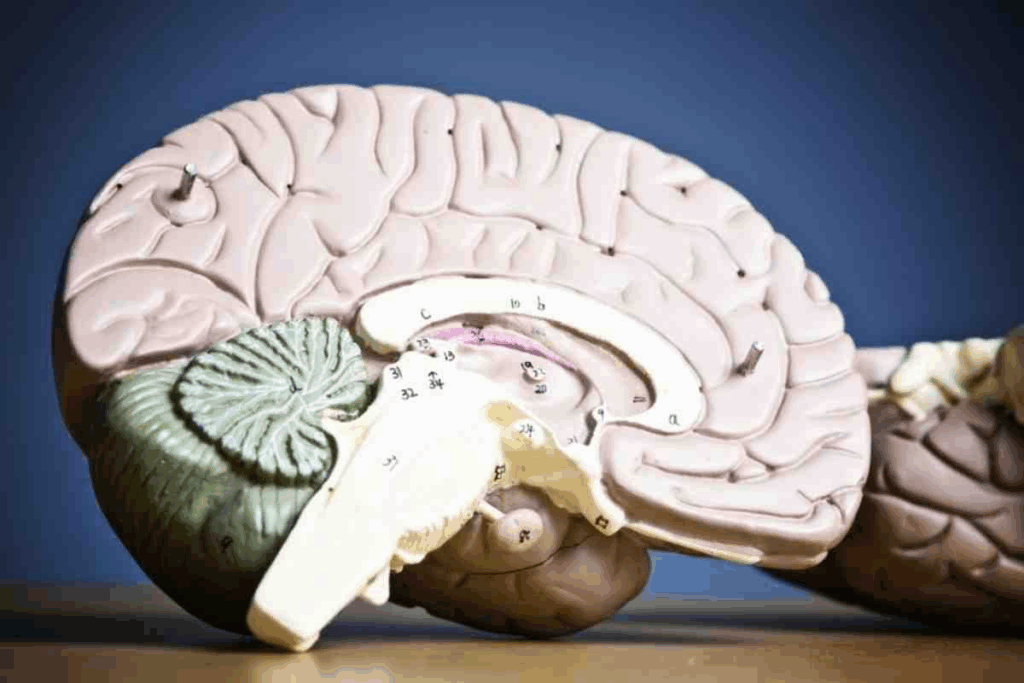
The medulla oblongata is a key part of our nervous system. It helps control important functions we need to live.cranial nerves of the medulla oblongataWhat Are the Causes, Symptoms, and Treatments for Cancer of the Brainstem?
It’s about 3 centimeters long. It links the brain to the spinal cord, helping signals move between them. The medulla oblongata manages things like heart rate, breathing, and blood pressure.
It also houses the nuclei of four cranial nerves. These nerves are vital for our body’s functions. Knowing how these nerves are organized in the medulla oblongata is key for doctors to make correct diagnoses and treatments.
Key Takeaways
- The medulla oblongata is a critical component of the brainstem.
- It regulates vital autonomic functions such as heart rate and blood pressure.
- The structure contains the nuclei of four cranial nerves.
- Understanding its anatomy is essential for accurate medical diagnoses.
- Effective treatment plans rely on a thorough comprehension of the medulla oblongata’s functions.
Anatomical Overview of the Medulla Oblongata
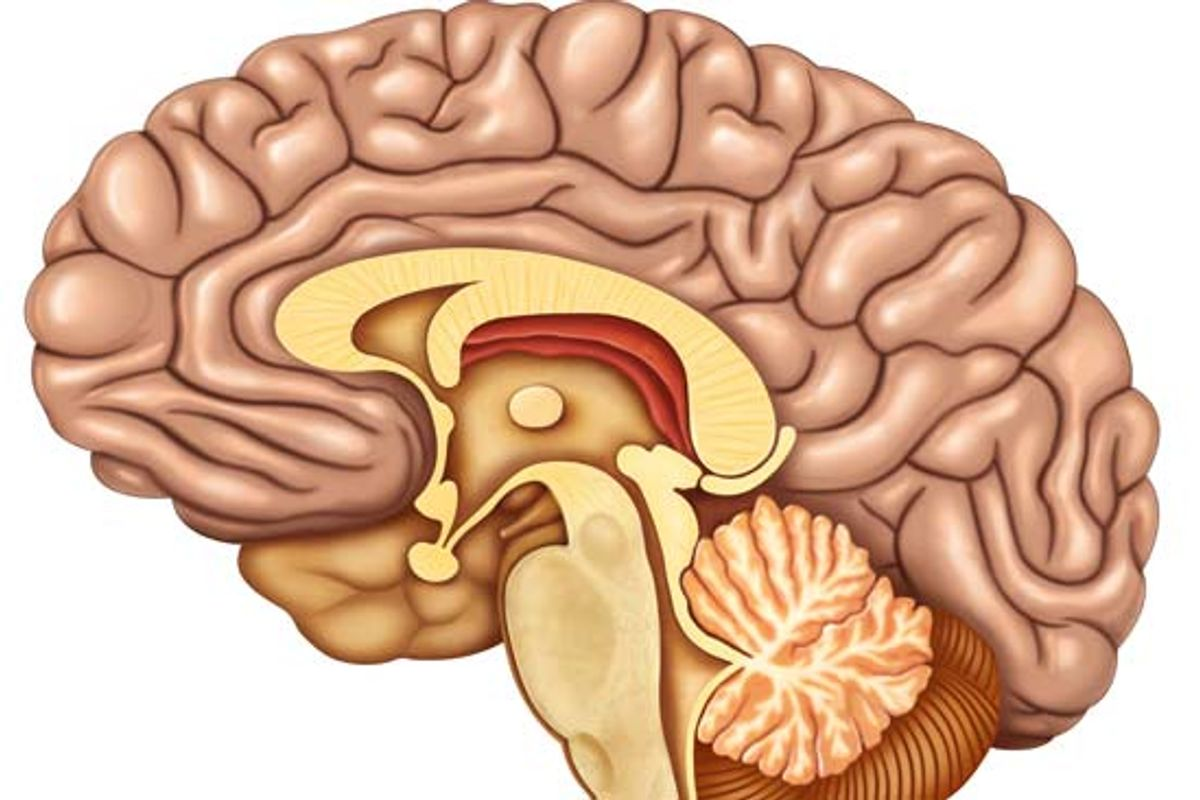
The medulla oblongata is a key part of our body. It connects the brain to the spinal cord. It’s located between the pons and the spinal cord.
Location and Dimensions
The medulla oblongata is shaped like a cone. It gets narrower as it goes down. It’s about 3cm long and 2cm wide at its widest point.
Structural Relationship to Surrounding Brain Areas
It connects to the pons above and the spinal cord below. The front side has important structures like the pyramids and olives. These help with movement and feeling.
Internal Organization
The inside of the medulla has many important parts. The pyramidal decussation is a key spot. It also has areas for cranial nerves IX, X, XI, and XII.
Structure | Function | Location |
Pyramids | Motor control | Anterior surface |
Olives | Sensory processing | Anterior surface |
Cranial Nerves IX, X, XI, XII | Various functions including swallowing, respiration, and tongue movement | Throughout the medulla |
In summary, the medulla oblongata is complex and very important. It connects the brain to the spinal cord. It also has key parts for our body’s functions.
Cranial Nerves of the Medulla Oblongata
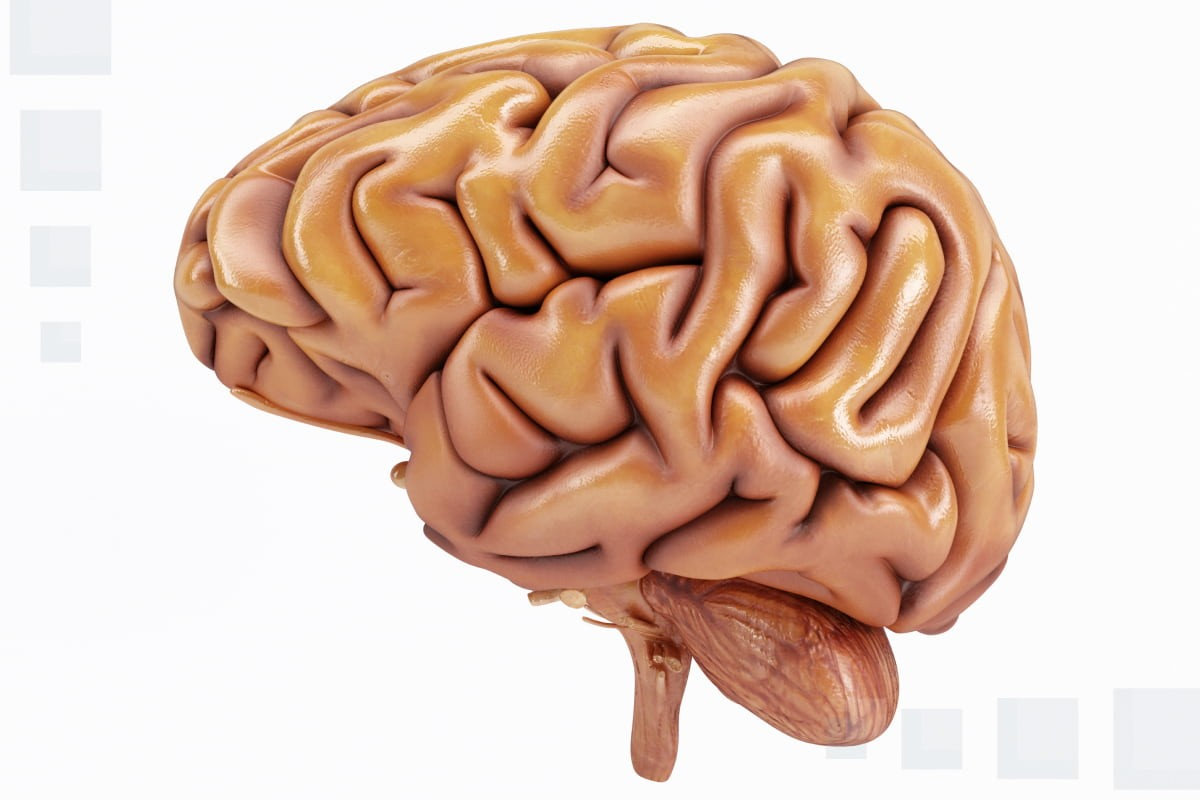
The medulla oblongata is home to four cranial nerves. These nerves are key for controlling muscles and sending sensory info. They are vital for our body’s functions.
General Classification and Organization
The four cranial nerves linked to the medulla oblongata are CN IX, CN X, CN XI, and CN XII. CN IX, CN X, and CN XI come from the back of the medulla. CN XII comes from the front. Knowing where they come from helps us understand their roles and any health issues.
Nuclei Distribution
The nuclei of these nerves are found in the medulla oblongata. Each nucleus has a specific job. For example, the nucleus ambiguus helps CN IX and CN X move. Knowing where these nuclei are is key for diagnosing and treating health problems.
Evolutionary Significance
The cranial nerves of the medulla oblongata show how our bodies have adapted over time. Their complex structure shows their importance in human anatomy. These nerves have stayed the same across species, showing their essential role in survival.
In short, the cranial nerves of the medulla oblongata are complex and play a big role in our body’s functions. Their organization, nuclei, and evolutionary importance give us insights into human anatomy and neurology.
The Glossopharyngeal Nerve (CN IX)
The glossopharyngeal nerve comes from the back of the medulla oblongata. It is key to many bodily functions. This nerve, or CN IX, handles both sensory and motor tasks. It’s a vital part of the cranial nerves linked to the medulla oblongata.
Anatomical Course and Branches
The glossopharyngeal nerve starts from the upper medulla oblongata and goes out through the jugular foramen. It has branches like the tympanic, carotid, pharyngeal, muscular, and tonsillar. Each branch has its own job. The tympanic branch is important for sending sensory info.
Sensory Functions
This nerve sends sensory info from the tongue’s back, the pharynx, and the carotid sinus. It’s key for taste and blood pressure monitoring. The nerve’s sensory fibers start important reflexes.
Motor Functions
The glossopharyngeal nerve also controls the stylopharyngeus muscle for swallowing. Its motor fibers help with swallowing coordination. The stylopharyngeus muscle is the only muscle it directly controls, showing its unique role.
In short, the glossopharyngeal nerve (CN IX) is a vital cranial nerve. It comes from the medulla oblongata and helps with taste, swallowing, and blood pressure. Its functions are essential to the nervous system.
The Vagus Nerve (CN X)
The vagus nerve is a complex nerve that comes from the medulla oblongata. It affects many organs in the body. It’s a key part of the autonomic nervous system, helping organs like the heart, lungs, and stomach work right.
Anatomical Course and Distribution
The vagus nerve starts at the back of the medulla oblongata and goes out through the jugular foramen. It then moves down through the neck and chest, sending branches to different organs. Its long path lets it reach many parts of the body, from the throat to the belly.
Sensory Components
The vagus nerve has sensory fibers that send info from organs to the brain. These fibers are key for checking on organs and controlling reflexes like coughing and swallowing.
Motor Functions
The motor part of the vagus nerve helps organs work right. It controls heart rate, helps with digestion, and affects other organs. This part is vital for keeping the body balanced and working well.
Role in Visceral Regulation
The vagus nerve is key in controlling body functions like heart rate, digestion, and breathing. Its calming effects help balance the body’s stress response. This nerve is essential for keeping us healthy and feeling good.
The Accessory Nerve (CN XI)
The accessory nerve (CN XI) is unique among cranial nerves. It has both cranial and spinal parts. Each part plays a role in its function.
Cranial and Spinal Components
The accessory nerve is special because it has two roots. The cranial component comes from the medulla oblongata. It helps control some muscles.
The spinal component comes from the spinal cord. It’s key for the sternocleidomastoid and trapezius muscles.
Knowing the nerve’s dual origin helps us understand its role. The cranial root briefly joins the vagus nerve before separating. The spinal root goes up through the foramen magnum and exits through the jugular foramen.
Anatomical Course
The nerve’s path is complex. The spinal part goes up through the foramen magnum. It then exits the skull through the jugular foramen with the vagus and glossopharyngeal nerves.
Motor Functions
The accessory nerve mainly controls muscles. The cranial root helps the vagus nerve with laryngeal muscles. The spinal root controls the sternocleidomastoid and trapezius muscles.
These muscles are important for neck and shoulder movements. They help with rotation, flexion, and extension.
Muscle | Function | Innervation |
Sternocleidomastoid | Neck rotation, flexion | Spinal component of CN XI |
Trapezius | Shoulder movement, scapular rotation | Spinal component of CN XI |
Laryngeal muscles | Voice production, laryngeal movement | Cranial component of CN XI (via CN X) |
The accessory nerve’s role is vital for daily activities. Damage can cause significant problems. This shows its importance in both clinical and physiological areas.
The Hypoglossal Nerve (CN XII)
The hypoglossal nerve comes from the medulla oblongata. It helps the tongue move, which is key for talking and eating. This nerve, or CN XII, is the twelfth cranial nerve. It controls how the tongue moves.
Anatomical Course
The hypoglossal nerve starts at the front of the medulla oblongata. It’s between the pyramid and the olive. It goes through the hypoglossal canal in the occipital bone. Then, it reaches the tongue to help its muscles move.
Key aspects of its anatomical course include:
- Originating from the medulla oblongata
- Passing through the hypoglossal canal
- Innervating the tongue muscles
Motor Functions
The main job of the hypoglossal nerve is to control the tongue. It works the intrinsic muscles, which change the tongue’s shape. It also works the extrinsic muscles, which move the tongue’s position.
The motor functions of CN XII include:
- Controlling tongue protrusion and retraction
- Regulating tongue movements for speech articulation
- Facilitating the manipulation of food during mastication
Role in Speech and Swallowing
The hypoglossal nerve is key for speaking. It helps the tongue move in the right way for words. It also helps with swallowing by making sure food goes down smoothly.
The importance of CN XII in these processes can be seen in:
- Articulation of words and sounds
- Coordination of swallowing mechanisms
- Overall coordination of oral phase of swallowing
The Fourth Ventricle and Pyramidal Tracts
The medulla oblongata has a special area called the fourth ventricle. It’s filled with cerebrospinal fluid. The pyramidal tracts, important for movement, are also found here.
Fourth Ventricle Anatomy
The fourth ventricle connects with the central canal of the spinal cord. It’s filled with cerebrospinal fluid. This fluid protects the brain and spinal cord.
Relationship to Central Canal of Spinal Cord
The fourth ventricle joins the central canal of the spinal cord. This creates a path for cerebrospinal fluid to flow. It’s key for the fluid to move around the nervous system.
Pyramidal Decussation
The pyramidal tracts, like the corticospinal tracts, help with movement. About 75% of these fibers cross over and go down the spinal cord. This crossing is important for controlling movements.
The anatomy of the medulla oblongata shows its role in controlling important functions. It helps with complex brain activities.
Vital Functions Regulated by the Medulla Oblongata
The medulla oblongata is key in controlling important body functions. It handles heart and breathing processes. It’s a vital part of the brainstem that keeps our autonomic systems working right.
Cardiovascular Control Centers
The medulla oblongata has centers that control heart rate and blood pressure. These centers gather info from the body and adjust as needed.
When we’re active, these centers make our heart beat faster and pump more blood. This helps our muscles get the oxygen they need. When we’re resting, they slow our heart rate to save energy.
Function | Description |
Heart Rate Regulation | Adjusts heart rate according to the body’s needs |
Blood Pressure Control | Maintains optimal blood pressure through vasodilation and vasoconstriction |
Respiratory Control Centers
The medulla oblongata also controls breathing. It manages how fast and deep we breathe based on our needs and blood gas levels.
During exercise, these centers make us breathe faster and deeper. This lets us take in more oxygen and get rid of more carbon dioxide. It’s important for our body’s gas exchange and to meet the exercise demands.
Reflex Centers
The medulla oblongata also has centers for reflexes like coughing, sneezing, and vomiting. These reflexes protect us from harmful substances and keep our airways and digestive system safe.
For example, if something gets stuck in our airway, the medulla oblongata can make us cough. This helps get rid of the foreign object and prevents lung damage.
Conclusion
The medulla oblongata is a key part of the brainstem. It helps connect the brain and spinal cord. It has both sensory and motor tracts, controlling many body functions.
We’ve looked at the cranial nerves linked to the medulla oblongata. These include the glossopharyngeal, vagus, accessory, and hypoglossal nerves. They help with swallowing, breathing, heart control, and reflexes.
The medulla oblongata’s main job is to handle information from different sources. This lets the body react to changes. Its nerves work together to keep the body balanced and organs working right.
In short, the medulla oblongata and its nerves are vital for our health. Knowing their role helps us understand how our bodies work.
FAQ
What is the medulla oblongata?
The medulla oblongata is a key part of the brainstem. It helps the brain talk to the spinal cord. It controls important things like heart rate, blood pressure, and breathing.
What are the cranial nerves associated with the medulla oblongata?
The medulla oblongata is linked to four cranial nerves. These are the glossopharyngeal nerve (CN IX), vagus nerve (CN X), accessory nerve (CN XI), and hypoglossal nerve (CN XII).
What is the function of the glossopharyngeal nerve (CN IX)?
The glossopharyngeal nerve helps with taste and swallowing. It sends signals from the tongue and controls the stylopharyngeus muscle.
What is the role of the vagus nerve (CN X) in visceral regulation?
The vagus nerve helps control organs like the heart and lungs. It also helps with digestion, keeping everything working right.
What is the purpose of the medulla oblongata?
The medulla oblongata keeps us alive by controlling heart rate, blood pressure, and breathing. It’s very important for our survival.
What is the relationship between the fourth ventricle and the central canal of the spinal cord?
The fourth ventricle connects to the spinal cord’s central canal.
What is the significance of the pyramidal decussation?
The pyramidal decussation is key for moving. It lets motor fibers cross over, helping us move on both sides.
What are the vital functions regulated by the medulla oblongata?
The medulla oblongata controls heart and breathing. It also handles reflexes, keeping us alive.
Where is the medulla oblongata located?
The medulla oblongata is in the brainstem. It connects with the pons above and the spinal cord below.
What is the function of the hypoglossal nerve (CN XII)?
The hypoglossal nerve helps move the tongue. This is important for talking and swallowing.
References
National Center for Biotechnology Information. Evidence-Based Medical Guidance. Retrieved from https://www.ncbi.nlm.nih.gov/books/NBK551589/