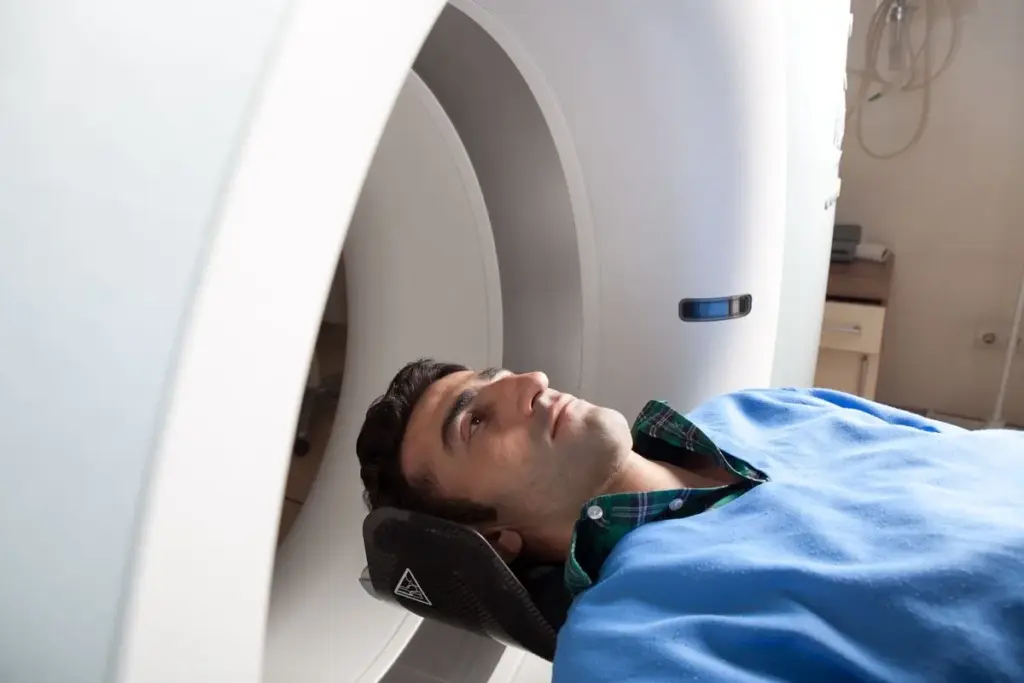
Our procedures are very accurate, with 70-85% getting results right on the first try. This means most patients get their results in a week. This allows for quick decisions and planning for treatment.
Waiting for ct guided biopsy results? Discover amazing timelines and vital, powerful insights into how specialists ensure diagnostic success.
Key Takeaways
- Results from a CT-guided biopsy are typically available within 2 to 7 days.
- The diagnostic accuracy of CT-guided biopsies is high, with 70-85% yielding diagnostic results on the first attempt.
- Our medical team is committed to providing fast and accurate results.
- The timeframe for results may vary depending on the complexity of the analysis.
- Additional tests may be required in some cases, affecting the overall turnaround time.
What Happens During a CT-Guided Biopsy
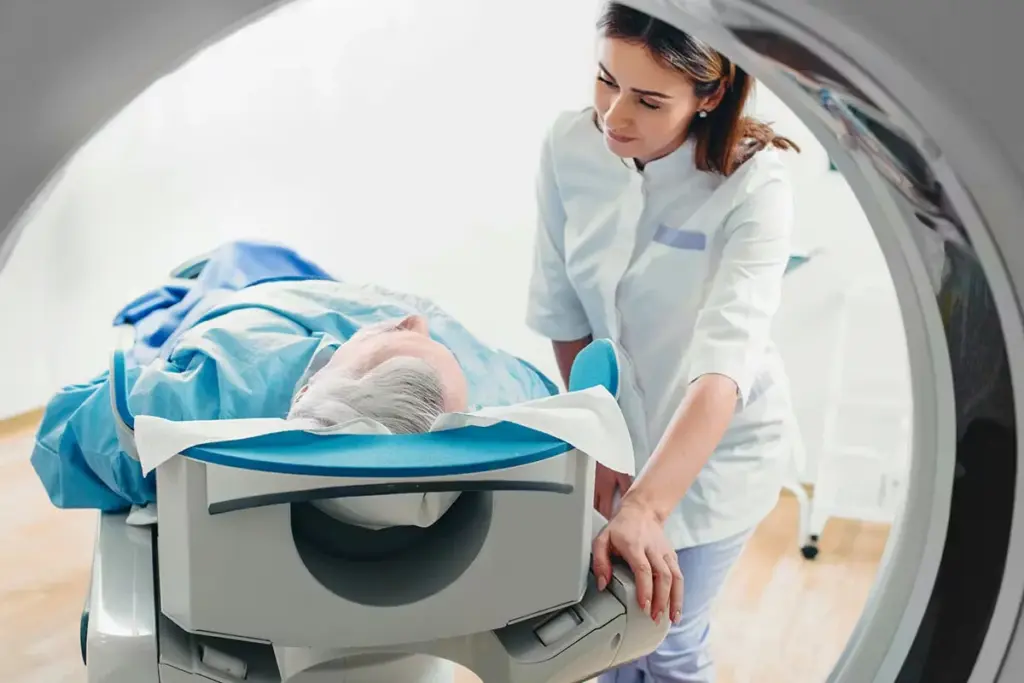
A CT-guided biopsy is a detailed medical procedure. It uses CT imaging to guide the biopsy needle to the right spot. This is key for getting accurate tissue samples for diagnosis.
Definition and Purpose of the Procedure
A CT-guided biopsy uses CT scans to guide the biopsy needle. Its main goal is to get tissue samples from areas thought to be diseased or abnormal.
CT imaging makes the biopsy more accurate. CT scans give detailed images that help our radiologists place the biopsy needle exactly where it’s needed.
How CT Imaging Guides the Biopsy Process
CT imaging is vital during the biopsy. Here’s how it helps:
- CT scans find the exact spot of the lesion or tissue.
- The images help plan the safest and most accurate path for the biopsy needle.
- More CT scans are taken as the needle is moved to make sure it’s in the right place.
Types of Tissues Commonly Sampled
CT-guided biopsies can take samples from different tissues, including:
|
Tissue Type |
Common Applications |
|---|---|
|
Lung Tissue |
Diagnosing lung nodules or tumors |
|
Liver Tissue |
Assessing liver lesions or abnormalities |
|
Bone Tissue |
Evaluating bone lesions or metastases |
By guiding the biopsy with CT imaging, we can get accurate tissue samples. This is vital for a precise diagnosis and effective treatment.
The Complete CT-Guided Biopsy Process
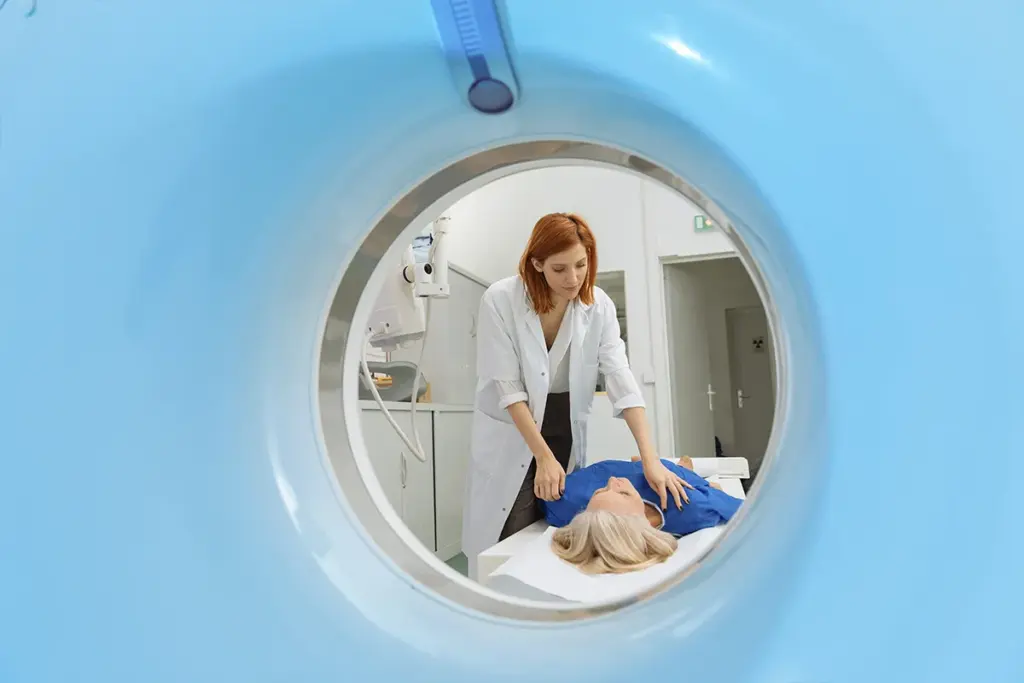
The CT-guided biopsy process has many stages, from start to finish. We know patients might feel nervous about it. Our aim is to help them through every step.
Pre-procedure Preparation
Before the biopsy, we make sure patients are ready. We do tests, check their medical history, and give clear instructions. Our team is dedicated to making patients feel at ease and informed.
During the Procedure Experience
During the biopsy, patients lie on a CT table. Imaging guides the needle into the right spot. The procedure is done under local anesthesia to reduce pain. Our team watches over the patient’s safety closely.
Immediate Post-procedure Recovery
After the biopsy, patients stay in a recovery area for a bit. We watch for any immediate issues. We give them clear instructions on what to do next, including any side effects. Our team supports patients during their recovery.
Sample Handling and Transportation
The biopsy samples are handled with care and sent to the lab. We follow strict rules to keep the samples safe. This ensures accurate results from the analysis.
Standard Timeline for CT-Guided Biopsy Results
Knowing when you’ll get your CT-guided biopsy results can ease some worry. Waiting for these results can be tough for patients.
Initial Processing Period
The first step in processing biopsy samples usually takes 24 to 48 hours after the test. During this time, the lab gets the samples ready for detailed checks.
Complete Results Timeline
Usually, you’ll get the full results of your CT-guided biopsy in 2 to 7 days. This time lets experts thoroughly examine and analyze the samples.
Factors That May Extend Result Times
Several things can affect how long it takes to get your biopsy results. These include:
- The complexity of the case
- The need for extra tests or special analysis
- The lab’s workload and staff
We aim to give you results fast, but these factors might make you wait a bit longer.
|
Timeline |
Description |
|---|---|
|
24-48 hours |
Initial processing of biopsy samples |
|
2-7 days |
Complete results typically available |
We’re dedicated to giving you accurate and quick results at our institution. We know how important fast diagnosis is for planning treatment.
Laboratory Analysis of Biopsy Specimens
Our laboratory is key in analyzing biopsy specimens. It gives vital info for diagnosing and treating patients. The process is detailed to ensure accurate results.
Initial Tissue Processing Steps
When we get the biopsy specimens, our team starts the initial processing. They carefully prepare the tissue for further checks. Proper fixation and embedding are key to keep the sample intact for precise analysis.
“The quality of the initial processing is vital for accurate diagnoses,” highlights the need for careful lab work.
Histopathological Examination Procedures
The histopathological examination is a key part of analyzing biopsy specimens. Our pathologists examine the tissues closely. They use advanced microscopy techniques to spot any issues or diseases. This step is essential for finding out if there’s cancer.
Special Staining Protocols When Needed
In some cases, we use special staining to get more info from the biopsy specimens. These stains help spot specific features in the tissues. The right stain depends on the suspected condition and what the pathologist needs to know.
By combining initial processing, histopathological examination, and special staining, we get a full analysis of biopsy specimens. This detailed approach is key to making accurate diagnoses and guiding patient care.
Advanced Testing That Affects Result Timelines
In some cases, a CT-guided biopsy needs more advanced tests. These tests give detailed info about the tissue. This is key for a correct diagnosis.
Not every test is needed, but when they are, it changes how fast you get your results. We’ll look at what these tests are and how they affect the process.
Molecular and Genetic Testing Requirements
Molecular and genetic tests are now key in diagnosing diseases. They find specific genetic changes linked to conditions like cancer. This info helps doctors create the best treatment plans for each patient.
These tests look at the biopsy for genetic changes. They use methods like PCR, FISH, and next-generation sequencing. Each method gives different insights into the tissue’s genetics.
Immunohistochemistry Analysis
Immunohistochemistry (IHC) uses antibodies to find proteins in tissues. It’s vital for diagnosing and understanding conditions, mainly cancers. IHC shows the type of cells, their origin, and tumor markers.
Antibodies are applied to the tissue sample. Then, special stains show where the antibodies bind. This lets pathologists see the proteins’ presence and where they are.
Culture Studies for Infectious Diseases
When an infection is suspected, culture studies are done. These studies grow microorganisms from the sample. They help find the infection cause and its antibiotic resistance.
Culture studies are key for diagnosing infections not found by other means. They help choose the right antibiotics or antifungals for treatment.
CT-Guided Biopsy of Lymph Nodes
CT-guided lymph node biopsies are key in modern medicine. They help get precise samples from lymph nodes. This is vital for diagnosing and understanding various cancers, infections, and diseases.
Specific Considerations for Lymph Node Sampling
When doing a CT-guided biopsy, many factors are considered. The size, location, and how close it is to important parts are looked at. This helps choose the right approach and tools to get good samples safely.
Getting precise samples is very important for lymph nodes. This makes the procedure safer and more effective.
How Long Do Lymph Node Biopsy Results Take
Getting biopsy results usually takes a few days. You might get initial results in 24 to 48 hours. But, detailed results can take 2 to 7 days. This depends on how complex the case is and how busy the lab is.
Waiting for results can be stressful. It’s good to talk to your doctor about your worries. They can help and support you through this time.
Accuracy Rates for Lymph Node Biopsies
CT-guided biopsies are very accurate. They can match the results of more invasive surgeries but are less risky. This makes them a trusted tool for doctors.
Getting accurate results is key for treatment plans. We make sure every sample is handled and analyzed carefully. This helps give reliable results.
Diagnostic Accuracy and Success Rates of CT-Guided Biopsies
CT-guided biopsies have changed how we diagnose diseases. They are very accurate, helping doctors find the right diagnosis for many health issues. Their success shows how important they are in today’s healthcare.
First-attempt diagnostic yield (70-85%)
The first try at getting a diagnosis with CT-guided biopsies works well, with a success rate of 70% to 85%. This means most of the time, the first biopsy is enough to make a diagnosis. The precision of CT guidance is key, making sure the biopsy hits the right spot.
Overall accuracy for malignant lesions (84-95%)
For cancer, CT-guided biopsies are very accurate, with a success rate of 84% to 95%. This high accuracy is vital for cancer diagnosis and treatment plans. The precision of these biopsies ensures samples are taken from the right areas, leading to accurate diagnoses.
Accuracy rates for benign conditions (70%+)
For non-cancerous conditions, CT-guided biopsies are also very accurate, with a success rate above 70%. While it might be a bit lower than for cancer, it’s very effective. Accurate diagnosis of non-cancerous conditions helps avoid unnecessary treatments and ensures patients get the right care.
Factors influencing diagnostic success
Several things can affect how well a CT-guided biopsy works. These include:
- The skill and experience of the practitioner performing the biopsy
- The quality of the CT imaging equipment
- The nature and location of the lesion being biopsied
- The adequacy of the sample obtained
Knowing these factors helps make the biopsy process better and improve how accurate it is.
|
Factor |
Impact on Diagnostic Success |
|---|---|
|
Practitioner Skill |
Highly experienced practitioners tend to have higher success rates |
|
Imaging Quality |
High-quality CT imaging enhances accuracy and precision |
|
Lesion Characteristics |
The nature and location of the lesion can affect biopsy success |
|
Sample Adequacy |
Sufficient sample size and quality are key for accurate diagnosis |
Factors That Can Delay Your CT-Guided Biopsy Results
Several factors can affect how long it takes to get CT-guided biopsy results. Knowing these can help you feel less anxious while waiting.
Specimen Quality and Quantity Issues
The quality and amount of the biopsy sample are key. Bad or not enough tissue can cause delays. Our team works hard to get good samples to avoid these problems.
Things that can affect sample quality include:
- The type of tissue being taken
- The biopsy method used
- How the sample is handled and moved
Laboratory Workload and Staffing
The amount of work in the lab and the number of staff can slow down results. Too many samples or not enough staff can cause delays. Our labs work hard to keep up and focus on urgent cases first.
|
Factor |
Impact on Processing Time |
|---|---|
|
Laboratory Workload |
High volumes can cause delays |
|
Staffing Levels |
Insufficient staff can slow processing |
Need for Specialist Consultation
At times, results need to be checked by experts like pathologists or radiologists. This can take longer but is important for accurate diagnosis.
Experts might be needed for:
- Hard or rare cases
- Results that are unclear or not sure
- When more expertise is needed
Additional Testing Requirements
More tests might be needed for a full diagnosis. These could be molecular studies, immunohistochemistry, or culture tests. While these are important, they can make waiting longer.
We know waiting for results can be tough. Our team is dedicated to giving you timely and accurate results. We make sure to take all necessary steps for a clear diagnosis.
When Additional Biopsies Become Necessary
Sometimes, the first biopsy isn’t enough for a clear diagnosis. This might happen for many reasons. These include non-diagnostic samples, differences between what the doctor sees and the lab finds, or the need to check how a disease is changing.
Non-diagnostic sample scenarios
Non-diagnostic samples happen when the biopsy isn’t good enough or doesn’t show what’s expected. In these cases, taking another biopsy is key to getting a clear diagnosis.
Getting a second biopsy might worry patients. But it’s a common step to get an accurate diagnosis. Following the right steps is important for the best results.
Discordant clinical and pathological findings
When what the doctor sees and the lab finds don’t match, more biopsies might be needed. This mismatch could mean the first sample didn’t show the real issue.
For example, if scans show a tumor but the biopsy says it’s not cancer, more samples are needed to figure out what’s going on.
Disease progression monitoring
In some cases, biopsies are done to track how a disease is changing or how well treatment is working. This info is key for adjusting treatment plans.
As a medical expert said,
“Repeated biopsies can offer critical information about how a disease is evolving and how it’s responding to treatment.”
Follow-up protocols after inconclusive results
After a biopsy that doesn’t give clear results, following a specific plan is important. This might mean doing another biopsy, running more tests, or keeping a close eye on the patient.
We suggest patients talk to their doctor about their care plan. This way, they know what to expect and how to get ready for any more tests or procedures.
Understanding Your CT-Guided Biopsy Results
Knowing the outcome of your CT-guided biopsy is key to moving forward. We get that getting and making sense of biopsy results can be tough. So, we’re here to help you through it.
How Results Are Typically Communicated
Your doctor will share the biopsy results with you. They will explain everything clearly and with care. This way, you can make smart choices about your health.
During a consultation, your doctor will go over the results. They’ll talk about what they mean and what you should do next. It’s important to ask questions so you understand your diagnosis and treatment options fully.
Interpreting Your Pathology Report
Your pathology report is a detailed document from your biopsy. It tells you about the tissue taken, if disease is present, and more. We know medical terms can be hard, so we’re here to help you grasp what it says.
Important parts of your report might include:
- A description of the tissue examined
- The diagnosis or findings
- Any additional tests that were performed on the tissue
Essential Questions to Ask Your Physician
When talking to your doctor about biopsy results, it’s good to have questions ready. Some key ones to think about are:
- What do my biopsy results mean for my diagnosis?
- What are the next steps in my treatment or care?
- Are there any more tests or procedures I need to have?
By understanding your CT-guided biopsy results and asking the right questions, you can be more involved in your healthcare. We’re here to support you every step of the way.
Potential Complications and Recovery After CT-Guided Biopsy
CT-guided biopsies are usually safe, but it’s good to know about possible complications and recovery. There are risks with any medical procedure. Knowing these can help patients get ready for what comes after.
Common Minor Complications
Most people feel only a little discomfort during and after the biopsy. Minor issues include:
- Mild pain or discomfort at the biopsy site
- Temporary bruising or swelling
- Slight bleeding or hematoma
These symptoms usually go away in a few days. Following the post-procedure instructions carefully can help avoid complications.
Rare but Serious Adverse Events
Though rare, serious problems can happen. These include:
- Infection at the biopsy site
- Significant bleeding needing a blood transfusion
- Pneumothorax (collapsed lung) if the biopsy was on lung tissue
It’s important for patients to know about these risks. If they have severe symptoms, they should get medical help right away.
Normal vs. Abnormal Post-Procedure Symptoms
Knowing the difference between normal and abnormal symptoms is key. Normal symptoms are mild pain and slight swelling. Abnormal symptoms are severe pain, heavy bleeding, or signs of infection like fever.
|
Symptom |
Normal |
Abnormal |
|---|---|---|
|
Pain |
Mild, manageable with medication |
Severe, worsening over time |
|
Bleeding |
Minimal, stops within a day |
Heavy, continuous |
|
Fever |
Low-grade, resolves quickly |
High, persistent |
When to Contact Your Healthcare Provider
If you have any of these, call your healthcare provider:
- Increasing pain or swelling
- Signs of infection (fever, redness, warmth at the biopsy site)
- Heavy or prolonged bleeding
- Difficulty breathing (if the biopsy was on lung tissue)
We aim to provide full care during recovery. If you have concerns or questions, please reach out to your healthcare team.
Key components of our approach include:
- Multidisciplinary team collaboration
- State-of-the-art imaging equipment
- Standardized protocols for sample handling
Multidisciplinary Tumor Boards and Case Review
We use a team effort to review tough cases at our institution. Radiologists, pathologists, oncologists, and surgeons work together for complete care.
International Standards and Quality Assurance
We follow strict quality checks and international standards for CT-guided biopsies. Regular checks and training keep our team at the top of their game.
Patient-Centered Result Delivery Protocols
We know waiting for biopsy results can be tough. So, we have special ways to share results with care and speed. Our patient coordinators offer support every step of the way.
“We understand that receiving biopsy results can be a stressful experience. That’s why we’re committed to delivering results with care and compassion.”
Innovations Improving Result Turnaround Times
The field of biopsy analysis is seeing big changes. These changes are making it faster to get results. We’re using new technologies and methods to improve the biopsy process.
Rapid On-Site Evaluation Techniques
Rapid on-site evaluation (ROSE) is becoming more common. It helps make diagnoses faster and more accurate. ROSE lets us check if a sample is good enough right away, cutting down on the need for more tests.
This method brings together radiologists, pathologists, and cytotechnologists. They work together to look at the sample on-site.
Digital Pathology and Telepathology Advances
Digital pathology and telepathology are changing how we analyze biopsies. Digital pathology turns histological slides into digital images. This lets pathologists look at and understand results from anywhere.
Telepathology takes it a step further. It allows for real-time talks and teamwork between experts, no matter where they are.
Artificial Intelligence in Specimen Analysis
Artificial intelligence (AI) is being used in analyzing specimens. AI can look through lots of data and find things humans might miss. This makes diagnoses quicker and more precise, helping patients get better faster.
Point-of-Care Testing Developments
Point-of-care testing (POCT) is playing a big role in biopsies. It lets us make quick diagnoses and decisions right at the patient’s side. POCT devices can quickly analyze biopsy samples, speeding up the time it takes to get results.
Patient Experiences: Waiting for CT-Guided Biopsy Results
Patients waiting for CT-guided biopsy results often feel anxious and hopeful. We aim to offer support and resources to ease these feelings.
Managing Anxiety During the Waiting Period
The wait after a CT-guided biopsy can be stressful. To ease anxiety, try deep breathing or meditation. Connecting with loved ones also helps.
Preparing for Different Outcome Scenarios
It’s key to prepare for all possible results. Knowing what to expect can reduce worry. Talking to your healthcare team can help clarify things.
|
Outcome |
Possible Implications |
Next Steps |
|---|---|---|
|
Benign Findings |
Relief, possible need for monitoring |
Follow-up appointments, lifestyle changes |
|
Malignant Findings |
Need for treatment, emotional support |
Oncology consultation, treatment planning |
Support Resources and Coping Strategies
There are many support options, like counseling and support groups. Try journaling, hobbies, or mindfulness to cope.
- Counseling services tailored to patient needs
- Support groups for sharing experiences
- Educational materials on biopsy results and next steps
Patient Testimonials and Common Experiences
Many patients have shared their biopsy wait experiences. They highlight the need for support and clear communication. These stories show the importance of caring during tough times.
“The support I received during the waiting period made a significant difference in my experience. The healthcare team’s compassion and clarity were invaluable.”— A patient
We strive to make the waiting period easier for our patients with the right support and resources.
Conclusion: Navigating the CT-Guided Biopsy Journey
Our team is here to help you from start to finish. We know waiting for biopsy results can be hard. But we promise to give you accurate diagnoses and support you every step of the way.
We use the latest medical tech and care tailored just for you. This way, you can make smart choices about your health. Our team works together to make sure every part of the biopsy process goes smoothly, from the first meeting to when you get your results.
FAQ
How long does it take to get results from a CT-guided biopsy?
You usually get CT-guided biopsy results in 2 to 7 days. The first steps in processing the sample happen in 24-48 hours.
What is a CT-guided biopsy?
A CT-guided biopsy uses CT imaging to guide a needle to the right spot. This ensures the sample is taken accurately, which is key for a correct diagnosis.
How is the biopsy sample analyzed?
The biopsy sample goes through several steps. First, it’s processed and then examined under a microscope. Sometimes, special stains or tests are needed.
How long do lymph node biopsy results take?
Lymph node biopsy results usually take the same time as other CT-guided biopsies, from 2 to 7 days.
What is the diagnostic accuracy of CT-guided biopsies?
CT-guided biopsies are very accurate. They often get the diagnosis right on the first try, with success rates between 70-85%. For cancer, the accuracy is even higher.
What factors can delay CT-guided biopsy results?
Several things can slow down the results. These include issues with the sample, busy labs, needing expert opinions, or extra tests.
Why might additional biopsies be necessary?
You might need more biopsies if the first one doesn’t give clear results. This can happen if there are differences between what the doctor thinks and what the lab finds, or if the disease is changing.
How are CT-guided biopsy results communicated?
We make sure you get all the information about your results clearly. We’ll talk to you about what they mean and what’s next.
What are the possible risks and complications of CT-guided biopsies?
Like any procedure, CT-guided biopsies have risks. We’ll talk to you about these and help you understand what to expect when you recover.
How can I manage anxiety while waiting for my CT-guided biopsy results?
Waiting for results can be tough. We’re here to support you and offer help to deal with anxiety. We’ll also prepare you for different outcomes.
References
National Center for Biotechnology Information. Evidence-Based Medical Insight. Retrieved from



 Departments
 Related Videos
 Our Doctors
 News
News