
When facing a serious diagnosis, patients need clear answers and a comfortable experience. A CT guided biopsy is a safe way to get tissue samples. A radiologist uses CT scans to guide a needle for sampling.
This advanced tool helps get accurate tissue samples. Knowing how to prepare for the CT guided biopsy procedure can reduce anxiety. It helps patients, whether it’s their first biopsy or a second opinion.
Key Takeaways
- CT guided biopsy is a minimally invasive diagnostic technique.
- It uses computed tomography imaging for precise needle placement.
- The procedure is key for accurate tissue sampling and diagnosis.
- Preparation is key to easing anxiety and ensuring a smooth process.
- Understanding the procedure can empower patients seeking a diagnosis.
What is a CT Guided Biopsy Procedure
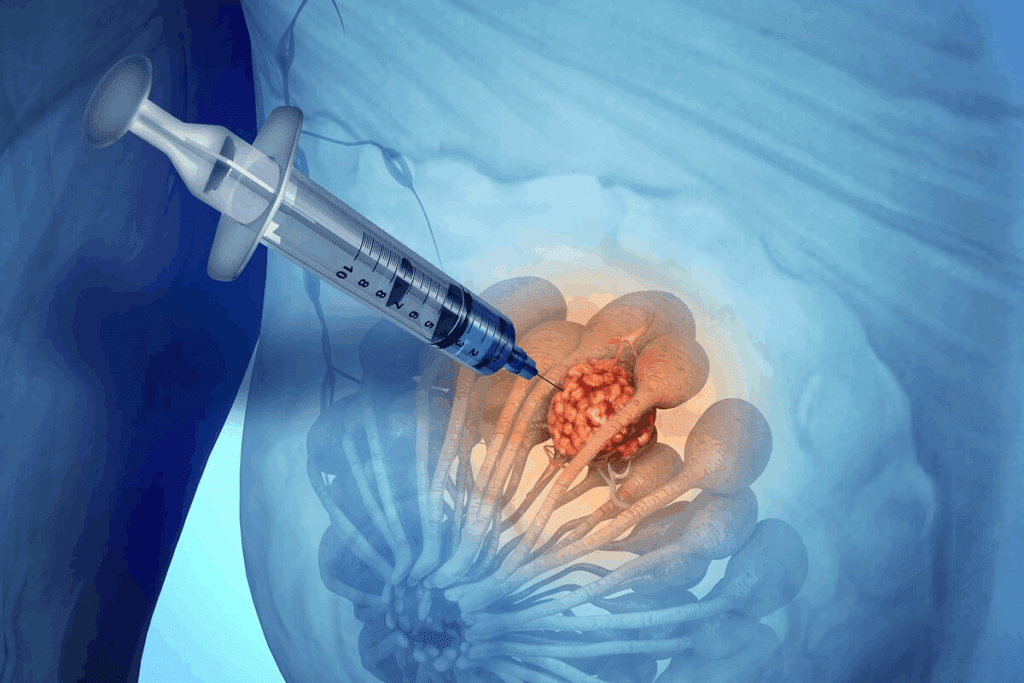
CT guided biopsy procedures are a big step forward in medicine. They let doctors get tissue samples with great accuracy using CT scans. This method has changed diagnostics by making it possible to get tissue samples from different parts of the body without big cuts.
Definition and Purpose of the Procedure
A CT guided biopsy is a medical test that uses CT scans to guide a needle into the body. The goal is to get tissue samples for diagnosing and treating diseases, mainly cancer and other issues.
The CT guided biopsy is great because it lets doctors see where the needle is in real-time. This ensures the tissue sample is taken from the right spot. This is key for making accurate diagnoses and treatment plans.
How CT Imaging Enhances Biopsy Accuracy
CT imaging is key to making biopsies more accurate. It gives detailed images of the body’s inside. This helps doctors:
- Find the exact spot for the biopsy
- Guide the needle to the right place
- Stay away from important parts
- Make sure the needle is in the right spot
This accuracy makes biopsies more effective. It helps in planning better treatments and improves patient results.
Common Target Areas for CT Guided Biopsies
CT guided biopsies can check tissues from many parts of the body. Some common spots include:
- Lungs: For checking lung nodules or masses
- Liver: To look at liver lesions or issues
- Bones: For sampling bone tumors or lesions
- Retroperitoneum: For checking masses or lymph nodes in this area
- Other areas: Like the pancreas, kidneys, and adrenal glands
The CT guided biopsy is very useful. It helps diagnose and manage many medical conditions.
Benefits and Advantages of CT Guided Biopsy Procedures
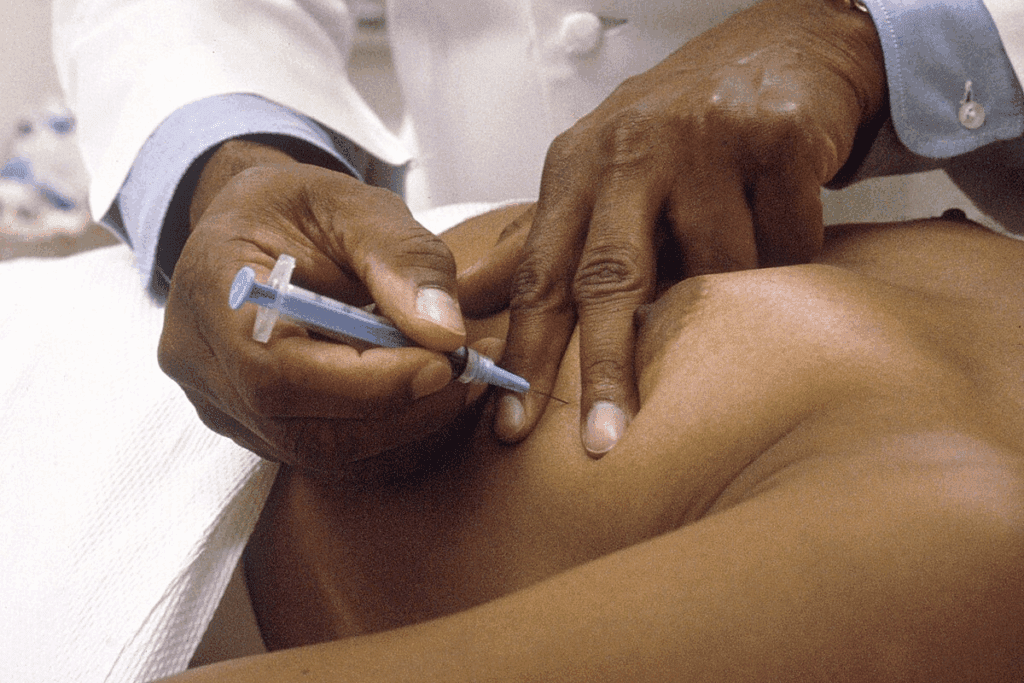
CT guided biopsy procedures have changed how we diagnose diseases. They are safe, accurate, and quick. This method is now more popular than old-fashioned surgical biopsies.
Minimally Invasive Nature
One big plus of CT guided biopsy is it’s minimally invasive. It doesn’t need big cuts like surgery does. This means less damage to the body and less pain after.
Improved Diagnostic Accuracy
CT guided biopsy is also more accurate because of the CT scan. It helps doctors find the right spot to take a sample. This is key for diagnosing diseases like cancer, where knowing the type and stage is vital.
Reduced Recovery Time Compared to Surgical Alternatives
Another great thing about CT guided biopsy is how fast you can get back to normal. It’s less invasive, so you heal quicker. You can usually go back to your daily life in just a day or two, unlike surgery.
Lower Risk of Complications
CT guided biopsy also has fewer risks than surgery. The CT scan helps avoid big blood vessels and other important areas. This lowers the chance of bleeding and infection. Plus, the small cut means less chance of infection.
| Benefits | Description | Advantage |
| Minimally Invasive | Small needle insertion instead of large incision | Less tissue damage and trauma |
| Improved Diagnostic Accuracy | Real-time CT imaging for precise tissue sampling | More accurate diagnosis and staging |
| Reduced Recovery Time | Faster healing due to less tissue trauma | Quick return to normal activities |
| Lower Risk of Complications | Avoidance of major blood vessels and critical structures | Reduced risk of bleeding and infection |
Medical Conditions That May Require a CT Guided Biopsy
CT guided biopsies are key for checking many health issues, like cancer or unknown lumps. Doctors might use a needle biopsy to find out what’s wrong or to rule out diseases. This method is great when other tests don’t give clear answers.
Suspected Cancer Diagnosis
CT guided biopsies are often used to check for cancer. Finding cancer cells is important for knowing what kind it is. This biopsy method helps doctors find the right spot to take a sample, making the diagnosis more accurate.
“Accurate diagnosis is the cornerstone of effective cancer treatment.” With a tissue sample from a CT biopsy, doctors can plan the best treatment for each patient.
Unexplained Masses or Abnormalities
When imaging tests like CT scans or ultrasounds find unknown lumps, a biopsy is needed. A CT guided biopsy can tell if these lumps are harmless or harmful. This helps doctors decide what to do next.
Infection Investigation
At times, a CT guided biopsy is needed to figure out infections. This is true when the infection’s cause is a mystery or if usual treatments don’t work. By looking at tissue samples, doctors can find the infection’s source and treat it right.
Follow-up After Abnormal Imaging Results
When imaging tests show something odd, more tests are needed to understand what it means. A CT guided biopsy can give important clues. It helps doctors figure out what’s going on based on previous test results.
In summary, CT guided biopsies are very useful for many health issues. They help doctors get the right information to care for their patients well.
Initial Consultation and Pre-Procedure Planning
Knowing what to expect at your first meeting can ease your worries about the CT guided biopsy. This meeting is key in getting ready for the biopsy. It’s where you talk about your health history, your condition, and any worries you have.
What to Expect During Your First Appointment
At your first meeting, you’ll talk about your health and why you need the biopsy. The doctor will explain the biopsy in detail, including the good and bad sides. Be ready to share your current medications and any allergies.
Important Questions to Ask Your Doctor
It’s important to have questions ready for your doctor. You might ask, “What are the possible risks and complications of the procedure?” or “How will the biopsy results be shared?” Writing down your questions can make sure you cover everything.
Understanding Your Specific Procedure Type
The type of biopsy you’ll have depends on where and why you need it. Knowing about your specific procedure can make you feel more ready. For example, a CT scan guided needle biopsy is often used to find out what’s wrong.
| Procedure Type | Description | Typical Recovery Time |
| CT Guided Needle Biopsy | A minimally invasive procedure using CT imaging to guide the needle. | Usually a few hours to a day |
| Biopsy with CT Scan | A procedure that involves using CT scans to guide the biopsy needle. | Varies depending on the individual case |
Scheduling Considerations
When setting up your biopsy, listen to any special instructions you need to follow. This could mean fasting or changing your medications. Your healthcare team will give you all the details on how to get ready for the biopsy with CT scan.
Managing Medications Before Your CT Guided Biopsy Procedure
Before your CT guided biopsy, it’s key to know how to handle your meds. Some drugs might mess with the results or raise risks. Always tell your doctor about every medicine you’re on.
Blood Thinners and Anticoagulants
Blood thinners and anticoagulants stop blood clots. They’re vital for some but can up the bleeding risk during and after a biopsy. Your doctor might tell you to stop these meds before the procedure.
Common blood thinners include:
- Warfarin (Coumadin)
- Aspirin
- Clopidogrel (Plavix)
- Apixaban (Eliquis)
- Rivaroxaban (Xarelto)
| Medication | Typical Stop Time Before Biopsy |
| Warfarin | 5-7 days |
| Aspirin | 7-10 days |
| Clopidogrel | 5-7 days |
Diabetes Medications
If you have diabetes, managing your blood sugar is critical before the biopsy. Your doctor might ask you to adjust your meds on biopsy day.
For example: You might stop metformin on biopsy day to avoid issues with contrast dye used in CT guided biopsies.
Pain Medications and Anti-inflammatories
Some pain meds and anti-inflammatories can thin your blood or mix badly with biopsy meds. Tell your doctor about any pain meds you’re taking.
Herbal Supplements and Over-the-Counter Drugs
Herbal supplements and over-the-counter drugs can also impact your biopsy. Supplements like ginkgo biloba, garlic, and fish oil can make bleeding more likely.
Talking to your doctor about all your meds, including supplements and over-the-counter drugs, is vital. This ensures your CT guided biopsy goes smoothly and safely.
Dietary and Lifestyle Preparations
A CT guided biopsy needs special dietary and lifestyle steps to lower risks and get accurate results. Getting ready right is key for a good outcome and your safety.
Fasting Requirements
Patients must fast for 4 to 6 hours before the test. This means no food or drinks during this time. Fasting cuts down on risks and makes the test go smoothly.
Hydration Guidelines
Even though you can’t eat, drinking clear liquids is okay until 2 hours before. It’s vital to follow your doctor’s hydration advice.
Alcohol and Tobacco Restrictions
It’s best to avoid alcohol and tobacco for at least 24 hours before. These can mess with your body’s reaction to the biopsy and up the risk of problems.
Special Considerations for Different Biopsy Types
Each biopsy type has its own needs. For example, a liver biopsy might need extra care compared to a lung biopsy. Your doctor will tell you all about it based on your biopsy type.
| Preparation | Guideline |
| Fasting | 4 to 6 hours before the procedure |
| Hydration | Clear liquids until 2 hours before the procedure |
| Alcohol and Tobacco | Avoid for at least 24 hours before the procedure |
What to Wear and Bring on the Day of Your Procedure
On the day of your CT guided biopsy, it’s key to be ready with the right clothes and documents. This prep ensures a smooth and comfy experience.
Comfortable, Loose-Fitting Clothing
Wear comfortable, loose-fitting clothing for your procedure. This kind of clothing makes it easier to access the biopsy area. It also makes you more comfortable during the process.
Jewelry and Metal Object Restrictions
Avoid wearing jewelry or other metal objects as they can mess with the CT imaging. If you have to wear jewelry, be ready to take it off before the procedure.
Essential Documentation
Remember to bring essential documentation with you. This includes your ID, insurance cards, and any important medical records or test results.
Transportation Arrangements
Make transportation arrangements ahead of time. You might not be able to drive home, depending on the biopsy type and sedation. Have a friend or family member take you home or use a ride-sharing service.
| Item | Description |
| Comfortable Clothing | Loose-fitting clothes for easy access and comfort |
| Identification | ID, insurance cards, and relevant medical records |
| Transportation | Arrange for a ride home, as you may not be able to drive |
The Complete CT Guided Biopsy Procedure: Step by Step
A CT guided biopsy is a detailed medical process. It includes several steps from start to finish. Knowing these steps can make patients feel more ready and calm.
Arrival and Check-in Process
When you arrive, you’ll check-in first. You’ll need to show your ID and insurance details. It’s good to get there a bit early to fill out any forms.
Key steps during check-in include:
- Verifying patient information
- Reviewing medical history
- Signing consent forms
Preliminary CT Scan and Planning
First, a CT scan is done to find the target area. This scan helps the doctor plan the biopsy safely and effectively.
The preliminary CT scan is key for:
- Identifying the best needle path
- Finding the right angle for insertion
- Measuring how far to the target
Skin Preparation and Local Anesthesia
After finding the target, the skin is cleaned with antiseptic. Then, local anesthesia is given to numb the area. This makes sure the patient is comfortable during the procedure.
Local anesthesia involves:
- Using a numbing medication
- Waiting for it to work
- Checking the area is numb before starting
Needle Insertion and Sample Collection
With the area numb, the doctor inserts the biopsy needle under CT guidance. They guide it to the target area. Then, a tissue sample is taken for further tests.
Sample collection involves:
- Gently getting tissue samples
- Checking the sample quality
- Preparing the samples for pathology
Potential Risks and Post-Procedure Complications
CT guided biopsies are usually safe, but there are risks and complications. Knowing these can help you prepare and understand your recovery.
Common Minor Side Effects
Most people have only minor side effects. You might feel mild pain or discomfort at the site, see bruising, or notice slight bleeding. These usually go away in a few days.
Serious Complications to Be Aware Of
Though rare, serious problems can happen. These include infection, significant bleeding, or pneumothorax if the lung is biopsied. It’s important to know these risks and follow your doctor’s instructions closely.
Organ-Specific Risks
The risks of CT guided biopsies vary by organ. Lung biopsies might risk pneumothorax, while liver or kidney biopsies have different risks. Your doctor will talk about the specific risks for your case.
When to Seek Emergency Medical Attention
Knowing when to get emergency help is key. Look for severe pain, heavy bleeding, shortness of breath, or signs of infection like fever or chills. If you see these, get medical help right away.
Conclusion: Recovery, Results, and Follow-up Care
After a CT guided biopsy, patients start a key recovery phase. They wait for results. The biopsy sample is checked for disease presence, cause, or extent.
Patients are watched for any complications during recovery. It’s vital to follow the doctor’s advice on care. This includes any medication and follow-up visits.
Getting biopsy results can take a few days to a week. When the results come in, the doctor will talk about them. They will also suggest further treatment or care.
Follow-up care is very important after a CT guided biopsy. It helps address any issues and ensures the right treatment. Knowing about recovery and follow-up helps patients understand their journey towards diagnosis and treatment.
FAQ
What is a CT guided biopsy procedure?
A CT guided biopsy is a way to get tissue or fluid samples. It uses CT imaging to guide a needle into the body. This helps doctors check for diseases.
How is a CT guided biopsy different from a traditional biopsy?
A CT guided biopsy uses CT imaging for precise targeting. This makes it more accurate and safer than traditional biopsies.
What are the benefits of a CT guided biopsy?
CT guided biopsies are less invasive. They are more accurate and have less risk of complications. This means quicker recovery times.
What medical conditions may require a CT guided biopsy?
CT guided biopsies are needed for suspected cancer and unexplained masses. They are also used for infections and follow-ups after abnormal scans.
How should I prepare for a CT guided biopsy procedure?
Before a CT guided biopsy, follow certain guidelines. Manage your medications and follow dietary restrictions. Wear comfortable clothes and bring important documents.
What should I expect during the CT guided biopsy procedure?
During the procedure, you’ll have a CT scan and skin prep. You’ll also get local anesthesia. Then, a needle will collect tissue or fluid samples.
What are the possible risks and complications of a CT guided biopsy?
Risks include minor side effects and serious issues like bleeding or infection. Be aware of organ-specific risks. Know when to seek emergency care.
How long does it take to receive the results of a CT guided biopsy?
Results usually come within a few days to a week. Discuss the findings and next steps with your doctor.
What is the recovery process like after a CT guided biopsy?
Recovery is usually quick. Most can return to normal activities soon. Follow your doctor’s post-procedure care instructions.
Can I undergo a CT guided biopsy if I have a bleeding disorder or take blood thinners?
If you have a bleeding disorder or take blood thinners, tell your doctor. They may need to take special precautions to avoid bleeding complications.
Are there any dietary restrictions after a CT guided biopsy?
There are usually no specific dietary restrictions. Just follow your doctor’s advice on rest, hydration, and medication.
Can I drive myself home after a CT guided biopsy?
It’s best to have someone drive you home. The procedure may cause temporary discomfort or drowsiness from sedation or local anesthesia.
Reference:
- Saggiante, L. (2024). Computed-Tomography-Guided Lung Biopsy: A Practice Overview. PMC, 2024 May 23. Retrieved from https://pmc.ncbi.nlm.nih.gov/articles/PMC11171640/