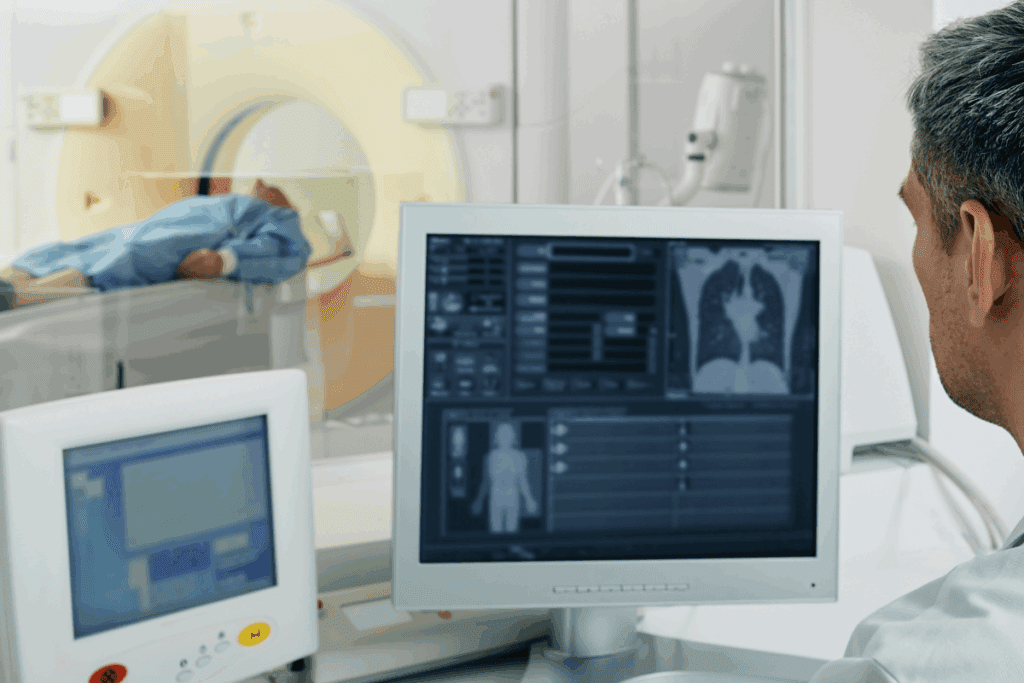
Getting ready for a CT lung biopsy can feel scary. But knowing what to expect can make you feel better. A CT scan-guided lung biopsy is a small procedure. It lets doctors take tissue from lung spots for tests. Prepare confidently for your ct lung biopsy with our step-by-step guide explaining procedure expectations and post-biopsy recovery.
At Liv Hospital, we help you through the CT scan lung biopsy steps. Our team is known worldwide for top-notch care. The American Lung Association says this method uses a CT scan to guide a needle into the lung. This gets tissue for tests.
Key Takeaways
- Understand the steps involved in a CT lung biopsy.
- Learn how to prepare for the procedure.
- Discover what to expect during and after the CT scan-guided lung biopsy.
- Find out how Liv Hospital’s patient-focused approach ensures a smooth experience.
- Gain insights into the benefits of a minimally invasive CT lung biopsy.
Understanding CT Lung Biopsy Fundamentals
Learning about CT lung biopsy is key for those facing this procedure. It’s a method that uses CT scans to take lung tissue samples. This is done for diagnostic purposes.
What is a CT Lung Biopsy?
A CT lung biopsy uses a CT scanner to see the lung area. It guides a biopsy needle to the right spot. This makes getting tissue samples precise, lowering risks and improving accuracy.
Different Types of CT Guided Techniques
There are several CT guided techniques for lung biopsies. These include:
- Fine-needle aspiration biopsy, which uses a thin needle to collect cell samples.
- Core needle biopsy, which collects a larger tissue sample for more detailed analysis.
These methods depend on the size, location, and type of lung lesion.
Common Reasons for Needing This Procedure
A cat scan guided lung biopsy is often needed when a lung mass or lesion is found. This could be from X-rays or CT scans. It helps diagnose lung cancer, tuberculosis, and interstitial lung disease. It gives vital info for treatment plans.
Knowing the basics of CT guided lung biopsy helps patients prepare. They can understand what to expect during and after the biopsy.
Benefits and Risks of CT Guided Biopsy Procedures
Understanding the benefits and risks of a CT guided biopsy is key. This procedure has greatly helped in finding lung cancers and other diseases. It uses CT scans to guide the needle biopsy.
Advantages Over Traditional Methods
CT scan guided biopsy is very precise. Doctors can target the right area with real-time imaging. This reduces errors and helps find small or hard-to-reach lesions.
“The use of CT guided biopsy has transformed the field of diagnostic medicine,” say doctors. It’s a less invasive option than surgery. This leads to faster recovery and fewer complications.
Potential Complications to Be Aware Of
Even though it’s less invasive, a CT scan-guided lung biopsy has risks. These include air leak, infection, and bleeding. Knowing these risks helps patients make better choices.
- Air leak: Air escapes into the space between the lung and chest wall.
- Infection: There’s a chance of infection with any invasive procedure.
- Bleeding: Bleeding can happen during or after the biopsy.
Diagnostic Accuracy and Success Rates
CT scan guided needle biopsy is very accurate. Studies show it has high success rates in getting diagnostic samples. This is key for treatment planning.
As technology improves, CT guided biopsy will play a bigger role in diagnosing lung conditions. Knowing the benefits and risks helps patients prepare for the procedure and recovery.
“The advancements in CT guided biopsy techniques have significantly improved patient outcomes by providing accurate diagnoses with minimal invasiveness.”
Medical Evaluation Before Your CT Lung Biopsy
Before a CT lung biopsy, a medical check-up is key. It checks your health and finds the best way to do the biopsy. This step is important to make sure you’re safe during the procedure.
Required Pre-Procedure Testing
Before the biopsy, you’ll have some tests. These tests check your health. They might include:
- Blood tests to check your blood count and clotting factors
- Imaging tests such as chest X-rays or previous CT scans
- Electrocardiogram (ECG) if you have a history of heart conditions
These tests help us understand your health. This way, we can make the best decisions for your care.
Important Medication Adjustments
Tell your doctor about any medicines you take, like blood thinners. They might need to change or stop them before the biopsy. This is to lower the risk of bleeding.
We suggest that you:
- List all your medications, including supplements and herbal remedies
- Inform us about any allergies or sensitivities you have
- Follow our instructions regarding medication adjustments
Discussing Your Complete Medical History
Talking about your medical history is very important. Share details about:
| Medical Condition | Relevance to CT Lung Biopsy |
| Bleeding disorders | Increased risk of bleeding during the procedure |
| Heart conditions | Potential need for additional monitoring during the biopsy |
| Allergies | Risk of allergic reactions to contrast agents or medications |
Knowing your medical history helps us customize the biopsy for you. This way, we can reduce the risk of problems.
You might need to not eat for up to eight hours before the biopsy. It’s important to follow our instructions. This ensures your safety and the success of the procedure.
Step-by-Step Preparation Guide
Getting ready for a CT lung biopsy might seem scary, but knowing what to do can make you feel better. The steps to prepare are clear and happen at different times before the procedure.
7-14 Days Before Your Procedure
First, you’ll need to do any tests your doctor says are necessary. This might include blood work and other tests. It’s also important to talk about your health history and any medicines you’re taking.
- Tell your doctor about all your medicines, vitamins, or supplements.
- Share any allergies or sensitivities you have.
- Go over your medical history, including past surgeries or health issues.
48-72 Hours Before Your Biopsy
As your biopsy gets closer, you’ll need to change your medicine routine. Some medicines, like blood thinners, might need to be stopped or changed to lower the risk of bleeding.
Key actions to take:
- Stop taking blood thinners or other medicines as your doctor tells you.
- Avoid eating or drinking things that could affect your medicines.
The Day Before Your CT Scan
The day before your biopsy is key for last-minute prep. You might need to fast or eat a special diet to make sure your stomach is empty during the procedure.
Important reminders:
- Stick to the diet your doctor or team tells you to follow.
- Make sure someone can drive you home after the procedure.
Morning of Your Appointment
On the day of your biopsy, there are a few things to do. Wear comfy, loose clothes and avoid jewelry or accessories that could get in the way.
- Check that you’ve done everything your doctor said to do before the procedure.
- Get to the appointment on time for registration and getting ready.
The CT Scan Biopsy Procedure in Detail
The CT guided biopsy procedure is a precise method for diagnosing lung issues. It uses a CT scan to guide a needle to the lung nodule. This way, tissue samples can be taken for further study.
Arrival and Registration Process
When you arrive, you’ll go to the registration area. There, you’ll fill out paperwork and share your ID and insurance details. Then, a staff member will guide you to the procedure room.
Positioning and Initial CT Scanning
You’ll lie on the CT scanner table, either on your stomach or back. The CT scanner will take initial images. These images help the radiologist find the nodule and plan the biopsy.
Anesthesia and Numbing Process
To reduce discomfort, local anesthesia is used. It numbs the area where the needle will go. This is done with a small needle that injects numbing medication into the skin and tissue.
Needle Insertion and Tissue Collection
With the area numbed, the radiologist inserts the biopsy needle. They use the CT scan images to guide the needle to the lung nodule. Tissue samples are then collected. Sometimes, multiple samples are taken to ensure enough material for diagnosis.
The following table summarizes the key steps involved in the CT scan biopsy procedure:
| Procedure Step | Description |
| Arrival and Registration | Complete paperwork, provide identification and insurance information |
| Positioning and Initial CT Scanning | Lie on CT scanner table, initial images taken to locate lung nodule |
| Anesthesia and Numbing | Local anesthesia administered to numb insertion area |
| Needle Insertion and Tissue Collection | Biopsy needle inserted, guided by CT scan images, tissue samples collected |
Knowing these steps helps you prepare for the procedure. It also lets you know what to expect on the day of your CT scan biopsy.
Managing Anxiety and Discomfort During Your CT Lung Biopsy
Having a CT lung biopsy can feel scary, but knowing what to expect can help. We know you might worry about the procedure. We’re here to help you manage any discomfort or anxiety during a cat scan biopsy.
Available Pain Management Options
We focus on making your ct guided biopsy as pain-free as possible. Our team might use local anesthesia to numb the area. Sometimes, we offer mild sedation to help you relax. We’ll talk about the best pain management for you before the procedure.
It’s important to follow our instructions about any medication, including pain management, to stay safe during the procedure.
Effective Breathing and Relaxation Techniques
Using breathing and relaxation techniques can help lower your anxiety during a ct scan guided biopsy. Deep breathing, progressive muscle relaxation, or visualization can calm you down. Our team can teach you the best techniques to use before and during the procedure.
Communication Strategies With Your Medical Team
Talking openly with your medical team is key. Tell us about your anxiety, any pain, and concerns. We’re here to support you and adjust our approach to keep you comfortable.
- Ask questions about the procedure to understand what to expect.
- Inform us about any medications you’re taking.
- Let us know if you experience any discomfort or pain.
What Sensations to Expect
During the cat scan biopsy, you might feel some pressure or discomfort when the needle is inserted. Our team will try to minimize this. You might need to hold your breath for short periods for clear images. Knowing what to expect can help you mentally prepare.
Being informed and prepared can greatly reduce your anxiety and discomfort during the ct guided biopsy. We’re dedicated to making this experience as comfortable as possible for you.
Conclusion
We’ve looked into how important CT lung biopsies are for diagnosing lung issues. We’ve covered the steps and what happens during and after. A CT scan guided biopsy is key for getting tissue samples accurately.
Knowing about the CT guided needle biopsy process helps patients get ready. This reduces anxiety and makes the experience better. There’s a lot of info on lung biopsies from trusted medical sites.
CT lung biopsies are vital for understanding lung health. Being informed and ready, patients can face this procedure confidently. It’s a big step towards getting the right diagnosis and treatment.
FAQ
What is a CT lung biopsy?
A CT lung biopsy is a procedure. It uses CT imaging to guide a needle into the lung. This is to collect a sample for diagnosis.
How do I prepare for a CT guided lung biopsy?
To prepare, you’ll need a medical evaluation and to adjust some medications. Your healthcare provider will give you specific instructions. This includes arriving on time and having someone with you.
What are the benefits of a CT guided biopsy?
CT guided biopsies are accurate and minimally invasive. They can target specific lung areas. This reduces the risk of complications.
What are the possible complications of a CT lung biopsy?
Complications can include bleeding, infection, and pneumothorax. But, these risks are low with proper care and precautions.
How is pain managed during a CT lung biopsy?
Pain management involves local anesthesia to numb the area. Sedation or other options may also be used. This helps you relax and reduces discomfort.
What can I expect during the CT scan biopsy procedure?
You’ll be positioned on a table for the CT scan. The needle will be guided into the lung tissue. You might feel some pressure or discomfort, but this is managed with anesthesia and pain relief.
How long does a CT guided lung biopsy take?
The procedure usually takes 30-60 minutes. This depends on the case’s complexity and the patient’s needs.
What happens after a CT lung biopsy?
After the biopsy, you’ll be monitored. You might feel sore or uncomfortable. Your healthcare provider will give you instructions on care and follow-up.
How accurate is a CT guided biopsy?
CT guided biopsies are very accurate. Success rates vary based on the condition and the patient’s situation.
Can I undergo a CT lung biopsy if I have a bleeding disorder?
If you have a bleeding disorder, talk to your healthcare provider. They may need to take special precautions or make adjustments to reduce bleeding risks.
Reference
- Nakamura, K., et al. (2021). Computed Tomography-guided Lung Biopsy: A Review. PMC. https://www.ncbi.nlm.nih.gov/pmc/articles/PMC9327413