A Computed Tomography (CT) system is a top-notch medical imaging tech. It uses a tomography X-ray to make detailed images of what’s inside us.
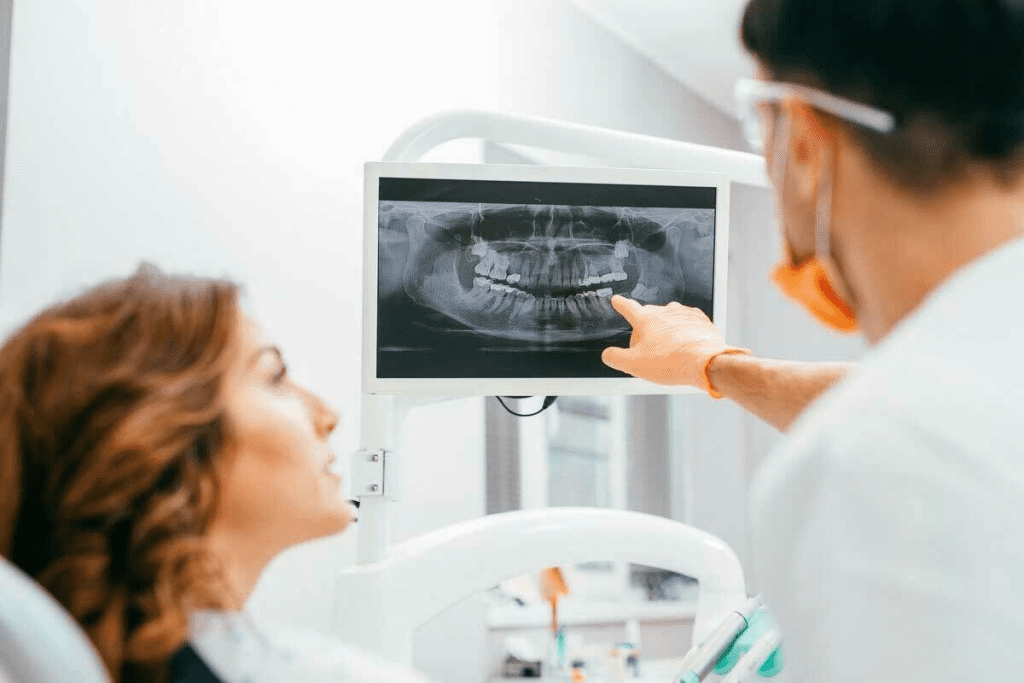
The National Center for Biotechnology Information says CT scans make detailed images that are key for doctors to diagnose. First, electrical energy turns into X-ray photons, which pass through the body at different angles. Then, these photons turn back into electrons, creating high-resolution ct machine images that help in accurate diagnosis.
Key Takeaways
- CT scans use tomography x-ray technology to produce detailed images.
- The technology involves passing X-ray photons through the body at multiple angles.
- Image quality depends on factors like resolution and contrast.
- Hounsfield units (HU) quantify tissue density.
- Techniques like multiplanar reformation (MPR) allow for image reconstruction in different planes.
The Evolution of Computed Tomography in Medical Imaging
Computed Tomography (CT) has changed a lot over the years. It has greatly improved how doctors diagnose diseases. The story of CT technology’s growth is one of constant innovation and betterment.
From Conventional X-rays to Cross-Sectional Imaging
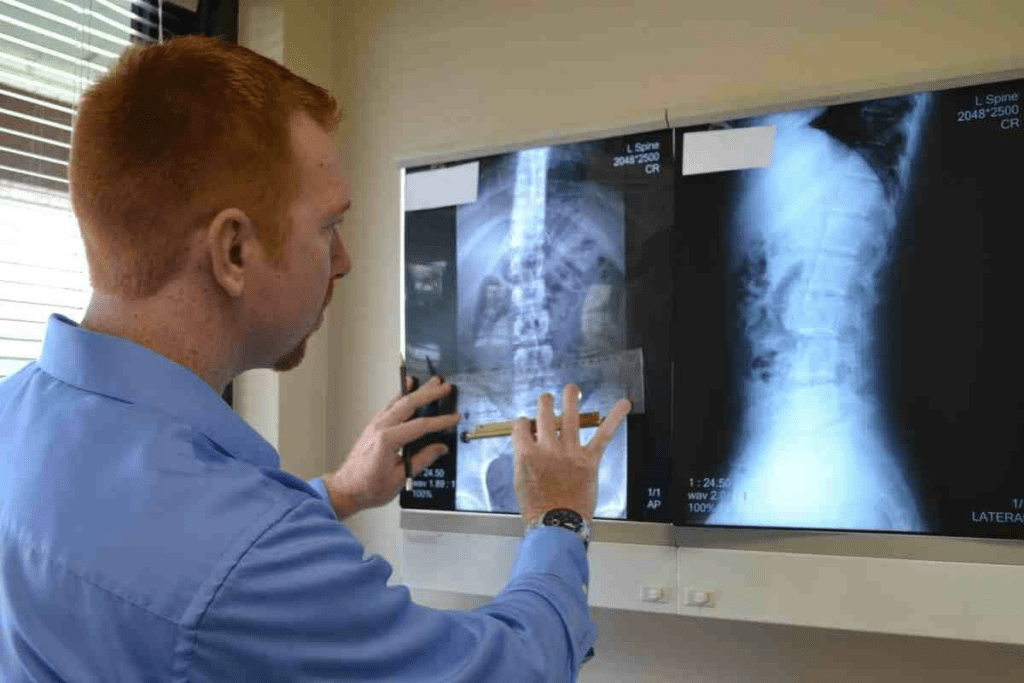
Old X-rays showed what was inside the body but only in two dimensions. CT scans changed this by showing cross-sections of the body. CT scans combine many X-ray measurements from different angles to create detailed images.
Knowing the computed tomography full form shows how advanced these systems are. CT scans are now key for making accurate diagnoses, something traditional X-rays couldn’t do.
The Computed Tomography Full Form and Basic Definition
The computed tomography full form is important to understand. It refers to a technology that uses X-rays and computers to make detailed images of the body. This shows how complex and advanced CT scans are.
Historical Development of CT Technology
The history of CT technology is filled with scientific breakthroughs and teamwork. The first CT scanner was made by Godfrey Hounsfield in 1971. It was a big leap forward in medical imaging.
After that, CT technology kept getting better. Spiral CT and multi-slice CT scanners were developed. These advancements made CT scans even more useful for doctors.
- The introduction of spiral CT allowed for continuous scanning without gaps.
- Multi-slice CT scanners enabled the simultaneous acquisition of multiple slices, significantly reducing scan times.
- Advances in detector technology and image reconstruction algorithms have further enhanced image quality and diagnostic accuracy.
Today, CT scans are a vital part of medical imaging. They offer unparalleled diagnostic capabilities and keep getting better with new technology.
Fundamental Principles: How Computed Tomography Works
CT scans use X-ray attenuation, which changes with tissue density. This key idea helps us grasp how CT machines create detailed images of our body’s inside.
The Science Behind X-Ray Attenuation
X-ray attenuation is when X-rays lose intensity as they go through materials or tissues. The amount of loss depends on the material’s density and the X-rays’ energy. In CT scans, this helps to tell different tissues apart in the body.
Key factors influencing X-ray attenuation include:
- Tissue density: Denser tissues absorb more X-rays.
- X-ray energy: Higher energy X-rays are less attenuated.
- Atomic number of the tissue: Tissues with higher atomic numbers absorb more X-rays.
Tomography X-Ray: Creating Slice-by-Slice Images
CT scanners send X-rays from many angles towards the patient. Detectors measure the X-rays that are absorbed and those that pass through. This data makes detailed, cross-sectional images of the body’s inside.
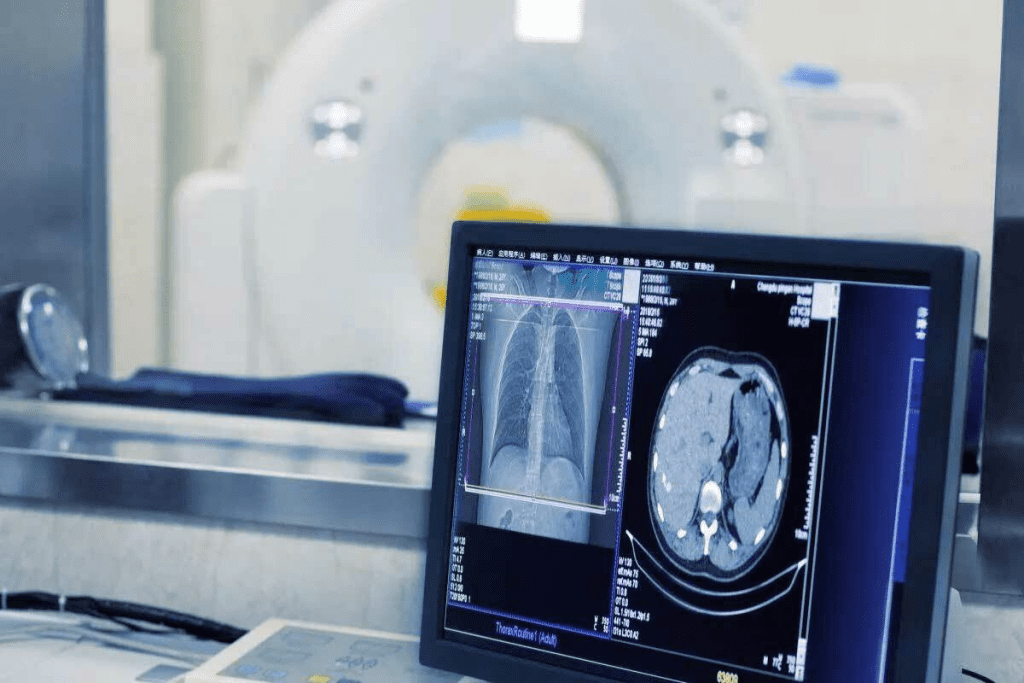
The process captures many X-ray measurements from different angles. Then, advanced algorithms turn this data into images. This slice-by-slice imaging method lets us see body structures and problems clearly.
Computerized Tomography: Definition and Core Concepts
Computerized Tomography (CT) is a medical imaging method. It uses computer-processed X-rays to make detailed images of body areas. The main idea is to use X-ray data to build detailed images ofthe inside structures.
Core components of CT technology include:
- X-ray tube: Emits X-rays towards the patient.
- Detectors: Measure the X-rays that pass through the patient.
- Computer system: Reconstructs the images from the acquired data.
- Gantry: Houses the X-ray tube and detectors, rotating around the patient.
Knowing these basic principles helps us understand what CT scans can and can’t do.
Anatomy of a CT System: Essential Components
A CT system has key parts like the gantry, X-ray tube, patient table, and detectors. These parts are vital for creating detailed images. Knowing about them helps us see how a CT machine works.
The Gantry Structure and Function
The gantry is a main part of the CT system. It holds the X-ray tube and detectors. It moves around the patient to take images from different angles. The gantry’s design greatly affects the quality of the images.
Key features of the gantry include:
- A rotating frame that allows for multi-angle imaging
- Housing for the X-ray tube and detectors
- Advanced tilting mechanisms for flexible scanning
X-Ray Tube Technology and Configurations
The X-ray tube is key to the CT system. It makes the X-rays that go through the patient. Today’s X-ray tubes make high-quality X-rays with precise control.
Advancements in X-ray tube technology have led to:
- Improved X-ray beam quality
- Increased tube longevity
- Enhanced cooling systems for prolonged scanning
Patient Table Mechanics and Movement
The patient table moves smoothly through the gantry. It keeps the patient in the right spot during scanning. The table’s movement is controlled by advanced systems for precise positioning.
CT Detectors: Types, Placement, and Capabilities
CT detectors catch the X-rays that go through the patient. They are set up in rows, with modern scanners having 4 to 64 or more rows.
The capabilities of CT detectors include:
- High sensitivity to X-ray signals
- Fast data acquisition rates
- Advanced noise reduction technologies
The CT machine works with rotating X-ray tubes, a patient table, and detectors inside a gantry. Understanding the CT system’s parts shows the complexity and sophistication of medical imaging today.
The Complete CT Scanning Process: How CT Machine Images Are Created
The CT scanning process has several key steps to make high-quality images. It starts with getting the patient ready and in position. Then, X-ray beams go through the body, and detectors catch the data. The raw data is then processed.
Patient Preparation and Positioning
Getting the patient ready and in the right spot is very important. The patient lies on a table that moves into the CT scanner, a doughnut-shaped machine. The radiographer makes sure the patient is in the right place for the scan. Getting it right first time is key to avoiding re-scanning and keeping the patient safe.
Patients might be told to hold their breath or stay very quiet during parts of the scan. This helps avoid blurry images. The table moves slowly through the scanner as the scan happens.
X-Ray Beam Transmission Through Different Tissue Densities
The X-ray beam goes through the body, and different tissues absorb it in different ways. Denser materials like bone absorb more, while softer tissues absorb less. This difference in absorption helps create contrast in the images.
The X-ray beam spreads out in a fan or cone shape as it goes through the body. The detectors on the other side of the scanner catch this pattern. This pattern shows how different tissues absorb X-rays.
Data Acquisition by Detector Arrays
The detectors in the CT scanner measure how strong the X-ray beam is after it goes through the body. They turn this into electrical signals. These signals are then used to create the raw data for making images.
Today’s CT scanners use advanced detector arrays. These can catch data from many angles at once. This makes scanning faster and helps create detailed images of complex structures.
Initial Processing of Raw Scan Data
The raw data from the detectors is first processed to fix any problems. This includes data calibration and using algorithms to improve image quality.
This initial processing is very important. It makes sure the next steps can create high-quality images. It uses complex math to get the data ready for the final images.
Image Reconstruction Algorithms in CT Scanning Equipment
CT images are made through complex algorithms. These algorithms turn raw data into useful diagnostic information. Modern CT scanners use advanced algorithms to make detailed images from the data they get.
Filtered Back Projection Methods
Filtered back projection (FBP) is a traditional method for making CT images. It uses a filter to fix artifacts in the data. FBP is fast and efficient, making it common in CT scanning.
Iterative Reconstruction Techniques
Iterative reconstruction techniques are becoming more popular. They improve image quality over traditional FBP methods. These techniques make CT images more useful for diagnosis.
3D Volumetric Rendering and Multiplanar Reformatting
Advanced CT scanners can create 3D images and cross-sections. This is key to seeing complex structures and problems clearly.
Computed Tomography Principle in Digital Processing
The computed tomography principle is key in digital CT image processing. It uses computers to make images from raw data. The principle helps create detailed images for accurate diagnosis.
In summary, algorithms are essential in CT scanning. They help make high-quality images for diagnosis. The ongoing improvement of these algorithms is vital for better CT technology.
How Tissue Characteristics Influence CT Scan Images
The way X-rays pass through different tissues is key to making detailed CT scan images. The density of body tissues affects how much X-rays are blocked. This, in turn, changes the brightness and contrast of the images.
Hounsfield Units and Tissue Differentiation
Hounsfield units (HU) measure how much X-rays are blocked by tissues compared to water. This scale helps doctors tell different tissues apart based on their density.
Denser tissues, like bone, block more X-rays and show up brighter on CT scans. Less dense tissues, like fat, block fewer X-rays and appear darker.
Contrast Enhancement in CT Imaging
Contrast enhancement makes certain body parts or lesions more visible by using a contrast agent. This agent changes how X-rays interact with the targeted area, making it clearer against other tissues.
Contrast enhancement is great for showing blood vessels, tumors, and inflammation. By choosing the right contrast agent and timing, doctors can see different body parts better.
Visualizing Different Anatomical Structures
CT scans can show different body parts because of their contrast and the use of contrast agents. For example, bone is very dense and stands out from softer tissues.
For soft tissues, which are more alike, contrast enhancement is key to seeing differences or finding problems. Seeing body structures clearly is vital for making accurate diagnoses and treatment plans.
Advanced Computed Tomography Technology and Innovations
New advancements in computed tomography have changed how doctors diagnose and treat patients. These improvements in CT technology have led to more advanced imaging methods. This has greatly improved patient care.
Multi-Slice CT Systems
Multi-slice CT systems are a big leap in CT technology. They allow for quicker scans and clearer images. This makes them great for detailed diagnostic work. Multi-slice CT scanners can take many images at once. This cuts down scan time and makes patients more comfortable.
These systems are now used in many medical areas, like cardiology and oncology. For example, cardiac CT scans can now be done fast. This lets doctors see the heart’s arteries and structures in detail.
Dual-Energy and Spectral CT Applications
Dual-energy CT scanners are another big step forward. They use two X-ray energies to give more detailed tissue information. This is very helpful for things like kidney stones, gout, and liver lesions.
Spectral CT takes it a step further. It analyzes X-ray energy to better understand materials and tissues. This makes diagnoses more accurate.
Low-Dose CT Protocols and Radiation Safety
There’s a big push to lower radiation in CT scans. Low-dose CT protocols aim to reduce radiation while keeping image quality high. This is key for patients needing many scans.
Keeping radiation low is a top priority in CT scans. Makers and healthcare teams are working on ways to lower doses. This includes things like automatic exposure control and new image algorithms.
Artificial Intelligence in CT Image Processing
Artificial intelligence (AI) is changing radiology with CT image processing. AI helps with image quality, noise reduction, and finding lesions. This makes CT scans more efficient and accurate.
AI can also automate tasks like measuring lesions and tracking changes. This helps doctors monitor disease and treatment progress. It’s all about better patient care.
Clinical Applications and Diagnostic Advantages of CT Scanning
CT scanning creates detailed images of the body’s inside. It’s a key tool in medicine. It helps doctors see inside the body like never before.
CT scans are very useful in emergencies. They help spot things like bleeding in the brain or injuries. They work fast and accurately, which is great in urgent situations.
Neurological Imaging and Diagnostics
CT scans are key for brain imaging, mainly in urgent cases. They help find problems like strokes or brain bleeds. They work quickly, which is important for fast diagnosis.
CT angiography also helps see blood vessels in the brain. This gives doctors more information.
Thoracic and Cardiovascular Assessment
CT scans show the heart, lungs, and big blood vessels in detail. They help find issues like blood clots or heart disease. This is very helpful for diagnosing.
Cardiac CT angiography is a safe way to check the heart’s blood vessels. It helps find blockages or plaque buildup.
Abdominal and Pelvic Examinations
CT scans are used a lot for the belly and pelvis. They help find problems like appendix issues or injuries. They show the liver, pancreas, and kidneys clearly.
Using contrast agents makes CT scans even better. It helps doctors tell different tissues apart.
Musculoskeletal and Orthopedic Applications
For bones and joints, CT scans are top-notch. They help spot fractures, tumors, or wear and tear. They show bone details better than regular X-rays.
3D reconstructions from CT scans are great for planning surgeries. They help doctors prepare for complex operations.
CT scanning’s big plus is its quick, detailed images. It helps doctors a lot, improving care and results for patients.
Conclusion: The Future of CT Imaging Technology
The future of CT imaging looks bright, thanks to new tech like artificial intelligence and low-dose scans. We’ll see better images, quicker scans, and more accurate diagnoses. This is all thanks to ongoing improvements in CT technology.
New technologies like dual-energy CT and spectral CT are opening up new ways to diagnose diseases. These advancements help doctors make more precise diagnoses and tailor treatments better. CT scans are becoming more common because they offer detailed images that help a lot in medical care.
As CT tech keeps getting better, we can expect more AI in medical imaging, safer scans, and better care for patients. Research and development are driving these changes. The future of CT imaging is exciting, promising to make medical care even better.
FAQ
What is computed tomography?
Computed tomography (CT) is a medical imaging technique. It uses X-rays to make detailed images of the body’s cross-sections.
How does a CT scan machine work?
A CT scan machine sends X-rays through the body. These X-rays are caught by detectors and turned into detailed images.
What is the difference between a CT scan and a conventional X-ray?
CT scans show more detail inside the body than X-rays. This helps doctors diagnose and treat better.
What are Hounsfield units in CT imaging?
Hounsfield units measure how much X-rays are blocked by different tissues. This helps identify different body parts.
How do CT detectors work?
CT detectors catch X-rays that pass through the body. They turn these X-rays into electrical signals for images.
What is the role of the gantry in a CT system?
The gantry is the core of a CT system. It holds the X-ray tube and detectors. It rotates around the patient to take images.
What are the benefits of multi-slice CT systems?
Multi-slice CT systems scan faster and produce clearer images. This makes diagnosis more accurate and comfortable for patients.
How is artificial intelligence used in CT image processing?
Artificial intelligence improves CT image quality and detects issues. It also automates analysis, making CT imaging more efficient and accurate.
What are the clinical applications of CT scanning?
CT scans are used in many areas, like brain imaging and heart assessments. They also help with abdominal, pelvic, and bone exams.
How can radiation exposure be minimized during CT scans?
To lower radiation, use low-dose CT settings. Optimize scan parameters and employ dose-reducing tech.
What is the future of CT imaging technology?
CT tech will keep improving, with better images, lower doses, and AI. This will enhance patient care and accuracy.
What is dual-energy CT?
Dual-energy CT uses two x-ray levels to better see tissues and improve image quality.
How does a CT scan, computed tomography, work?
CT scans use X-rays to create detailed images. These images are then turned into 3D views.
What is the computed tomography principle?
CT works by measuring how X-rays are blocked by tissues. This creates detailed images of the body’s inside.
What is X-ray computerized tomography?
X-ray computerized tomography is another name for CT. It uses X-rays to make detailed body images.
References:
- Liang, S., Wang, Y., & Zhang, H. (2020). Biotypes of major depressive disorder: Neuroimaging evidence from resting-state default mode network patterns. NeuroImage: Clinical, 28, 102514.https://www.sciencedirect.com/science/article/pii/S221315822030351X
- Chen, X., Liang, S., & Zhang, H. (2023). Biotypes of major depressive disorder identified by a multiview clustering framework. NeuroImage: Clinical, 38, 103388.https://www.sciencedirect.com/science/article/pii/S2213158223001881