A CT scan guided needle biopsy is a small procedure. A radiologist uses special imaging to guide a needle into an abnormal area. This is to take tissue samples for diagnosis. Discover how a ct scan guided needle biopsy works, including preparation steps, accuracy benefits, and post-procedure recovery tips.
At Liv Hospital, we know getting a biopsy can be scary. Our team is here to help you feel clear and confident. We support you from start to finish of your biopsy journey.
During the procedure, a radiologist uses a CT scan to guide the needle. This makes sure the tissue sample is accurate. The tissue is then tested in a lab. This gives us important information about your health.
Key Takeaways
- CT scan guided needle biopsy is a minimally invasive procedure for diagnosing medical conditions.
- Our team of experts at Liv Hospital provides personalized care and support throughout the biopsy journey.
- Advanced imaging technology ensures accurate tissue sampling.
- The extracted tissue is sent to a lab for testing, providing valuable insights into your medical condition.
- We are committed to delivering world-class healthcare with international patient support.
Understanding CT Scan Guided Needle Biopsy
CT guided biopsy is a way for doctors to get tissue samples from the body. It’s used to find conditions like cancer and infections. This method is key for areas like the lungs that are hard to reach.
Definition and Basic Principles
A CT scan guided needle biopsy uses CT imaging to guide a needle. It’s done under local anesthesia to reduce pain. This method aims to give a precise diagnosis without surgery.
CT scanning shows the body’s internal structures in detail. This helps place the biopsy needle accurately. Getting the right tissue sample is key for a correct diagnosis.
How CT Scanning Technology Works in Biopsies
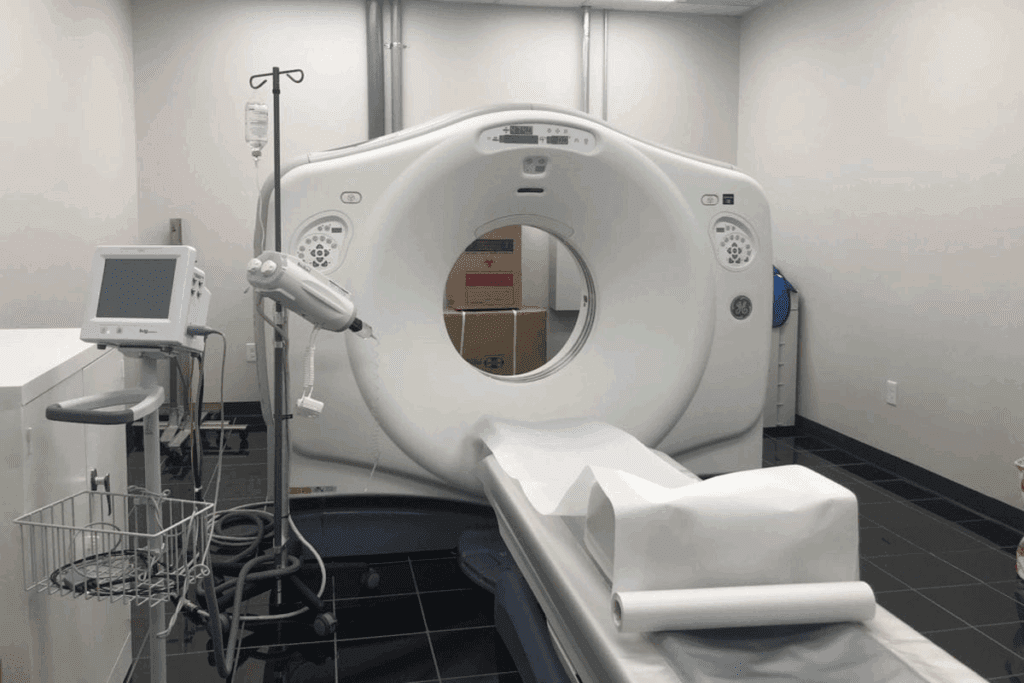
CT scanning uses X-rays to make detailed images of the body. During a biopsy, these images guide the needle to the right spot. This real-time guidance makes the biopsy more accurate and safer.
Multiple CT scans are taken as the needle moves towards the target. This lets the doctor adjust the needle’s path for the best placement.
Types of Tissues and Organs Commonly Biopsied
CT guided needle biopsy can sample many body parts. Common areas include the lungs, liver, and lymph nodes. It’s a valuable tool for many medical conditions.
It’s often used for lung nodules or masses that are hard to reach. This method ensures a precise diagnosis, which is vital for treatment planning.
Medical Conditions Requiring a CT Guided Biopsy
CT guided biopsies are key in diagnosing many medical conditions. They help get precise tissue samples. This is important for conditions that are hard to see or reach with other tests.
Diagnosing Suspected Cancer
CT guided biopsies are often used to check for cancer. They help find out if a tumor is cancerous or not. This is vital for choosing the right treatment.
Accurate diagnosis helps pick the best treatment. This could be surgery, chemo, or radiation, or a mix of these.
Identifying Infections and Inflammatory Conditions
CT guided biopsies are also used for infections and inflammation. They help find the cause of these issues in hard-to-reach places. This guides the right treatment, like antibiotics or anti-inflammatory drugs.
Evaluating Abnormal Imaging Findings
When imaging shows odd spots or growths, a biopsy is needed. A CT guided biopsy gets tissue for tests. This is key for lung nodules, where a CT scan lung biopsy or CT lung biopsy is used.
These biopsies can prevent more serious tests. They help start treatment quickly.
CT Scan Lung Biopsy: A Common Application
The use of CT scan guided needle biopsy in lung tissue is a big step forward in medicine. It helps us accurately diagnose many lung conditions.
Why Lung Nodules Require Biopsy
Lung nodules are abnormal spots seen on chest X-rays or CT scans. Doctors can’t always tell if these spots are cancer just by looking at them. A biopsy is needed to find out what they are.
Lung nodules can be either harmless or cancerous. A CT guided lung biopsy lets us take tissue samples from these spots. This gives us a clear diagnosis.
Diagnostic Accuracy of CT Guided Lung Biopsies
CT guided lung biopsies are very accurate. Research shows they can spot lung cancer and other issues well.
| Diagnostic Method | Accuracy Rate |
| CT Guided Lung Biopsy | 90-95% |
| Other Biopsy Methods | 80-90% |
Advantages Over Other Lung Biopsy Methods
CT guided lung biopsy has many benefits. It’s less invasive and can be done with just local anesthesia. This lowers the chance of complications.
“CT guided lung biopsy is a safe and effective procedure for diagnosing lung nodules and other lung conditions.” – Interventional Radiologist
Preparing for Your CT Scan Guided Needle Biopsy
To make sure your CT scan guided needle biopsy goes well, we’ll help you get ready. This includes knowing what to do before the test, how long to fast, and any changes to your medicines.
Pre-Procedure Instructions and Fasting Requirements
Before your cat scan guided needle biopsy, you might need to fast. This means no food or drink, including water, for a while before the test. Your doctor will tell you exactly how long to fast and what else you need to do.
It’s also important to follow any extra steps your healthcare team tells you to take. This might include arriving early to fill out forms or get ready for the test.
Medication Adjustments and Considerations
Some medicines might need to be changed or stopped before your biopsy ct scan. This is true for blood thinners, as they can make bleeding more likely during the test. Tell your doctor about all the medicines you’re taking, including any supplements or over-the-counter drugs.
Your healthcare team will tell you if you need to change your medicines. They want to make sure you’re safe during the ct needle biopsy.
What to Bring and Wear on Procedure Day
On the day of your test, wear something comfy and easy to move in. You might need to change into a hospital gown, so pick clothes you can easily take off. It’s best to leave jewelry and other valuables at home.
Bring any important papers, like your insurance cards and a list of your medicines. Having someone you know with you can also be a big help.
By following these tips and listening to your healthcare provider, you can make your CT scan guided needle biopsy a success.
The CT Scan Biopsy Procedure: Step by Step
Getting a CT scan guided needle biopsy might seem scary, but knowing what happens can make it less intimidating. We’ll walk you through each step, so you know what to expect.
Initial Positioning and CT Scanning
The first thing is getting you set up on the CT scan table. You’ll lie down on your back, side, or stomach, depending on where the biopsy needs to happen. Then, a CT scan finds the exact spot for the needle.
Local Anesthesia Administration
To keep you comfortable, local anesthesia is given to numb the area. This makes sure you won’t feel pain when the needle goes in.
Needle Insertion and Sample Collection
With the area numb, the doctor carefully puts in the biopsy needle under CT scan guidance. The CT scan helps the doctor place the needle exactly right. Then, a tissue sample is taken for tests.
“Thanks to advances in guided CT scan and CT guided needle biopsy, complication rates remain low,” highlighting the safety and efficacy of this diagnostic procedure.
Duration and Discomfort Levels
The time it takes for a CT scan guided needle biopsy varies. It can be from 30 minutes to a few hours, depending on the case. Most people find it tolerable, but some might feel a bit of pain afterwards.
We know biopsies can be stressful, but our team is here to help. By knowing what happens during a CT scan guided needle biopsy, you can feel more ready for it.
The Medical Team Performing Your Biopsy with CT Scan
When you have a CT scan guided needle biopsy, knowing who’s involved is important. The team, including interventional radiologists and others, is key to a successful biopsy. They make sure the procedure is safe and accurate.
Role of the Interventional Radiologist
The interventional radiologist is a doctor who specializes in small, precise procedures. They use a CT scan to guide a needle into the body. This is to get tissue samples from places like lung nodules. Their skill ensures the biopsy is done right and safely.
Supporting Medical Staff
Behind the radiologist are radiology nurses and technologists. They help during the procedure, watch the patient, and check the equipment. They keep everything clean and care for the patient before, during, and after.
Communication During the Procedure
Good communication is essential during a biopsy. The radiologist and team talk to the patient to keep them comfortable and informed. Patients can talk back through an intercom, sharing any discomfort or questions.
Knowing who’s on your team for a CT scan biopsy can make you feel more at ease. The radiologist and their team work together to make sure the biopsy goes well.
Recovery After a CT Guided Needle Biopsy
The recovery after a CT scan guided needle biopsy is simple for most. It involves a short watch and some care after. We know getting a medical test can be scary. So, we’re here to help you know what to expect when you’re getting better.
Immediate Post-Procedure Monitoring
Right after the biopsy, we keep a close eye on you in the recovery room. We check your vital signs and look for any issues. Our team is ready to help with any problems that might come up. Most people don’t need to stay long, and serious problems are very rare.
Discharge Instructions and Home Care
Before you go home, we give you clear instructions. These tell you how to take care of yourself, what to watch for, and when to come back. It’s important to follow these steps to heal well. We also suggest having someone with you for a few hours after you get home.
At home, you might feel some soreness where the biopsy was done. This can usually be helped with over-the-counter pain meds. Rest and avoid hard activities for the rest of the day. If you notice anything odd or have worries, call us.
When to Resume Normal Activities
How soon you can go back to normal depends on your health and the biopsy details. Usually, people can get back to their usual life in a day or two. But, we advise against heavy lifting, bending, or hard exercise for a few days. Your doctor will give you specific advice based on your situation.
It’s key to go to any follow-up appointments. We want to see how you’re doing and answer any questions. Your health is our main concern, and we’re here to support you all the way.
Potential Risks and Complications of Cat Scan Guided Biopsies
CT scan guided biopsies are generally safe. But, there are risks and complications to know about. They are precise and valuable for diagnosis. Yet, they carry some risks.
Common Minor Side Effects
Most people have little side effects from CT scan guided biopsies. Common minor side effects include:
- Temporary discomfort or pain at the biopsy site
- Mild bruising or swelling
- Soreness or tenderness in the area where the biopsy was performed
These side effects are usually short-lived and go away in a few days. There’s also a small chance of infection. This can be treated with antibiotics if needed.
Serious but Rare Complications
Though rare, serious complications can happen. For lung biopsies, a big risk is pneumothorax. This is when the lung collapses due to air leaking into the space between the lung and chest wall. The risk of pneumothorax is a concern, even though it’s rare.
“The risk of pneumothorax following CT guided lung biopsy is a significant consideration, requiring careful patient selection and procedural technique.”
Other serious but rare complications include significant bleeding, air embolism, or injury to surrounding structures. The risk of these complications highlights the need for an experienced team to perform the procedure.
Risk Factors That May Increase Complications
Certain factors can raise the risk of complications from CT scan guided biopsies. These include:
- Patient’s overall health and presence of underlying conditions
- The location and nature of the tissue being biopsied
- The patient’s ability to remain motionless during the procedure
- Previous surgeries or treatments in the area of the biopsy
We carefully evaluate these risk factors before doing a CT guided biopsy. We make sure the benefits are greater than the risks for each patient.
In conclusion, CT scan guided biopsies have risks and complications, but most are minor and short-lived. Serious complications are rare. With careful patient selection and expertise, the benefits of these biopsies are significant in modern medicine.
Understanding Your Biopsy CT Scan Results
After a CT scan guided needle biopsy, knowing your results is key. It helps figure out what to do next. The biopsy info is important for diagnosing and treating many health issues.
Timeframe for Receiving Results
How long it takes to get your biopsy CT scan results depends on the analysis and the lab’s work. Usually, it’s a few days to a week. Your doctor will tell you when to expect them and how you’ll get the news.
Interpreting Pathology Reports
The pathology report is made by a pathologist after looking at your biopsy samples. It talks about the tissue or cells, their look under the microscope, and the diagnosis. It can be hard to understand, so talking it over with your doctor is a good idea.
“The pathology report is a key document for managing your care and treatment.” –
A pathology expert
Follow-Up Appointments and Next Steps
When your results come in, your healthcare team will meet with you. They’ll talk about what the results mean and what to do next. You might need more tests or treatments. Always follow your doctor’s advice and ask any questions you have.
Waiting for your cat scan guided needle biopsy results can be stressful. But, getting a clear diagnosis can help you feel more certain. It lets you start the right treatment.
Conclusion: Advances in CT Scan Guided Procedures
CT scan guided procedures have greatly improved how we diagnose and treat patients. The ct scan guided needle biopsy is now a key tool for doctors. It helps patients avoid more serious surgeries.
This method is very accurate, thanks to the real-time images from CT scans. It’s great for biopsies in tricky spots, like lung nodules. So, it’s a top choice for many medical tests.
The biopsy is also quick and doesn’t hurt much, which means patients recover faster. As CT scanning gets better, so will these procedures.
This article has shown how valuable ct scan guided needle biopsy is. It’s used to find cancer and check on other health issues. Knowing about it helps patients make better choices for their health.
FAQ
What is a CT scan guided needle biopsy?
A CT scan guided needle biopsy is a medical test. It uses CT scanning to guide a needle into the body. This is to collect tissue samples for diagnosis.
Why is a CT guided biopsy necessary?
A CT guided biopsy is needed to diagnose many conditions. This includes suspected cancer, infections, and abnormal imaging findings. It provides tissue samples for examination.
How does CT scanning technology work in biopsies?
CT scanning technology uses X-rays to create detailed images of the body. Doctors use these images to guide the biopsy needle accurately.
What types of tissues and organs are commonly biopsied using CT guided needle biopsy?
CT guided needle biopsy can biopsy various tissues and organs. This includes the lungs, liver, kidneys, and lymph nodes, among others.
How do I prepare for a CT scan guided needle biopsy?
To prepare for a CT scan guided needle biopsy, follow specific instructions. This includes fasting, medication adjustments, and wearing comfortable clothing.
What happens during a CT scan biopsy procedure?
During a CT scan biopsy procedure, you’ll be positioned on a CT table. Local anesthesia will be given to minimize discomfort. The doctor will then insert the biopsy needle under CT guidance. Tissue samples will be collected.
How long does a CT guided needle biopsy procedure take?
The duration of a CT guided needle biopsy procedure varies. It can take between 30 minutes to several hours, depending on the case.
What are the possible risks and complications of a CT scan guided biopsy?
Minor side effects like pain and bruising are possible. Serious but rare complications include bleeding and infection.
How will I receive my biopsy CT scan results?
Your biopsy CT scan results will be available in a few days to a week. Your doctor will discuss the findings and next steps with you during a follow-up appointment.
What is the diagnostic accuracy of CT guided lung biopsies?
CT guided lung biopsies have a high diagnostic accuracy. They allow doctors to diagnose lung conditions, including cancer, with a high degree of certainty.
What is the role of the interventional radiologist in a CT guided needle biopsy?
The interventional radiologist is key in performing the CT guided needle biopsy. They use their expertise to guide the biopsy needle and collect tissue samples.
How do I care for myself after a CT guided needle biopsy?
After a CT guided needle biopsy, follow specific discharge instructions. This includes monitoring for signs of complications and resuming normal activities gradually.
Can I undergo a CT guided biopsy if I have a bleeding disorder?
If you have a bleeding disorder, special precautions may be needed before a CT guided biopsy. Your doctor will assess the risks and benefits of the procedure.
Are there any alternatives to CT guided needle biopsy?
Depending on your condition, alternative diagnostic procedures may be available. This includes surgical biopsy or other imaging-guided biopsies.
Reference
- National Center for Biotechnology Information. (2018). CT-guided procedures: an initial experience. https://www.ncbi.nlm.nih.gov/pmc/articles/PMC6296730