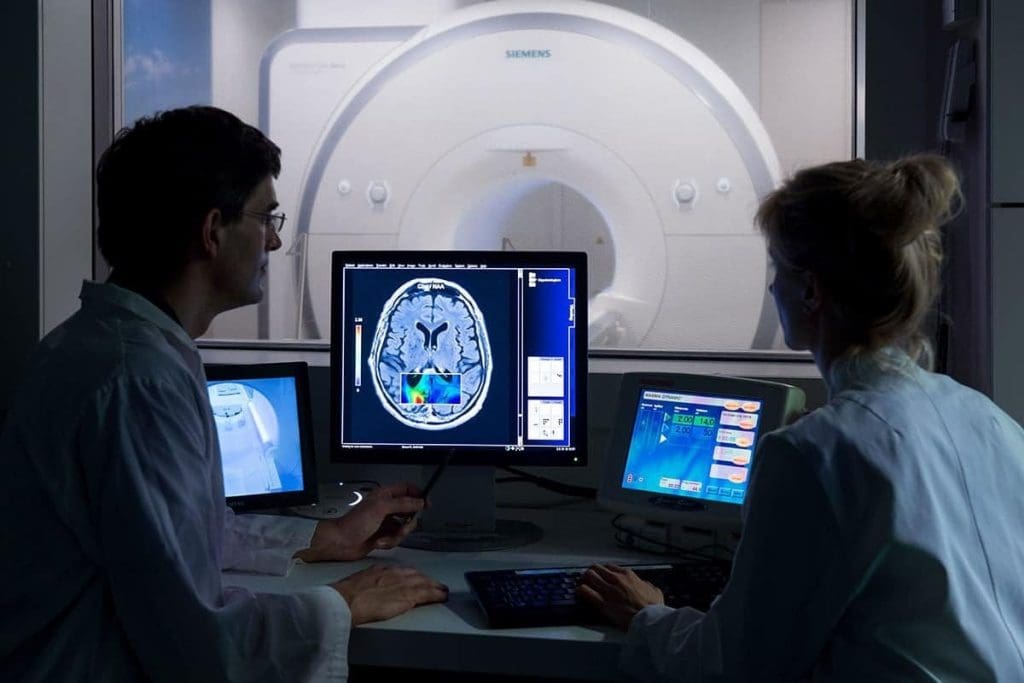
Understanding CT Scan for Head Tumors
Medical experts often rely on advanced imaging to detect and evaluate brain tumors. A CT scan head tumor test is one of the most essential tools. It uses X-rays and computer technology to create detailed images of the brain and surrounding tissues, helping doctors identify abnormalities with precision.
At leading healthcare centers like Liv Hospital, patients receive accurate diagnostics and compassionate care. Understanding how a CT scan works empowers patients to make informed decisions about their health. Liv Hospital is committed to providing complete information, ensuring patients feel confident and supported throughout their medical journey.
Key Takeaways
- CT scans are a non-invasive diagnostic tool used to detect brain tumors and other abnormalities.
- The technology combines X-rays and computer processing to create detailed images.
- Understanding the capabilities and limitations of CT scans is essential for informed healthcare decisions.
- Leading medical centers utilize CT scans as part of their diagnostic protocols.
- Patients benefit from the clarity and compassion provided by experienced medical teams.
The Science Behind CT Scan Technology for Brain Imaging
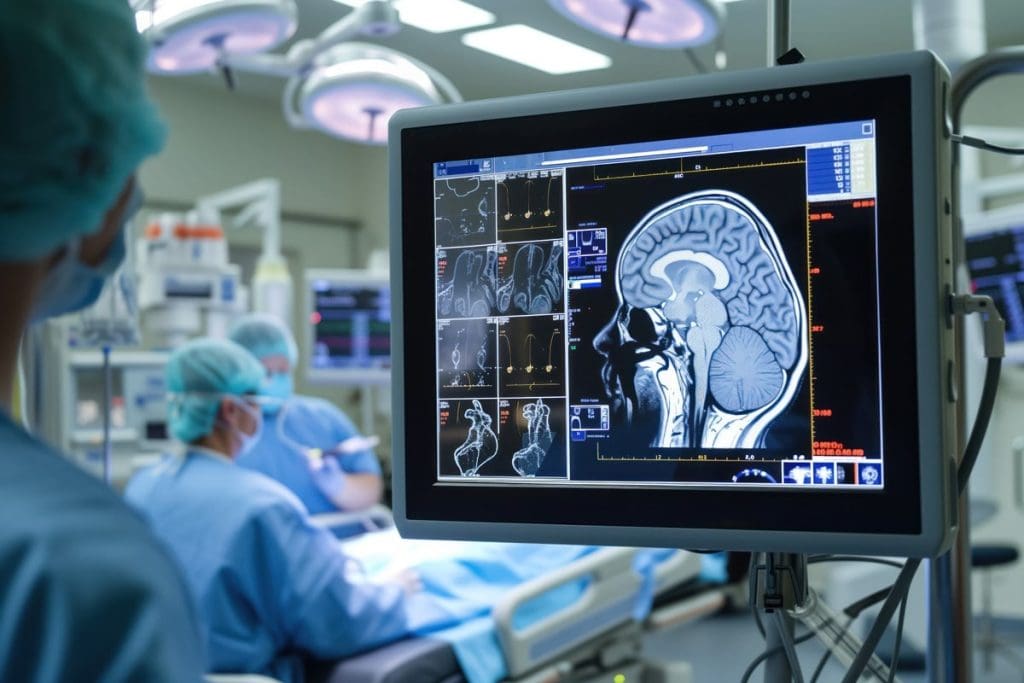
CT scan technology has changed how we look at the brain, helping us find tumors. It gives us detailed pictures of the brain. This helps us spot tumors and other problems.
Basic Principles of Computed Tomography
CT scans use X-rays to see inside the body. They move an X-ray source and detectors around the body. This way, they get data from many angles to make detailed brain images.
CT scans work because X-rays are absorbed differently by tissues. For example, bone absorbs more X-rays than soft tissue. This helps us see the brain’s different parts.
How Cross-Sectional Images Are Generated
Making cross-sectional images is a complex process. The X-ray source and detectors rotate around the patient. As X-rays go through the brain, they are absorbed at different rates. Detectors catch this info, and algorithms turn it into images.
Key Steps in Image Generation:
- Data acquisition through X-ray absorption
- Rotation of X-ray source and detectors
- Image reconstruction using algorithms
Radiation Dose Considerations in Brain CT
One big thing to think about with CT scans is the radiation dose. CT scans are very helpful but they do expose patients to radiation. We need to weigh the benefits against the risks of radiation.
| Radiation Dose Considerations | Impact on Diagnosis |
| Low-dose protocols | Reduced radiation exposure |
| High-resolution imaging | Improved diagnostic accuracy |
| Optimized scanning parameters | Balanced image quality and radiation dose |
Understanding CT scan technology helps us see its importance in finding brain tumors. The tech keeps getting better, aiming to make images clearer while using less radiation.
When Doctors Order a CT Scan Head Tumor Evaluation
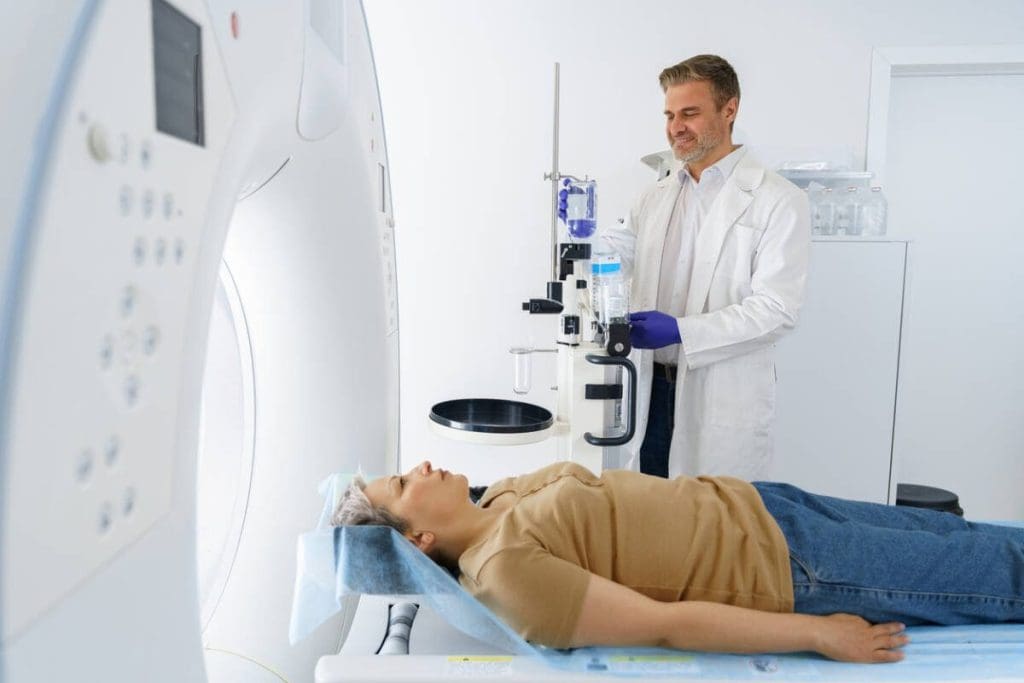
Doctors use CT scans to check for head tumors when patients show signs of trouble. This method is key in emergency cases where fast action is needed.
Common Symptoms That Prompt Brain Imaging
Doctors might order a CT scan if a patient has certain symptoms. These include headaches, seizures, confusion, or sudden vision or speech changes. These signs can mean a brain tumor needs quick medical help.
Common symptoms that may prompt a CT scan include:
- Severe or worsening headaches
- Seizures or convulsions
- Numbness or weakness in parts of the body
- Changes in speech or vision
- Confusion or altered mental state
Emergency vs. Non-Emergency Scanning Scenarios
CT scans for brain tumors can be urgent or not. Urgent scans are for serious symptoms like severe head trauma or sudden headaches. These are high-priority cases.
| Scenario | Typical Symptoms | Urgency Level |
| Emergency | Severe head trauma, sudden severe headache, signs of increased intracranial pressure | High |
| Non-Emergency | Chronic headaches, memory loss, gradual neurological decline | Low to Moderate |
Preparation Before the Procedure
Before a CT scan, patients should remove metal items like jewelry. They might also need to change into a hospital gown. Sometimes, a dye is used to make certain areas clearer.
It’s important to tell the doctor about any allergies, like as iodine or dye. Also, share any health conditions, like kidney disease.
What Happens During the Scan
The patient lies on a table that slides into a big machine. The scan is fast, lasting just a few minutes. They might be asked to hold their breath or stay very quiet for clear images.
After the scan, a radiologist reviews the images. They then report to the doctor. This report helps decide what to do next in diagnosing and treating the patient.
How CT Scans Reveal Brain Tumor Characteristics
CT scans are key in finding out about brain tumors. They show the tumor’s density, size, and where it is in the brain. This info is vital for doctors to make good plans for diagnosis and treatment.
Density Differences Between Tumor and Normal Tissue
CT scans are great for spotting brain tumors because they show how different tumor tissue is from normal brain tissue. Tumors usually have different densities than healthy tissue, making them stand out on CT scans. The density of a tumor can tell doctors about its type and how aggressive it is.
For example, some tumors might look brighter on a CT scan because of calcification or bleeding. Others might look darker because of dead cells or cysts. By looking at these differences, doctors can guess what kind of tumor it is.
Size and Location Identification
CT scans also help doctors measure the size and spot the exact location of brain tumors. Knowing the size is key to figuring out how serious the tumor is and planning treatment. Where the tumor is also matters a lot, as it can affect brain function and treatment choices.
We use CT scans to see if the tumor is in a vital part of the brain. This can change how doctors plan surgery or if they should use other treatments. Knowing the size, location, and density of the tumor gives doctors a full picture of the tumor.
| Characteristic | Description | Clinical Significance |
| Density | Variations in tumor density compared to normal tissue | Helps in identifying tumor type and aggressiveness |
| Size | Precise measurement of tumor dimensions | Critical for staging and planning treatment |
| Location | Identification of tumor location within the brain | Influences treatment choices and surgical approaches |
By looking at density, size, and location, doctors can make a more accurate diagnosis. They can then plan a better treatment for patients with brain tumors.
Effectiveness of CT Scans in Brain Tumor Detection
CT scans are key in finding brain tumors. They help us get accurate and quick diagnoses. These are vital for making good treatment plans.
Success Rates for Different Tumor Types
Research shows CT scans work well for some brain tumors. A study on the National Center for Biotechnology Information website talks about their success. The success rate changes with the tumor type, with some being easier to spot.
Here’s a table showing how well CT scans do for different tumors:
| Tumor Type | Detection Rate | Accuracy in Size Measurement |
| Meningioma | 95% | 90% |
| Glioma | 85% | 80% |
| Metastatic Tumors | 90% | 85% |
Accuracy in Determining Tumor Size and Boundaries
CT scans are great at finding tumors and measuring their size. Knowing the tumor size is key for tracking growth and treatment success. New CT technologies have made these measurements even more accurate.
Timeframe for Results and Interpretation
How fast you get CT scan results depends on the place and the case’s urgency. Usually, you get them in a few hours to a few days. Our radiologists team up with the clinical team to understand the results and plan treatment.
In summary, CT scans are very helpful in finding brain tumors. They have high success rates and accurately measure tumor size and boundaries. We keep using CT scans as a main tool in neuroimaging.
Diagnostic Limitations of CT Scans for Brain Tumors
CT scans are useful for finding brain tumors, but they have limits. These limits can affect how accurate diagnoses and treatments are.
Challenges in Detecting Small or Low-Contrast Tumors
One big problem with CT scans is finding small or low-contrast tumors. Tumors that are tiny or blend in with the brain can be hard to spot. This is a big issue when trying to catch tumors early.
We try to improve image quality with advanced CT tech. But finding very small tumors is always a challenge. The resolution limits of CT scans mean some tumors are too small to see.
Difficulty Distinguishing Between Tumor Types
Another issue is telling different types of brain tumors apart. A CT scan can show that a tumor is there, but it can’t always say if it’s benign or malignant. Knowing this is key to choosing the right treatment.
Often, we need more tests, like MRI or PET scans, to learn more about the tumor. We might use different imaging methods together to understand the tumor better.
Anatomical Regions with Reduced Visibility
Some brain areas are harder to see with CT scans because of artifacts from surrounding bone or other structures. For example, the posterior fossa near the skull base is tricky to image.
To deal with these issues, we might change how we do the CT scan or use other imaging methods. This helps us get the most accurate info for diagnosis.
CT Scans vs. MRI: Comparative Analysis for Brain Tumor Imaging
When diagnosing brain tumors, doctors often use CT scans and MRIs. Each has its own strengths and weaknesses. This makes them better for different situations in brain tumor imaging.
Strengths and Weaknesses of Each Modality
CT scans are fast and easy to get, making them great for emergencies. They’re good at finding bleeding and calcifications in tumors. But, they use radiation and don’t show soft tissues as well as MRI.
MRI, on the other hand, shows soft tissues better, which is key for understanding tumors and their surroundings. It’s best for planning surgeries and checking how treatments are working. But MRI scans take longer and can be affected by movement. They’re also not as common as CT scans.
When CT is Preferred Over MRI
There are times when CT scans are better than MRI for brain tumors. For example, in emergencies, CT scans are quicker. They’re also better for people with metal implants or who are afraid of tight spaces.
| Imaging Modality | Strengths | Weaknesses |
| CT Scans | Fast, readily available, and good for detecting hemorrhage and calcifications | Involves radiation, limited soft tissue differentiation |
| MRI | Superior soft tissue contrast, ideal for tumor characterization and treatment planning | Longer scan time, susceptible to motion artifacts, less available than CT |
The choice between CT scans and MRI depends on the situation, the patient’s health, and what’s needed for diagnosis and treatment.
Advanced CT Technologies Enhancing Brain Tumor Visualization
Advanced CT technologies are changing how we find and treat brain tumors. New CT scanning innovations give us clearer images of brain tumors. This helps doctors make better diagnoses and plan treatments.
Multi-Detector CT Scanners
Multi-detector CT scanners are a big step forward in CT tech. They use many detectors to get more data in one go. This means faster scans and sharper images.
Key benefits of multi-detector CT scanners include:
- Faster scan times, reducing patient discomfort and motion artifacts
- Higher resolution images, enabling more detailed tumor assessment
- Improved diagnostic accuracy, leading to better treatment planning
Perfusion CT Imaging
Perfusion CT imaging shows how blood flows through brain tumors. It helps tell tumor types apart and check how well treatments work.
The benefits of perfusion CT imaging include:
- Enhanced characterization of tumor vascularity
- Improved differentiation between tumor types
- Better assessment of treatment response
Dual-Energy CT Applications
Dual-energy CT adds a new layer to brain tumor imaging. It uses two X-ray energies to give more detailed tumor and tissue information.
The advantages of dual-energy CT include:
- Improved tissue characterization
- Enhanced visualization of tumor boundaries
- Potential reduction in contrast material dosage
As CT tech keeps getting better, we’ll see even more precise brain tumor diagnosis and treatment. These advanced CT technologies are changing neuro-oncology. They bring new hope to patients with brain tumors.
Artificial Intelligence Revolution in CT Tumor Analysis
Artificial intelligence is changing how we analyze CT scans for brain tumors. It makes both accuracy and efficiency better. AI algorithms are now key in helping radiologists interpret medical images.
Computer-Aided Detection Systems
Computer-aided detection (CAD) systems are becoming more common. They help radiologists spot tumors on CT scans. These systems use algorithms to point out areas that might need a closer look.
Thanks to CAD systems, tumor detection is getting more accurate. They can quickly go through lots of data. This gives radiologists insights they might have missed.
Automated Segmentation of Tumor Boundaries
AI is also improving how we define tumor boundaries. AI algorithms can draw out tumor edges more accurately than humans. This is key for planning treatments and checking if they work.
Automated segmentation saves time and makes tumor measurements more reliable. This is a big help in treating patients.
Machine Learning Algorithms for Improved Accuracy
Machine learning algorithms are leading the way in CT tumor analysis. They learn from big datasets to spot tumor patterns that humans might miss.
By using machine learning in CT imaging, we get more accurate diagnoses. This leads to better treatment plans for each patient. We’re using these advances to improve patient care.
| AI Application | Benefits | Impact on Diagnosis |
| Computer-Aided Detection | Improved detection rates, reduced human error | Enhanced accuracy in tumor detection |
| Automated Segmentation | Precise tumor boundary delineation, time-saving | Better treatment planning and monitoring |
| Machine Learning Algorithms | Pattern identification, improved diagnostic accuracy | Personalized treatment plans, better patient outcomes |
As AI becomes more integrated into CT tumor analysis, we’ll see even better results. The future of medical imaging looks bright thanks to these technologies.
Conclusion: The Evolving Role of CT in Brain Tumor Diagnosis
We’ve looked at how CT scans are key in finding and studying brain tumors. They help doctors plan treatments. CT scans are getting better at spotting and understanding brain tumors.
CT scans are very important, like in emergencies when quick images are needed. New CT tech, like multi-detector scanners and perfusion CT, makes diagnoses more accurate. This helps doctors a lot.
Using artificial intelligence in CT scans will lead to even better diagnoses. Whether a brain tumor shows up on a CT scan depends on many things. But, CT scans are getting better at finding many types of brain tumors.
Knowing what CT scans can and can’t do helps us use them better. The future of finding brain tumors will likely mix CT scans with MRI and AI. This will help patients even more.
FAQ
Will a CT scan show a brain tumor?
Yes, a CT scan can spot brain tumors. It shows differences in density between the tumor and normal tissue. It also reveals the tumor’s size and location.
Can a brain tumor be detected with a CT scan?
Yes, CT scans are good at finding brain tumors, even in emergencies. But, how well they detect tumors can depend on the tumor’s type and size.
How do CT scans reveal brain tumor characteristics?
CT scans show brain tumor details by highlighting density differences. They also show the tumor’s size and location. These details are key for diagnosis and treatment planning.
What are the diagnostic limitations of CT scans for brain tumors?
CT scans have some limits. They might miss small or low-contrast tumors. They can also struggle to tell different tumor types apart or see certain areas. These issues can affect their accuracy.
How do CT scans compare to MRI for brain tumor imaging?
CT scans and MRI have their own strengths and weaknesses. CT scans are quicker and easier to get to. MRI gives more detailed images of soft tissues. The choice between them depends on the situation.
Can artificial intelligence improve CT tumor analysis?
Yes, artificial intelligence is making CT scans better. It includes systems for detecting tumors, outlining tumor boundaries, and using machine learning. These tools improve analysis accuracy and speed.
What are the latest advancements in CT technology for brain tumor visualization?
New CT tech includes multi-detector scanners, perfusion imaging, and dual-energy CT. These advancements help better see and diagnose brain tumors.
How long does it take to receive results from a CT scan for a brain tumor?
The time to get CT scan results varies. It depends on the hospital and how urgent the case is. Usually, results are ready in a few hours or days.
Do CT scans show brain cancer?
Yes, CT scans can find brain cancer, including tumors. But how well they detect it depends on the tumor’s type, size, and location.
Can a CT scan detect brain cancer?
Yes, CT scans can find brain cancer. They’re often used in emergencies to quickly check for tumors or other issues.
References
- Kumar, A., et al. (2023). Distinctive approach in brain tumor detection and feature extraction using CT images. Scientific Reports, 13, Article 14021. https://www.nature.com/articles/s41598-023-50073-9