CT Scan of Neck with Contrast: What to Expect
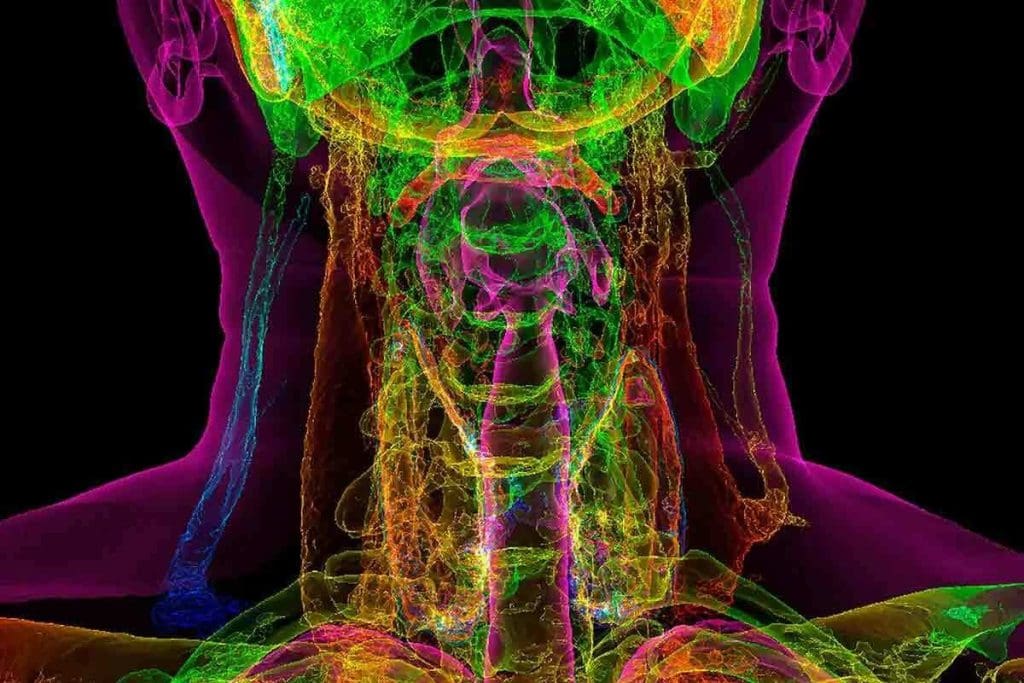
Getting a medical test can feel stressful, especially when you’re unsure what will happen. A CT scan of neck with contrast is a detailed imaging test that helps doctors examine important areas such as the throat, lymph nodes, and blood vessels. The contrast dye highlights these structures, making it easier to detect any abnormalities or signs of disease.
The entire process ” from preparation to the actual scan ” usually takes about 20 to 40 minutes. Patients may be asked to avoid eating or drinking for a few hours before the test. After the scan, you can usually return to your normal activities.
For more details on what happens during a CT scan and how to prepare, explore our helpful resources. At Liv Hospital, we focus on making every patient’s experience safe, clear, and comfortable.
Key Takeaways
- The CT scan itself is quick, lasting just a few minutes.
- Getting ready and after-care can take up to 40 minutes.
- You might need to change into a hospital gown and get an IV for contrast dye.
- We might give you medicine to relax if you’re worried about being in a small space.
- You’ll need to hold your breath a few times during the scan.
What Is a CT Scan of the Neck With Contrast?
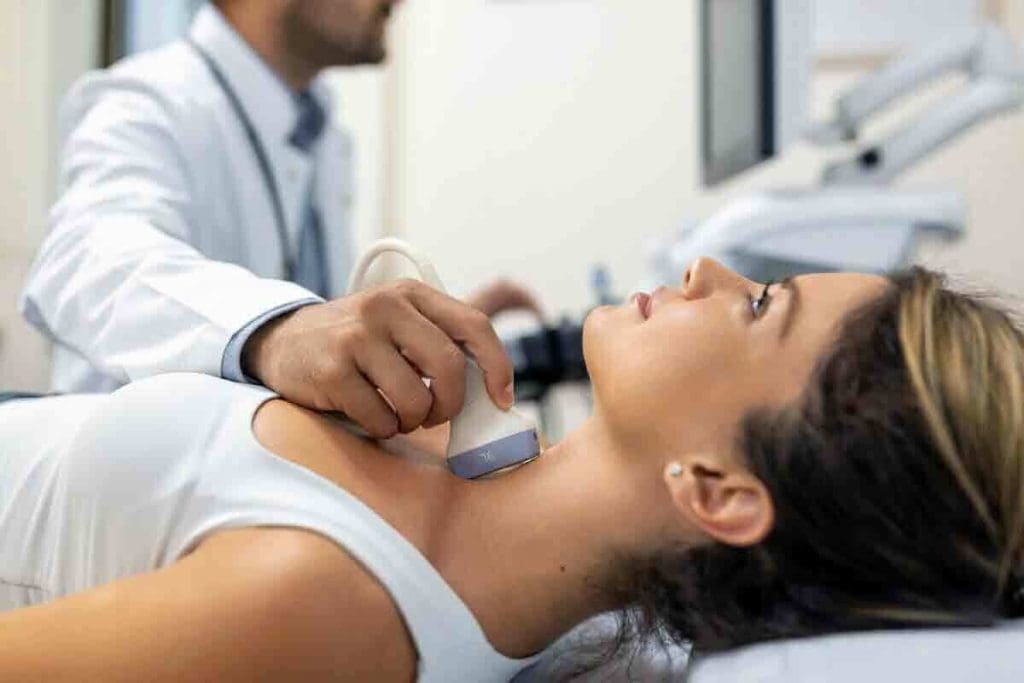
A CT scan of the neck with contrast is a detailed imaging method. It helps doctors find many health issues. This test uses X-rays and a contrast agent to show the neck’s inner details.
Definition and Basic Principles
A CT scan of the neck with contrast is a special imaging test. It combines X-rays from different angles to show the neck’s cross-sections. A contrast agent, given through a vein, makes some tissues stand out more.
This makes it easier to spot problems. Clinical experts say CT scans are great for looking at complex areas and finding issues not seen on other tests.
Structures Evaluated in the Neck Region
The neck has many important parts, like the throat and blood vessels. A CT scan with contrast can check these areas for issues. It uses the contrast agent to show the differences between tissues.
Difference Between Contrast and Non-Contrast Scans
The main difference is the contrast agent used in CT scans. This agent, like iodine, makes X-rays show up differently. This helps highlight the differences between body tissues.
Non-contrast CT scans are good for some things, like finding kidney stones. But contrast-enhanced scans give more details about soft tissues and blood vessels.
Medical Conditions Diagnosed Using CT Scan of Neck With Contrast
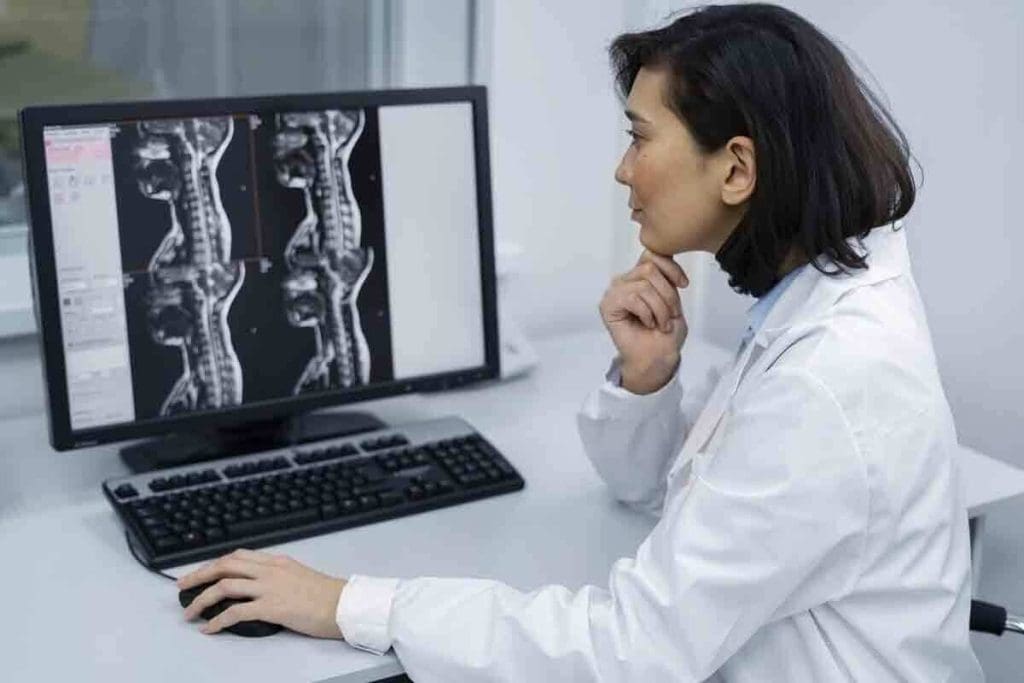
A CT scan of the neck with contrast is a tool for finding medical issues in the neck. It gives clear images of the neck’s parts. This helps us spot problems and figure out what treatment is needed.
Lymph Node Abnormalities
CT scans are great for checking lymph nodes in the neck. Big lymph nodes might mean infection, inflammation, or cancer. Our team looks at these nodes to see if they’re normal or if there’s a problem like lymphoma or cancer.
- Detection of enlarged lymph nodes
- Assessment of lymph node structure and shape
- Identification of possible cancerous changes
Vascular Conditions
CT scans are also good for finding problems with blood vessels in the neck. They help spot stenosis, aneurysms, or blood clots in the carotid arteries. This way, we can find issues that might cause a stroke or heart problems.
Soft Tissue Masses and Tumors
The CT scan with contrast is useful for looking at soft tissue masses and tumors in the neck. It can show us benign growths like cysts or lipomas, or cancerous tumors. The clear images help us understand the size, location, and type of growth, which guides our treatment plan.
Key features assessed include:
- Size and location of the mass
- Characteristics of the mass, such as density and enhancement patterns
- Relationship of the mass to surrounding structures
Inflammatory Conditions
CT scans can also help diagnose inflammation like abscesses or cellulitis in the neck. The contrast agent makes it easier to see where the inflammation is. This info is key for making a good treatment plan.
Preparing for Your CT Scan on Neck
A successful CT scan of the neck with contrast starts with good preparation. We’ll guide you through it. Being well-prepared helps the scan go smoothly and ensures accurate results.
Pre-Scan Instructions and Requirements
Before your CT scan, you’ll get specific instructions. You might need to arrive early to fill out paperwork and change into a gown. It’s important to follow these instructions carefully to avoid any delays or complications during the scan.
Dietary and Medication Considerations
There might be dietary restrictions before your CT scan, if it’s with contrast. You may need to fast for a few hours before the scan. Also, some medications might need to be adjusted or stopped. Talk to your healthcare provider about your medications.
What to Wear and Bring
On the day of your CT scan, wear loose, comfortable clothing without metal. Avoid jewelry, glasses, or clothes with metal parts as they can interfere with the scan. You might need to change into a gown provided by our facility. Bring any medical records, previous scans, and a list of your current medications.
Discussing Medical History and Concerns
Talk to our medical team about your medical history and any concerns before the scan. This includes any allergies, like to contrast materials, and kidney problems. Telling us about your medical history helps us ensure your safety during the procedure.
The Complete CT of the Neck Procedure Step by Step
A CT scan of the neck with contrast is a simple process. We’ll guide you through each step. Knowing what to expect can help reduce your anxiety. At Liv Hospital, we aim to make your experience as comfortable and seamless as possible.
Arrival and Registration Process
When you arrive, you’ll start with the registration. Our staff will help you with the paperwork and identification. Make sure to arrive 15-30 minutes early to get this done.
Contrast Agent Administration
Before the scan, a contrast agent is given to make your neck’s structures clearer. Our medical team will explain the process and ensure you’re comfortable. The agent is injected into a vein in your arm with a small needle.
Some patients might feel a slight pinch or cold sensation as the contrast is administered, but this is usually temporary and well-tolerated.
Positioning in the CT Scanner
After the contrast agent is given, you’ll be placed on the scanning table. Our radiographers will make sure you’re aligned and comfortable. The table will then move into the CT scanner, a large, doughnut-shaped machine.
Instructions During the Scan
During the scan, you’ll need to stay very quiet and might be asked to hold your breath. Our team will communicate with you through an intercom system, ensuring you’re comfortable and aware of what’s happening.
- The scan itself is relatively quick, typically taking only a few minutes.
- You’ll be alone in the room, but our team will be monitoring you closely.
- If you experience any discomfort, let us know, and we’ll address it promptly.
By understanding these steps, you’ll be better prepared for your CT scan of the neck with contrast. This will make the experience as smooth and stress-free as possible.
Duration Breakdown: How Long Does a Neck CT Scan Take?
Knowing how long a neck CT scan takes is key for planning your day.
Total Time from Check-in to Completion
A CT scan of the neck with contrast usually takes 20 to 40 minutes. This includes getting ready, getting the contrast, and the scan itself.
Preparation and Contrast Administration Time
Getting ready for the scan is important. This includes:
- Registration and preparation: 5-10 minutes
- Contrast administration preparation: 2-5 minutes
We make sure you have enough time to feel comfortable and ready for the scan. Every patient is different, and we take that into account.
Actual Scanning Duration
The actual scan of the neck is very quick. It takes less than a minute to a few minutes. Our team makes sure you’re in the right spot to get the images we need.
Factors That May Extend Your Scan Time
Even though we try to be quick, some things might make your scan take longer:
- The need for more images or sequences
- Issues with getting the contrast in
- Challenges with moving or positioning you
Our team is ready for these situations. We’ll keep you updated and make sure you’re comfortable and understand what’s happening.
In summary, the actual scan is fast, but the whole visit includes getting ready and other steps. We’re dedicated to making your experience as smooth and efficient as possible.
What You’ll Experience During a CT Scan With Contrast for Neck
Getting ready for a CT scan with contrast for your neck might make you curious about what it’s like. At our place, we make sure you know what to expect and feel comfortable.
Physical Sensations in the Scanner
When the contrast agent is given through an IV, you might feel a slight sensation. Some people say it feels warm or like a flush, but it’s usually short-lived and safe. You might also hear a soft humming or clicking as the scanner works.
It’s important to stay very quiet during the scan to get clear images. Our team will help you with breathing and how to sit to keep you comfortable and cooperative.
Common Reactions to Contrast Material
Some studies show that people might taste metal, feel nauseous, or get a warm feeling from the contrast. Rarely, more serious reactions can happen, but our medical team is ready to handle them quickly.
Some people might feel their heart beat faster or get a sudden warmth in their chest, arm, or genital area. If you have any worries or feel something odd, tell our team right away.
Noise Levels and Environment
The CT scanner makes some noise, but it’s not very loud. We try to keep it quiet and make you as comfortable as possible. You can talk to our staff through an intercom, so feel free to ask anything or share any concerns.
Breathing Instructions and Positioning Requirements
To get the best images, you’ll need to follow some easy steps. Our team will ask you to hold your breath briefly and stay very quiet. They’ll also help you get into the right spot on the scanner table.
Here’s what you can expect during the CT scan with contrast for the neck:
| Aspect | Description |
| Physical Sensations | Slight sensation during contrast administration, possible warmth or flushing |
| Reactions to Contrast | Metallic taste, nausea, warmth; rare severe reactions |
| Noise Levels | Moderate noise; communication possible through intercom |
| Breathing Instructions | Hold breath for short periods; remain very quiet |
After Your Cat Scan of the Neck: Recovery and Results
After your CT scan of the neck, we focus on making you comfortable and informed. We know getting a medical scan can be stressful. Our goal is to support you every step of the way.
Immediate Post-Procedure Care
You can usually go back to your normal activities right after the scan. But, it’s crucial to heed your doctor’s recommendations. They will advise you to be vigilant for any potential side effects and provide guidance on how to manage them.
Hydration Requirements After Contrast
Drinking lots of water is key after a CT scan with contrast. It helps get rid of the contrast agent. Try to drink at least 8-10 glasses of water in the 24 hours after your scan.
| Hydration Tips | Benefits |
| Drink water regularly | Helps eliminate contrast agent |
| Avoid caffeinated beverages | Reduces dehydration risk |
| Monitor urine output | Ensures proper kidney function |
When and How You’ll Receive Results
How long it takes to get your CT scan results varies. Usually, your doctor will talk about them with you at a follow-up visit. It’s important to follow up with your healthcare provider to understand your results and any necessary next steps.
Follow-up Recommendations
Depending on your scan results, your healthcare team might suggest more tests, treatment, or follow-up visits. We’re dedicated to giving you the best care, from the scan to the follow-ups, to help you get the best results.
We always put your health and well-being first. If you have questions or concerns about your CT scan results or recovery, please contact our team.
Potential Risks and Special Considerations
CT scans are very useful for diagnosing health issues. But, it’s important to know the risks and special things to consider. At our place, we always put patient safety first. We work hard to make sure CT scans of the neck with contrast are safe.
Radiation Exposure and Safety Measures
CT scans use radiation, which is a worry for patients. But, we use the least amount of radiation needed to get good images. Our team follows strict rules to keep radiation exposure low.
Radiation safety measures include using special controls and techniques. We also plan each scan carefully to reduce radiation exposure.
Contrast Agent Allergies and Reactions
Some people might be allergic to the contrast agent used in CT scans. We use iodine-based contrast agents, which are usually safe but can cause allergic reactions. Symptoms include hives, itching, or trouble breathing.
If you have allergies, tell your doctor before the scan. We take precautions for patients with a history of allergies. We might give you medicine to prevent an allergic reaction.
Kidney Function and Contrast Considerations
People with kidney disease or poor kidney function should be careful with contrast agents. Their kidneys might struggle to clear the contrast. We check kidney function before using contrast by looking at lab tests.
For those with serious kidney problems, we might choose other imaging options. Or, we might take extra steps to protect them. Sometimes, we decide the benefits of contrast outweigh the risks, and we watch their kidney function closely.
Pregnancy and CT Scans
Pregnant women or those who might be pregnant should tell their doctor before a CT scan. Radiation exposure during pregnancy is a concern. But, we try to keep radiation low when a CT scan is needed.
In some cases, we might suggest ultrasound or MRI instead. But if a CT scan is necessary, we use the lowest dose of radiation. We also try to shield the abdomen and pelvis as much as we can.
Conclusion
A CT scan of the neck with contrast is a key tool for finding neck problems.Our trained professionals at Liv Hospital focuses on top-notch care, from start to finish.
Knowing what to expect during a ct scan on neck can make you feel better. The neck ct scan includes getting ready, scanning, and aftercare.
Our team is here to support you every step of the way. If you have questions about ct of neck or ct with contrast neck, reach out to us.
Opting for Liv Hospital guarantees you receive exceptional care and assistance. We’re here to help you every step of the way.
FAQ
What is a CT scan of the neck with contrast?
A CT scan of the neck with contrast is a test that uses X-rays and a contrast agent. It creates detailed images of the neck. This helps doctors check the throat, lymph nodes, blood vessels, and soft tissues.
How long does a CT scan of the neck with contrast take?
The time for a CT scan of the neck with contrast varies. It depends on how long it takes to prepare, give the contrast, and scan. It usually takes 15-30 minutes.
What should I wear and bring to the scanning facility?
Wear loose, comfy clothes without metal. Leave jewelry and metal clothes at home. Bring your medical records, insurance, and a list of your medicines.
Are there any dietary or medication considerations before the scan?
Yes, you’ll get instructions before the scan. You might need to fast or avoid certain medicines.
Will I experience any physical sensations during the CT scan?
You might feel a slight sensation when the contrast is given. You’ll be in the CT scanner, staying very quiet. You might hear some noise.
What are the possible risks of a CT scan of the neck with contrast?
Risks include radiation, allergic reactions, and issues for those with kidney problems or who are pregnant. Our team takes steps to reduce these risks.
How will I receive my scan results?
You’ll get your results as your healthcare provider directs. Our team will also tell you what to do next.
Can I undergo a CT scan of the neck with contrast if I have kidney issues?
If you have kidney problems, you might need special care or avoid the contrast. Our team will check your situation and advise you.
Is a CT scan of the neck with contrast safe during pregnancy?
CT scans use radiation, which could harm the fetus. Our team will talk to you about the risks and benefits. We might look for other tests instead.
How can I prepare for a CT scan of the neck with contrast?
To prepare, follow the instructions from our team. This includes what to eat and drink and what medicines to avoid. Arrive early to fill out any paperwork.
References
- Zhang, R., et al. (2019). Large-Scale Assessment of Scan-Time Variability and Factors Associated with Prolonged Imaging Exams. PMC (PubMed Central). https://pmc.ncbi.nlm.nih.gov/articles/PMC7064664/
- Alzimami, K., et al. (2022). Effective Radiation Doses in Neck Computed Tomography: A Study of Dose Variation. ScienceDirect. https://www.sciencedirect.com/science/article/abs/pii/S0969806X22003838