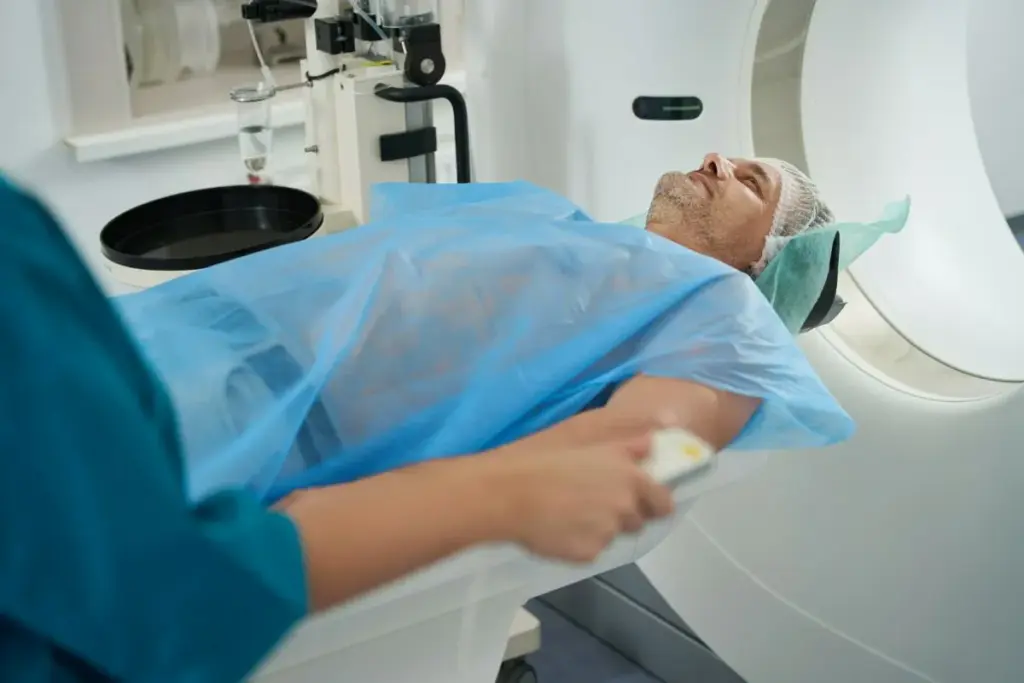
Heart disease is a major killer worldwide, causing millions of deaths each year. Early detection is key to prevent and manage heart conditions. A cardiac CT scan is a diagnostic tool that shows detailed images of the heart and its blood vessels. It helps doctors spot problems early. Wondering what a ct scan shows? Uncover vital truths about your heart health and detect hidden issues early with this amazing diagnostic tool.
We use cardiac CT scans to see the heart’s structure and find issues like coronary artery disease and cardiac tumors. This cardiovascular test is safe and non-invasive. It gives doctors the info they need to make the right treatment choices for heart health.
Key Takeaways
- A cardiac CT scan is used for heart screening and diagnosing cardiovascular diseases.
- It provides detailed images of the heart and its blood vessels.
- This test is critical for early detection of heart problems.
- Cardiac CT scans help in diagnosing conditions like coronary artery disease.
- The test is non-invasive, making it a safe diagnostic option.
Understanding Cardiac CT Scans
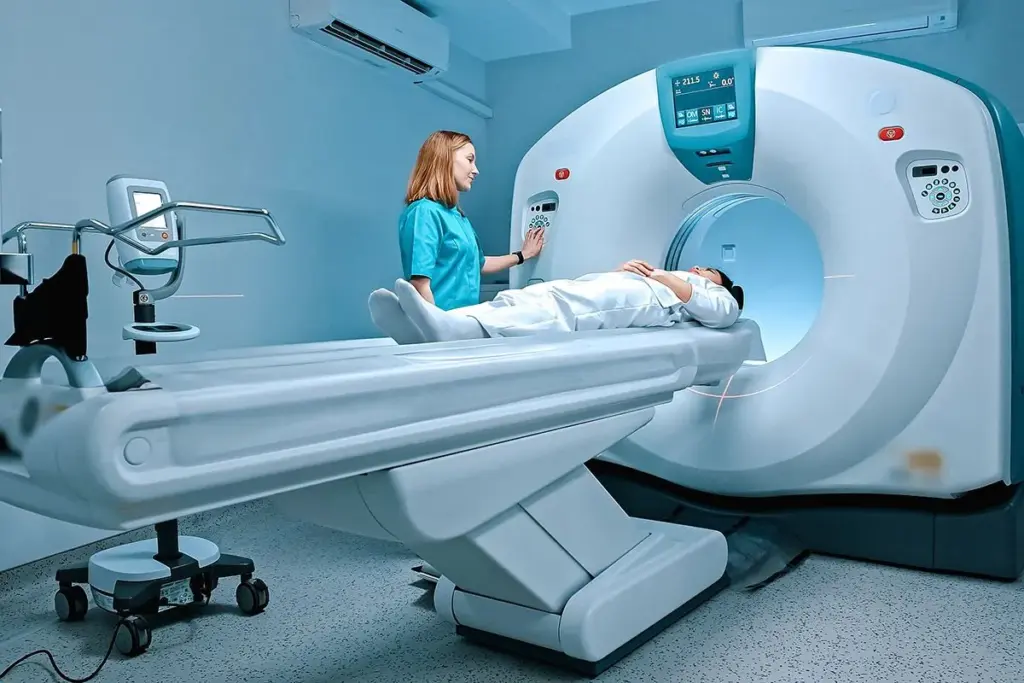
Cardiac CT scans are key in cardiology, giving detailed views of the heart. We’ll look into what they are and how they compare to other imaging methods.
Definition of a Cardiac CT Scan
A cardiac CT scan is a non-invasive test that uses X-rays to show the heart and blood vessels clearly. It helps doctors see the heart’s shape, find problems, and plan treatments.
The scan uses a CT scanner that moves around the body. It takes pictures of the heart from different sides. Then, these pictures are put together to show the heart’s full structure.
|
Key Features |
Description |
|---|---|
|
Non-invasive |
No surgical incisions are required, making it a safe and comfortable procedure for patients. |
|
High-resolution images |
Provides detailed images of the heart’s structure and blood vessels, aiding in accurate diagnoses. |
|
Quick procedure |
The scan itself typically takes only a few minutes, though preparation and processing may take longer. |
How It Differs from Other Imaging Techniques
Cardiac CT scans are different from MRI or ultrasound. MRI shows the heart’s structure without X-rays but might miss the coronary arteries. Ultrasound uses sound waves but doesn’t show as much detail as a CT scan.
Key differences include:
- The use of X-rays to create detailed images of the heart and its blood vessels.
- The ability to provide high-resolution images of the coronary arteries, which is key for diagnosing coronary artery disease.
- A quicker procedure compared to some other imaging techniques, making it more convenient for patients.
The Purpose of Cardiac CT Scans
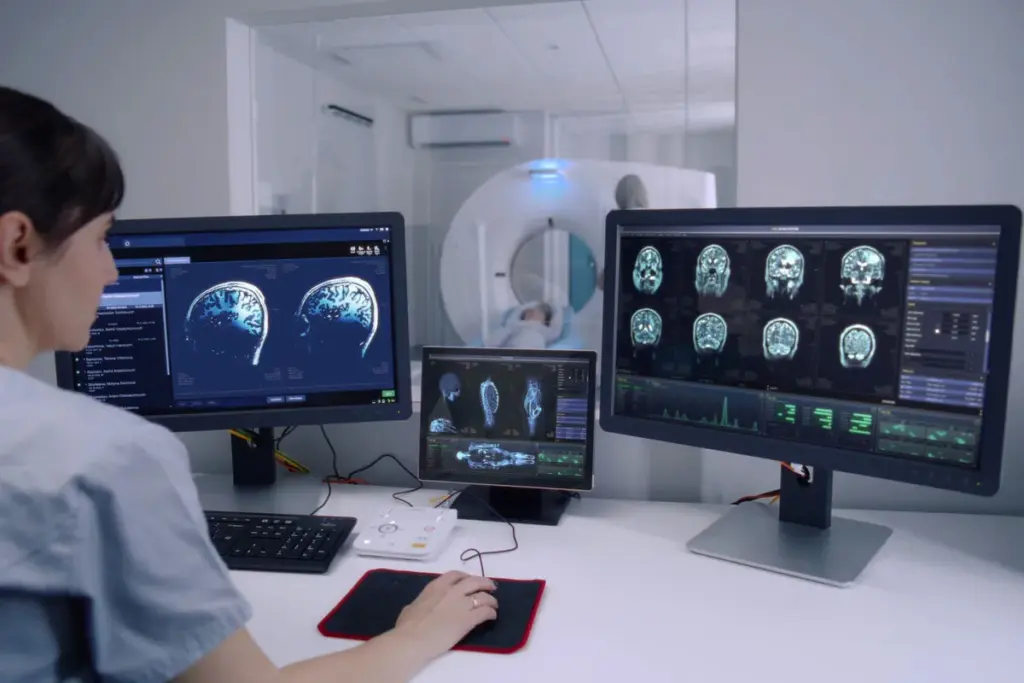
Cardiac CT scans are key in checking the heart’s health. They help find problems early. These scans show how the heart works and its structure, which is vital for diagnosing and treating heart issues.
Diagnosing Heart Conditions
Cardiac CT scans are essential for diagnosing heart conditions. They give detailed images of the heart. Doctors can spot blockages, narrowings, or other problems in the coronary arteries.
These scans are great for finding coronary artery disease, cardiac tumors, and other heart problems. Doctors can then decide the best treatment for patients based on the scan images.
Assessing Coronary Artery Disease
Cardiac CT scans are mainly used to assess coronary artery disease. They can spot calcium in the arteries, which shows atherosclerosis. This helps doctors know how severe the disease is and plan treatment.
These scans also measure how narrow the arteries are. This is key for deciding if patients need procedures like angioplasty or stenting.
|
Diagnostic Method |
Usefulness in Diagnosing Heart Conditions |
Ability to Assess Coronary Artery Disease |
|---|---|---|
|
Cardiac CT Scan |
Highly effective for visualizing heart structure and detecting abnormalities |
Excellent for identifying calcium deposits and assessing stenosis |
|
Echocardiogram |
Useful for evaluating heart function and detecting valve problems |
Limited ability to assess coronary artery disease directly |
|
Stress Test |
Helpful for identifying ischemia and assessing cardiac function under stress |
Indirectly assesses coronary artery disease through symptoms and cardiac function |
Cardiac CT scans help doctors understand a patient’s heart health fully. This allows for targeted and effective care.
Types of Cardiac CT Scans
Cardiac CT scans are used in different ways, like coronary CT angiography and calcium scoring CT. Each has its own purpose. Knowing about these types helps both doctors and patients make better choices for heart health.
Coronary CT Angiography
Coronary CT angiography gives detailed images of the heart and its blood vessels. It uses contrast dye to show the coronary arteries. This helps find blockages or problems. It’s great for spotting coronary artery disease and figuring out treatment.
Calcium Scoring CT
Calcium scoring CT checks for calcium in the coronary arteries. Finding calcium shows if heart disease is present. It’s good for checking heart disease risk in people without symptoms and tracking disease changes.
Preparing for a Cardiac CT Scan
Knowing what to do before a cardiac CT scan can make you feel less anxious. We’ll walk you through the steps to make your experience as easy as possible.
Pre-scan Guidelines
To get ready for a cardiac CT scan, follow these tips:
- Avoid eating or drinking anything except water for a few hours before the scan, as directed by your healthcare provider.
- Inform your doctor about any medications you’re taking, specially if you have diabetes or kidney disease.
- Wear loose, comfortable clothing and avoid wearing jewelry or anything with metal.
- If you’re claustrophobic, discuss your concerns with your doctor, as they may be able to offer a solution.
It’s important to follow these guidelines to ensure your scan is safe and effective.
What to Expect on Scan Day
Here’s what you can expect on the day of your cardiac CT scan:
- Upon arrival, you’ll be asked to change into a hospital gown.
- A technician will explain the procedure and answer any questions you may have.
- You will be positioned on a table that slides into the CT scanner.
- The scan itself is relatively quick, typically taking only a few minutes.
- You may be given a contrast dye to help highlight the areas of your heart.
Our team is dedicated to making you feel as comfortable as possible throughout the process.
The Procedure: Step-by-Step
The cardiac CT scan is a detailed medical test that shows the heart’s pictures. We aim to make the process clear and easy to understand. This way, you’ll feel more at ease during the test.
Technology Involved
The tech behind a cardiac CT scan is cutting-edge. It uses a CT scanner, a big, doughnut-shaped machine. This machine takes X-rays of the heart from various angles.
The scanner has special software that turns these images into 3D models of the heart. This tech lets doctors see the heart’s structure and function very accurately.
Key components of the technology include:
- X-ray tube: Produces X-rays that pass through the body.
- Detectors: Capture the X-rays that have passed through the body, sending the information to a computer.
- Computer system: Reconstructs the images from the data captured by the detectors.
Duration of the Scan
The actual scan is fast, taking just a few minutes. But getting ready and the whole visit might take about 30 minutes to an hour. You’ll lie on a table that slides into the CT scanner.
You might get contrast dye to make the heart’s structures stand out. The scan is painless, and you can breathe normally. You might need to hold your breath for a bit.
Remember, the scan itself is quick. But the whole process includes getting ready and waiting for the contrast dye to work.
Analyzing the Results
Looking at the results of a cardiac CT scan is key for doctors to diagnose and manage heart issues. We examine detailed images of the heart and its blood vessels. This helps us spot any problems.
Interpreting CT Images
Reading CT images needs a lot of skill. Radiologists and cardiologists team up to study the scan images. They search for signs of heart disease, like plaque buildup or narrowed arteries.
They check how severe the disease is and how it affects the heart. Then, they decide on the best treatment, which could be more tests, medicine, or other actions.
Common Findings
Cardiac CT scans often show signs of heart disease, like calcium deposits in arteries. A high calcium score means a big risk of heart disease.
Here’s what different findings might mean:
|
Finding |
Implication |
|---|---|
|
Coronary Artery Disease |
Shows plaque buildup or narrowed arteries, which can lead to heart attacks or other serious issues. |
|
High Calcium Score |
Means a higher risk of heart disease because of calcium in the arteries. |
|
Structural Heart Issues |
Points to problems with the heart’s valves, chambers, or other parts. |
A leading cardiologist says, “The info from a cardiac CT scan is key for a treatment plan that fits each patient’s needs and risks.”
“The cardiac CT scan has changed how we diagnose and treat heart disease. It’s a non-invasive way to check for heart problems and coronary artery disease.”
It’s important to understand your cardiac CT scan results for your heart health. We help patients understand their results and what to do next.
Risks and Safety Concerns
Cardiac CT scans carry some risks, like radiation exposure and allergic reactions to contrast dye. It’s important for patients and doctors to know about these risks. This helps everyone make better choices.
Radiation Exposure
Cardiac CT scans use X-rays to see the heart clearly. This means a small amount of radiation is used. There’s a chance this could lead to cancer later, but the scan’s benefits often outweigh this risk.
We try to use the least amount of radiation needed for good images. New CT scanners help make images better while using less radiation. Technology keeps getting better, making cardiac CT scans safer.
Allergic Reactions to Contrast Dye
Some scans need contrast dye to show the heart and blood vessels. While safe for most, it can cause allergic reactions in some. These can be mild or very serious.
We check for allergies before the scan. If you’re allergic to the dye, we might use other tests or give you medicine to prevent a reaction.
The table below shows the main risks and how we keep you safe during cardiac CT scans:
|
Risk |
Description |
Safety Measures |
|---|---|---|
|
Radiation Exposure |
Increased risk of cancer |
Use of lowest necessary radiation dose, advancements in CT scanner technology |
|
Allergic Reactions to Contrast Dye |
Range from mild to severe reactions |
Screening for allergy history, alternative imaging methods, pre-medication |
Understanding these risks and our protective measures can help you feel more at ease with cardiac CT scans. Your doctor will recommend them when they’re needed.
Benefits of Cardiac CT Scans
Cardiac CT scans are great for catching heart problems early. They help keep our hearts healthy. We use them to find out what’s wrong and how to fix it.
Detecting Heart Issues Early
One big benefit of cardiac CT scans is finding heart problems early. This means we can act fast to stop bigger issues. It’s a big help in keeping our hearts in top shape.
- Identifies coronary artery disease before symptoms arise
- Detection of calcium deposits in the coronary arteries
- Assessment of cardiac structure and function
Non-Invasive Nature
Cardiac CT scans are non-invasive. They don’t need to go inside the body. This makes them a good choice for those who are scared of invasive tests.
|
Benefits |
Description |
|---|---|
|
Early Detection |
Identifies heart issues before they become severe |
|
Non-Invasive |
No need for surgical incisions or insertion of instruments |
|
Accurate Diagnosis |
Provides detailed images for accurate assessment |
Cardiac CT scans help a lot with heart health benefits and cardiovascular benefits. They catch problems early and are easy on the body. Talk to a doctor to see if a cardiac CT scan is right for you.
Comparing Cardiac CT with Other Tests
Different tests give us different views of heart health. Knowing these differences is key for good diagnosis and treatment. Cardiac CT scans are one tool for checking the heart, alongside MRI and traditional angiography.
CT vs. MRI for Cardiac Imaging
Cardiac CT scans and MRI are both for seeing the heart. But they do it in different ways and show different things. Cardiac CT scans use X-rays to show the heart’s structure, like the coronary arteries. This makes them great for finding coronary artery disease.
MRI uses magnetic fields and radio waves to show the heart’s structure and function. It can see how well the heart muscle pumps. MRI is better at showing soft tissues, but cardiac CT scans are faster and clearer for the coronary arteries.
CT vs. Traditional Angiography
Traditional angiography uses a dye and a catheter to see the arteries on X-ray. It’s the top choice for finding coronary artery disease. But, it’s invasive and can be risky.
Cardiac CT scans are non-invasive, using X-rays to see the coronary arteries without a catheter. They might not show as much detail as traditional angiography. But, they’re safer for a first look and can decide if more invasive tests are needed.
Choosing between cardiac CT scans, MRI, and traditional angiography depends on the patient’s needs and the risks of each test. Knowing what each test can do helps doctors make the best choice for their patients.
Understanding False Positives and Negatives
Cardiac CT scans can sometimes show false positives and negatives. It’s important to know what these mean for patient care. A false positive means a problem is seen when there isn’t one. On the other hand, a false negative means no problem is seen when there actually is one.
Causes of Misinterpretation
There are several reasons why cardiac CT scan results might be misinterpreted. These include:
- Technical issues: Problems with the CT scanner or issues during scanning can affect image quality.
- Patient factors: Patient movement or certain physical characteristics can impact image clarity.
- Interpretation expertise: The skill level of the professional interpreting the scan can affect accuracy.
Knowing these causes can help reduce the risk of misinterpretation.
Importance of Follow-up Tests
Follow-up tests are key when a cardiac CT scan is unclear or possibly wrong. These tests can confirm or rule out heart conditions. This ensures patients get the right care.
Some common follow-up tests include:
- Stress tests: To check heart function under stress.
- Traditional angiography: To get detailed images of coronary arteries.
- MRI scans: To get more insights into heart structure and function.
Using different diagnostic tools helps healthcare providers make more accurate diagnoses. This leads to better treatment plans.
Cost Considerations
Cardiac CT scans are important for diagnosing heart issues. But, they come with different costs. It’s key to know these costs and how insurance covers them for financial planning.
Average Costs of Cardiac CT Scans
The price of a cardiac CT scan changes based on several things. These include where you get it, whether it’s at a hospital or imaging center, and the technology used.
- Facility Fees: Hospitals usually charge more than centers for imaging.
- Technology and Equipment: More advanced CT scanners can cost more.
- Professional Fees: The cost for the radiologist’s interpretation can vary too.
In the U.S., a cardiac CT scan can cost between $300 and $1,500 or more. This depends on the scan’s complexity and other factors.
Insurance Coverage and Considerations
Most health insurance plans cover cardiac CT scans if they’re needed. But, how much they cover can differ a lot. This depends on the insurance company and your plan.
- Check Your Coverage: Make sure your plan covers cardiac CT scans.
- Pre-authorization: Some plans need you to get approval before getting a scan.
- Out-of-Pocket Costs: Even with insurance, you might have to pay for things like deductibles and copays.
We suggest talking to your healthcare provider or insurance about coverage and costs before getting a cardiac CT scan.
Next Steps After a Cardiac CT Scan
After a cardiac CT scan, patients get their results and might need to take steps for their heart health. We help you understand what to do next, making sure you’re informed.
Follow-Up Care
Follow-up appointments might be needed based on your scan results. These meetings help doctors keep an eye on your heart health. They also adjust treatment plans if needed.
Making Lifestyle Adjustments
Based on your scan results, you might need to make lifestyle changes. These changes can improve your heart health and lower disease risk. We help you create a plan that fits your life.
Understanding your scan results and taking action can keep your heart healthy. Our team is here to support you every step of the way.
FAQ
What is a cardiac CT scan?
A cardiac CT scan is a non-invasive test. It uses X-rays to show detailed images of the heart and blood vessels. This helps doctors diagnose heart conditions and check for coronary artery disease.
How does a cardiac CT scan differ from other imaging techniques?
Cardiac CT scans are different from MRI or traditional angiography. They give high-resolution images of the heart and blood vessels. This makes them great for spotting coronary artery disease.
What is the purpose of a cardiac CT scan?
The main goal of a cardiac CT scan is to find heart problems. It helps doctors check for coronary artery disease and spot heart issues early. This allows for quick treatment.
What are the types of cardiac CT scans?
There are two main types of cardiac CT scans. Coronary CT angiography shows the coronary arteries in detail. Calcium scoring CT measures calcium in the arteries, showing the extent of disease.
How do I prepare for a cardiac CT scan?
To get ready for a cardiac CT scan, avoid caffeine and certain meds. Also, remove any metal objects or jewelry on the day of the scan.
What happens during a cardiac CT scan?
During the scan, you’ll lie on a table that slides into a CT scanner. The scanner uses X-rays to take images of your heart. The whole process usually takes 10-15 minutes.
How are cardiac CT scan results analyzed?
Doctors analyze the scan results by looking at the images. They check for signs of disease, blockages, or other heart issues. They also look for any other problems.
What are the risks associated with cardiac CT scans?
Risks include radiation exposure and allergic reactions to contrast dye. But, steps are taken to reduce these risks. This includes using low doses of radiation and watching for allergic reactions.
What are the benefits of cardiac CT scans?
Cardiac CT scans have many benefits. They can find heart problems early, are non-invasive, and provide clear images. These make them a valuable tool for heart health.
How do cardiac CT scans compare to other diagnostic tests?
Cardiac CT scans are compared to MRI and traditional angiography. They all provide detailed images of the heart and blood vessels. Each has its own strengths and weaknesses, depending on what’s needed.
What are false positives and negatives in cardiac CT scans?
False positives and negatives are incorrect results. They can happen due to technical issues or unique body shapes. Follow-up tests might be needed to confirm or rule out a diagnosis.
How much does a cardiac CT scan cost?
The cost of a cardiac CT scan varies. It depends on location, insurance, and the facility. On average, it can cost from a few hundred to several thousand dollars.
What are the next steps after a cardiac CT scan?
After a cardiac CT scan, you’ll need to talk to your doctor about the results. You might need more tests or make lifestyle changes to keep your heart healthy.
Will my insurance cover a cardiac CT scan?
Insurance coverage for cardiac CT scans varies. It depends on your provider and policy. Always check with your insurance to see what’s covered and any costs you might face.
National Center for Biotechnology Information. Evidence-Based Medical Insight. Retrieved from https://pmc.ncbi.nlm.nih.gov/articles/PMC10894027/