
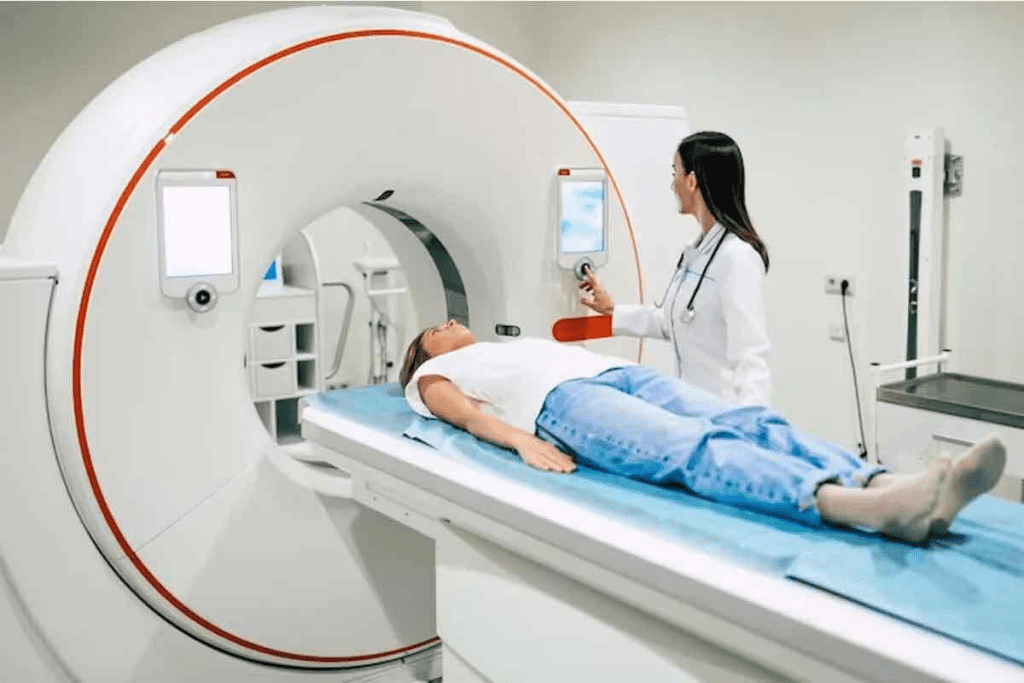
A CT scan with barium sulfate helps us see the inside of your digestive system. We use a barium sulfate CT scan to make the images clearer.
At Liv Hospital, we focus on keeping you safe and getting accurate results. Our team is here to help you understand your health options.
The use of barium CT contrast in CT scans is common for diagnosing stomach and bowel issues. We’ll look at the main points about this procedure. We’ll talk about its side effects and how safe it is.
Key Takeaways
- Understanding the role of barium sulfate in CT scans.
- Safety considerations for patients undergoing barium sulfate CT scans.
- Potential side effects and how to manage them.
- The importance of barium CT contrast in diagnostic imaging.
- Pre-procedure preparations and post-procedure care.
What Is Barium Sulfate and Its Role in Medical Imaging
Barium sulfate is a key contrast agent in medical imaging. It makes internal structures visible during CT scans. It helps doctors diagnose issues in the gastrointestinal tract.
Definition and Chemical Properties
Barium sulfate is a white, odorless powder that doesn’t dissolve in water. Its properties make it perfect for contrast agents. It’s not absorbed by the body and doesn’t mix with other substances.
How Barium Works as a Contrast Agent
Barium sulfate blocks X-rays, making the digestive tract visible on aCT scan. When swallowed, it lines the digestive tract. This helps doctors see ulcers, tumors, and other issues clearly.
Types of Barium Preparations Available
There are many barium preparations, like liquid suspensions and pastes. The type used depends on the procedure and area being checked. For example, a liquid might be used for upper GI tract scans.
Knowing about different barium preparations is key to good imaging. The right choice helps doctors get accurate results.
The Complete CT Scan With Barium Sulfate Procedure

Getting ready for a CT scan with barium sulfate involves several steps. We’ll cover what you need to do before, how barium sulfate is given, and what happens during the scan.
Pre-Procedure Preparation
Before your CT scan, you’ll likely need to fast for a while. The exact time will depend on your doctor’s instructions. You might also need to skip some medications or foods to avoid any issues.
Administration Methods (Oral vs. Rectal)
Barium sulfate can be taken by mouth or through the rectum. This choice depends on which part of your GI tract needs to be checked. Your doctor will decide based on your needs.
| Administration Method | Area Examined |
| Oral | Upper GI Tract |
| Rectal | Lower GI Tract |
What to Expect During the Procedure
During the scan, you’ll lie on a table that moves into a big machine. The barium sulfate makes the images clearer. You might feel a bit uncomfortable, but it’s usually not painful.
Following your doctor’s instructions is key to a good outcome. If you have any worries or questions, just ask.
Key Fact #1: Diagnostic Applications of Barium CT Contrast
Barium CT contrast has changed how we do diagnostic imaging, mainly for the gut. We use barium sulfate to make CT scans clearer. This helps us make more accurate diagnoses.
Gastrointestinal Tract Visualization
Barium CT contrast is great for seeing the gut, like the esophagus, stomach, small intestine, and colon. Barium sulfate coats the inside of these organs. This makes their shapes clear, helping us spot any problems.
Detection of Abnormalities and Conditions
Thanks to barium CT contrast, we can find many gut issues, like tumors, ulcers, and inflammation. Key benefits include:
- Improved diagnostic accuracy
- Enhanced visualization of complex structures
- Better detection of abnormalities
Advantages Over Non-Contrast Imaging
Barium CT contrast beats non-contrast CT scans in many ways. It shows gut structures more clearly, helping us find and diagnose problems.
Using barium CT contrast helps doctors make better choices for patient care. This leads to better treatment results.
Key Fact #2: Common Barium Sulfate CT Scan Side Effects

Barium sulfate is usually safe for CT scans. But some side effects can happen. These are mostly mild and short-lived. Knowing about them helps you recover better.
Gastrointestinal Discomfort
Gastrointestinal discomfort is a common side effect. It might feel like bloating, cramps, or just not feeling right in your stomach. Drinking plenty of water can help make these feelings better.
Does Barium Sulfate Cause Diarrhea?
Yes, barium sulfate can lead to diarrhea. It can make your bowel lining feel irritated, causing loose stools. If you keep having diarrhea, you should talk to your doctor about it.
Nausea and Vomiting
Nausea and vomiting are also possible side effects. These symptoms are usually mild but can be uncomfortable. Eating small, light meals after the scan can help with nausea.
Constipation Concerns
Some people might get constipated after a barium sulfate CT scan. This is because barium can slow down your bowel movements. Drinking more water and eating more fiber can help with this.
In summary, barium sulfate CT scans are mostly safe. But knowing about possible side effects helps you prepare and manage them. If you have severe or ongoing symptoms, always talk to your healthcare provider.
Key Fact #3: Rare but Serious Complications
Barium sulfate CT scans can have rare but serious complications. It’s key to know these risks. Barium sulfate is usually safe, but some people might face more problems.
Gastrointestinal Obstruction Risk Factors
Gastrointestinal obstruction is a rare but serious issue with barium sulfate CT scans. It can be life-threatening. People with bowel obstruction or strictures are at higher risk. We check patients carefully before using barium sulfate to lower this risk.
Allergic Reactions to Barium For CT Scan
Allergic reactions to barium sulfate are rare but can be severe. Symptoms include hives, itching, swelling, and trouble breathing. In bad cases, anaphylaxis can happen, needing quick medical help. We try to spot patients at risk before giving barium sulfate.
Barium Impaction: Causes and Prevention
Barium impaction is when barium sulfate gets stuck in the intestines. It can cause constipation, abdominal pain, and even bowel obstruction. To avoid this, we tell patients to drink lots of fluids after the scan to flush out the barium sulfate.
Knowing about these rare but serious complications helps us reduce risks. This way, we can make sure the CT scan with barium sulfate is safe and works well.
Key Fact #4: Safety Profile of Barium CT Contrast
Understanding the safety of barium CT contrast is key to making smart choices. Barium sulfate’s safety for CT scans has been studied extensively.
FDA Evaluation and Approval
The FDA has checked barium sulfate for CT scans closely. The FDA’s guidelines say it’s safe when used correctly. This includes lots of testing for safety and how well it works.
Research on Long-term Safety
Research on barium sulfate’s long-term safety is good. Studies have watched patients for a long time. They found no big long-term side effects.
Comparison with Other Contrast Agents
Barium sulfate is safer than some other contrast agents. It has a low risk of allergic reactions and works well for seeing the gut. This makes it a top choice for many CT scans.
In summary, barium CT contrast is safe for use in medical imaging. It gives important information for doctors while keeping patients safe.
Key Fact #5: Special Considerations for Pediatric Patients
Pediatric patients need special care during barium sulfate CT scans. We must consider their age, weight, and health to ensure the best care.
Dosage Adjustments for Children
The amount of barium sulfate given to kids depends on their age and weight. This helps the contrast agent work well without causing harm. Getting the dosage right is very important to prevent too little or too much.
| Age Group | Dosage Adjustment |
| Infants (0-12 months) | Reduced dosage based on weight |
| Children (1-5 years) | Adjusted dosage based on age and weight |
| Children (6-12 years) | Dosage approaching adult levels, adjusted for weight |
Unique Side Effect Profiles in Pediatric Population
Children may react differently to side effects than adults. They might feel stomach discomfort or have allergic reactions. It’s important to watch for these signs and act fast if needed.
Preparation Techniques for Young Patients
Getting kids ready for barium sulfate CT scans is key. We explain it in a way they can understand and use places that are friendly for kids. Using calming methods and involving parents can help them feel less scared and more cooperative.
Key Fact #6: Contraindications and Risk Assessment
Healthcare providers must carefully check for contraindications and risks before giving barium sulfate for CT scans. This is key to finding out who might face more complications.
Pre-existing Conditions That Increase Risk
Some health issues can make barium sulfate CT scans risky. For example, severe bowel problems or damage to the GI tract. Patients with these issues need careful checking to see if barium sulfate is safe for them.
Medication Interactions
Medications can also affect the safety of barium sulfate CT scans. We must look at how certain drugs might harm the GI tract or react with barium sulfate. It’s important to review the patient’s medication history to understand these risks.
Screening Protocols Before Administration
It’s essential to have a detailed screening before giving barium sulfate. This includes looking at the patient’s history, current health, and any possible contraindications. This way, we can lower risks and make sure barium sulfate is used safely for tests.
- Assess patient history and current health status
- Evaluate pre-existing conditions that may increase risk
- Review medication history for possible interactions
Key Fact #7: Post-Procedure Care After Barium For CT Scan
Proper care after a barium sulfate CT scan is key to avoiding side effects. We suggest following certain guidelines for a smooth recovery. This helps lower the chance of complications.
Hydration Requirements
Drinking lots of water is vital after a barium sulfate CT scan. We tell patients to drink water to flush out the barium. This helps prevent constipation, a common side effect.
Managing Common Side Effects at Home
Some people might feel stomach discomfort, nausea, or constipation after the scan. To handle these, we recommend:
- Drinking plenty of fluids to help eliminate the barium
- Eating a light diet that is easy to digest
- Avoiding heavy meals or strenuous activities for a few hours
| Side Effect | Management Tip |
| Constipation | Increase fluid intake and consider a mild laxative if advised by your doctor. |
| Nausea | Eat small, frequent meals and avoid strong odors |
When to Seek Medical Attention
While most side effects are mild and short-lived, some need medical help. We advise seeking immediate medical help for severe abdominal pain, vomiting, or signs of an allergic reaction.
By following these care guidelines, patients can reduce the risk of complications. This ensures a comfortable recovery after their barium sulfate CT scan.
Alternatives to Barium And CT Scan Procedures
New contrast agents and imaging techniques are being developed. This is because of the need for better alternatives to barium sulfate in CT scans. Medical technology is advancing, leading to more patient-friendly and effective diagnostic methods.
Iodine-Based Contrast Agents
Iodine-based contrast agents are a common alternative to barium sulfate. These agents are given intravenously. They are great for seeing blood vessels and certain tumors.
| Contrast Agent | Administration Route | Primary Use |
| Iodine-Based | Intravenous | Vascular and tumor imaging |
| Barium Sulfate | Oral/Rectal | Gastrointestinal tract imaging |
Non-Contrast CT Options
Non-contrast CT scans are sometimes used instead of contrast agents. They are often used for detecting kidney stones, lung nodules, or in emergencies. This is because they provide quick imaging without the need for contrast.
Emerging Technologies and Contrast Agents
New technologies and contrast agents are being developed in medical imaging. For example, nanoparticle-based contrast agents are being researched. They could improve diagnostic accuracy and reduce side effects.
It’s important to stay updated on these advancements. By exploring new alternatives to traditional CT scans, we can offer better care to patients.
Conclusion: Balancing Benefits and Risks of CT Scans with Barium Sulfate
We’ve looked into how barium sulfate helps in CT scans, its uses, and the good and bad sides. CT scans with barium sulfate give us important information about the gut. They help find many health issues. But they can also cause side effects and problems.
It’s key to think about each patient’s needs and health history when using these scans. Doctors need to consider the good they do versus the possible downsides. This way, they can make smart choices for their patients. Patients can then safely get these scans.
CT scans with barium sulfate are a big help in finding health problems. By carefully looking at the pros and cons, we can make sure patients get the best care. This helps us find health issues more accurately.
FAQ
What is barium sulfate used for in CT scans?
Does barium sulfate cause diarrhea?
How is barium sulfate administered for a CT scan?
What are the common side effects of barium sulfate CT scans?
Are there any serious complications associated with barium sulfate CT scans?
Is barium sulfate safe for pediatric patients?
What are the contraindications for barium sulfate CT scans?
How can I manage common side effects after a barium sulfate CT scan?
Are there alternatives to barium sulfate CT scans?
What should I do if I experience severe side effects after a barium sulfate CT scan?
How is barium sulfate compared to other contrast agents in terms of safety?
Can I undergo a CT scan with barium sulfate if I have a pre-existing medical condition?
References
- U.S. National Library of Medicine. (2007, August 26). Toxicological Profile for Barium and Compounds. Agency for Toxic Substances and Disease Registry (ATSDR).https://www.ncbi.nlm.nih.gov/books/NBK598777/