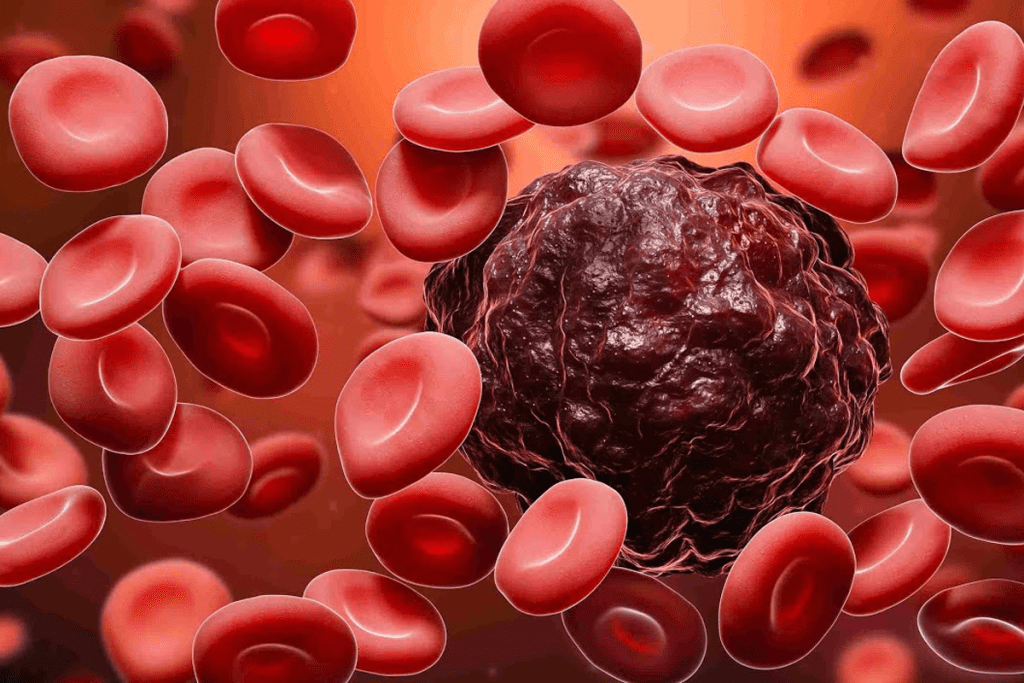
Cancer diagnosis has become more advanced. Yet, a shocking fact is that 1 in 2 people will get some form of cancer in their life.
Early detection is key, and many tools help in this fight. While blood work is used for many health checks & CT scan wrong lung cancer, its role in cancer detection is complex.
Imaging methods, like those for ct scan lung cancer accuracy, are very important. But, they’re not perfect. Mistakes can happen, leading to lung cancer ct scan errors or ct scan misdiagnosis lung cancer. This shows we need many ways to find cancer.
Key Takeaways
- Blood work is not always a definitive method for cancer diagnosis.
- Imaging techniques like CT scans are vital for finding cancer.
- The accuracy of these tools can vary.
- Early detection greatly improves cancer treatment results.
- Using a mix of diagnostic methods is often needed for accurate diagnosis.
Cancer Detection: The Diagnostic Landscape

Medical technology has made big strides in finding cancer early. This has led to better care for patients. Now, doctors use new tools like imaging and blood tests to spot cancer.
Overview of Cancer Screening Approaches
There are many ways to screen for cancer, depending on the type. Doctors use imaging like CT scans, MRI, and PET scans. They also use blood tests to find tumor markers or other signs of cancer.
Imaging techniques are key in finding solid tumors. For example, CT scans are great for spotting lung cancer. They give clear pictures of the lungs and help find nodules.
| Diagnostic Method | Application | Advantages |
| CT Scan | Lung Cancer Detection | High accuracy in detecting pulmonary nodules |
| Blood Tests | Tumor Marker Detection | Non-invasive, can detect cancer early |
| MRI | Soft Tissue Tumor Detection | High-resolution images of soft tissues |
The Importance of Early and Accurate Detection
Finding cancer early is key to treating it well. Accurate diagnosis means patients get the right treatment. This improves their chances of living longer and living better.
Multi-modal Diagnostic Strategies
Using different methods together makes finding cancer more accurate. For instance, combining imaging and blood tests gives a fuller picture of the disease.
Multi-modal diagnostic strategies mix various tools. This method helps catch cancer early and diagnose it accurately. Both are vital for managing cancer well.
Blood Tests for Cancer Detection
blood tests for cancer detection
Blood tests are key in finding cancer early. They are less scary than other tests. These tests look for signs of cancer in the blood.
Common Tumor Markers in Blood Work
Tumor markers are found in the blood of some cancer patients. Prostate-specific antigen (PSA) helps find prostate cancer. Carcinoembryonic antigen (CEA) is linked to colorectal, lung, and breast cancers. Finding these markers can show if cancer is present.
Complete Blood Count Abnormalities in Cancer
A complete blood count (CBC) checks the blood’s parts. It looks at red and white blood cells and platelets. If these counts are off, it might mean cancer, like leukemia or lymphoma.
Blood Chemistry Tests That May Indicate Cancer
Blood chemistry tests check the blood’s chemicals. Some changes can mean cancer. For example, high liver enzyme levels might show liver cancer or cancer spread to the liver.
Limitations of Blood-Based Cancer Detection
Blood tests are helpful but not perfect. Not all cancers show up in blood tests. Some non-cancer issues can also cause false positives. So, doctors use blood tests with other tests to be sure of a cancer diagnosis.
Types of Cancer That Blood Tests Can Detect

Certain cancers can be found through blood tests, changing how we detect them early. Blood tests are now key in finding different cancers. They offer a way to find cancer without needing invasive tests.
Leukemia and Blood Cancers
Leukemia, a blood or bone marrow cancer, is often found through blood tests. If your white blood cell count is off, it might mean you have leukemia. Blood cancers like lymphoma and multiple myeloma can also be found through blood tests.
Key indicators of leukemia in blood tests include:
- Abnormal white blood cell count
- Presence of blast cells
- Low red blood cell or platelet count
Solid Tumors with Reliable Blood Markers
Some solid tumors can be found through blood markers. For example, prostate-specific antigen (PSA) helps find prostate cancer. Carcinoembryonic antigen (CEA) is used for colorectal cancer. Other markers like CA-125 for ovarian cancer and CA 19-9 for pancreatic cancer are also used.
| Cancer Type | Blood Marker |
| Prostate Cancer | PSA (Prostate-Specific Antigen) |
| Colorectal Cancer | CEA (Carcinoembryonic Antigen) |
| Ovarian Cancer | CA-125 |
| Pancreatic Cancer | CA 19-9 |
Emerging Liquid Biopsy Technologies
Liquid biopsies are a new area in cancer detection. They look at the blood for tumor DNA or biomarkers. This could help find cancer early and see how treatments are working.
“Liquid biopsies have the power to change cancer diagnosis. They offer a non-invasive way to see the tumor’s genetic makeup.” – Cancer Research Institute
When Blood Tests Miss Cancer
Even though blood tests are helpful, they’re not perfect. Some cancers don’t have specific markers, or markers might not show up early. So, blood tests should be used with other tools like imaging and biopsies.
Blood tests are key in finding many cancers, from leukemia to some solid tumors. New tech like liquid biopsies will help even more. But, it’s important to know their limits and use them as part of a full diagnostic plan.
Imaging Techniques in Cancer Diagnosis
Cancer diagnosis uses many imaging methods like X-rays, ultrasounds, MRI, PET scans, and CT scans. Each has its own benefits. These tools have changed oncology by showing detailed body images. They help find, diagnose, and stage cancer.
Basic Screening Tools: X-rays and Ultrasounds
X-rays and ultrasounds are key in cancer diagnosis. X-rays help spot tumors in bones and lungs. Ultrasounds use sound waves to see inside the body. They check organs like the liver, kidneys, and thyroid.
MRI and PET Scan Capabilities
Magnetic Resonance Imaging (MRI) and Positron Emission Tomography (PET) scans are advanced tools. MRI shows soft tissues well, great for brain and spine tumors. PET scans show active cancer cells and cancer spread.
CT Scans: The Gold Standard for Lung Assessment
Computed Tomography (CT) scans lead in lung cancer checks. They give detailed body images. This helps measure tumors and see their effect on nearby areas. The reliability of chest CT scans in diagnosing lung cancer is known, but remember, there are limits.
When Imaging is Recommended Over Blood Work
Blood tests can show cancer markers, but imaging is often better for a precise diagnosis. This is true for lung cancer, where CT scans can see tumors. They help measure size and guide biopsies. The choice between imaging and blood tests depends on the situation, patient history, and cancer type.
CT Scan Wrong Lung Cancer: Understanding Misdiagnosis
CT scans are key for finding lung cancer. But, mistakes in reading them can lead to wrong diagnoses. It’s important to understand the challenges in interpreting these scans.
Frequency and Types of CT Scan Errors
Errors in CT scans can happen for many reasons. These include technical problems, issues with the patient, and challenges for the radiologist. Studies show that misdiagnosis in lung cancer cases is not rare. This highlights the need for better diagnostic methods.
There are different kinds of errors:
- False positives, where non-cancerous conditions are thought to be cancer
- False negatives, where cancer is missed when it’s there
- Errors in understanding how far or how advanced the cancer is
Radiologist Interpretation Challenges
Radiologists have tough jobs when it comes to reading CT scans for lung cancer. They must tell apart cancerous from non-cancerous growths, handle image problems, and think about the patient’s health.
Some big challenges are:
- Differences in how nodules look and behave
- Similarities in how cancer and other diseases appear on scans
- The need to match scan findings with the patient’s overall health
Impact of Misdiagnosis on Treatment and Prognosis
When lung cancer is misdiagnosed, it can really affect treatment and how well a patient does. Wrong or late diagnosis can mean the wrong treatment, which can harm patient outcomes and survival chances.
The effects are:
- Not treating lung cancer when it’s there
- Unnecessary worry and treatment for conditions that aren’t cancer
- Choosing the wrong treatment plan because of wrong staging
Case Studies of CT Scan Misinterpretation
Many case studies show how hard it is to correctly read CT scans for lung cancer. These examples stress the need for accurate diagnosis and the serious effects of mistakes.
For example, a case where a harmless nodule was thought to be cancer shows the importance of careful checks and sometimes more tests to be sure.
CT Scan Lung Cancer Accuracy Rates
Knowing how accurate CT scans are for lung cancer is key for good diagnosis. CT scans help find lung cancer early without surgery. They let doctors see the lungs and spot tumors.
Sensitivity and Specificity Statistics
CT scans’ ability to find lung cancer varies. Studies say they can spot it 85% to over 90% of the time. For example, the National Lung Screening Trial showed CT scans can lower lung cancer deaths in high-risk groups.
Sensitivity and specificity statistics are important. Sensitivity means the test can find those with lung cancer. Specificity means it can find those without it.
- Lung adenocarcinoma: CT scans are very good at finding this type of lung cancer.
- Lung squamous cell carcinoma: Finding this type can be harder because of its location and size.
- Small cell lung cancer: CT scans help find this fast-growing cancer, but its accuracy can be lower.
Factors Affecting Diagnostic Accuracy
Many things can change how well CT scans work for lung cancer. These include:
- The quality of the CT scan equipment and the radiologist’s skill.
- Things about the patient, like BMI and other lung diseases.
- The tumor’s size and where it is, which can make it harder to see.
Comparison with Other Lung Cancer Detection Methods
CT scans are often compared to other ways to find lung cancer. Chest X-rays are less good, but PET scans can show more about tumors. This helps tell if a tumor is cancerous or not.
| Detection Method | Sensitivity | Specificity |
| CT Scan | 85-90% | 80-85% |
| PET Scan | 90-95% | 85-90% |
| Chest X-ray | 60-70% | 70-80% |
Technological Improvements in CT Accuracy
New CT technology, like low-dose scans and better algorithms, makes finding lung cancer better. Research is ongoing to make CT scans even more accurate. This includes using artificial intelligence and machine learning.
False Positives in Lung Cancer CT Scans
ct scan false positive lung cancer
CT scans can sometimes show lung cancer when it’s not there. This is called a false positive. It happens when a scan looks like there’s cancer, but tests later show it’s not.
Causes and Benign Mimics
Many things can cause false positives in lung cancer scans. Inflammatory processes, infections, and benign nodules are common culprits. Conditions like pneumonia, tuberculosis, and fungal infections can look like cancer on scans.
Benign lung nodules, which are not cancer, can also be mistaken for tumors. These nodules might come from old infections or inflammation.
Impact on Patients
False positives can really affect patients. They can feel anxious and stressed, thinking they might have cancer. More tests and procedures can also be expensive.
Follow-up Protocols
After a scan shows something suspicious, it’s important to follow up. This might include additional imaging tests or invasive diagnostic procedures like biopsies. Quick and right follow-up can help ease worries and give a clear answer.
Knowing why false positives happen and having good follow-up plans are key. They help make sure patients get the right care quickly and accurately.
False Negatives in Lung Cancer CT Scans
False negatives in lung cancer CT scans are a big problem. They can delay finding and treating cancer. This can hurt how well patients do.
Early-Stage Lung Cancers: A Diagnostic Challenge
It’s hard to find early lung cancers with CT scans. They are small or hard to see. Small tumors can look like normal tissue or be hidden by other parts of the body.
A study in the Journal of Thoracic Imaging found a problem. “CT scans can miss small lung nodules, less than 5 mm in diameter.”
“Finding small lung cancers is tough, even with the latest CT technology.” “ A radiologist
Detection Challenges with Small Cell Lung Cancer
Small cell lung cancer (SCLC) is very aggressive. It’s hard to spot with CT scans alone. SCLC often looks like a centrally located mass, making it hard to tell apart from other chest structures.
| Characteristics | Non-Small Cell Lung Cancer (NSCLC) | Small Cell Lung Cancer (SCLC) |
| Typical Location | Peripheral | Central |
| Growth Pattern | Variable | Rapid, often with early metastasis |
| CT Appearance | Often as a distinct nodule or mass | May appear as a large, centrally located mass |
Anatomical Factors Affecting Visibility
The chest’s anatomy can make tumors hard to see on CT scans. Tumors near the diaphragm or mediastinum are tricky to spot because of the complex structures around them.
Risk Factors for Missed Diagnoses
Some patient factors raise the risk of missing a diagnosis. Obesity can make images less clear. Other lung conditions, like COPD, can make it harder to read CT scans.
Knowing these challenges helps improve lung cancer diagnosis. By understanding the limits and risks, doctors can work to avoid these problems. This can lead to better care for patients.
Different Lung Cancer Types and CT Appearance
Lung cancer is not just one disease but a group of cancers with unique features on CT scans. Knowing these differences is key for correct diagnosis and treatment plans.
Non-small Cell Lung Cancer CT Characteristics
Non-small cell lung cancer (NSCLC) makes up about 85% of lung cancer cases. On CT scans, NSCLC shows up as a large, irregular mass with spiculated margins. This means it’s more likely to be cancerous. The tumor might also have necrosis or cavitation, which is common in bigger tumors.
Small Cell Lung Cancer Imaging Features
Small cell lung cancer (SCLC) is a fast-growing cancer. It often starts in the center of the lung and can spread to nearby structures. On CT scans, SCLC looks like a large, homogeneous mass with bulky mediastinal lymphadenopathy. Its quick growth can cause serious problems by pressing on important areas.
Adenocarcinoma vs. Squamous Cell Carcinoma
Adenocarcinoma and squamous cell carcinoma are two types of NSCLC with different looks on CT scans. Adenocarcinoma is usually a peripheral nodule or mass with ground-glass opacities. Squamous cell carcinoma is centrally located and might have cavitation. Knowing these differences helps doctors make accurate diagnoses and choose the right treatment.
Metastatic Lung Lesions on CT
Metastatic lung lesions come from cancers like breast, colon, and renal cell carcinoma. On CT scans, they look like multiple, bilateral nodules or masses with well-defined margins. The accuracy of CT in spotting lung metastases depends on the lesion size and location. It also depends on whether there’s underlying lung disease.
Conditions Commonly Confused with Lung Cancer on CT
Many non-cancerous conditions can look like lung cancer on CT scans. This makes it very important to get a correct diagnosis. The lung’s complex structure and the look-alike nature of benign and malignant conditions on CT scans make it hard.
Infectious Mimics: Pneumonia, Tuberculosis, and Fungal Infections
Pneumonia, tuberculosis, and fungal infections can look like lung cancer on CT scans. Pneumonia can show up as consolidations that might look like tumors. Symptoms like fever, cough, and others can help tell them apart, but sometimes, a second CT scan is needed.
Tuberculosis can form nodules or masses that are hard to tell from cancer, even with risk factors. Fungal infections, like histoplasmosis, can also create lung nodules that look like cancer.
Inflammatory Conditions: Sarcoidosis and Autoimmune Diseases
Inflammatory conditions like sarcoidosis and autoimmune diseases can also be mistaken for lung cancer. Sarcoidosis often shows up as bilateral hilar lymphadenopathy, but it can also cause lung nodules or masses. Autoimmune diseases, like rheumatoid arthritis, can lead to lung nodules or interstitial lung disease that might look like cancer.
Vascular Issues: Pulmonary Embolism and Infarcts
Vascular issues, including pulmonary embolism and infarcts, can sometimes be mistaken for lung cancer. A pulmonary embolism can cause a filling defect in a pulmonary artery that might be misinterpreted as a tumor. Lung infarcts, which can occur due to emboli, may present as peripheral lung opacities that are concerning for malignancy.
Benign Tumors and Hamartomas
Benign tumors, such as hamartomas, can also be confused with lung cancer. Hamartomas are typically characterized by the presence of fat and calcifications on CT, features that can help differentiate them from malignant tumors. But, not all benign lesions have these distinctive features, making biopsy or follow-up imaging necessary in some cases.
Complementary Diagnostic Approaches
Lung cancer diagnosis has become more accurate with new methods. These methods use different tools together to find lung cancer better.
Combining Blood Work with Imaging
Using blood tests and imaging together is promising. Blood tests look for tumor markers. Imaging, like CT scans, shows where and how big the tumor is. This mix helps find and stage lung cancer early, which is key for treatment.
The Role of Biopsy in Confirming Diagnosis
Even with new tests, biopsy is the best way to confirm lung cancer. It takes a tissue sample from the tumor. This sample is checked for cancer cells. It gives a clear diagnosis and helps choose the right treatment.
PET-CT for Improved Accuracy
PET-CT scans combine PET and CT scans. They give a detailed look at the disease. This helps in accurate staging and finding cancer spread. It’s great for seeing if cancer has spread to other parts of the body.
Emerging Biomarkers and Technologies
New biomarkers and technologies are being researched. Liquid biopsies might find cancer DNA in blood, a less invasive option. New imaging and biomarkers could also help find cancer early.
Using these new methods, doctors can diagnose lung cancer more accurately. This leads to better treatments and outcomes for patients.
When to Seek a Second Opinion on CT Results
Getting a diagnosis from a CT scan is a big moment, like when you find out about lung cancer. Getting a second opinion is key to make sure you get the right diagnosis and treatment.
Warning Signs of Possible Misdiagnosis
There are signs that might mean you need a second opinion. These include:
- Uncertainty or inconsistency in the diagnosis
- CT scan results that don’t match your symptoms or medical history
- Rare or unusual cancer types
- Discrepancies between CT scan results and other tests
Knowing these signs can help spot possible misdiagnoses early.
How to Get and Evaluate a Second Opinion
Getting a second opinion involves a few steps:
- Gather all your medical records and CT scan images
- Find a specialist or center for a second opinion
- Ask them to review your CT scan results and diagnosis
- Compare the first diagnosis with the second opinion
When looking at a second opinion, check the specialist’s credentials. Also, see if their review is thorough and if their findings match or differ from the first diagnosis.
Questions to Ask Your Healthcare Provider
When you’re getting a second opinion, ask important questions:
- What does the CT scan show?
- How do these findings relate to your diagnosis?
- Are there other possible explanations for the CT scan results?
- What more tests or evaluations might be needed?
These questions can help you understand your diagnosis and treatment better.
Patient Advocacy in Diagnostic Accuracy
Patients are key to getting accurate diagnoses. By staying informed, asking questions, and seeking second opinions when needed, patients can advocate for themselves well.
| Patient Advocacy Actions | Benefits |
| Seeking second opinions | Confirms or challenges initial diagnosis |
| Asking questions | Provides clarity on diagnosis and treatment |
| Gathering medical records | Ensures a complete review of your history |
By being active in your diagnosis and treatment, you can help ensure you get the best care possible.
Conclusion
Getting a correct diagnosis is key in fighting lung cancer. Different methods, like ct scans and blood tests, help find the disease. But, ct scans aren’t perfect and can be affected by many things.
How well a ct scan works depends on the type of lung cancer. Some are harder to spot than others. Using more than one test can make detection better. New tech, like liquid biopsy, might also help a lot.
It’s important to know what each test can do. This helps doctors and patients make the best choices. Using many tests together can lead to better results and treatment plans.
Getting lung cancer right is very important. We need better ct scans and other tools to help patients. This will help save more lives and improve care.
FAQ
How accurate are CT scans in detecting lung cancer?
CT scans can vary in accuracy for lung cancer detection. The size and location of the tumor, and the scan quality, affect how well they work.
What are the common causes of false positive results in lung cancer CT scans?
False positives in lung cancer CT scans can come from conditions like pneumonia and tuberculosis. Inflammatory diseases like sarcoidosis can also cause them.
Can blood tests detect all types of lung cancer?
No, blood tests can’t find all lung cancer types. Some cancers may not show up in blood tests, or they might be too small to detect.
What is the role of biopsy in confirming a lung cancer diagnosis?
Biopsy is key in confirming lung cancer. It gives a tissue sample for detailed examination. This helps figure out the cancer type and stage, guiding treatment.
How can I ensure accurate interpretation of my CT scan results?
For accurate CT scan results, a skilled radiologist should review them. Getting a second opinion from a specialist can also confirm or rule out a diagnosis.
What are the benefits of combining blood work with imaging in lung cancer diagnosis?
Using blood tests and imaging together gives a fuller picture of the disease. Blood tests can spot biomarkers, while scans show tumor details like size and location.
Can CT scans miss early-stage lung cancer?
Yes, CT scans might miss early lung cancer, like small tumors in hard-to-see spots. The scan quality and radiologist’s skill also play a part.
What are the differences between adenocarcinoma and squamous cell carcinoma on CT scans?
Adenocarcinoma and squamous cell carcinoma look different on CT scans. Adenocarcinoma is often a peripheral nodule, while squamous cell carcinoma is a central mass with cavitation.
When should I seek a second opinion on my CT scan results?
Get a second opinion if you’re unsure about your CT scan results. This is also wise if the results are unclear or if you’re at high risk for lung cancer.
What are the emerging technologies in lung cancer diagnosis?
New technologies for lung cancer diagnosis include liquid biopsies and advanced biomarkers. Improved imaging like PET-CT also aims to improve detection accuracy.
How do radiologists interpret CT scans for lung cancer?
Radiologists look for abnormalities like nodules or masses in CT scans. They consider the tumor’s size, shape, and density. They also look at the patient’s medical history and other factors.
References
- del Ciello, A., et al. (2017). Missed lung cancer: when, where, and why? PMCID. https://pmc.ncbi.nlm.nih.gov/articles/PMC5338577/
- Hammer, M. M., et al. (2020). Factors influencing the false positive rate in CT lung cancer screening. PMCID. https://pmc.ncbi.nlm.nih.gov/articles/PMC9219003/
- Bartlett, E. C., et al. (2021). False-negative results in lung cancer screening. Journal of Thoracic Oncology. https://www.jto.org/article/S1556-0864%2821%2901652-X/fulltext
- Furuya, K., et al. (2012). Lung CT: Part 1, mimickers of lung cancer ” spectrum of CT findings. American Journal of Roentgenology. https://ajronline.org/doi/10.2214/AJR.10.7262
- Shin, H. J., et al. (2020). Delayed diagnosis of lung cancer due to misdiagnosis as worsening of sarcoidosis: a case report. BMC Pulmonary Medicine, 20(1), 71. https://bmcpulmmed.biomedcentral.com/articles/10.1186/s12890-020-1105-2