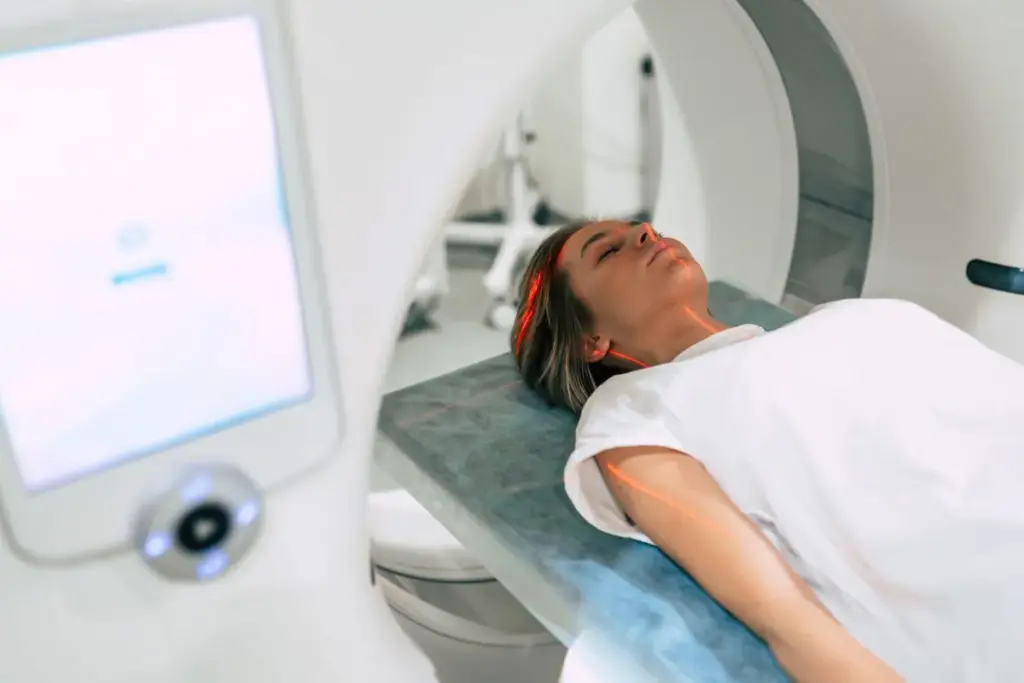
Choosing the right imaging test for sinus issues is very important. We often use CT scans because they show details clearly and help see bone structures well.
CT scans are often chosen for sinus imaging because they show the sinuses’ detailed anatomy well. This is very important for people with chronic rhinosinusitis (CRS). Accurate diagnosis is key to treating it effectively.
We will look at the good and bad sides of CT scans and MRI for sinus imaging. This will help you know which test is best for you.
Key Takeaways
- CT scans are preferred for sinus imaging due to their high spatial resolution.
- MRI is useful for evaluating soft tissue abnormalities.
- The choice between CT and MRI depends on the specific diagnosis needs.
- Accurate imaging is key for diagnosing chronic rhinosinusitis (CRS).
- Understanding each imaging modality’s advantages is important for effective treatment.
Understanding Sinus Imaging: The Basics
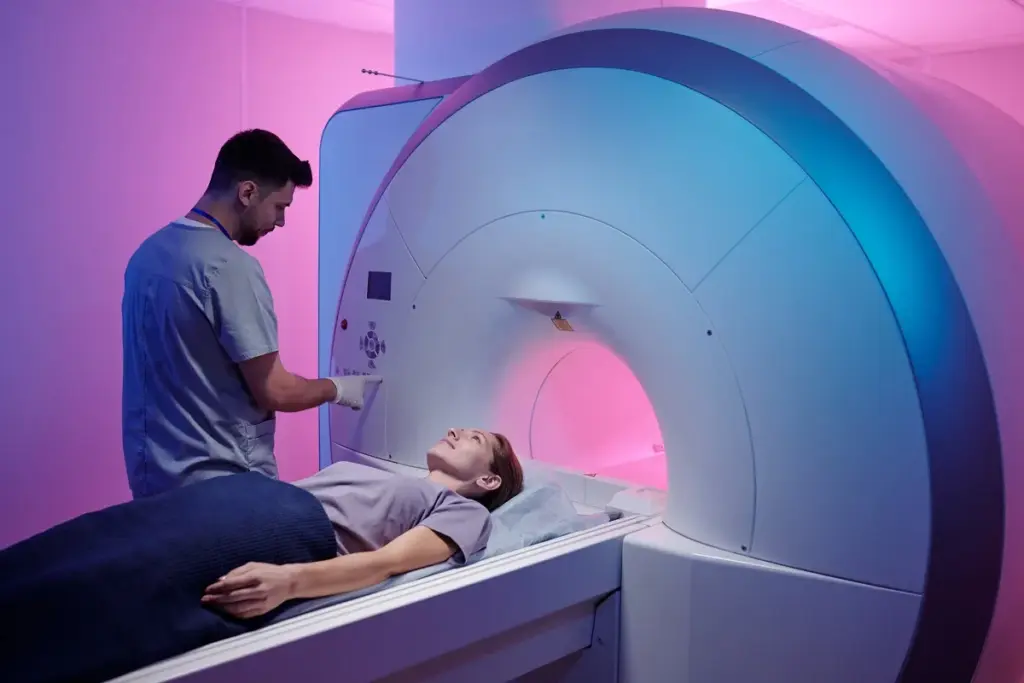
Learning about sinus imaging is key for diagnosing and treating sinus problems. It uses different medical imaging methods to see the nasal passages and sinuses.
The Anatomy of Sinuses
The paranasal sinuses are a complex structure. They have four pairs: frontal, maxillary, ethmoid, and sphenoid. These air-filled cavities are around the nasal cavity and have mucous membranes.
Why Imaging Is Necessary for Sinus Conditions
Imaging is vital for diagnosing issues like chronic rhinosinusitis (CRS), sinusitis, and tumors. The American Cancer Society says sinusitis is common. It can be diagnosed with CT scans or sinus computed tomography.
Common Sinus Conditions Requiring Imaging
Conditions needing sinus imaging include CRS, sinusitis, and nasal tumors. Accurate diagnosis through imaging helps in creating effective treatment plans. For example, a sinus CT scan or nasal CT scan gives detailed images. This aids in diagnosing and managing these conditions.
What Is a CT Scan for Sinuses?
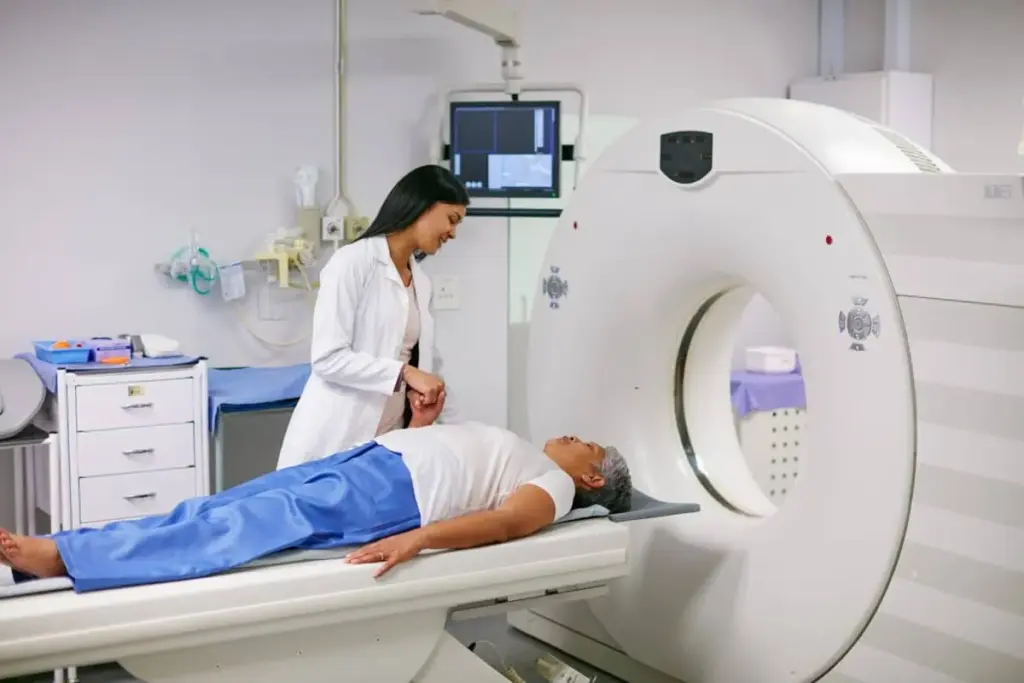
A CT scan of the sinuses is a top-notch imaging method. It helps doctors spot and treat sinus problems. We use it to see the sinus cavities clearly, making diagnosis and treatment easier.
How CT Scans Work
CT scans use X-rays to make detailed images of the sinuses. The machine rotates around the patient’s head, capturing data. This data is then turned into detailed images, showing bone structures and any issues in the sinuses.
The CT Scan Procedure for Sinus Examination
For a sinus CT scan, the patient lies on a table that slides into a CT scanner. The scan takes just a few minutes. The patient might be asked to hold their breath or stay very quiet for clear images. It’s a painless and non-invasive process.
Types of CT Scans Used for Sinus Imaging
There are various CT scans for sinus imaging, like conventional and cone beam CT scans. The type chosen depends on the diagnosis needs and the patient’s situation.
|
Type of CT Scan |
Description |
Use for Sinus Imaging |
|---|---|---|
|
Conventional CT Scan |
Uses X-rays to create detailed cross-sectional images |
Highly effective for visualizing sinus structures and detecting abnormalities |
|
Cone Beam CT Scan |
Provides 3D images with lower radiation doses |
Useful for detailed examination of sinus anatomy and pre-surgical planning |
A study in the Journal of Computer Assisted Tomography shows CT scans are great for finding sinusitis and other sinus problems. We count on this tech for precise diagnoses and treatment plans for our patients.
What Is an MRI for Sinuses?
MRI for sinus exams is key in medical diagnostics. It’s a safe, radiation-free option compared to CT scans. MRI is great for seeing soft tissue details, helping spot tumors and infections in the sinuses.
How MRI Technology Works
MRI uses strong magnetic fields and radio waves to create body images. It’s safer than CT scans because it doesn’t use harmful radiation. The machine detects signals from hydrogen atoms in the body, showing internal structures.
The MRI Procedure for Sinus Examination
During an MRI, you lie on a table that slides into the scanner. It’s usually painless but might feel tight. A contrast agent might be given to improve image quality. The technologist will help you through it, making sure you’re comfortable.
Types of MRI Sequences Used for Sinus Imaging
There are many MRI sequences for sinus imaging. T1-weighted images show anatomy, while T2-weighted highlight fluids and inflammation. STIR sequences help spot abnormalities by reducing fat signal.
|
MRI Sequence |
Use in Sinus Imaging |
|---|---|
|
T1-weighted |
Anatomical detail, post-contrast enhancement |
|
T2-weighted |
Fluid-filled structures, inflammation, tumors |
|
STIR |
Suppressing fat signal, highlighting abnormalities |
Knowing about MRI sequences helps doctors make better diagnoses. This leads to more effective treatments for sinus issues.
CT Scans Sinus: Advantages and Strengths
CT scans are a top choice for sinus imaging. They give detailed views of the sinuses. This helps doctors diagnose and plan treatments accurately.
Superior Bone Visualization
CT scans are great for seeing bones clearly. This is key for spotting fractures and other bone issues. The clear images help doctors make precise diagnoses.
Speed and Convenience
CT scans are faster than MRI scans. They’re better for people who can’t stay in tight spaces for long. This speed helps hospitals see more patients.
Cost-Effectiveness
CT scans are cheaper than MRI scans. This makes them a smart choice for saving money without losing quality. They’re a big plus for sinus imaging.
Availability and Accessibility
CT scanners are common in hospitals. This means patients can get quick diagnoses and treatments for sinus problems. It’s a big advantage for getting care fast.
Limitations and Disadvantages of CT Scans for Sinuses
CT scans for sinus imaging have some downsides that both healthcare providers and patients need to think about.
Radiation Exposure Concerns
One big worry with CT scans is radiation. They use X-rays to show the sinuses clearly. But, this radiation can be a problem, mainly for kids or when scans are done often.
A study in the Journal of Radiology found that radiation risks are a big deal, mostly for younger patients.
Limited Soft Tissue Contrast
CT scans are great for bones but not so good for soft tissues. This makes it hard to spot some conditions that affect soft tissues.
For example, if there’s a soft tissue tumor or inflammation, CT scans might not be enough. You might need to do an MRI instead.
Potential Contrast Agent Reactions
Some CT scans need contrast agents to improve the images. But, these agents can cause problems in some people. These can range from mild allergies to serious anaphylaxis.
We need to think carefully about using contrast agents. We should check if the patient is at risk before doing a CT scan for sinuses.
In summary, CT scans are useful for diagnosing sinus issues but have their limits. It’s important to know these downsides. This helps make better choices, like choosing sinus MRI or deciding if you need another abnormal sinus CT scan.
MRI for Sinuses: Advantages and Strengths
MRI has changed how we see sinuses by showing soft tissues clearly. It’s a key tool for finding and treating sinus problems.
Superior Soft Tissue Visualization
MRI shows soft tissues well, which helps find issues like tumors or inflammation. These problems might not show up on other scans.
No Radiation Exposure
MRI doesn’t use radiation, unlike CT scans. This makes it safer for people who need many scans or are worried about radiation. It’s great for pregnant women and kids.
Better for Detecting Certain Conditions
MRI is good at spotting soft tissue problems like tumors and cysts. It helps see how far disease has spread in the sinuses and around them.
Multiplanar Imaging Capabilities
MRI can show images from different angles. This helps doctors make accurate diagnoses and plans for treatment.
|
Advantages |
CT Scan |
MRI |
|---|---|---|
|
Soft Tissue Visualization |
Limited |
Superior |
|
Radiation Exposure |
Yes |
No |
|
Multiplanar Imaging |
Limited |
Yes |
In summary, MRI is great for sinus imaging. It shows soft tissues well, doesn’t use radiation, and can show images from different angles. These benefits make MRI a top choice for diagnosing and treating sinus issues.
Limitations and Disadvantages of MRI for Sinuses
MRI for sinus imaging has its downsides, even though it’s useful. It shows soft tissues well and doesn’t use radiation. But, there are things that can make it hard to use.
Longer Procedure Time
One big problem with MRI for sinuses is how long it takes. It can last from 15 to 90 minutes. This can be tough for people who get scared in small spaces or can’t sit for a long time.
Higher Cost
MRI is pricier than CT scans, which makes it harder for some to afford. This is a big issue for those without good insurance. We need to think about the cost when choosing between MRI and CT scans for sinuses.
Contraindications and Accessibility Issues
MRI isn’t safe for people with metal implants or pacemakers. Also, it’s hard for some to get to the MRI machine because of size or claustrophobia. These problems mean we have to pick the right patients for MRI scans.
Motion Artifacts
MRI scans can be ruined by movement. If the patient moves, the pictures won’t be clear. This is a big problem for those who can’t stay calm or are in pain.
In short, MRI is a good tool for looking at sinuses, but we must think about its limits. Knowing these can help us decide when to use MRI or CT scans better.
Normal vs. Abnormal Findings in Sinus Imaging
It’s key to know the difference between normal and abnormal sinus images. We use CT scans and MRI to see inside the sinuses. This helps us find and treat problems.
Normal Sinus CT Scan Appearance
A normal CT scan shows clear sinuses with no blockages. The bones look good, with no breaks or wear. Normal sinus CT scans help us spot problems.
Abnormal Findings on CT Scans
CT scans can show issues like blockages or bone damage. These signs might mean sinusitis, tumors, or breaks. A study in the Journal of Laryngology and Otology says imaging is key for diagnosing sinusitis.
Normal MRI Appearance of Sinuses
On MRI, healthy sinuses look like empty spaces. They show up dark on one type of image and light on another. The lining is thin, and there’s no extra tissue.
Abnormal Findings on MRI
MRI can show problems like thick linings or blockages. It’s great for seeing soft tissue issues and brain problems.
Knowing what’s normal and abnormal on CT scans and MRI helps doctors. They can then plan better treatments for sinus issues.
Clinical Indications: When Is CT Preferred for Sinus Conditions?
CT scans are often chosen for sinus issues because they show complex sinus anatomy clearly. They are precise in diagnosing sinus problems.
Acute Sinusitis and Infections
CT scans are great for spotting acute sinusitis and infections. They can find complications like abscesses or infections spreading. A study in the Journal of Computer Assisted Tomography shows CT scans are very good at finding sinusitis and other sinus problems.
Trauma and Fractures
When there’s facial trauma, CT scans are the top choice for checking fractures and bone injuries. They give detailed images for treatment planning.
Pre-surgical Planning
Before sinus surgery, CT scans are key. They give a detailed look at the sinus anatomy. This helps surgeons plan their approach.
Chronic Sinusitis Evaluation
CT scans also help with chronic sinusitis. They show anatomical variations and other factors that cause the condition. This info is vital for a good treatment plan.
In short, CT scans are the go-to for sinus issues because they offer detailed images, are quick, and accurate. We suggest them for acute sinusitis, trauma, pre-surgery planning, and chronic sinusitis checks.
Clinical Indications: When Is MRI Preferred for Sinus Conditions?
MRI is the top choice for certain sinus problems because it shows soft tissues well. It’s best for complex sinus issues that need a close look at soft tissues.
Suspected Tumors or Malignancies
MRI shines when we think there might be tumors or cancer in the sinuses. It gives clear pictures of soft tissues. This helps us see how big the tumor is and if it’s touching other parts.
Complications Involving the Brain
For brain problems caused by sinus issues, like abscesses or spreading infections, MRI is key. It checks both the sinuses and the brain thoroughly.
Fungal Sinusitis
Fungal sinusitis needs quick and correct diagnosis, more so in people with weak immune systems. MRI spots how far the fungus has spread. This helps doctors plan the right treatment.
Evaluating Soft Tissue Involvement
MRI is great at looking at soft tissue in sinus problems. A study in the American Journal of Neuroradiology shows MRI is very good at finding soft tissue issues in the sinuses. This makes it a must-have for doctors dealing with tough sinus cases.
Conclusion: Making the Right Choice for Sinus Imaging
Choosing between CT scans and MRI for sinus imaging depends on the specific clinical indication and patient needs. We have discussed the advantages and limitations of both diagnostic tools. CT scans are great for seeing bones well, are fast, and cost less. They are best for acute sinusitis, trauma, and planning surgeries.
MRI for sinuses is better for soft tissues. It’s great for finding tumors, brain issues, and fungal sinusitis. A study in the Journal of Laryngology and Otology says accurate diagnosis needs a mix of clinical evaluation and imaging studies.
By knowing the benefits and limits of CT scans and MRI, healthcare providers can make better choices. This ensures patients get the right test for their condition. Whether it’s a sinus CT scan or an MRI, the right choice helps in accurate diagnoses and effective treatments.
FAQ
What is the difference between a CT scan and an MRI for sinus imaging?
A CT scan uses X-rays to show detailed images of the sinuses. An MRI uses a magnetic field and radio waves for images. CT scans are great for bones, while MRI is better for soft tissues.
Which is better for diagnosing sinusitis, a CT scan or an MRI?
A CT scan is usually the first choice for sinusitis diagnosis. It’s very accurate. But, an MRI might be used if there’s a brain issue or a tumor suspected.
What are the advantages of a CT scan for sinus imaging?
CT scans are good for seeing bones clearly. They’re fast, easy, and cheaper. Plus, they’re widely available.
What are the limitations of a CT scan for sinus imaging?
CT scans have some downsides. They use radiation, which is a concern. They also don’t show soft tissues well. And, some people might react to the contrast agent.
What are the advantages of an MRI for sinus imaging?
MRI scans are better for soft tissues. They don’t use radiation. They also offer detailed views from different angles.
What are the limitations of an MRI for sinus imaging?
MRI scans take longer and cost more. They’re not for everyone, like those with metal implants. They’re also not as common as CT scans.
Can a CT scan or MRI detect sinus tumors or malignancies?
Yes, both CT scans and MRI can spot tumors or cancer in the sinuses. MRI is often chosen for soft tissue checks and finding fungal infections.
How do I prepare for a CT scan or MRI for sinus imaging?
Before a CT or MRI, remove metal items. Avoid certain meds. Follow your doctor’s prep instructions carefully.
What is a normal sinus CT scan or MRI appearance?
A normal scan shows clear sinuses. There’s no sign of infection or other problems.
What are abnormal findings on a CT scan or MRI for sinuses?
Abnormal scans might show sinusitis, tumors, or fractures. These need medical attention.
Can a CT scan or MRI be used for pre-surgical planning for sinus surgery?
Yes, CT scans and MRI are used for planning sinus surgery. CT scans are often used to map out the sinuses for surgery.
Reference
National Center for Biotechnology Information. Evidence-Based Medical Insight. Retrieved from https://pmc.ncbi.nlm.nih.gov/articles/PMC8285193/



 Departments
 Related Videos
 Our Doctors
 News
News