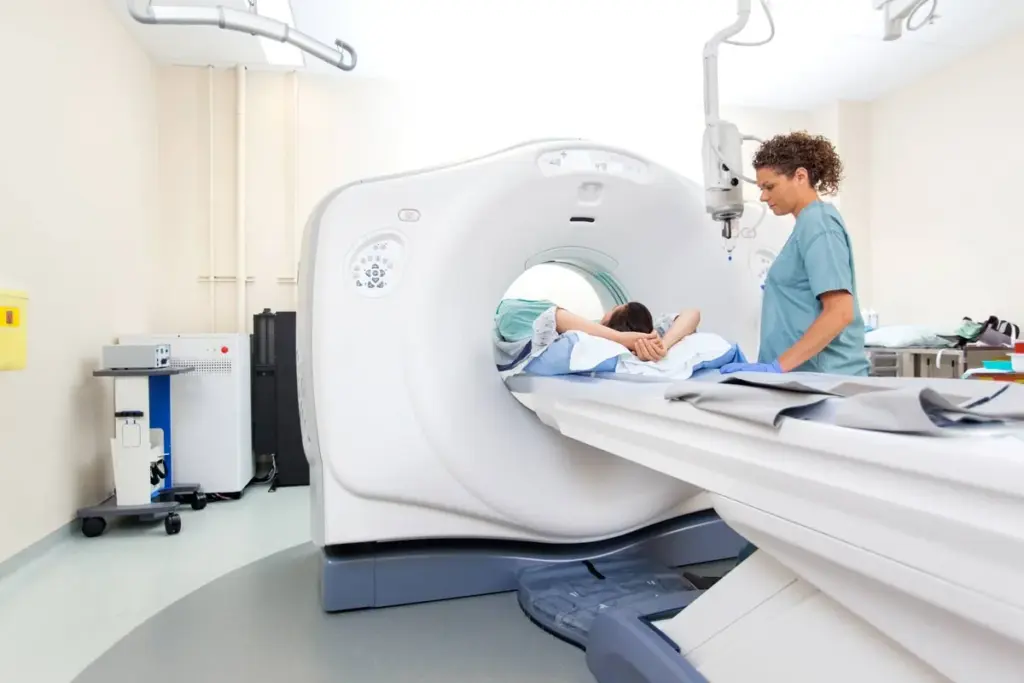
Doctors might order a CT scan of the sinuses to get detailed images. These images help diagnose and evaluate sinus issues. At Liv Hospital, we use the latest imaging tech for accurate diagnoses and treatment plans. A study found that CT scans can spot sinusitis that might not show up through symptoms alone.
Getting a sinus CT scan might worry you, but it’s key for finding problems. Our team works hard to give you the best care for your sinus issues. We’re here to help with chronic sinusitis, unusual anatomy, and planning surgeries.
Key Takeaways
- CT scans provide detailed images for diagnosing sinus-related issues.
- Advanced imaging technology aids in accurate diagnoses and treatment plans.
- Sinus CT scans are vital for spotting chronic sinusitis and unusual anatomy.
- Our team offers complete care for patients with sinus problems.
- CT scans can uncover sinusitis that symptoms might miss.
Understanding Sinus Anatomy and Function
It’s important to know about the sinuses to treat sinus problems well. The sinuses are more than just empty spaces. They are key to our breathing health.
The Paranasal Sinus System
The paranasal sinus system has four main sinuses: frontal, maxillary, ethmoid, and sphenoid. Each is named for its spot around the nose. For example, the maxillary sinuses are under the eyes, and the frontal sinuses are above the eyebrows.
The sinuses have mucous membranes that make mucus. This mucus moistens the air we breathe and catches dust and germs. A study on PMC shows knowing the sinuses is key for treating them right.
Normal Sinus Function and Drainage
Healthy sinuses make and drain mucus. This mucus flows into the nasal cavity through tiny channels. This flow is vital for keeping the sinuses healthy. If these channels get blocked, sinus issues can arise.
|
Sinus |
Location |
Drainage Pathway |
|---|---|---|
|
Frontal |
Above the eyebrows |
Frontonasal duct |
|
Maxillary |
Under the eyes |
Infundibulum |
|
Ethmoid |
Between the eyes and nasal cavity |
Anterior and posterior ethmoidal cells |
|
Sphenoid |
Behind the nasal cavity |
Sphenoethmoidal recess |
Knowing how the sinuses work is key to treating sinus issues. By understanding their role and how they can be affected, doctors can create better treatment plans.
Common Sinus Conditions Requiring Medical Attention
Many sinus problems need medical help to avoid serious issues and ease symptoms. These issues can really hurt your quality of life. It’s key to know what causes them and how to treat them.
Acute Sinusitis
Acute sinusitis comes from viruses or bacteria, causing swelling and blockage in the sinuses. Symptoms include facial pain, nasal congestion, and thick nasal discharge. Most of the time, it gets better by itself. But, if it’s bad or lasts a long time, you might need antibiotics.
Chronic Sinusitis
Chronic sinusitis means your sinuses are always inflamed and infected for over 12 weeks. Things like allergies, abnormal anatomy, and immune problems can cause it. To treat it, doctors might use medicines, change your lifestyle, or even surgery to fix the root cause.
Structural Abnormalities
Problems like nasal polyps or a crooked septum can block your sinuses. These might need surgery to fix and help your sinuses work better. It’s important to get a clear diagnosis with tests like CT scans to find and treat these issues.
At our place, we know how much sinus problems can affect people. Our skilled ENT team works with you to find and treat different sinus issues. We use the latest tools and make treatment plans just for you.
Initial Diagnostic Approaches for Sinus Problems
We use a variety of methods to diagnose sinus issues. This approach helps us understand and treat sinus problems effectively. It ensures we tailor treatments to each patient’s needs.
Physical Examination
The first step is a thorough physical exam. We check for signs like nasal congestion or facial pain. A detailed medical history is also key in understanding symptoms and their duration.
Nasal Endoscopy
Nasal endoscopy is a key tool for diagnosing sinus issues. It uses an endoscope to see inside the nasal passages and sinuses. This method lets us see the sinus mucosa and spot any problems, like inflammation or polyps.
The benefits of nasal endoscopy include:
- Direct visualization of the nasal passages and sinuses
- Ability to identify anatomical abnormalities
- Opportunity to collect tissue samples for further analysis if needed
When Basic Diagnostics Are Insufficient
Sometimes, basic exams and nasal endoscopy aren’t enough. In these cases, we might suggest a CT scan of the sinuses. This helps us see more details about the sinuses and any issues.
A CT scan sinus is useful when:
- There’s a need to assess the extent of sinus disease
- Anatomical variations or complexities are suspected
- Surgical planning is required
By using these methods together, we can fully evaluate sinus problems. This ensures we create effective treatment plans for each patient.
What Are CT Scans Sinus and How Do They Work?
CT scans of the sinuses are key for diagnosing sinus issues. They give us detailed images of the sinuses. This helps us understand and treat sinus problems effectively.
CT scans use X-rays and computer tech together. This combo makes detailed images of the sinuses. These images are vital for spotting sinus problems and understanding the anatomy.
Technology Behind Sinus CT Imaging
X-rays are used in sinus CT scans. They are sent from different angles around the patient’s head. Detectors catch these X-rays, and computers turn them into detailed images of the sinuses.
Key features of CT scan technology include:
- High-resolution imaging of sinus anatomy
- Ability to detect complex abnormalities
- Rapid image acquisition, reducing scan time
Difference Between CT and Other Imaging Methods
CT scans are different from X-rays and MRI scans. X-rays show only two dimensions, but CT scans give a three-dimensional view of the sinuses. CT scans are also faster and better at showing bony structures than MRI scans.
The choice of imaging modality depends on the specific clinical question and patient needs. For example, CT scans are great for seeing how far sinus disease has spread and for planning surgeries.
Types of Sinus CT Protocols
There are many CT scan protocols for sinus imaging. Each one is designed for different situations. The protocols can change the amount of radiation used and the image quality.
We adjust our CT scanning protocols for each patient. This ensures they get the best imaging for their condition. We aim to balance image quality with safety from radiation.
Primary Reasons Doctors Order Sinus CT Scans
We use CT scans to check and manage sinus problems. This helps us understand the sinuses better. It’s key for making good treatment plans.
Diagnosing Acute vs. Chronic Sinusitis
We often order a CT scan of sinuses to tell acute from chronic sinusitis apart. Acute sinusitis starts suddenly, while chronic lasts longer. A sinus CT scan shows how bad the inflammation is. This helps us decide how to treat it.
Evaluating Extent of Inflammation
A CT ent or CT sinuses scan shows the sinuses clearly. It helps us see how much inflammation there is. Knowing this helps us choose the right treatment, like medicine or surgery.
Detecting Anatomical Variations
Some people have sinus problems because of how their sinuses are shaped. A sinus CT scan can spot these issues. For example, a crooked nasal septum or a bulging concha. Finding these problems lets us treat them directly.
Identifying Sinus Obstruction
Blocked sinuses can cause many problems, like infections and long-term inflammation. A CT scan of sinuses finds where the blockage is. It could be something like a polyp or a weird shape. Knowing this helps us figure out how to fix it.
CT Scans for Surgical Planning and Intervention
CT scans are key for planning surgeries for sinus problems. They show detailed anatomy. This is vital for planning surgeries well.
Identifying Anatomical Landmarks
Sinus CT scans help find important landmarks. This is key for surgeons to work in the complex sinus area. It helps them plan better, lowering surgery risks.
A top ENT doctor says, “CT scans give us the detailed images we need to understand the sinuses. This is key for safe and effective surgeries.” This shows how important CT ENT imaging is in sinus surgery today.
Guiding Endoscopic Sinus Surgery
Endoscopic sinus surgery is less invasive thanks to CT scans. They guide surgeons through the nasal passages and sinuses. This makes surgery more precise and less invasive, improving patient results and recovery times.
- Detailed preoperative planning
- Enhanced precision during surgery
- Reduced risk of complications
Preoperative Assessment Benefits
Nasal CT scans offer many benefits before surgery. They help surgeons understand the patient’s anatomy and spot challenges. This planning is key for successful sinus surgery.
Using CT scans, we can give our patients the best care. As technology advances, CT scans will play an even bigger role in sinus surgery planning.
The Procedure: What to Expect During a Sinus CT Scan
At our facility, we make sure patients know what to expect from a sinus CT scan. We know it’s a new experience for many. We aim to make it as comfortable as possible.
Preparation Requirements
Before the scan, we give detailed instructions on how to prepare. Patients need to remove any jewelry or metal objects. This ensures the scan’s quality.
Patients might need to wear a hospital gown. This is to avoid any metal objects during the scan. Our staff will help you get ready for the sinus CT scan.
The Scanning Process
The CT scan sinus process is quick. Patients lie on a table that slides into a CT scanner. It’s a large, doughnut-shaped machine.
During the scan, the machine rotates around the patient’s head. It captures detailed images of the sinuses. The whole process usually takes just a few minutes.
Duration and Comfort Considerations
A cat scan sinuses is short. The scanning itself takes only a few minutes. But getting ready and positioned might take longer.
We make sure patients are comfortable. We offer support or adjust the scanning table as needed. Our goal is to make the experience smooth and stress-free.
“The advancements in CT technology have significantly improved our ability to diagnose and treat sinus conditions effectively,” notes a leading radiologist.
Knowing what to expect during a sinus CT scan helps patients feel more at ease. We’re committed to providing top-notch healthcare and support for our international patients.
Interpreting Sinus CT Scan Results
Understanding CT scan results is key to spotting sinus problems. At Liv Hospital, our skilled radiologists and ENT experts work together. They interpret CT scan results and plan treatments.
Normal vs. Abnormal Findings
It’s important to tell normal from abnormal in a sinus CT scan. A normal scan shows healthy sinuses without thickened mucosa or bone issues. But, an abnormal scan might show inflammation, unusual shapes, or blockages.
Our specialists can spot small differences in scans. This ensures patients get the right diagnosis.
Common Pathological Patterns
Sinus CT scans can show different patterns like thickened mucosa, air-fluid levels, and bone changes. These signs help us diagnose issues like acute or chronic sinusitis, or structural problems.
By looking at these patterns, we can see how serious the sinus disease is. Then, we can plan specific treatments.
The Importance of Clinical Correlation
It’s important to link CT scan results with symptoms and other tests. Our team does this to make sure diagnoses are right and treatments work well.
This detailed approach helps us give patients the care they need. It improves their health and life quality.
Research Statistics on CT Findings in Sinus Patients
Research on CT scans for sinus patients has brought new insights. It shows how often sinus problems are found, even when people don’t feel sick. This is important for understanding and treating sinus issues.
61.4% Positive CT Findings in a 2022 Study
In 2022, a big study found that 61.4% of people had sinus problems on their CT scans. This shows how key CT scans are in spotting sinus issues.
Prevalence of Abnormalities in Asymptomatic Individuals
Research also found that 40% of people without symptoms might have sinus problems on their CT scans. This shows how tricky it can be to diagnose sinus issues just by looking at scans.
Correlation Between Symptoms and Imaging Results
It’s important to know how symptoms match up with what CT scans show. Studies are looking into this to help doctors understand and treat sinus problems better.
|
Symptom Severity |
CT Scan Findings |
Percentage of Patients |
|---|---|---|
|
Mild |
Minimal Abnormalities |
20% |
|
Moderate |
Moderate Abnormalities |
40% |
|
Severe |
Significant Abnormalities |
60% |
Understanding CT scan findings helps doctors create better treatment plans. CT scans are now a vital tool in diagnosing and treating sinus problems.
How CT Scans Change Treatment Management
CT scans have changed how we treat sinus problems. They give us detailed images of the sinuses. This helps us find the main cause of the issue and create a treatment plan that fits each patient’s needs.
Impact on One-Third of Chronic Sinusitis Cases
Research shows CT scans help in about one-third of chronic sinusitis cases. They reveal blockages that other tests might miss.
CT scans help us:
- Find out if anatomical variations are causing sinus problems
- Spot blockages or other issues that cause symptoms
- Create a treatment plan that suits the patient’s needs
Matching Obstructive Findings With Symptoms
CT scans are great for linking blockages with symptoms. They help us understand what’s causing the problem.
This info helps us:
- Make better treatment choices, like surgery
- Check if treatments are working and adjust them if needed
- Give patients better care by focusing on their specific needs
Treatment Modifications Based on CT Results
CT scan results often change treatment plans. For example, if a scan shows a big blockage, we might need to change how we treat it.
At Liv Hospital, we use the latest tech to help our patients. CT scans help us create better treatment plans that meet each patient’s needs.
Limitations and Considerations of Sinus CT Scans
CT scans of the sinuses are a powerful tool for diagnosis. Yet, they have their own set of limitations and considerations. At our institution, we carefully weigh the benefits against the risks. This ensures our patients get the most effective and safe care.
Radiation Exposure Concerns
One major limitation of CT scans is radiation exposure. While the dose is generally safe, repeated exposure can raise cancer risks. We use strict protocols to keep radiation doses low, ensuring high-quality images.
Radiation Dose Comparison
|
Imaging Modality |
Typical Effective Dose (mSv) |
|---|---|
|
Sinus CT Scan |
0.5-1.5 |
|
Chest X-ray |
0.1 |
|
Mammogram |
0.4 |
Cost-Benefit Analysis
Another factor is the cost of CT scans. They offer valuable diagnostic info but can be pricey. We aim to balance accurate diagnosis with cost, ensuring our patients get the best care for their money.
False Positives and Incidental Findings
CT scans can sometimes show false positives or incidental findings. This may lead to more tests or worry. Our skilled radiologists carefully review images to reduce these issues and guide the next steps.
Understanding the limitations of sinus CT scans helps us use them wisely. This approach ensures our patients get the best care. It balances the benefits of advanced imaging with risks and costs, leading to better outcomes.
When CT Scans Are Not Recommended for Sinus Issues
CT scans aren’t always needed for sinus problems. At Liv Hospital, we use guidelines to decide when a CT scan of sinuses isn’t the first choice.
Uncomplicated Acute Sinusitis
For uncomplicated acute sinusitis, a sinus CT scan is usually not needed. Guidelines say we should first look at symptoms and do a physical exam. A CT scan sinus is saved for when complications are thought of or symptoms get worse.
Alternative Diagnostic Approaches
Often, other ways to diagnose are better. A detailed medical history and physical exam, including nasal endoscopy, can give us a lot of info. A study on MIPS Quality Measure 333 shows how important clinical evaluation is for sinusitis. You can learn more on MIPS Quality Measure 333.
Guidelines for Appropriate Use
We follow guidelines for when to use CT sinuses imaging. These rules help us use CT scan sinus wisely, reducing radiation and improving care. By picking the right patients for sinus CT scan, we improve accuracy and safety.
In summary, CT scans are great for some sinus issues, but not all. By sticking to guidelines and exploring other options, we give our patients the best care.
Advances in Sinus CT Imaging Technology
Recent updates in sinus CT imaging have greatly improved how we diagnose and care for patients. At Liv Hospital, we use the newest technologies to better serve our patients.
Low-Dose CT Protocols are a big step forward in sinus CT imaging. They cut down on radiation without losing image quality. This makes scans safer, which is great for patients needing many scans.
Low-Dose CT Protocols
Low-dose CT protocols aim to lower radiation while keeping image quality high. This is a big plus for patients needing lots of scans or long-term monitoring.
Using low-dose CT protocols helps make sinus CT scans safer for everyone.
3D Reconstruction and Navigation
3D reconstruction and navigation are also big advancements in sinus CT imaging. They give us detailed 3D images of the sinuses. This helps in making more accurate diagnoses and planning surgeries.
3D reconstruction lets us see complex sinus structures better. This helps our specialists spot problems more easily and plan treatments that target them.
Future Directions in Sinus Imaging
The future of sinus CT imaging is exciting, with new research and tech on the horizon. These advancements promise to give us even clearer images of the sinuses and what’s going on inside them.
As we keep up with these new technologies, we’re sure sinus CT imaging will keep being a key tool in treating sinus problems. This will lead to better care and outcomes for our patients.
Conclusion
CT scans are key in finding and treating sinus problems. At Liv Hospital, we use them to see the sinuses clearly. This helps us make accurate diagnoses and treatment plans.
With sinus ct scans, we can see how much inflammation there is. We can also spot any unusual shapes or blockages in the sinuses. This info is vital for creating treatment plans that fit each patient’s needs.
We’re dedicated to using the newest ways to diagnose and treat sinus issues. This includes using ct scans of the sinuses. It helps us improve how well our patients do and make their lives better.
We listen to what our patients need and tailor treatments to fit them. This way, we can address their specific sinus problems effectively.
FAQ
What is a CT scan of the sinuses?
A CT scan of the sinuses is a test that uses X-rays and computer tech. It makes detailed images of the sinuses and nearby areas.
Why would a doctor order a CT scan of the sinuses?
A doctor might order this scan to find and treat sinus problems. This includes issues like sinusitis, unusual anatomy, and structural problems.
What are the benefits of a CT scan of the sinuses?
The scan offers clear diagnosis and detailed views of the sinuses. It also helps plan surgeries.
How do I prepare for a CT scan of the sinuses?
To get ready, you might need to remove metal items like jewelry. You also need to stay very quiet during the scan.
What happens during a CT scan of the sinuses?
You’ll lie on a table that moves into a CT scanner. The scanner takes X-ray images of your sinuses from different angles.
Are CT scans of the sinuses safe?
CT scans are usually safe, but they do expose you to some radiation. We work to keep radiation low and ensure the scan’s benefits outweigh the risks.
Can I undergo a CT scan of the sinuses if I have a medical condition?
If you have a health issue, like kidney disease or claustrophobia, tell your doctor. We’ll check your situation and decide the best action.
How long does it take to get the results of a CT scan of the sinuses?
The scan results usually come in a few hours or days. This depends on the test’s complexity and your condition’s urgency.
What are the limitations of a CT scan of the sinuses?
While CT scans are very useful, they’re not for everyone. We’ll talk about any limitations and risks before the test.
Are there alternative diagnostic approaches to CT scans of the sinuses?
Yes, options like nasal endoscopy and X-rays exist. We’ll choose the best test for your specific case.
What is the difference between a CT scan and an MRI of the sinuses?
A CT scan uses X-rays and computer tech for detailed images. An MRI uses magnetic fields and radio waves for soft tissue images. We’ll pick the best one for you.
Can a CT scan of the sinuses detect cancer?
A CT scan can spot abnormalities, like tumors. But, it’s not a sure way to diagnose cancer. We’ll look at all test results and clinical findings together.
Reference
National Center for Biotechnology Information. Evidence-Based Medical Insight. Retrieved from https://pmc.ncbi.nlm.nih.gov/articles/PMC4899356/



 Departments
 Related Videos
 Our Doctors
 News
News