
When you might have cancer, knowing for sure is key. At Liv Hospital, we know how important it is to have the right tools. A CT scan is a big help in finding and tracking cancer. It makes detailed pictures that show any growths or tumors.
We rely on CT scans to spot tumors and figure out what’s wrong. Many patients wonder if a CT show cancer”yes, it can reveal abnormal growths by making detailed pictures of the body. This helps doctors determine if there’s a tumor or cancer present.
Key Takeaways
- CT scans are a key tool for finding tumors and cancer.
- They give doctors clear pictures to help diagnose and track treatment.
- It’s important to know what CT scans can and can’t find for accurate diagnosis.
- Liv Hospital focuses on patient care, making sure every CT scan is clear.
- CT scans use X-rays to make detailed pictures of the body.
The Science Behind How CT Scans Visualize Cancer
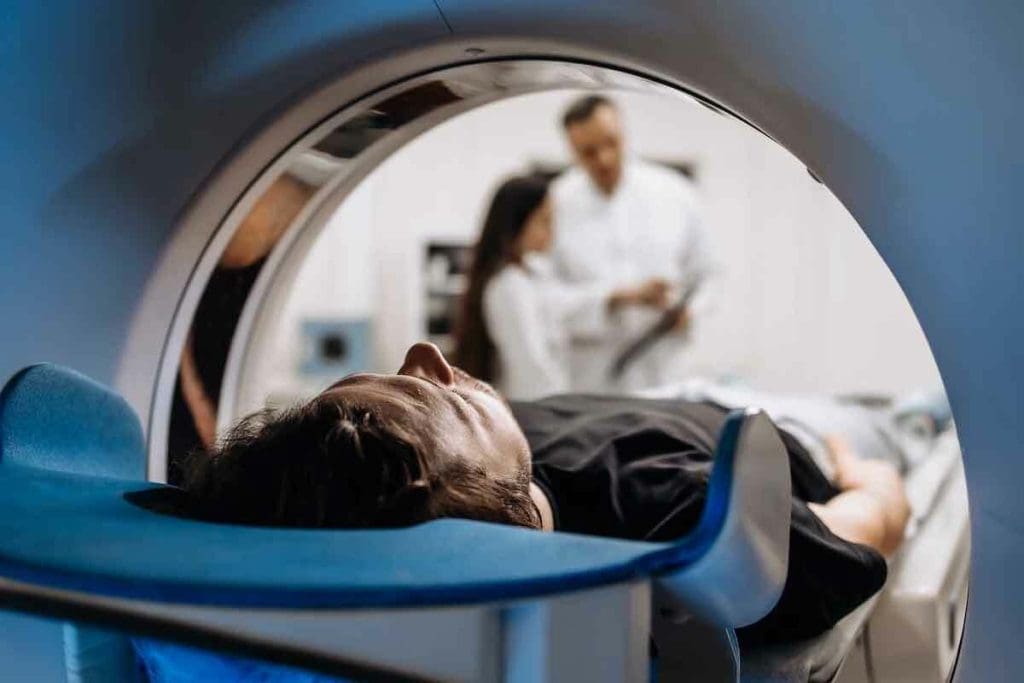
CT scans use advanced technology to show the body’s inside. They help doctors find and understand cancer. This is because they can see the body’s organs and tissues clearly.
How CT Scan Technology Creates Detailed Images
CT scans use X-rays and computers to make detailed pictures. They move an X-ray source and detectors around the body. Then, a computer turns this data into images.
They work well because they can tell different tissue densities apart. This helps doctors spot tumors and other issues.
Differentiating Between CT Scans and Other Imaging Methods
CT scans use X-rays, unlike MRI, which uses magnetic fields. This makes CT scans better for some cancers, like lung cancer. They show clear differences between tumors and healthy tissue.
Doctors say CT scans are very good at showing solid tumors in places like the lungs and liver. This is because they can take pictures of the whole body quickly.
“CT scans offer a complete view of the body, making them a key tool in cancer care.”
To learn more about CT scans and cancer, check out Precision Imaging Centers. They share a lot about what CT scans can and can’t do in cancer detection.
Key Fact #1: How CTShowsw Cancer Through Density Differences
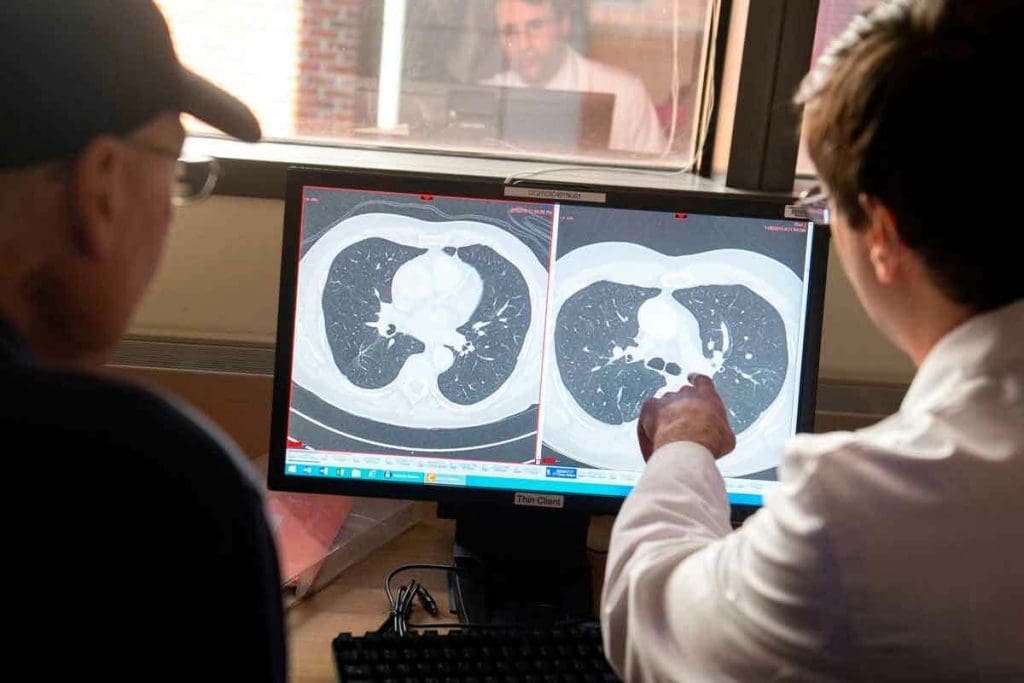
CT scans find cancer by showing differences in tissue density. Tumors are usually denser or less dense than healthy tissues. This makes them stand out on CT images.
Visual Characteristics of Tumors on CT Images
Tumors look different on CT scans based on their type and location. They might show up as distinct masses or nodules. Or, they could be areas of changed density inside an organ. The visual characteristics of tumors on CT images give clues about their nature.
Some tumors are less dense than the tissue around them. Others are denser. Contrast agents help make these differences clearer. They highlight how blood flows through the tumor and the surrounding tissue.
Contrast Agents: Enhancing Cancer Visibility
Contrast agents, or “dye,” are used to make body structures or fluids stand out in medical images. In CT scans, iodine-based agents are the most common. They can be given orally or through an IV, depending on the exam.
Contrast agents greatly help in spotting and understanding tumors. They show the blood flow and tissue perfusion differences between tumors and normal tissues. This makes tumors easier to see on CT images.
| Feature | DescriptioBenefits | It is in Cancer Detection |
| Density Variation | Tumors often have different densities than surrounding tissues. | Makes tumors visible on CT scans. |
| Contrast Agents | Enhance contrast between different tissues. | Improves tumor detection and characterization. |
| Visual Characteristics | Tumors may appear as masses or areas of altered density. | Provides information about the tumor’s nature and stage. |
Key Fact #2: Cancers Most Accurately Detected by CT Scans
CT scans are top-notch for spotting certain cancers. They help us see solid tumors in different organs. This is key for figuring out what’s wrong and how to fix it.
Lung Cancer: Why CT Excels at Detection
CT scans are great at finding lung cancer. This is because they can show lung nodules and tumors clearly. Early detection with CT scans means better treatment chances.
Liver, Kidney, and Colon Cancers
CT scans also do well with liver, kidney, and colon cancers. They show these organs well, helping spot tumors. CT scans give us clear images for diagnosing and understanding these cancers.
Measuring Tumor Size, Shape, and Spread
CT scans are good at measuring tumors. Knowing the size and spread helps doctors plan treatment. They also help track how treatments are working.
| Cancer Type | CT Scan Detection Accuracy | Key Benefits |
| Lung Cancer | High | Early detection, detailed visualization of lung nodules |
| Liver Cancer | High | Accurate tumor sizing, assessment of spread |
| Kidney Cancer | High | Clear visualization of kidney tumors, staging |
| Colon Cancer | High | Detection of tumors, assessment of local spread |
CT scans give us detailed pictures of tumors and their surroundings. This helps doctors make better decisions for patients. The info from CT scans is key to creating effective treatment plans.
Key Fact #3: Cancer Types That CT Scans May Miss
Not all cancers show up on CT scans. Some types are hard to spot, making early detection tricky. CT scans are great for finding many cancers, but some tumors are harder to see, even when they’re small.
Early-Stage Pancreatic Cancer Challenges
Spotting early pancreatic cancer with CT scans is tough. The pancreas is a tricky organ, and tumors can hide in its tissues. Even with better CT tech, finding early pancreatic cancer is a big challenge.
Brain Tumor Detection Limitations
Brain tumors are also hard to see on CT scans. The brain’s layout and the skull’s thickness make it hard to spot some tumors. For brain tumors, MRI is usually better because it can see soft tissues better.
Why Blood Cancers Require Different Imaging Approaches
Blood cancers like leukemia and lymphoma are tricky to find with CT scans alone. These cancers affect the blood and lymph systems, needing special tests. CT scans can show signs of blood cancers, but biopsies are often needed for a clear diagnosis.
The table below shows the challenges of finding different cancers with CT scans:
| Cancer Type | Detection Challenges | Alternative/Complementary Imaging |
| Early-Stage Pancreatic Cancer | Small tumor size, complex pancreas anatomy | Endoscopic Ultrasound (EUS), MRI |
| Brain Tumors | The complex anatomy, skull density | MRI |
| Blood Cancers (Leukemia/Lymphoma) | Involvement of the blood and lymphatic systems | Biopsy, PET scans |
It’s key to know what CT scans can and can’t do for cancer detection. While they’re very useful, they’re not perfect for every cancer type.
Key Fact #4: Understanding CT Scan Error Rates
CT scans are a key tool in finding cancer. But, they’re not perfect. Knowing about CT scan errors helps patients and doctors make better choices.
False Positives: When CT Shows Something That Isn’t Cancer
False positives happen when a CT scan says there’s cancer when there isn’t. This can cause worry, more tests, and treatments that aren’t needed.
Things like infections, benign growths, and imaging mistakes can cause false positives. To avoid these, doctors look closely at CT images. They might use more tests or scans to check their findings.
False Negatives: When Cancer Is Present But Not Detected
False negatives occur when a CT scan misses cancer that’s there. This can make treatment start too late, which might hurt patient outcomes.
Small tumors, hard-to-reach areas, and outdated CT tech can lead to false negatives. To reduce these, doctors use top-notch CT machines and have lots of experience.
The table below shows the main differences between false positives and false negatives:
| Characteristics | False Positives | False Negatives |
| Definition | CT scan shows cancer when none is present | CT scan misses the actual cancer |
| Causes | Infection, benign growths, and imaging artifacts | Small tumors, difficult locations, and technology limitations |
| Consequences | Unnecessary anxiety, additional testing, overtreatment | Delayed diagnosis, delayed treatment |
| Mitigation Strategies | Careful image analysis, additional imaging | High-quality equipment, experienced radiologists |
Knowing about these errors helps us see why we need to use CT scans with other tests for accurate cancer diagnosis.
Key Fact #5: Factors Affecting CT Scan Accuracy
It’s important to know what affects CT scan accuracy. This includes patient factors, technical aspects, and the radiologist’s skill. Understanding these helps us see how well CT scans can find cancer.
Patient-Related Factors
Things about the patient can change how clear a CT scan is. For example, a bigger body size can make images less clear. Also, moving during the scan can mess up the pictures, making them hard to read.
Technical Considerations and Protocol Selection
The type of CT scanner and the scan settings matter too. Newer scanners can show more detail and find smaller tumors. Using contrast agents can make some cancers stand out more.
Radiologist Experience and Interpretation
The radiologist’s experience is key. A skilled one can spot cancer signs that others might miss. They also look at the patient’s history and the scan’s details to make a correct diagnosis.
In short, CT scans’ ability to find cancer depends on many things. These include the patient, the technology, and the radiologist. Knowing these helps doctors use CT scans better to find and treat cancer.
Key Fact #6: When CT Scans Need Supplementary Testing
CT scans are great for finding cancer, but sometimes they need more tests to be sure. They show detailed pictures inside the body. But, they can’t always tell if a tissue is cancerous or not.
Complementary Imaging Technologies
To get a clearer picture, CT scans are often paired with other imaging tools. Magnetic Resonance Imaging (MRI) and Positron Emission Tomography (PET) scans are often used together.
| Imaging Technology | Primary Use in Cancer Diagnosis | Benefits |
| CT Scan | Initial detection and staging | Quick, detailed images of internal structures |
| MRI | Soft tissue characterization | High resolution for soft tissues, no radiation |
| PET Scan | Metabolic activity assessment | Provides information on tissue metabolism, useful for staging and monitoring treatment response |
The American Cancer Society says, “Using many imaging tests helps doctors get a full picture of cancer. This leads to more accurate diagnoses.”
The Critical Role of Biopsies
Imaging tests are helpful, but biopsies are key for cancer diagnosis. A biopsy takes a tissue sample from a tumor. Then, it’s checked for cancer cells under a microscope.
A biopsy is essential because it lets doctors see the tissue directly. This is very important when imaging tests aren’t clear.
“The diagnosis of cancer is typically confirmed by a biopsy, which involves the removal of a small sample of tissue for pathological examination.”
Multi-Modal Diagnostic Approaches
Using CT scans with other tests and biopsies makes cancer diagnosis more accurate. This approach helps doctors understand the cancer better. They can see the type, stage, and how far it has spread.
Combining different diagnostic tools improves accuracy and helps plan treatment. As we learn more about cancer, using many diagnostic methods is key to good care.
Key Fact #7: CT’s Role in Cancer Staging and Treatment Monitoring
CT scans are key in cancer care. They help us see how far cancer has spread and if treatments are working. This info is vital for patient care.
How CT Helps Determine Cancer Spread
CT scans are vital for cancer staging. They give detailed images of tumors. This lets doctors check if cancer has spread to other parts of the body.
Tracking Treatment Response with Sequential Imaging
Sequential CT scans track treatment success. By comparing images, doctors see if tumors are getting smaller. This helps decide if treatment should keep going or change.
Radiation Exposure Considerations
CT scans are important but carry radiation risks. We aim to use the least amount of radiation needed. This way, we balance benefits with risks, keeping patients safe.
Conclusion: Balancing CT Benefits and Limitations in Cancer Detection
CT scans are key in finding cancer, showing both their strengths and weaknesses. They can spot cancer by looking at density differences. This makes them great for finding cancers in the lungs, liver, and colon.
But CT scans aren’t perfect. They can miss cancers like early pancreatic cancer and some brain tumors. How well a CT scan works depends on the patient, the technology used, and the radiologist’s skill.
To get the most from CT scans, we need to know their limits. Using CT scans with other tests, like biopsies, helps doctors make better decisions. This way, we can see how far cancer has spread and how well treatments are working.
Knowing if a CT scan can find cancer is important for good care. By understanding what CT scans can and can’t do, we can use them better. This helps improve how we diagnose and treat cancer. Whether a CT scan will show tumors depends on many things, like the cancer type and the scan quality. By using CT scans wisely and understanding their results, we can help patients more.
FAQ
Can a CT scan detect cancer?
Yes, CT scans can find cancer by showing differences in body tissues. They help spot tumors and abnormal growths.
What cancers can a CT scan detect?
CT scans are great at finding lung cancer. They also work well for liver, kidney, and colon cancers. This is because they give detailed images of these areas.
Will a CT scan show tumors?
Yes, CT scans can show tumors. They help see their size, shape, and spread. This is key for diagnosing and planning treatment.
Can cancer be missed on a CT scan?
Yes, some cancers, like early-stage pancreatic cancer and brain tumors, can be hard to find on CT scans. Blood cancers might need different imaging methods.
Are CT scans accurate in detecting cancer?
CT scans are very useful for finding cancer. But their accuracy can change based on several factors. These include the patient, the scan quality, and the radiologist’s skill.
Can a CT scan miss cancer?
Yes, CT scans might miss cancer, like in its early stages. Or if the tumor isn’t dense enough to see. This shows why more tests might be needed sometimes.
How accurate are CT scans in cancer detection?
CT scans’ accuracy in finding cancer varies. It depends on the cancer type, scan quality, and the radiologist’s expertise. It’s best to use CT scans with other diagnostic tools.
Do CT scans show cancer?
CT scans can show cancer by spotting tumors and abnormal growths. But their success depends on the cancer type and tumor characteristics.
What are the limitations of CT scans in cancer detection?
CT scans have some limits. They can give false positives and negatives. They might not work for all cancers, like blood cancers.
Can CT scans be used to monitor cancer treatment?
Yes, CT scans can track treatment progress. They help doctors see how well the treatment is working through images over time.
Are there any risks associated with using CT scans for cancer detection?
Yes, CT scans use radiation. This is something to think about, mainly for patients needing many scans.
Can a CT scan detect cancer at an early stage?
CT scans can find cancer early in some cases. But their success depends on the cancer type and tumor details.
Reference
- Mecoli, C. A., et al. (2023). Diagnostic yield of computed tomography for cancer detection in idiopathic inflammatory myopathy patients. Arthritis Research & Therapy, 25, 99.https://pmc.ncbi.nlm.nih.gov/articles/PMC10497706/