Urethral stricture is a common issue worldwide, causing trouble with urination. Thanks to new medical imaging, diagnosing this problem has gotten much better. CT scans are now a key part of this process. CT urethral stricture detection? It’s possible but rare. Get best facts. Urethrograms are better. Accurate testing is vital for relief.
We use CT urethral stricture detection to get precise diagnoses. It shows detailed images of the urethra and nearby tissues. This has greatly helped patients by allowing for quicker and better treatments.
Key Takeaways
- CT scans play a key role in finding urethral strictures.
- Getting the diagnosis right is essential for good treatment plans.
- New imaging tech has really improved how we care for patients.
- Seeing the full extent of urethral stricture helps doctors plan better.
- Catching it early can make a big difference in treatment success.
Understanding Urethral Strictures
It’s important to know about urethral strictures to manage and treat them well. These strictures can block urine flow and cause bigger problems if not treated right.
Definition of Urethral Strictures
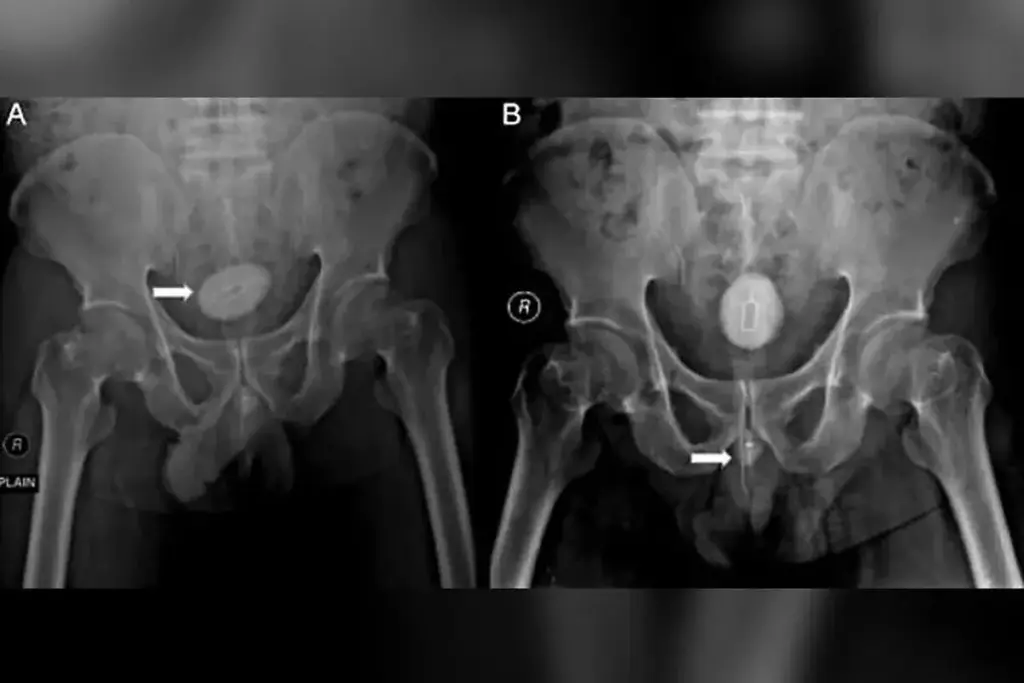
A urethral stricture is when the urethra gets narrower because of scarring or inflammation. This can stop urine from flowing right, leading to symptoms. CT urethrography and multi-detector CT urethrography help find these strictures by showing detailed images of the urethra.
“The use of CT urethrography has changed how we diagnose urethral strictures,” say urology experts. “It’s a non-invasive and very accurate way to see the urethra.”
Causes and Risk Factors
Urethral strictures can come from trauma, infection, or inflammation. People who have had urethral injuries, used catheters, or had surgeries there are at higher risk. Knowing these causes and risks helps prevent and treat them early.
- Trauma or injury to the urethra
- Infections or inflammation of the urethra
- Previous urethral surgeries or catheterization
Symptoms and Complications
Symptoms of urethral stricture include trouble urinating, weak urine flow, and pain while doing so. If not treated, they can cause infections, bladder damage, and kidney problems. Early detection with imaging like CT urethrography is key to avoid these issues and treat them well.
As a medical expert notes, “Quick diagnosis and treatment of urethral strictures are essential to avoid long-term damage to the urinary system.”
Role of CT Scans in Medical Imaging
CT scans play a key role in medical imaging. They give us detailed images of the body. This helps us diagnose and treat many health issues.
How CT Scans Work
CT scans use X-rays to create detailed images inside the body. A CT scanner, shaped like a doughnut, moves around the patient. It takes X-ray measurements from different angles.
These measurements are turned into images by computers. This technology lets us see inside the body in ways other methods can’t.
Advantages of CT Imaging
CT imaging is fast, accurate, and can show complex structures. It’s great in emergencies when quick diagnosis is needed. It shows bones, soft tissues, and blood vessels clearly.
CT scans help doctors make better decisions for patient care.
Other Imaging Techniques for Urethral Issues
Other methods are used for urethral problems too. Retrograde urethrography (RUG) is the top choice for seeing the urethra. It involves putting contrast material into the urethra to show its inside.
RUG gives detailed views of the urethra, key for finding strictures. Ultrasound and MRI might also be used, based on the patient’s needs and the issue.
Knowing the strengths and limits of each imaging method is important. We choose the best tool based on the patient’s condition and the issue at hand.
CT Urethral Stricture Detection Process
CT scans are used to find urethral strictures in several steps. These include getting ready for the scan and checking the results after. Knowing these steps can make patients feel more at ease and informed.
Preparing for a CT Scan
Before a CT scan, patients are told to:
- Remove any metal objects or jewelry that could interfere with the scan.
- Wear comfortable, loose-fitting clothing.
- Inform their doctor about any allergies or sensitivities, specially to contrast dye.
- Follow specific instructions regarding eating and drinking before the scan.
Contrast dye is used to make the urethra and surrounding structures clearer. Patients might drink a contrast agent or have it injected into their bloodstream.
What to Expect During the Scan
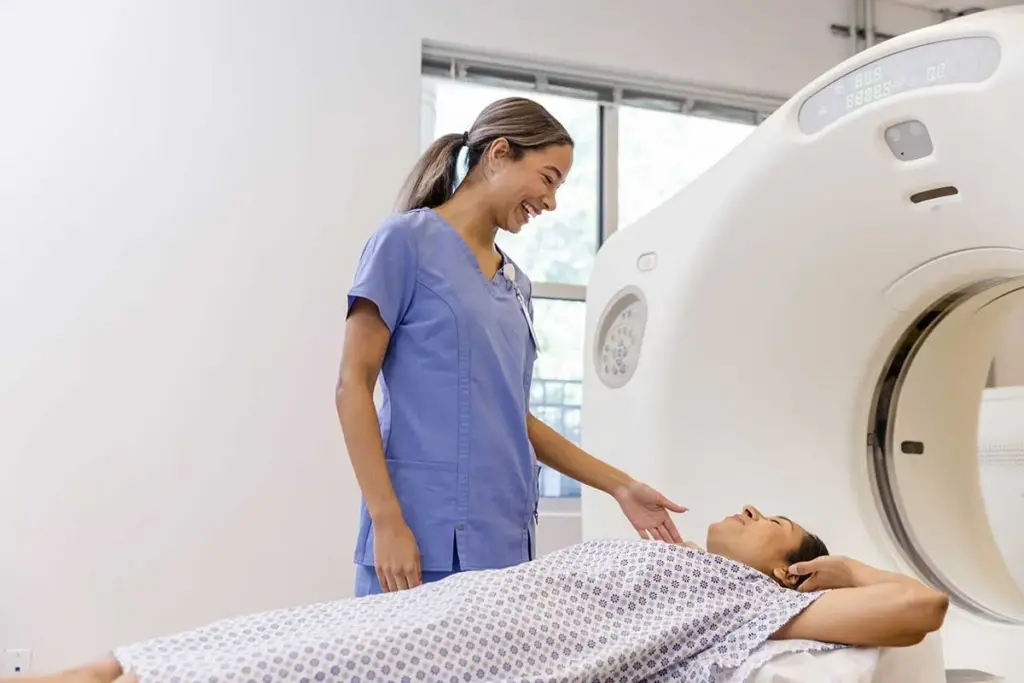
During the CT scan, patients lie on a table that slides into a large, doughnut-shaped machine. The scan is quick, lasting just a few minutes. Here’s what happens:
- The table will move slowly through the CT scanner.
- Patients may be asked to hold their breath for short periods.
- The machine will make whirring and clicking sounds.
- A radiologist or technician will be present to monitor the process.
It’s normal to feel a bit anxious, but the procedure is generally painless and non-invasive.
Post-scan Procedures and Analysis
After the CT scan, a radiologist analyzes the images. They look for any narrowing or blockage in the urethra. They also measure the length and diameter of the stricture and check the surrounding tissue.
The results are then shared with the patient’s healthcare provider. They will discuss the findings and suggest treatment options.
|
Diagnostic Feature |
CT Scan |
RUG (Retrograde Urethrography) |
|---|---|---|
|
Imaging Technique |
Cross-sectional imaging using X-rays |
X-ray imaging with contrast dye injected into the urethra |
|
Visualization |
Detailed images of the urethra and surrounding structures |
Primarily shows the urethral lumen and strictures |
|
Invasiveness |
Non-invasive |
Invasive, requires catheterization |
|
Contrast Use |
Optional, depending on the protocol |
Required |
This comparison shows the utility of CT scans in finding urethral strictures. They provide a detailed view of the urethra and surrounding tissues without needing invasive procedures.
Comparison of CT Scan and Other Diagnostic Methods
Several methods are used to find urethral strictures. Each has its own good points and downsides. Knowing these differences helps pick the best tool for patient care.
MRI for Urethral Stricture Diagnosis
Magnetic Resonance Imaging (MRI) is key in checking urethral strictures, mainly in tough cases. It shows the urethra and nearby tissues clearly. This helps measure stricture length and how bad it is.
MRI is great for seeing how much fibrosis and spongiosclerosis there are. This info is key for planning surgery. It’s also good when CT scans aren’t enough, like in complex strictures or the posterior urethra.
Ultrasound and X-ray Techniques
Sonourethrography, a special ultrasound, is getting more attention. It can accurately measure stricture length and size. It uses a saline solution to make the urethra bigger, so the stricture shows up well.
X-rays, like retrograde urethrography (RUG) and voiding cystourethrography (VCUG), are also used. They use contrast to see the urethra on X-rays. But they might not show soft tissue as well as MRI or CT scans.
Effectiveness of Different Diagnostic Tools
Diagnostic tools for urethral strictures can be compared by their accuracy, safety, and how comfortable they are for patients. Here’s a table that shows what CT scans, MRI, ultrasound, and X-rays can do.
|
Diagnostic Method |
Accuracy |
Safety |
Patient Comfort |
|---|---|---|---|
|
CT Scan |
High |
Low radiation exposure |
Quick and comfortable |
|
MRI |
Very High |
No radiation |
May cause claustrophobia |
|
Ultrasound (Sonourethrography) |
High |
No radiation |
Generally comfortable |
|
X-ray (RUG/VCUG) |
Moderate to High |
Radiation exposure |
May cause discomfort |
Each method has its role in checking urethral strictures. The right choice depends on the situation, the patient, and the stricture’s details. Knowing what each method can do helps doctors make the best choices for patients.
Accuracy of CT Scans in Identifying Strictures
Recent studies have shown that CT scans are very reliable in finding urethral strictures. This condition needs a precise diagnosis for the best treatment.
Medical imaging has made big strides, with CT scans being key in spotting complex urethral issues.
Success Rates and Studies
Many studies have looked into how well CT scans work in finding urethral strictures. For example, a study in the Journal of Urology found CT scans are very good at spotting strictures, even in tough cases.
“The use of CT scans has changed how we diagnose urethral strictures,” say experts. “It’s a very accurate way to find these conditions.”
CT scans are great because they give clear images of the urethra. This lets doctors find strictures very precisely.
Limitations of CT in Urethral Strictures
Even though CT scans work well, they have some limits. For instance, if a stricture is very thin or hard to see, CT scans might miss it.
We know that the quality of the CT scan and the radiologist’s skill can affect how accurate the diagnosis is.
Factors Influencing Detection Accuracy
The accuracy of CT scans in finding urethral strictures depends on a few things. This includes the technology used and the experience of the healthcare team.
In complex stricture imaging CT is very important. It gives detailed views that are key for treatment planning.
Also, in imaging urethral trauma cases, CT scans are very helpful. They provide important info for both immediate care and long-term plans.
By knowing these factors and using CT scans’ strengths, we can improve diagnosing and treating urethral strictures.
Patient Experiences with CT Screening
Patients who have had CT scans for urethral strictures share their stories. These stories show how CT scans help in patient care. At our institution, we’ve seen the big difference CT scans make.
Case Studies and Anecdotes
A patient’s urethral stricture was found with a CT scan. The scan’s clear images helped our urologists plan a precise preoperative CT urethra mapping. This is key for surgery success. This case shows how important accurate tests are for urethral strictures.
Another patient had ongoing urinary problems. A CT scan showed a complex stricture. The scan’s detailed urethral anatomy by CT helped our team create a good treatment plan. This greatly improved the patient’s life.
Testimonials from Urological Patients
Patients who had CT scans for urethral strictures feel relieved. “The CT scan was a game-changer for me,” one patient said. “It let my doctors see how bad my condition was and plan the right treatment.”
These stories highlight the CT scan’s value. It not only diagnoses urethral strictures but also gives patients clarity and direction in their care.
How CT Results Changed Patient Outcomes
CT scans have greatly improved patient outcomes. They give clear images of the urethral anatomy. This lets healthcare providers tailor treatments to each patient’s needs.
- Accurate diagnosis leading to targeted treatment plans
- Enhanced patient understanding and engagement in their care
- Improved surgical outcomes due to precise preoperative planning
With ongoing CT technology advancements, we expect even better patient outcomes in the future.
Follow-up Procedures After CT Diagnosis
After a CT scan finds a urethral stricture, several steps help manage it. A CT scan gives detailed images. These images help us see how big and what kind of stricture it is. They also show indirect signs of stricture that might not be obvious at first.
Knowing these details is key to making a good treatment plan. We’ll talk about why it’s important to watch strictures, the treatment options, and lifestyle changes needed.
Monitoring Strictures
It’s important to keep an eye on strictures after a CT scan. This means periodic CT scans or other imaging to see if the stricture is getting worse.
“Monitoring helps us adjust the treatment plan as needed,” says a top urologist. “It’s a proactive way to improve life for those with urethral stricture.”
Treatment Options
Treatment for urethral stricture depends on the stricture’s severity and location. Common treatments include:
- Dilation: a procedure to widen the stricture
- Urethrotomy: a surgical procedure to cut the stricture
- Urethroplasty: a more extensive surgery to repair or replace the affected urethra
Each treatment has its own pros and cons. We work with patients to find the best treatment for their condition and health.
Lifestyle Changes
Medical treatments aren’t the only way to manage urethral stricture. Lifestyle changes can also help. These include:
- Drinking plenty of water to stay hydrated
- Avoiding irritants that can make symptoms worse
- Maintaining good hygiene to prevent infections
Combining these lifestyle changes with medical treatment can help patients manage their condition better. This improves their overall well-being.
Managing urethral stricture well needs a complete approach. This includes accurate diagnosis with CT urethral pathology detection, careful monitoring, the right treatment, and lifestyle changes. We aim to give our patients the best care. We want to support and guide them every step of the way.
Costs and Insurance Coverage
It’s important to know the costs of medical care, like CT scans for urethral stricture detection. The price can change a lot based on where you are, who you see, and your insurance.
Average Costs of CT Scans in the U.S.
In the U.S., a CT scan can cost between $200 and $1,000 or more. This depends on how complex the scan is and where it’s done. For urethral stricture detection, the price might go up because of special protocols or extra imaging.
Here’s a table with average costs for CT scans for urethral stricture detection:
|
Procedure |
Average Cost |
Range |
|---|---|---|
|
CT Scan for Urethral Stricture |
$450 |
$250 – $800 |
|
CT Scan with Contrast |
$600 |
$350 – $1,200 |
|
CT Urography |
$800 |
$500 – $1,500 |
Insurance Plans and Urethral Stricture Detection
Most insurance plans cover CT scans for urethral stricture detection. But, how much they cover can really vary. It’s a good idea to check your insurance before getting a CT scan.
Key factors that influence insurance coverage include:
- The type of insurance plan (e.g., HMO, PPO, Medicare)
- The specific coverage details for diagnostic imaging
- Deductibles and copayments associated with the CT scan
- Whether the CT scan is performed by an in-network or out-of-network provider
Financial Assistance Resources
If you’re struggling to pay for diagnostic procedures, there are resources to help. Many places offer financial help or lower fees based on your income.
Here are some ways to get financial help:
- Call the billing department of your healthcare provider to ask about financial help.
- Look into non-profit groups that help with medical costs.
- Talk to your healthcare provider about payment plans.
Knowing the costs of CT scans for urethral stricture detection and looking into financial help can make your care more affordable.
Innovations in CT Technology
CT scans are changing how we find and treat urethral strictures. Medical imaging keeps getting better, and CT tech is leading this change.
New CT imaging methods are making it easier to see and study urethral strictures. These updates are key to better care for patients.
Developments in Imaging Techniques
New CT tech is all about better imaging. This includes:
- High-resolution images for clearer views of the urethra
- Advanced algorithms for sharper and more accurate pictures
- Dynamic imaging to check how the urethra works
These new tools help us spot urethral strictures right and plan the best treatments.
AI and Machine Learning in CT Analysis
Artificial Intelligence (AI) and Machine Learning (ML) are changing CT scans. AI helps by:
- Making image analysis faster for doctors
- Finding small problems doctors might miss
- Helping decide the best treatment options
AI and ML make CT scans more efficient and accurate in finding urethral strictures.
Future Possibilities for Urethral Stricture Detection
The future of CT scans for urethral strictures is bright. New trends and tech are coming. These include:
- Dual-energy CT for better tissue details
- Advanced visualization for better surgery planning
- Combining with other imaging for a full view
These new tools will help us find and treat urethral strictures even better, leading to better care for patients.
Clinical Guidelines for Urethral Stricture Management
Managing urethral strictures well needs a detailed plan, following the latest clinical guidelines. It’s key to stick to these guidelines to give patients the best care.
Recommendations from Urological Associations
Urological groups around the world make and update guidelines for urethral strictures. These guidelines are based on new research and evidence. CT scans are important in this process, giving detailed views of the urethra and strictures.
The American Urological Association (AUA) and the European Association of Urology (EAU) are key in making these guidelines. They cover diagnosis, treatment, and follow-up, ensuring a complete care plan for patients.
Importance of Early Detection
Finding urethral strictures early is key for good management and avoiding problems. Early action can greatly help patients, lowering the chance of more serious issues and the need for complex treatments. Guidelines stress the need for early use of diagnostic tools, like CT scans, for early detection.
Doctors should watch for signs and risk factors of urethral strictures. This helps ensure patients get quick evaluation and treatment.
Multidisciplinary Approaches in Treatment
Treating urethral strictures often needs a team effort, with urologists, radiologists, and others working together. Guidelines suggest using different treatments based on the patient and stricture specifics.
Working together is vital for creating and carrying out good treatment plans. This includes using imaging like CT scans to guide decisions and track progress. A team approach helps improve patient results and care quality.
Conclusion: The Future of Urethral Stricture Diagnosis
Medical imaging is getting better, and CT scans are key in finding and treating urethral strictures. They give doctors the details they need to help patients. This has made a big difference in how well patients do.
Advancements in Imaging Techniques
More research is needed to make diagnosing urethral strictures even better. New CT tech, like AI and machine learning, will help find and treat these issues more effectively.
Empowering Patients
Patients need to know about their diagnosis and treatment options. This knowledge helps them take charge of their health. We believe in teaching patients so they can manage their urethral strictures better.
Role of Advanced Imaging
CT scans and other advanced imaging are essential in today’s healthcare. As technology advances, we’ll see even better care and results for patients.
FAQ
What is a urethral stricture and how is it diagnosed?
A urethral stricture is when the urethra gets narrower because of scarring or inflammation. Doctors use imaging like retrograde urethrography (RUG), CT urethrography, or sonourethrography to diagnose it.
How does CT urethrography compare to RUG in diagnosing urethral strictures?
CT urethrography gives a detailed view of the urethra and surrounding tissues. This is better than RUG, which is a 2D method. CT urethrography is great for complex stricture imaging and checking for urethral trauma.
What are the advantages of using CT scans for urethral stricture detection?
CT scans show the urethra and surrounding areas clearly. This helps doctors find and assess strictures accurately. They’re also good for seeing how much damage there is and planning treatment.
Are there any limitations to using CT scans for urethral stricture diagnosis?
CT scans are very effective but might not work for everyone. This includes people with certain health issues or allergies to contrast agents. Also, they use radiation.
How do CT scans compare to MRI in diagnosing urethral strictures?
Both CT and MRI can find urethral strictures. But, MRI is better for soft tissue details. CT scans are better for seeing calcifications and bony structures.
What is the role of sonourethrography in urethral stricture diagnosis?
Sonourethrography uses ultrasound to check urethral strictures, mainly in the front part of the urethra. It’s a helpful addition to other imaging methods.
How accurate are CT scans in detecting urethral strictures?
Studies show CT scans are very good at finding urethral strictures. They’re as good as or even better than traditional RUG.
What factors influence the accuracy of CT scans in detecting urethral strictures?
The quality of the CT scan equipment, the radiologist’s skill, and any health conditions can affect how accurate CT scans are.
What are the costs associated with CT scans for urethral stricture detection?
CT scan costs vary by location, healthcare provider, and insurance. They can range from a few hundred to several thousand dollars.
Are there any financial assistance resources available for patients undergoing CT scans?
Yes, many healthcare providers and non-profit groups offer financial help for medical imaging, including CT scans.
What are the future possibilities for CT-based urethral evaluation?
New CT technology, like AI and machine learning, will make CT-based urethral evaluation even better.
How can patients prepare for a CT scan for urethral stricture detection?
Patients should follow their doctor’s instructions. This might include fasting, avoiding certain medicines, and arriving early for the scan.
What are the clinical guidelines for managing urethral strictures?
Urological associations have guidelines for managing urethral strictures. They stress the importance of early detection, accurate diagnosis, and treating them in a team effort.
National Center for Biotechnology Information. Evidence-Based Medical Insight. Retrieved from https://pubmed.ncbi.nlm.nih.gov/23507857/[4