Last Updated on November 27, 2025 by Bilal Hasdemir

Understanding radiation exposure in medicine is essential for making informed health decisions. At Liv Hospital, we combine global expertise with a strong focus on patient safety. Our goal is to ensure that every imaging study uses the lowest radiation possible without compromising image quality.
The CXR radiation dose—the amount of radiation from a chest X-ray—is about 0.1 millisieverts (mSv). This is roughly equal to the natural background radiation a person receives over 10 days, and it’s much lower than the dose from more advanced imaging tests like CT scans.
At Liv Hospital, we always prioritize patient safety and peace of mind. By keeping the CXR radiation dose and overall exposure as low as possible, we provide accurate diagnostics while protecting our patients’ health.
Key Takeaways
- Chest X-ray (CXR) radiation dose is relatively low, around 0.1 mSv.
- CXR exposure is equivalent to 10 days of natural background radiation.
- CT scans deliver a higher radiation dose compared to CXR.
- Liv Hospital uses the lowest effective dose in imaging studies.
- Patient safety and peace of mind are our top priorities.
- Understanding radiation exposure is essential for informed healthcare decisions.
Understanding Medical Radiation in Diagnostic Imaging
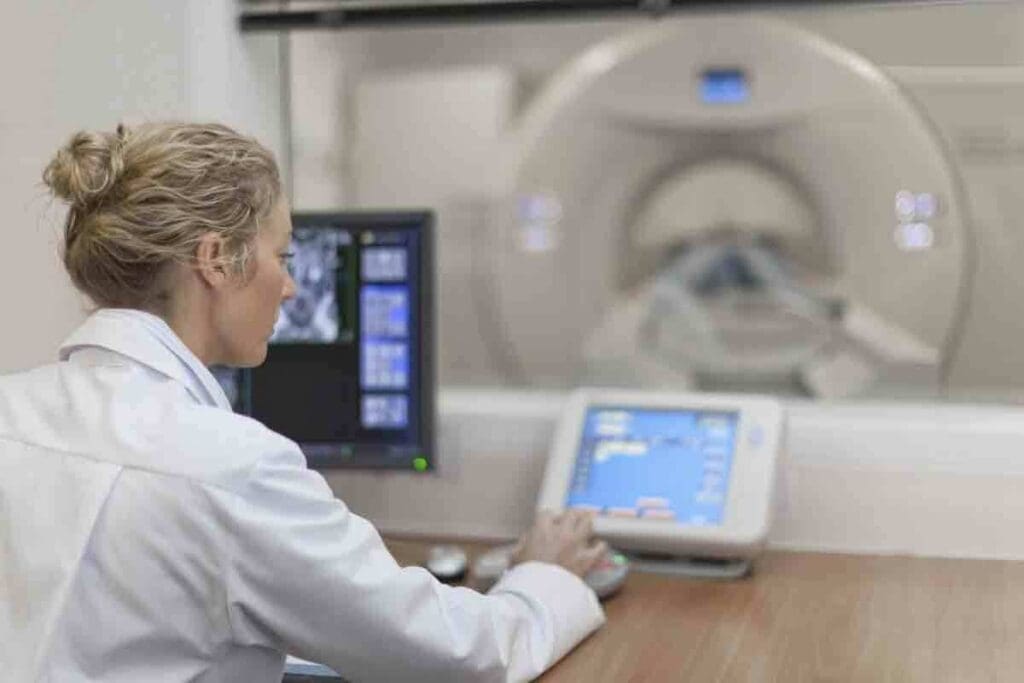
Diagnostic imaging uses X-rays and CT scans to see inside the body. It’s important to know about radiation and how it works in these tools.
What Is Ionizing Radiation?
Ionizing radiation is energy that can remove electrons from atoms. This includes X-rays, gamma rays, and cosmic rays. In medical imaging, it helps create images by going through different tissues.
Ionizing radiation is useful in medical imaging because it:
- Penetrates soft tissues to varying degrees
- Is absorbed differently by different materials (e.g., bone vs. soft tissue)
- Creates detailed images of internal structures
How X-rays and CT Scans Generate Images
X-rays and CT scans use the fact that different tissues absorb X-rays differently. Here’s how they work:
X-rays are electromagnetic radiation that can go through the body. When X-rays hit a part of the body, they go through tissues at different rates. Bone absorbs more X-rays than soft tissue. This creates an image based on the body’s density.
CT scans use X-rays and computers to make detailed images. A CT scanner moves around the body, sending X-rays from many angles. The data is then turned into detailed images by computers.
| Imaging Modality | Typical Radiation Dose (mSv) |
| Chest X-ray | 0.02-0.1 |
| CT Chest | 5-8 |
| Abdominal X-ray | 0.7-1.0 |
| CT Abdomen | 5-10 |
Knowing the radiation doses for different imaging is key. It helps patients and doctors make smart choices about tests. Understanding radiation and how X-rays and CT scans work is important.
CXR Radiation Dose: Measurements and Safety Profile
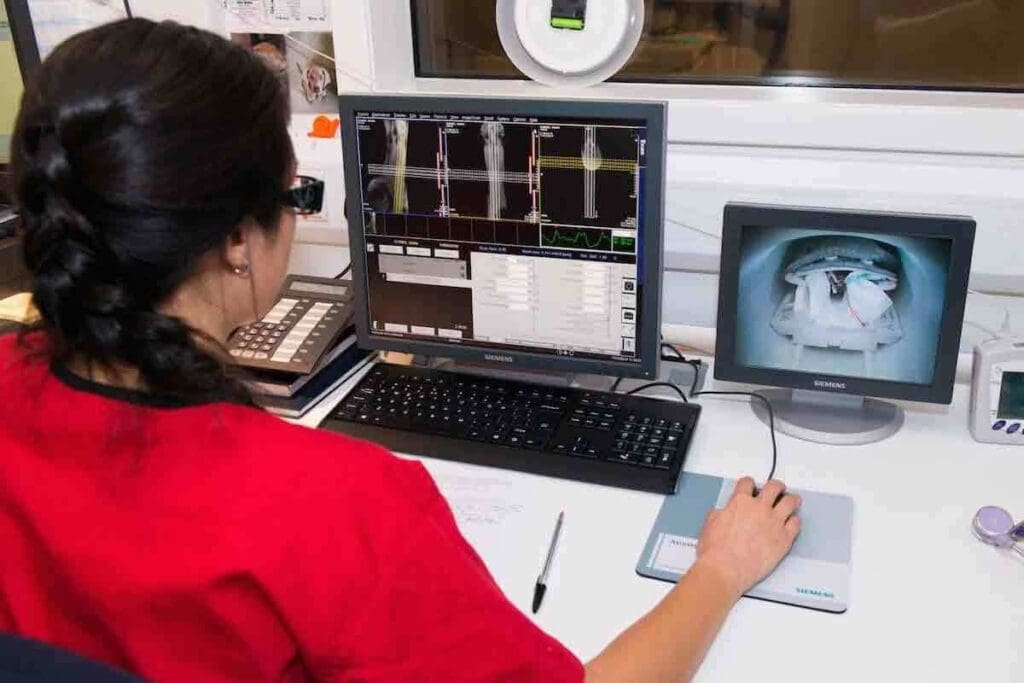
Knowing the radiation dose from chest X-rays (CXR) is key for patients and doctors. We look at the usual doses and what affects them. This gives a full picture of CXR safety.
Typical Chest X-ray Exposure Levels
A standard chest X-ray has an effective dose of about 0.1 mSv. This is quite low. For comparison, a CT scan of the abdomen can have a dose of 7-10 mSv, much higher than a CXR. CXR doses usually range from 0.02-0.1 mSv, making it a safe choice for diagnosis.
Factors Affecting Individual CXR Radiation Exposure
Several things can change how much radiation a CXR gives off. These include:
- Patient size: Bigger patients might need more dose for clear images.
- Imaging technology: New digital systems use less radiation than old ones.
- Exposure settings: The X-ray energy and exposure levels also play a part.
Knowing these factors helps doctors make CXRs safer. They can keep doses low while keeping images clear.
Measuring Radiation: The Millisievert (mSv) System Explained
The millisievert (mSv) is now the standard unit for measuring radiation in medical settings. This makes it easier to compare different imaging methods.
To understand the millisievert, we must first learn about radiation units.
Understanding Radiation Measurement Units
The millisievert (mSv) is key for measuring radiation in medical imaging. It shows the total radiation a body gets.
This unit considers how different parts of the body react to radiation. It gives a better idea of the risks.
Converting Between Different Radiation Metrics
Changing between radiation units can be tricky. But it’s vital for comparing doses from different scans. The millisievert is used worldwide for this purpose.
For example, it helps us see how an X-ray compares to a CT scan in terms of radiation.
Here’s a simple table to show how various scans compare in millisieverts (mSv):
| Imaging Procedure | Typical Radiation Dose (mSv) |
| Chest X-ray | 0.02-0.1 |
| CT Abdomen | 5-10 |
| Mammogram | 0.4 |
Using millisieverts helps us understand and compare radiation from different medical scans.
X-Ray Radiation Dose Chart: Procedure-by-Procedure Breakdown
It’s important for doctors and patients to know about X-ray radiation doses. Different X-rays give out different amounts of radiation. For example, dental X-rays have low doses, while abdominal X-rays have higher doses. We’ll break it down to help you understand the differences.
Common X-ray Procedures and Their Radiation Levels
Many X-ray procedures are used in medical tests. Each one has its own radiation level. Let’s look at some common ones and their doses.
Dental X-rays (0.005-0.01 mSv)
Dental X-rays have very low radiation doses. They help find problems like tooth decay and gum disease in your mouth.
Extremity X-rays (0.001-0.005 mSv)
Extremity X-rays, like those for arms and legs, also have low doses. They’re used to check for fractures and bone problems.
Abdominal X-rays (0.7-1.0 mSv)
Abdominal X-rays have higher doses than dental or extremity X-rays. They help find problems in the belly, like blockages or foreign objects.
To show the dose differences, we made a comparison table:
| X-ray Procedure | Typical Radiation Dose (mSv) |
| Dental X-ray | 0.005-0.01 |
| Extremity X-ray | 0.001-0.005 |
| Abdominal X-ray | 0.7-1.0 |
This chart shows how different X-rays have different doses. Knowing this helps us make better choices about medical imaging.
CT Abdomen Radiation Dose: Why It’s Higher Than X-rays
Abdominal CT scans are vital for diagnosis but have a higher radiation dose than X-rays. This is mainly because CT scans need more detail and complexity.
Understanding the 5-10 mSv Exposure Range
A typical CT abdomen scan gives patients a radiation dose of 5-10 millisieverts (mSv). For comparison, a chest X-ray has a dose of about 0.02-0.1 mSv. The higher dose in CT scans is needed for detailed images of the abdominal organs.
The reasons for this higher dose include:
- The need for higher resolution images to diagnose complex abdominal conditions.
- The use of multiple X-ray beams from different angles to create detailed cross-sectional images.
- The thickness and density of the abdominal region, requiring more radiation to penetrate.
Multi-phase CT Scans and Cumulative Exposure
Some CT abdomen scans are done in multiple phases. This means the scan is repeated after contrast material is given. This can greatly increase the total radiation dose.
It’s important to think about the total radiation from all imaging procedures. Patients who have had many CT scans or X-rays may get a higher total dose. This total dose is key to understanding long-term risks from radiation.
To lower these risks, healthcare providers follow the ALARA principle (As Low As Reasonably Achievable). They make sure radiation doses are as low as possible while keeping image quality high. This helps balance the benefits of CT scans with the risks of radiation.
CT Chest and Other Common CT Procedures
Computed Tomography (CT) scans are key for diagnosing many health issues. But, they expose us to different amounts of radiation, depending on where they’re used. It’s important to know how much radiation each scan uses and how it compares to X-rays.
Typical Radiation Dose in Chest CT (5-8 mSv)
A chest CT scan usually gives a dose of 5 to 8 millisieverts (mSv). This is much more than a chest X-ray, which is about 0.02-0.1 mSv. The higher dose is because CT scans take many X-rays from different angles for detailed images.
Head CT Radiation Exposure (1-2 mSv)
Head CT scans have lower doses, usually 1 to 2 mSv. This is because the head is smaller, needing less radiation for clear images. Yet, it’s key to think about the effects of getting many scans.
Whole-body CT Screening Considerations
Whole-body CT scans scan the whole body. They expose patients to 10-15 mSv or more, depending on the method. While they offer detailed info, the high radiation makes them a serious consideration. This is true, even for people who aren’t showing symptoms.
Knowing the radiation doses for different CT scans is vital for doctors and patients. By comparing these doses to X-rays, we can weigh the risks and benefits. This helps us make smarter choices about when to use these tests.
X-Ray vs CT Scan: Comparative Radiation Exposure Analysis
When we compare X-rays and CT scans, we see big differences in radiation exposure. These differences are key to making safe choices for medical imaging.
Why CT Delivers 50-100 Times More Radiation Than X-rays
CT scans give off more radiation than X-rays because they take more detailed pictures. They capture many cross-sectional images at once. This means patients get more radiation overall.
Key factors contributing to higher CT scan radiation:
- Multiple image slices
- Higher dose per slice compared to X-rays
- Potential for multi-phase scanning
A chest X-ray usually gives 0.02-0.1 mSv of radiation. But, a chest CT scan can give 5-8 mSv or more.
Diagnostic Value vs. Radiation Risk Assessment
Healthcare providers must think about both the benefits and risks of X-rays and CT scans. CT scans give clearer images and can spot more conditions. But, they also mean more radiation, which is a big concern, mainly for those needing many scans.
| Imaging Modality | Typical Radiation Dose (mSv) | Diagnostic Use |
| Chest X-ray | 0.02-0.1 | Lung conditions, bone fractures |
| Chest CT Scan | 5-8 | Detailed lung imaging, complex diagnoses |
Knowing these differences helps us choose the best imaging tests. We aim to find a balance between getting the right diagnosis and keeping radiation exposure low.
Natural Background Radiation Compared to Medical Imaging
Medical procedures sometimes worry patients about radiation. But it’s key to see this in light of natural background radiation. We get radiation every day from our surroundings. Knowing this helps us decide on medical imaging wisely.
Average Annual Environmental Radiation
Every year, we get about 3 mSv of natural background radiation. This comes from space, radon gas, and radioactive earth materials. For example, a chest X-ray has 0.02-0.1 mSv, much less than our yearly dose.
Putting Medical Procedures in Context of Daily Exposure
Medical imaging worries us about radiation. But, comparing it to daily natural radiation helps. A CT scan of the abdomen is like 2-3 years of natural radiation.
Remember, radiation risks add up over time. Knowing both natural and medical radiation helps us choose healthcare wisely. We must think about the benefits of imaging against the risks.
The ALARA Principle: Minimizing Radiation Exposure
In medical imaging, the ALARA principle is key. It stands for “As Low As Reasonably Achievable.” It helps reduce radiation exposure while keeping image quality high.
To follow the ALARA principle, we look at several things. We consider the imaging type, the patient’s health, and the equipment’s tech. By adjusting these, we cut down radiation without losing image quality.
Implementation in Clinical Practice
Following the ALARA principle in clinics means several steps. This includes:
- Using the least radiation needed for diagnosis
- Adjusting imaging based on patient size and needs
- Keeping imaging tech up to date
- Training staff on using tech safely
These steps help doctors reduce radiation while getting clear images.
Patient-specific Protocol Optimization
Optimizing for each patient is vital. We adjust imaging based on age, size, and health needs. Kids, for example, need extra care because they’re more sensitive to radiation.
Customizing protocols for each patient reduces radiation and improves image quality. We do this by choosing the right imaging settings and using new tech to lower doses.
Radiation Safety Considerations for Special Populations
Special groups, like kids and pregnant women, need special care when it comes to radiation. It’s very important to keep them safe during tests that use radiation.
Pediatric Imaging Guidelines
Children are more at risk from radiation because their bodies are growing and they have a long life ahead. So, it’s key to follow rules that help keep their radiation exposure low.
- Use the lowest possible dose necessary for diagnostic image quality.
- Adjust exposure settings based on the child’s size and age.
- Use alternative imaging modalities when possible, such as ultrasound or MRI.
The Image Gently campaign stresses the need to adjust settings for kids’ smaller bodies. This shows how important it is to tailor radiation safety for kids.
| Age Group | Recommended Dose Reduction |
| Infants (0-1 year) | 50-75% reduction |
| Children (1-12 years) | 25-50% reduction |
| Teenagers (13+ years) | Minimal reduction, approaching adult doses |
Pregnancy and Radiation Protection
Pregnant women need extra care to protect their unborn babies from radiation. The risk depends on how far along they are and the dose they get. It’s best to avoid radiation whenever you can.
“The goal is to keep the fetal dose as low as reasonably achievable (ALARA) without compromising the diagnostic quality of the examination,” as stated by radiological guidelines.
- Verify pregnancy status before any radiologic examination.
- Use alternative imaging techniques that do not involve ionizing radiation.
- Optimize radiologic exams to use the lowest necessary dose.
By sticking to these rules, we can make sure imaging tests are safe for special groups. This way, we can get the right diagnosis while keeping vulnerable patients safe from radiation.
Conclusion: Making Informed Decisions About Imaging Procedures
It’s key for patients and doctors to know about radiation doses and risks. This helps in making smart choices about tests.
We’ve looked into medical radiation, from the basics to the details of X-rays and CT scans. This helps us see why picking the right test is important for each patient.
Choosing the right test means looking at the radiation dose, how useful it is, and the patient’s risk. By following safety rules and the ALARA principle, we can lower radiation while getting the needed info.
As medical imaging gets better, staying up-to-date on safety is vital. This way, we can give patients the best care and keep their radiation exposure low.
FAQ
What is the typical radiation dose for a Chest X-ray (CXR)?
A CXR usually has a radiation dose of 0.02-0.1 millisieverts (mSv). This is quite low compared to other imaging methods.
How does the radiation dose of a CXR compare to a CT scan?
CT scans give off much more radiation than CXRs. In fact, some CT scans can expose patients to 50-100 times more radiation.
What is the standard unit for measuring radiation dose in medical imaging?
The millisievert (mSv) is the standard unit for measuring radiation dose in medical imaging. It considers the biological effects of different types of radiation.
How much radiation is in a CT scan of the abdomen?
A CT scan of the abdomen usually exposes patients to 5-10 mSv of radiation. This amount can vary based on the procedure and technology used.
What factors can affect the radiation dose for a CXR or CT scan?
Several factors can influence the radiation dose. These include patient size, the imaging technology used, and the specific procedure being performed.
How does the ALARA principle help minimize radiation exposure?
The ALARA principle aims to use the least amount of radiation needed for quality images. This helps reduce patient exposure.
Are there special considerations for radiation safety in children and pregnant women?
Yes, children and pregnant women need extra care when it comes to radiation safety. There are guidelines to minimize their exposure and ensure safe imaging.
How does natural background radiation compare to medical imaging radiation?
On average, people get about 3 mSv of natural background radiation each year. This helps put the risks and benefits of medical imaging into perspective.
What is the radiation dose for a head CT scan?
Head CT scans usually expose patients to 1-2 mSv of radiation.
How do dental X-rays compare to other X-ray procedures in terms of radiation dose?
Dental X-rays have a very low radiation dose, around 0.005-0.01 mSv. This makes them a safe imaging option.
Reference
- Mahmoud, A. M. (2024). A Comparative Study of Radiation Dose From Chest CT Scans in Two Medical Centers. Journal of Radiology Research, 2024. https://pubmed.ncbi.nlm.nih.gov/39759664/