
Nearly 1.9 million people are diagnosed with cancer in the United States each year. Accurate diagnosis is key for effective treatment.
Diagnostic imaging techniques are vital incancer diagnosis. Two tests often used are PET scans and biopsies. Both tests give important information but serve different purposes.
It’s important to know the differences between these tests. This helps decide the best way to diagnose cancer. In this article, we’ll look at the pros and cons of diagnostic imaging techniques. We’ll also compare medical tests to help you make a smart choice.
Key Takeaways
- Understand the purpose and advantages of PET scans and biopsies
- Learn about the differences between diagnostic imaging techniques
- Discover the importance of accurate diagnosis in cancer treatment
- Compare medical tests to determine the best course of action
- Make an informed decision about your cancer diagnosis
Understanding PET Scans and Biopsies
Understanding PET scans and biopsies is key for those facing cancer. These tools give vital info for treatment plans.
PET scans and biopsies have different roles in cancer diagnosis. A PET scan is a non-invasive test that checks tissue and organ activity.
What is a PET Scan?
A PET (Positron Emission Tomography) scan uses a special sugar molecule to find cancer. Cancer cells use more sugar, so they show up on scans.
PET scans help see how far cancer has spread, check treatment success, and spot cancer coming back.
What is a Biopsy?
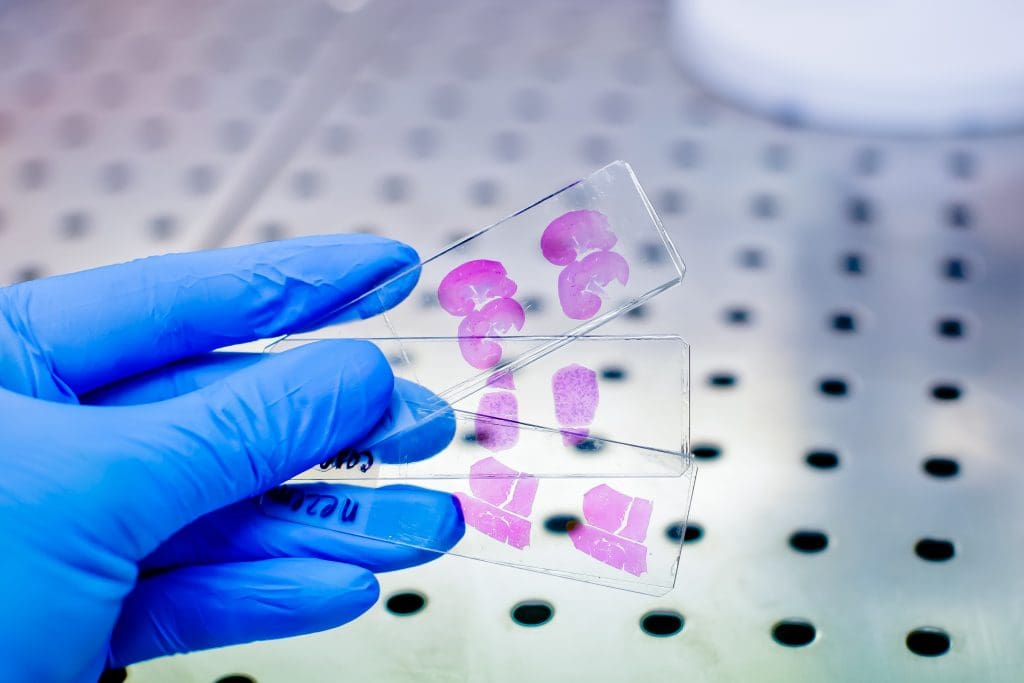
A biopsy takes a small tissue sample for a microscope check. It’s the best way to confirm cancer, by looking at cells.
Biopsies can be done in different ways, like needle or surgical biopsies, based on where the tumor is.
Both PET scans and biopsies are essential in fighting cancer. PET scans show cancer activity and spread. Biopsies give a clear diagnosis by looking at tumor cells.
The Fundamental Differences Between PET Scans and Biopsies
PET scans and biopsies help doctors find cancer in different ways. It’s key to know how they differ. “The choice between these diagnostic tools can significantly impact the diagnosis and treatment plan,” say medical experts.
Non-invasive vs. Invasive Procedures
PET scans are non-invasive. They use a radioactive tracer to see how cells work. This lets doctors check if cancer has spread without taking tissue.
Biopsies, on the other hand, are invasive. They take tissue or cells from the body for a close look. While biopsies give detailed info, they’re riskier than PET scans.
PET scans are great for first checks and seeing how treatments work because they’re non-invasive.
Imaging vs. Tissue Sampling
PET scans are imaging tests. They show how active tumors are by looking at glucose use. This helps spot cancer cells.
Biopsies, by contrast, take tissue samples. They give a direct view of cancer cells. This is key for figuring out cancer type, how aggressive it is, and more.
“Biopsy remains the gold standard for cancer diagnosis, providing detailed cellular information that imaging tests cannot.”
It’s vital for doctors to know the basics of PET scans and biopsies. This helps them pick the best test for each patient. It leads to accurate diagnoses and effective treatments.
PET Scan vs Biopsy: A Direct Comparison
In cancer diagnosis, PET scans and biopsies are key. Each has its own benefits and drawbacks. This section compares them, focusing on how well they work, how they’re done, and how they affect patients.
Diagnostic Capabilities
PET scans and biopsies work differently. A PET scan is a non-invasive test that shows where cancer might be by looking at how cells work. It’s great for spotting cancer spread.
A biopsy, on the other hand, takes tissue or cells out for a closer look. It’s the most accurate way to know what kind of cancer you have.
Key differences in diagnostic capabilities:
- PET scans show how active cells are, helping find cancer.
- Biopsies give a clear diagnosis by looking at cells directly.
Procedural Differences
PET scans and biopsies are done in different ways. PET scans are quick and don’t hurt much. You get a special dye, then lie in a scanner that tracks it.
Biopsies are more involved. They take tissue or cells out. This can be done in several ways, depending on where the tumor is.
Procedural differences:
- PET scans don’t hurt and don’t take tissue out.
- Biopsies hurt and take tissue out for testing.
- How you prepare and recover is different for each.
Recovery Time and Patient Experience
Recovery times and how patients feel differ too. PET scans are easy on the body and don’t keep you from doing things right away. They only take about 30 minutes to an hour.
Biopsies can take longer to get over. Needle biopsies are quick, but surgical ones might keep you in bed for days. People might feel pain or worry because biopsies are more invasive.
Patient experience comparison:
- PET scans are painless and don’t mess with your day much.
- Biopsies can hurt and take longer to recover from, depending on the type.
Accuracy and Reliability of Diagnostic Methods
When diagnosing cancer, the accuracy of PET scans and biopsies is key. Both have their own strengths and weaknesses. It’s important for patients and doctors to know this.
How Accurate Are PET Scans for Cancer Detection?
PET scans are great at finding cancer because they show where cells are active. But, how well they work can change based on the cancer type and the patient’s health. PET scan accuracy is usually high for some cancers, but not always.
PET scans are good at spotting cancer spread. But, they can sometimes mistake inflammation or infection for cancer. This can cause extra worry and tests.
Biopsy Accuracy Rates
A biopsy is the top choice for cancer diagnosis because it looks at tissue directly.Biopsy accuracy rates are very high, as long as the sample is from the right area. The skill of the pathologist and the biopsy method can affect results.
Biopsies are very accurate but are invasive. They can cause bleeding or infection. Doctors usually do a biopsy after other tests, like imaging, have been done.
Limitations of Each Method
PET scans and biopsies both have limitations. PET scans might miss small tumors or cancers that don’t show up well. Biopsies are accurate but can be risky and might not always get the right sample.
Knowing these limits helps in understanding test results and making treatment plans. Doctors often use more than one test to get a clear diagnosis.
When a PET Scan Should Be Done First
In some cases, a PET scan is the first test doctors recommend. This non-invasive test shows how tissues work, helping find cancer early.
Initial Cancer Screening and Staging
A PET scan is key in the early stages of cancer. It shows how far cancer has spread, which is important for treatment. PET scans are great at finding cancer spread by showing active areas.
At first, a PET scan finds the main tumor and checks for cancer in other parts. This helps doctors stage the cancer accurately.
Monitoring Known Cancer and Treatment Response
For those with cancer, PET scans are vital. They check how the disease is doing and how well treatments work. They look at changes in how tissues work to see if treatments are effective.
By using PET scans often, doctors can change treatment plans as needed. This ensures patients get the best care.
PET scans are a key tool in fighting cancer. They help from the start to ongoing care.
When a Biopsy Should Be the First Choice
Healthcare providers often choose a biopsy first when they find something suspicious. This step is key to figuring out what’s wrong and what treatment to use.
Suspicious Findings Requiring Definitive Diagnosis
When tests or doctor’s checks show something odd, a biopsy is often needed for a clear diagnosis. This is very true for any growths that might be cancer. A biopsy lets doctors check the tissue or cells to see if there’s cancer and what kind.
Getting a biopsy is very important. It gives doctors the info they need to:
- Confirm if there’s cancer
- Find out what kind and how serious it is
- Decide on the best treatment
Accessible Tumors or Lesions
For tumors or growths that are easy to reach, a biopsy is usually the first step. How easy it is to get to depends on where it is, how big it is, and the patient’s health. Tumors or growths that are easy to get to are those that don’t risk hurting the patient too much.
Some things make a tumor or growth easy to get to include:
- Being close to the skin’s surface
- Being the right size and shape for safe sampling
- Being far enough away from important body parts
In short, a biopsy should be the first choice for suspicious findings or when tumors or growths are easy to get to. This way, patients get the right diagnosis and treatment.
The Role of PET Scans in Cancer Staging
PET scans are key in cancer staging. They give detailed views of how far cancer has spread. This info helps decide the best treatment.
Cancer staging checks how far cancer has spread in the body. PET scans are great because they show where cancer is active. This is because cancer cells use more energy than normal cells.
Detecting Metastasis and Spread
PET scans help find where cancer has spread. This lets doctors know how far the cancer has gone. They can then plan a treatment that fits the cancer’s stage.
- Identifying distant metastasis
- Assessing the spread to lymph nodes
- Detecting additional tumor sites
Treatment Planning Based on PET Results
The info from a PET scan is key for treatment planning. Knowing how far cancer has spread helps doctors create a treatment plan that’s right for you.
- Determining the need for surgery, chemotherapy, or radiation therapy
- Assessing the possibility of targeted therapy
- Checking if treatment is working
In summary, PET scans are very important in cancer staging. They help doctors find where cancer has spread. This helps in planning the best treatment.
Biopsy’s Critical Role in Cancer Diagnosis
Biopsy is key in cancer diagnosis. It helps doctors plan the best treatment. A biopsy takes a small tissue sample for cancer cell check.
Determining Cancer Type and Characteristics
Biopsy helps find out what kind of cancer you have. Pathologists look at the tissue sample. They see the cancer type, grade, and other important details.
This info is vital for a treatment plan that fits you. The cancer’s genetic makeup and behavior are key. They decide which treatments work best.
Genetic and Molecular Testing for Personalized Treatment
Biopsy samples are used for genetic and molecular tests too. These tests find specific genetic changes in cancer cells. This info helps tailor treatments.
Knowing your cancer’s genetic makeup helps doctors create a treatment plan just for you. This leads to better treatments with fewer side effects.
Personalized treatment plans based on biopsy results can greatly improve patient outcomes. They help patients get better faster and live longer.
In summary, biopsy is essential in cancer diagnosis. It helps doctors understand the cancer and plan treatments. Genetic and molecular tests from biopsies guide these plans. This leads to more effective care for cancer patients.
Cost Considerations: PET Scans vs Biopsies
Knowing the cost of diagnostic tests is key for patients deciding between a PET scan and a biopsy. The prices for these tests can change a lot. This affects how patients plan their finances and make choices.
Insurance Coverage for Diagnostic Procedures
Insurance is a big factor in how much patients pay for PET scans or biopsies. Most plans cover these tests, but how much they cover can vary. For example, and often pay for PET scans for cancer. It’s important for patients to check their insurance before getting a test to avoid surprise bills.
Key factors influencing insurance coverage include:
- The type of insurance plan (e.g., HMO, PPO,)
- The specific medical condition being diagnosed or monitored
- The healthcare provider’s network status
Out-of-Pocket Expenses and Financial Planning
Even with insurance, the costs for PET scans and biopsies can be different. Patients might have to pay deductibles, copays, or coinsurance. This can add up fast. For those without insurance or with limited coverage, the costs can be very high. Planning finances well is important to handle these costs.
Strategies for managing out-of-pocket expenses include:
- Checking insurance coverage and understanding the policy details
- Comparing prices among different healthcare providers
- Exploring financial assistance programs offered by hospitals or non-profit organizations
Patients should also think about indirect costs. This includes travel, lost wages, and costs for more tests or follow-ups.
In summary, while PET scans and biopsies are important, their costs can affect patients a lot. Knowing about insurance and planning for expenses can help. This way, patients can get the care they need without financial worry.
Patient Preparation and Experience
Getting ready for a PET scan or biopsy can feel overwhelming. But knowing what to expect can really help. These tests are key for finding and understanding health issues, like cancer. Being prepared can make the whole process better.
Preparing for a PET Scan
A PET scan shows how well organs and tissues work. Before the test, you usually need to fast for a few hours. It’s important to follow your doctor’s specific instructions closely, as they can change based on the scan type.
Tell your doctor about any medicines you’re taking. Some might need to be changed or skipped before the scan. Wear comfy clothes and avoid jewelry or anything that could get in the way of the scan.
What to Expect During a Biopsy
A biopsy takes a tissue sample for examination. The experience can differ based on the biopsy type and where it’s done.
The area for the biopsy is cleaned and ready. Local anesthesia is often used to lessen pain. Talk to your doctor about any worries or questions you have before the procedure.
- Know the type of biopsy and what it involves.
- Follow the pre-biopsy instructions carefully, including any medicine changes.
- Have someone with you, if possible, for more invasive biopsies.
During the biopsy, a healthcare provider will use special tools to get the tissue sample. The whole process is usually quick.
Understanding what to expect and preparing well can greatly improve your experience with PET scans and biopsies. Being informed and following your doctor’s advice can help reduce stress and lead to better results.
The Diagnostic Pathway: Combining PET Scans and Biopsies
Cancer patients often go through a diagnostic pathway that includes PET scans and biopsies. This method helps doctors get a full picture of the cancer. They learn about its stage, type, and other important details.
Combining diagnostic tools makes cancer diagnosis more accurate. It helps doctors create a good treatment plan. They use the strengths of PET scans and biopsies to decide the best order of tests for each patient.
Sequential Testing Approaches
Sequential testing means using PET scans and biopsies in a certain order. For example, a PET scan might come first to find cancer spread. Then, a biopsy confirms the diagnosis.
This method is great when cancer is thought to be advanced or when the main tumor site is unknown. By sequencing the tests right, doctors can quickly diagnose and start treatment.
Integrated Diagnostic Strategies
Integrated diagnostic strategies combine PET scan and biopsy results. This gives a clearer view of the cancer. Doctors can link the metabolic activity from PET scans with biopsy findings.
This way, doctors understand the cancer’s biology better. They learn about its aggressiveness and how it might react to treatment. This info is key for personalized treatment plans that meet each patient’s needs.
Using PET scans and biopsies together is a big step forward in cancer care. It leads to more accurate staging, better treatment plans, and better patient outcomes.
Cancer-Specific Considerations
Diagnosing cancer often uses imaging and tissue sampling. The choice between PET scans and biopsies depends on the cancer type. Each cancer has unique features that make some methods better than others.
Lung Cancer Diagnosis
Lung cancer starts with imaging studies. PET scans are key in staging and checking if the cancer has spread. They help find active tumors and decide if a biopsy is needed.
PET scans are great for seeing how far the disease has spread and finding metastasis. Biopsies give detailed info on the tumor’s molecular makeup, vital for treatment plans.
Prostate Cancer Detection
PET scans are changing how we detect prostate cancer. They use tracers like PSMA to find cancer when other tests are unclear. But, biopsies are the main way to diagnose prostate cancer. MRI-guided biopsies have made diagnosis more accurate.
- PET scans help in staging and assessing recurrence.
- Biopsies are key for initial diagnosis and checking tumor aggressiveness.
Breast Cancer Evaluation
Imaging like mammography and MRI is first for breast cancer. PET scans are used for staging, not initial diagnosis. Core needle biopsy is vital for tissue analysis and molecular studies.
The choice between PET scans and biopsies in breast cancer depends on the disease’s stage and type. It also depends on the need for detailed tissue analysis.
Lymphoma and Other Blood Cancers
PET scans are essential for lymphoma and blood cancers. They help see how far the disease has spread and how well it’s responding to treatment. Biopsies, like excisional biopsies, are needed for a definitive diagnosis and subtyping.
Lymphoma diagnosis needs both PET scans for staging and biopsies for a clear diagnosis and subtyping. This guides treatment choices.
Emerging Technologies and Future Developments
New technologies are changing how we fight cancer. The medical world is always growing. Now, we can find and treat cancer better than before.
New tools in cancer diagnosis are making it more accurate and easier on patients. Two big areas are better imaging and liquid biopsies.
Advances in Imaging Techniques
Imaging has been key in finding cancer for years. Now, with high-resolution MRI and PET/CT scans, we can spot tumors better.
- These new scans can find small tumors.
- They help us understand how tumors work.
- Special software makes analyzing images easier.
These new tools help us find cancer early and see if treatments are working. Also, radiomics is being studied. It uses lots of data from images to guess how a patient will do.
Liquid Biopsies and Non-invasive Testing
Liquid biopsies are a big step towards not needing surgery to find cancer. They look at DNA in the blood to learn about tumors.
- They can find cancer early.
- They let us watch how tumors change during treatment.
- They help us see if treatments are working.
Liquid biopsies are safer for patients because they don’t need surgery. But, we’re working on making them better and more reliable.
As these new technologies get better, they will be key in fighting cancer. They promise to make finding and treating cancer more accurate and less scary for patients.
Conclusion
It’s important to know the differences between PET scans and biopsies in cancer diagnosis. Both tools are key in finding and managing cancer, but they have different uses.
A PET scan is a non-invasive test that spots cancer areas, checks how far cancer has spread, and sees how well treatments work. A biopsy, on the other hand, takes tissue samples for a clear diagnosis. It helps figure out the cancer type and its details.
Choosing between a PET scan and a biopsy depends on many things. These include the cancer type, its stage, and what the patient needs. Using both tests, doctors can create treatment plans that fit each patient’s situation.
In the debate of pet scan vs biopsy, it’s clear both are vital in cancer diagnosis. Knowing their strengths and weaknesses helps patients and doctors make the best choice for each case.
FAQ
What is the difference between a PET scan and a biopsy?
A PET scan is a non-invasive test that uses a radioactive tracer to see cancer cells. A biopsy, on the other hand, is an invasive procedure that removes tissue or cells for examination.
Which is more accurate, a PET scan or a biopsy?
Biopsies are usually more accurate than PET scans. This is because biopsies directly examine tissue or cells. PET scans, while useful, rely on indirect methods to spot cancer cells.
Can a PET scan detect cancer without a biopsy?
Yes, PET scans can hint at cancer’s presence. But, a biopsy is often needed to confirm the diagnosis and understand the cancer’s type and characteristics.
What are the benefits of using PET scans in cancer diagnosis?
PET scans are great for spotting cancer early, tracking treatment progress, and finding metastasis. They are key in cancer staging and planning treatments.
When should a biopsy be done first?
A biopsy is first when findings are suspicious and need clear diagnosis. It’s also done when a tumor or lesion is accessible and safe to biopsy.
How accurate are PET scans for detecting cancer?
PET scans are very good at finding certain cancers. But, their accuracy can change based on the cancer type, tumor size, and other factors.
What is the role of PET scans in cancer staging?
PET scans are vital in cancer staging. They help find metastasis and spread, guiding treatment plans and decisions.
Can PET scans miss cancer?
Yes, PET scans might miss cancer, like small tumors or those with low activity. This shows the need to use PET scans with other tests.
How do PET scans and biopsies compare in terms of cost?
The cost of PET scans and biopsies varies by location, insurance, and more. Generally, PET scans cost more than biopsies.
What are the emerging technologies in cancer diagnosis?
New technologies include better imaging like PET/MRI and liquid biopsies. These offer non-invasive, possibly more accurate ways to diagnose cancer.
Are PET scans reliable for cancer detection?
PET scans are usually reliable for finding cancer. But, their accuracy can be affected by factors like tumor type, size, and location.
Can cancer be diagnosed without a biopsy?
Some cancers can be diagnosed without a biopsy, like through imaging or blood tests. Yet, a biopsy is often needed to confirm the diagnosis and understand the cancer’s type and characteristics.
What is the best scan for prostate cancer?
The best scan for prostate cancer is often a multiparametric MRI. But, PET scans, like PSMA PET, are also used in some cases.
How accurate is a PET scan for cancer?
The accuracy of a PET scan for cancer varies. It depends on the cancer type, tumor size, and other factors. Yet, PET scans are generally very sensitive and specific.