

At Liv Hospital, we think knowing the basics of human anatomy is key. It helps us understand healthcare better. One basic idea is the define artery, a blood vessel that carries blood away from the heart.
Arteries are vital for delivering oxygen-rich blood to our tissues and organs. They are essential for our health. The role of arteries in medical terms is huge, as they are linked to many heart conditions.
We want to share clear info about the arterial system and its role in our health.
Key Takeaways
- Arteries are blood vessels that carry blood away from the heart.
- They play a critical role in delivering oxygen-rich blood.
- Understanding artery function is essential for appreciating cardiovascular health.
- Arteries are involved in various medical conditions.
- Liv Hospital provides accurate information on artery health.
The Basic Definition of Artery
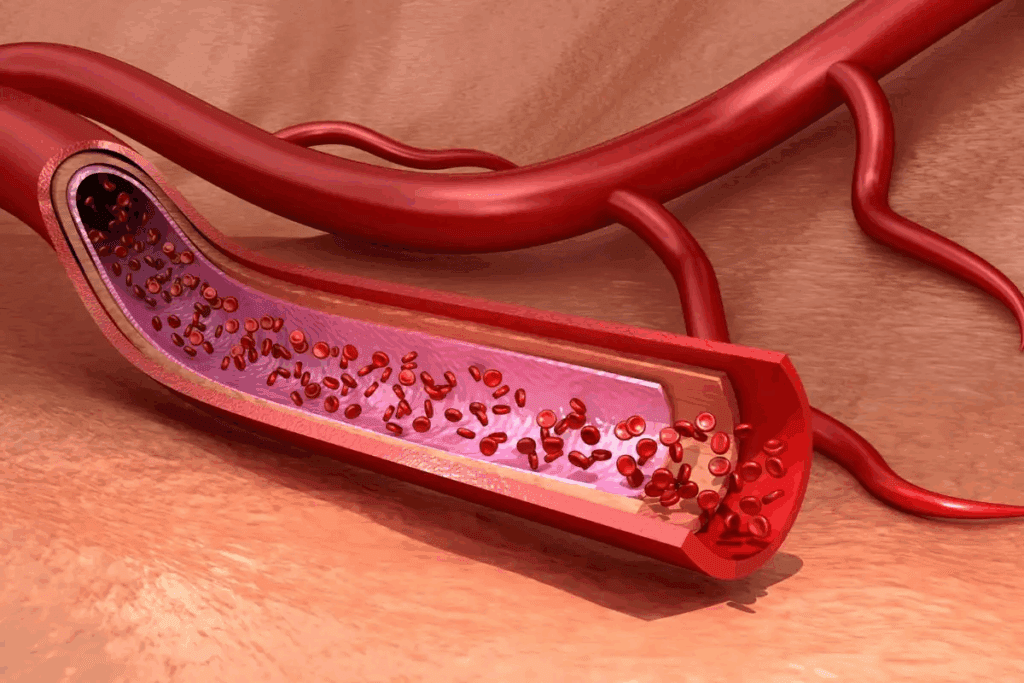
An artery is a blood vessel that carries oxygen-rich blood from the heart to the rest of the body. It plays a key role in the circulatory system.
Knowing what an artery is helps us understand how the cardiovascular system works.
Etymology and Origin of the Word “Artery”
The word “artery” comes from the Greek “artēría.” It originally meant the trachea or windpipe.
But over time, it came to mean the blood vessels we call arteries today.
Common Misconceptions About Arteries
Many people think arteries are to blame for high blood pressure. They also believe arteries work differently from veins.
But arteries mainly carry oxygenated blood from the heart to other parts of the body.
| Characteristic | Description |
| Function | Transport oxygen-rich blood |
| Origin | From Greek “artēría” |
| Misconception | Believed to cause high blood pressure |
How to Spell Artery Correctly
Spelling “artery” right is key in medical terms. We’ll look at the right spelling, singular and plural forms, and common mistakes. This will help you avoid errors.
Singular vs. Plural Forms: Artery and Arteries
Define Artery is a blood vessel that carries oxygenated blood from the heart to the body. The word “artery” is used for one, and “arteries” for more than one. Knowing this is important for clear medical talk.
Common Misspellings and How to Avoid Them
People often misspell it as “artary” or “artrey.” To get it right, remember “artery” for one and “arteries” for more. Practicing and watching out for these errors can make you more accurate.
Knowing the right spelling and common mistakes boosts your medical knowledge. It helps you talk about health more clearly.
What Does Artery Mean in Medical Context?
An artery is a key part of the body’s circulatory system. It’s a muscular and elastic tube that carries blood. Arteries send oxygen-rich blood to the body, except for the pulmonary artery, which goes to the lungs.
Technical Definition in Medicine
Arteries are defined by their structure and function. They have thick walls made of three layers: the tunica intima, tunica media, and tunica externa. The tunica media is special because it has smooth muscle and elastic fibers. This helps arteries handle the high blood pressure.
Arteries are different from veins because of their walls and blood flow. Arteries carry blood away from the heart, while veins bring it back. Capillaries are tiny vessels where oxygen, nutrients, and waste are exchanged with tissues.
How Arteries Differ from Veins and Capillaries
Arteries and veins have different jobs and blood flow directions. Arteries handle high pressure because they carry blood away from the heart. Veins have one-way valves and less muscle because they handle lower pressure.
Capillaries are the smallest blood vessels. They are key for exchanging substances between blood and tissues. This is vital for delivering oxygen and nutrients.
Knowing the differences between arteries, veins, and capillaries is important. It helps us understand how the circulatory system works and the roles of each blood vessel.
The Anatomy and Structure of Arteries
Knowing how arteries work is key to understanding blood flow in our bodies. Arteries are more than just tubes. They have a detailed structure that helps them do their job well.
Arteries have three main layers, each with its own role. These layers help arteries handle blood pressure and ensure blood flows smoothly.
The Three Layers of Arterial Walls
The arterial wall is divided into three layers: the tunica intima, tunica media, and tunica adventitia. Each layer plays a part in keeping the artery healthy and efficient.
- The tunica intima is the innermost layer. It’s made of endothelial cells that line the artery. This layer is vital for keeping blood flowing and preventing clots.
- The tunica media is in the middle. It’s mostly smooth muscle cells and elastic fibers. This layer helps the artery expand and contract, controlling blood pressure and flow.
- The tunica adventitia is the outermost layer. It’s made of connective tissue that supports and protects the artery. It also has nerves and small blood vessels that supply the artery itself.
Elastic Properties and Muscular Components
Arteries are elastic, allowing them to stretch and bounce back with each heartbeat. This ensures blood keeps flowing. The elastic fibers in the tunica media are key to this elasticity.
The muscular parts in the tunica media let arteries change their size as needed. This is important for controlling blood pressure and directing blood to where it’s needed.
| Layer | Composition | Function |
| Tunica Intima | Endothelial cells | Maintains blood flow, prevents clot formation |
| Tunica Media | Smooth muscle cells, elastic fibers | Regulates blood pressure and flow through constriction and dilation |
| Tunica Adventitia | Connective tissue | Provides support and protection, contains nerves and small blood vessels |
In summary, arteries are complex and highly specialized. Understanding their anatomy is key to appreciating their role in our cardiovascular health.
The Function of Arteries
Arteries are key to delivering oxygen and nutrients to our body’s tissues and organs. This is vital for our health and how well our body works.
Transportation of Oxygen-Rich Blood
Arteries carry oxygen-rich blood from the heart to the rest of our body. The journey starts with the aorta, the biggest artery. It splits into smaller ones that reach every part of us.
Oxygen-rich blood is key for our tissues and organs to work right. It gives them the oxygen needed to do their jobs.
Role in Nutrient Distribution
Arteries also help spread nutrients all over our body. As they branch into smaller arterioles and capillaries, they help swap nutrients and waste. This network makes sure cells get the nutrients they need to function well.
Keeping arteries healthy is important for heart health. It helps prevent heart diseases and keeps us feeling good.
Types of Arteries
It’s important to know about the different types of arteries. They are divided based on their structure and function. Each type has a key role in keeping us healthy.
Elastic Arteries: The Aorta and Its Branches
Elastic arteries are very elastic. They stretch with each heartbeat. The aorta, the biggest artery, is a great example. It splits into smaller arteries that spread blood all over the body.
Key features of elastic arteries include:
- High concentration of elastic fibers
- Ability to stretch and recoil with each pulse
- Primary role in conducting blood from the heart to the rest of the body
Muscular Arteries: Medium-Sized Distributors
Muscular arteries, or distributing arteries, have lots of smooth muscle. This lets them control blood pressure and flow. They are medium-sized and very important for getting blood to different parts of the body.
Characteristics of muscular arteries include:
- Thick layer of smooth muscle
- Ability to regulate blood flow and pressure
- Medium size, larger than arterioles but smaller than elastic arteries
The Unique Case of the Pulmonary Artery
The pulmonary artery is special. It carries blood without oxygen from the heart to the lungs. It’s a key part of the pulmonary circulation and helps oxygenate blood.
Notable aspects of the pulmonary artery include:
- Carries deoxygenated blood to the lungs
- Part of the pulmonary circulation
- Crucial for oxygenating blood
Common Arterial Diseases and Conditions
Arteries are key for moving blood around the body. But they can get sick. This can really hurt your health if not treated right.
Atherosclerosis and Arterial Plaque
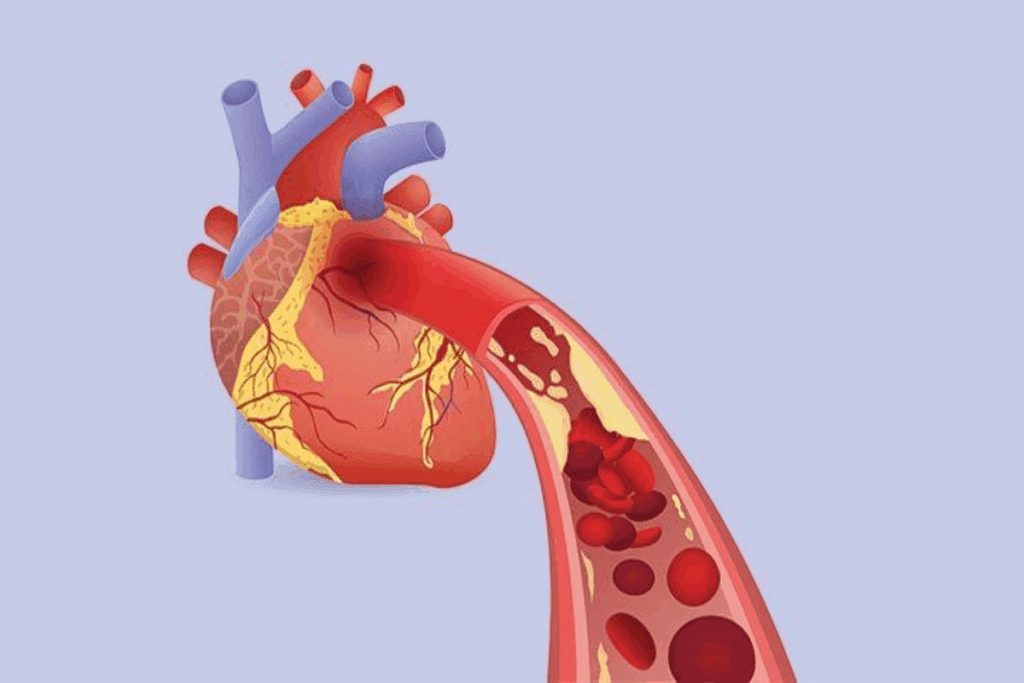
Atherosclerosis is when plaque builds up in artery walls. This makes them hard and narrow. It can block blood flow, leading to heart attacks and strokes.
The plaque is made of fat, cholesterol, and more. High cholesterol, smoking, diabetes, and high blood pressure can cause it.
Hypertension and Its Effects on Arteries
Hypertension, or high blood pressure, is bad for arteries. It makes them thick and stiff. This can lead to atherosclerosis and heart problems.
Controlling high blood pressure with diet and medicine can help protect arteries.
Aneurysms and Other Conditions
An aneurysm is a bulge in a blood vessel. It can happen in any artery. Aneurysms can burst, causing serious bleeding. Other issues include peripheral artery disease (PAD), which limits blood to limbs.
Knowing about these problems and their causes is key. It helps find them early and treat them well.
Medical Approaches to Arterial Health
Keeping arteries healthy is key to avoiding heart disease. Healthy arteries help blood flow well around the body. We’ll look at how doctors diagnose and treat artery problems, stressing the need for early action.
Diagnostic Methods for Arterial Diseases
Doctors use advanced imaging and traditional tests to find artery issues. Imaging tests like angiography, ultrasound, and CT scans are vital. “Early detection through imaging can significantly improve treatment outcomes,” a top cardiologist says.
They also check risk factors and use tests like the ankle-brachial index (ABI). These steps help find problems early, so we can act fast.
Treatment Options for Arterial Conditions
Treatment for artery problems depends on the disease’s severity. Lifestyle changes like better eating, more exercise, and quitting smoking are often first. For serious cases, medicines like statins and blood pressure drugs might be needed.
When blockages are bad, surgery like angioplasty and stenting might be used. “New surgical methods have greatly helped patients,” a study found. We expect more progress in these treatments as technology improves.
In summary, managing artery health involves both finding and treating problems. Knowing these steps helps us fight and prevent artery diseases.
Conclusion
Knowing about arteries is key to keeping our hearts healthy. We’ve looked at how arteries carry oxygen-rich blood, their makeup, and health issues they face.
Arteries are essential for our blood flow. Their health affects our overall well-being. By focusing on artery health, we can avoid and manage problems like atherosclerosis and high blood pressure.
In short, understanding arteries helps us make better health choices. We suggest readers keep learning about artery health. This knowledge is vital for our overall wellness.
FAQ
What is the definition of an artery?
An artery is a blood vessel. It carries oxygen-rich blood from the heart to the rest of the body.
How do arteries differ from veins?
Arteries carry blood with oxygen away from the heart. Veins carry blood without oxygen back to the heart.
What is the correct spelling of the word “artery”?
The correct spelling is A-R-T-E-R-Y. The plural form is “arteries.”
What are the different types of arteries?
There are three main types. Elastic arteries, like the aorta, are large and stretchy. Muscular arteries are medium-sized and distribute blood. Arterioles are small and lead to capillaries.
What is the function of arteries in the circulatory system?
Arteries are key in the circulatory system. They transport oxygen-rich blood and nutrients to tissues and organs.
What are some common diseases that affect arteries?
Common diseases include atherosclerosis (plaque buildup), hypertension (high blood pressure), and aneurysms (balloon-like bulges in artery walls).
How are arterial diseases diagnosed?
Doctors use imaging tests (like ultrasound and angiography), blood pressure checks, and physical exams to diagnose.
What are the treatment options for arterial conditions?
Treatment depends on the condition. It can include lifestyle changes, medications, angioplasty, or surgery.
Can arterial diseases be prevented?
Some risk factors can’t be changed. But, a healthy lifestyle, stress management, and blood pressure monitoring can help prevent or slow disease.
References
- StatPearls. (2023). Anatomy, Head and Neck: Carotid Arteries. In StatPearls https://www.ncbi.nlm.nih.gov/books/NBK545238/
- Jones, O. (2023, February). Major arteries of the head and neck. TeachMeAnatomy. https://teachmeanatomy.info/neck/vessels/arterial-supply/
- Foran, P., & Co-authors. (2023). Clinical basis for the knowledge of anatomy of the carotid artery: A review article. Yenagoa Medical Journal, 5(2), 24-29.https://yenagoamedicaljournal.net/clinical-basis-for-the-knowledge-of-anatomy-of-the-carotid-artery-a-review-article/
- Omotoso, B. R., et al. (2021). Radiological anatomy of the intracranial vertebral artery in [population studied]. Scientific Reports. https://www.nature.com/articles/s41598-021-91744-9/