
This prevalent condition leads to pain and restricts shoulder movement.
The deltoid muscle is crucial for shoulder movement and stability.
Key Takeaways
- The deltoid muscle is crucial for shoulder movement and stability.
- Innervation by the axillary nerve is vital for deltoid function.
- Understanding deltoid innervation can help treat shoulder impingement.
- Proper deltoid function is essential for arm abduction and shoulder stability.
- Shoulder impingement can significantly impact quality of life.
Understanding Shoulder Impingement Syndrome
Understanding shoulder impingement syndrome is key to managing it well. This prevalent condition leads to pain and restricts shoulder movement. It happens when the rotator cuff tendons get irritated or inflamed as they move through the subacromial space.
Definition and Prevalence
The deltoid muscle is crucial for shoulder movement and stability.
This prevalent condition leads to pain and restricts shoulder movement.
Impact on Daily Activities
Shoulder impingement syndrome can make everyday tasks painful, like reaching up, lifting, or even sleeping on the affected side. It can also reduce the range of motion and strength, affecting how well the shoulder works.
Doing activities that involve a lot of arm movement or heavy lifting can make it worse. Modifying your activities and performing exercises to strengthen the shoulder muscles, including the deltoid, while enhancing flexibility is essential.
Understanding the anatomy of the shoulder complex is essential for diagnosing and treating shoulder issues.

Understanding the anatomy of the shoulder complex is essential for diagnosing and treating shoulder issues. The shoulder complex is a complex structure that allows for a wide range of movements. This makes it very mobile but also potentially unstable.
Bone Structure and Joint Components
The shoulder complex has the glenohumeral joint, acromioclavicular joint, and muscles and tendons around them. The glenohumeral joint is a ball-and-socket joint that lets us move in many directions. The acromioclavicular joint connects the acromion to the clavicle, adding stability.
The bones of the shoulder include the scapula, humerus, and clavicle. The scapula is the back part of the shoulder girdle. The humerus is the long bone of the upper arm that connects to the scapula at the glenohumeral joint.
Rotator Cuff Muscles
The rotator cuff is a group of muscles and tendons around the glenohumeral joint. It provides stability and helps with movement. The four muscles are the supraspinatus, infraspinatus, teres minor, and subscapularis.
These muscles work together to control the humerus’s movement and keep the glenohumeral joint stable.
- The supraspinatus muscle helps in abduction.
- The infraspinatus and teres minor muscles assist in external rotation.
- The subscapularis muscle is involved in internal rotation and stabilization.
Subacromial Space
The subacromial space is between the acromion and the humeral head. It has the supraspinatus tendon and the subacromial bursa. If these get irritated or inflamed, it can cause pain and inflammation.
Understanding the subacromial space is vital for diagnosing and treating shoulder impingement syndrome.
Deltoid Innervation: The Nerve Supply to Your Shoulder
The deltoid muscle is crucial for shoulder movement and stability.
Axillary Nerve Pathway and Function
The axillary nerve comes from the C5 and C6 nerve roots. It’s the main nerve for the deltoid. It goes through the quadrangular space to get to the deltoid muscle.
Key functions of the axillary nerve include:
- Motor innervation to the deltoid and teres minor muscles
- Sensory innervation to the shoulder joint and surrounding areas
- Coordination of arm abduction and external rotation movements
The deltoid muscle is crucial for shoulder movement and stability.
The deltoid muscle has three parts: anterior, lateral, and posterior. Each part helps with different shoulder movements:
- Anterior compartment: assists in flexion and medial rotation
- Lateral compartment: mainly helps with abduction
- Posterior compartment: aids in extension and lateral rotation
The axillary nerve supplies all three parts. This ensures the shoulder moves smoothly and stays stable.
Clinical Significance of Proper Innervation
Good deltoid innervation is essential for a healthy shoulder. Damage to the axillary nerve can weaken shoulder abduction. It can also cause shoulder instability and impingement syndrome.
Clinical considerations include:
- Assessment of axillary nerve function in shoulder injuries
- Rehabilitation strategies focusing on nerve recovery and muscle strengthening
- Surgical interventions to repair nerve damage or decompress the axillary nerve
Common Causes of Shoulder Impingement
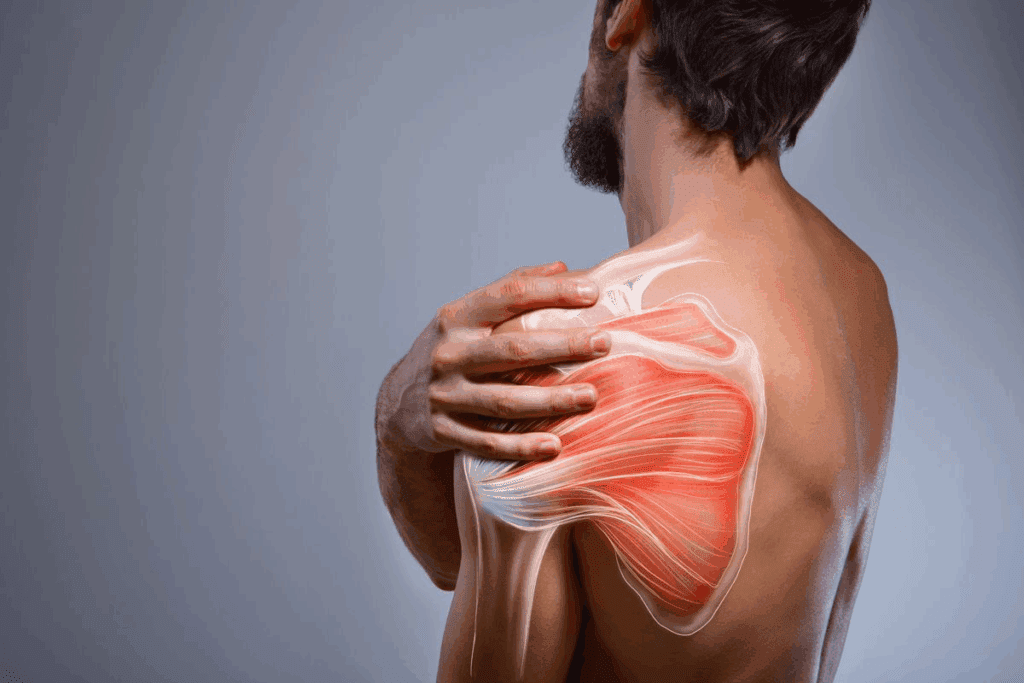
Shoulder impingement happens when the rotator cuff tendons and subacromial bursa get compressed. This is due to both anatomical and functional factors. Knowing these causes helps in creating effective treatment plans.
Structural Abnormalities
Structural issues are a big part of shoulder impingement. For example, a hooked acromion can make the subacromial space smaller. This increases the chance of impingement. Osteophytes or bone spurs in the acromioclavicular joint also narrow the space.
A study in the Journal of Orthopaedic & Sports Physical Therapy found a link. It said a type III acromion is linked to more rotator cuff tears and impingement.
“Anatomical variations, such as a hooked acromion, can predispose individuals to shoulder impingement by reducing the subacromial space.”Ludewig & Braman, 2011
Overuse and Repetitive Movements
Doing the same motion over and over can cause shoulder impingement. This is true for activities like throwing or lifting. It’s common in sports like baseball, tennis, or swimming.
| Sport/Activity | Repetitive Motion | Risk of Impingement |
| Baseball Pitching | Overhead throwing | High |
| Swimming | Repetitive arm strokes | Moderate to High |
| Tennis | Serving and overhead shots | Moderate |
Poor Posture and Muscle Imbalances
Poor posture and muscle imbalances can also cause impingement. Forward head posture and scapular dyskinesis can change how the shoulder moves. This can lead to tendon compression.
The deltoid muscle is crucial for shoulder movement and stability.
Recognizing Shoulder Impingement Symptoms
Spotting shoulder impingement symptoms early is key to better treatment. These symptoms can affect daily life, so knowing what to look for is important.
Pain Patterns and Location
Pain is a main symptom of shoulder impingement. It often happens when lifting the arm or doing overhead tasks. The pain usually hits the front and top of the shoulder, sometimes spreading to the upper arm.
The deltoid muscle nerves, mainly the axillary nerve, are vital for arm movement. They get affected in impingement syndrome.
Range of Motion Limitations
Another big symptom is a limited shoulder range of motion. People might find it hard to move their arm, or it might feel stiff. This is often because of the impingement and pain.
Understanding the anatomy of the shoulder complex is essential for diagnosing and treating shoulder issues.
Progressive Nature of Symptoms
Left untreated, shoulder impingement symptoms get worse. This means more pain and less mobility. Even simple tasks can become hard.
Knowing about the shoulder muscle innervation and its role in movement helps in finding the right treatment. This can stop or even reverse the worsening of symptoms.
It’s vital to catch these symptoms early for effective management. Understanding the pain, limited motion, and how symptoms get worse helps. This way, people can get the right medical help to ease their symptoms and improve arm function.
Self-Assessment Tests for Shoulder Impingement
Knowing if you have shoulder impingement is key. You can do simple tests at home to check. These tests can tell you if you need to see a doctor.
Neer’s Test
Neer’s Test is a common way to check for shoulder impingement. Stand with your arm straight and turn it inwards. Then, lift your arm forward until you feel pain.
If pain happens between 60 to 120 degrees, you might have shoulder impingement. The deltoid muscle is important in this test. Its axillary nerve helps in checking if you have the problem.
Hawkins-Kennedy Test
The Hawkins-Kennedy Test is another useful test. To do it, bend your arm to 90 degrees and turn your shoulder inwards. If pain comes back, it might mean you have shoulder impingement.
This test checks if the rotator cuff tendons are being squeezed. It’s linked to how well the deltoid muscle works.
When to Seek Professional Diagnosis
Self-tests can give you a starting point, but they’re not enough. If pain doesn’t go away, or if you can’t move your arm as well, see a doctor. They can do a detailed check, including looking at deltoid innervation and shoulder function. They’ll give you a proper diagnosis and suggest the right treatment.
Immediate Relief Strategies for Shoulder Pain
Getting quick relief for shoulder pain means more than just easing the pain. It’s about getting your shoulder to move and work right again. Shoulder impingement can really mess up your day and life. We’ll look at ways to help right away, like resting, using ice and heat, and taking over-the-counter pain meds.
Rest and Activity Modification
Modifying your activities and performing exercises to strengthen the shoulder muscles, including the deltoid, while enhancing flexibility is essential.
Changing your daily routine might be hard, but it’s key for healing. Simple things like taking breaks or using better tools can help a lot.
Ice and Heat Application Techniques
Using ice or heat on your shoulder is a common way to ease pain and swelling. Ice is best at first to cut down swelling. Then, heat can help relax muscles and get blood flowing better.
- Put ice on for 15-20 minutes, a few times a day, after activities that hurt your shoulder.
- Use a towel between ice and skin to avoid burns.
- For heat, use a warm towel or heating pad on low for 15-20 minutes.
Switching between ice and heat can also help, depending on how you react to them.
Over-the-Counter Pain Management Options
OTC pain meds can really help with shoulder pain. Drugs like ibuprofen or naproxen can cut down pain and swelling.
| Medication | Dosage | Benefits |
| Ibuprofen | 400-800 mg every 8 hours | Reduces pain and inflammation |
| Naproxen | 250-500 mg every 12 hours | Long-lasting pain relief and anti-inflammatory effects |
Always follow the dosage and talk to a doctor before starting any new meds, if you have other health issues or take other meds.
Using these quick relief methods can help with shoulder pain, swelling, and start your healing. How well your deltoid muscle and other tissues work is key to getting better and having a strong shoulder.
Step-by-Step Guide to Conservative Treatment
Conservative treatment for shoulder impingement is a multi-step process. It aims to ease symptoms, boost function, and stop future problems.
Working with Physical Therapists
Understanding the anatomy of the shoulder complex is essential for diagnosing and treating shoulder issues.
The physical therapist checks the shoulder’s movement, strength, and function. They then guide the patient through exercises to:
- Improve flexibility and reduce stiffness
- Strengthen the rotator cuff and surrounding muscles, including the deltoid
- Enhance scapular stabilization
Anti-inflammatory Medication Protocols
Anti-inflammatory meds help manage pain and inflammation in shoulder impingement. We follow a specific protocol to ensure these meds work well and have fewer side effects.
| Medication Type | Dosage | Duration |
| Ibuprofen | 400mg every 4-6 hours | 7-10 days |
| Naproxen | 500mg twice daily | 7-14 days |
Corticosteroid Injections: Procedure and Effects
Corticosteroid injections can greatly help with shoulder impingement. The procedure involves injecting a corticosteroid into the subacromial space. This reduces inflammation and pain. It’s important to know about the axillary nerve innervation of the deltoid muscle to avoid nerve damage.
The effects of these injections are significant. They offer:
- Rapid reduction in inflammation
- Significant pain relief
- Improved range of motion
By using physical therapy, anti-inflammatory meds, and sometimes corticosteroid injections, we can manage shoulder impingement well. The goal is a treatment plan that fits the individual’s needs, including the deltoid muscle’s health and its innervation.
Essential Exercises to Relieve Shoulder Impingement
A good exercise plan is key to easing shoulder impingement and getting your shoulder to work right again. We suggest a mix of stretches and exercises to boost deltoid muscle function and shoulder muscle innervation.
Beginner Stretching Exercises
Starting with simple stretches is vital for better shoulder flexibility and less stiffness. Try the pendulum stretch by leaning forward and letting your arm hang down, then swing it in circles. The shoulder flexion stretch is also great, lifting a stick or wand forward and up to stretch your shoulder.
Modifying your activities and performing exercises to strengthen the shoulder muscles, including the deltoid, while enhancing flexibility is essential.
Progressive Strengthening Exercises
The deltoid muscle is crucial for shoulder movement and stability.
Begin with light weights and slowly add more as your shoulder gets stronger. Always focus on the right form and technique to avoid shoulder strain.
Advanced Rehabilitation Techniques for Faster Recovery
To speed up recovery, using advanced rehab strategies is key. These methods focus on the shoulder complex. They boost strength and stability and keep the deltoid innervation right, which is vital for shoulder health.
Scapular Stabilization Exercises
Scapular stabilization exercises are vital for shoulder impingement rehab. They strengthen muscles around the scapula, improving its position and movement. This reduces rotator cuff strain and boosts shoulder efficiency.
Strengthening scapular stabilizers also improves axillary nerve innervation to the deltoid. This enhances shoulder function.
Scapular exercises include scapular push-ups, wall slides, and rows. A physical therapist should guide these to ensure correct form.
Rotator Cuff Strengthening Program
Understanding the anatomy of the shoulder complex is essential for diagnosing and treating shoulder issues.
Exercises like external rotations, internal rotations, and shoulder blade squeezes are good for the rotator cuff. Start with low-intensity exercises and increase as the shoulder gets stronger.
Functional Movement Pattern Training
Functional movement pattern training is a must in advanced rehab. It involves practicing movements like daily activities or sports actions. This improves shoulder function and lowers re-injury risk.
Examples include throwing motions, overhead reaches, and lifting. Tailor these exercises to fit the individual’s needs and goals. Always do them with a healthcare professional’s supervision.
Using these advanced rehab techniques can lead to quicker recovery from shoulder impingement. They ensure the innervating the deltoid muscle gets the right signals for effective shoulder function.
How to Protect the Nerves of the Deltoid Muscle During Recovery
The deltoid muscle is crucial for shoulder movement and stability.
Avoiding Compression Positions
One important way to protect the nerves is to stay away from positions that can hurt the axillary nerve. This requires mindfulness in your sleeping, sitting, and movement positions. Make sure you’re not putting too much pressure on your shoulder.
- Avoid sleeping on the affected side, as this can compress the axillary nerve.
- Use a pillow to support your arm when sleeping on your back.
- Be cautious when reaching overhead or behind your back.
Nerve Gliding Exercises
Nerve gliding exercises are also important. They help keep the nerve moving freely and prevent it from sticking to other tissues. This can help avoid more irritation.
- Gently tilt your head to the side, bringing your ear towards your shoulder.
- Slowly rotate your shoulder in both clockwise and counterclockwise directions.
- Do these exercises often, but stop if they hurt.
Monitoring Neurological Symptoms
Understanding the anatomy of the shoulder complex is essential for diagnosing and treating shoulder issues.
Key symptoms to watch for include:
- Numbness or tingling in the shoulder or arm
- The deltoid muscle is crucial for shoulder movement and stability.
- Pain that radiates down the arm
If you notice any of these signs, see your doctor right away. Quick action can stop serious damage and help your recovery go smoother.
When to Consider Surgical Intervention
Understanding the anatomy of the shoulder complex is essential for diagnosing and treating shoulder issues.
Indicators of Failed Conservative Treatment
Conservative treatment includes physical therapy, anti-inflammatory meds, and lifestyle changes. If these don’t work, surgery might be next. Signs that treatment has failed include:
- Persistent pain that makes daily activities hard
- Limited motion that doesn’t get better with therapy
- Recurring symptoms even with treatment
If these signs show up, doctors might suggest surgery to fix the shoulder impingement.
Types of Surgical Procedures
Surgery for shoulder impingement aims to ease pressure on tendons and improve shoulder function. Common surgeries include:
- Subacromial decompression: This removes bone spurs or inflamed tissue to reduce impingement.
- Rotator cuff repair: Surgery is needed to fix torn rotator cuff tendons.
Recovery Expectations and Timeline
Recovering from shoulder surgery means a careful rehab program. The deltoid muscle, which the axillary nerve controls, is key to shoulder function. It needs careful rehab after surgery.
Recovery includes:
- Rest and pain management first
- Slow start with physical therapy
- Strengthening the rotator cuff and deltoid muscles
Knowing about deltoid innervation and its role in shoulder function is important. It shows how complex recovery is and why professional help is needed.
By sticking to a detailed rehab plan, people can get the best results and get back to their usual activities.
Post-Treatment Rehabilitation Protocol
Getting your shoulder back to health after treatment needs a good plan. A well-thought-out rehab plan is key for a full recovery and avoiding future problems.
Phases of Rehabilitation
The rehab journey has different stages, each with its own goals and exercises. First, we work on reducing pain and swelling. Then, we focus on improving how far you can move your shoulder. Lastly, we strengthen the rotator cuff and scapular muscles.
The deltoid muscle is crucial for shoulder movement and stability.
Progression Criteria
How fast you move through rehab depends on several things. We look at how much pain you have, how well you can move, and how strong your muscles are. When you meet these goals, we move you to more challenging exercises.
We keep a close eye on how you’re doing with exercises. If needed, we might change them to avoid making things worse or to better target the axillary nerve.
Return to Activity Guidelines
Going back to normal activities and sports needs to be done slowly and carefully. We give you clear guidelines to make sure you don’t hurt your shoulder again. This means slowly increasing how hard you’re working and watching for any signs of overdoing it.
The deltoid muscle is crucial for shoulder movement and stability.
Preventing Recurrence of Shoulder Impingement
Modifying your activities and performing exercises to strengthen the shoulder muscles, including the deltoid, while enhancing flexibility is essential.
Workplace Ergonomics Adjustments
Improving your work area can help a lot. Here are some tips:
- Make sure your chair height is right so your feet are flat or on a footrest. Your knees should be at or below hip level.
- Place your computer monitor in front of you, about 20-25 inches away. It should be at a height where you look slightly down.
- Use a keyboard tray to keep your keyboard and mouse close. This way, you won’t have to stretch too far.
These changes can help avoid making your shoulder impingement worse. Keeping your shoulders and back straight is key.
Sports Technique Modification
For athletes, changing how you do sports can be very important. This might mean:
- Getting a coach to help you change your throwing or serving style. This can help reduce shoulder strain.
- Doing exercises that strengthen your rotator cuff and improve deltoid nerve supply. This makes your shoulder more stable.
Changing your technique can spread out the forces better. This can lower the chance of getting impingement again.
Maintenance Exercise Program
Having a regular exercise routine is essential for keeping your shoulders healthy. It should include:
- Stretching to keep your range of motion good.
- Exercises that strengthen your rotator cuff and deltoid innervation. This supports your shoulder joint.
- Exercises that help stabilize your scapula. This improves your posture and lowers impingement risk.
Doing these exercises regularly can help stop shoulder impingement from coming back. It also keeps your shoulders healthy overall.
Conclusion: Long-Term Management of Shoulder Health
The deltoid muscle is crucial for shoulder movement and stability.
Understanding the anatomy of the shoulder complex is essential for diagnosing and treating shoulder issues.
Being proactive about shoulder health can make a big difference. It can help you move better and feel less pain. We suggest doing exercises that strengthen the rotator cuff and scapular muscles. Also, keep your posture right and your workspace set up well. This approach helps keep your shoulder healthy for a long time.
FAQ
What is the deltoid muscle’s role in shoulder movement?
The deltoid muscle is crucial for shoulder movement and stability.It works thanks to the axillary nerve.
What is shoulder impingement syndrome?
This prevalent condition leads to pain and restricts shoulder movement.
How does the axillary nerve innervate the deltoid muscle?
The axillary nerve comes from the C5 and C6 nerve roots. It helps the deltoid muscle move the arm up and keep the shoulder stable.
What are the common causes of shoulder impingement?
Shoulder impingement can be caused by many things. These include structural problems, too much use, repetitive actions, bad posture, and muscle imbalances.
What are the typical symptoms of shoulder impingement?
Symptoms of shoulder impingement include pain, trouble moving the shoulder, and symptoms that get worse over time. These can be linked to the deltoid muscle and its nerve.
How can I self-assess for shoulder impingement?
You can check for shoulder impingement with Neer’s Test and Hawkins-Kennedy Test. These tests can show if there’s a problem with the deltoid muscle and shoulder complex.
What are the immediate relief strategies for shoulder pain?
To ease shoulder pain right away, rest, use ice and heat, and try over-the-counter pain relievers. These can help with symptoms related to the deltoid muscle and shoulder impingement.
How can I protect the nerves of the deltoid muscle during recovery?
To keep the nerves of the deltoid muscle safe during recovery, avoid positions that compress them. Do nerve gliding exercises and watch for any neurological symptoms.
When should I consider surgical intervention for shoulder impingement?
If other treatments don’t work and you have ongoing pain and limited mobility, surgery might be needed for shoulder impingement.
What is the post-treatment rehabilitation protocol for shoulder impingement?
The deltoid muscle is crucial for shoulder movement and stability.
How can I prevent the recurrence of shoulder impingement?
To avoid shoulder impingement coming back, make changes at work and in sports. Also, keep up with a regular exercise routine. These steps help keep the deltoid muscle and shoulder complex healthy.
References
- Hsu, T., & Wajswol, G. (2023). Axillary nerve. StatPearls. https://www.ncbi.nlm.nih.gov/books/NBK539744/