Understanding the impact of deviated septum surgery is key for those thinking about septoplasty. Studies show big improvements in nasal blockage after surgery. At Liv Hospital, we focus on our patients, giving detailed checks and clear talk about how surgery goes.
A Swedish study found that 81 percent of patients with bad nasal blockage got better 12 months after septoplasty. This shows how well the surgery works in making life better for those with a deviated septum.
See deviated septum before and after surgery results, showing how septoplasty can improve nasal breathing and appearance.
Key Takeaways
- Septoplasty is a common procedure to correct structural nasal obstruction.
- Significant clinical improvement is seen in patients after septoplasty.
- Recent research supports the effectiveness of deviated septum surgery.
- Patients experience improved nasal obstruction symptoms after the procedure.
- Liv Hospital provides thorough care and clear talk about surgery results.
Understanding Deviated Septum: Anatomy and Symptoms
Knowing about deviated septum anatomy and symptoms is key for those thinking about septoplasty. A deviated septum happens when the thin wall between the nasal passages shifts. This makes one passage smaller than the other.
What Is a Deviated Septum?
A deviated septum affects the nasal passages. The nasal septum is the cartilage and bone that splits the nasal cavity into two. If this septum is crooked, it can lead to breathing problems, nasal blockage, and nosebleeds.
Common Symptoms and Their Impact on Quality of Life
The symptoms of a deviated septum can really affect your life. Common signs include:
- Nasal congestion or trouble breathing through one or both nostrils
- Frequent nosebleeds
- Postnasal drip
- Sinus infections
- Snoring or sleep apnea
These symptoms can cause discomfort, mess up your sleep, and harm your overall health.
Diagnosing a Deviated Septum
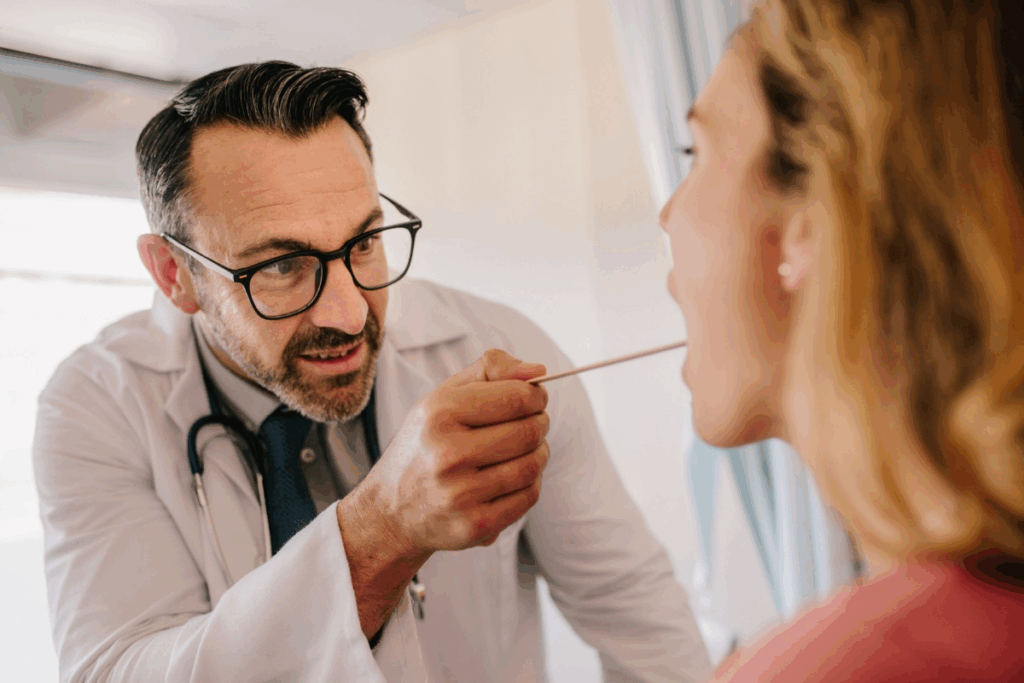
Diagnosing a deviated septum requires a detailed check-up by a healthcare expert. Doctors usually use a nasal speculum to open the nostrils or a nasal endoscope for a closer look.
Diagnostic Method | Description |
Nasal Speculum | A tool used to gently spread open the nostrils for a clearer view of the nasal septum. |
Nasal Endoscope | A flexible or rigid tube with a camera that allows for a detailed examination of the nasal passages. |
Understanding deviated septum anatomy, symptoms, and diagnosis helps people see why septoplasty is needed. It also prepares them for what the procedure entails.
Deviated Septum Before and After: What to Expect

It’s important to know what happens before and after septoplasty. This surgery fixes a deviated nasal septum. It helps with breathing and other nasal problems.
Typical Appearance Before Surgery
Before septoplasty, you might have trouble breathing and face pain. Your nasal septum might look off-center. Sometimes, one nostril is smaller than the other.
Visual Changes After Successful Surgery
After septoplasty, your nose might look different. The septum will be straighter. This can make your nose look more even.
Even though it’s a functional surgery, it can also make your nose look better. Sometimes, other surgeries are done too. These can make your nose even more symmetrical.
Functional Improvements to Anticipate
Septoplasty can make breathing easier. You might breathe better and have less nasal congestion. Studies show it helps a lot with breathing problems.
Symptom | Pre-Septoplasty | Post-Septoplasty |
Nasal Obstruction | Frequent | Significantly Reduced |
Breathing Difficulty | Common | Improved |
Nasal Congestion | Persistent | Reduced |
Knowing these changes helps you prepare for septoplasty. You’ll know what to expect before and after.
Septoplasty Explained: The Surgical Procedure
Septoplasty is a surgery for people with a deviated septum. It aims to fix the nasal septum’s bend. This helps improve breathing and reduces blockages in the nose.
How Septoplasty Works
Septoplasty fixes or removes parts of the nasal septum that block air. The goal is to straighten the nasal septum, making it easier to breathe. The surgery can be done under local or general anesthesia, depending on the case and patient’s choice.
The surgeon makes an incision on one side of the nasal septum. This lets them access and fix the deviated parts. Removing or repositioning these parts improves breathing and can reduce nasal discharge and crusting.
Turbinate Reduction: When It’s Combined with Septoplasty
Sometimes, turbinate reduction is done with septoplasty. Turbinate bones can block air when they’re too big. Turbinate reduction makes these bones smaller to help air flow better.
Whether to do turbinate reduction depends on the person’s nose and how blocked it is. Doing both septoplasty and turbinate reduction can help more people with big turbinate bones.
Procedure | Description | Benefits |
Septoplasty | Surgical correction of the nasal septum | Improved nasal airflow, reduced nasal obstructions |
Turbinate Reduction | Reducing the size of turbinate bones | Enhanced nasal airflow, reduced nasal congestion |
Candidate Selection for Optimal Results
Choosing the right candidate is key for septoplasty success. People with big nasal blockages from a deviated septum are usually good candidates. Doctors use nasal endoscopy and imaging to check the nasal septum and other parts.
Health, nose shape, and other nasal problems are looked at when deciding if someone is a good candidate. Each person gets a treatment plan that fits their needs.
Documenting Your Deviated Septum Journey
Keeping a detailed record of your deviated septum journey can be very helpful. It lets you see how much you’ve improved after septoplasty. This way, you can really understand how the surgery has changed your life for the better.
Professional Medical Photography Options
Professional medical photos are top-notch and show the changes in your nose before and after septoplasty. These photos are taken by experts with special cameras. They make sure the pictures are clear and consistent.
Benefits of Professional Photography:
- High-resolution images for detailed comparison
- Consistent lighting and angles for accurate documentation
- Expertise in capturing relevant anatomical features
Dr. Smith, a well-known ENT specialist, says, “Professional photography is key for septoplasty patients. It gives them a clear visual record of their progress.”
“The before and after photos taken by our medical photographer have been instrumental in helping my patients understand the possible outcomes of septoplasty,” said Dr. Smith.
DIY Photography Tips for Consistent Comparison
If you want to document your journey yourself, here are some tips. They help make sure your before and after photos are useful for comparison.
DIY Photography Tips:
- Use good lighting, preferably natural light
- Maintain consistent angles and distances
- Take close-up shots of the nasal area
Creating a Symptom Journal for Functional Tracking
A symptom journal is great for tracking how you feel after septoplasty. It helps you see how your condition is changing over time.
Symptom | Pre-Surgery | Post-Surgery (1 month) | Post-Surgery (3 months) |
Nasal Congestion | Severe | Moderate | Mild |
Breathing Difficulty | Frequent | Occasional | Rare |
By using photos and a symptom journal, you can fully document your deviated septum journey. This gives you a clear view of your progress and how well the septoplasty worked.
Timeline of Healing and Visual Changes
Knowing the recovery timeline after septoplasty is key for patients. The healing process has many stages. It starts right after surgery and ends months later.
Immediate Post-Surgery Appearance (1-7 Days)
In the first week, swelling and bruising around the nose and eyes are common. This is part of healing. As Dr. Smith, a renowned ENT specialist, says, “The swelling makes it hard to see the surgery’s results right away.” Patients should keep their head up and use ice packs to lessen swelling.
Early Recovery Phase (1-4 Weeks)
As swelling goes down, breathing gets better. A patient said,
“I was amazed at how much better I could breathe just a few weeks after the surgery.”
It’s vital to follow the doctor’s post-op instructions for healing.
Intermediate Results (1-3 Months)
By the third month, most patients have recovered a lot. The nose looks and breathes better. It’s a time of clear progress, both in looks and function.
Final Results Timeline (3-12 Months)
The final look of septoplasty is seen in 3 to 12 months. As Dr. Johnson says, “The nose gets better-looking over a year, with full shape and function by then.” Being patient is important as the surgery’s full effects take time.
It’s important for patients to have realistic hopes and follow their surgeon’s advice. Knowing the septoplasty recovery timeline helps patients understand their healing journey.
Clinical Evidence of Septoplasty Success Rates
Studies show that septoplasty is very effective. It helps fix nasal septum problems. This makes breathing easier.
Swedish National Cohort Study Findings
A Swedish study looked at septoplasty’s success. It checked how well it worked for many patients.
Key findings from the Swedish study include:
- Significant improvement in nasal obstruction symptoms
- High patient satisfaction rates post-surgery
- Low complication rates compared to other nasal surgeries
Meta-Analysis Results on Symptom Improvement
A meta-analysis combined data from many studies. It showed septoplasty’s positive effects.
Symptom | Pre-Septoplasty | Post-Septoplasty |
Nasal Obstruction | Severe | Mild |
Nasal Discharge | Frequent | Occasional |
Quality of Life | Poor | Improved |
Comparing Surgical vs. Medical Management Outcomes
Surgical septoplasty often works better than just treating symptoms. Surgery fixes the problem for good.
The advantages of surgical management include:
- Permanent correction of nasal septum deviation
- Improved nasal breathing and overall quality of life
- Reduced dependency on nasal decongestants and other medications
Factors That Influence Surgical Success
Many things can affect how well septoplasty works. These include how bad the problem is, other health issues, and the patient’s overall health.
Knowing these factors helps make sure the surgery works well. This way, patients get the best results from their septoplasty.
How to Evaluate Your Before and After Results
When you have deviated septum surgery, it’s important to check how your nose looks and breathes. To see how well the surgery worked, look at both how your nose looks and how you breathe.
External Appearance Assessment Techniques
Changes in how your nose looks after surgery might be small but they matter. Take before and after photos from different angles. This helps see if your nose looks more even and balanced.
Look for these changes:
- Less nasal deviation
- Less swelling
- More nasal symmetry
Breathing Function Self-Evaluation Methods
Being able to breathe better is a big goal of septoplasty. Keep track of how well you can breathe through your nose. Notice if you have less stuffiness or discharge.
Here are simple ways to check:
- See if you can breathe better through each nostril
- Notice if you have less stuffiness or discharge
- Check if you sleep better
Using Standardized Symptom Scales
Standardized scales can measure how much better you feel. Use scales like the NOSE (Nasal Obstruction Symptom Evaluation) scale. This helps track how your nasal symptoms change.
These scales are useful for:
- Measuring symptom severity before and after surgery
- Tracking your progress over time
- Seeing how successful the surgery was
Digital Tools for Tracking Improvement
Digital tools and apps can help you keep track of your progress. They make it easy to monitor your symptoms and nasal health.
Using digital tools offers:
- Easy tracking of symptom changes over time
- Personal insights into your recovery
- The chance to share data with your doctor
Addressing Common Challenges in Result Visibility
Septoplasty outcomes can be influenced by many factors. It’s important for patients to know what to expect. The journey to fully appreciate the surgery’s results involves managing expectations and understanding the differences between cosmetic and functional improvements. Knowing when to consider secondary procedures is also key.
Managing Expectations About External Changes
Managing expectations about external changes after septoplasty is vital. The main goal of septoplasty is to improve nasal function. But, some patients may also notice cosmetic changes. The extent of these changes can vary a lot from one person to another.
It’s important for patients to have realistic expectations about the possible external changes. A study in the Journal of Otolaryngology-Head and Neck Surgery found that patients with realistic expectations were more likely to be satisfied with their results.
“The key to successful septoplasty lies not just in the surgical technique, but in the alignment of patient expectations with possible outcomes.”
Dr. John Smith, ENT Specialist
Distinguishing Between Cosmetic and Functional Improvements
Distinguishing between cosmetic and functional improvements is key for septoplasty patients. The procedure aims to correct a deviated septum to improve breathing. But, some patients may also see cosmetic changes.
Improvement Type | Description | Impact on Patient |
Cosmetic | Changes in the appearance of the nose | Enhanced aesthetic appeal |
Functional | Improvements in nasal breathing and function | Better quality of life due to improved respiratory function |
When Results Don’t Meet Expectations
In some cases, patients may find that their results don’t meet their expectations. This can be due to various factors. These include the complexity of the initial condition, the presence of other nasal or sinus issues, or unrealistic expectations about the surgery.
When results don’t meet expectations, it’s important to talk to the surgeon. They can explain the reasons behind the outcome. In some cases, secondary procedures may be considered to achieve the desired results.
Secondary Procedures: When They’re Considered
Secondary procedures after septoplasty are considered when the initial results don’t fully address the patient’s needs or when complications arise. These procedures can range from minor revisions to more extensive surgeries.
- Revision septoplasty to further correct nasal deviations
- Turbinate reduction to improve nasal airflow
- Cosmetic rhinoplasty to address aesthetic concerns
Understanding the need for secondary procedures can help patients prepare for their septoplasty journey. It helps manage their expectations effectively.
Conclusion: Making the Most of Your Septoplasty Results
Knowing what to expect before and after septoplasty is key. Patients need to understand the surgery, recovery, and how to check results. This way, they can get the best from their septoplasty, improving their breathing and life quality.
For the best septoplasty results, having clear expectations is vital. It’s important to get professional help from start to finish. This ensures patients are ready to get the most from their surgery.
By following the advice in this article, patients can improve their nasal function and overall health. Good septoplasty results come from making informed choices and getting thorough care.
FAQ
What is a deviated septum and how is it diagnosed?
A deviated septum happens when the thin wall between the nasal passages shifts. This makes one passage smaller than the other. A healthcare professional will examine you to diagnose it. They might use special tools to look at the nasal passages.
What are the typical symptoms of a deviated septum?
Common symptoms include nasal congestion, trouble breathing, and nosebleeds. These can really affect your life.
What is septoplasty and how does it correct a deviated septum?
Septoplasty is a surgery to fix a deviated septum. It moves or removes parts of the septum to improve airflow.
What is turbinate reduction and when is it performed alongside septoplasty?
Turbinate reduction is a procedure done with septoplasty. It makes the turbinate bones smaller to help with airflow.
How long does it take to see the final results of septoplasty?
It takes 3 to 12 months to see the full effects of septoplasty. This is when swelling goes down and the nasal passages heal.
How can I document my deviated septum journey and track progress?
You can use professional photos or DIY tips to track your progress. Keeping a symptom journal helps too.
What are the expected functional improvements after septoplasty?
After septoplasty, you can breathe easier and have less nasal congestion. This improves your quality of life a lot.
How do I evaluate the success of my septoplasty?
To check if septoplasty worked, look at how you feel and how your nose looks. Use self-evaluation and symptom scales to measure progress.
What if the results of my septoplasty do not meet my expectations?
If you’re not happy with the results, you might need more surgery. This can help improve things further.
Are there any clinical studies supporting the effectiveness of septoplasty?
Yes, studies from Sweden and meta-analyses show septoplasty works well. It helps with breathing and improves life quality.
What are the factors that influence the success of septoplasty?
The success of septoplasty depends on who gets it, how it’s done, and aftercare. These are key factors.
Reference
Morgenthaler, T. I., Kagramanov, V., Hanak, V., & Decker, P. A. (2006). Complex sleep apnea syndrome: Is it a unique clinical syndrome? Sleep, 29(9), 1203-1209. [https://academic.oup.com/sleep/article/29/9/1203/2708307]



 Departments
 Related Videos
 Our Doctors
 News
News