
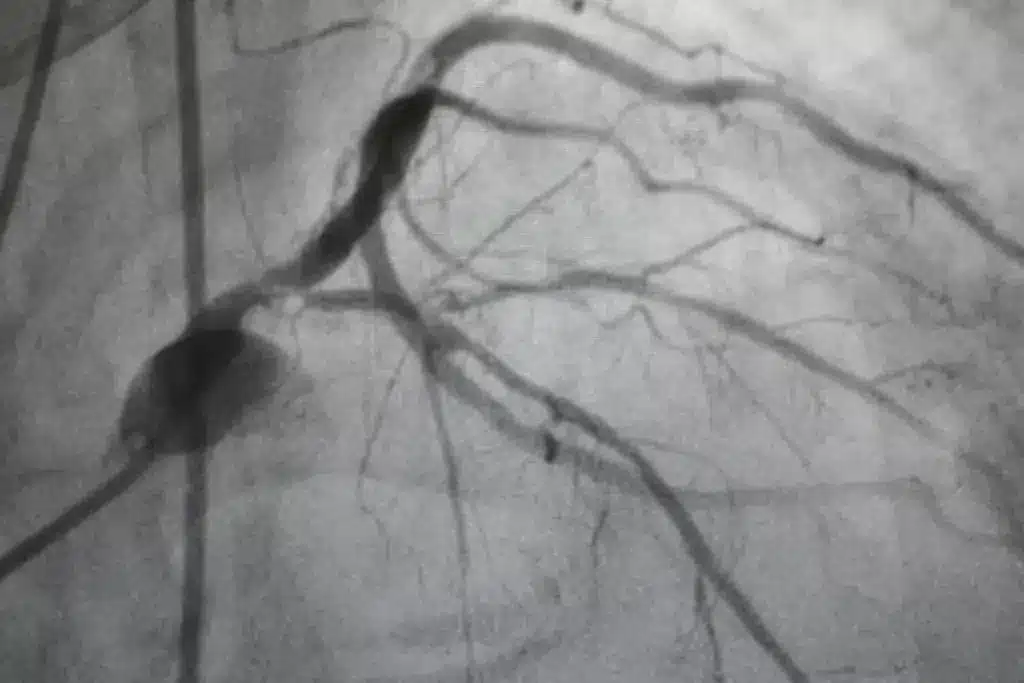
It’s important to know the difference between Diastolic Hyperemia-Free Ratio (DFR) and Fractional Flow Reserve (FFR). They are key in diagnosing and treating coronary artery disease.
Myocardial ischemia, or reduced blood flow to the heart, affects how well a patient does. Recent studies show the need for precise diagnostic tools in this area.
We will look into how DFR and FFR are used in medical diagnostics. We’ll also cover their differences and what they mean for patient care. Knowing these tools helps doctors make better choices.
Key Takeaways
- DFR and FFR are diagnostic tools used to assess coronary artery disease.
- The presence of myocardial ischemia is key for patient prognosis.
- Understanding DFR and FFR is vital for accurate diagnosis and treatment.
- Both DFR and FFR help decide on revascularization.
- Accurate diagnosis with DFR or FFR greatly affects patient outcomes.
What is DFR (Digital Forensic Response)?

In the world of cybersecurity, Digital Forensic Response (DFR) is key in tackling cyber incidents. With technology growing, strong DFR methods are more vital than ever.
Definition and Core Concepts of Digital Forensics
Digital forensics is a part of forensic science that deals with digital evidence. It uses special tools and methods to solve cybercrimes. Digital forensic investigations look into digital devices and systems to find cyber threats.
The main ideas of digital forensics are:
- Gathering and keeping evidence
- Analyzing and investigating digitally
- Writing reports and documenting
The Evolution of Digital Forensic Response
DFR has grown a lot over time, thanks to more complex cyber threats. At first, it was just about basic incident response. Now, it includes advanced forensic analysis and hunting for threats. The evolution of DFR has brought new tools and ways to fight cyber threats.
Some big changes in DFR are:
- Using artificial intelligence and machine learning in analysis
- Mixing threat intelligence into DFR
- Using cloud-based forensic tools
Experts say, “The future of DFR is in keeping up with new threats and tech.”
“The growing complexity of cyber threats means we need to get better at DFR.”
We know how important it is to keep up with DFR to fight cyber threats. By understanding DFR’s definition, core ideas, and growth, we see its big role in cybersecurity.
What is FFR (Fractional Flow Reserve)?

Fractional Flow Reserve (FFR) is a key tool in cardiology for checking how bad coronary artery disease is. It shows the ratio of blood flow in a diseased artery to blood flow in the same artery without blockage. This helps doctors see how much a blockage affects the heart.
Medical Definition and Significance
FFR is measured during a coronary catheterization. A pressure guidewire is used to check the pressure drop across a blockage. It’s important because it tells doctors if a blockage needs to be treated.
An FFR value of ≤0.80 means there’s significant ischemia. This helps doctors decide if a blockage needs to be fixed. Using FFR can lead to better patient care by focusing on the right blockages.
The Science Behind FFR Measurements
FFR measurements rely on understanding how blockages affect blood flow. It’s calculated by comparing the pressure after a blockage to the aortic pressure during maximum blood flow. This shows how much blood flow is affected by the blockage.
Many things can affect FFR measurements, like how bad the blockage is and the blood vessels’ resistance. Knowing these factors helps doctors understand FFR values and make better choices for treatment.
FFR gives a direct look at how a blockage affects blood flow. This helps doctors create treatment plans that fit each patient’s needs, improving heart disease management.
Key Differences Between DFR and FFR
It’s important to know the differences between DFR and FFR, whether you work in tech or medicine. These two terms might look similar, but they deal with very different areas and methods.
Field of Application: Technology vs. Medicine
DFR stands for Digital Forensic Response. It’s all about solving cybercrimes and data breaches in the tech world. FFR, or Fractional Flow Reserve, is a tool for doctors to check how serious heart disease is.
DFR helps protect against cyber threats in tech. FFR, on the other hand, helps doctors figure out how bad heart disease is.
|
Criteria |
DFR (Digital Forensic Response) |
FFR (Fractional Flow Reserve) |
|---|---|---|
|
Field of Application |
Cybersecurity and Digital Forensics |
Cardiology and Interventional Cardiology |
|
Primary Use |
Investigation and Analysis of Digital Evidence |
Assessment of Coronary Artery Disease Severity |
|
Methodology |
Digital Evidence Collection and Analysis |
Pressure Wire Measurement Across Coronary Stenosis |
Methodological and Practical Distinctions
DFR and FFR use different methods because of their fields. DFR uses digital tools to collect and analyze evidence. FFR uses special medical devices to check blood flow in heart arteries.
Practical distinctions show in how they’re used. DFR helps fight cyber attacks and recover data. FFR guides doctors during heart procedures to treat heart disease.
In summary, DFR and FFR might look the same, but they’re very different. Knowing these differences is key for tech and medical professionals.
The Role of DFR in Cybersecurity
In the world of cybersecurity, Digital Forensic Response (DFR) is key in fighting cyber threats. As more businesses use digital systems, they need strong DFR plans.
DFR is more than just reacting to cyber attacks. It’s about digging deep to find the cause and stop it from happening again. Effective incident response means spotting the problem, stopping it, and setting up defenses for the future.
Incident Response and Digital Investigation
DFR plays a critical role in incident response, enabling companies to effectively and swiftly manage cyber attacks. It involves a detailed digital investigation to find the attack’s source, understand how it was done, and see what was affected.
Through DFR, companies can collect evidence, study it, and use it to boost their cybersecurity. This not only reduces the damage from a cyber attack but also makes their security stronger.
DFR Frameworks and Best Practices
To do DFR well, following frameworks and best practices is essential. These guides offer a clear way to handle cyber incidents, making sure all important steps are taken.
Some main parts of DFR frameworks are:
- Getting ready and planning for possible incidents
- Finding and sorting incidents
- Stopping and removing threats
- Getting back to normal and after-incident work
By sticking to these frameworks and best practices, companies can have a solid cybersecurity plan that includes good DFR.
As cyber threats keep changing, DFR’s role in cybersecurity will grow. Companies must always be ready, updating their DFR plans to face new dangers and keep their digital stuff safe.
FFR in Cardiovascular Assessment
FFR has changed how we diagnose and treat heart disease. It measures the pressure drop in coronary stenosis. This helps doctors decide if a patient needs a procedure.
Diagnosing Coronary Artery Disease with FFR
FFR is great for finding heart disease because it looks at how well blood flows. It shows how bad a blockage is, unlike just looking at the blockage itself.
Using FFR to find heart disease has many benefits:
- It’s more accurate
- It helps find the right blockages to fix
- It means fewer tests are needed
FFR-Guided Interventional Cardiology
FFR is instrumental in guiding various cardiac procedures. It helps doctors make better choices for patients. This can lead to better results and save money.
Some big pluses of using FFR in heart procedures are:
- It picks the right patients for procedures
- It helps place stents better
- It lowers the chance of problems and improves long-term health
In summary, FFR is key in heart disease diagnosis and treatment. It gives important info about blockages. This makes it a vital tool in heart procedures.
Essential Components of DFR Methodology
The Digital Forensic Response (DFR) methodology is a detailed process. It includes several key parts. These parts work together to make sure digital investigations are done well.
Evidence Collection and Preservation Techniques
Evidence collection is a vital step in DFR. It’s about finding, gathering, and keeping digital evidence safe. This keeps it good for use in court. Techniques include:
- Creating exact copies of digital devices
- Using write-blockers to stop data from changing
- Keeping track of who had the evidence
Keeping evidence safe is also key. This means storing it in a safe place and using strong storage devices.
Digital Analysis Procedures
Digital analysis is about looking at the evidence to find important info. It uses special tools and methods. These help find deleted files and hidden data.
|
Analysis Technique |
Description |
Application |
|---|---|---|
|
Data Carving |
Getting back deleted files from digital media |
Finding hidden evidence |
|
Network Traffic Analysis |
Looking at network logs and patterns |
Finding bad activity |
|
Memory Forensics |
Checking what’s in a computer’s RAM |
Finding running programs and malware |
Documentation and Reporting Standards
Documentation is very important in DFR. It keeps a clear record of the investigation. Reporting standards make sure this record is complete, right, and follows the law.
Important parts of documentation and reporting are:
- Details about the evidence found and looked at
- How the investigation was done
- What was found and what it means
Following these standards helps DFR experts make sure their work is trustworthy, can be checked again, and is good for court.
Technical Aspects of FFR Measurement
Knowing how Fractional Flow Reserve (FFR) measurement works is key for good heart health checks. It uses advanced tech to check blood flow in the heart. This is important for spotting and treating heart disease.
Pressure Wire Technology and Application
At the core of FFR measurement is pressure wire tech. It uses a special guide wire with a pressure sensor at the tip. This wire is pushed through a catheter into the heart’s artery. The sensor measures pressure past a blockage, helping to figure out the FFR.
This tech is very accurate. It lets doctors:
- See how bad a heart blockage is
- Know if a blockage is hurting the heart
- Decide if they need to open up the blockage
Interpreting FFR Values in Clinical Practice
Understanding FFR values is key for making good treatment choices. A value of ≤0.80 means a blockage is hurting the heart. It might need to be opened up.
Doctors look at the whole patient picture when deciding treatment. They consider symptoms, other tests, and medical history. This helps them choose the best treatment.
Relationship to Blood Pressure and Heart Rate Metrics
FFR measurement is linked to blood pressure and heart rate. But, it’s not directly changed by resting blood pressure or heart rate.
Yet, things that raise heart oxygen need can affect FFR value meaning. Doctors must think about these when looking at FFR and making treatment plans.
By grasping the tech behind FFR, like pressure wire tech, doctors can better care for patients. This leads to better heart disease treatment outcomes.
Tools and Technologies Used in DFR
Digital Forensic Response (DFR) experts use advanced tools and technologies to fight cyber threats. The field is always changing, thanks to new hardware and software.
Hardware Solutions for Digital Forensics
Hardware tools are key in the early stages of digital forensic work. They help in getting and keeping data safe. Some important hardware includes:
- Forensic duplicators: Tools like the Tableau Forensic Duplicator make exact copies of digital evidence.
- Write blockers: Devices like the WiebeTech WriteBlocker stop data from being changed during an investigation.
- Mobile device forensic tools: Tools like Cellebrite’s UFED help get data from phones and tablets.
Software Platforms for Forensic Analysis
Software is essential for analyzing data in digital forensic investigations. Some top software includes:
- EnCase Forensic: A tool for getting, analyzing, and reporting on digital evidence.
- FTK (Forensic Toolkit): A strong platform for analyzing digital evidence.
- Autopsy: An open-source platform with many tools for forensic analysis.
Emerging Technologies in the DFR Field
The DFR field is seeing big changes with new technologies. Some of these are:
- Artificial Intelligence (AI) and Machine Learning (ML): AI and ML help automate analysis, find patterns, and predict threats.
- Cloud Forensics: As more data goes to the cloud, tools for cloud forensics are getting more important.
- Blockchain Forensics: Investigators are finding ways to track and analyze blockchain transactions.
These new technologies are making DFR experts better at fighting cyber threats. They help in responding to the changing cyber threat world.
FFR Equipment and Procedural Protocols
In the catheterization lab, FFR measurement uses advanced tech and careful steps. To get accurate results, the right equipment and protocols are key.
Catheterization Laboratory Requirements
The lab needs top-notch tech for FFR measurement. This includes:
- High-resolution imaging systems
- Advanced hemodynamic monitoring equipment
- Sophisticated pressure wire technology
These tools are vital for precise measurements and better patient care.
FFR Measurement Devices and Systems
FFR devices measure pressure drops in coronary lesions. The main systems are:
|
Device/System |
Description |
Key Features |
|---|---|---|
|
Pressure Wire |
A thin, flexible wire with a pressure sensor |
High accuracy, real-time data |
|
FFR Console |
A system for processing and displaying FFR data |
User-friendly interface, advanced algorithms |
Patient Preparation and Procedural Workflow
Proper patient prep is essential for FFR measurement. This includes:
- Administering anticoagulation therapy as needed
- Ensuring adequate hydration
- Monitoring vital signs closely
The procedure involves careful planning and execution. It starts with the pressure wire insertion and ends with FFR value assessment.
With advanced equipment and strict protocols, healthcare pros can get accurate FFR measurements. This helps guide treatment and improves patient outcomes.
Legal and Ethical Framework of DFR
The legal and ethical rules around Digital Forensic Response (DFR) are key. DFR is important in cybersecurity and digital investigations. It’s vital to know the legal and ethical rules that guide its use.
Chain of Custody and Evidence Integrity
Keeping the chain of custody is essential in DFR. It ensures digital evidence’s integrity. This means documenting every step of evidence handling, from collection to analysis. It helps prevent tampering and keeps evidence admissible in court.
“The chain of custody is a critical component of digital forensics, as it provides a clear and transparent record of how evidence has been handled.” A strong chain of custody builds trust in evidence integrity. It supports its use in court.
Privacy Considerations in Digital Investigations
DFR practitioners must balance evidence gathering with privacy respect. They need to protect sensitive information and minimize privacy impact. It’s important to know legal data privacy frameworks and follow them.
Expert Testimony and Legal Admissibility
DFR experts often testify in court, explaining complex tech to judges and juries. To be effective, they must communicate complex info clearly and credibly. The admissibility of DFR evidence depends on its reliability and the expert’s credibility.
“Expert testimony in digital forensics requires a deep understanding of both the technical and legal aspects of the field.”
As we work in DFR, staying updated with legal and ethical changes is critical. This ensures our practices are effective, responsible, and follow the law.
Clinical Applications and Limitations of FFR
Understanding FFR’s uses and limits is key for its right use in heart health checks. FFR is a vital tool in cardiology, helping us see how bad coronary artery disease is.
Indications and Contraindications for FFR Assessment
FFR is used for those with heart disease, mainly when it’s not clear if they need treatment. But, it’s not for everyone. It’s not good for people with very high blood pressure, recent heart attacks, or can’t take adenosine.
We must check patients first to make sure FFR is safe for them. This means looking at other tests and the patient’s health overall.
Alternative Diagnostic Approaches in Cardiology
FFR is just one way to check for heart disease. Other methods include looking at the heart’s blood vessels, stress tests, and imaging like MRI and CT scans.
|
Diagnostic Approach |
Key Features |
Clinical Utility |
|---|---|---|
|
FFR |
Measures pressure drop across coronary stenosis |
Guides revascularization decisions |
|
Coronary Angiography |
Visualizes coronary anatomy |
Assesses lesion severity and morphology |
|
Stress Testing |
Evaluates ischemia during stress |
Identifies patients at risk for adverse events |
Special Considerations for Diverse Patient Populations
When using FFR on different patients, we must think about age, health problems, and heart shape. For example, people with diabetes or kidney issues need extra care.
We also need to know when FFR might not work for some patients. In these cases, we might use other tests together to get a full picture of their health.
DFR Implementation Across Different Sectors
DFR is used in many areas, showing its wide use. As tech grows, so does the need for strong digital forensic skills in many fields.
Corporate Digital Forensics and Incident Response
In business, DFR is key for dealing with cyber threats. Companies use it to fight data breaches and theft. Corporate digital forensics helps figure out what happened and how to fix it.
For DFR to work well in companies, they need a good plan. This plan should have the right tools and people ready to act fast. This way, companies can get back to normal quickly and avoid big losses.
Government and Military DFR Applications
Government and military groups also count on DFR. They use it to keep their secrets safe and protect the country. Government DFR needs special tools and methods for its complex tasks.
The military uses DFR to fight cyber threats. They watch for odd network activity and act on cyber attacks. This is key to keeping their operations safe from cyber attacks.
Law Enforcement Digital Investigation Protocols
Police use DFR to solve cyber crimes and collect digital clues. Law enforcement protocols make sure evidence is safe and follows the law.
These rules help police collect, keep, and study evidence carefully. They work with other groups to share knowledge and methods in digital forensics.
With strong DFR rules, police can fight cybercrime better. This teamwork helps keep everyone safer online.
FFR in Contemporary Cardiology Practice
FFR has changed how we treat coronary artery disease. It’s a key tool in cardiology, helping us make better treatment plans. This leads to better health outcomes for patients.
Integration with Comprehensive Cardiac Assessment
FFR is now a big part of checking a patient’s heart health. It shows how serious a blockage is. This helps doctors choose the best treatment.
We use FFR with other tests like angiography and stress tests. This gives us a full picture of a patient’s heart. We can then make a treatment plan that fits each patient’s needs.
Impact on Treatment Decision-Making Processes
FFR changes how we decide on treatments. It helps us see which blockages need fixing. This means we can:
- Decide if a patient needs a procedure like PCI or CABG
- Place stents better to avoid blockages coming back
- Check if treatments are working and make changes if needed
A leading cardiologist says, “FFR is key in our decision-making. It lets us tailor treatments to each patient.”
“The use of FFR has significantly improved our ability to diagnose and treat coronary artery disease, leading to better patient outcomes and improved quality of life.”
Economic and Healthcare System Implications
Using FFR saves money and improves healthcare. It reduces the need for extra procedures. This means:
|
Outcome |
Impact |
|---|---|
|
Reduced procedural costs |
Lower healthcare expenditure |
|
Improved patient outcomes |
Reduced morbidity and mortality |
|
Enhanced quality of life |
Improved patient satisfaction and reduced healthcare utilization |
As cardiology keeps growing, FFR will keep being a key part of our work.
Are DFR and FFR the same?
When we talk about heart disease, two important terms come up: FFR (Fractional Flow Reserve) and DFR (Diastolic Flow Ratio).
FFR and DFR help us understand how serious heart blockages are. But they measure things in different ways. FFR looks at the pressure change in a blocked artery when it’s working its hardest. DFR checks the pressure ratio in the artery compared to the heart’s main artery during rest.
Understanding the functions of DFR and FFR is crucial for developing appropriate treatment plans. We’ll see if DFR and FFR are the same or if they have different roles in heart health.
Key Takeaways
- FFR and DFR are both used to assess coronary artery disease.
- The key difference lies in their measurement principles.
- FFR measures pressure drop during maximal hyperemia.
- DFR assesses diastolic pressure ratio during diastole.
- Understanding the differences is critical for accurate diagnosis.
What is DFR (Digital Forensic Response)?
DFR, or Digital Forensic Response, is key in fighting cybercrime. It helps organizations handle cyber incidents well. As cyber threats grow, DFR’s role in cybersecurity is more important than ever.
We’ll look into what Digital Forensics is and how DFR has evolved. This will help us see its role in keeping our digital world safe.
Definition and Core Concepts of Digital Forensics
Digital Forensics is a part of forensic science that deals with digital evidence. It uses special tools and methods to solve cybercrimes and digital incidents.
The main ideas of Digital Forensics are:
- Evidence collection and preservation
- Digital analysis procedures
- Documentation and reporting standards
These ideas are key to making sure digital evidence is handled right. They help investigations be thorough and reliable.
The Evolution of Digital Forensic Response
Digital Forensic Response has changed a lot over time. This change is because of new tech and more complex cyber threats.
The growth of DFR shows in new tools and methods. It also includes setting up best practices and standards for digital forensic work.
|
Year |
DFR Evolution |
Key Features |
|---|---|---|
|
2000s |
Early Adoption |
Basic forensic tools, manual analysis |
|
2010s |
Advancements |
Automated tools, cloud forensics |
|
2020s |
Modern DFR |
AI-powered tools, advanced analytics |
Now, DFR is a vital part of cybersecurity. It helps organizations deal with cyber incidents fast and well.
What is FFR (Fractional Flow Reserve)?
FFR has changed how we find coronary artery disease. It’s a way to check how bad the disease is by looking at pressure differences in arteries.
Medical Definition and Significance
FFR is the ratio of blood flow in a narrowed artery to what it would be if the artery was normal. It’s key for figuring out how serious a blockage is. This helps doctors choose the best treatment.
The Science Behind FFR Measurements
Doctors use a pressure wire during a catheterization to get FFR readings. This wire checks pressure before and after a blockage. A lower FFR means a more serious blockage.
FFR is important in medicine. It helps find and treat coronary artery disease. It makes sure patients get the right care.
Key Differences Between DFR and FFR
DFR and FFR are not just terms; they represent different ways of working and areas of use. Their differences are deep and wide.
Field of Application: Technology vs. Medicine
DFR, or Digital Forensic Response, is mainly for the tech world, like in cybersecurity and digital crime solving. It deals with gathering, analyzing, and keeping digital clues safe, often for cybercrime or data theft.
FFR, or Fractional Flow Reserve, is a key tool in medicine, mainly in heart health. It checks the pressure difference in a narrowed heart artery. This helps doctors see how bad heart disease is.
Key differences in their fields of application include:
- DFR is used in technology and cybersecurity.
- FFR is used in medical diagnostics, mainly in heart health.
Methodological and Practical Distinctions
DFR and FFR use different methods. DFR uses advanced digital forensic methods, like data recovery and malware detection. It needs special software and tools to look at digital clues.
FFR, on the other hand, uses pressure wires during heart tests. It’s a complex procedure that needs exact technical skills and understanding.
Practical distinctions include:
- DFR involves digital analysis and forensic techniques.
- FFR involves invasive heart tests using pressure wires.
Knowing these differences is key for experts in both fields. It helps them see the unique challenges and chances in DFR and FFR.
The Role of DFR in Cybersecurity
Cyber threats are getting more complex, making Digital Forensic Response (DFR) key in cybersecurity. DFR helps us deal with cyber attacks by managing their impact.
Incident Response and Digital Investigation
DFR is vital in incident response. It lets organizations quickly tackle cyber threats. They do this by doing a deep digital investigation to find out where and how the breach happened.
The essential elements of DFR for effective incident response are:
- Rapid identification and containment of threats
- Thorough digital investigation to understand the breach
- Collection and preservation of digital evidence
DFR Frameworks and Best Practices
Using good DFR frameworks and practices is key for strong cybersecurity. These guides help organizations handle incidents and digital investigations well.
Best practices in DFR include:
- Regular training and updates for incident response teams
- Continuous improvement of DFR processes and technologies
- Collaboration with law enforcement and other stakeholders
By following these practices, organizations can boost their cybersecurity. They can also get better at handling cyber incidents.
FFR in Cardiovascular Assessment
FFR is key in diagnosing coronary artery disease today. It measures the pressure drop in a coronary stenosis. This helps us understand how severe the blockage is.
Diagnosing Coronary Artery Disease with FFR
Coronary artery disease affects the heart’s blood supply. FFR helps us see if a blockage is causing heart problems. It tells us if we need to fix the blockage.
FFR helps us choose who really needs treatment. This makes sure patients get the best care. It also saves healthcare resources.
FFR-Guided Interventional Cardiology
FFR has changed how we treat heart disease. It shows if a blockage is causing heart problems. This helps us decide the best treatment.
Research shows FFR-guided treatments work better. They reduce heart problems and improve patient care. We tailor treatments to each patient’s needs.
In summary, FFR is vital in treating heart disease. It improves patient care and outcomes in cardiology.
Essential Components of DFR Methodology
The Digital Forensic Response (DFR) methodology is a detailed process. It includes many important parts. It helps organizations deal with cyber attacks well.
DFR uses different methods and steps for digital investigations. It has a clear way to gather, study, and keep digital evidence safe.
Evidence Collection and Preservation Techniques
Gathering evidence is key in DFR. It means finding, getting, and keeping digital evidence safe. This keeps it good for legal use.
Key techniques include:
- Using special tools for data extraction
- Making exact copies of digital media
- Tracking who had the evidence
Keeping evidence safe makes sure it stays the same during the investigation.
Digital Analysis Procedures
Digital analysis is a big part of DFR. It looks at the evidence to find important details.
Analysis procedures include:
- Getting data back
- Studying malware
- Looking at network traffic
These steps help find out what happened in the cyber attack.
Documentation and Reporting Standards
Good documentation and reports are key in DFR. They make a clear, full record of the investigation.
Key aspects include:
|
Documentation Aspect |
Description |
|---|---|
|
Detailed incident description |
A full story of the incident, with times and systems affected. |
|
Evidence logs |
A list of all evidence, how it was handled and stored. |
|
Analysis findings |
A summary of what was found, with main points. |
Following these standards makes sure DFR reports are complete, the same, and can be used in court.
Technical Aspects of FFR Measurement
FFR measurement is all about its technical parts, like pressure wire tech. FFR, or Fractional Flow Reserve, is a tool in cardiology to check how bad coronary artery disease is. It measures the pressure difference across a narrowed part of the artery.
Pressure Wire Technology and Application
A special guide wire, called a pressure wire, is used for FFR measurement. It has a tiny pressure sensor at its tip. This lets us get exact pressure readings inside the artery.
The pressure wire goes through a catheter to the artery. There, it checks the pressure before and after a narrow spot.
Key features of pressure wire technology include:
- High-fidelity pressure measurement
- Miniature sensor technology
- Works with standard catheterization gear
Interpreting FFR Values in Clinical Practice
FFR values tell us if a coronary stenosis is serious. A value of ≤0.80 means the stenosis is likely causing symptoms or ischemia.
|
FFR Value |
Interpretation |
|---|---|
|
>0.80 |
Non-significant stenosis |
|
≤0.80 |
Significant stenosis, possibly causing ischemia |
Relationship to Blood Pressure and Heart Rate Metrics
FFR measurement doesn’t really depend on blood pressure or heart rate. It looks at the ratio of pressure in the artery to aortic pressure when the heart is working its hardest. But, getting the heart to work its hardest is key for accurate readings. This is usually done with medicine like adenosine.
Knowing how FFR measurement works helps doctors make better choices for treating coronary artery disease. This includes understanding the role of pressure wire tech and how to read FFR values.
Tools and Technologies Used in DFR
The field of Digital Forensic Response (DFR) has grown a lot. It now uses many tools and technologies. This is because cyber threats are getting more complex. Investigators need advanced tools to analyze digital evidence well and fast.
Hardware Solutions for Digital Forensics
Hardware is key in digital forensics for getting and analyzing data from different devices. Some important hardware tools are:
- Forensic duplicators: Make exact copies of storage devices, keeping the original evidence safe.
- Write blockers: Stop any data from being written to the evidence device, keeping it unchanged.
- Mobile device forensic tools: Help get and analyze data from smartphones and other mobile devices.
Software Platforms for Forensic Analysis
Software is very important for analyzing digital evidence. Some top forensic software includes:
- EnCase: A full tool for getting, analyzing, and reporting on digital evidence.
- FTK (Forensic Toolkit): Used for analyzing and processing digital evidence, with strong features for data recovery and analysis.
- Volatility: An open-source tool for analyzing memory dumps and getting important information.
Emerging Technologies in the DFR Field
The DFR field keeps changing, with new technologies helping investigators. Some of these technologies are:
- Artificial Intelligence (AI): AI helps automate the analysis of digital evidence, making it more efficient and accurate.
- Blockchain analysis: Helps trace cryptocurrency transactions, aiding in financial crime investigations.
- Cloud forensics: Focuses on investigating data in cloud environments, solving the problem of remote data analysis.
As DFR keeps evolving, using these tools and technologies will be key in fighting cybercrime and improving digital investigations.
FFR Equipment and Procedural Protocols
FFR measurements need the right equipment and follow certain steps. This is key for diagnosing heart disease and picking the best treatment.
Catheterization Laboratory Requirements
The cath lab is where FFR measurements happen. It needs top-notch imaging tech like fluoroscopy and angiography. It also must have the right setup for watching patient health and keeping things clean.
Keeping the lab’s gear in top shape is important. This means:
- High-quality fluoroscopy and angiography systems
- Advanced patient monitoring systems
- Sterile equipment and supplies
FFR Measurement Devices and Systems
FFR devices are special tools for checking pressure drops in heart stenosis. They use a pressure wire in a catheter to measure pressure. This gives an FFR value.
Key features of these devices include:
|
Feature |
Description |
|---|---|
|
Pressure Wire Technology |
Advanced sensors for accurate pressure measurement |
|
Compatibility |
Works with many catheter systems |
|
Ease of Use |
Easy to use for everyone |
Patient Preparation and Procedural Workflow
Getting ready for FFR is very important. Patients need to know what’s going to happen. Doctors should check their medical history and what meds they’re on.
The steps for FFR measurement are:
- Getting the patient ready and getting their consent
- Using anticoagulation therapy if needed
- Putting in the guiding catheter and the pressure wire
- Measuring FFR values
- Figuring out what treatment to use based on the results
By sticking to these steps and using the best FFR equipment, we can get accurate results. This helps patients get better care.
Legal and Ethical Framework of DFR
The legal and ethical rules around Digital Forensic Response (DFR) are complex. As DFR becomes more important in cybersecurity and digital investigations, it’s key to understand its legal and ethical sides.
Chain of Custody and Evidence Integrity
Keeping the chain of custody is key in DFR. It makes sure digital evidence stays true and can be used in court. We must follow strict rules for collecting, storing, and moving evidence to avoid any changes.
- Document every step of the evidence handling process
- Use secure storage facilities with access controls
- Implement robust tracking and logging mechanisms
By sticking to these rules, we keep digital evidence safe and ready for legal use.
Privacy Considerations in Digital Investigations
DFR deals with tough privacy issues, mainly with personal data. We need to find a balance between doing thorough investigations and protecting privacy.
Important points include:
- Get the right legal permissions before looking at personal data
- Only collect personal info that’s needed
- Make sure handling personal data follows privacy laws
Expert Testimony and Legal Admissibility
Expert opinions are vital in DFR, mainly in court where digital evidence is shown. We must make sure our experts are qualified and their opinions are based on solid evidence.
To make digital evidence more acceptable in court, we focus on:
- Show that our digital forensic experts are credible and skilled
- Use methods that the digital forensics field accepts
- Explain complex tech stuff in a way lawyers can understand
By following these steps, we make digital evidence more reliable in court and help get better legal results.
Clinical Applications and Limitations of FFR
In today’s cardiology, FFR is key in figuring out if coronary lesions matter. It’s a tool with both benefits and limits for managing patients well.
Indications for FFR Assessment
FFR helps check how bad coronary artery stenosis is. It’s mainly used for lesions that are not too severe but not too mild either. The main reasons to use FFR include:
- Intermediate coronary lesions (40-70% stenosis)
- Multivessel coronary artery disease
- Checking if a lesion causes ischemia
- Helping decide on revascularization
Contraindications for FFR Assessment
Even though FFR is useful, there are times when it shouldn’t be used. These situations are:
- Severe coronary artery disease with total occlusion
- Acute coronary syndrome (it depends on the situation)
- Severe left ventricular dysfunction
Alternative Diagnostic Approaches in Cardiology
Cardiology uses more than just FFR to check for coronary artery disease. Other methods include:
- Coronary angiography
- Stress testing (like exercise stress tests)
- Cardiac computed tomography angiography (CCTA)
- Myocardial perfusion imaging
Each method has its own uses and limits. The right choice depends on the patient and their symptoms.
Special Considerations for Diverse Patient Populations
When using FFR, we must think about different patient groups. This includes:
- Patients with diabetes
- Patients with renal insufficiency
- Elderly patients
These groups might need special attention when interpreting FFR results and making treatment plans.
DFR Implementation Across Different Sectors
DFR is used in many areas, like corporate, government, and law enforcement. This shows how important and flexible DFR is for different digital forensic needs.
Corporate Digital Forensics and Incident Response
In the corporate world, DFR is key for handling cyber incidents. Companies use DFR to keep their digital assets safe, keep business running, and follow the law. Good DFR plans help companies spot, handle, and bounce back from cyber attacks fast.
Key parts of corporate DFR are:
- Incident response planning
- Digital evidence collection and analysis
- Employee training and awareness programs
Government and Military DFR Applications
Government and military use DFR to keep national security and protect important info. DFR is vital for looking into cybercrimes, fighting cyberterrorism, and keeping government networks safe.
DFR in government and military includes:
- Cyber threat intelligence gathering
- Digital forensic analysis for legal proceedings
- Working with international partners on cybersecurity
Law Enforcement Digital Investigation Protocols
Law enforcement uses DFR to solve cybercrimes and catch the bad guys. DFR helps them collect and study digital evidence, track down cybercriminals, and build strong cases.
Law enforcement DFR includes:
- Digital evidence collection and preservation
- Forensic analysis of digital devices and data
- Working with other agencies on cybercrime cases
Using DFR in various sectors shows its big role in today’s digital world. Knowing how DFR works in different places helps organizations fight cyber threats and follow the law.
FFR in Contemporary Cardiology Practice
In today’s cardiology, FFR is key in figuring out how bad coronary lesions are. It helps decide if a patient needs a revascularization. We’ll see how FFR fits into a full cardiac check-up, affects treatment choices, and impacts healthcare systems.
Integration with Comprehensive Cardiac Assessment
FFR works with other tests to give a clear picture of a patient’s heart health. This teamwork leads to more precise diagnoses.
FFR is paired with coronary angiography and other scans to check on stenoses. This detailed method spots ischemia-causing lesions. It guides when to do revascularizations.
Impact on Treatment Decision-Making Processes
FFR’s findings greatly shape treatment plans. It pinpoints significant lesions, making care more personalized.
FFR in the cath lab cuts down on unneeded stenting. This leads to better patient results and lower costs. FFR-guided PCI is now common in many places.
Economic and Healthcare System Implications
FFR’s use has big effects on costs and healthcare systems. It makes revascularizations more efficient, cutting down on spending.
|
Aspect |
FFR-Guided Strategy |
Angiography-Guided Strategy |
|---|---|---|
|
Revascularization Rate |
Lower |
Higher |
|
Healthcare Cost |
Reduced |
Higher |
|
Patient Outcome |
Improved |
Variable |
Why DFR and FFR Are Sometimes Confused
DFR and FFR are often mixed up because of their similar names. These abbreviations stand for Digital Forensic Response and Fractional Flow Reserve. They are used in different fields but can cause confusion when both are relevant.
Acronym Similarity and Terminology Overlap
The main reason for the mix-up is their similar acronyms. Both are three-letter abbreviations that can be confused, mainly in busy or stressful situations. The terms used in digital forensics and cardiovascular medicine are complex and sometimes overlap. This makes it hard for those without specific knowledge to tell them apart.
DFR (Digital Forensic Response) is about cybersecurity and technology. It deals with investigating and fixing cybercrimes and data breaches. FFR (Fractional Flow Reserve), on the other hand, is a medical term. It measures the pressure difference in coronary artery stenosis in cardiology.
Contexts Where Both Terms Might Appear
There are many places where DFR and FFR might be talked about, adding to the confusion:
- In multidisciplinary conferences or meetings, both cybersecurity and medical experts might be there. If the terms are not clearly explained, confusion can happen.
- In academic or research settings, where studies might involve both digital forensics and medical technology, the similar names can cause confusion.
- In hospitals or healthcare facilities that also deal with sensitive data and cybersecurity, both terms might be used. This increases the chance of mistakes.
To clear up any confusion, it’s key to define and explain DFR and FFR clearly, mainly in mixed professional environments. Knowing the specific meanings and uses of these acronyms helps professionals communicate accurately and avoid misunderstandings.
Future Developments in DFR and FFR Technologies
The future of DFR and FFR technologies looks bright. New innovations are set to change digital forensics and heart health diagnostics. We’re on the cusp of big changes in both areas.
Innovations in Digital Forensic Methodologies
Digital Forensic Response (DFR) is getting a boost from new trends. Artificial intelligence (AI) and machine learning (ML) are being added to digital forensic tools. This makes them better at handling complex data fast and right.
Key Innovations in DFR:
- Advanced threat detection using AI
- Improved data recovery techniques
- Enhanced encryption methods for securing evidence
Advancements in Cardiovascular Diagnostic Techniques
Fractional Flow Reserve (FFR) technology is also getting better. New sensor tech and data analysis algorithms are being developed. These will make FFR measurements more accurate and reliable.
|
Advancement |
Description |
Impact |
|---|---|---|
|
Improved Sensor Technology |
More precise pressure measurements |
Enhanced diagnostic accuracy |
|
Advanced Data Analysis |
Better interpretation of FFR data |
Informed treatment decisions |
|
Integration with Other Diagnostic Tools |
Comprehensive cardiac assessment |
Holistic patient care |
As these technologies grow, we’ll see big improvements in digital forensics and heart health diagnostics. This will lead to better results in both fields.
Conclusion: Understanding the Distinct Purposes of DFR and FFR
We’ve looked into the worlds of DFR (Digital Forensic Response) and FFR (Fractional Flow Reserve). We’ve seen how they serve different needs in cybersecurity and medical diagnostics. DFR helps solve cyber crimes and keeps digital data safe. On the other hand, FFR is key in finding out about heart disease and helping doctors make better treatment plans.
It’s important to know what DFR and FFR do. This knowledge helps experts in both areas do their jobs better. They can protect digital spaces or help patients with heart issues.
As we move forward in cybersecurity and medical science, DFR and FFR will become even more vital. Keeping up with these technologies and how they’re used will help us innovate and improve in our fields.
FAQ
What does DFR stand for in cybersecurity?
DFR stands for Digital Forensic Response. It’s a key part of cybersecurity. It deals with investigating and analyzing digital evidence after a cyber attack or data breach.
What is FFR used for in medical diagnostics?
FFR, or Fractional Flow Reserve, is a tool in cardiology. It measures the pressure difference across a coronary artery stenosis. This helps assess the severity of coronary artery disease.
How does DFR differ from FFR in terms of application?
DFR is used in cybersecurity and digital investigation. FFR is used in cardiology to check coronary artery disease.
What is the significance of FFR in diagnosing coronary artery disease?
FFR is key in diagnosing coronary artery disease. It gives a precise measure of blood flow to the heart muscle. This helps decide if revascularization is needed.
How is DFR used in incident response?
DFR helps quickly identify and contain cyber threats. It analyzes digital evidence to lessen the impact of a security breach.
What are the key components of DFR methodology?
DFR’s main parts are collecting and preserving evidence, analyzing it digitally, and documenting and reporting. These steps are vital for a thorough digital forensic investigation.
How is FFR measured?
FFR is measured with pressure wire technology. A sensor-tipped guidewire is used to measure pressure before and after a stenosis. This gives the FFR value.
What are the clinical applications of FFR?
FFR guides revascularization decisions and assesses stenosis. It helps optimize treatment for coronary artery disease patients.
What are the legal considerations for DFR?
Legal aspects of DFR include maintaining evidence integrity and following privacy laws. Digital evidence must be collected and presented legally.
How does FFR relate to other cardiovascular metrics like blood pressure and heart rate?
FFR is a specific metric for coronary artery disease. It’s different from blood pressure and heart rate. But, it might be used with them for a full cardiac assessment.
What are the emerging technologies in DFR?
New technologies in DFR include advanced forensic analysis software, artificial intelligence, and machine learning. These tools improve investigation efficiency and accuracy.
What is the future of FFR in cardiology?
FFR’s future in cardiology includes more integration with other diagnostics and better pressure wire technology. There might also be non-invasive methods for assessing coronary artery disease.
Why are DFR and FFR sometimes confused?
DFR and FFR are confused because of their similar names and specialized fields. But, they have different uses and applications.
What is a normal FFR value?
A normal FFR value is above 0.80. This means the coronary artery is not severely stenosed. Blood flow to the heart muscle is not significantly impaired.
How is DFR implemented across different sectors?
DFR is used in various sectors like corporate, government, military, and law enforcement. Each has its own protocols and requirements for digital forensic investigations.
References
National Center for Biotechnology Information. Evidence-Based Medical Insight. Retrieved from https://pubmed.ncbi.nlm.nih.gov/38199309/