Becoming a physical therapist is a big commitment. It usually starts with a Doctor of Physical Therapy (DPT) degree. First, you need a bachelor’s degree. Then, you must complete a DPT program, which takes about three years.
The job outlook for physical therapists is very promising. The U.S. Bureau of Labor Statistics says jobs will grow much faster than average by 2032. As healthcare experts, we aim to help patients get better, feel less pain, and live better lives.
Key Takeaways
- Earn a bachelor’s degree before pursuing a DPT program.
- A DPT degree typically takes three years to complete after undergraduate studies.
- The field of physical therapy is projected to grow faster than average through 2032.
- Physical therapists play a critical role in patient recovery and pain relief.
- Advanced clinical education is key to becoming a licensed physical therapist.
The Physical Therapist Career Path

Physical therapists are key in healthcare, helping patients get back on their feet. They use custom treatment plans. With healthcare changing, the need for these experts is growing.
What Physical Therapists Do Daily
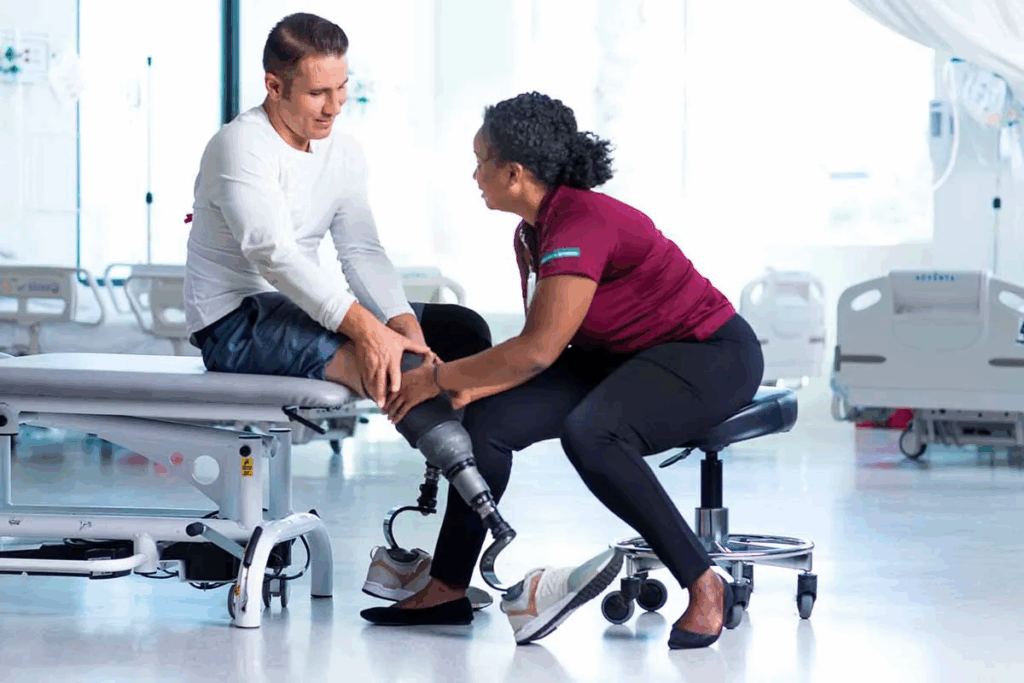
We help patients get better from injuries or illnesses. We also help them manage long-term conditions and move better. Our daily work includes:
- Assessing patients’ conditions and creating personalized treatment plans
- Implementing therapeutic exercises and interventions
- Educating patients and their families on proper care techniques
- Continuously evaluating patient progress and adjusting treatment plans as necessary
Employment Settings and Opportunities
We can work in many places, like:
- Hospitals and rehabilitation centers
- Outpatient clinics and private practices
- Nursing homes and assisted living facilities
- Schools and sports organizations
This variety lets us pick where we want to work. It makes our jobs both rewarding and exciting.
Salary and Job Growth Through 2032
The need for physical therapists is increasing. This is because more people are getting older and focusing on health. The U.S. Bureau of Labor Statistics says jobs for physical therapists will grow 14 percent from 2023 to 2033. This means good pay, with salaries depending on where you work, how long you’ve been doing it, and your experience.
Education Required to Be a Physical Therapist

To become a physical therapist, you need both undergraduate and graduate degrees. First, you must get a bachelor’s degree in a science field. Then, you’ll earn a Doctor of Physical Therapy (DPT) degree.
Undergraduate Preparation
The first step is getting a bachelor’s degree in a field like biology, chemistry, or physiology. You’ll study anatomy, physiology, biology, and physics. These subjects are key for understanding physical therapy.
Timeline: How Long Does It Take to Become a PT?
Becoming a physical therapist usually takes six to seven years. You’ll spend four years on a bachelor’s degree and three years on a DPT degree. Some students choose “3+3 programs,” which let them finish their undergraduate degree in three years and then start a three-year DPT program.
Alternative Pathways to PT Education
There are alternative paths to becoming a physical therapist. These include combined undergraduate and graduate programs. They’re designed to be efficient, helping students move from undergraduate to DPT programs smoothly.
Program Type | Duration | Description |
Traditional Pathway | 4 + 3 years | Four years for a bachelor’s degree followed by three years of DPT program |
3+3 Program | 6 years | Three years of undergraduate + three years of DPT |
Doctor of Physical Therapy Degree Requirements
All accredited physical therapist programs in the U.S. now offer the Doctor of Physical Therapy (DPT) degree. This change shows the field’s growing need for advanced education. It ensures physical therapists can give top-notch care to patients.
Evolution from Master’s to Doctoral Programs
The move from master’s to doctoral programs in physical therapy has been slow. At first, physical therapists earned master’s degrees. But as the job’s needs grew, so did the education needed. Now, the DPT is the main degree for entering the field, preparing therapists for today’s healthcare needs.
The Commission on Accreditation in Physical Therapy Education (CAPTE) makes sure DPT programs meet high standards. CAPTE’s approval is key because it lets graduates take the National Physical Therapy Examination (NPTE).
Accredited DPT Programs in the United States
CAPTE checks DPT programs all over the U.S. These programs teach a wide range of subjects like biology, anatomy, and pharmacology. They review the curriculum, faculty, and clinical training to ensure graduates are ready for the job.
When picking a DPT program, think about the campus, job rates, and cost. These things can really affect your learning and career chances.
Traditional vs. Hybrid/Online DPT Options
DPT programs come in traditional and hybrid/online types. Traditional programs are on campus, while hybrid/online mix online classes with some campus time. Both meet CAPTE’s standards, so graduates are well-educated, no matter the program.
Choosing between traditional and hybrid/online DPT programs depends on your learning style and needs. Look at the curriculum and clinical training to see if they fit your career goals.
Preparing a Competitive DPT Program Application
To stand out in the competitive landscape of DPT admissions, applicants must prepare a robust application. This application must meet rigorous academic and clinical standards.
Admission to highly competitive DPT programs is rigorous. The average GPA of incoming students is 3.6 out of 4.0. Most DPT programs require prerequisite courses in anatomy, physiology, biology, chemistry, and psychology.
Academic Requirements and GPA Expectations
A strong academic record is key for a competitive DPT application. Applicants need to meet minimum GPA requirements, usually around 3.0 or higher. But, competitive applicants often have GPAs above 3.5.
Prerequisite Coursework includes subjects such as:
- Anatomy and Physiology
- Biology
- Chemistry
- Psychology
- Biomechanics
Prerequisite Course | Typical Credit Hours |
Anatomy and Physiology | 8 |
Biology | 4 |
Chemistry | 8 |
Observation Hours and Clinical Experience
Gaining significant observation hours and clinical experience is vital. Applicants need to accumulate a minimum of 100 hours of observation. But, more competitive applicants often exceed this requirement.
“Clinical experience not only provides valuable insight into the physical therapy profession but also demonstrates an applicant’s commitment to the field.” – Physical Therapy Admission Committee
GRE Preparation and Score Requirements
The Graduate Record Examination (GRE) is a standardized test required for most DPT programs. Applicants should prepare thoroughly to achieve competitive scores, typically within the 50th percentile or higher.
Letters of Recommendation Strategy
Securing strong letters of recommendation is critical. Applicants should identify possible recommenders early, such as academic advisors or clinical supervisors. They should also provide them with information about the DPT programs they are applying to.
A well-crafted letter of recommendation can significantly enhance an applicant’s chances of admission. It provides insight into their skills, work ethic, and future as a physical therapist.
Navigating the Highly Competitive Admissions Process
The DPT admissions process is very competitive. Thousands of students want to become physical therapists, but there are only a few spots. Understanding what makes this process competitive and how to improve your chances is key.
Understanding the 1000:46 Applicant-to-Seat Ratio
The fight for DPT program seats is fierce. With a 1000:46 applicant-to-seat ratio, it’s clear that a strategic approach is needed. This ratio shows just how tough it is to get into these programs.
Program Type | Applicant-to-Seat Ratio | Average GPA |
DPT Programs | 1000:46 | 3.5 |
Competitive DPT | 1200:30 | 3.7 |
PTCAS Application System Explained
The Physical Therapist Centralized Application Service (PTCAS) is the main platform for DPT applications. Knowing how to use PTCAS well is essential for a strong application.
- Submit transcripts and letters of recommendation through PTCAS.
- Make sure your personal statement is engaging and shows why you want to be a physical therapist.
- Check your application carefully before you submit it.
The American Physical Therapy Association (APTA) says, “The PTCAS application is a key part of getting into DPT programs. It needs careful attention and a great personal statement.”
“The personal statement is your chance to share your story and show your passion for physical therapy. It should be clear, short, and show your unique experiences and skills.” APTA Guidance on PTCAS Personal Statements
Standing Out in Your Application
To stand out, you need more than good grades. You need a compelling story, lots of clinical experience, and a clear commitment to physical therapy.
To make your application stronger, write a personal statement that highlights your special qualities and experiences. Also, getting valuable clinical experience and strong letters of recommendation can really help.
DPT Program Curriculum Breakdown
The DPT program curriculum focuses on a balanced education. It combines classroom learning with hands-on clinical experience. Students learn the sciences behind physical therapy and the skills needed for patient care.
Core Sciences: Anatomy, Physiology, and Biomechanics
The core of the DPT program is anatomy, physiology, and biomechanics. These subjects help understand the human body and how it moves. Students learn through lectures, labs, and practical experiences.
They study human anatomy, including muscles, nerves, and blood vessels. Physiology and biomechanics teach how the body reacts to exercise and injury.
Clinical Skills Development
DPT programs also focus on clinical skills development. Students learn how to examine, diagnose, and treat patients. They practice therapeutic techniques like manual therapy and exercise planning.
Through simulations and exams, students become skilled in delivering care. They learn to apply their knowledge in real-world settings.
The 77/23 Classroom-to-Clinical Education Balance
DPT education balances classroom and clinical training. About 77% of the curriculum is classroom work, and 23% is clinical. This balance prepares students for clinical practice.
Students gain practical experience through internships and rotations. They apply what they learned in class under experienced practitioners’ guidance.
This mix of classroom and clinical learning is key. It ensures DPT graduates are well-prepared to provide quality care.
Clinical Rotations in Physical Therapy Training
Students in DPT programs get hands-on experience through clinical rotations. They work under licensed physical therapists. This is a key part of their education, helping them apply what they’ve learned in real settings.
Structure and Duration of Clinical Experiences
Clinical rotations last from 22 to 38 weeks. The exact time depends on the program. This long period prepares students for the real world of physical therapy.
Students get to work in many different places. This helps them learn a lot and become good at their job.
Rotation Specialties and Settings
DPT students see many different areas of physical therapy. They work in orthopedics, neurology, pediatrics, and sports physical therapy. They also visit hospitals, clinics, and sports facilities.
- Orthopedic clinics
- Neurological rehabilitation centers
- Pediatric clinics
- Sports medicine facilities
- Acute care hospitals
This variety is key for students to learn and grow. It prepares them for the many challenges they’ll face.
Performance Evaluation During Clinicals
Student performance is watched closely during clinicals. Clinical instructors check their skills, how they talk to patients, and their behavior. This feedback helps students improve and get ready for their careers.
Key areas of evaluation include:
- Clinical decision-making and problem-solving
- Patient assessment and treatment skills
- Professionalism and ethical practice
- Communication with patients, families, and healthcare teams
One instructor said, “Being able to use what you’ve learned in real life shows you’re ready.” This shows how important clinical rotations are for DPT students.
How to Become a Licensed Physical Therapist
To become a licensed physical therapist, you must pass the National Physical Therapy Examination (NPTE). You also need to meet state-specific requirements. This ensures physical therapists can provide safe and effective care.
National Physical Therapy Examination (NPTE)
The NPTE is a test by the Federation of State Boards of Physical Therapy (FSBPT). It checks a candidate’s knowledge and skills in physical therapy. The exam makes sure candidates can practice safely and effectively.
The NPTE covers many topics, like anatomy and physical therapy techniques. Candidates need to study hard. They use study materials and practice questions to get ready.
State Licensure Requirements
After passing the NPTE, physical therapists must meet state licensure requirements. These vary by state. It’s important to check with the state’s licensing authority for details.
Some states might need extra exams, background checks, or continuing education. Make sure to check the specific requirements for your state.
Continuing Education for License Maintenance
Once licensed, physical therapists must keep their license by completing continuing education. This ensures they stay up-to-date with the latest in their field.
Continuing education can be workshops, online courses, or conferences. Check with your state’s licensing authority for the specific requirements for license renewal.
Specialization Paths After Your DPT
Physical therapists often look to specialize as they grow in their careers. This path can bring more job satisfaction, deeper expertise, and better patient care. We’ll look at the different ways physical therapists can enhance their skills and knowledge.
Board-Certified Clinical Specialties
The American Board of Physical Therapy Specialties (ABPTS) has several board-certified specialties. These include orthopedics, neurology, and pediatrics. To get certified, therapists need to meet certain requirements, pass a tough exam, and keep up with continuing education.
Benefits of Board Certification:
- Enhanced professional credibility
- Increased career opportunities
- Greater autonomy in practice
- Recognition among peers and patients
Residency and Fellowship Opportunities
Residency and fellowship programs offer deep training in specific areas of physical therapy. These programs are more in-depth than regular continuing education. They last from 9 to 24 months and help prepare therapists for board certification in a specialty.
Key aspects of residency and fellowship programs include:
- Advanced clinical training
- Research opportunities
- Mentorship from experienced professionals
- Preparation for board certification
Transitioning to Academic or Research Roles
Physical therapists who want to teach or do research can find a rewarding path. This path often requires more education, like a Ph.D. or Ed.D. It may involve teaching in DPT programs, doing research, or publishing articles.
Steps to Transition:
- Pursue additional education if necessary
- Gain experience in teaching or research
- Build a professional network in academia
- Stay current with the latest research and developments in physical therapy
Conclusion: Embarking on Your Physical Therapy Career
Starting a career as a physical therapist is a rewarding journey. It offers chances to make a real difference in people’s lives. With a DPT degree and a license, you can choose from many career paths.
If you’re interested in this field, there are many opportunities to explore. Becoming a physical therapist takes dedication and hard work. But the rewards are worth it. A DPT degree can lead to various careers, like working in hospitals or private practices.
When thinking about your career, look into different settings and specialties in physical therapy. This will help you find the right fit for your skills and interests. With the right education and training, you can have a fulfilling career helping others reach their health goals.
FAQ
What is the typical educational pathway to become a physical therapist?
First, you need a bachelor’s degree. Then, you go to a Doctor of Physical Therapy (DPT) program. This usually takes three years.
What are the requirements for DPT program admission?
You need a good GPA and GRE scores. Also, gaining experience and getting strong letters of recommendation helps.
How long does it take to complete a DPT program?
It takes three years after your bachelor’s degree. Some programs, like “3+3,” offer quicker paths.
What is the curriculum like in a DPT program?
The program covers anatomy, physiology, and biomechanics. You also learn clinical skills. A lot of time is spent in clinics.
What are the licensure requirements for physical therapists?
You must pass the National Physical Therapy Examination (NPTE). You also need to meet state requirements. Continuing education is needed to keep your license.
Are there opportunities for specialization after earning a DPT degree?
Yes, you can specialize in many areas. This includes board-certified specialties and academic or research roles.
What are the employment opportunities and growth prospects for physical therapists?
The U.S. Bureau of Labor Statistics says there will be a 14 percent increase in jobs. This is much faster than average. You can work in many healthcare settings.
Can I complete a DPT program online or through a hybrid program?
Yes, there are online and hybrid DPT programs. They are accredited by CAPTE. This lets you find a program that suits you.
What is the role of clinical rotations in DPT training?
Clinical rotations give you real-world experience. They prepare you for practice. Your performance is evaluated to check if you’re ready.
References
National Center for Biotechnology Information. Nutrition in space and planned analogue missions: The authors’ perspective. Retrieved from https://pmc.ncbi.nlm.nih.gov/articles/PMC3076909/