If you’re feeling pain, swelling, or seeing color changes in your legs, your doctor might suggest a Doppler ultrasound. This test is non-invasive and uses sound waves to check blood flow in your legs. It looks at both arteries and veins doppler test for legs.
At Liv Hospital, we have the latest Doppler technology. It helps us find issues like blockages, blood clots, and poor circulation. Early detection is key to avoid serious problems. Our team is here to give you the right diagnosis and care with kindness.
Key Takeaways
- A Doppler ultrasound is a non-invasive test that evaluates blood flow in the legs.
- It’s used to detect vascular conditions like blockages and blood clots.
- Early detection can prevent serious complications.
- Liv Hospital uses advanced Doppler technology for accurate diagnoses.
- Our team provides compassionate care and personalized treatment plans.
Understanding Doppler Test for Legs

The Doppler test for legs is a key tool for doctors to check leg circulation. It’s a non-invasive test that looks at blood flow in leg veins and arteries. This gives doctors important info on vascular health.
Definition and Basic Principles
A Doppler ultrasound study is a painless test that uses sound waves to check leg blood flow. It works by detecting how sound waves change when they hit moving objects, like blood cells. This lets the test show how fast and in which direction blood is moving.
This test is great for spotting and tracking blood flow problems. It gives doctors the details they need to find and fix issues.
How Sound Waves Measure Blood Flow
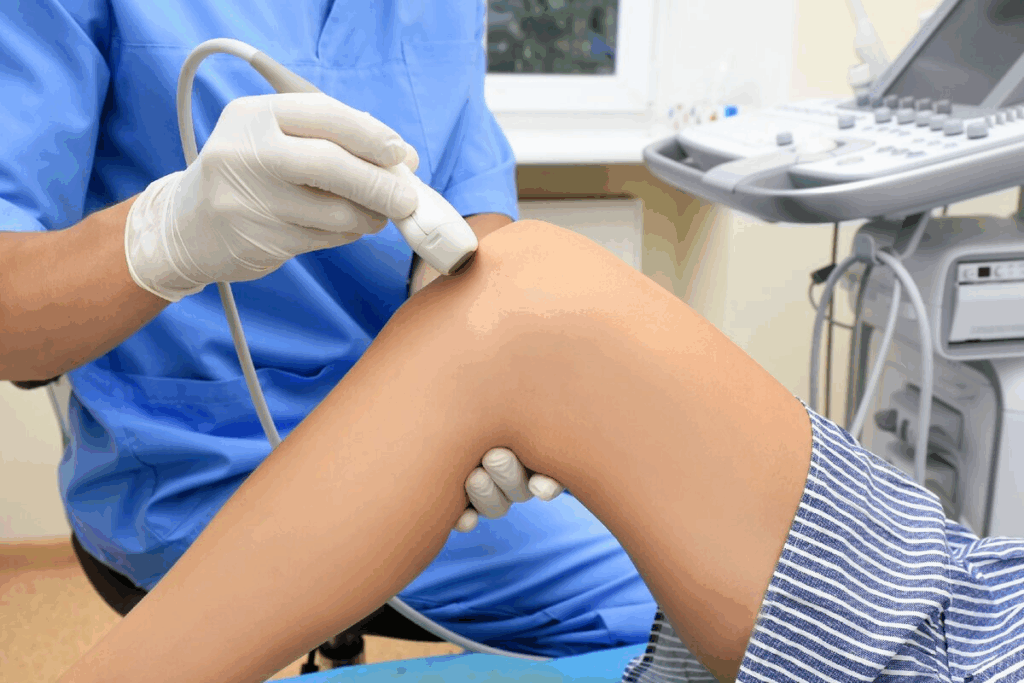
In a Doppler ultrasound, a technician puts gel on the skin and uses a transducer to send sound waves. These waves go through the tissue and hit blood cells, then come back as echoes. The echoes are turned into images and graphs that show blood flow.
The Doppler ultrasound can look at different parts of blood flow, like:
- Velocity: How fast blood is moving.
- Direction: If blood is moving towards or away from the transducer.
- Turbulence: Any unusual flow patterns that might mean stenosis or other vascular problems.
Doctors can understand leg circulation better with this info. They can spot problems early and plan the best treatment. This ensures patients get the best care for their vascular conditions.
Types of Doppler Ultrasound Tests for Legs

Several Doppler ultrasound tests are used to check leg vascular health. Each test has its own use. They help find problems like blood clots, venous insufficiency, and blockages.
Arterial Doppler Examination
An arterial Doppler examination looks at blood flow in leg arteries. It’s great for finding blockages or narrowing from Peripheral Artery Disease (PAD). Doctors use it to see how bad the problem is and decide on treatment.
Venous Doppler Examination
A venous Doppler examination checks the veins. It helps find deep vein thrombosis (DVT) and venous insufficiency. The test looks for clots or problems in the veins.
Duplex Doppler Ultrasound
Duplex Doppler ultrasound uses both ultrasound and Doppler ultrasound. It shows the blood vessels’ structure and blood flow. This test is good at finding many vascular problems, giving clear images and blood flow data.
The table below shows what each Doppler ultrasound test is for:
Type of Test | Primary Use | Key Benefits |
Arterial Doppler Examination | Assessing arterial blood flow, detecting PAD | Helps in planning treatment for arterial blockages |
Venous Doppler Examination | Diagnosing DVT and venous insufficiency | Effective in detecting clots and venous abnormalities |
Duplex Doppler Ultrasound | Comprehensive vascular assessment | Provides detailed images and real-time blood flow data |
A medical expert says, “Doppler ultrasound is a key tool for checking vascular health. It’s safe and gives us important information in real-time.”
“Doppler ultrasound is vital in vascular medicine. It’s a safe way to check blood flow and find vascular problems.”
Common Conditions Diagnosed with Leg Doppler Tests
We use Doppler ultrasound tests for legs to find many vascular conditions. These tests help us see how serious these diseases are. They are key for spotting and understanding vascular diseases.
Deep Vein Thrombosis (DVT)
Deep Vein Thrombosis (DVT) is when a blood clot forms in the deep veins, usually in the legs. Symptoms include swelling, pain, and redness. If not treated, DVT can cause serious problems like pulmonary embolism.
Peripheral Artery Disease
Peripheral Artery Disease (PAD) happens when the arteries to the legs get narrowed or blocked. This causes pain when walking and other symptoms. Doppler ultrasound helps figure out how bad PAD is. Studies show Doppler ultrasound is 77-82% sensitive and 92-98% specific in finding significant blockages.
Venous Insufficiency
Venous insufficiency is when veins can’t return blood to the heart properly. This can cause swelling, pain, and skin changes in the legs. It’s a common issue affecting many people globally.
Arterial Occlusion and Stenosis
Arterial occlusion and stenosis mean the arteries are narrowed or blocked. This reduces blood flow to the legs. Doppler ultrasound is good at finding out how bad the blockage is. This helps doctors plan the right treatment.
These conditions show how vital Doppler ultrasound is for vascular health. Accurate diagnosis with Doppler ultrasound lets doctors treat patients quickly and effectively. This improves patient outcomes.
The Procedure: What to Expect During a Doppler Test
A Doppler ultrasound test is easy and doesn’t hurt. It helps check your leg health. We know getting a medical test can be scary. So, we’ll tell you what to expect.
Pre-Test Preparation
Before the test, you might need to:
- Take off any clothes or jewelry that could get in the way
- Get on an exam table
- Stay very quiet during the test
Wearing loose, comfy clothes is a smart move too.
During the Examination
A healthcare provider will put gel on your skin and use a transducer. This tool sends sound waves that hit blood cells. It’s painless and doesn’t hurt. These sound waves turn into images that show how blood flows in your legs.
- Putting gel on the area to be checked
- Using the transducer to get images of blood flow
- Maybe using pressure or other methods to check blood flow
Post-Test Activities
After the test, you can go back to your usual activities right away. There’s usually no need to wait or do anything special. It’s a simple way to check your health.
Your doctor will talk about the test results with you. They might suggest more tests or actions to take next.
Accuracy and Reliability of Doppler Ultrasound
Doppler ultrasound has changed how we check blood vessels. It gives us reliable and accurate results.
Sensitivity and Specificity Rates
Doppler ultrasound is very good at finding problems in blood vessels. Studies show it can spot big blockages in arteries well.
It’s known for being accurate in finding blood vessel issues. Doctors trust it because it’s very sensitive and specific.
It’s great at finding blockages in arteries. This helps doctors treat problems early.
Condition | Sensitivity Rate | Specificity Rate |
Arterial Stenosis | 95% | 90% |
Deep Vein Thrombosis (DVT) | 92% | 95% |
Venous Insufficiency | 88% | 92% |
Factors Affecting Test Accuracy
Even though Doppler ultrasound is very accurate, some things can affect its results. These include the skill of the person doing the test, the quality of the equipment, and the patient’s body type.
The test’s accuracy depends on the person doing it and the technology used. Better equipment and software can make images clearer, leading to more accurate results.
Things like obesity or gas in the intestines can make images less clear. But, skilled technicians can usually find ways to get better images.
Benefits and Limitations of Leg Sonography
Doppler ultrasound gives us real-time images, helping us spot and track leg vascular diseases. It’s a big help in checking blood flow and finding problems.
Non-Invasive Nature and Safety Profile
Doppler ultrasound is non-invasive, which means it’s safe and doesn’t hurt. It doesn’t need to go inside the body or use harmful rays. This makes it safe for everyone, even pregnant women and people with certain health issues.
Its safety lets us do tests over and over without worrying about harming the patient. This is great for watching how vascular diseases change and if treatments are working.
Real-Time Imaging Advantages
Doppler ultrasound shows blood flow as it happens. This is key for making accurate diagnoses. It lets doctors see blood moving and find any issues, like blockages.
It also helps us check how fast and in what direction blood is flowing. This is important for spotting problems like deep vein thrombosis and peripheral artery disease.
Potential Limitations and Alternatives
Even though Doppler ultrasound is very useful, it has some downsides. The quality of the test can depend on who’s doing it. Also, things like being overweight or having gas in the intestines can mess with the images.
Diagnostic Method | Non-Invasive | Real-Time Imaging | Operator-Dependent |
Doppler Ultrasound | Yes | Yes | Yes |
Angiography | No | No | Yes |
MRI Angiography | Yes | No | No |
If Doppler ultrasound isn’t right or available, we might use other methods like angiography or MRI angiography. Each has its own good and bad points. The choice depends on what the patient needs and what the doctor thinks is best.
When Do You Need a Doppler Test for Legs?
Knowing when to get a Doppler test for your legs is key to spotting and treating vascular problems. This test is non-invasive and checks blood flow in your legs. It helps find any issues early on.
Common Symptoms Requiring Evaluation
Some symptoms might mean you need a Doppler test. These include:
- Leg pain or cramping when you’re active
- Swelling or edema in your legs
- Numbness or tingling
- Coldness in your legs or feet
- Discoloration or ulcers on your legs
If you’re feeling any of these symptoms requiring a Doppler test, see a doctor right away.
Risk Factors That May Necessitate Testing
Some risk factors might make you more likely to need a Doppler test. These include:
Risk Factor | Description |
Smoking | Smoking harms blood vessels and cuts down circulation. |
Diabetes | Diabetes can cause vascular problems. |
High Blood Pressure | Hypertension puts pressure on blood vessels. |
Family History | A family history of vascular disease raises your risk. |
If you have these risk factors for Doppler test, watch your vascular health closely. Talk to your doctor about getting tested.
Doctor Recommendations and Referrals
A healthcare provider might suggest a Doppler test after checking you over. Doctor recommendations depend on your symptoms, medical history, and risk factors. If your doctor wants you to get a Doppler test, they likely suspect a vascular problem.
In summary, a Doppler test for legs is a great tool for diagnosing vascular issues. It’s important for people with specific symptoms or risk factors. By understanding when to get this test, you can help keep your vascular health in check.
Understanding Your Doppler Ultrasound Results
Your Doppler ultrasound test gives you insights into your blood flow. It shows images and data that help doctors check your leg’s blood flow.
Normal vs. Abnormal Findings
It’s important to know if your test results are normal or not. Normal findings mean your blood vessels are working right. But, abnormal findings could point to problems like blood clots or varicose veins.
Abnormal results can show how serious the problem is. Doctors might find stenosis (narrowing) or occlusion (blockage). These findings help decide the best treatment.
Follow-Up Recommendations
After getting your test results, your doctor will talk about what to do next. If everything looks good, you might just need regular check-ups. But, if there are problems, you might need more tests or treatments.
For abnormal results, your doctor might suggest lifestyle changes or medication. They might also recommend more tests to keep an eye on your condition.
Additional Testing That May Be Required
Based on your test results, you might need more tests. This could include angiography or other non-invasive tests. These tests help doctors understand your blood flow better.
Doctors will explain why you need these tests. They’ll also tell you what to expect from them. This helps you prepare and understand your treatment plan.
Conclusion
We’ve looked into the Doppler test for legs, a tool that’s easy and doesn’t hurt. It shows important info about blood flow and health of blood vessels. This test is key for spotting and treating problems like deep vein thrombosis and peripheral artery disease.
Doppler ultrasound is super important because it gives doctors the right info fast. This helps them make good plans for treatment. Knowing about Doppler tests helps patients understand their health better and take care of it.
To wrap it up, the Doppler test for legs is a must-have for checking blood vessel health. It’s safe and works well, making it a big part of today’s vascular care. We suggest it for anyone who needs a detailed check-up of their leg’s blood vessels.
FAQ
What is a Doppler test for legs?
A Doppler test for legs is a non-invasive ultrasound. It uses sound waves to measure blood flow. It helps diagnose conditions like deep vein thrombosis and peripheral artery disease.
How do I prepare for a Doppler ultrasound of my legs?
To prepare, you might need to avoid certain medications. Wear comfortable clothes and remove jewelry. We’ll give you detailed instructions before the test.
Is a Doppler test for legs painful?
No, it’s not painful. You might feel some pressure from the probe. But it’s usually not uncomfortable.
What are the benefits of a Doppler ultrasound for legs?
Doppler ultrasound is safe and non-invasive. It shows blood flow in real-time. It’s quick and painless too.
Can a Doppler test diagnose all vascular conditions in the legs?
While it’s very effective, it’s not for all conditions. Your doctor will decide if it’s right for you.
How accurate is a Doppler ultrasound for legs?
Doppler ultrasound is very accurate. But, accuracy can depend on the operator and equipment quality.
What do abnormal Doppler ultrasound results mean?
Abnormal results might show a vascular condition. Your doctor will explain and suggest further steps.
Do I need to follow a special diet before a Doppler ultrasound?
Usually, no special diet is needed. But, we might give specific instructions based on your medications or health.
Can I resume normal activities after a Doppler ultrasound?
Yes, you can go back to normal activities right after. It’s a non-invasive test with no recovery time needed.
How long does a Doppler ultrasound examination take?
The time varies based on the test and condition. It usually takes 30 minutes to an hour.
What is the difference between an arterial and venous Doppler examination?
An arterial Doppler checks arteries, while a venous Doppler checks veins. Both are used for different conditions.
Are there any risks associated with a Doppler ultrasound?
Doppler ultrasound is safe and non-invasive. There are no major risks. But, like any test, there might be some limitations.
References
National Center for Biotechnology Information. Doppler Ultrasound: Assessing Blood Flow in Legs. Retrieved from https://www.ncbi.nlm.nih.gov/pmc/articles/PMC8772481/